Shein continues to sell products containing hazardous chemicals
Greenpeace Germany has once again examined items of clothing from online fashion retailer Shein and found that 25 of the 31 products tested massively exceeded the limit values. Despite warnings in November 2025, identical or similar items containing hazardous chemicals remained available.


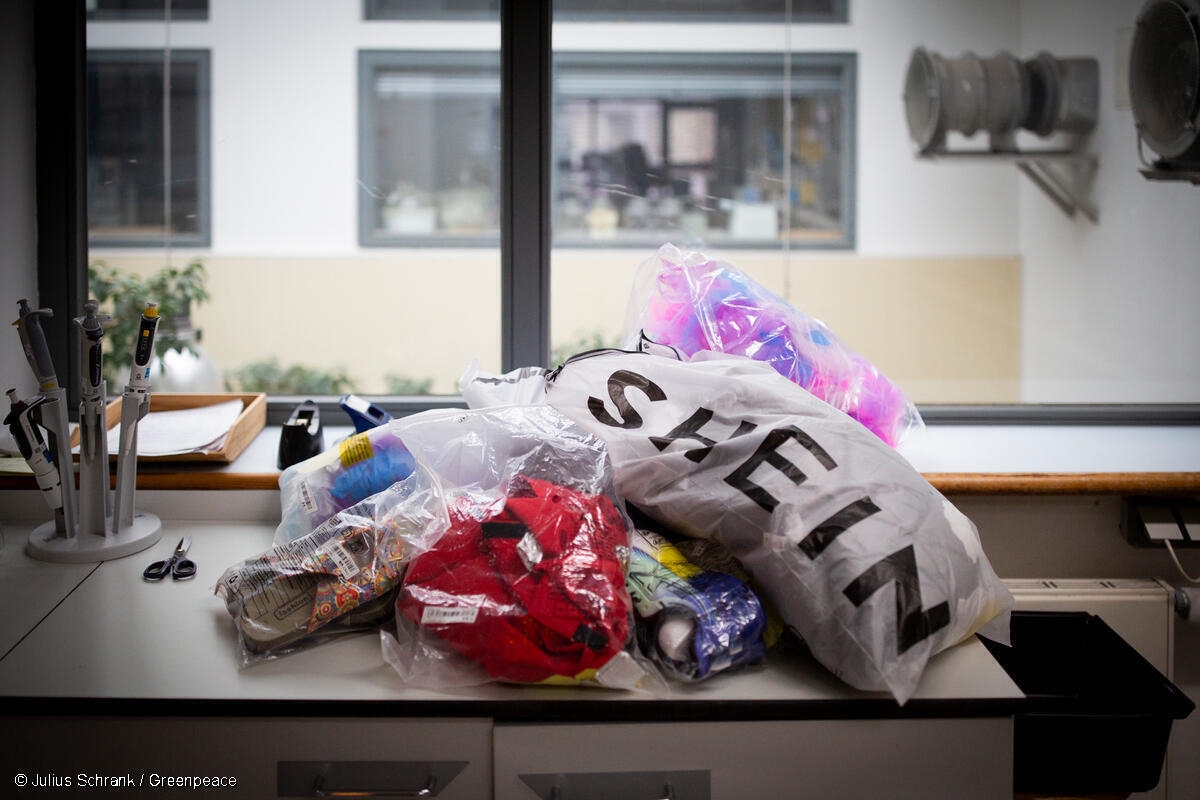
The online fashion retailer Shein does not take warnings about harmful chemicals in its products seriously. This is shown by a study by the Bremen Environmental Institute, which tested a total of 31 items of clothing in January 2026 on behalf of Greenpeace Germany. In 25 of them, the European Chemicals Regulation (REACH) was found to have been exceeded, in some cases massively.
Particularly explosive: the products in question were identical or very similar to the first Greenpeace test in November 2025. According to Shein's promises, these should no longer be available on the platform. After the first tests, the fast fashion group announced that it would withdraw the affected items from the market and stated that product safety and EU standards had top priority.
Only specific product numbers removed
The reality is different: Shein only removed the specific product numbers objected to by Greenpeace. The products themselves remained available. «Shein is ignoring warnings and legal limits and is accepting harm to people and the environment. This behavior is grossly negligent,» says Joëlle Hérin, consumer expert at Greenpeace Switzerland.
Of the 25 products tested in January, four were identical to those in the first test. One outdoor jacket was even available again from the same retailer. In one sandal, Shein kept nine other strap colors on offer - all with the same non-compliant footbed, although Greenpeace had already objected to one color variant in November 2025. Some of the hazardous chemicals exceeded the Swiss and EU limits by a factor of 3115.
Risks for people and the environment
Greenpeace was able to detect potentially toxic chemicals above the permitted limits in the clothing, including children's clothing. The chemicals found are associated with various diseases, including cancer, reproductive disorders and growth disorders in children, as well as a weakening of the immune system.
Workers and the environment in the production countries are particularly affected. But buyers also come into contact with the chemicals through skin contact, sweat or inhaled fibers. During washing and disposal, the substances continue to enter rivers, soil and the food chain.
Legal loopholes in Switzerland
Shein supplies the goods almost exclusively directly from China to consumers in Switzerland. The products are therefore not currently subject to the Foodstuffs and Utility Articles Act or the Chemicals Act. In concrete terms, this means that these products do not have to comply with Swiss limit values. As a result, Shein has so far evaded liability under Swiss law.
In order to protect the environment and human health, Swiss law must apply without loopholes to all products that can be purchased in Switzerland. Suppliers who repeatedly violate Swiss regulations must be sanctioned and excluded from the market. Greenpeace is also calling for a strong anti-fast fashion law based on the French model in order to establish environmentally friendly business models.
«The Shein case shows: Voluntary promises made by these companies are worth nothing. As long as fast fashion companies can make a profit with disposable fashion and hazardous chemicals, clear legal limits are needed,» says Joëlle Hérin and adds: «An effective anti-fast fashion law must curb overproduction, limit advertising for cheap fashion and finally hold manufacturers accountable.»
Statement from Shein
Shein has sent us the following statement about this article:
«The constructive exchange with Greenpeace is very important to us. As part of the review of the current test results, we have commissioned independent test institutes to carry out further tests on the identified products.
All products mentioned in the previous Greenpeace report were immediately removed from our platform worldwide, as per our own standard protocols. The products are still not listed on our website.
The products identified in this report were also removed immediately after we were informed of the results. At the same time, we are carrying out further tests of our own.
We are addressing concerns about our processes for dealing with such cases and recognize that this process highlights areas where our controls can be further strengthened.
As soon as we became aware of the concerns, we initiated measures to identify potential improvements to our protective measures. These range from the preliminary testing of products to the ongoing monitoring of products that are already available. The protective measures include platform-wide checks of similar products using technical detection systems as well as targeted manual checks.
In addition, we are increasing our investment in the specialized teams and technologies that implement the specified measures in a targeted manner. We are also tightening up the measures we take against providers who do not comply with our requirements and rules, including by suspending or terminating contracts more quickly and imposing stricter financial sanctions.
These measures build on the Enhanced Compliance Program that we initiated at the end of 2025 to improve product safety and raise compliance standards on our platform. As part of this program, we are expanding our partnership with leading global quality assurance providers to implement a range of improvements. These include more intensive vetting of new vendors, higher training standards for content moderators and vendors, and structured compliance testing to identify vulnerabilities and initiate corrective actions in relevant areas.
We continue to advocate for an increased exchange of information between platforms in order to identify problematic offers and sellers. After all, many such products are still available on several online marketplaces.»