Motor vehicle insurance: Premiums rise by 20 percent
Premiums for motor vehicle insurance have risen by around 20 percent in five years, making them one of the biggest cost drivers in the area of housing and mobility. According to the current Comparis-Womo price index, more expensive spare parts and more complex repairs are leading to this massive increase.


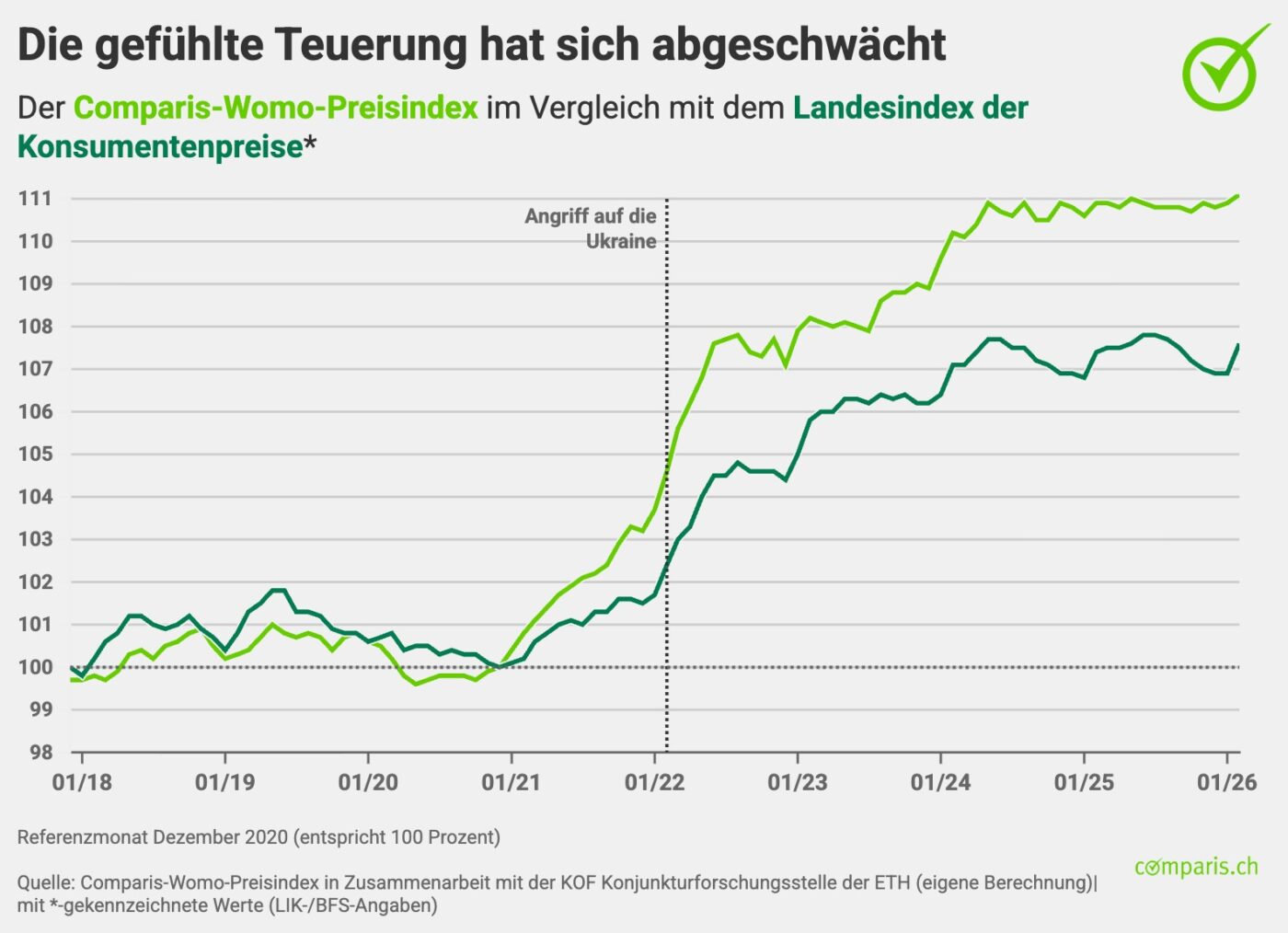
According to the Comparis-Womo price index in collaboration with the KOF Institute at ETH Zurich, prices for housing and mobility in Switzerland rose by 0.2% in February 2026 compared to the same month last year. While many prices have remained stable or fallen recently, motor vehicle insurance is one of the few areas with massive price increases.
Electronics in new cars drive up costs
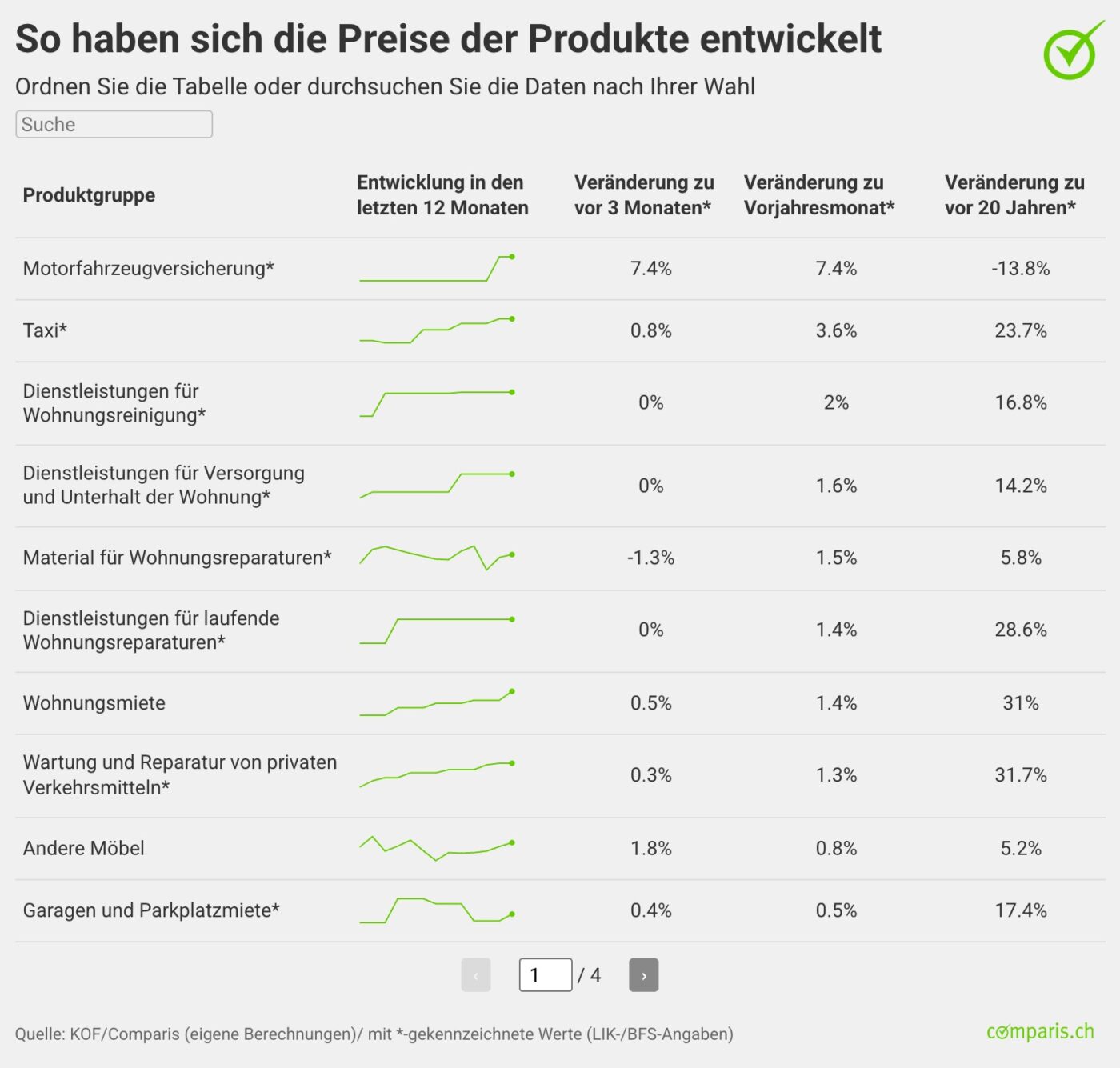
Motor vehicle insurance increased by 7.4% compared to the same month last year. Over the last five years, the increase was as high as 18.9 percent. «More expensive electronics in new cars led to more complex repairs and more expensive spare parts - and thus to a sharp rise in premiums,» explains Comparis financial expert Dirk Renkert. In particular, rear-view mirrors with sensors and cameras, LED headlights and the calibration of assistance systems make repairs more expensive.
The high increases in motor vehicle insurance are due to higher costs for spare parts and repairs. Spare parts have risen particularly sharply over the last five years, increasing by 19.1 percent. Service and repair work for motor vehicles has also become 8.1 percent more expensive. In addition, the increase in claims such as hail damage led to higher costs.
Above-average rise in residential rents
Over the last five years, the Womo price index has risen by a total of 10.3 percent. By comparison, the national consumer price index (CPI) rose by 7.3% during this period. Residential rents, the largest expenditure item, increased by 1.4 percent compared to the same month last year.
«The above-average increase in residential rents continues unabated. This is particularly bitter for low-income households, as rent is the largest budget item,» says Renkert.
The products that have risen the most in price over the last five years include energy for heating (gas, heating oil, firewood and district heating), which has risen by 41.2%, and electricity, which has risen by 34.1%.
Fuel prices fall significantly
Not all prices went up. According to the Comparis analysis, fuel prices fell by 5.3% compared to the previous year. Prices for other consumer goods for household use fell the second most, by 5.0%.
The goods and services whose prices have fallen sharply in the last five years include small household appliances (down 8.7 percent), motorized tools for home and garden (down 7.9 percent) and bicycles and electric bicycles (down 3.1 percent).
Low-income households particularly affected
The income classes show that life has become most expensive for the lowest income class compared to the previous year. The Womo price index rose by 0.4 percent for this class. The highest income class was the least affected by inflation, with an increase of 0.1%.
Broken down by household type, single-person households aged 65 and over experienced the highest inflation in housing and mobility in the last twelve months, with an inflation rate of 0.5% compared to the previous year.
Tips for insurance customers
Anyone who receives a higher bill for motor vehicle insurance should not simply accept the adjustment. In the event of a premium increase, there is an extraordinary right of termination, which makes it possible to change provider without complications.
The differences in the market are huge. A comparison shows whether you are paying too much for similar benefits or whether better cover is available. If you have been with the same provider for many years, you should pay particular attention. Loyalty is not automatically rewarded in the insurance market.
With the advancing technological development of new cars, vehicle owners of older models are increasingly being asked to pay, warns Renkert.
Source: www.comparis.ch