AI chatbots become the first point of contact in everyday working life
One in four employees prefers to rely on AI chatbots such as ChatGPT or Gemini for important professional and private questions. However, a recent study by the Pinktum Institute also shows the flip side: 43% of respondents use the technology specifically to avoid in-depth discussion of topics.





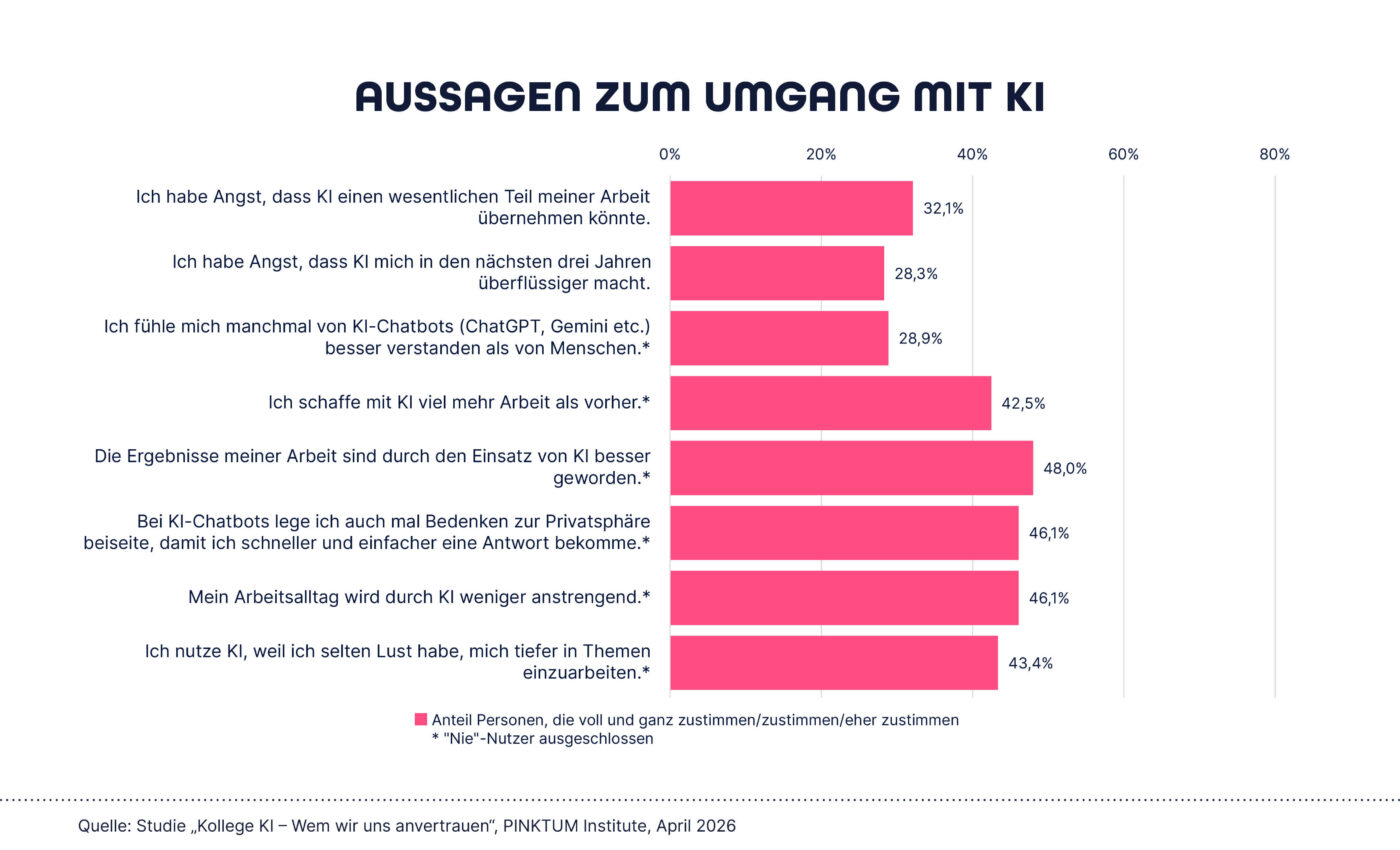
Artificial intelligence is becoming a central point of contact in the world of work. According to a representative study conducted by the Pinktum Institute among 1,550 employees in Germany, 26% across all areas of application primarily turn to AI chatbots such as ChatGPT or Gemini. When it comes to specific questions about job applications, salary interviews, specialist topics or creative processes, more than 40% rely primarily on digital assistants.
Trust shifts to systems
The relationship of trust with AI is particularly striking: 29% of all respondents sometimes feel better understood by AI chatbots than by humans. Among younger workers aged between 25 and 29, this figure is more than twice as high at 56%. «Trust is no longer built exclusively between people, but increasingly in systems,» says the study.
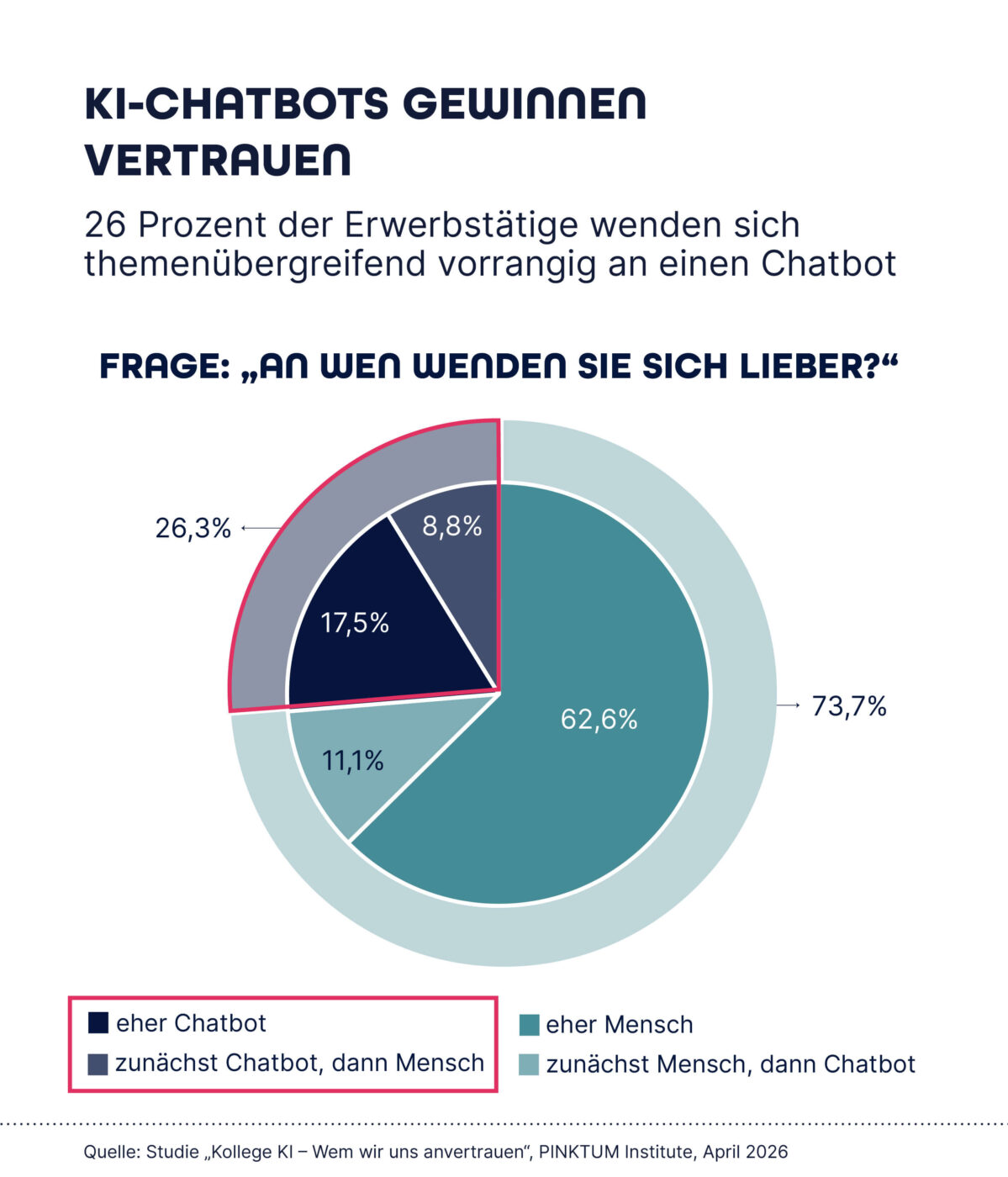
The study shows that this change is largely driven by efficiency gains. 43% of those surveyed stated that AI chatbots create more work. 48% believe that they achieve better results and 46% experience a reduction in their daily workload.
Convenience instead of depth
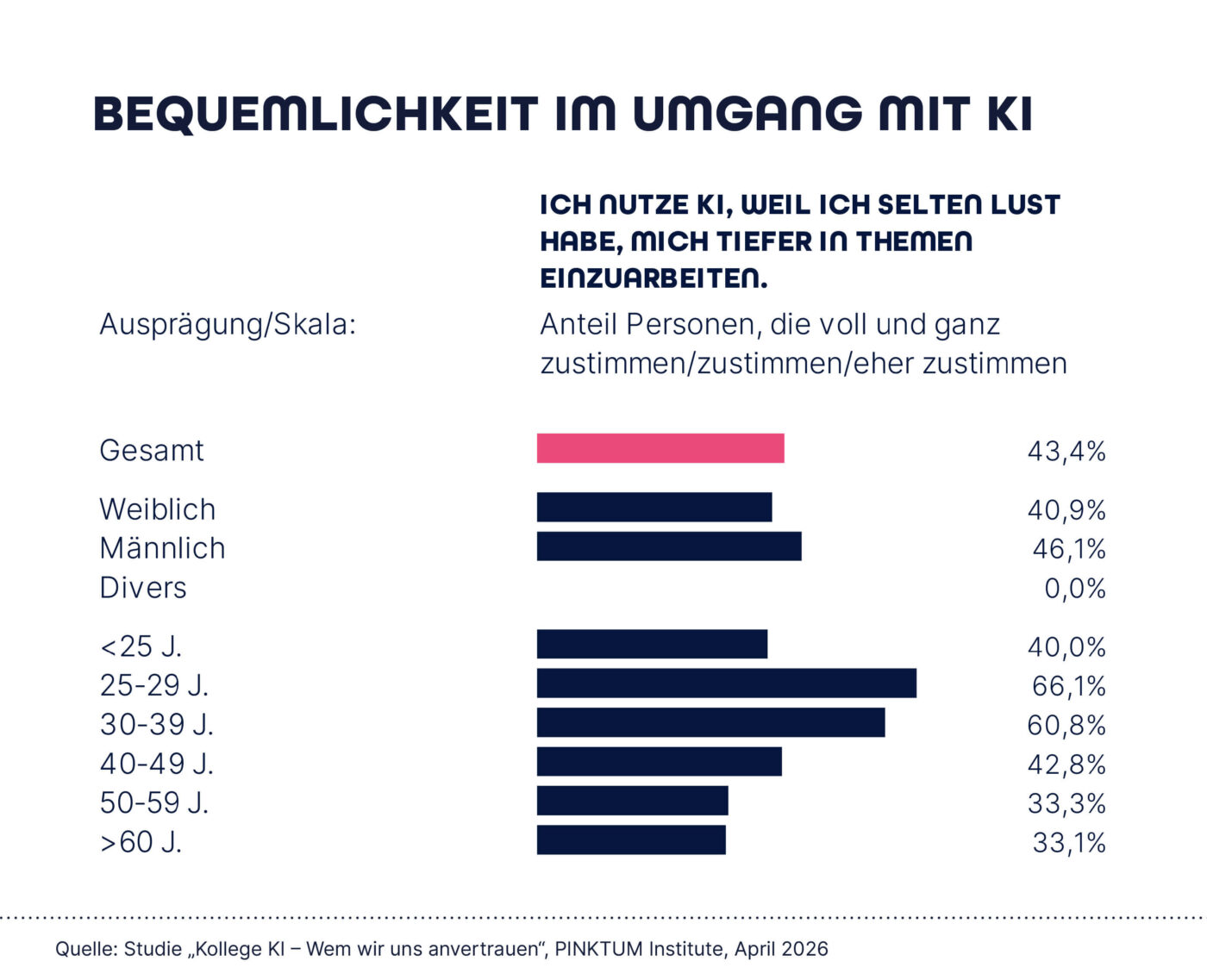
At the same time, the study reveals a critical downside: 43% use AI chatbots specifically to avoid an in-depth examination of topics. The result is faster results, but often without a sound understanding of the underlying content and correlations. AI is therefore not only used as a tool to improve quality, but also as a cognitive shortcut. 46% of respondents even put aside concerns about their privacy in favor of this acceleration.
Joachim Pawlik, CEO of Pinktum, warns: «AI makes us more productive, but it also tempts us to think less for ourselves. When convenience becomes the guiding logic and trust shifts from people to systems, there is a structural risk to competence, responsibility and leadership.» He adds: «AI is therefore not only changing work, but also the way we deal with responsibility. Management must actively counteract this by demanding reflection and strengthening employees» powers of judgment."
Source: Pinktum Institute