AI in Switzerland: Adoption Is Rising, but Depth Is Lacking
Swiss companies rely on artificial intelligence more often than the European average—but most remain at a basic level of use. A new study by Amazon Web Services and Strand Partners reveals where the real challenges lie.





The independent research firm Strand Partners conducted a comprehensive study on the use of artificial intelligence in Switzerland on behalf of Amazon Web Services (AWS). A total of 2,000 participants were surveyed. The findings are summarized in the report ’Unlocking the Potential of AI in Switzerland by 2026.« Its key message: AI adoption in Switzerland exceeds the European average—but the real challenge lies in the depth of its implementation.
Adoption Is Growing, While Advanced Use Is Declining
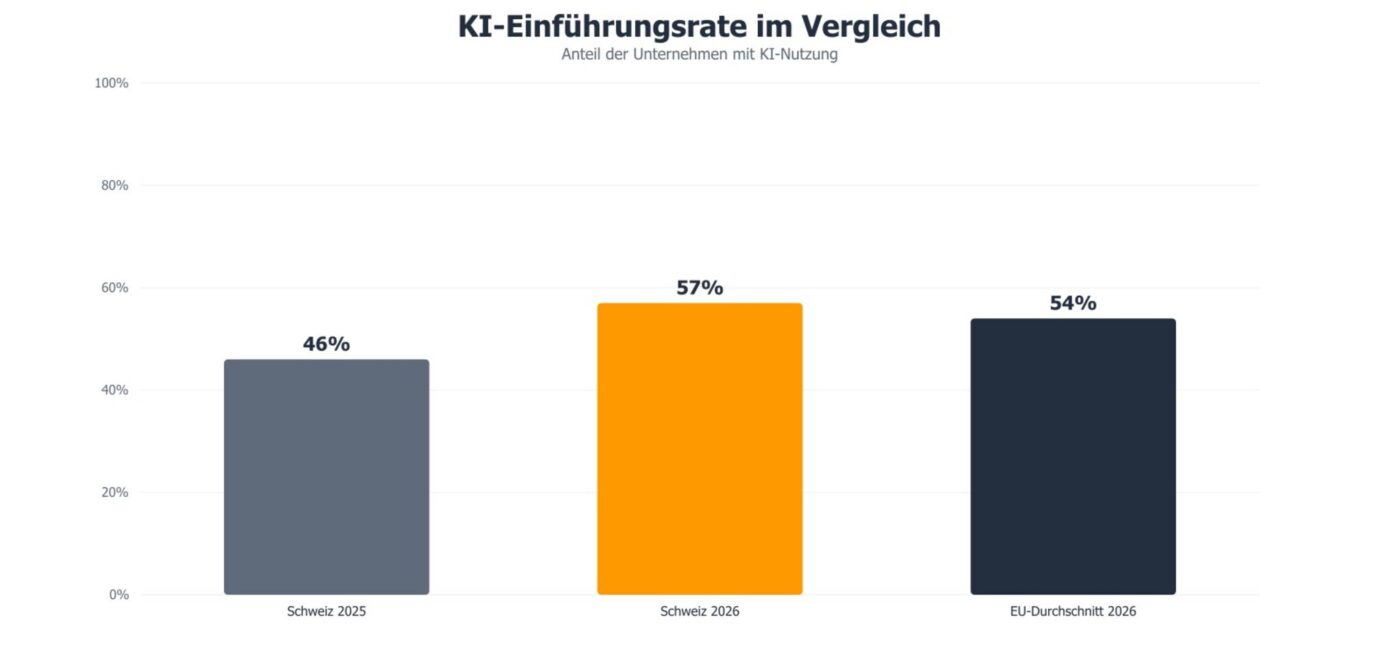
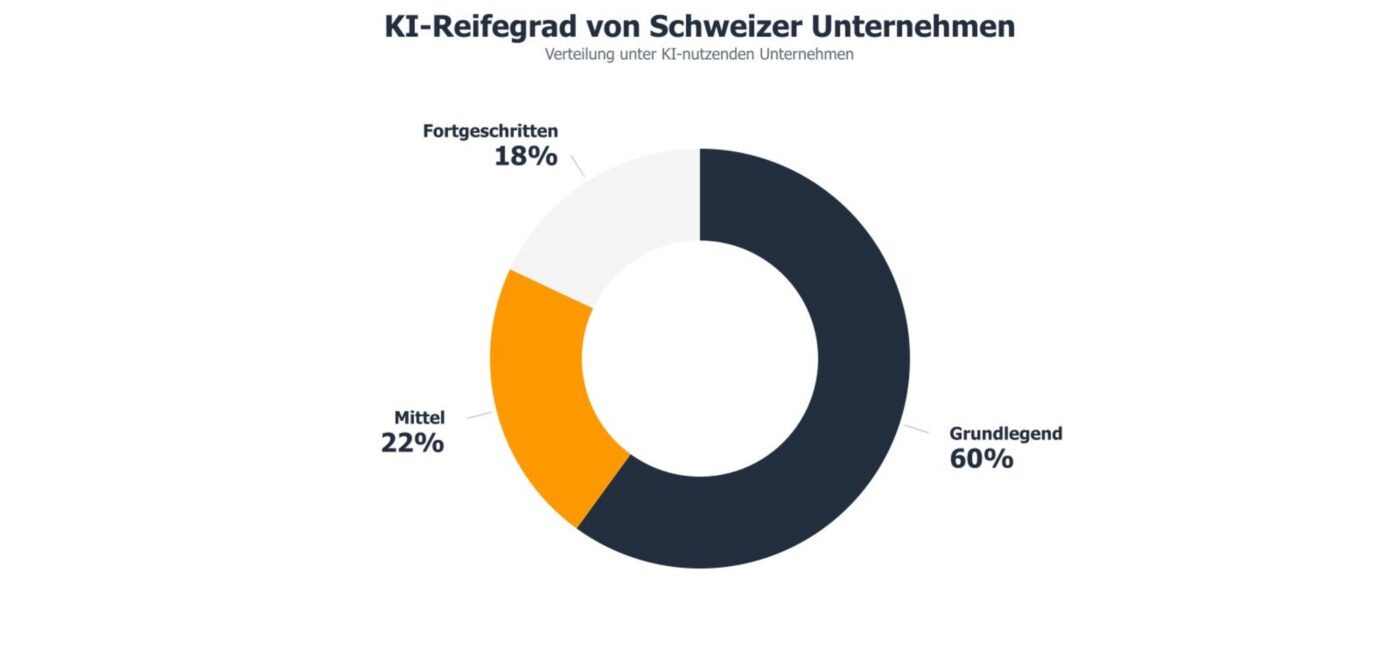
57 percent of Swiss companies currently use AI, up from 46 percent last year. This puts Switzerland above the European average of 54 percent. However, a closer look at implementation reveals that most companies are still at a basic stage of AI adoption. Sixty percent of companies using AI primarily employ it for simple use cases—such as publicly available chatbots or off-the-shelf solutions. Twenty-two percent have reached the intermediate adoption stage and are integrating AI across multiple business areas. Only 18 percent use advanced AI systems, combine multiple models, or deploy agent-based AI—a decline from 20 percent the previous year, driven by the strong influx of new users at the entry level.
The SME Paradox: Less Visible, but More Deeply Involved
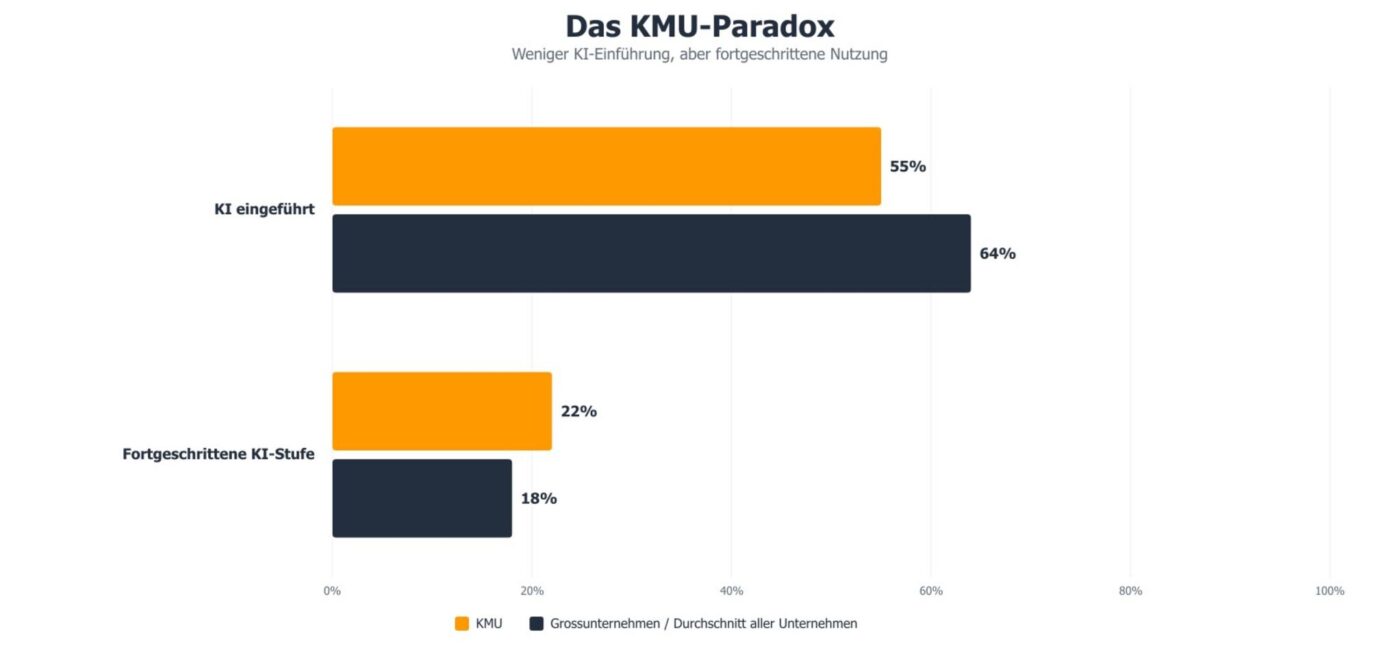
Overall, SMEs have adopted AI less frequently than large companies—55 percent versus 64 percent. However, when they do adopt it, they tend to do so more thoroughly: 22 percent of SME users reach the advanced adoption level, compared with 18 percent on average across all companies. This pattern shows that once SMEs decide to adopt AI, they are willing to integrate the technology more thoroughly.
Limited familiarity with next-generation AI
Agent-based and physical AI have the potential to take companies far beyond mere productivity gains. However, awareness of this in Switzerland is still limited. Less than a quarter of companies (24 percent) report having heard of agent-based AI. Of these, only 4 percent have fully implemented the technology, while 12 percent are experimenting with it or conducting pilot projects. Only 19 percent of companies are familiar with physical AI—among startups, the figure is 38 percent. The results among early adopters are remarkable: 90 percent of companies already using agent-based AI report productivity gains, and 95 percent have seen higher revenues following implementation.
Swiss Startups Under Pressure to Scale
Startups are pioneers in AI adoption, but are increasingly hitting scaling limits domestically. 32 percent of Swiss startups are considering moving outside Europe in order to scale—slightly less than the European average of 38 percent. The most common reasons they cite are better access to financing (60 percent), lower operating costs (54 percent), and faster international scaling (51 percent). The biggest domestic obstacles cited are limited access to funding (54 percent), difficulties in recruiting talent (42 percent), and inconsistent regulations across countries (38 percent). Nevertheless, the majority of startups—56 percent—have no plans to relocate, citing strong local ecosystems (60 percent), good access to European markets (55 percent), and the availability of growth financing (45 percent).
Four Areas of Action for the Next Phase
The report identifies four priorities for driving success in the next phase of AI adoption and ensuring that the benefits of AI are felt throughout the economy. First, Switzerland’s strengths should be better leveraged: According to the Stanford AI Index 2026, Switzerland leads the world in the density of AI professionals. This strength must also be made accessible to SMEs, not just large companies and research institutions. Second, targeted tax incentives, co-financing programs, and industry-specific innovation centers are needed to promote AI-driven innovation across companies of all sizes. Third, clear funding mechanisms are necessary: 42 percent of companies do not have a dedicated AI budget. This shortfall affects startups, SMEs, and the public sector alike. Fourth, policymakers and the business community must work together to build digital skills across the entire workforce—today, only 24 percent of companies have strong AI capabilities.
Source: Amazon Web Services (AWS)