Working Efficiently and Ergonomically: What Matters When Using Pallet Trucks in the Workplace
Pallet jacks make it easier to transport goods within a facility—but only when used properly. Appropriate equipment, safe traffic routes, good organization, and regular training help reduce physical strain and improve both efficiency and workplace safety.





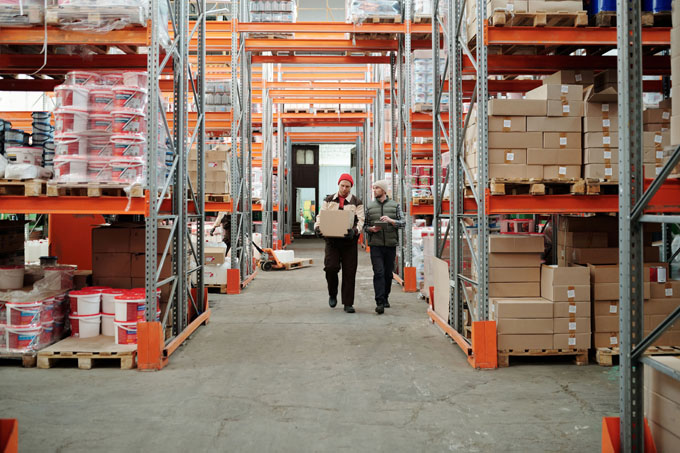
Pallet jacks are part of the daily workflow in many businesses—whether in the warehouse, in production, or for transporting goods within the facility. These handy tools make it easier to move pallets and other loads. However, efficient handling depends not only on technical factors but also on ergonomic considerations. In this article, we’ll highlight the key points to keep in mind when using a pallet jack.
Using a Pallet Jack Correctly
A pallet jack is designed to facilitate material handling within a facility. It should not itself become a source of physical strain. Key factors include a suitable floor surface, sufficient space to maneuver, and a well-planned layout of transport routes. Uneven floors and narrow passageways increase the amount of effort required and make it difficult for employees to maneuver safely. The design of the pallet jack is also important: the wheels and handle height, as well as the lever ratios, should be appropriate for the specific task at hand.
When pulling and pushing manually, various stress factors come into play. How strenuous a transport task is depends not only on the weight of the pallet. The frequency of starting and stopping also affects the physical strain. That is why the Swiss Accident Insurance Fund (Suva) When evaluating such activities, consider not only the workflow but also body posture and the suitability of the tools used.
Equally important is the organization of work processes. If pallets are moved unnecessarily often, the physical strain increases without adding any value. Efficient transport routes and easily accessible storage areas can save time on the one hand and reduce the strain on employees on the other. Clearly defined handoff points can also help avoid unnecessary trips and extra steps in daily work. Ergonomics is therefore not just a matter of individual work equipment, but also a matter of workplace organization.
Combining Safety and Efficiency in In-Plant Transportation
An efficient material flow isn't achieved solely through fast movements. Far more important are clearly defined processes and a work environment in which loads can be moved in a controlled manner. When planning, it is essential to consider where pallets are picked up, transported, and set down. Intersections and areas with high foot traffic require special attention, as this is where different movement patterns converge.
Companies in all industries would be well advised to regularly review ergonomic factors as part of their risk assessment. In doing so, they should not focus solely on the condition of the equipment. Factors such as floor quality and the frequency of required movements may also be relevant.
In addition, ergonomics can have a direct impact on workplace productivity. By avoiding unnecessary physical exertion and awkward movements, work processes can be made more consistent. Our article on this topic demonstrates just how important it is to take a holistic approach to ergonomic workstations Back pain. Among other things, it addresses poor posture, one-sided physical strain, and the design of the workplace and work posture.
What Companies Should Consider When Using Pallet Trucks
Before using a pallet jack, you should first determine what loads will be moved and under what conditions the transport will take place. The weight and center of gravity of the load affect handling, as do the length of the transport routes and the condition of the floor (see above). Especially in companies with frequent transport operations—such as in the logistics sector—it makes sense to systematically analyze the processes in order to reduce unnecessary strain.
The following points can serve as a guide for daily practice:
- Keep transportation routes free of obstacles
- Check the floors for unevenness and damaged areas
- Distribute loads safely and as evenly as possible
- Check the condition and functionality of the work equipment
- Allow for sufficient space to move around
- Avoid unnecessary transportation routes and temporary storage
- Provide regular training to employees
The selection of the appropriate equipment should also be based on the specific task. A pallet jack that is suitable for the loads and transport routes involved can reduce physical strain and make handling easier. For companies in industries such as logistics, construction, and the food industry, for example, a Pallet Trucks from Jungheinrich Profishop in question.
For routine material-handling tasks, it is advisable to take a critical look at the entire process. Does a pallet really need to be moved multiple times? Are the distances kept as short as possible? Are there any obstacles or unfavorable inclines? Answering these and other questions helps make material handling more ergonomic and efficient.
Train employees and inspect work equipment regularly
In addition to selection and organization, the human factor also plays an important role. Employees should know how to use a pallet jack safely and ergonomically and be aware of the load limits that must be observed. Regular employee training helps prevent operating errors and unnecessary physical strain. New or modified work procedures should also be taken into account.
It is equally important to inspect the pallet jack regularly. Damaged wheels, stiff mechanisms, and other defects can increase the effort required and compromise safe handling. If problems are detected and corrected early, unnecessary risks can be reduced.
Conclusion: Pallet trucks as part of a well-designed work process
Ergonomic pallet jack use begins long before the actual transport takes place. The most important factors are appropriate equipment, well-planned traffic routes, and a suitable surface. It is also important for companies to monitor the physical strain on their employees and to regularly review transport procedures. Ultimately, the goal is not to speed up every work process as much as possible, but to design processes in such a way that physical exertion is kept to a minimum.