SGES 2026: Let's do it—but please make it innovative, resilient, and sustainable!
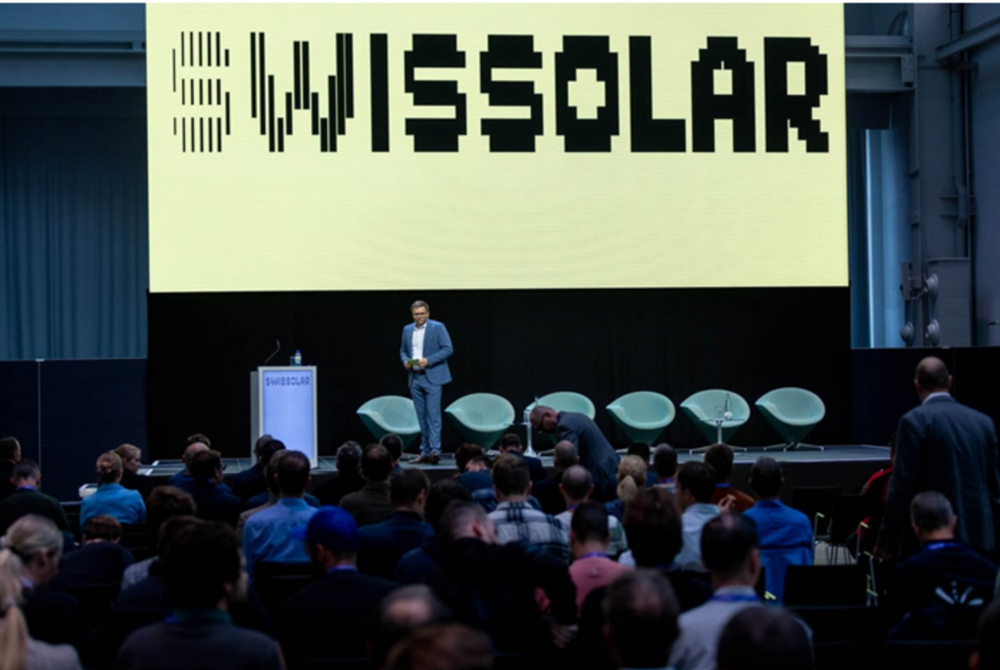
From September 1 to 4, 2026, the 14th Swiss Green Economy Symposium took place in Winterthur—the most comprehensive conference on business and sustainability in Switzerland. The program featured over 250 speakers, 15 innovation forums, and numerous networking opportunities.


Since 2013, the Swiss Green Economy Symposium (SGES) has been the most comprehensive conference on business and sustainability in Switzerland. This year’s event was held under the theme «Take Action! Innovative. Resilient. Sustainable.» —with the goal of working together to turn sustainability challenges into opportunities. The symposium spanned three and a half days and featured a packed program: more than 250 speakers, two main programs, 15 in-depth innovation forums, company visits at two locations (SGEXperience), diverse networking opportunities, and Switzerland’s first biodiversity congress.
Resilience: The Order of the Day
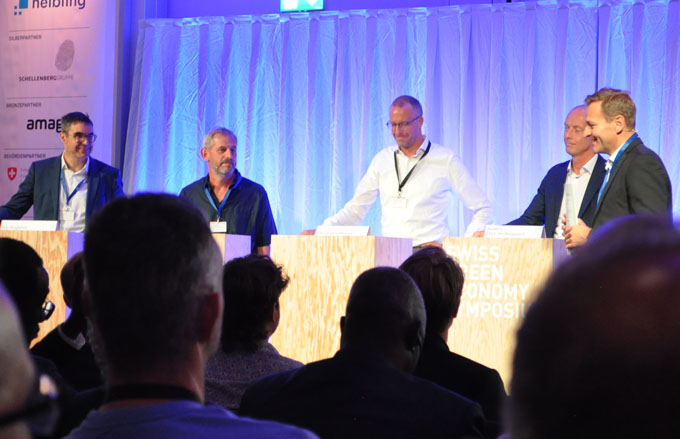
On September 2, the program included topics such as sustainable supply chains, the circular economy in construction, and the PFAS issue. Dr. Stephan Mumenthaler, Director of scienceindustries—the umbrella organization for the chemical, pharmaceutical, and life sciences industries in Switzerland—spoke about sustainable supply chains and security of supply. Especially in light of the experience from the COVID-19 pandemic, which led to shortages of medical supplies, one should not conclude that Switzerland must produce everything itself to ensure security of supply. Rather, the solution lies in diversifying sources of supply. «Open markets are a prerequisite for this,» said Mumenthaler, referring to our country’s economic policy. Dr. Tanja Schaffer, Global Head of BL CDMO at Arxada, demonstrated just how heavily the chemical industry—one of Switzerland’s most important «export drivers»—relies on a functioning regulatory framework. Economic security also means national security, she noted in her keynote address. She sees one of Switzerland’s strengths in the fact that challenges are addressed in an interconnected manner: «Climate goals and resilience cannot be achieved in isolation,» said Schaffer. She concluded with the statement: «Resilience arises where politics, business, and society move in a common direction.» The subsequent panel discussion—with Dr. Ronald Indergand, Head of the Economic Policy Directorate at SECO, and Dr. Roland Pfister, Delegate for National Economic Supply, also participating on stage—highlighted just how fragile today’s systems are in light of the current geopolitical situation. Ronald Indergand emphasized that resilience must come from businesses and society. He stated that the role of policymakers is to create the necessary framework conditions. However, he also noted that, at the international level, it has become difficult for a small country to make its voice heard.
Circular Economy in Construction: A Lot Is Already Being «Done»
The thematic block «Circular Economy in Construction» could be summarized under the heading «Doing.» The construction industry is one of the sectors with a particularly large carbon footprint, primarily due to the building materials glass and concrete. Anders Dam Vestergaard, Executive Vice President of Sales at the VELUX Group, outlined his company’s key priorities: reducing emissions, expanding material cycles, and protecting nature. By building with existing materials, the carbon footprint can be reduced by one-third. Christophe Berset, Head of Cement Sales D-CH & New Solutions at Holcim Switzerland, highlighted the concrete industry’s active role in the circular economy. In Switzerland, 80 percent of concrete demolition waste is already recycled. However, material contaminated with hazardous substances remains a challenge. The real estate sector also has a responsibility, as Ivo Angehrn, Head of Sustainability at Drees & Sommer Switzerland, emphasized in the ensuing discussion. CO₂ in particular is a major lever in the construction industry—«greater than anything »green’ you can write in an ESG report,” said Angehrn. For Philipp Noger, Head of the Office for Environmentally Sound Planning and Construction for the Canton of Basel-Stadt, the circular economy in construction is the order of the day. This is because landfills in Switzerland are getting fuller and fuller.
PFAS: A Proverbially «Permanent» Problem
Also on September 2, the program included a session on PFAS, the so-called «forever chemicals.» The participants in a panel discussion agreed: PFAS are a problem, and finding solutions is challenging. Even establishing ecologically and economically viable limit values for PFAS is no easy task, as Michael Widmer, managing director of the Association for the Recycling of Building Materials, noted. One approach must involve replacing PFAS, according to Simon Liechti of the Federal Office for the Environment: «Where alternatives to PFAS exist, they must be implemented as quickly as possible,» he said, referring to bans currently being introduced within the EU. Dominique Werner, Head of Chemicals Regulation at scienceindustries, expressed the view that more needs to be learned about the use of PFAS in order to establish appropriate regulations. Above all, the question remained as to who should bear the cost of PFAS contamination, the source of which often can no longer be precisely determined. This question—aside from the issue of dealing with contaminated sites—was met with a deafening silence. A voice from the agricultural sector—which is directly affected by contaminated soil—was also missing from the panel; this was perhaps the only shortcoming for which the SGES organizers could be criticized in retrospect.
Packaging and Biodiversity
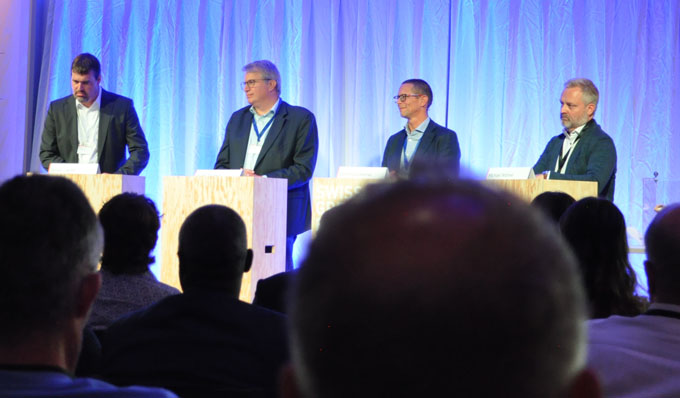
The second day of the SGES focused on the topics of «Packaging and the Circular Economy» (particularly in light of the new EU Packaging Regulation, PPWR) and «Viewing and Protecting Climate and Biodiversity Together.» The question «Circular Economy and Innovation: A Strategic Opportunity?» was also raised. Speakers included, among others, Prof. Dr. Julia Binder (IMD Professor of Business Transformation and Director of the Center for Sustainable and Inclusive Business), Thomas Vellacott (CEO, WWF Switzerland), Isabelle Gómez Truedsson (Deputy Delegate of the Federal Council for the 2030 Agenda, FDFA—Federal Department of Foreign Affairs), and Prof. Dr. Selçuk Yildirim, Head of the Center for Food Production and Packaging at ZHAW.
In addition, the first standalone biodiversity conference took place on September 4, 2026. During discussions among leading figures from business, academia, politics, government, and NGOs, participants jointly explored solutions to current challenges.
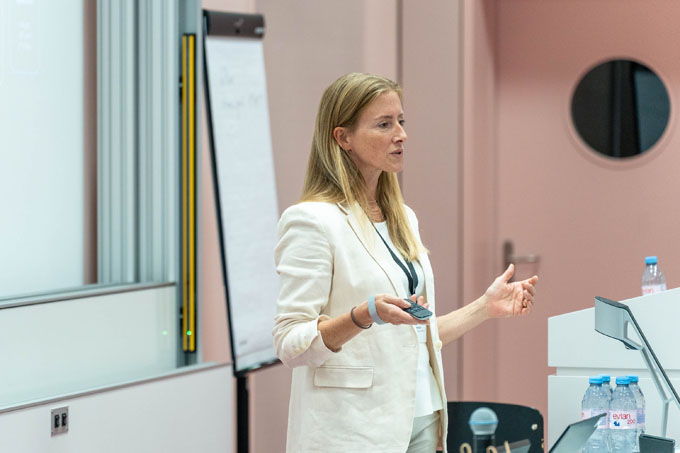
Innovation Forums: In-Depth Knowledge
The 15 innovation forums addressed practical topics and brought together stakeholders from business, academia, and government. Topics discussed included sustainable urban development (IF.08 «Liveable Residential Areas»), strengthening supply chains and competitiveness in Switzerland as a production hub (IF.11), the international dissemination of sustainable innovations through intellectual property (IF.14), and the interplay of wood and concrete in sustainable construction (IF.16). The topic «Energy and Digitalization» (IF.09) also generated interest. Various approaches were presented on how energy systems can be managed more effectively to meet demand through digitalization. Geothermal energy was also highlighted as an alternative energy source: Perhaps the solution to energy shortages really does lie deep underground…
More information: www.sges.ch