
"Switching between worlds requires empathy and adaptability"

The gastronomy company Tibits has appointed Regula Bührer Fecker, an experienced brand strategist, to its Board of Directors. In an interview with m&k, she talks about her new role, effective communication in times of change - and why advertising clients need more courage and self-confidence again.


(Image: zVg.)

As an experienced board member and entrepreneur, Bührer Fecker brings in-depth knowledge in the development of new business models as well as a deep understanding of consumers and social trends. Her perspective will help Tibits to remain innovative in the future and take advantage of new opportunities in the growing market for plant-based nutrition.

"We are delighted to have Regula Bührer Fecker, an outstanding personality, on board. Her experience and flair for contemporary developments are of great value to Tibits, especially at a time when sustainable nutrition and conscious consumption are becoming increasingly important," says Daniel Frei, Chairman of the Board of Directors of Tibits.

In the following interview, Regula Bührer Fecker talks about her new position on the Board of Directors, her perspective on the Tibits brand and the opportunities for companies in the field of sustainable gastronomy.


m&k: Regula Bührer Fecker, you are a new member of the Tibits Board of Directors. What motivated you to take a seat there?

The vision of Tibits has inspired me since it was founded: to make vegetarian and vegan food not only widely available, but also enjoyable and natural. I am delighted to be able to help shape this mission with my colleagues on the Board of Directors in the future.


What challenges can you help with in word and deed?

With everything that keeps Tibits busy. The task will be very varied and exciting.


You have been shaping the Swiss advertising industry for decades. What motivated you to take the path of communication strategy?

When I started working in advertising, I didn't even know that "strategy" existed as a discipline in its own right. Even at one of my first employers - Jung von Matt, then still "Honegger von Matt" - there were no dedicated strategists around the year 2000. It was consultants with an affinity for strategy who developed briefings, concepts and presentations. It was precisely this part that fascinated me from the very beginning. So I focused on it: I trained further, gained experience abroad and consistently deepened my strategic thinking.


Your approach is based on human insights and innovative concepts. How do you find the balance between creative innovation and the need to address target groups effectively?

It is clear to me that relevance for the target group is non-negotiable. That's where the scope for creativity lies, like we reach people. Innovation often arises when we take a close look at what really moves people - and then find a surprising, new way to respond.


In your career, you have supported numerous companies - from start-ups to large corporations. What challenges do you see in developing communication strategies for different company sizes?

I like switching between worlds - but it requires empathy and adaptability. You always have to rethink yourself: the culture, the resources, the objectives. There are always competitors with bigger budgets or sectors with louder voices. My job is to show organizations how much they can achieve with their resources - and how courage can multiply these resources.


You are described as one of the most astute and creative advertisers in Switzerland. What qualities do you think are crucial for success in the industry?

The courage to get to the heart of the matter, to trust your own opinion and to expose yourself. Without buckling at the first headwind.


You repeatedly emphasize the aspect of humanity in communication. How do you define this term - and why is it so important for the success of brands?

Humanity means triggering resonance. The best campaigns touch us - they strike a chord within us. This requires a keen sense for the zeitgeist and nuances, for real needs.


Your work often involves supporting transformation processes in companies. What role does communication play in successful change?

A central one. Change triggers uncertainty - good communication can provide orientation, create trust and release energy. If it is honest, clear and close to people, it becomes a lever for real change.


Your company, La Stratégisteis known for its customized solutions. Can you give us an example of a particularly challenging project?

No, it's still too early. I started two months ago.


You are celebrated as a role model for young women in the industry. What role does mentoring play in your work and how do you promote young talent?

Thank you very much for your kind words. I think I'm good at listening and getting to the heart of things, even if it hurts sometimes. Once this point has been overcome, it's about thinking together about solutions that suit the other person and the challenge.


You have a keen sense for social trends. What trends do you see in the communications industry that companies should take into account in the coming years?

Many companies are stuck in a performance corset - everything is geared towards short-term KPIs and the money is tied up too much in Silicon Valley. As a result, long-term brand development and the connection to the Swiss public fall by the wayside. I believe that Swiss advertisers urgently need a new balance between performance and local relevance. And more self-confidence and courage again.


What are the values that you live by every day at "La Stratégiste" and incorporate into your work - and how are these reflected in the projects?

It makes me happy when customers say goodbye and tell me that we were able to solve something together and that my contribution has helped them noticeably.

Jung von Matt Impact joins The Generation Media

By joining The Generation Media, Jung von Matt Impact is expanding its media expertise across all channels. The two agencies have been working together successfully for some time - now the partnership is being formalized.

Benjamin Herz, Managing Partner at Jung von Matt Impact, Petra Kreussler, VRP of The Generation Media, Matthias Städeli, Managing Director of The Generation Media, and Dominik Habermacher, Managing Partner at Jung von Matt Impact (from left to right). (Image: zVg.)

Jung von Matt Impact joins Zurich agency The Generation Media. The move marks the continuation of a collaboration that has grown over the years and has already seen over ten joint client mandates. The two agencies bring different strengths to the table: Jung von Matt Impact stands for digital marketing solutions, while The Generation Media pursues a broad all-media approach.

The merger will enable customers to benefit from cross-channel consulting and implementation - from social media, display and video to traditional media and performance marketing. The 27 specialists involved will continue to work in well-coordinated teams at two locations.

As part of the investment, Jung von Matt Impact is acquiring shares in The Generation Media. However, the two agencies will retain their "boutique character" and their operational structures, as stated in the joint press release. Matthias Städeli will become Managing Director of The Generation Media, Petra Kreussler will remain President of the Board of Directors.

"Like The Generation Media, Jung von Matt Impact is fully committed to customer success. We are united by the aspiration to generate the highest quality every day," says Kreussler. Benjamin Herz, Managing Partner of Jung von Matt Impact, also emphasizes the strategic fit: "With this step, we are combining two media agencies in such a way that they ideally complement each other in their services for our clients: The digital power house Jung von Matt Impact with the all-media approach of The Generation Media."

Dreifive at Meta and Google in Dublin: Exclusive insights into the digital future

For the fifth time, Dreifive traveled to Dublin with selected customers to gain exclusive insights into current trends and innovations in digital marketing at the EU headquarters of Meta and Google. The focus was on topics such as AI, new content formats and developments in VR, AR and new media.

(Pictures: Dreifive)

This year's sessions focused on topics such as AI-supported tools, new content formats and innovations relating to VR, AR and new media. Meta offered insights into its AI systems for automated creative generation, while Google presented the latest advances in Gemini. These technologies are not only changing the world of advertising - they also demand a new understanding of creative work and data-driven strategy.

Sascha Frommhund, Managing Director of the Dreifive Group and Partner.

AI as a key competence

The lesson learned: Those who want to remain relevant in the future must not only use AI, but also be able to apply it correctly. Prompting, creative automation and strategic data interpretation will be key success factors. The Dreifive agency sees itself in the role of enabler here - with in-depth expertise, direct platform access and a willingness to break new ground.

Deborah Pfleger, Head of Social Media and Partner at Dreifive.

Inspiration through diversity: focus on customer cases

A highlight of the trip were case presentations from companies such as ÖAMTC, Rossmann and C&A. The strategies and learnings they presented showed how versatile modern campaigns can be today. They also reflected how important it is to have the courage to test and adjust - and to set new standards in the process.

For Dreifive, the trip to Dublin confirmed once again: if you want to be successful in digital marketing, you need tools, strategic thinking, innovative spirit and platform proximity that enables you to recognize trends at an early stage, critically evaluate them and translate them into market-relevant strategies.

Web tool for intrinsic safety verifications

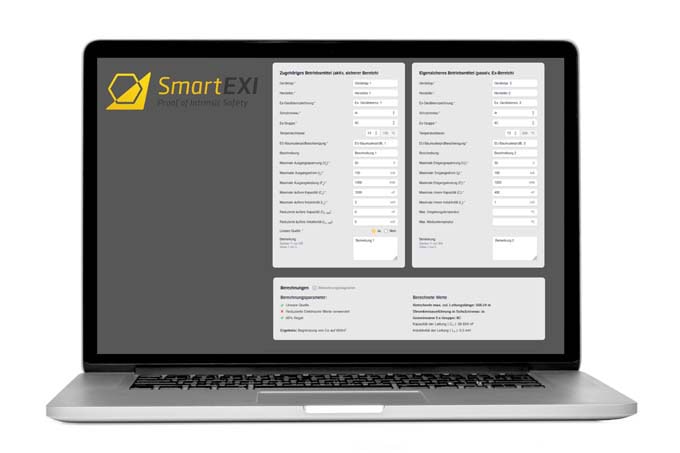
Since February 2025, the manufacturer Rösberg has been offering the SmartEXI web tool for creating intrinsic safety certificates for hazardous areas. The tool is manufacturer-independent and easy to use. The transparent calculation logic ensures that it is easy to understand how the web tool has determined the results.

SmartEXI is a user-friendly web tool for creating intrinsic safety certificates. It helps to calculate the explosion safety of systems effectively and efficiently. (Image: Rösberg)

The safety of people, the environment and equipment is the top priority when operating process technology systems. Where plant areas are at risk of explosion, for example due to the substances used in the process, appropriate protective measures must be taken and reliably documented. However, this is a complex task, as the calculations must take into account the entire wiring of the system as well as the ambient conditions. The automation experts at Rösberg have been offering the SmartEXI web tool for this task since February 2025. It can be used to calculate whether equipment may be interconnected and the maximum possible cable length. The tool also determines the protection level of the circuits, the Ex group and much more. For the first time, a simple solution is now available that can be used across the board without restrictions and provides tamper-proof verification.

Tamper-proof documentation in three steps

The procedure for creating intrinsic safety certificates is very simple. In the first step, users create their system or assets and enter the necessary information such as name, Ex group, protection level, etc. in a corresponding mask. In the second step, the system automatically checks whether, for example, two devices may be interconnected in the given environment (Ex zone classification, temperatures, etc.) and what maximum cable lengths are permitted between the devices. In the third step, users then receive a tamper-proof certificate that they can save in addition to their technical system documentation. Throughout the entire process, the transparent calculation logic ensures that it is clear how the web tool has determined the results. Users also benefit from manufacturer independence, tamper-proof documentation, increased efficiency and ease of use. Without time-consuming and expensive implementation, you can quickly obtain a secure Ex-i certificate.

Source and further information: https://smartexi.roesberg.com/

This article originally appeared on m-q.ch - https://www.m-q.ch/de/webtool-fuer-eigensicherheitsnachweise/

Flowers and pearls: already "bostitched" today?

Sarah Pally, linguist and partner at the agency Partner & Partner, takes a close look at (advertising) language in her column "Blossoms and pearls". This time it's all about products and brands that have crept into everyday language.

If your own brand or product name makes it into the dictionary, then "you've made it". The preliminary stage of this is being used as a verb or umbrella term. Of course, this actually happens quite rarely and this exclusivity alone makes it a kind of distinction. But can this quasi-immortality be bent somehow?

When a new brand or a new product is launched, particularly shrewd marketers like to briefly check whether the name suggestions floating around could also be used as a verb or as an umbrella term. But this is hardly relevant. After all, language can do almost anything anyway - and whether it sounds "nice" doesn't really matter in the end. If someone had these thoughts back then at the "Bostitch" company in the USA: Chapeau! But then the product or the company would probably have a different name. It doesn't get much stranger than that.

Stapler? Stapler?

But Bostitch has just solved a problem. And we're not talking about the loose sheets of paper fluttering around. Apparently, at least in Switzerland, there didn't seem to be a satisfactory name for this device and the associated activity, so the company name Bostitch was quickly coined. Did this thing and the associated activity not even exist in Switzerland before? Or was "stapler" and "stapling device" simply too German? In any case, it struck a nerve of sorts, filling a linguistic vacuum. So well, in fact, that many people no longer even know that Bostitch is not a device, but a company. Some even think it's a technical term from the stationery industry.

One might argue that it would be an absolute worst case scenario if the product is a huge success - but unfortunately the name cannot be used as a verb! As is supposedly the case with Galaxus: Or have you ever galaxed today (or would it be "gelaxt" or "gegölaxt", as a mixture of gegönnt and Galaxus)? The problem here is that galaxus does not solve a problem linguistically, because there is no problem: There is simply no need to find another word for "bestellen" or "Onlineshop". That's bad luck for Galaxus.

Create the problem and then solve it

The name "Google" is also not at all a good verbalization, but it has crept in without hesitation. Because it is simply better than "searching for something on the Internet using a search engine". With "Twinten", the corresponding activity simply didn't exist before the product - a forced verbalization, so to speak. Or to put it another way: along with the product, Twint also created the linguistic problem that it immediately solved again.

Sure: in hindsight, everything seems somehow logical. But it helps to think about whether there is even a linguistic necessity or gap that can be filled before thinking about the most elegant verbalized application of a new brand or product name. And even then: if Bostitch makes it into everyday language, then so can others.

Of course, there are also these desperate attempts to use the name as a verb or umbrella term via advertising. Like "Nogger yourself one!". Go ahead and google it, preferably via image search. Together with this absurd appearance, it was somehow weird enough for the slogan to be dropped sarcastically. After all, it has made itself virtually immortal in its own way as a dubious but much-used example of the problem at hand.


Analyzed since 2025 Sarah Pally In her column "Blossoms and Pearls", she uses industry-related terms and comments on them with a personal touch, from a linguistic perspective - as well as with a precise view of developments in the industry. Pally is a partner in the Partner & Partner agency in Winterthur. She has been working in the fields of content marketing, text/concept and storytelling in the communications and marketing sector for 15 years.

Rebranding and website relaunch for Bellprat Partner

The Zurich agency Bellprat Partner has modernized its brand presence with a comprehensive rebranding and a new website. With the new look, the agency is completing a transformation phase that combines its creative DNA with a future-oriented vision.

The Bellprat Partner management team (from left to right): Arnau Bellprat, Marion Häring, Markus Göb, Iwan Funk and Xavier Bellprat. (Pictures: zVg. Bellprat Partner)

Bellprat Partner's new logo has a more modern look, stands for flexibility and dynamism and adapts to different applications. The revised website focuses on projects and the team, offers intuitive navigation and presents the agency's 44-year portfolio, from Expo pavilions to tourist productions.

Parallel to the visual renewal, the management structure has also been strengthened: Creative Director Arnau Bellprat, Co-CEO Markus Göb and Co-CEO Iwan Funk are taking over the operational management, supported by Marion Häring as Head of People and Culture in the extended management team. Xavier Bellprat, company founder, partner and still Creative Director, will continue to actively contribute his many years of expertise to various specific projects. The current team at Bellprat Partner is generally more interdisciplinary: Experts from the fields of scenography, architecture, interaction design and graphics work together in close collaboration.

Individual sensor solutions often cheaper than conversions

In special machine construction or when converting, upgrading or retrofitting existing machines and systems, commercially available sensors often do not fit in the intended position. This can be remedied by a service from sensor specialist burster.

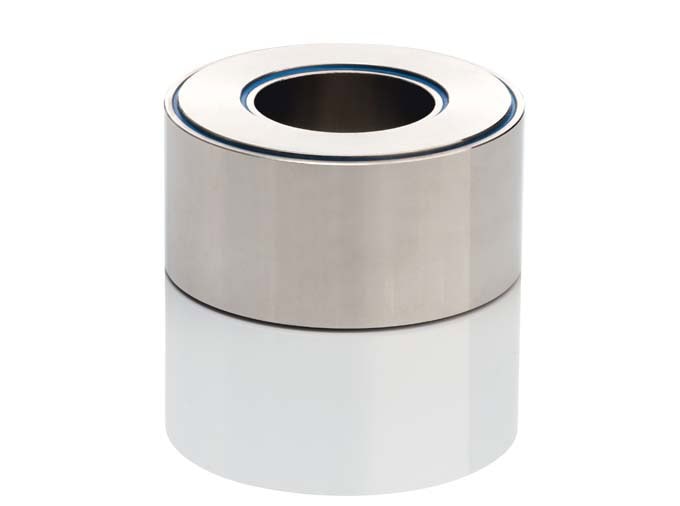
Fully encapsulated sensor body to prevent the ingress of foreign particles during injection molding (Image: burster)

The German company burster from the Black Forest focuses on supplying users in mechanical and plant engineering, automation, automotive engineering with suppliers, electrical engineering, electronics and the chemical industry. With the MySensor service, all force, torque, displacement and pressure sensors from the portfolio can be adapted to the user's specifications or redesigned to meet individual customer requirements. This may sound time-consuming, but it is usually cheaper than converting the systems themselves for the use of standard sensors, according to the company. The procedure also saves time and guarantees optimum measured values, the company adds. The conversion begins with a feasibility analysis in which CAD data is evaluated. If necessary, the sensor experts inspect the device via video in order to find the best possible position for force or torque measurement and then agree on the procedure. After the analysis, a prototype is produced, tested and evaluated by the user and then manufactured in series. The materials available are aluminum or stainless steel. They cover a wide range of application requirements and are suitable for special requirements in areas such as hygiene or medical technology. If required, strain gauges can also be integrated directly into customer parts to absorb forces.  

Special design cheaper - how does that work?

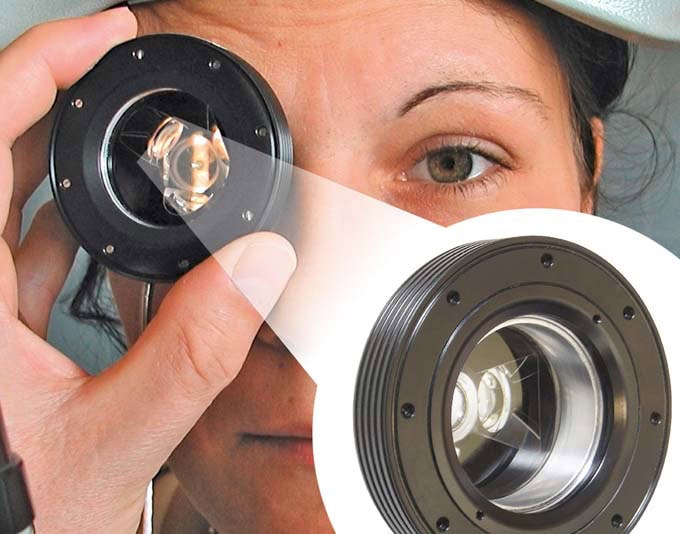
Custom-made products are cost-intensive and therefore undesirable. However, it is often sufficient to adapt the sensor design in order to avoid a mechanical conversion of the machine. This saves time and money. The range of possibilities is wide: housing variations with modified inner or outer diameters, shoulders or flanges or recesses on the housing, modified (through) holes for countersunk screw heads are sufficient in some applications for the sensor to fit. Sometimes fully encapsulated sensor bodies are required to prevent the ingress of foreign particles during injection molding (image above). One example can be found in motor vehicles, where a sensor with a particularly flat design is required for force measurement on the control pedal. But even more complicated applications can be implemented quickly with MySensor. Determining the center of gravity of a crane boom truck requires insensitivity to vibration and shock as well as integrated low-power electronics and maximum reliability thanks to a fully encapsulated, laser-welded design. The insensitivity to lateral loads is ensured by eight strain gauges. Another complex application example can be found in the measurement of intraocular pressure. Here, small forces have to be measured with low temperature drift (image below), which was achieved by decoupling the sensor body of the "contact glass dynamometer".

Extremely flat sensor for detecting the smallest forces for measuring intraocular pressure (Image: burster)

Source and further information: www.burster.de

This article originally appeared on m-q.ch - https://www.m-q.ch/de/individuelle-sensorloesungen-oft-guenstiger-als-umbauten/

Reader's Digest "Trusted Brand 2025": Trust in brands remains stable

The 25th edition of the "Trusted Brand" study by Reader's Digest shows which brands are most trusted in Switzerland. In 13 out of 15 categories, the frontrunners remain unchanged, while the acceptance of AI applications is growing.

The annual "Trusted Brand" brand study by Reader's Digest, conducted in collaboration with the Aachen-based Dialego Institute, has once again investigated Swiss consumers' trust in brands. For the 2025 edition, 2,300 people were surveyed and asked to name their most trusted brands in 15 product categories. Despite economic and social uncertainties, brand trust remains remarkably stable: in 13 categories, the winners are the same as last year.

The frontrunners in the respective categories include Ricola (sweets), Miele (household appliances), Amplifon (hearing aids), NeoCitran (cough medicine), Nivea (cosmetics) and CSS (health insurance). Particularly striking is the dominance of Fielmann in the opticians/glasses brands category with 752 mentions - the highest number of all categories - followed by Ricola (655 votes) and Nivea (532 votes).

AI acceptance on the rise

There has been a change in attitudes towards artificial intelligence (AI). While 24% of respondents rate AI applications positively - an increase of two percentage points compared to the previous year - the negative attitude fell by six points to 33%. However, the majority of consumers remain indifferent to AI, with an increase to 43%.

The study also sheds light on the personal assessment of the future: only 57% of Swiss people still believe that 2025 will be a good year for them personally - a decline compared to the 61% in the previous year. Andreas Karl, Managing Director of Reader's Digest Germany, Austria and Switzerland, comments: "Our study shows how important it is to provide clear points of reference with high-quality and sustainable offers - and thus invest in the trust of customers."


The "Trusted Brand" study has been conducted since 2001 and is considered one of the largest consumer studies in Europe. According to the information provided, the unaided survey, in which consumers spontaneously name their most trusted brands, is unique. A total of 2193 brand terms were named in Switzerland, which underlines the intense competition for consumer trust.

Cyber Resilience Act requires product adaptations

The EU is getting serious about "security by design": devices with exploitable cyber vulnerabilities will soon no longer be allowed to be sold in the EU. Manufacturers will therefore have to adapt their products.

The EU's Cyber Resilience Act also imposes new obligations on Swiss manufacturers of digital products. (Image: created by KI / ChatGPT 4o)

The EU Cyber Resilience Act came into force on December 10, 2024. This places new obligations on manufacturers of "products with digital elements". "Companies that are subject to the EU Cyber Resilience Act (CRA) should hurry to adapt their products to the requirements of the CRA," says Jan Wendenburg, CEO of the Düsseldorf-based cybersecurity company Onekey. He points out that the first CRA regulations will apply from September 2026 and all others from December 11, 2027. "From this date, all networked products must fully comply with the cyber security requirements of the Cyber Resilience Act," clarifies Jan Wendenburg. Manufacturers, importers and retailers are equally challenged: Without CRA conformity, the CE mark may not be awarded, and thus the affected products may no longer be sold in the EU.

The European Commission's Cyber Resilience Act, which was adopted on December 10, 2024, is the most comprehensive regulation to date on the cyber security of connected products in Europe. For all manufacturers of devices "with digital elements", i.e. all smart products, whether for industry, consumers or businesses, time is of the essence, as the new security requirements must already be taken into account during product development. "In view of the product life cycles, which generally span many years, the topic of CRA should therefore be given top priority in order to be able to continue selling on the EU market in the future," advises Jan Wendenburg.

"Security by design" for CRA compliance

Key elements for CRA compliance are the principle of "security by design" as well as continuous risk assessment and vulnerability remediation. In addition, the EU CRA requires a Software Bill of Materials (SBOM) to make software components traceable and to identify risks in the supply chain at an early stage. The CRA categorizes products into three security classes: Critical, Important and Other. Corresponding requirements must be met in each class. The security of the supply chain is particularly relevant here, as vulnerabilities in third-party and open source components can jeopardize the integrity of the overall system. The implementation period of 24 or 36 months since coming into force on December 10, 2024 poses major challenges for manufacturers, as product developments often take years. In order to meet the requirements of the CRA, companies should implement cybersecurity best practices as quickly as possible. In addition to the CRA, other regulatory frameworks such as RED II (EN 18031) and IEC 62443-4-2 must also be taken into account. Special compliance tools can help to meet current and future requirements by enabling a quick, simple and therefore efficient cybersecurity assessment of product software. One example of this is the patent-pending Compliance Wizard from Onekey.

"Companies that adapt their product strategy in good time not only secure their market approval in the EU, but also their competitiveness. Product lifecycle cybersecurity, proactive compliance and supply chain transparency are becoming indispensable success factors for all manufacturers on the EU market," explains Jan Wendenburg.

The new requirements of the Cyber Resilience Act

In order to meet the new requirements, companies must be able to identify security vulnerabilities in their products and continuously monitor the product life cycle. This means that every software version must be tested and - as long as it is active - continuously monitored for possible new vulnerabilities. New vulnerabilities must be continuously assessed and, if necessary, reported and/or measures taken to repair them.

The CRA requirements cover the entire life cycle of smart products - from planning and development through to operation and subsequent decommissioning. Manufacturers are obliged to offer security updates for their products for a period of at least five years. If the product is used for a shorter period, this period can be shortened accordingly. "In many industrial sectors, however, product lifetimes of 10 or 20 years or even longer are not uncommon. This means that monitoring, maintenance, vulnerability management and patch strategies must also be maintained over a correspondingly long period," says Jan Wendenburg, explaining the challenges.

"The implementation of the Cyber Resilience Act poses considerable practical challenges for manufacturers," explains Jan Wendenburg. He cites specific examples: "In industrial manufacturing, where control and production systems are used for decades and regular security updates are required to ensure compliance. In the IoT industry, such as smart household appliances, constant maintenance of the software bill of materials is also necessary in order to quickly identify and rectify potential vulnerabilities." Companies need to work closely with their suppliers and use third-party software testing tools, such as binary analysis solutions, to ensure security monitoring upon receipt of goods and throughout the product lifecycle. "Only automated processes and tools for vulnerability and compliance analysis make it possible to meet the new legal requirements in an economically viable and efficient manner," says Jan Wendenburg.

Source: Onekey

CRA and Switzerland

The provisions of the Cyber Resilience Act also affect Swiss companies, particularly if they wish to export products with digital components to the EU. Network devices such as routers and switches, industrial control systems and software products are affected. Swiss companies wishing to export such products or other products with digital elements to the EU are obliged to meet the requirements of the CRA and must provide corresponding proof of conformity. According to information from the Federal Office for Cybersecurity BACS, the majority of products are considered "non-critical". This means that a self-declaration is sufficient as proof of conformity. However, for products such as intelligent door locks, alarm systems, wearable medical devices and the like, the requirements for conformity are higher and require an assessment by a third party.

red. / swisscybersecurity.net / Redguard AG

This article originally appeared on m-q.ch - https://www.m-q.ch/de/cyber-resilience-act-fordert-produktanpassungen/

Dalith Steiger receives Empowering Women Award 2025

Entrepreneur and AI expert Dalith Steiger has been honored with the Empowering Women Award at this year's League of Leading Ladies Conference in Interlaken. The jury honored her commitment to empowering women in technology, business and society.

(Image: Anna Kohler)

Dalith Steiger-Gabler was honored with the Empowering Women Award at the League of Leading Ladies Conference 2025 in Interlaken. The co-founder of the AI hub SwissCognitive was recognized for her long-standing commitment to promoting women in technology-related professions.

Steiger is regarded as one of the leading voices in the field of artificial intelligence and pursues a socially minded approach. A graduate in mathematics and business informatics from the University of Zurich, she repeatedly emphasizes the role of AI as a tool for social progress and equality.

The jury - consisting of Charlotte Parnack (The time), Ulrich Rotzinger (View) and Sandra-Stella Triebl (Ladies Drive Magazine) - justified her decision by saying that Steiger "embodies the zeitgeist like no other". "She stands for empowerment in an area where women urgently need more visibility and a voice." For example, through her support of initiatives such as Women in AI, Girls Can Code or TechFace or as a mentor.

Steiger's aim is to motivate women worldwide to get involved in male-dominated professional fields: "I want to inspire women worldwide and show them that technology is not just a male domain - it belongs to (and helps) all of us," she said at the award ceremony.

Since 2022, the Empowering Women Award has been presented at the annual League of Leading Ladies Conference, which brings together international leaders from business, science and society. The conference was held for the twelfth time.

The long-standing partner of the event, Porsche Switzerland, emphasized the importance of visionary thinking: "Real innovation is created when we have the courage to imagine something new," said CEO Holger Gerrmann. The award is an expression of this aspiration.

Dalith Steiger together with Porsche CEO Holger Gerrmann. (Picture: Anna Kohler)

Spar ends sponsorship of women's handball

After 13 years of successful collaboration, Spar Switzerland and the Swiss Handball Federation are ending their partnership. The national commitment to women's handball ends with the 2025 season.

(Image: Handball.ch)

The Swiss Handball Association SHV and Spar Switzerland are ending their long-standing collaboration at the end of the current season. The retailer's logo has been present in Swiss women's handball since 2012 - including as the namesake of the Spar Premium League, on the national team's jerseys and in the Spar Handball app.

The partnership has contributed significantly to the professionalization and visibility of Swiss women's handball over the past 13 years, as SHV Central President Pascal Jenny emphasizes: "Without Spar, the current successes of Swiss women's handball would hardly have been possible."

With its commitment to women's handball, Spar has used a broad platform over the years and has supported the association not only financially, but also with its app-based club support. According to the press release, more than CHF 200,000 has been distributed to the clubs via this tool.

Now, a reorientation towards more local involvement has led to the dissolution of the partnership. Gary Alberts, CEO of Spar Switzerland, explains: "Due to our new positioning as a fresh food neighborhood market, the focus in communication and thus also in sponsoring has changed significantly." In future, the company wants to concentrate on locally anchored activities. However, the emotional connection to women's handball will remain.

The last joint season will be completed in spring 2025.

"The Winner takes it All"

The "Best of Swiss Web" awards ceremony in Dübendorf produced a big winner: Bucher Municipal. A video captures the atmosphere and the triple gold triumph of their "Bucher Connect Service Platform" project - crowned "Master of Swiss Web 2025".

With the project "Bucher Connect service platform" Bucher Municipal pulled off a coup that caused quite a stir. The team won over the expert juries three times - in the "Marketing", "Productivity" and "Technology" categories. The reward: three gold medals. But it got even better. In the final vote, the project, together with its implementation partners Eyekon and Intelliact, also won over the public - and secured the main prize. The title "Master of Swiss Web 2025" went to Bucher Municipal. The jury, the community and the audience agreed: this performance is outstanding.

"Benchmark for digital fleet management"

The "Bucher Connect Service Platform" offers local authorities a precise overview of the use, condition and location of their vehicles - whether for cleaning, winter maintenance or waste disposal. Daniel Liebhart, jury president of the "Technology" category, spoke of a "benchmark for digital fleet management" and a "prime example of 'the Internet of Things as we want it'". The marketing jury saw the platform as a "beacon project for pioneering marketing". And Rafael Perez Süess, jury president of the "Productivity" category, highlighted the IoT-supported control of the vehicles as particularly beneficial in his laudatory speech.

Bucher Connect iOT solution

IoT real-time data

The "Best of Swiss Web" award honors digital excellence - and that is exactly what the "Bucher Connect Service Platform" is. It helps cities and municipalities to use smart IoT real-time data to fulfill their public mandate efficiently, sustainably and economically - for clean and safe cities.

Roland Fröhlich, Bucher Municipal with presenter Marco Fritsche during the winner interview

In the video, Roland Schuler, Director IoT & Digital Services Platform at Bucher Municipal, explains what the project is all about: measurably increasing the productivity of municipal vehicle fleets with digital support. The platform shows how intelligent technology can help to optimize processes and use resources wisely. Bucher Municipal sees itself not just as a provider, but as a partner at eye level - together with its customers, for a smarter future in urban areas.

Three gold medals and the title "Master of Swiss Web": This award is emblematic of the innovative strength and quality with which Bucher Municipal sets standards in the field of digital fleet management. A well-deserved triumph - and a strong signal to the industry.

get_footer();