First National Conference of Engineers joins forces to combat skills shortage
Around 40 experts from business, science and politics met at Lucerne University of Applied Sciences and Arts to strengthen the promotion of young talent in engineering. The challenge lies not in a lack of initiatives, but in coordinating them and making them visible.


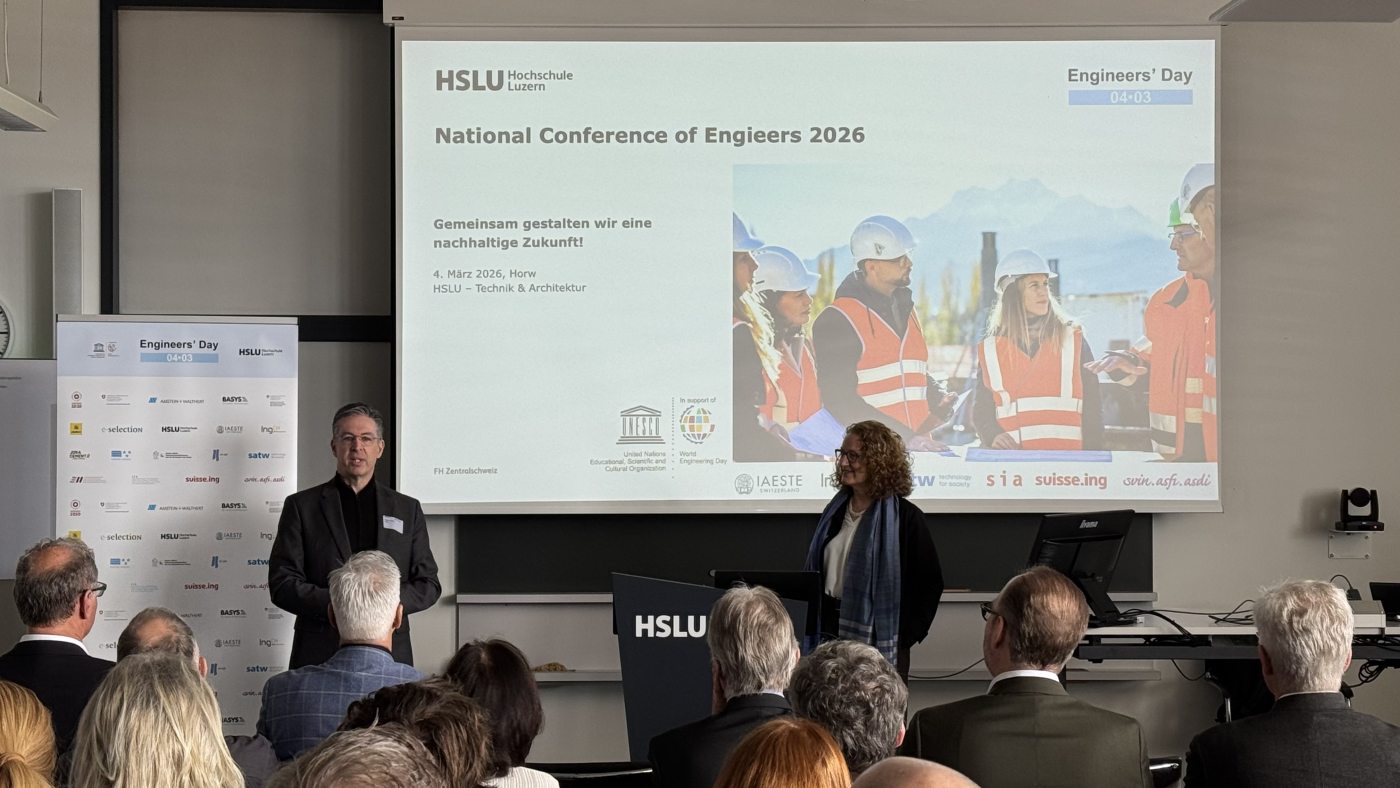
On March 4, 2026, the first National Conference of Engineers took place at the Lucerne University of Applied Sciences and Arts (HSLU). Around 40 experts from business, science, administration, associations and the student body came together to jointly develop strategies for promoting young talent in engineering. The conclusion of the conference is clear: in order to master the major social, technological and ecological challenges, coordinated action is required from all relevant players.
Many initiatives, lack of coordination
The conference aimed to gain an overview of existing funding initiatives in engineering and to pool resources for future measures. It became clear that there is no shortage of offers in Switzerland - only on the platform educamint.ch at least 860 initiatives are listed. The real challenge lies in coordinating, funding and making these initiatives more visible.
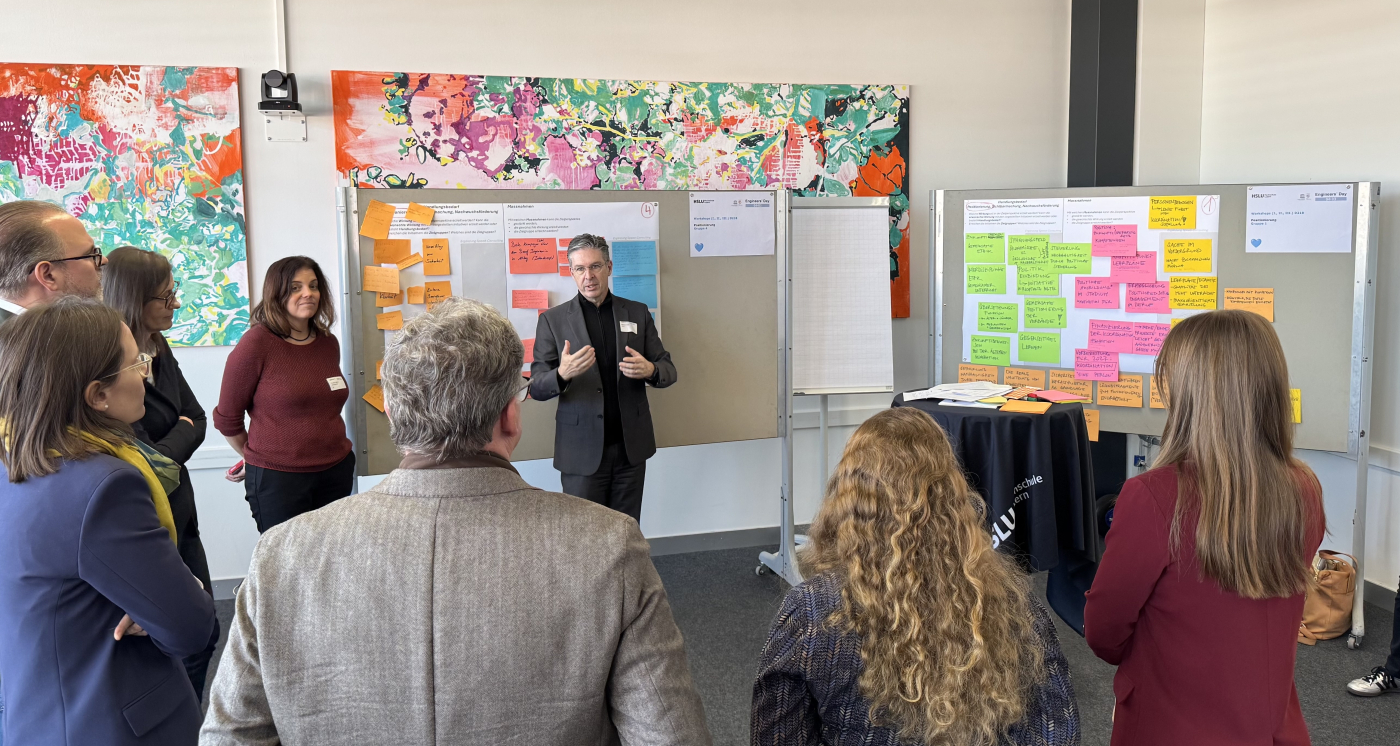
Together, they discussed strategies to get more young people - especially women - interested in engineering, STEM and tech professions. The conference was organized by Engineers‘ Day and Lucerne University of Applied Sciences and Arts.
Engineers as problem solvers
In the face of global challenges such as mobility, climate change and digitalization, engineers have a central role to play. They develop innovative solutions for renewable energy systems, resilient infrastructures, smart mobility concepts, digital technologies, data-based applications and sustainable production processes. In doing so, they make an indispensable contribution to the quality of life, the sustainable development of society and the achievement of the United Nations Sustainable Development Goals.
At the same time, engineering, STEM and tech professions have been under pressure for years: there is a pronounced shortage of skilled workers and women are still significantly underrepresented.
Interdisciplinary workshops develop measures
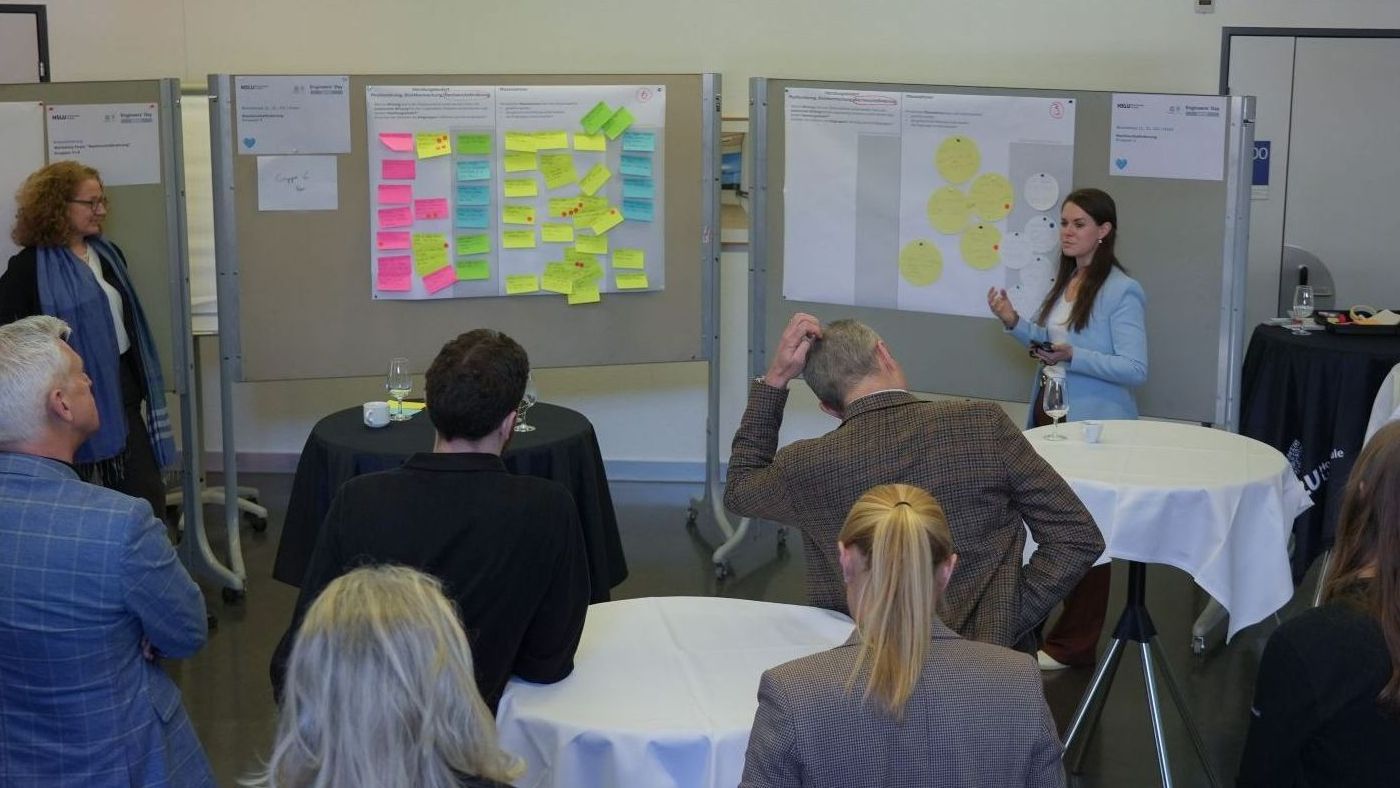
In thematic workshops, the participants jointly developed specific measures, which were then reflected upon, refined and supplemented. Interdisciplinary collaboration and the active involvement of students, who contributed new perspectives and practical ideas, proved particularly valuable.
Roadmap for coordinated action
In the workshops and the panel discussion, the participants developed five central directions as the basis for a joint roadmap. Engineering secures the future of Switzerland, because the skills of engineers are a central basis for innovation, competitiveness and prosperity.
The job description must be told in a new way - more as a socially relevant contribution to solving complex problems, understandable, approachable and beyond clichés. Visibility is created through concrete examples: Concrete projects and everyday examples show the benefits engineering creates for society and the economy.
The next generation should be inspired at an early age. Children and young people should experience early on how exciting and meaningful engineering can be - through schools, various role models and practical insights into real projects. In order to strengthen engineering in the long term, we need national networking, coordinated activities and a continuous exchange between education, industry, associations and politics.
Starting signal for sustainable commitment
The first National Conference of Engineers sent out a strong signal and laid the foundation for a joint, sustainable commitment to strengthening young talent and the engineering, STEM and tech professions in Switzerland. The clear commitment of the participants: Existing initiatives should be strengthened, synergies systematically exploited and more impact achieved together.
The starting signal for coordinated cooperation was given with great commitment - with a clear milestone in sight: the major National Conference of Engineers on March 4, 2027, at which a national declaration is to be adopted.
About the Engineers‘ Day
At the initiative of the World Federation of Engineering Organizations (WFEO), the 40th General Conference of UNESCO decided in November 2019 to declare March 4 of each year as World Engineering Day. Countless events are held around the world. On Engineers‘ Day, numerous companies and institutions offer in-depth insights into the broad professional field of engineering and STEM professions.
Engineers‘ Day in Switzerland was launched back in 2018 and is supported by the sponsoring associations suisse.ing, Swiss Engineering STV UTS ATS, Swiss Society of Engineers and Architects sia, Swiss Academy of Engineering Sciences SATW, IngCH MINT for our future, Swiss Association of Women Engineers SVIN, Swiss Association of Surveyors IGS and IAESTE Switzerland.
More information: www.worldengineeringday.net and www.engineersday.ch