Office noise is an underestimated cause of back pain
Phone calls, keyboard clatter and ventilation noise cause stress, which leads to tension and back pain. The Healthy Back Campaign recommends that companies create noise-reduced retreat areas with ergonomic equipment.


Phone calls, keyboard clatter, ventilation noise: What sounds like a normal day at the office can actually cause back pain. The reason is not the noise itself, but the stress it causes. «Many people underestimate how much stress even seemingly harmless background noises can put the body under,» says Christian Terstappen, physiotherapist and expert at the German organization Aktion Gesunder Rücken (AGR) e. V. «The result is tense shoulders, a stiff neck and, in the long term, often back pain.»
For companies, this is increasingly becoming an issue of occupational health management: noise-reduced retreat areas in the office can help to reduce stress and enable concentrated work. The AGR certifies back-friendly office concepts with the AGR seal of approval following comprehensive testing by an independent panel of scientific experts.
Ergonomics in the workplace: why noise protection is a must
It is well known that noise can make you ill. However, the connection with back problems is often underestimated. Noises that the brain considers disturbing activate the stress system: the body releases cortisol, pulse and blood pressure rise and the muscles tense up. The neck and shoulders are particularly affected.

A representative YouGov survey commissioned by AGR shows how common complaints are in everyday office life: 73% of employees in Germany suffer from neck pain. At the same time, the BIBB/BAuA Employee Survey 2024 shows that around a quarter of employees often work in noisy conditions, and more than half find this stressful.
«Noise protection is often underestimated in everyday office life,» says Christian Terstappen. «Yet it is just as much a part of ergonomics as a good chair or a height-adjustable desk.» It is therefore worthwhile for HR managers and OHM officers to incorporate the acoustic design of workplaces more strongly into prevention concepts.
Creating places of retreat: What employers should look out for
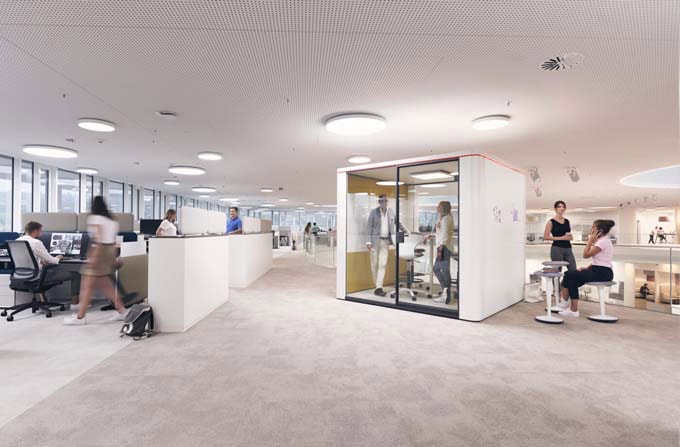
Open office concepts promote communication and teamwork, but at the same time increase noise pollution. Protected areas are therefore important for concentrated work, confidential phone calls or a short break. Acoustic booths can help here.
In addition to good sound insulation, such cabins should also be ergonomically equipped to promote employee health, according to AGR: Height-adjustable desks and active chairs encourage a change of posture, while good ventilation and sufficient lighting with daylight quality contribute to general well-being.
Terstappen, who advises companies on workplace health promotion, emphasizes: «Companies that invest in soundproof retreat areas should consider ergonomic equipment from the outset. If you have peace and quiet but sit badly, you've gained nothing.»
Three simple tips to combat noise stress in the office
Employees can also do something about noise stress at work themselves. Noise-canceling headphones can help to reduce disruptive background noise and work with greater concentration. If possible, phone calls or meetings should be moved to closed rooms. This reduces the noise level in the open-plan office for everyone.
Regular short exercise breaks help to reduce stress and loosen up tense muscles. «Just standing up briefly once an hour and going to an open window or outside the door makes a noticeable difference,» says physiotherapist and AGR expert Christian Terstappen.
Source and further information: www.agr-ev.de/laermreduzierte-buerobereiche
This article originally appeared on m-q.ch - https://www.m-q.ch/de/buerolaerm-als-unterschaetzte-ursache-fuer-rueckenschmerzen/