NZZ SME Barometer 2026: Pessimism at record high
The economic sentiment among Swiss SMEs is more pessimistic than at any time since the surveys began in 2021. Geopolitical uncertainties, US trade policy and a growing regulatory burden are weighing on the overall index - while strategic adaptability remains an open construction site for many companies.


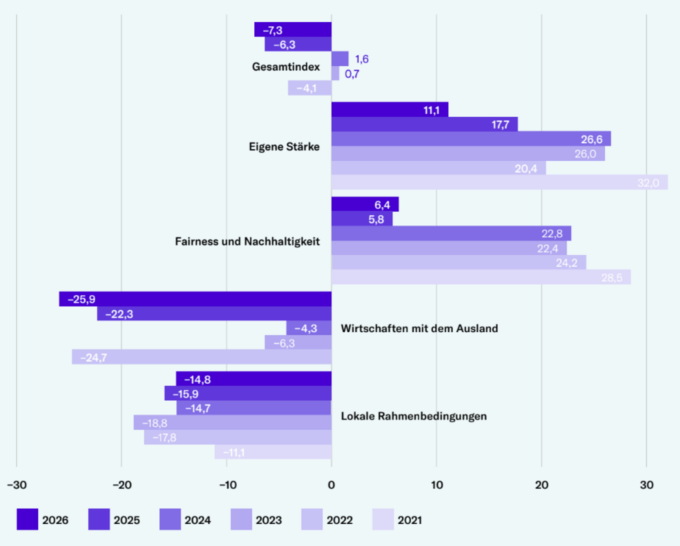
The NZZ SME Barometer 2026 paints a worrying picture: Swiss SMEs rate their economic situation as worse than at any time since the annual survey began. The overall index plummeted to a new low of -7.3 index points - almost all sub-sectors deteriorated compared to the previous year.
New lows for the overall index
The study, which is conducted annually by NZZ in collaboration with Kalaidos University of Applied Sciences in the run-up to the Swiss Economic Forum (SEF), was conducted for the sixth time in 2026. In April 2026, 495 people in management positions at Swiss SMEs took part. This year's SEF theme was «Unbreakable?» - and it was precisely this question of resilience that was at the heart of the barometer.
The companies surveyed were more pessimistic about their overall economic situation than at any time since measurements began in 2021, with particularly negative assessments of doing business with foreign countries - made more difficult by the trade policy upheavals in the US -, the currency situation and the reliability of supply chains, which are burdened by geopolitical uncertainties. There are also concerns about further increases in bureaucracy due to legal regulations. One positive outlier is the integration of modern technologies: The majority of companies see an improvement in this area.
Operational strength, strategic gaps
More than half of the SMEs surveyed (55 %) classify themselves as somewhat to very resilient. One in ten companies, on the other hand, consider themselves to be less or not very resilient, while the rest rate their resilience as average. At an operational level, the majority rate themselves as capable of acting and crisis-proof. At the strategic level, however, there are clear limits to resilience.
An unexpected drop in turnover would be almost impossible to cope with or even threaten the existence of just under a fifth of companies. Less than a third see themselves in a position to fundamentally adjust their business model within six months. The diversification of suppliers and customers also remains an open challenge for the majority.
In addition to a pronounced willingness to learn from crises, a proactive approach to artificial intelligence and digitalization are cited as factors that promote resilience. The vast majority of companies are already experimenting with this or making targeted investments.
Traditional confidence collapses
«Up to now, Swiss SMEs have assessed their situation remarkably positively year after year, despite all the difficulties. This traditional confidence has changed alarmingly in view of the difficult global environment and the simultaneous deterioration in Switzerland as a business location,» comments Peter A. Fischer, NZZ Chief Economist, on the results. He adds: «It is true that companies have mastered the operational crisis trade perfectly. However, many currently see limited opportunities to adapt their business models quickly and comprehensively to the volatile environment. However, the real test of the present lies precisely in this strategic flexibility.»
Source: NZZ