AI, yes—but with people in the background
Insurers are increasingly turning to artificial intelligence for customer service. A new international study by Wavestone, which surveyed more than 7,000 people, shows that customers are generally open to AI—but only under clear conditions. Transparency and the ability to reach a human representative at any time are non-negotiable.


Insurers are increasingly investing in artificial intelligence, digital assistants, and automated customer service. But how do policyholders actually feel about this change? A new international study by the consulting firm Wavestone provides nuanced answers—and highlights the limits of automation.
7,000 respondents in six countries
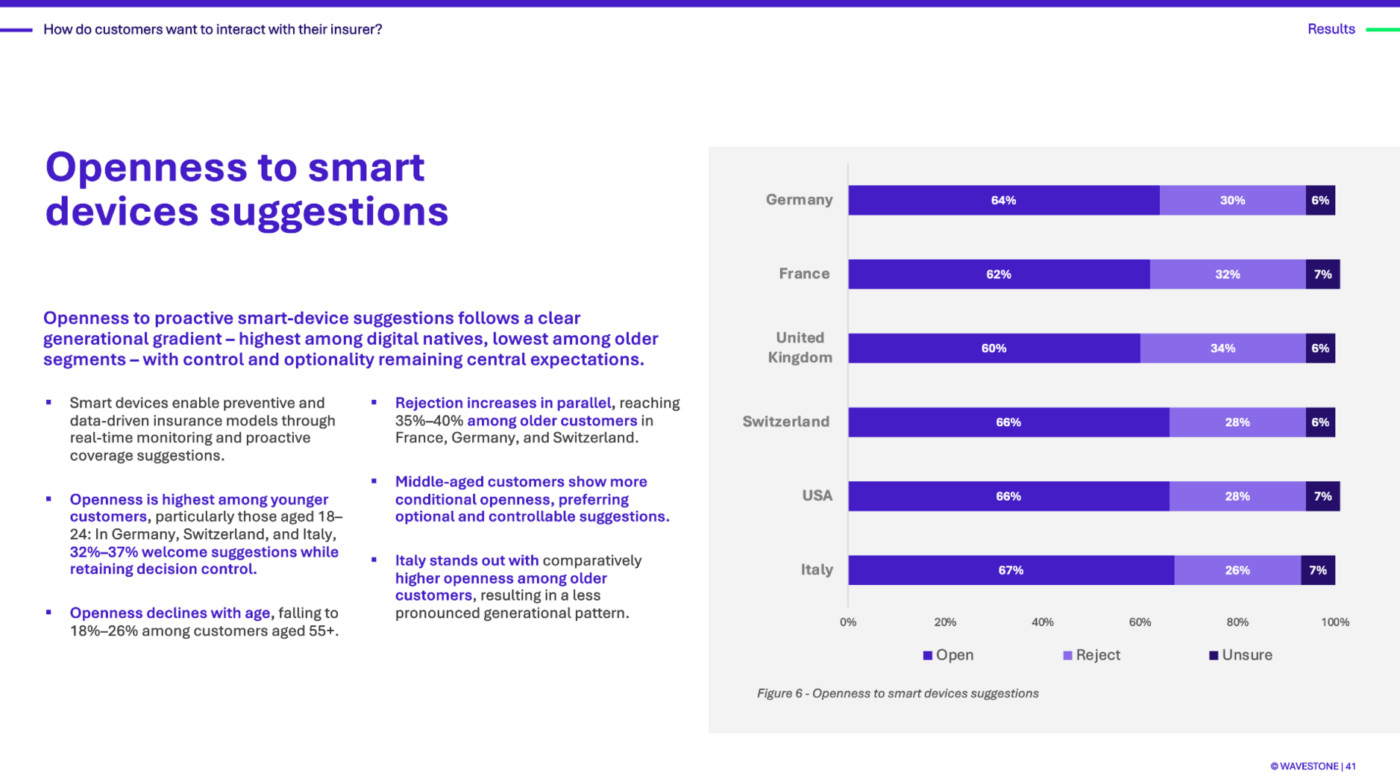
For the study, more than 7,000 policyholders in Switzerland, Germany, France, the United Kingdom, Italy, and the United States were surveyed about their communication preferences regarding customer service and post-sales support. In addition, interviews were conducted with executives from the insurance industry. The results paint a clear picture: Automated support is valued for simple issues. However, when it comes to complex, financially significant, or emotional matters, personal advice remains indispensable.
Transparency as the Foundation of Trust
The need for transparency is particularly evident: 92 percent of respondents want to know whether they are communicating with an AI or a human. Over 89 percent consider it non-negotiable to be able to be quickly and seamlessly transferred to a human representative. AI is viewed positively when it offers concrete added value—for example, through faster responses, shorter processing times, or easier handling of routine inquiries.
It is also noteworthy how sensitive customers’ trust is to digital service experiences. Positive experiences are quickly taken for granted, while even a single negative experience can lead policyholders to permanently revert to preferring in-person channels. Email remains the structural backbone of post-purchase communication: 84 to 85 percent of all age groups prefer this channel because it offers certainty.
Demographic Limits of Segmentation
According to the study, age-based segmentation has clear limitations. Despite their strong affinity for digital solutions when it comes to routine tasks, customers aged 18 to 24 explicitly request in-person advice at critical moments—such as when filing a claim. These preferences are often determined more by the specific situation than by age.
Hybrid Service Models as a Solution
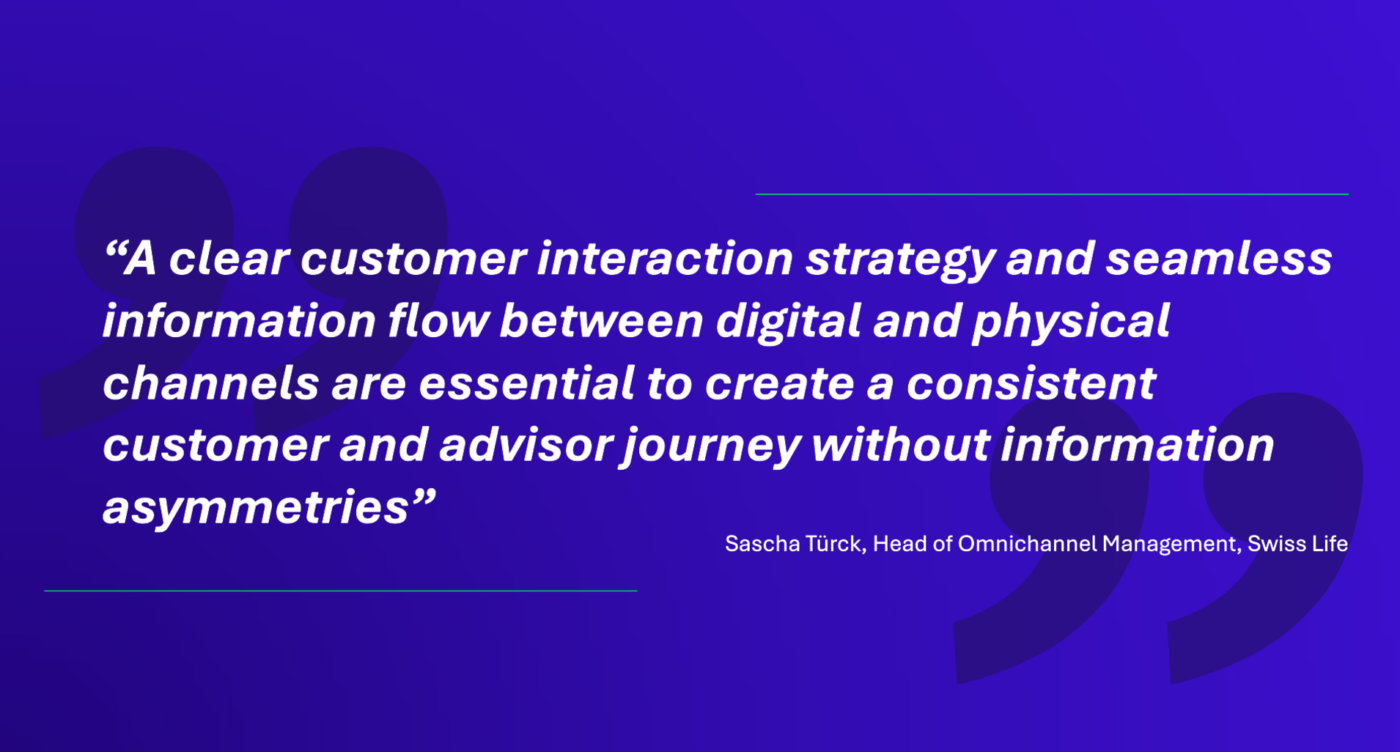
The results make it clear: Successful customer communication does not result from maximum automation, but rather from the intelligent interplay of digital services and human expertise. These findings are particularly relevant for Swiss insurers. The high level of digital maturity among customers does not mean that personal advice is losing its importance. Rather, expectations are rising for hybrid service offerings in which digital efficiency and personal support work together seamlessly. Anyone who wants to use AI successfully must therefore invest not only in technology, but also in transparency, trust, and human advice that is available at all times.
Source: www.wavestone.com