Review of Swiss Quality Day 2026: Quality as a path, not just a goal
The Swiss Quality Day took place in Bern on April 21, 2026. The focus was on quality for the future: sustainable, digital and human at the same time. The keynote speeches and six practical workshops were all about this.





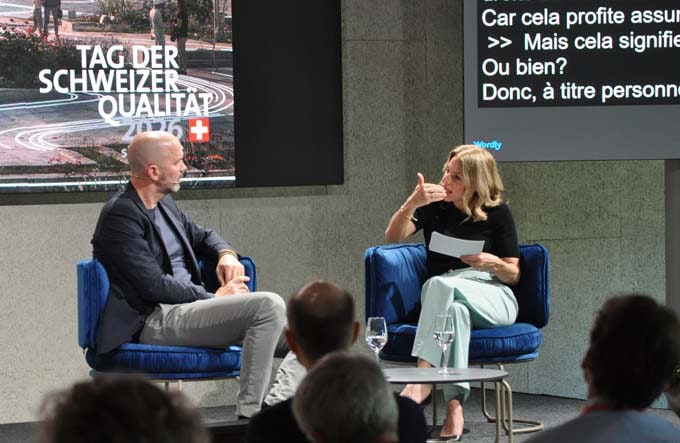
This year's Swiss Quality Day was special in more ways than one. For the first time, it was held in the new BERNEXPO festival hall and also marked the 60th anniversary of the SAQ Swiss Association for Quality. The focus was less on looking back and more on the question of where quality thinking is heading, how it is influenced by artificial intelligence and what role people play in this.
In her opening address, SAQ President Ursula Grunder emphasized that quality today no longer begins with testing, but with customer expectations. Quality is becoming more human, precisely because of technology. As a result, quality is what we decide on a daily basis.
Service excellence in logistics and luxury hotels
The various keynotes highlighted quality from the present and future and from different perspectives. Angela Klüe from HAVI Logistics, the logistics partner for a large fast food chain in Switzerland, gave an insight into data-based logistics processes. The aim is to plan deliveries precisely and supply the restaurants with a pure push service in future. In addition, the decisive factor in continuous improvement measures is not key figures, but a close look at the processes.
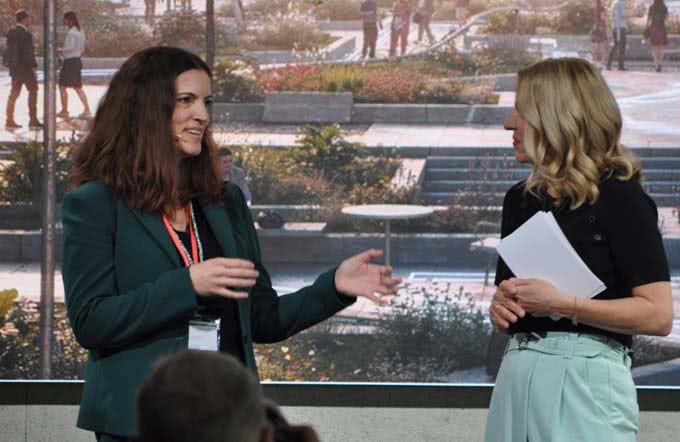
Chris K. Franzen from the Bürgenstock Resort spoke to presenter Andrea Vetsch about service excellence in the hotel industry. Quality there means both good infrastructure and excellent service. To achieve this, you have to know the guests and their preferences and train the staff in a targeted manner. Clear and consistent leadership is just as important - also towards guests. «We sometimes take the liberty of kicking out guests who don't behave decently towards our employees,» Chris K. Franzen clarified.
Digitized quality in the industry
Remo Gander from the Bossard Group showed how digitalized quality works in the industry. Smart Factory is an important keyword here. At Bossard, this topic is addressed via the total cost of ownership (TCO), as this is where the greatest leverage comes from, according to Remo Gander. Concrete solutions to exploit this leverage exist, for example, in external logistics (e.g. «smart bins», i.e. containers for components that automatically trigger orders when they reach a certain fill level), in intralogistics through the use of Kanban methods and in assembly, where camera systems support the processes. Such camera-based solutions are produced by the company Sentinus. Its Co-Founder & Executive Lead Jonas Conrad described this in his short presentation as the digitalization of the four-eyes principle. The aim is to convert image and process data into usable findings in order to enable efficient and high-quality production. This system's image processing takes place directly on the store floor and does not require a cloud. And digital twins can be used to train your own vision models.
AI and ethics: still many unresolved questions
Peter G. Kirchschläger from the University of Lucerne drew attention to the risks of AI. He warned of declining cognitive abilities due to excessive use, high resource consumption and manipulative use of data. He also criticized the lack of effective regulations that make it almost impossible to punish abusive deepfakes. Generative AI must be possible without violating human rights. Kirchschläger therefore advocates the creation of an International Data-based Systems Agency (IDA) at the UN, based on the model of the International Atomic Energy Agency (IAEA).
Andreas Grünert from BACS made it clear that cyber security is a key quality factor. He recommended the introduction of security and resilience procedures, the implementation of general basic protection measures and transparency towards suppliers and customers, especially in the event of incidents.
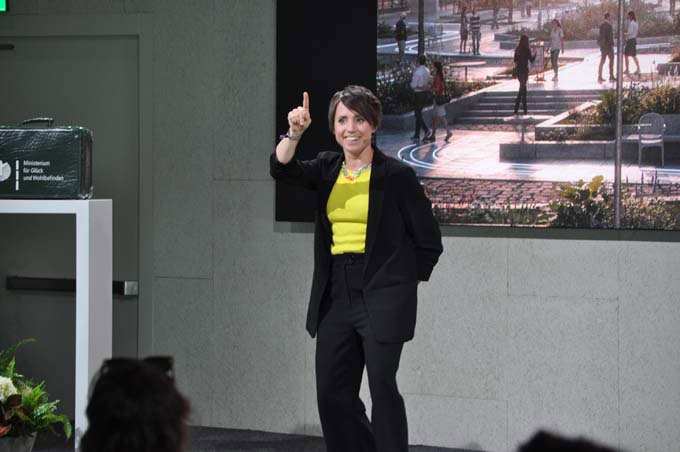
The «Minister for Happiness»
The Swiss Quality Day came to an optimistic conclusion with the closing speech by Gina Schöler. She is the founder of the «Ministry of Happiness and Wellbeing» and inspires people throughout Europe to be happier in their everyday lives and at work. She praised Switzerland as a happy country. However, a small spontaneous survey of the audience showed that many people are concerned about the current world situation. In this context, Gina Schöler gave the following quote: «The darker it gets outside, the brighter we have to shine». She used a flashlight to show that this is not always easy: without a battery, even it cannot provide the necessary brightness. One key message that the participants took away from Gina Schoeler's presentation was to focus less on the negative and more on the many good news stories that still exist despite everything. And this rounded off the conference theme perfectly: Quality for the future is sustainable, digital - and also human.
More information: www.tsq.swiss
This article originally appeared on m-q.ch - https://www.m-q.ch/de/rueckblick-tag-der-schweizer-qualitaet-2026-qualitaet-als-weg-nicht-nur-als-ziel/