Tradingzone saves over 1,600 tons of CO₂ with office furniture circular economy
Tradingzone from Regensdorf presents practice-based data with the «Swiss Office 2026 Circular Economy Study»: Over 120 office organizations per year lead to the reuse of around 20,000 pieces of furniture. Systematic reuse saves more than 1,600 tons of CO₂ every year - a real operational impact instead of theoretical potential.


With the publication of the «Swiss Circular Office 2026 Study», Tradingzone documents the impact of its circular activities in the Swiss office market. The analysis is based on data from over 120 office organizations per year and shows The systematic reuse of commercial office equipment saves more than 1,600 tons of CO₂ annually. The values shown document a real operational impact and not just a theoretical market potential.
Commercial office furnishings are under increasing pressure to change. Hybrid work, location consolidations, economic uncertainties and increasing ESG requirements are leading to structural adjustments to working environments and shorter investment cycles.
Around 20,000 pieces of furniture in circulation every year
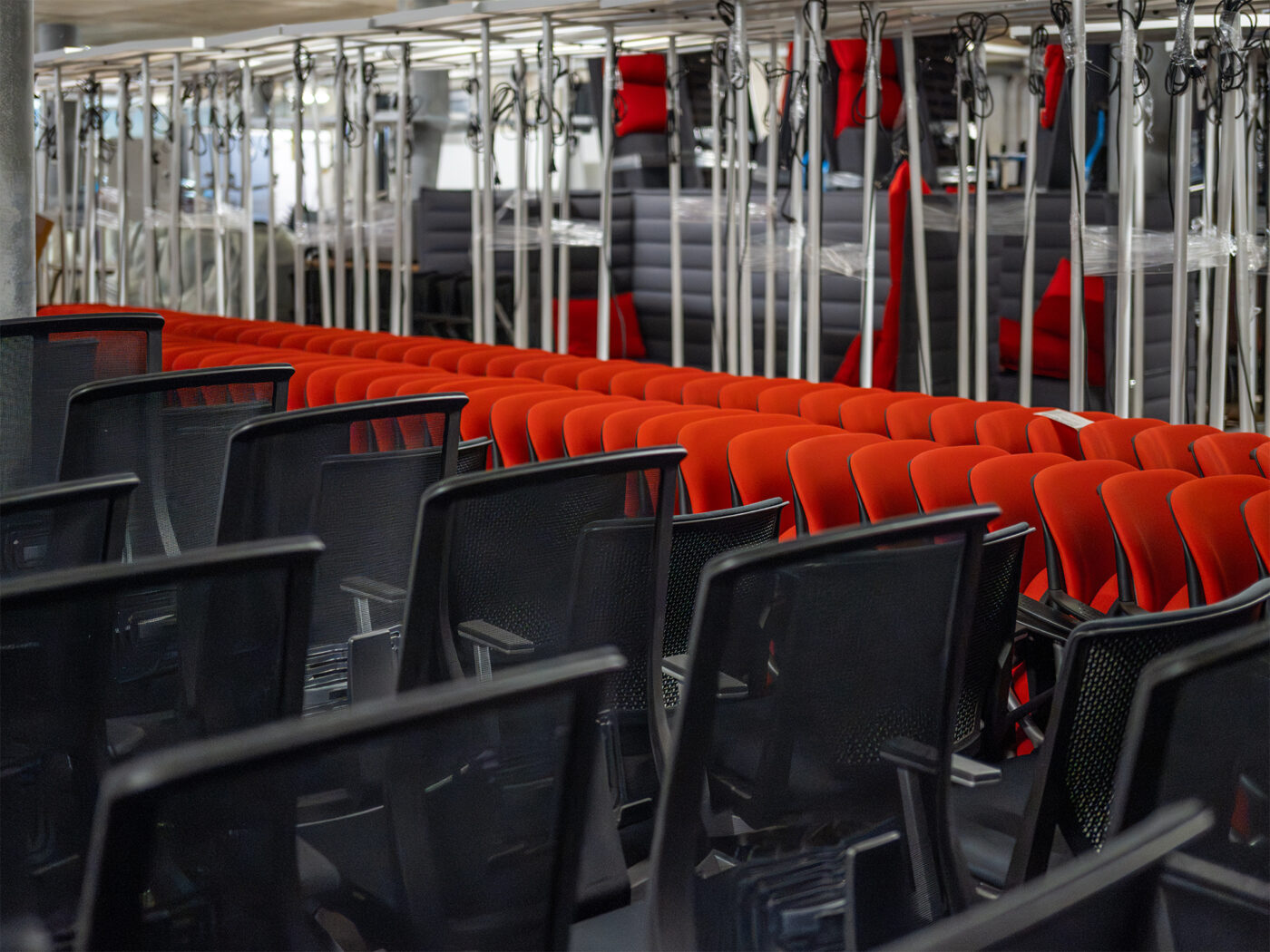
The data basis of the study includes around 20,000 pieces of furniture per year that are taken over, checked, refurbished and put back into use as part of projects in connection with office reorganizations, relocations and operational restructuring. Around 93 percent of the furniture taken over can be put to a second use. The remaining 7 percent is professionally recycled or disposed of.
Typical triggers for these projects are area consolidations, location mergers, organizational realignments or economic adjustments. Technical defects in the furniture, on the other hand, are rarely the reason.
Real impact instead of theoretical potential
Based on the pieces of furniture that are actually recycled each year, the documented order of magnitude is as follows: around 700 tons of material saved per year and over 1,600 tons of CO₂ emissions avoided annually.
The calculation is based on an average furniture weight of 35 kg and conservative emission values of 80 kg CO₂ per newly produced piece of furniture. The aim of the extrapolation is not to maximize the effect, but to provide a realistic classification of the dimension.
Organizational changes instead of technical wear and tear
«A lot of office furniture is not replaced because it has reached the end of its technical life, but because organizations are changing. The greatest circular potential therefore lies not in buying new furniture, but in reusing it intelligently,» says Marco Bühler, co-founder and Managing Director of Tradingzone.
The study places the results in the context of ESG reporting, Scope 3 emissions and changing workplace concepts. Circular models are increasingly developing from a niche solution into a component of modern procurement strategies.
Tradingzone is an owner-managed Swiss specialist company based in Regensdorf. Since 2007, the company has specialized in new and used office furniture as well as sustainable solutions for office furnishings. With over 70,000 pieces of furniture immediately available and a clear focus on the circular economy, Tradingzone is one of the leading providers of sustainable office furnishing solutions in Switzerland.
www.tradingzone.ch/kreislaufwirtschaft