

Optical Sorting: A Game-Changer in Building Materials Recycling
Construction and demolition waste is the largest waste stream in Europe—and holds enormous untapped potential. BRT Baustoff Recycling Thurgau demonstrates how sensor-based sorting technology from Binder+Co enables a decisive leap in quality in building material recycling and creates valuable secondary raw materials for the circular economy.





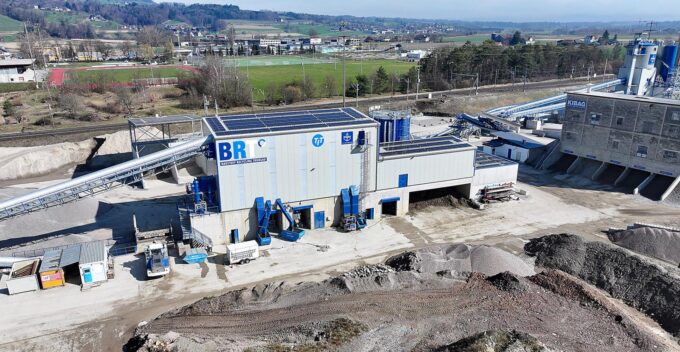
Construction and demolition waste is Europe’s largest waste stream—and is full of untapped potential. Crushing, screening, and washing have long been standard practices at many recycling facilities. However, sensor-based sorting is what makes the decisive difference: It precisely separates valuable material streams from one another and significantly improves the quality of recycled building materials. BRT Baustoff Recycling Thurgau demonstrates how this key technology creates added value in practice.
From Excavated Material to Primary Gravel
The company is regarded as a highly competent partner in the mineral recycling industry and relies on several processing machines from Binder+Co—including two CLARITY sorting systems, which play a crucial role in ensuring quality at the end of the process. «We primarily process excavated material that is chemically contaminated or mixed with construction debris,» explains Martin Feldmann, managing director of BRT. Nevertheless, the company is able to return about 75 percent of the processed material to the material cycle as sand and gravel.
The process begins right at the material intake stage. Depending on its origin and contamination level, the delivered excavated material is evaluated, consolidated in different storage areas, and then evenly fed into the wet mechanical processing system. There, it is washed, crushed, and separated into different particle sizes.
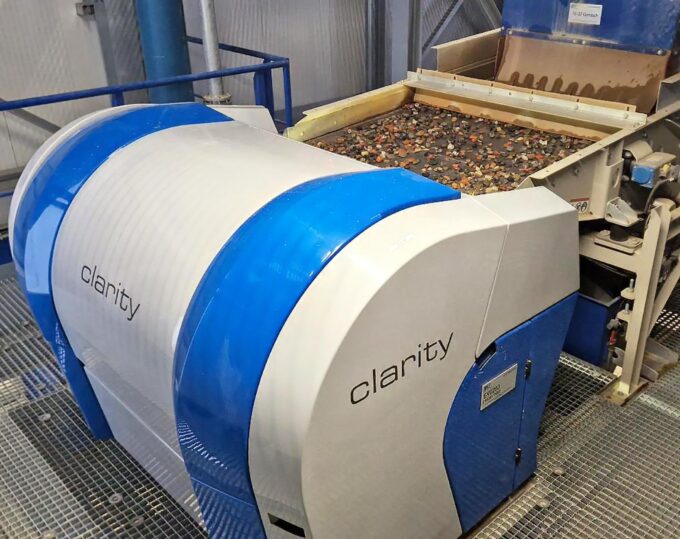
This is followed by the step that is increasingly becoming a decisive factor for success in the processing of construction waste: Binder+Co’s CLARITY systems use high-resolution cameras and intelligent image analysis to detect even the slightest color differences and material characteristics. «Thanks in large part to optical sorting, we are now able to return the processed material to circulation as primary gravel,» emphasizes Feldmann. Broken bricks are also reliably separated from high-quality gravel, foreign materials are removed, and product quality is significantly improved.
The benefits of this sorting process extend far beyond the facility itself. The majority of the sorted sand and gravel goes directly into concrete production at the adjacent concrete plant. Even the screened-out brick rubble is put to use, for example as an aggregate for roofing substrates or in non-standard concrete mixes. The purity of the materials is always crucial here, as only high-quality secondary raw materials will find lasting acceptance in the market.
Strict Regulation as a Driver
Switzerland is considered to have particularly strict regulations regarding construction waste. The Ordinance on Waste Prevention and Disposal (VVEA) distinguishes five contamination levels for excavated and demolished material—ranging from uncontaminated to heavily contaminated. It is precisely in this demanding environment that BRT Baustoff Recycling Thurgau has established itself.
The wet mechanical processing plant has been in operation since 2023—equipped with several screening and sorting machines from Binder+Co. «Now, every metric ton we process no longer ends up in a landfill but is returned to the construction materials market,» says Feldmann, summing up the approach.
Artificial Intelligence as the Next Step
At the same time, Feldmann believes the industry is facing new challenges. Composite materials and rising quality standards will require even more efficient processing methods in the future. That is why it is important to continuously evaluate new technologies and implement them where they add value.
So far, CLARITY has primarily sorted materials based on color. Thanks to AI support, however, it will soon be possible to reliably separate black materials—such as asphalt and slag—from black gravel. «We’re very interested in the latest AI upgrade so we can remove the remaining contaminants in the form of slag and pavement, and also to further improve the performance of the other fractions,» says Feldmann.
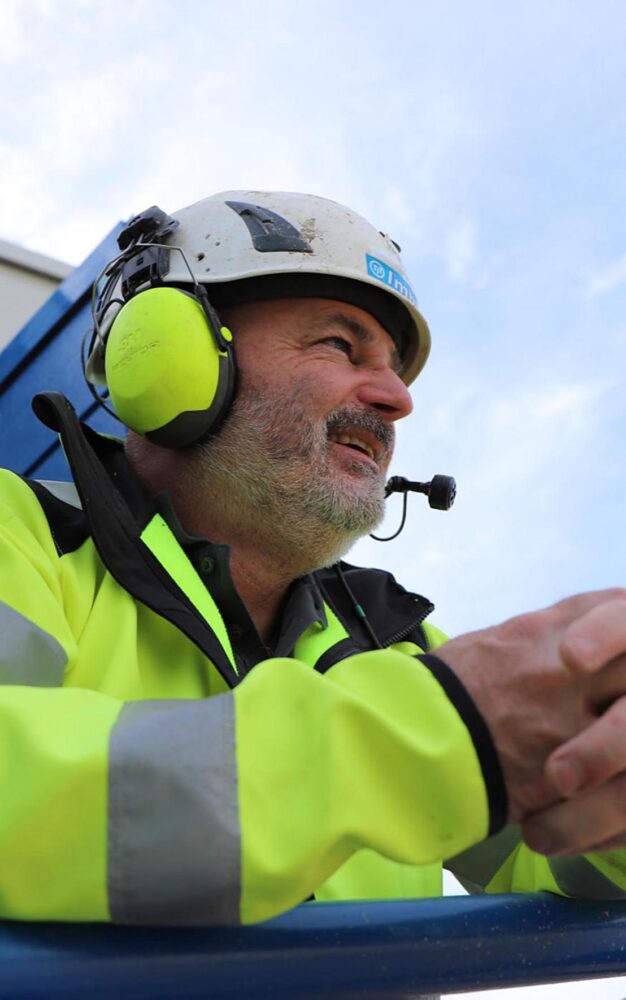
Manfred Berghofer, a sales representative for sorting technology, minerals, and construction waste at Binder+Co, also sees sorting as the next step in the development of building materials recycling: «Crushing, screening, and washing are state-of-the-art today. However, it is only through sorting that optimal and consistent recycling of mineral building materials becomes possible.» Given the growing scarcity of primary raw materials, rising landfill costs, and increasingly stringent legal requirements, sorting will play a key role in the future. Berghofer also expects EU regulations on construction waste recycling to become stricter in the near future—similar to the already stringent Swiss standards. «Only the precise separation of materials creates the quality that turns construction waste back into a sought-after raw material. Sorting thus becomes the real game-changer in the mineral circular economy—and companies like BRT are demonstrating that this is already possible today.»
Source: www.binder-co.com


