Switzerland's oldest shoe brand makes a comeback
The kybun Joya Group acquires Switzerland's oldest shoe brand: ELGG. For decades, this long-established company was one of the most important manufacturers of military footwear, producing, among other things, the legendary Swiss Army Combat Boot 90.





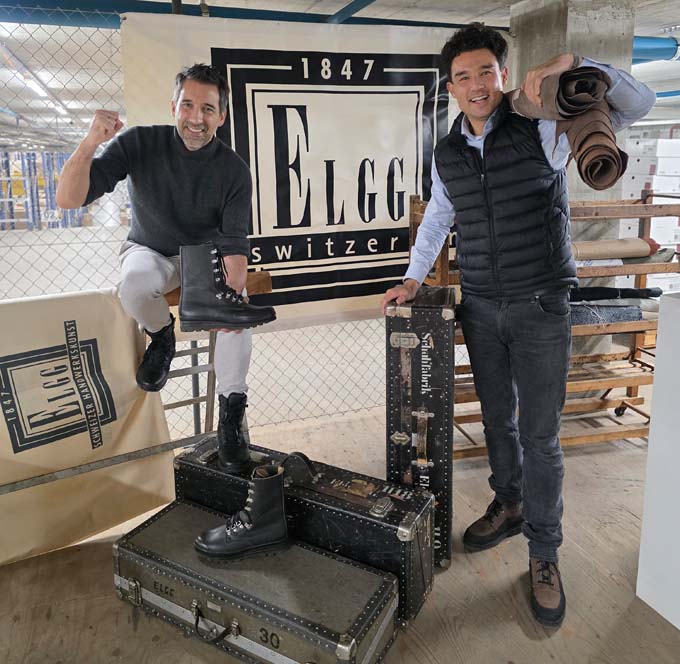
A traditional Swiss brand is making a comeback: with the acquisition of ELGG, the kybun Joya Group is setting an example for tradition, innovation, and Swiss value creation. «Our vision is clear: Swiss army boots should be produced in Switzerland again,» says Karl Müller, Co-CEO of kybun Joya. The first prototypes of a newly developed, ergonomic, and highly durable combat boot are set to be unveiled as early as next year. «ELGG is part of the cultural heritage of the Swiss shoe industry. We are proud to lead this brand into a new era,» adds co-CEO Claudio Minder.
A commitment to Switzerland as a place of work
The kybun Joya Group operates a shoe production facility in Sennwald in the St. Gallen Rhine Valley. The aim is to keep added value in Switzerland. «Bringing army boot production back home secures expertise, creates jobs, and strengthens our industrial independence. Swiss soldiers deserve Swiss shoes—and we have the expertise to make them.",
revive this tradition,» emphasizes Karl Müller.
The launch will begin with a combat boot for women. Although women are still in the minority in the army, their commitment and valuable contributions make them an indispensable asset to the entire force. «If a combat boot offers women secure support, comfort, and stability in extreme stress situations, it shows that it meets the highest standards and thus sets the benchmark for other models,» explains Claudio Minder. In addition, the focused line for women allows production capacities in Switzerland to be ramped up gradually before the large quantities for men's models follow.
Return of a piece of Swiss industrial history
ELGG's roots date back to 1847, a time when shoemakers played a central role in social and economic life. During World War I, the Swiss shoe industry experienced a historic boom: demand for military shoes was enormous, and brands such as ELGG laid the foundation for the reputation of Swiss shoemaking through quality and reliability. By 1911, there were 83 companies in Switzerland with over 8,400 employees producing shoes. These included well-known names such as Bally, Raichle, Künzli, and Kandahar. However, from the 1970s onwards, price pressure from low-wage countries led to a massive decline in production – a structural change that
also hit ELGG hard.
«Until the end of the 1990s, the ELGG shoe factory was a major manufacturer of high-quality, welted men's shoes and military boots. Around 100 employees produced up to 500 pairs of shoes every day – most of which were exported worldwide,» Karl Müller continues. The Kampfstiefel 90 combat boot, developed and produced in Elgg, still enjoys cult status today. «Rising production costs led to the discontinuation of manufacturing in Switzerland in 2002. As a result, the army lost not only a local manufacturer, but also part of its industrial supply security,» adds Claudio Minder.
Source: kybun Joya