M&A activity: Swiss SMEs particularly popular with foreign investors
M&A activity among Swiss SMEs has picked up noticeably in 2025, returning to growth after two subdued years. The upturn is being driven primarily by foreign buyers, private equity investors and a strongly consolidating IT and software sector.


The consulting and auditing firm Deloitte has published its latest study «M&A Activity of Swiss SMEs», which examines and evaluates corporate transactions in 2025. The 20th edition of the Deloitte study recorded a total of 208 transactions involving Swiss SMEs. This represents an increase of 16% compared to 179 deals in the previous year and is therefore close to the boom level of 2021.
Switzerland as a hotspot for M&A activity
The overall value of the Swiss M&A market developed particularly dynamically, increasing by around 70% - also thanks to larger transactions outside of the SME segment. Internationally, Switzerland is thus once again positioning itself as one of the strongest M&A markets in Europe, where investors specifically acquire innovative strength and niche positions.
The global situation is ambivalent: the number of deals worldwide rose to 41,362 in 2025 with a volume of CHF 3.7 trillion, which corresponds to a 28% increase in value. While Europe saw 19,175 transactions, US companies were involved in 14,475 deals - an environment in which the robust Swiss activity is particularly striking.
Inbound boom, restrained Swiss expansion
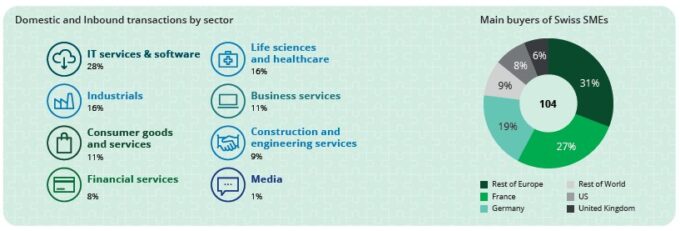
The most striking trend is the jump in inbound transactions: The number of purchases of Swiss SMEs by foreign buyers rose by 65% from 63 to a record 104 deals. The main drivers were IT service providers and software companies, which accounted for 56% of inbound growth and 28% of all domestic and inbound transactions.
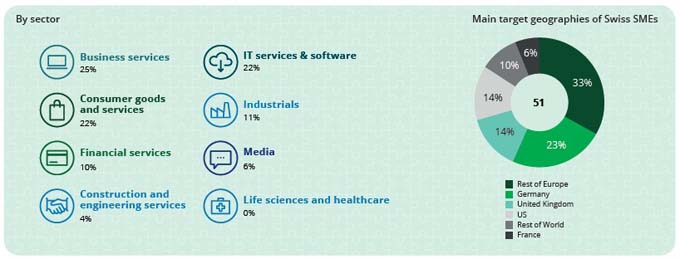
In contrast, purely Swiss deals increased only slightly - from 48 to 53 transactions, which corresponds to an increase of 10%. Consumer goods and services were particularly in demand domestically, with deals increasing from 9 to 13. On the other hand, there was a significant decline in the drive of Swiss SMEs abroad: outbound transactions fell by 25% from 68 to 51, with a particularly sharp drop in the life sciences segment, where no more takeovers were recorded in 2025.
Geographically, new players are moving into focus: French buyers were responsible for 27% of inbound deals (2024: 11%), displacing Germany at the top with 19%. Investors from the Nordic countries increased their share from 3% to 13%, which Deloitte explains with a strong focus of these investors on technology and AI as well as abundant available capital. US buyers, on the other hand, appeared much less frequently; their share fell from 17% to 8% - a development that the study attributes, among other things, to the approximately 15% stronger Swiss franc against the dollar and high US tariffs on Swiss companies in 2025.
Private equity as an important driver
More than half of the recorded transactions now bear a private equity signature. In 2025, 116 deals with PE involvement were recorded, 45% more than in the previous year; this investor group therefore accounts for 56% of total SME M&A activity. Foreign PE involvement in Switzerland grew particularly dynamically: inbound PE transactions increased by 156% from 23 to 59 deals, 45 of which were classic «bolt-on» acquisitions of existing platform companies (2024: 9).
IT services and software were also the preferred targets here, with German and French PE houses dominating the buy-side. While outbound PE deals fell by 24% (29 instead of 38), the number of purely Swiss PE transactions increased by 47% to 28, which suggests a clear focus on the domestic business. Overall, the number of Swiss companies sold by or to PE funds more than doubled (87 vs. 42, +107%).
Valuation situation and economic environment
On the capital markets, the Deloitte Swiss Small & Mid Cap Index 2025 recorded a significant revaluation: the EV/EBITDA multiple climbed from 9.2x in the first quarter to 10.7x at the end of the year, reaching its highest level since the end of 2022. At the same time, the Argos Mid-Market Index, which represents transaction multiples in the euro mid-market, fell to 8.7x, its lowest level since 2017. The diverging trend points to a gap between stock market valuations and transaction multiples actually paid, which began to close again in 2025 - an important catalyst for the M&A upturn.
In macroeconomic terms, the CFO surveys analyzed for the study paint an ambivalent picture: While the outlook for the Swiss economy as a whole was clearly negative following the US tariff shock in April 2025, 52% of CFOs were positive about their own company's prospects - the largest gap between company and economic assessments since 2014. Based on SECO forecasts, Deloitte expects GDP growth of 1.1% in 2026 with an inflation rate of 0.2% - conditions that, together with further falling interest rates, should encourage additional deals.
Methodology and data basis
The study is based on M&A transactions that were concluded between January 1 and December 31, 2025 and involve majority share acquisitions in Swiss SMEs. For this purpose, Deloitte defines SMEs as companies with a turnover of more than CHF 10 million, fewer than 250 employees and a transaction value of between CHF 5 and 500 million. Only majority takeovers are included; joint ventures, pure real estate deals, asset deals, option purchases or internal restructurings are not taken into account.
The geographical classification is based on the registered office of the target company and the sector classification on its main activity. The data is based on the M&A platform Mergermarket, internal Deloitte databases, the Swiss business press and capital market information from Capital IQ and the SIX Swiss Exchange; due to the lack of disclosure requirements in the private market, transaction values had to be estimated in many cases. In addition, Deloitte refers to its own study from the previous year and accompanying online analyses, which highlight the structural role of interest rates, the geopolitical environment and investor sentiment in the development of the Swiss SME M&A market.
Source and further information: www.deloitte.ch