Review of Swiss Cyber Security Days 2026: «Sovereign is he who knows his dependencies»
Under the motto «Digital Sovereignty - The New Frontier», the seventh edition of the Swiss Cyber Security Days took place on February 17 and 18, 2026 at the BERNEXPO site in Bern. National and international speakers provided answers to the most important digital questions of our time.


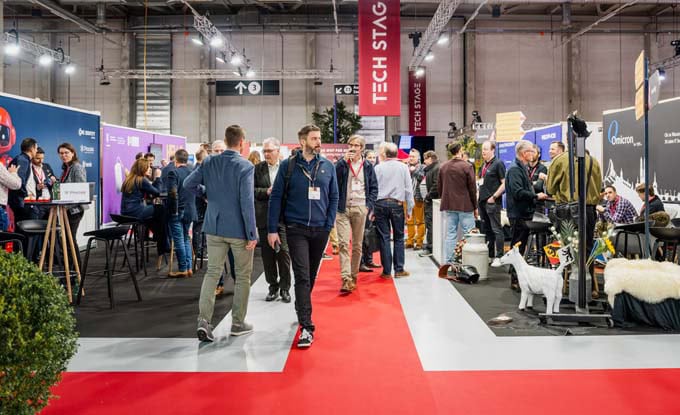
On Tuesday, February 17 and Wednesday, February 18, 2026, the BERNEXPO site became the focal point of a debate on security, freedom and self-determination. For the third time in a row, the Swiss Cyber Security Days (SCSD), the leading platform on cyber security, took place in Bern and brought together national and international speakers in one place. With 2,800 visitors and over 100 exhibitors, the event built on last year's success. One highlight was the presentation by Florian Schütz, Director of the Federal Office for Cybersecurity (BACS), who gave an overview of the current cybersecurity situation in Switzerland and placed it in relation to the international environment. He also gave a few concrete figures: In 2025, for example, 2,347,618 reports of devices infected with malware were analyzed. Just over 17,000 command and control systems of attackers were identified and blocked. ’Economic damage caused by cyberattacks remains the greatest risk for Switzerland,’ said Schütz.
Digital sovereignty affects everyone
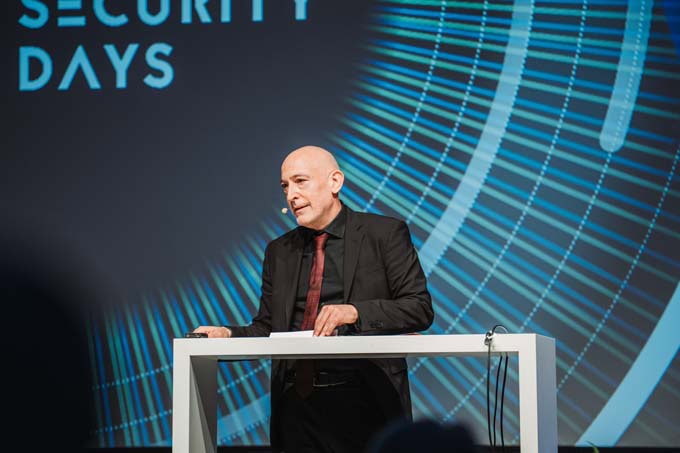
The event focused on the question of who determines the rules of the game in the new digital world and thus influences geopolitical, economic and social developments. However, the topic of digital sovereignty, which dominated this year's Swiss Cyber Security Days, is nothing new. In his keynote speech at the beginning of the event, Federal Chancellor Viktor Rossi pointed out that as early as 1999, the Confederation was already concerned about sovereignty and dependencies when using software products from large providers. Today, however, a complete departure from Microsoft systems is hardly realistic, but it must still be possible to place critical systems under one's own control, according to Viktor Rossi. Furthermore, digital sovereignty also consists of creating trust among the population that the authorities have the data under control. The narrow outcome of the vote on the e-ID showed just how difficult this is.
In his speech, Program Director Nicolas Mayencourt made it clear that digital sovereignty concerns everyone and that we must work together to develop future-oriented and secure solutions: «What unites us is a common goal: to make the cyber dimension secure, autonomous and sustainable. We need binding techno-social responsibility, supported by the state, the economy and the civilian population.» Nik Gugger, President of the SCSD, also addressed clear words to the attendees from politics and business in his opening speech: «Create reliable framework conditions and invest in digital sovereignty. Understand cyber resilience not as a cost factor, but as a competitive factor.» And Viktor Rossi said: «Sovereignty is knowing your dependencies».
Switzerland is not on the sidetrack
The experts agreed on one point: Europe and Switzerland must strengthen their digital sovereignty and secure it in the long term. What this path should look like in concrete terms was the subject of lively and passionate discussion. One thing is clear: Europe's innovative strength must not be built exclusively on the value creation of non-European tech companies. The strong dependence on a few large providers is particularly evident in the cloud sector, as Dr. Cristina Caffarra from the EuroStack Initiative Foundation and one of Europe's leading experts in the field of digital sovereignty explained. She is convinced that Europe has sufficient technological strengths - these must now be consistently bundled and strategically deployed. «We must now make every effort to create what we have missed in the last 15 years,» said Cristina Caffarra at a media conference on the fringes of the SCSD. And when asked whether states should develop their own software, she replied: «The state should not be a competitor, but an enabler.»
Digital sovereignty is also being pursued in Switzerland, as Prof. Dr. Matthias Stürmer, Professor at Bern University of Applied Sciences & Head of the Institute for Public Sector Transformation, explained: «Switzerland is not on the sidetrack. There are great opportunities for digital sovereignty, but more courage is needed in strategic decisions.» What worries him, however, is the fact that the large US corporations are lobbying intensively and thus trying to thwart efforts to achieve digital sovereignty. This makes it all the more important to join forces. This is why the «SDS - Sovereign Digital Switzerland» network, an association of over 160 authorities and Swiss IT companies, was created to establish sustainable structures. The vision: to create a coordinated, efficient Swiss offering that offers practicable alternatives to international hyperscalers and strengthens digital independence.
Where digital sovereignty already works
There are already many prominent examples of organizations in Germany and abroad that are taking a concrete approach to digital sovereignty. The German federal state of Schleswig-Holstein, for example, has successfully converted its administration to open source software. The collaboration solution from Nextcloud is one of the tools used there. Its founder and CEO Frank Karlitschek was also a guest at the Swiss Cyber Security Days. In his keynote speech, he pointed out that even the EU General Data Protection Regulation (GDPR) cannot provide protection for European data stored on US servers. This means that a lot of data that is shared via Microsoft products, for example, is not GDPR-compliant. Karlitschek criticized the market power of US hyperscalers, which in many cases leads to a so-called vendor lock-in.
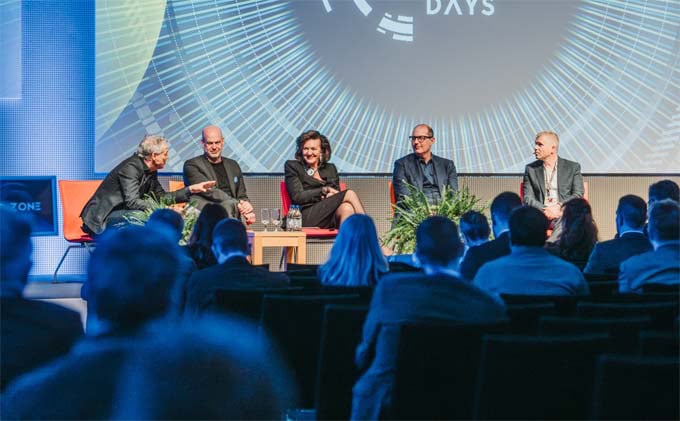
A highlight was the subsequent panel with Cristina Caffarra and Florian Schütz, Director of the Federal Office for Cyber Security, Frank Karlitschek and René Oester from Axpo Systems AG. In this lively discussion, Frank Karlitschek backed the idea of «Buy Europe», which is intended to redirect money flows into the European economy. However, he also made it clear that software companies such as Nextcloud do not need economic policy support: «We need customers,» said Frank Karlitschek. He sees the EuroStack initiative represented by Cristina Caffarra as a way to achieve the goal of strengthening the European IT markets. Florian Schütz makes it clear that it is not a question of simply trying to replicate US hyperscalers in Europe. It would be better to promote the strengths of the European IT industry in specialized areas such as logistics. René Oester referred to the risk management of companies: There needs to be a better understanding of dependencies and work towards enabling business continuity management even without hyperscalers.
Satisfied exhibitors and organizers
The organizer BERNEXPO can look back on two thoroughly successful days. 2,800 visitors attended around 100 presentations and discussions and took the opportunity to engage in intensive discussions. The two Best Practice Stages were also very popular and offered practical insights and concrete experience reports. The newly created SME zone was aimed specifically at small and medium-sized enterprises: The focus was on success stories from everyday business life and a direct exchange with IT service providers. The workshops held by Lucerne University of Applied Sciences and Arts in the SME Lounge also met with particularly great interest. For example, the impact of the current Swiss laws on data protection and information security on SMEs was explained in a practical way.
Over 100 exhibitors presented their offerings in the exhibition area, creating ideal conditions for personal dialog and new partnerships. Swiss cyber security provider ELCASecurity and Senthorus SOC also appreciated the interdisciplinary exchange: «This is where strategic decision-makers meet technical experts, enabling us to think holistically about security architectures, present concrete solutions, deepen partnerships and work together with the community on a resilient digital future for Switzerland,» explains Christophe Gerber, General Manager, ELCASecurity. The next edition of the Swiss Cyber Security Days will take place on February 23 and 24, 2027 in Bern.
This article originally appeared on m-q.ch - https://www.m-q.ch/de/rueckblick-swiss-cyber-security-days-2026-souveraen-ist-wer-seine-abhaengigkeiten-kennt/