AI Needs an Emergency Exit
When ChatGPT, Claude, and Grok went down almost simultaneously in September 2026, the risks of unchecked AI dependency suddenly became apparent. The AI consulting firm Neurawork recommends six concrete steps that companies can take to safeguard critical AI processes and remain capable of taking action in an emergency.


On September 3, 2026, ChatGPT, Claude, and Grok experienced outages almost simultaneously. Users were temporarily unable to access the AI services or had only limited access. A common cause has not been confirmed. However, the incident highlights how quickly reliance on AI providers can become a business risk.
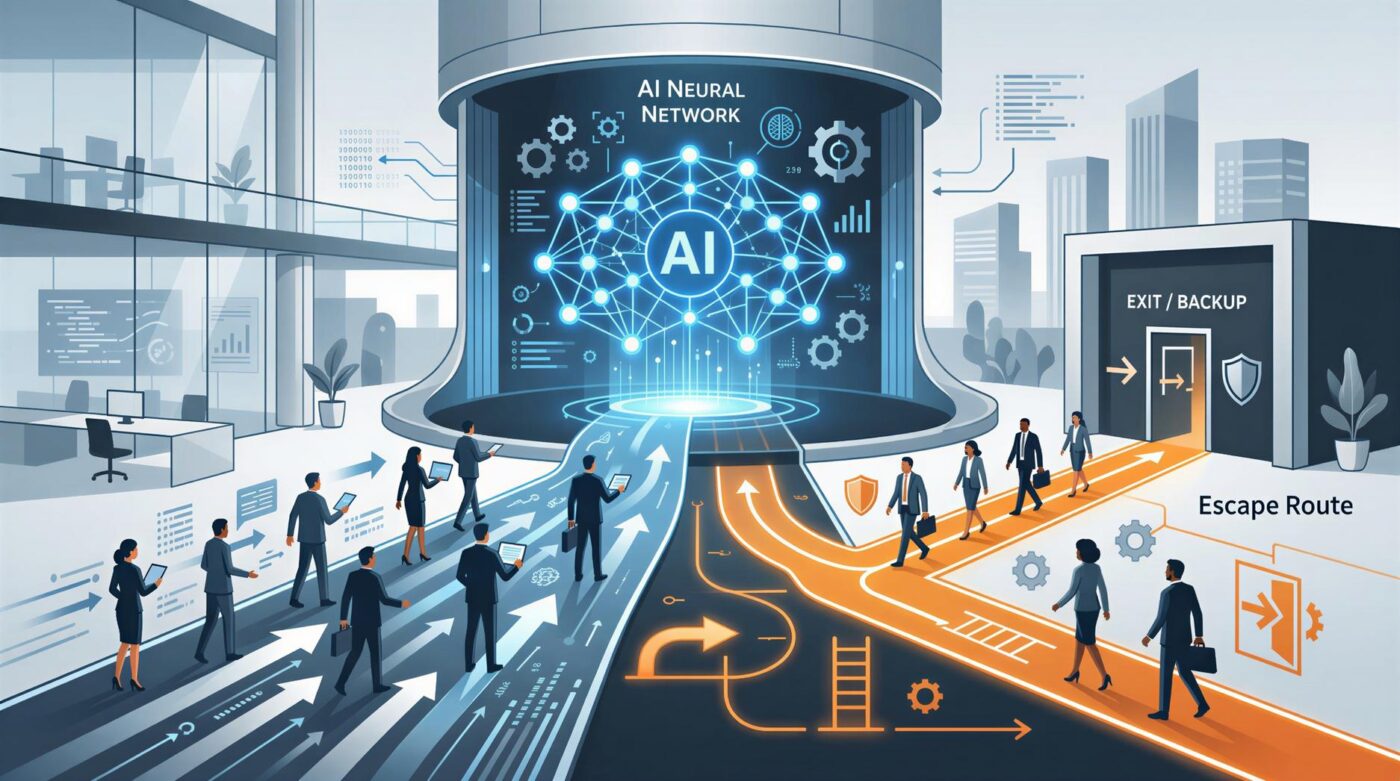
Neurawork, an AI consulting firm, therefore recommends that every business-critical AI system have an "emergency exit." This refers to the ability to continue operating a critical AI process within a few days, even without the current provider. Neurawork recommends six steps to ensure you are prepared for an emergency.
Step 1: Identify Critical AI Processes
Companies should first assess which processes would be seriously disrupted if the AI were to fail. Today, AI is used in areas such as production, procurement, logistics, customer service, sales, and accounting. The key question is: What would happen if this AI were no longer available tomorrow?
Step 2: Keep Data In-House
Prompts, knowledge bases, documents, or conversation histories should not be stored exclusively with the AI provider. Important information belongs in systems that the company itself can access at any time—such as SharePoint, its own database, or its own cloud storage.
Step 3: Document Process Knowledge
For every important AI process, the following should be documented: What information goes into it? What should come out? What rules apply? Who verifies the result? Otherwise, critical knowledge may be confined solely to the provider or to the prompt entered by a single employee.
Step 4: Learn About AI Alternatives
Companies should know which other AI systems could step in as a backup in an emergency. For example, if a company uses OpenAI to generate quotes, it should check in advance whether the same task can also be performed using Anthropic, Mistral, or another system. The goal: In a crisis, don’t start searching from scratch—instead, already know and have tested an alternative.
Step 5: Establish a manual Plan B
Not every process requires an alternative AI solution right away. However, it is important that work can continue even without AI in the event of an emergency. For example, if an AI system used for preparing quotes or handling customer inquiries goes down, it must be clear which employees will take over manually and how they should proceed.
Step 6: Test for an emergency
An emergency plan is of little use if no one knows whether it works. Companies should therefore conduct regular simulations: «What if our most important AI is no longer available tomorrow—can we still keep working?» This quickly reveals whether data is accessible, process knowledge is documented, another model can be used, and employees can take over the process manually if necessary.
The following example of a medium-sized supplier with 200 employees that uses AI for quote generation illustrates how this works in practice: Quote templates and pricing logic are stored in the company’s own ERP system, the prompt is documented in the company wiki, the AI model can be replaced, and sales employees can still create quotes on their own if necessary.
Source: www.neurawork.ai