Ethics Society warns: 80 percent of all jobs will be lost by the end of the decade
The Ethics Society has published a position paper on the future of work in the age of AI. In it, the authors Jürgen Linsenmaier, Reiner Huthmacher and Gerald Wood predict a «disruption of biblical proportions»: by the end of the decade, 80 percent of current jobs will become redundant. Employment relationships subject to social security contributions will be a thing of the past and the gig economy will become the norm.


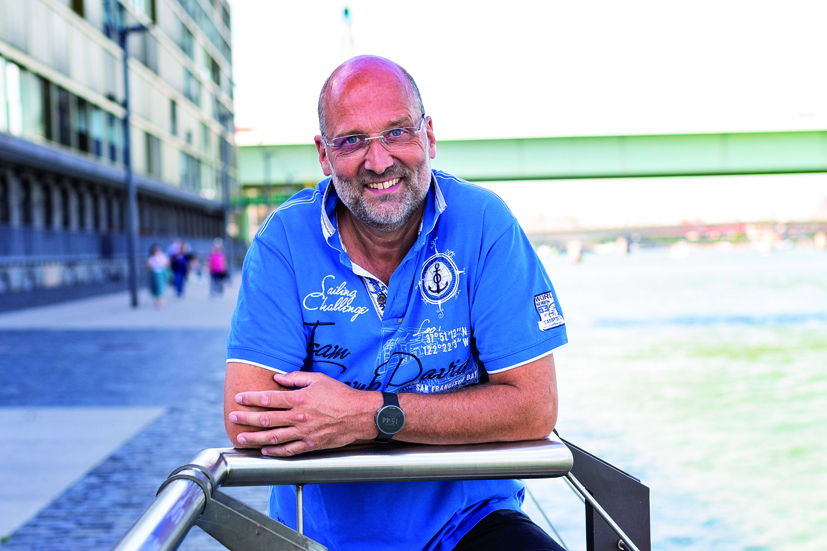
The Ethics Society has published an eight-point paper on the future of work in the age of AI. The core message: in the future, there will be hardly any employment relationships subject to social insurance contributions, 80 percent of jobs will be eliminated and the profession practiced will no longer determine identity. The authors Jürgen Linsenmaier, Reiner Huthmacher and Gerald Wood accuse politicians of failing to hold the really important debates and playing down developments.
Politicians play down the development
«Politicians are not telling the truth, are playing down and ignoring the development,» criticizes Gerald Wood, AI expert and author of the book «#NextGenWork». 80 percent of currently known jobs will become redundant - not in twenty years, but by the end of the decade. «And yes, new jobs will also be created, but they will be completely different jobs, of which we don't even know the job title today,» he is convinced.

It will be a disruption of biblical proportions, at the end of which the vast majority of jobs will either be done directly by AI or robots or in which humans will have effectively merged with technical systems. It will be the end of work as we know it. Anyone who does not train themselves in AI now and get fit, both as a company and as an employee, will disappear from the market. According to the German-American, it's five past twelve.
Gig economy becomes the rule
«Permanent employment has had its day. Anyone who still has work in the near future will do it on a temporary basis in projects, of which they usually have several at the same time,» explains Wood. The so-called gig economy will become the norm. Ultimately, everyone will become self-employed in one way or another and be able to work from anywhere. «Then social security and our tax system will be at an end.»
The Ethics Society paper therefore recommends that in future, productivity should be taxed rather than labor, for example in the form of a machine tax. With regard to social security systems, the authors recommend taking their cue from private systems. «If almost everyone works like the self-employed, then collective pay-as-you-go systems have no future,» say the authors.
Technology dividend for employees
Reiner Huthmacher, labor market and HR expert, promotes more employee participation. «We expect employees to be motivated to participate in the current transformation. Then it is only fair to involve them appropriately.» The Ethical Society paper develops several scenarios and solutions for this. In each case, employees should receive a kind of «technology dividend».
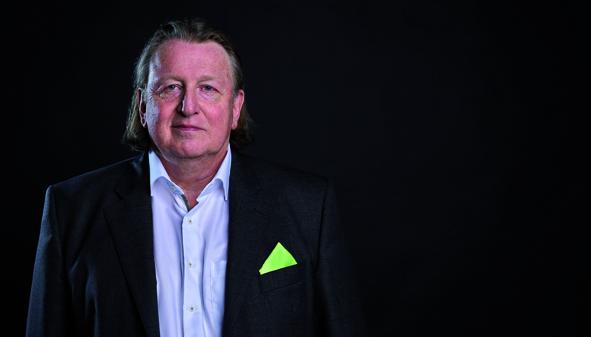
Employers also need to train themselves to adapt to the new role in largely digital and autonomous companies. «The manager of the future will not only lead people, but also AI models. That is something completely different from today,» says Reiner Huthmacher.
Huthmacher is also calling on politicians to raise the monthly exemption limit for benefits in kind from the current 50 euros to at least 500 euros. «Especially in these times of upheaval, work must be worthwhile, and companies that want to offer their employees something should be able to do so easily and individually.» He is certain: "In the coming years, we will experience a shortage of skilled workers and mass unemployment at the same time. This is not a contradiction, but a logical consequence of technological development.
Making AI sustainable
Jürgen Linsenmaier, founder of the Ethics Society and publisher of the eight-point paper, calls for a sustainable approach to AI. «Regulation must not hinder development under any circumstances, but ethical issues and aspects of environmental protection must also be taken into account,» he warns. He cites high energy consumption, the construction of new data centers and green coding as examples.
«Up to now, we have largely defined ourselves by our profession and our professional experience. But what if that disappears because almost everyone can do everything themselves with the help of AI? We will have to find new ways of working together. A new humanity will emerge,» concludes Jürgen Linsenmaier with a positive message.
The entire eight-point paper «The future of work in the age of AI» is available at https://wirtschaft-und-ethik.com/positionspapier-zukunft-der-arbeit/.