«Man, it's really hot today.»
Things can sometimes get «heated» in the workplace; most employees know that. But the fact that temperatures at their workplaces are becoming unbearable is a new phenomenon for them. Their employers must respond to this.


Companies also face new challenges time and again in the area of preventive health care. For example, new forms of collaboration and the use of new technologies often give rise to new factors that can potentially negatively impact employees’ health and well-being.
Climate change is also having an impact in the workplace
Among the new challenges are the increasingly frequent heat waves caused by climate change. These cause temperatures at many workplaces to
- temporarily rise to unbearable levels,
- have a negative impact on employees' health, as well as
- reduce their ability to concentrate and perform.
Common effects of heat also include headaches, circulatory problems, exhaustion, and irritability.
However, the conditions vary considerably from one workplace to another: While poorly air-conditioned rooms are often a problem in offices, workers in production facilities and on construction sites are frequently exposed to much higher temperatures.
Leadership begins with listening and taking people seriously
Managers who are committed to the well-being of their employees and the «Vision Zero» concept (goal: zero work-related illnesses) should view heat stress not merely as an organizational issue, but also as a shared concern involving safety, health, and work ability. Therefore, they should engage in an open dialogue with their employees on this topic. Suitable questions to ask include:
- How much are the current temperatures affecting you and your work?
- What factors and activities are particularly stressful for you?
- What would help you cope better with the heat?
- Which solutions are feasible in the short term, and which are feasible in the medium to long term?
An exchange like this
- shows employees that their individuality and circumstances are being acknowledged, and
- lays the groundwork for jointly developing practical solutions and countermeasures.
Finding Sustainable Solutions Together
Not every measure is suitable for every workplace. That is why it is advisable to conduct an analysis to determine which solutions meet the needs of both employees and the company.
In office spaces, significant improvements can often be achieved with a reasonable amount of effort. These include:
- the free provision of chilled drinking water and non-alcoholic beverages,
- Fans or portable air conditioners, where technically feasible,
- sun protection provided by blinds, roller shutters, or window films,
- Regular ventilation in the early morning hours,
- reducing additional heat sources, for example, by turning off unused devices,
- a relaxation of the dress code, to the extent that this is operationally feasible,
- more flexible work hours with an earlier start time,
- increased use of working from home, provided that working conditions there are better,
- shifting particularly demanding tasks to cooler times of the day.
In production areas, the focus is usually on different solutions:
- additional water stations with chilled beverages,
- Regular breaks to drink and reminders to drink enough,
- Rest breaks in cool or shaded areas,
- portable cooling units or high-performance ventilation systems,
- Technical shielding of particularly hot machines,
- Adjusting work processes and shifting work hours to cooler times of the day,
- lighter work clothing with good breathability, to the extent permitted by occupational safety regulations,
- Increased monitoring for signs of overheating, as well as clear guidelines for dealing with heat-related ailments.
Solutions arise through dialogue
In most cases, a combination of individual measures yields the greatest benefit. Managers should therefore discuss the following with their teams:
- What measures can be implemented immediately?
- What organizational changes would be appropriate?
- Which investments pay off in the short term, and which ones tend to pay off in the long term?
- What experiences have individual employees already had?
- What ideas can be adopted from other companies or sectors?
Experience shows that managers who involve their employees in finding solutions often receive a surprisingly large number of practical suggestions. In addition, acceptance of the measures that are adopted increases.
Promoting Health and Maintaining Effectiveness
When it comes to solutions that require investment, companies often worry about the higher costs. However, experience in the field of preventive health care and workplace health management (WHM) shows that preventive measures usually make economic sense—especially when it comes to challenges like heat waves, which are clearly bound to return. This is because employees who, for example, stay adequately hydrated, work in more comfortable temperatures, and can flexibly adjust their work hours to suit the circumstances remain more productive even when outdoor temperatures are extreme. They also make fewer mistakes and are less likely to miss work due to heat-related ailments. Furthermore, by implementing these preventive measures, companies position themselves as responsible employers.
Vision Zero means being prepared for new risks
Heat waves caused by climate change are a prime example of how the challenges in the field of workplace health management (WHM) are also changing. New stressors usually develop gradually and, over time, require increasingly urgent solutions. Managers committed to the Vision Zero philosophy therefore do not wait until serious health problems arise. Instead, they take early action
- the conversation with her employees and
- We work with them to develop solutions that promote and maintain their health, performance, and willingness to perform in equal measure.
Over time, this fosters a culture within the organization in which health—and low absenteeism due to illness—is not a matter of chance, but rather the result of ongoing dialogue and shared responsibility.
Authors:
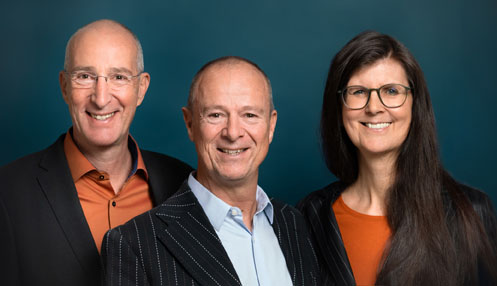
The three authors—Elke Katharina Meyer, Frank Nesemann, and Thomas Achim Werner—together form the leadership team of the management consulting firm Positivity Guides eGbR, Berlin/Braunschweig (www.positivity-guides.de), which specializes in the field of positive leadership. At the email address [email protected] Those interested can request a guide titled «Positive Leadership – Key to VISION ZERO» from Positivity Guides.