Permanent adaptation instead of permanent stress
On the reasons why mental work ability becomes a management task.





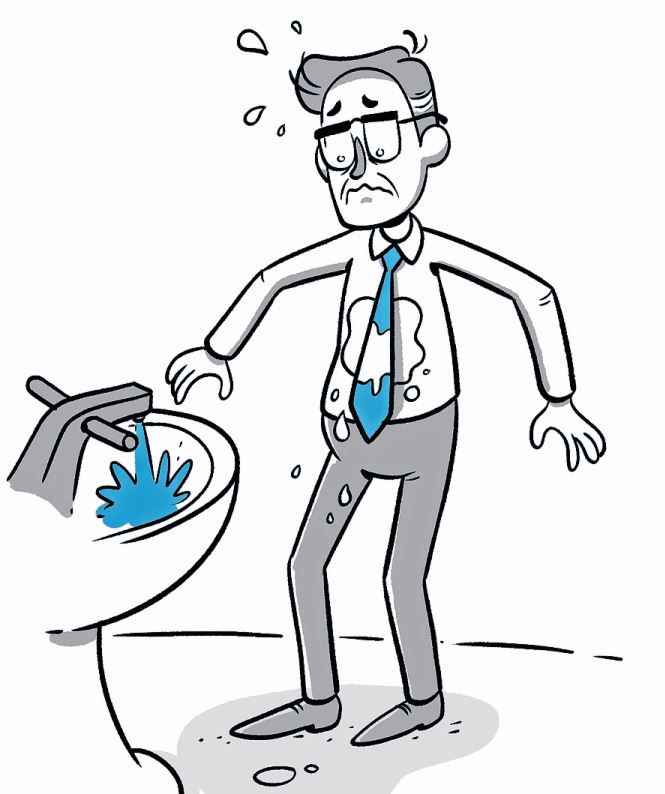
In many companies today, stress is no longer the result of individual stress peaks. It arises insidiously - through a new basic logic: permanent availability, a fast pace, constant interruptions, tool changes and a feeling of «never being finished». Anyone who treats this only as an individual resilience issue is falling short. Mental work ability is increasingly a management and organizational task: it determines quality, error rate, decision-making ability, commitment and ultimately the stability of the system.
What has changed in the last 20 years
Digital communication has accelerated processes - and at the same time fragmented everyday working life. Many employees no longer work «on tasks», but on a series of context switches: chat, email, meeting, ticket, query, update. Added to this is the pressure to change: new systems, new processes, new roles. What used to be cushioned by rest periods, paths or clearer transitions now often takes place in the same time window. The price is often not a lack of will, but a decline in control: less focus, more errors, longer decision-making paths, more friction in the team.
The new exhaustion is often a permanent adjustment
In practice, exhaustion often arises where people have to constantly mediate between demands: Speed vs. quality, availability vs. concentration, growth vs. stability. The nervous system remains «online», real regeneration becomes the exception. Many compensate for this for a long time - with discipline, extra work and internal pressure. Until sleep, mood, patience and performance start to deteriorate. Not because people are weaker, but because the system constantly demands more than it gives back.
How to recognize the imbalance early on
- Focus breaks off more quickly, errors accumulate despite competence
- Decisions take longer because new information is constantly being added
- Meetings become more, clarity becomes less
- Conflicts go round in circles (interfaces, responsibilities, tone of voice)
- Relaxation becomes a distraction: you «switch off» but don't recharge
Five levers that leadership can influence immediately
Make priorities visible:
Less «everything important». Clear top 3 per week/team, with justified stops: what do we consciously leave out so that the essentials can be achieved? The decisive factor is not only setting priorities, but also actively putting an end to side issues.
Protect focus:
Focus is not created by appeals, but by conditions. Define focus windows without meetings and without chat obligations. Agree simple rules of the game: Interruptions are bundled (e.g. two defined response times per day), «pinging» is not a work order, and complex topics do not belong in endless chats.
Regulate accessibility:
Many teams do not suffer from a lack of work, but from pressure to react. Clarify bindingly: what is «normal» (same-day response), what is «urgent» (within 2 hours), what is «critical» (immediately, with a clear escalation chain)? If «immediately» becomes the norm, everyone's ability to concentrate decreases.
Simplify decisions:
Unclear decision-making rights create permanent loops. Clarify roles and responsibilities (who decides, who advises, who is informed). Shift small decisions to where the competence lies - and define clear criteria for larger decisions. This reduces friction and takes the pressure off management.
Take rhythm and regeneration seriously:
Breaks, realistic planning and transitions are not a luxury. Make a conscious effort to plan «buffers», reduce lengthy meetings and establish team rhythms (e.g. start the week with priorities, end the week with relief). Regeneration is a management variable - just like quality or budget.
Diagnostic logic that provides clarity in minutes
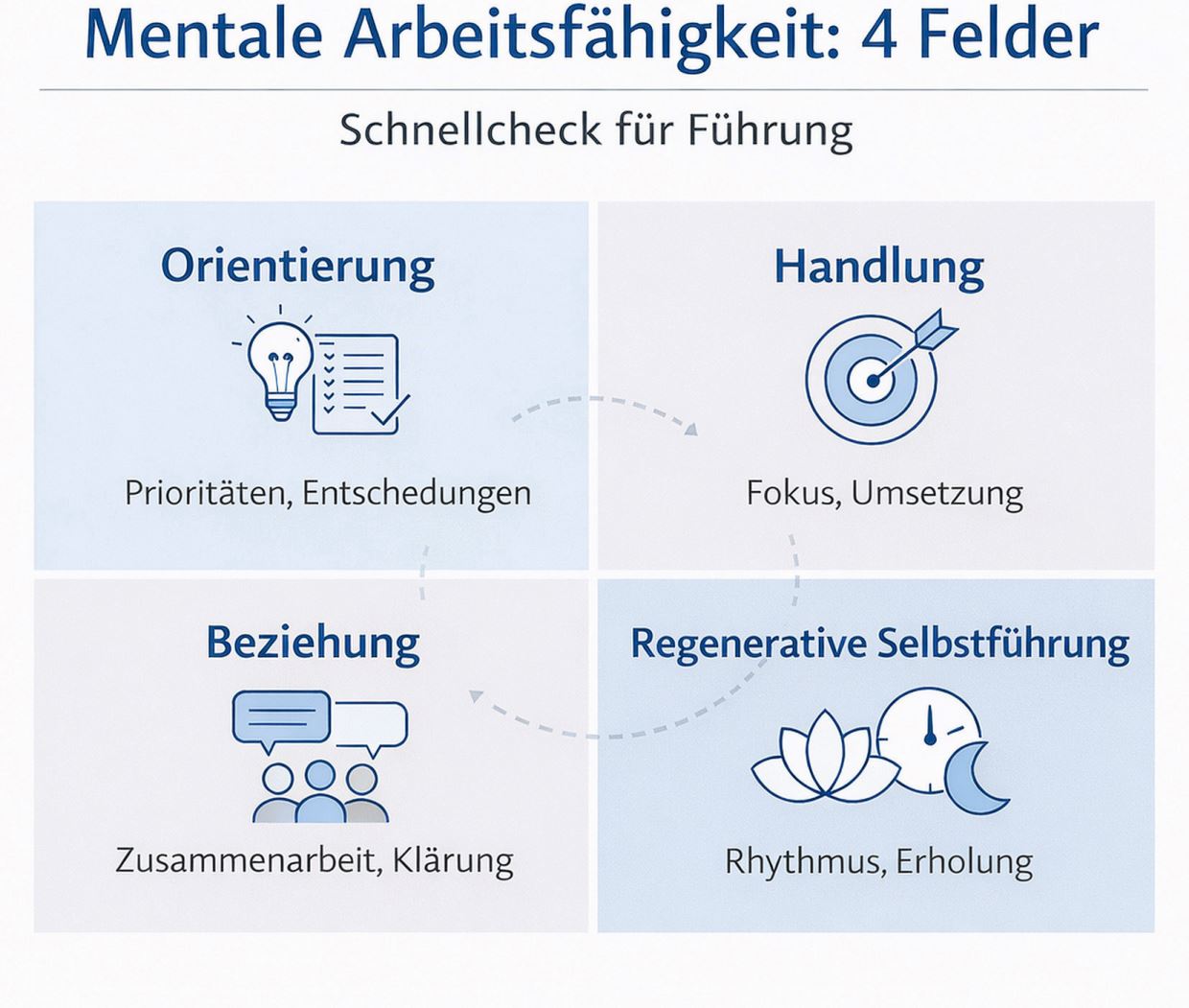
In my work, a pragmatic classification has proven its worth: Where is the bottleneck - in orientation (clarity), action (implementation), relationship (collaboration) or regenerative self-management (stability)? These four fields make it clear whether you are working on symptoms or on the lever. A brief assessment of the current situation in the management circle is often enough to choose the right measures.
Conclusion
Mental work ability is not strengthened with «feel-good programs», but with good design: clarity, focus, sensible boundaries, clean decisions and a workable rhythm. Those who reduce permanent adjustment not only gain health - but also performance, quality and loyalty.
Author
Andreas Gruber is a speaker, systemic coach with a therapeutic background, specialist author and developer of the Ergoarchipel® model. He supports leaders and companies in German-speaking countries in times of change, high complexity and mental stress - clearly, practically and effectively.