Swiss insolvencies reach historic record
Global credit insurer Allianz Trade is forecasting around 14,000 corporate insolvencies in Switzerland in 2026 - a new all-time negative record. The Middle East conflict is exacerbating the situation and driving global bankruptcies to a five-year high.





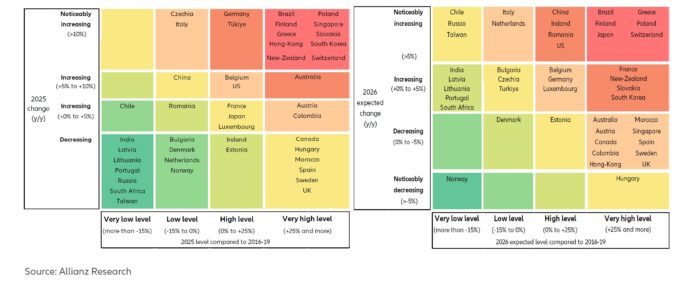
Switzerland is facing an unprecedented rise in corporate insolvencies. According to the latest global insolvency report from Allianz Trade, the world's leading credit insurer, around 14,000 insolvencies are expected in Switzerland in 2026. This represents the sixth consecutive increase, twice as many cases as in 2022 and almost three times as many as the pre-pandemic average.
New insolvency system as a key driver
A decisive factor in this massive increase is the new Swiss insolvency system, which came into force on January 1, 2025. With the repeal of paragraphs 1 and 1bis of Article 43 of the Federal Debt Enforcement and Bankruptcy Act (SchKG), debts under public law - including VAT, taxes and social security contributions - can now lead directly to the bankruptcy of a company entered in the commercial register, instead of being pursued through the seizure procedure as was previously the case. All registered companies and legal structures are affected by this reform, including self-employed persons.
Jan Möllmann, CEO of Allianz Trade in Switzerland, assesses the situation as follows: «In addition to the new insolvency system, the below-average economic outlook and growth forecasts, which have been revised downwards due to higher energy prices and global uncertainties, are also contributing to the negative trend. We currently expect the increase in insolvencies to be +20 % in 2026 - after +38 % in 2024 and +17 % in 2023 - before normalizing from 2027 (-3 %).»
Middle East conflict exacerbates global insolvency situation
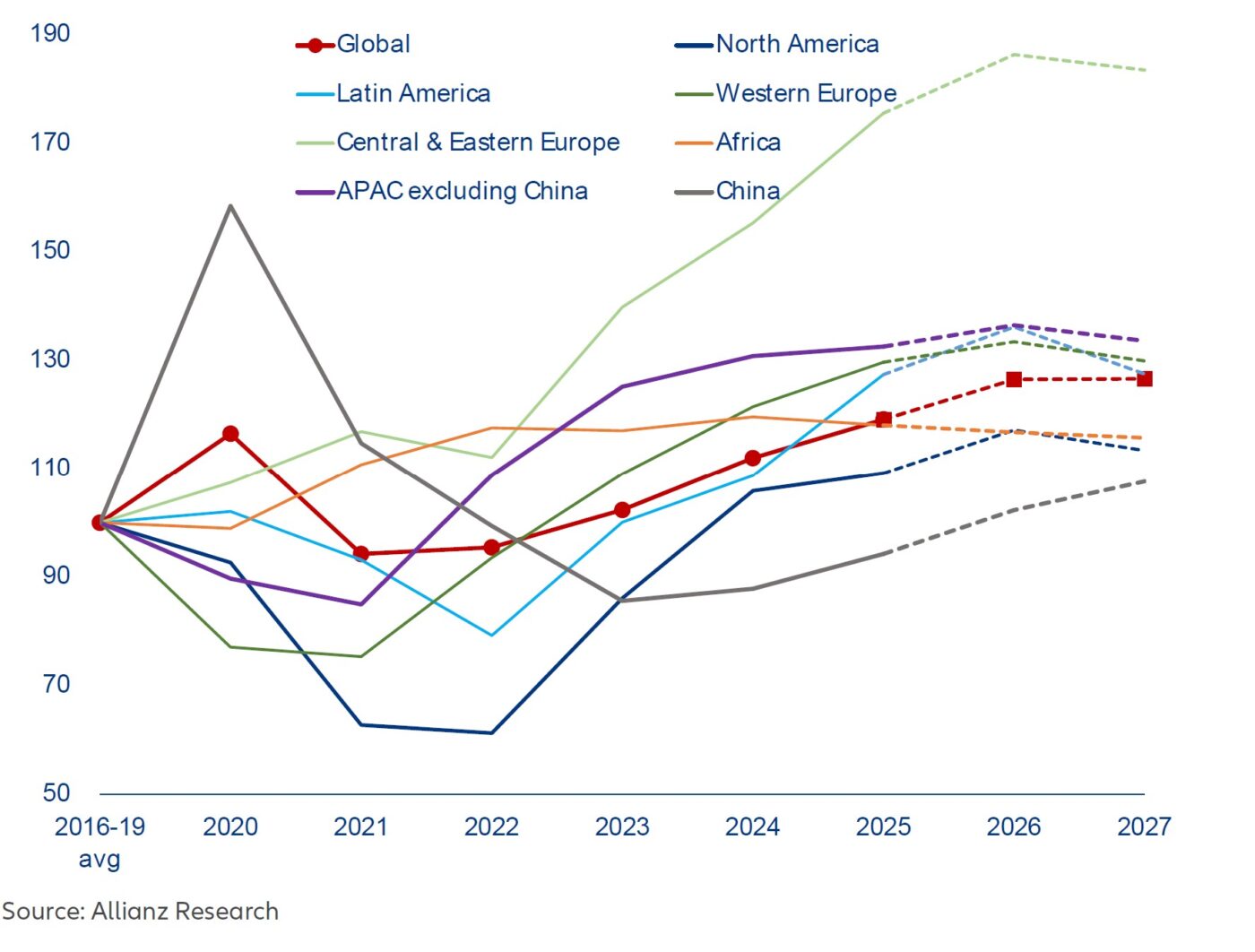
There are also signs of a significant deterioration internationally. The crisis in the Middle East has increased volatility on the energy markets, made transport costs more expensive and destabilized global supply chains. Allianz Trade expects corporate insolvencies worldwide to rise by 6 % in 2026 - for the fifth time in a row. Before the conflict, the forecast was +3 %.
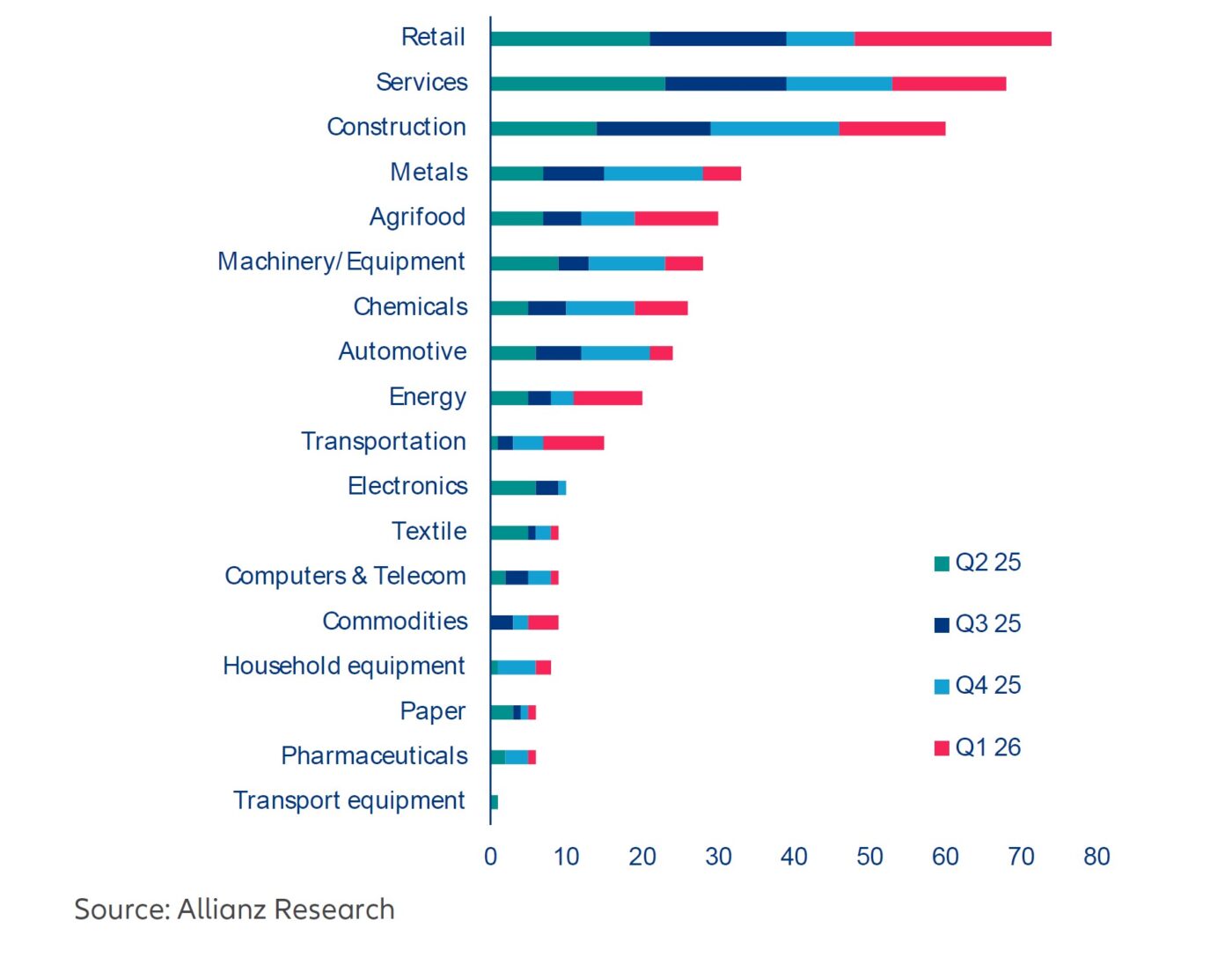
Aylin Somersan Coqui, CEO of Allianz Trade, comments: «This situation is driving up costs along global value chains, from agriculture and food to manufacturing, healthcare and technology. It is also exacerbating the pressure on energy-intensive sectors such as transportation, chemicals and metals. The combination of weaker demand, rising input costs and tight financial conditions is weighing on companies with weak pricing power, low margins, high debt or structurally increased working capital requirements. Compared to our pre-crisis forecast, the direct damage of the Middle East conflict will mean 7,000 additional corporate insolvencies worldwide in 2026 and 7,900 in 2027.»
Worst case: escalation would further exacerbate the situation
If the Strait of Hormuz remains blocked in the longer term, the consequences could be significantly exacerbated by prolonged supply disruptions for oil and gas as well as other commodities such as fertilizers and helium. Maxime Lemerle, lead analyst for insolvency research at Allianz Trade, warns: «A prolonged and widespread escalation would result in global insolvencies increasing by 10 % in 2026 and 3 % in 2027. This would mean around 4100 additional insolvencies in the US and 10,500 in Western Europe in the period 2026-2027.’
Millions of jobs at risk
The predicted increase in global corporate insolvencies of 6 % in 2026 will also put jobs under pressure. Allianz Trade estimates that around 2.2 million jobs would be directly at risk - 94,000 more than in the previous year. According to Lemerle, the construction, retail and services sectors would be particularly affected. Europe leads the global statistics with 1.3 million potentially affected jobs. Western Europe and North America are both likely to record a 12-year high. Overall, the jobs threatened by bankruptcies could account for around 6 % of the total number of unemployed in the US and Europe.
Stabilization not expected until 2027
Allianz Trade expects a stabilization at a high level globally in 2027 - a slight decline had been forecast before the Middle East conflict. In Switzerland, a normalization is expected from 2027, with a decline in insolvency cases of an estimated 3 %. Until then, the situation will remain challenging for many companies - especially SMEs.
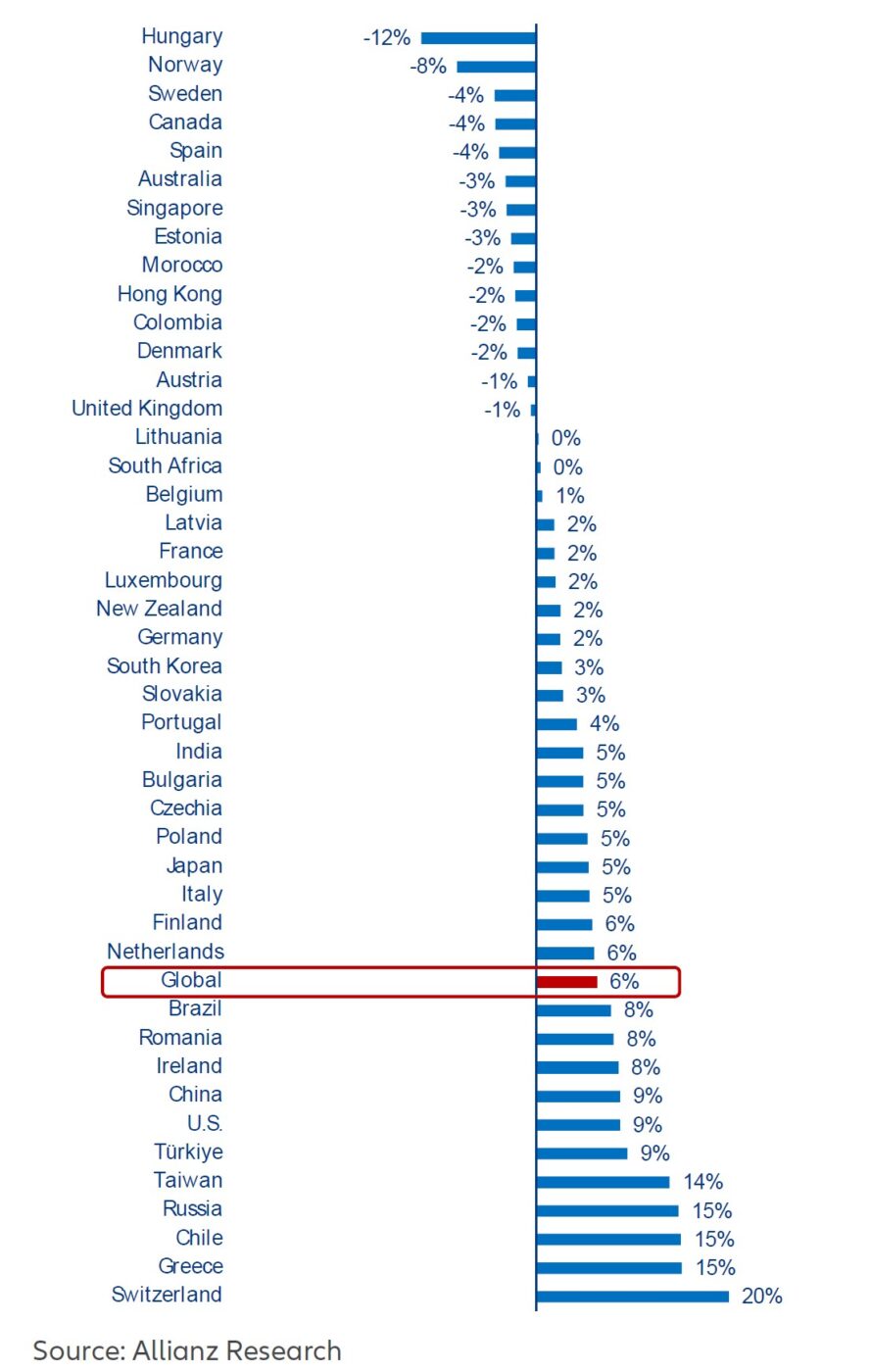
Source: Alliance Trade