«The antithesis of every business textbook»
With its assistive devices, Orthotec enables people with physical disabilities to be mobile. The company, which is part of the Swiss Paraplegic Group, is known for its strong innovative spirit and a corporate culture based on mutual respect.





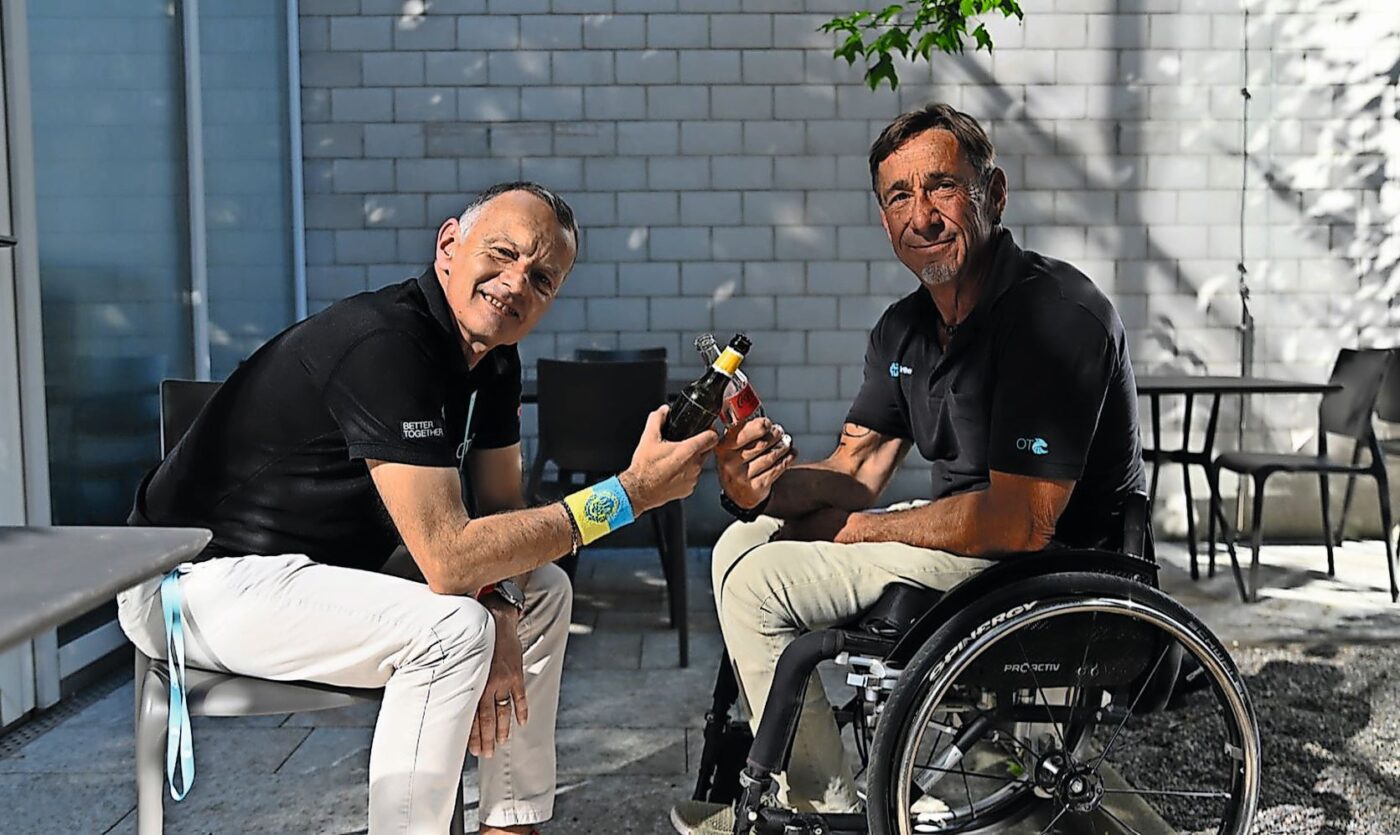
Every two days, an accident occurs in which a person suffers a spinal cord injury. For those affected and their families, this represents a massive upheaval in their lives: Will they ever be able to move around again? Will they be able to return to work? What will they have to do without for the rest of their lives? Doctors, nursing staff, and therapists at the Swiss Paraplegic Center (SPZ) are confronted with these kinds of questions every day. This is because spinal cord injury doesn’t just mean being unable to walk; it also affects many other daily activities: transferring from bed to a wheelchair and back, managing bladder and bowel functions, or regularly shifting weight to relieve pressure on the buttocks all require specific assistive devices. This is exactly where Orthotec comes in—a «sister company» of the Swiss Paraplegic Center (SPZ) that is also based in Nottwil, in the same building. The company helps people with spinal cord injuries regain optimal mobility and quality of life through customized assistive devices and services. We spoke with Managing Director Stefan Dürger.
Mr. Dürger, at first glance, Orthotec seems like a «typical» medical device supplier. But there are still a few differences. What are they?
Stefan Dürger: We take a holistic approach, in keeping with the ideas of Dr. Guido A. Zäch, the founder of the Swiss Paraplegic Center. Patients should be able to receive everything from a single source—meaning they shouldn’t have to travel to Zurich for a prosthesis, pick up a wheelchair in Basel, and then go somewhere else again for vehicle modifications. Upon discharge from the SPZ, patients are equipped as much as possible to manage their daily lives independently once again. What sets us apart from other assistive device providers is that we can offer all necessary assistive devices at a single location—rehabilitation technology, vehicle modifications, continence and daily living aids, and orthopedic technology. Added to this is wheelchair sports. It serves as our showcase, raises our profile beyond the medical field, and at the same time acts as a driver of innovation.
So, is it comparable to Formula 1?
Exactly. We also collaborate directly with the Sauber Formula 1 racing team. Many of the projects we carry out with them are later incorporated into other products. We are the global leader in wheelchair athletics and the only organization of its kind in Switzerland.
Orthotec is a nonprofit corporation. How do the public interest and economic efficiency go hand in hand?
Orthotec is a stock corporation with only one shareholder: the Swiss Paraplegic Foundation. Although we are a nonprofit organization, we must still operate successfully from a business perspective. What sets us apart from many other companies is that our profits are not distributed to private owners. They remain within the group and are channeled into reserves, investments, and the further development of our services. This is made possible in part by the solidarity of our two million members in the Foundation’s Supporters’ Association. Each company also has its own mission statement. Part of our mission is to be as self-financing as possible and to remain financially sound in the long term. Thus, the common good and financial viability are not mutually exclusive—they complement each other.
Where are you currently investing the most?
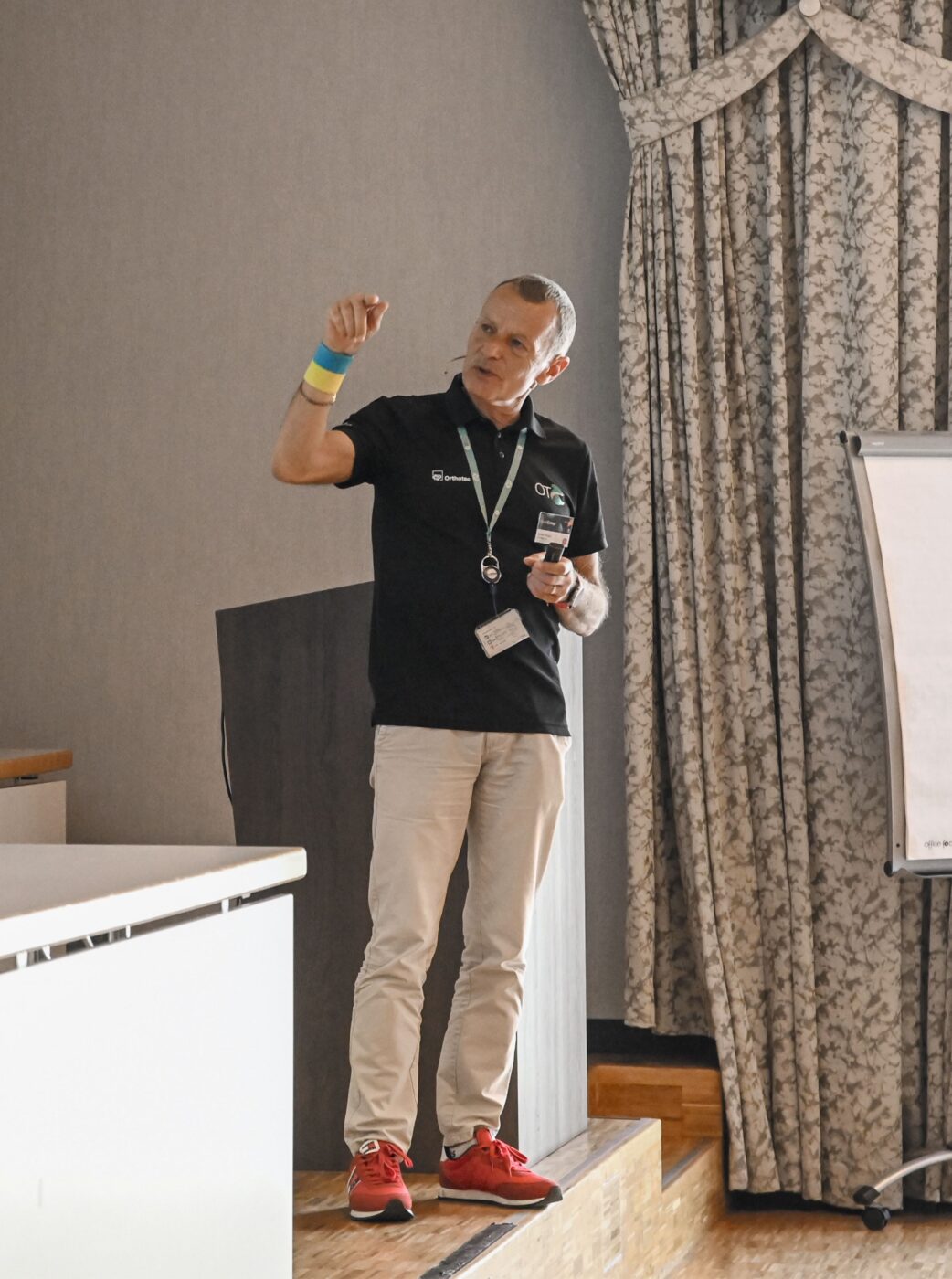
Above all, in digitalization. We’re well-equipped in terms of machinery, and we have a modern infrastructure. The largest investment in Orthotec’s history was the implementation of Opacc’s new ERP system. It was necessary because the previous system wasn’t sufficient. Each department worked in isolation; there was no common data structure. This made data exchange complicated, and we were reaching our limits. So we had to start from scratch—partly because we don’t manufacture standard products. In our workshop, we handle thousands of different orders. Our company is a prime example of «batch size 1.» That makes it difficult, but also exciting. We’re practically the antithesis of every business management textbook.
What does this mean for you as a boss?
I’m incredibly proud of my employees. What we do isn’t always easy, and it’s been worth making the shift from a purely organizational approach to a process-oriented mindset. When you first start explaining this, nobody understands it at first. But suddenly, the tide turns: employees see that a team next door is working on similar tasks and, on their own initiative, suggest solving a challenge together. Ultimately, this leads to greater satisfaction.
This is partly because your work is incredibly meaningful. Your company gives seriously injured people the chance to move from point A to point B on their own again. I can well imagine that your employees share in that joy every time.
Yes, we experience the full range of emotions, from deep sadness to great joy. We strive to do our best for everyone and go the extra mile. The patient’s journey begins upon admission to the SPZ. Rehabilitation starts immediately after acute care. Together with doctors and therapists, we assess the patient’s needs and put together the necessary components. For example, we purchase wheelchairs from specialized manufacturers. These already meet about 80 percent of each patient’s needs. Our job is then to customize the remaining 20 percent to suit each user individually. After all, every person is different.
As a medical device supplier, Orthotec operates in a highly regulated market. That sounds like a lot of administrative work.
That’s right, we need a large administrative department. Ninety percent of our work involves medical devices that must be billed through insurance companies. There are significant differences in how these are processed, not to mention varying cantonal regulations. In addition, we are subject to the Medical Devices Ordinance. Since there is no longer a framework agreement with the EU, all medical devices from the EU must be separately approved for Switzerland. This can result in foreign manufacturers no longer supplying our country because they are unwilling to bear the additional costs of obtaining extra certification. Or take another example: As soon as we modify a wheelchair too extensively, it loses its CE mark. We then have to re-approve it separately because it is considered a new product. These administrative hurdles lead to higher personnel costs and make our lives very difficult overall.
Let's talk a little more about the future of the company, particularly in relation to developments in robotics and AI: What opportunities are emerging for new solutions that help improve patients' quality of life?
I don’t think AI will have much of an impact on people themselves. But there’s enormous potential when it comes to processes and administration. Especially if you’ve set up an ERP system properly, the data can be used to automate recurring processes. That will certainly become an issue for us in some areas. In manufacturing, there’s hardly any room for automation when dealing with batch sizes of one. But the most important thing for us remains human interaction: we encounter people in very difficult situations. Empathy and compassion simply can’t be replaced by AI.
What about robotic assistance, for example with prosthetics or in the form of exoskeletons?
There’s a lot going on right now, and there are some fascinating examples. But many of these developments are still a long way from being practical. Exoskeletons are already being used in therapy. However, people who have tried such devices often prefer a wheelchair. While exoskeletons are good for standing up, they’re still too cumbersome for getting around all day long. A major area of research is spinal cord regeneration—that is, reconnecting severed nerve pathways. I believe we’ll see major progress in this area in the future—thanks in part to AI.
What are the next milestones in the company's continued development?
We’re in the fortunate position of not having to make any fundamental changes. We’ve already tackled the biggest hurdle—including the financial aspect—with the implementation of the new ERP system. Our main goal is to remain stable. We’ll digitize whatever can be digitized, moving away from paper-based processes. I don’t foresee any major changes to our business model at this time. However, if spinal cord injuries can one day be cured, then we’ll have to reevaluate our strategy. That’s why it’s important that we stay on top of technological developments.
More information: www.orthotec.ch