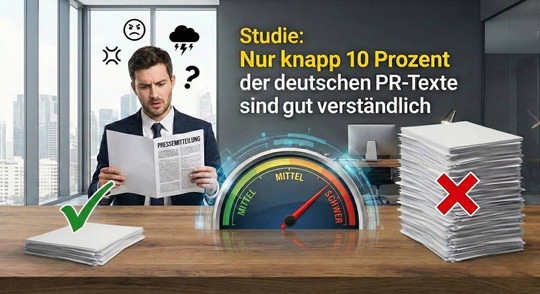
German PR texts: Only 10 percent are easy to understand
An analysis of 3,235 press releases on Presseportal.de shows: Only just under a third of German-language PR texts are good or acceptably comprehensible. Texts from the healthcare sector and other sensitive areas are particularly problematic. The study by Wortliga reveals major weaknesses in PR communication.


How clearly do German companies, authorities and organizations communicate? A study of 3,235 press releases on the largest German PR portal Presseportal.de shows major differences: texts about entertainment are easy to understand. Important sectors such as healthcare, on the other hand, often use complicated official language.
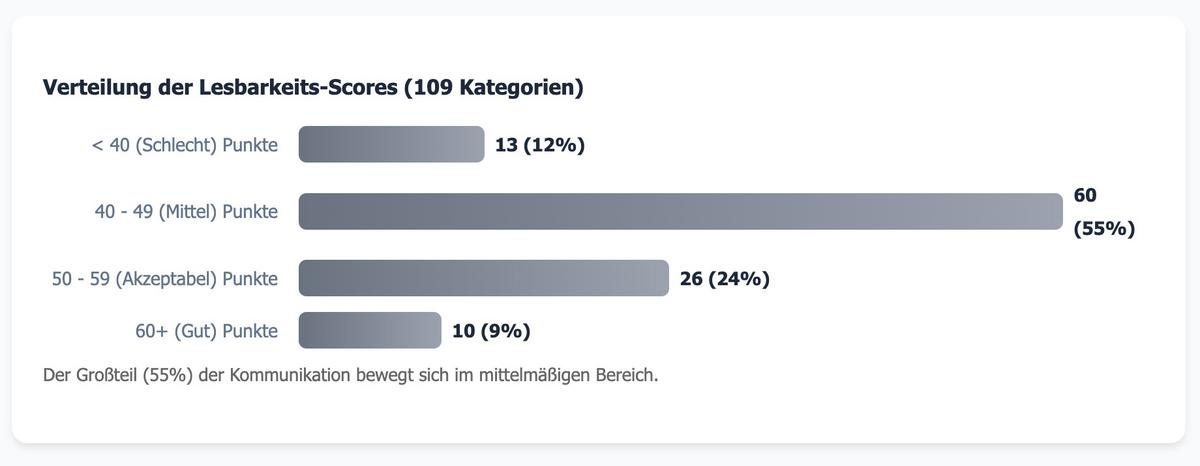
The study by the Munich-based manufacturer of text analysis tools Wortliga examined texts from 109 subject areas on Presseportal.de in November 2025. The result: only around one in three texts (33 percent) achieved a good or acceptable result in terms of readability. In contrast, 55 percent of the messages are only moderately comprehensible and almost 12 percent fall into the critical range below 40 points.
Critical topics do not get through
The difference between the topics is very large: texts on the topic of entertainment («show») are the clearest with 63.8 points. Communications from hospitals scored the worst with only 36.4 points. Authors often use cumbersome passive sentences, especially where trust is particularly important.
«We are observing a huge gap,» explains Gidon Wagner, Managing Director of Wortliga. «Particularly in sensitive areas such as health, finance or crisis topics, senders hide - perhaps unintentionally - behind nested sentences and nominal style. Authors use language here as an instrument to distance themselves rather than as a bridge to the reader.»
«It's a big problem when important topics such as health or finance don't reach people with incomprehensible language,» says Wagner. «A readability score of 36.4 for hospital press releases is a sign of very poor communication. Readers and journalists need clear facts instead of long and complicated sentences.»
Complexity of topics is no excuse
The data disproves the idea that complex topics require complicated texts. Even dry topics such as «fuel prices» land in the top field in the study. However, it is striking that the more unpleasant the news (e.g. insolvencies), the longer and more bureaucratic the sentences become - to the detriment of transparency, trust and reach in editorial offices.
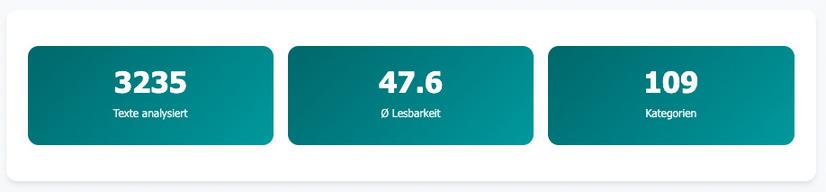
The results at a glance
The analysis based on the word league formula (scale 0-100) shows the winners and losers in terms of communication quality:
Top 5 categories (best comprehensibility): Show (score: 63.8), Bundesliga (score: 62.7), television production (score: 62.5), fuel prices (score: 62.5), celebrities (score: 61.5)
Flop 5 categories (worst comprehensibility): Environment (score: 37.4), air transport (score: 37.3), jurisdiction (score: 37.2), logistics (score: 36.9), hospital (score: 36.4)
The study advises companies to write with fewer nouns, more verbs and shorter sentences. This makes press releases more usable for journalists.
Source: wortliga.de