Quantum computing: new potentials for automated machine learning
Quantum computing makes it possible to advance computationally intensive technologies such as machine learning (ML). In the "AutoQML" project, eight partners from research and industry are therefore developing solution approaches that link quantum computing and ML. An open-source platform is intended to enable developers to use quantum machine learning algorithms without in-depth specialist knowledge. The Fraunhofer Institute for Manufacturing Engineering and Automation IPA is playing a major role in the project and [...]





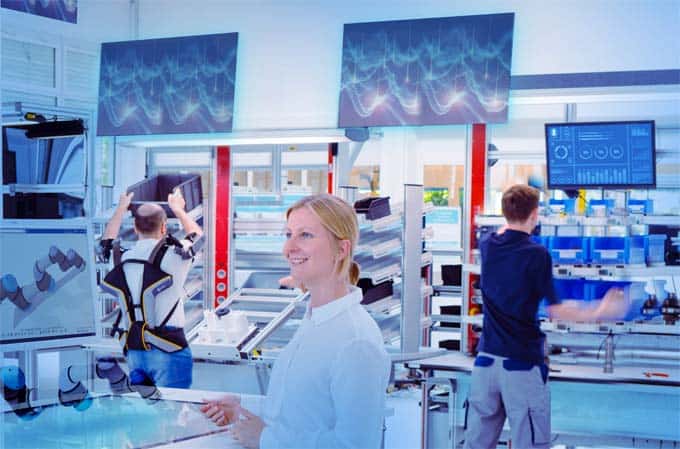
New approach: quantum computing takes machine learning to a new level
The approach of automated machine learning (AutoML) counteracts these challenges and facilitates the use of AI for specialists. In particular, the choice of concrete ML algorithms is automated. Users thus have to deal with and know less about ML and can focus more on their actual processes. In this context, quantum computing marks a breakthrough into a new technological era, as it can significantly improve the AutoML approach. In addition, quantum computing provides the computing power often required for AutoML. The joint project "AutoQML" takes this innovation as its starting point and pursues two main goals: First, the new AutoQML approach is being developed. This will be extended by newly developed quantum ML algorithms. Second, quantum computing raises the AutoML approach to a new level, because certain problems can be solved faster with the help of quantum computing than with conventional algorithms. Led by the Fraunhofer Institute for Industrial Engineering IAO, the project gives developers simplified access to conventional and quantum ML algorithms via an open-source platform. In addition to Fraunhofer, the companies GFT Integrated Systems, USU Software AG, IAV GmbH Ingenieursgesellschaft Auto und Verkehr, KEB Automation KG, TRUMPF Werkzeug-maschinen GmbH + Co. KG and Zeppelin GmbH are participating in the project. The solutions developed will be tested on the basis of specific use cases from the automotive and production sectors.The best of both worlds: Software library for hybrid total solutions
The project consortium will integrate components of quantum computing into current machine learning solution approaches in order to be able to use the performance, speed and complexity advantages of quantum algorithms in an industrial context. In the so-called AutoQML-Developer Suite - a software library - developed quantum ML components and methods will be brought together in the form of a toolbox and made available to developers in an open-source platform. This will enable users to apply machine learning and quantum machine learning and to develop hybrid overall solutions. The project will run for three years. Further market dissemination by the corporate partners will enable the transfer of research-based high-technology to a broad industrial environment with the aim of significantly strengthening Germany as an industrial location. The project is funded by the German Federal Ministry of Economics and Climate Protection. More information: http://www.autoqml.ai/This article originally appeared on m-q.ch - https://www.m-q.ch/de/quantencomputing-neue-potenziale-fuer-automatisiertes-maschinelles-lernen/