Solar hydrogen now also possible without expensive platinum
Researchers have succeeded in producing hydrogen efficiently using solar energy - without the previously indispensable precious metal catalyst platinum.


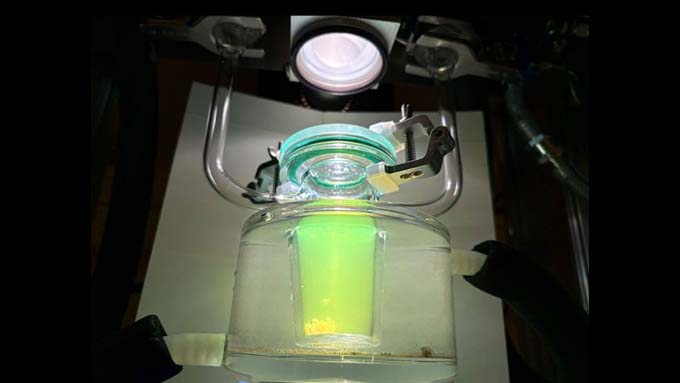
A research team at Chalmers University of Technology in Sweden has developed a process that can be used to produce hydrogen gas from sunlight and water alone - without the previously necessary and expensive raw material platinum. Instead, tiny particles of an electrically conductive plastic are used to drive the reaction efficiently and sustainably.
«Developing efficient photocatalysts without platinum has long been a dream in hydrogen research,» says Alexandre Holmes, co-author of the study. Through targeted material design, it has now been possible to modify the conductive plastic particles so that they interact better with water and use light more efficiently. In the laboratory, the reaction with simulated sunlight produced visible bubbles of hydrogen gas - according to the researchers, up to 30 liters per hour with just one gram of the material.
The new approach, published in the journal Advanced Materials, This could significantly reduce the costs of hydrogen production and improve its ecological footprint. This is because platinum is not only scarce and environmentally harmful to extract, but its production is concentrated in just a few countries.
Next, the team led by chemistry professor Ergang Wang plans to carry out the reaction completely without additional additives such as vitamin C. The long-term goal is to split water into hydrogen and oxygen using sunlight alone - a decisive step towards a sustainable energy future.
Source: Chalmers University of Technology