Check Point launches AI-driven exposure management
Check Point Software Technologies announces its new Exposure Management to help organizations defend against AI-driven cyber attacks. The solution transforms fragmented data about the attack surface into prioritized, actionable remediation and integrates with over 75 security controls from around 90 percent of the largest security vendors.



Check Point Software Technologies has announced Check Point Exposure Management (EM). The new approach helps organizations defend against cyber attacks in the age of artificial intelligence by transforming fragmented data about the attack surface into prioritized, actionable and secure remediation.
Powered by the capabilities of Cyberint, Veriti and Check Point's global threat visibility, EM provides real-time situational awareness. The solution combines threat intelligence, dark web insights, attack surface visibility, exploitability context and automated remediation. These are all the more important today as hackers increasingly use automation and AI to act faster than traditional security measures can respond.
Closing the gap in damage repair
«IT security teams are inundated with information but continue to struggle to turn insights into action and reduce risk with their existing security investments,» said Yochai Corem, Vice President of Exposure Management at Check Point Software Technologies. «Exposure Management closes this gap by combining real-world threat intelligence with secure, automated remediation. This helps organizations reduce risk faster while preparing for AI-driven attacks.»
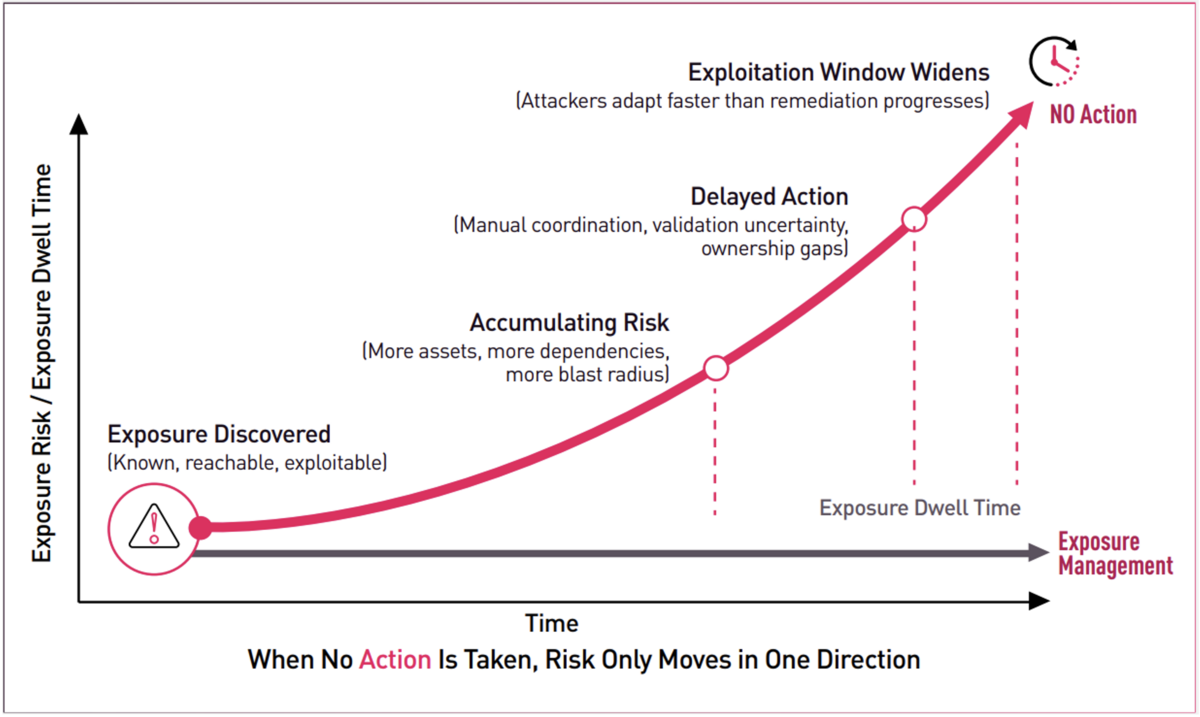
While attacks are becoming more widespread and automated, the remediation of security vulnerabilities remains slow and manual in many organizations. Disjointed tools, siloed teams and reliance on static severity assessments mean critical vulnerabilities continue to go unaddressed. This widens the gaping hole in cyber threat remediation and increases the likelihood of successful attacks.
Integration into existing security environments
Designed for use in existing environments, EM integrates with more than 75 security controls from approximately 90 percent of the largest security vendors, including network, endpoint, cloud, email, identity and operating system layers. This comprehensive integration reflects Check Point's open-garden approach and enables organizations to reduce risk with the tools they already have while minimizing operational complexity.

The approach is in line with Gartner's Continuous Threat Exposure Management (CTEM) framework, which focuses on the continuous correlation between the actual behavior of attackers and corporate resources. By linking information, exposure context and remediation measures, organizations prioritize and eliminate the greatest risks before cyber criminals become active.
Three integrated layers for comprehensive protection
Check Point Exposure Management is based on three tightly integrated layers: First, Threat Intelligence leverages Check Point's capabilities to map the cyber attacker ecosystem and track active campaigns, exploited vulnerabilities, malicious infrastructure and high-risk indicators. The data is based on real-world attacks observed from the industry's most comprehensive sources.
Second, the platform automatically identifies the organization's attack surface using built-in scanners and integrates with industry-standard tools to prioritize risks based on their actual exploitability, business context and existing security controls. This includes a continuous assessment of security effectiveness.
Third, Check Point Exposure Management goes beyond prioritization by securely reconfiguring existing security controls via APIs. Validated measures such as virtual patching, IPS activation and indicator enforcement enable consistent remediation at scale with minimal operational friction.
«Exposure management has become essential as organizations struggle to operationalize vulnerability data. Check Point's approach is characterized by the combination of deep intelligence, brand protection and secure, automated remediation to move from insight to action faster,» said Michelle Abraham, Senior Research Director, Security & Trust at IDC.
Check Point Exposure Management is now available. Further information on the product can be found on the Check Point website. In addition, Check Point published the corresponding «State of Exposure Management Report» in January 2026, which here is available.