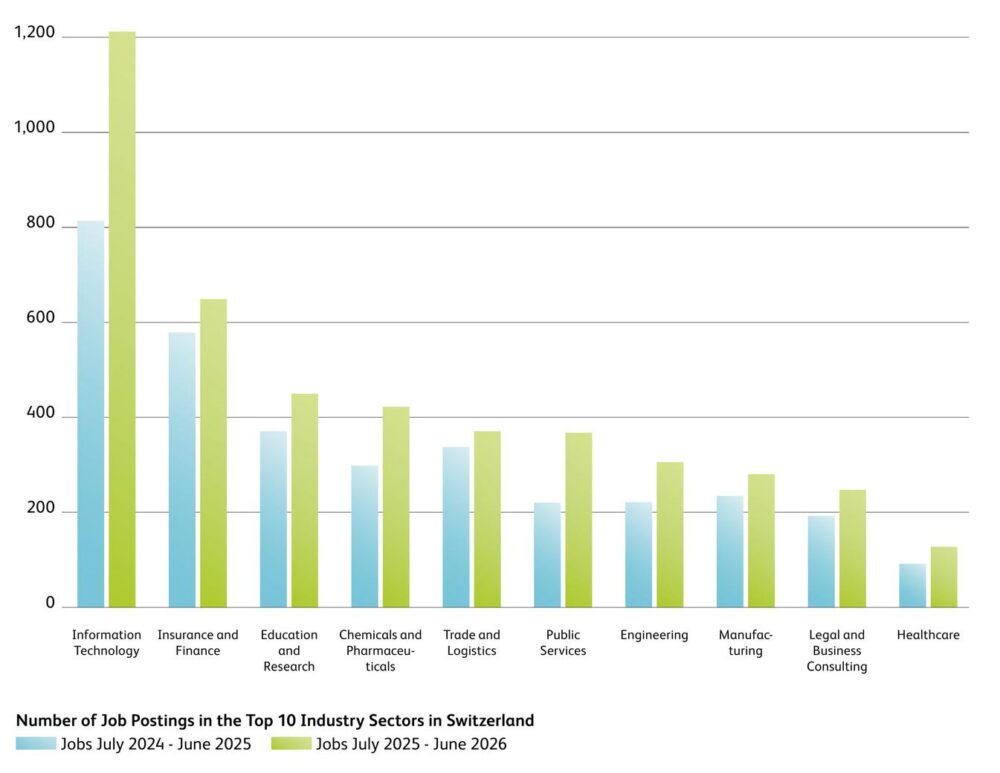
AI causes the number of applications to explode
Employers are facing a new challenge in recruiting: the number of applications is increasing rapidly - especially through the use of artificial intelligence.


With «Quick Apply» functions on job platforms and LinkedIn as well as AI tools that can send dozens of applications in just a few minutes, companies are now faced with a veritable flood of applications. This makes it increasingly difficult to identify the right talent. «Some recruiters are now receiving more than 800 applications for middle management positions, more than double the number from last year,» says Tom Lakin, Global Head of Future of Work Advisory at recruitment firm Robert Walters. «Many applications look almost identical. In an AI-driven job market, human judgment is therefore more important than ever.»
AI is changing the way we advertise
Two developments are driving this trend particularly strongly. Firstly, application processes are increasingly automated and often lack transparency for candidates. Applicant tracking systems (ATS) often provide little insight into the status or next steps of the process.
On the other hand, many candidates themselves use AI to increase their chances. Tools such as LazyApply or automated application bots search job boards and send out masses of applications - sometimes without candidates even having read the job advertisement in detail.
Research by Robert Walters shows that 56 % of professionals now use AI in some form for their applications, with almost one in five using it regularly. This may result in more applications, but not automatically in better quality. Employers are increasingly reporting generic, AI-generated CVs and less personalized applications - making it harder to filter out real talent.
Human judgment remains indispensable
In order to cope with the high number of applications, many companies are increasingly relying on AI-supported screening tools. These can speed up processes, but they also entail risks: they can reinforce existing biases, reduce transparency and overlook the subtle differences that make up human judgment.
«The most successful teams don't try to completely automate the problem,» explains Faye Walshe, Director of Innovation & AI at Robert Walters. «They deliberately put people at the heart of the process: they check real skills early on in the selection process, critically scrutinize AI-generated shortlists and test their tools regularly. This makes it possible to separate the wheat from the chaff and make better hiring decisions.»
How companies can react
Robert Walters makes the following recommendations for dealing with the AI-induced flood of applications:
- Using AI responsibly: AI can help with the initial pre-selection, but the final assessment should always lie with humans.
- Make processes more transparent: Clear and comprehensible application processes reduce irrelevant applications and improve the quality of candidates.
- Check skills early on: Work samples, short tasks or structured interviews help to quickly recognize real skills.
- Review AI tools regularly: Regular audits help to identify bias, ensure fairness and meet regulatory requirements.
AI will continue to change recruiting in 2026. Companies that succeed in combining technological efficiency with human judgment will gain a clear competitive advantage. Those who focus on transparency, fairness and human decision-making will be able to cope with the flood of applications - and still find the right talent.
Source: Robert Walters