2026 Online Retailer Survey: AI Agents Are Transforming Swiss E-Commerce
The FHNW School of Business has published its 2026 Online Retailer Survey. The study shows that AI agents are fundamentally transforming online retail—for both sellers and consumers. However, three-quarters of the companies surveyed have not yet formulated an AI strategy.


The FHNW School of Business has published the 2026 Online Retailer Survey. 473 online store operators—90 percent of whom are from Switzerland—participated. The study, conducted by the Institute for Competitiveness and Communication (ICC) under the direction of Prof. Dr. Darius Zumstein, highlights key developments in Swiss e-commerce: the increasing influence of AI on sales processes, the emergence of agentic commerce, and the growing need for strategic action within companies.
Agentic Commerce as a New Sales Channel
Already, 10 percent of the online retailers surveyed describe so-called "Agentic Commerce"—that is, buying and selling through AI agents—as a revenue-generating channel. Seventy-five percent expect AI agents to handle product searches in the future, 74 percent anticipate they will take over price comparisons, and 71 percent expect product recommendations from AI systems. Expectations regarding autonomous purchasing decisions are significantly more cautious: Only 32 percent believe that AI agents will make purchasing decisions in the future, and just 22 percent expect the entire purchasing process to be handled by AI.
Google has already paved the way for the future of online shopping by integrating AI Mode into its search engine and introducing features such as Agentic Checkout. For online retailers, this means, in concrete terms, that structured, up-to-date, and machine-readable product data, reliable interfaces, and trustworthy content are becoming increasingly important.
Generative Engine Optimization Is Gaining Traction
Generative Engine Optimization (GEO) was included as a marketing tool in the 2026 survey for the first time. Already, 51 percent of retailers rate GEO as relevant or somewhat relevant. GEO refers to measures aimed at improving the visibility of companies, brands, and products in generative AI systems such as ChatGPT, Gemini, or Claude. However, search engine optimization (SEO) remains the most important marketing tool, at 88 percent.
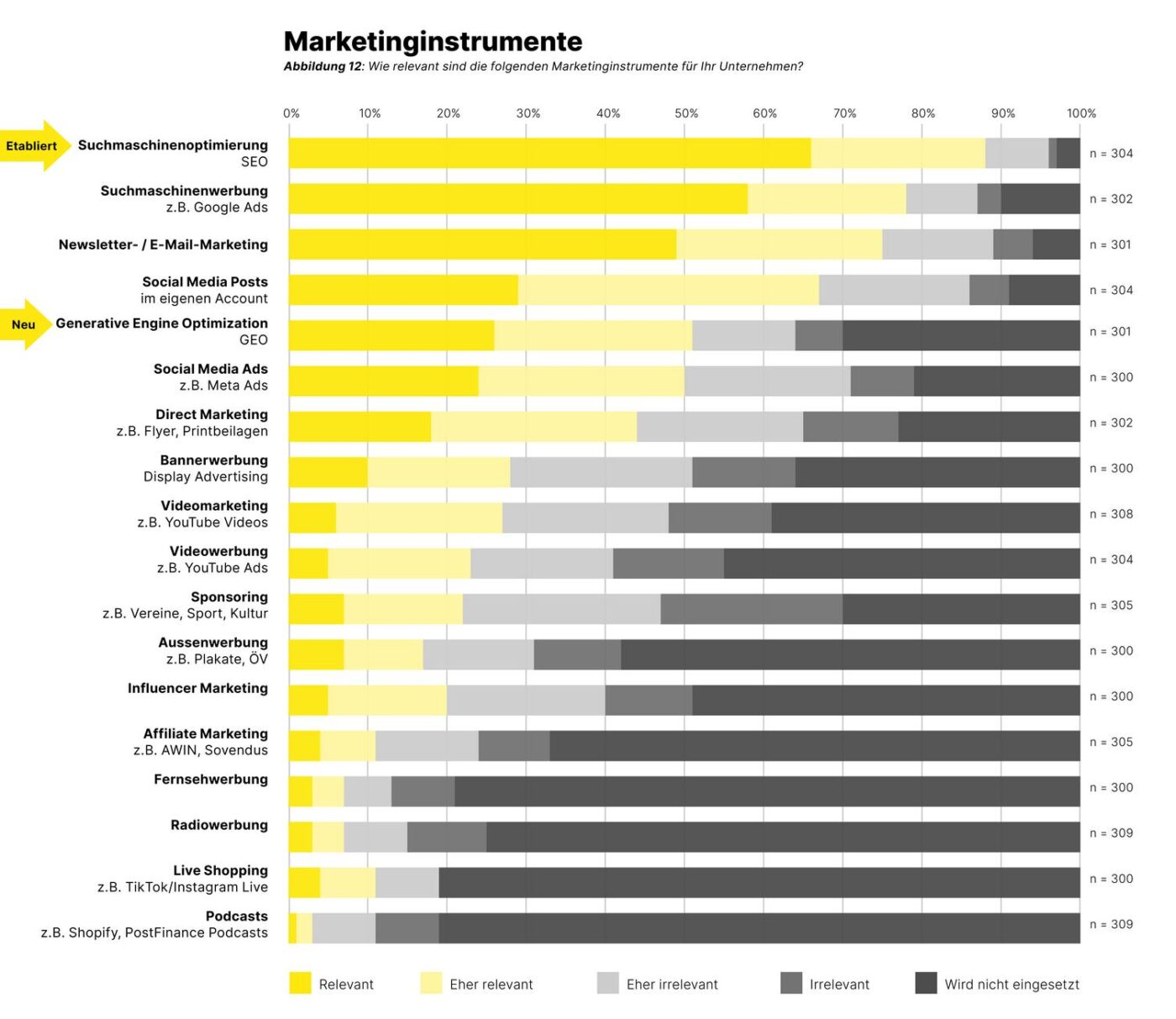
The study reveals a significant gap between the perceived relevance of GEO and the systematic measurement of its success: Only 18 percent of retailers measure what is known as the AI Visibility Rate. Many are also still unable to quantify traffic and revenue generated by AI systems.
AI Has Become Part of Everyday Life—But a Strategy Is Missing
85 percent of the retailers surveyed use AI for content creation, and 88 percent for translations. The use of AI in programming is growing particularly rapidly: While only 24 percent were using AI-powered development tools such as Claude Code or Codex in 2025, that figure had already risen to 43 percent by 2026. AI usage has also risen sharply in analytics (35 percent) and image generation (59 percent).
The benefits are measurable: 81 percent of retailers report time savings thanks to AI, and 78 percent report gains in productivity and efficiency. At the same time, the so-called “human-in-the-loop” approach remains the norm: fully autonomous end-to-end processes are the exception—people review, make decisions, and approve.
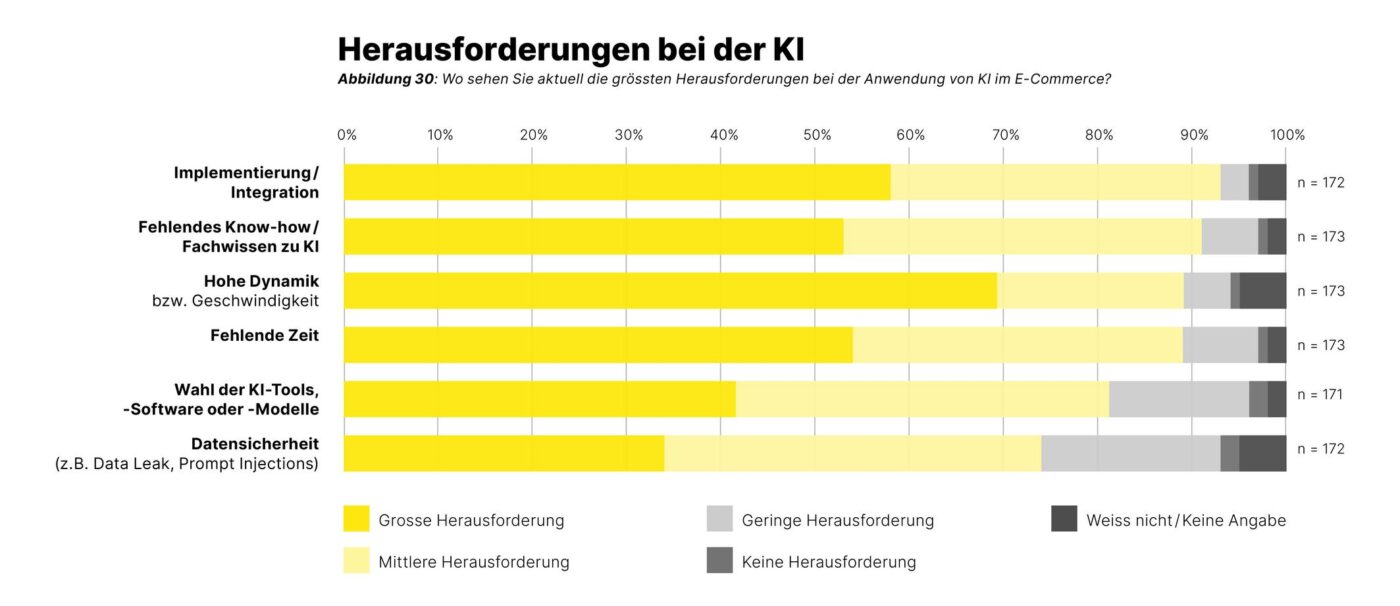
Despite this operational adoption, there is a lack of strategic alignment: Nearly three-quarters of respondents have not yet formulated an AI or agentic commerce strategy. Only 2 percent are already fully implementing such a strategy. «The high level of dynamism and rapid pace surrounding AI remains the biggest challenge in e-commerce today,» says Prof. Dr. Darius Zumstein. «Online retailers must now make themselves »Agentic Commerce ready’ and continue to develop their data and system infrastructure.”
The Market and Marketing Remain Major Concerns
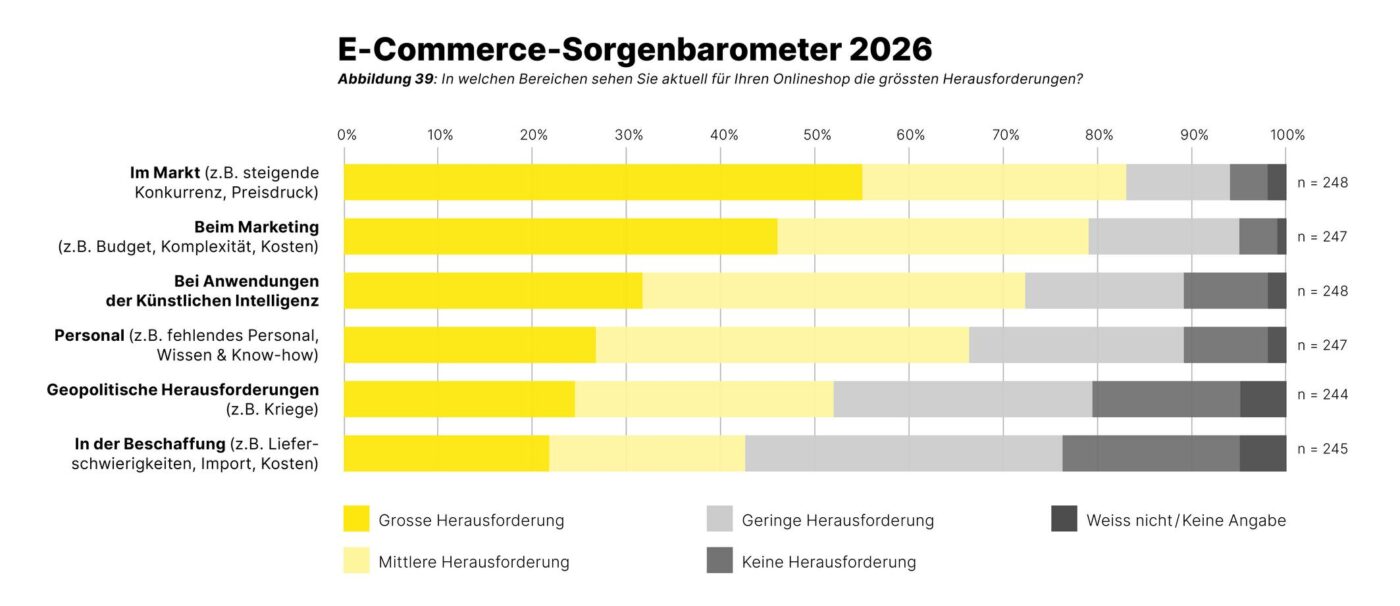
The annual E-Commerce Concerns Barometer shows that, at 83 percent, market pressures—including increasing competition, price transparency, and subdued consumer sentiment—remain the biggest challenge. Marketing follows in second place (79 percent). The importance of AI as a challenge has increased significantly: 73 percent of retailers cite AI applications as a major or moderate challenge, up from 60 percent the previous year—the sharpest rise among all areas surveyed. Personnel issues, as well as knowledge gaps (67 percent) and strategic corporate management (55 percent), are also gaining in importance.
Semi-automation dominates—major retailers are still ahead
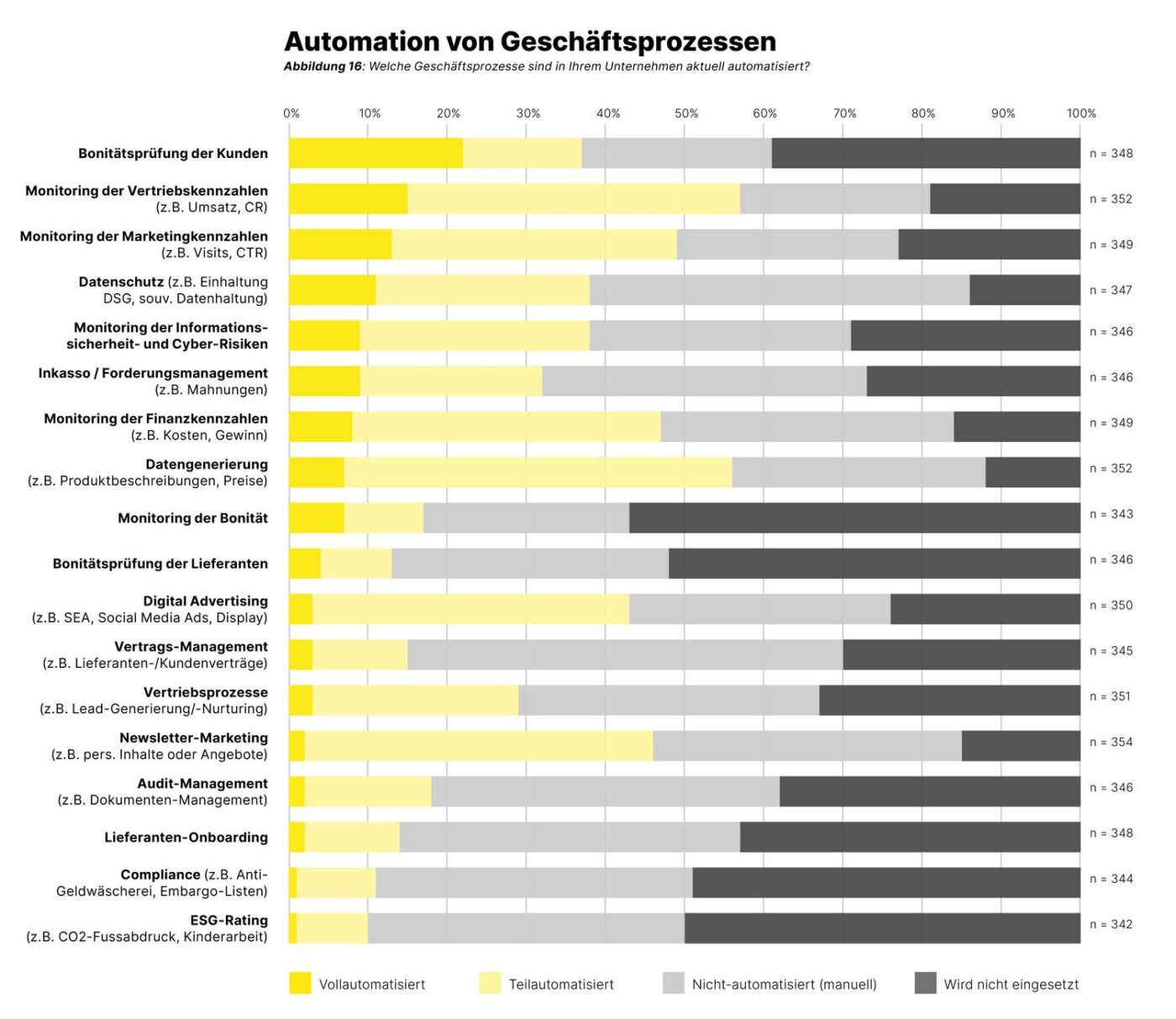
Automation is most advanced in standardized and data-driven processes: Credit checks (37 percent fully or partially automated), the monitoring of sales (57 percent) and marketing metrics (49 percent), and the generation of data for product descriptions (56 percent) are the most commonly automated tasks. For less standardized processes such as contract management, supplier onboarding, or ESG ratings, the automation rate is significantly lower. Large retailers exhibit significantly higher levels of automation in nearly all processes than smaller companies.
Source: www.fhnw.ch