Family caregivers support the system - but the framework conditions are lagging behind
On March 24, 2026, Pro Familia Switzerland held a symposium in Bern on the topic of caring for relatives. Experts from science, practice and politics agree: relatives are a cornerstone of care, but for this model to work in the long term, clear and binding framework conditions are needed now. Around 500,000 elderly people in Switzerland are cared for at home by relatives.





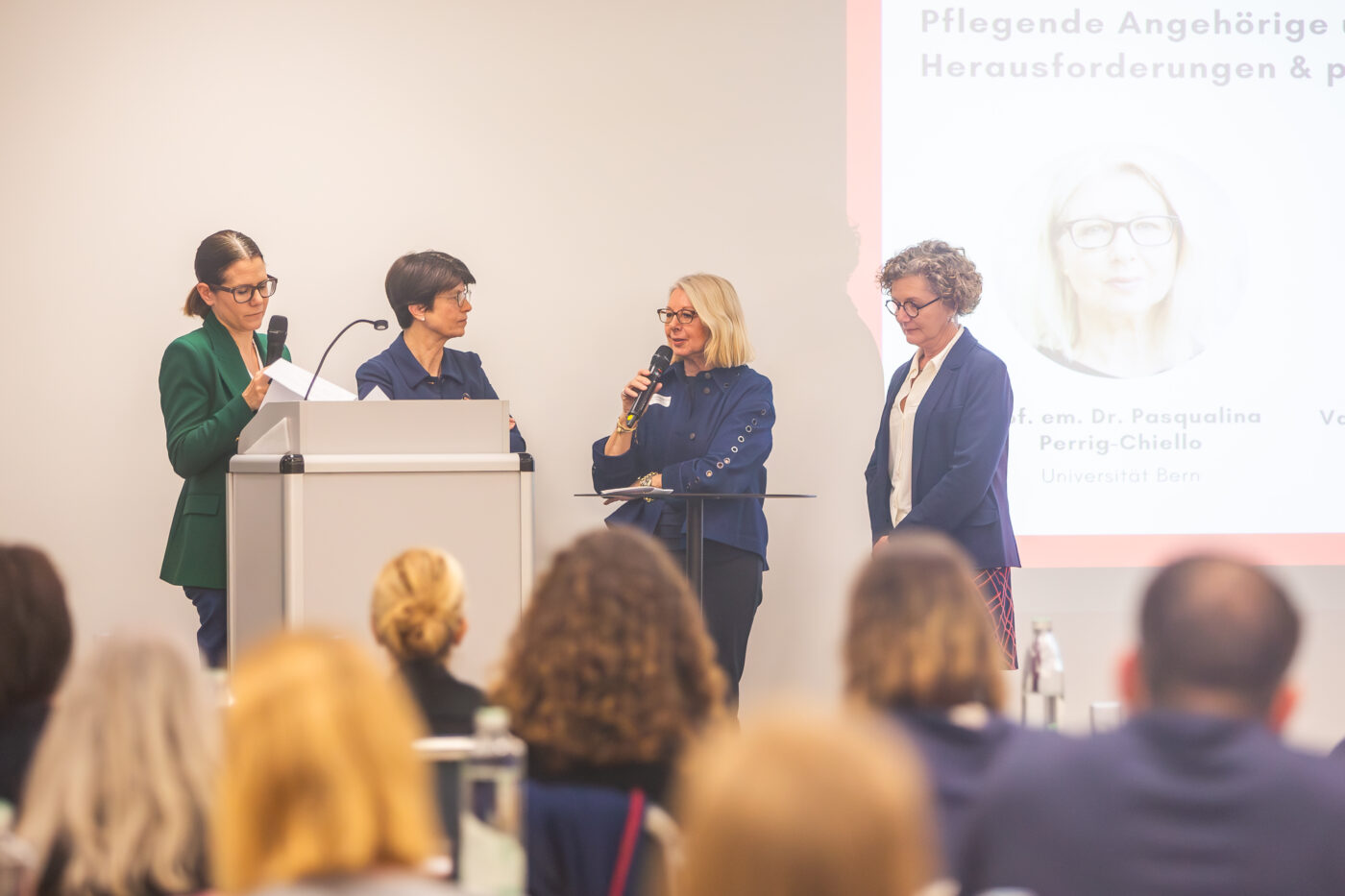
Around 500,000 elderly people in Switzerland are cared for at home by relatives. This commitment is systemically relevant, but often remains invisible, inadequately supported and a burden on health. The symposium ’Caring and caring relatives in the focus of an ageing society« on March 24, 2026 in Bern showed that there is a concrete need for action in terms of framework conditions, funding and relief services.
«Family caregivers are not a buffer. Not a cost factor. And certainly not a marginal issue. They are a cornerstone of our system. What follows now is the decisive step: Prioritize. Decide. And above all: implement,» emphasizes Eva-Maria Kaufmann Rochereau, Managing Director of Pro Familia Switzerland.
Ensuring quality, clarifying responsibility
Clear standards are a key lever. The conference shows: Care for relatives can be a viable component of care - if it is professionally embedded. This requires binding minimum standards for training and support, clear roles between professionals and relatives, systematic data bases and comparability as well as coordinated management across cantons. The focus is not on the question of whether relatives provide care, but on how quality, safety and fairness can be guaranteed.
Rethinking financing
Another key is transparent and balanced financing. In particular, the effect of current tariff structures was discussed. One thing is clear: costs must be transparent, prices must be structured in such a way that false incentives are avoided and greater consideration must be given to the economic benefits. Clear rules are the only way to prevent economic interests from shaping healthcare provision.
Systematically strengthening support and relief
Alongside care, support remains a key challenge. It makes up a large part of care work, but is often inadequately regulated and financed. The conference presents concrete solutions: Expansion and better accessibility of respite services, greater involvement of municipalities and regional networks, promotion of so-called caring communities and better reconciliation of gainful employment and caring for relatives.
Health begins before care
In the long term, there needs to be a stronger focus on prevention. Education throughout the life course strengthens health literacy and can reduce the need for care. This makes it clear that caring for relatives is not just a question of organization, but also of social investment in health.
Act now
The key challenges are known - now it's a question of implementation. Clear political guidelines are required to ensure quality, relieve the burden on relatives and stabilize the system as a whole. Family caregivers are not a marginal issue, they are systemically relevant. They must be treated accordingly.
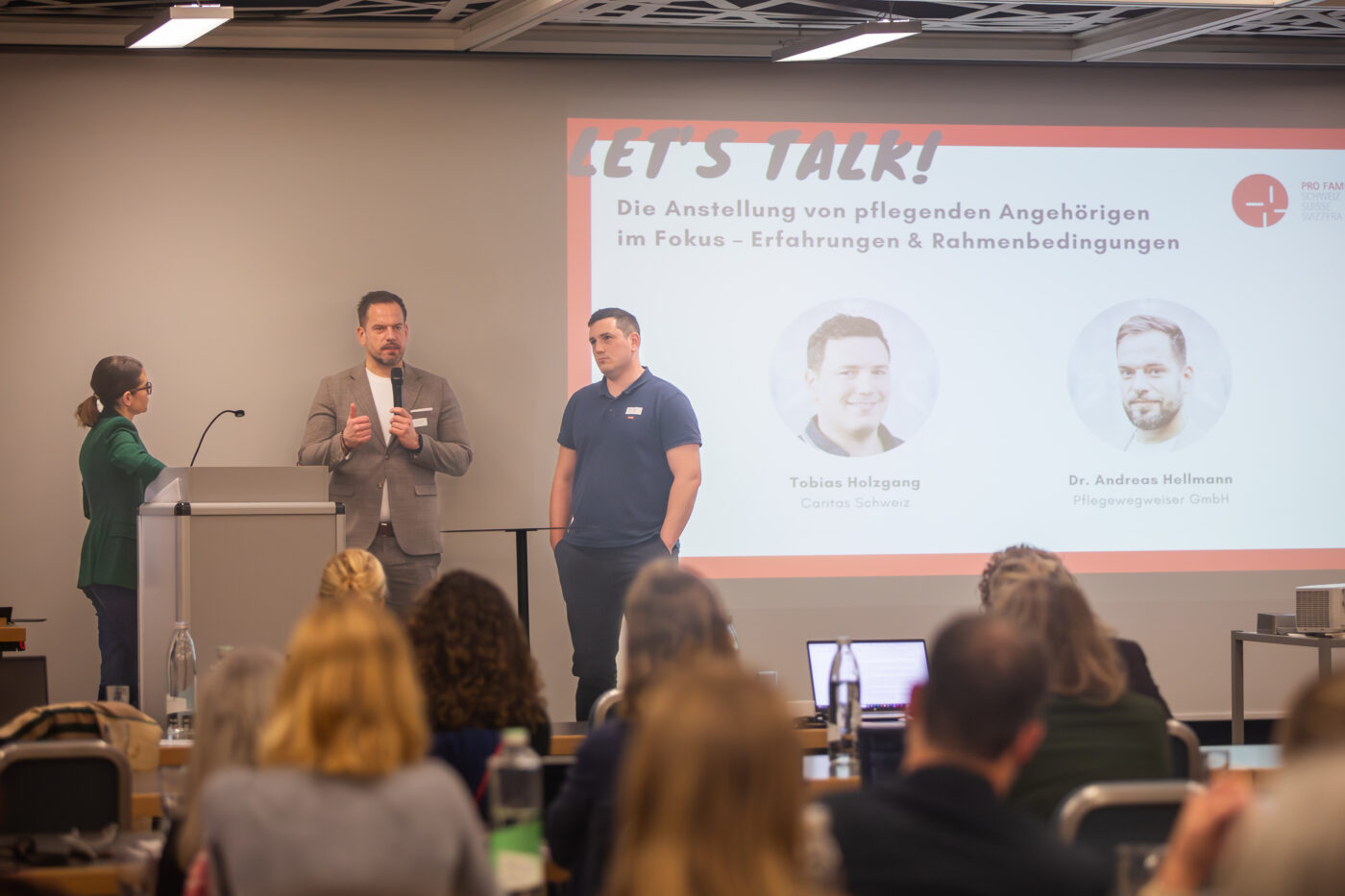
Speakers at the conference included National Councillor Valérie Piller Carrard (President of Pro Familia Switzerland), Prof. em. Dr. Pasqualina Perrig-Chiello (University of Bern), Dr. Andreas Hellmann (Pflegewegweiser GmbH), Tobias Holzgang (Caritas Switzerland), Valérie Borioli Sandoz (IGAB Interessensgemeinschaft Angehörigenbetreuung) and National Councillor Ursula Zybach.