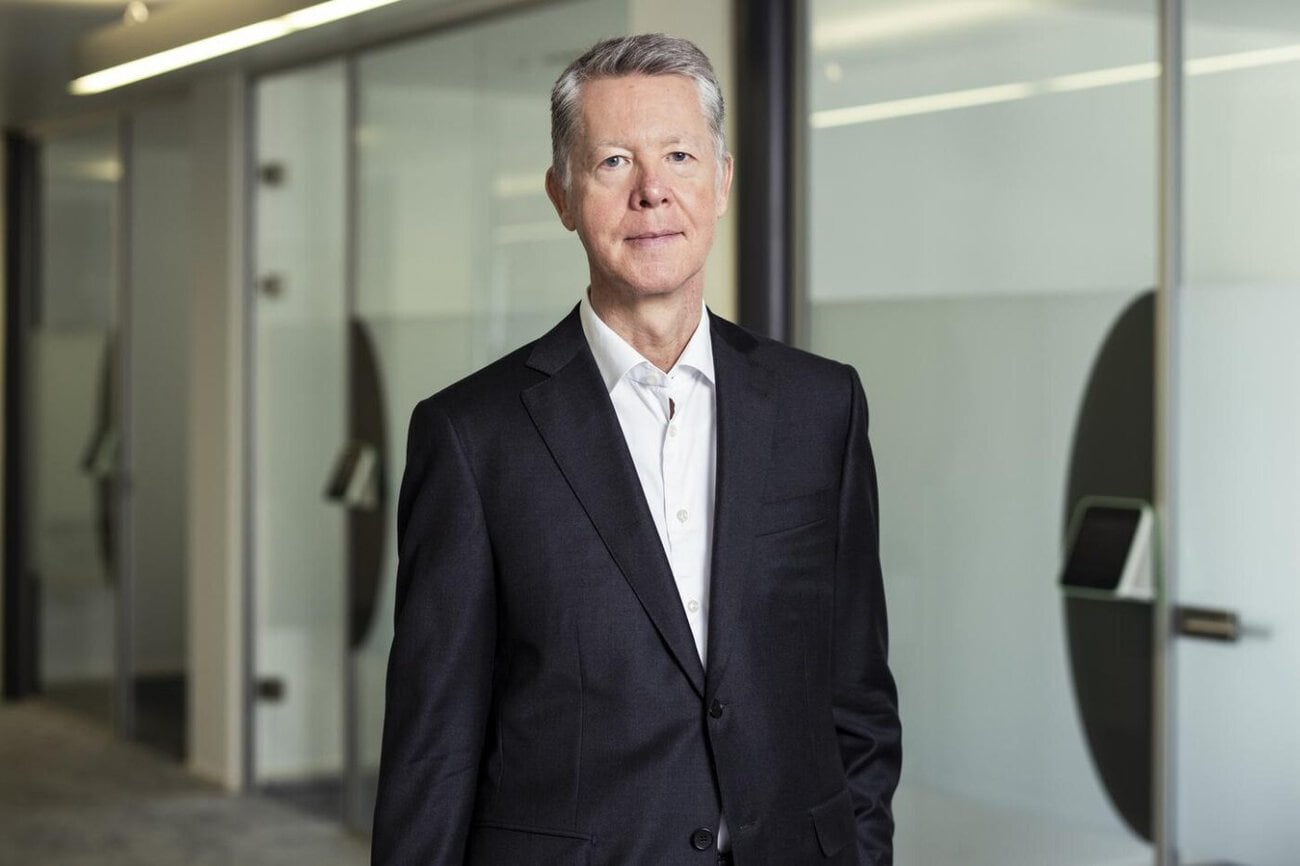
Frédéric Alran from Workday: «For us, the focus is clearly on people»
Workday, an AI platform for managing HR, finance and agents, conducted a study in 2025 and examined the strategies companies use to implement talent management. In some cases, significant differences were identified in the DACH countries. We asked Frédéric Alran, Vice President Switzerland at Workday, about this.


According to the «Global State of Skills» study, managers in Austria and Switzerland are increasingly relying on skills-based workforce strategies. Companies want to counter the shortage of skilled workers and prepare for a rapidly changing world of work. More than half of managers in the DACH region (54 %) see the future skills shortage as a major risk. We spoke to Frédéric Alran, Vice President Workday Switzerland, about some of the results of the study.
Mr. Alran, a study published by Workday in mid-2025 shows that Austrian companies are the leaders in skills-based recruitment strategies, followed by Germany and Switzerland. How do you explain these differences between the DACH countries?
Frédéric Alran: The openness of Austrian companies to skills-based hiring can be explained, among other things, by the situation on the labor market. The talent pool is limited and the shortage of skilled workers is clearly noticeable in many sectors, meaning that traditional requirement profiles are not always sufficient. Many companies in Austria are responding pragmatically and focusing more on specific skills and experience.
Where do you see the greatest need to catch up in Switzerland?
Switzerland is very advanced strategically when it comes to skills, particularly with regard to further training and digital skills. However, we see the greatest need to catch up in this country when it comes to consistently linking skills strategies with overarching business objectives. Many companies are still struggling to systematically make skills visible and manage them across the organization. The focus to date has been more on development than on the holistic use of skills data - for internal mobility, workforce planning or recruiting, for example. In our view, this is precisely where the greatest potential lies.
Generally speaking, there is a great deal of openness to competency-based models in the DACH countries. In your opinion, what are the reasons for this openness?
The ongoing shortage of skilled workers, rapid technological change and new requirements resulting from digitalization and AI are leading to significant changes in role profiles and activities. As a result, companies are adapting their view of work and qualifications and looking more closely at which skills are actually relevant for specific tasks. Competencies enable employees to make their strengths visible and develop in a more targeted manner. At the same time, they open up a broader talent pool for companies because potential beyond traditional career paths can be better recognized and utilized.
In Switzerland, many managers continue to see challenges in linking competence strategies and corporate goals. What levers can Workday offer here to close this gap between strategy and implementation?
From our point of view, the main thing is to turn skills from an HR issue into a genuine management tool for the business. Above all, companies need transparency - a clear, up-to-date picture of which skills are available, where there are specific gaps and which skills will be crucial for strategic goals in the future. Building on this, it helps to consistently integrate skills into processes such as workforce planning, internal mobility, learning and recruiting. Our Skills Cloud offers our customers a centralized view of existing and future skills requirements, embedded in HR, learning and talent processes. With the help of AI, skills are continuously updated and linked to business requirements, roles and projects. This allows strategic goals to be translated directly into concrete measures.
According to your study, AI plays a central role in upskilling and increasing productivity. How do you ensure that the use of AI not only promotes technical skills, but also human skills such as creativity and critical thinking?
For us, the focus is clearly on people. AI increases productivity by taking over routine tasks and thus consciously creating space for creative, analytical and strategic work; the final decision always remains with the human being. At the same time, AI supports employees in developing their skills in a targeted manner, for example by providing personalized information on which skills will be relevant in the future. Learning opportunities can be aligned more closely with roles, development goals and the company's requirements.
What experience can you draw from customer projects in this regard? Can you describe a specific example?
We see time and again from customer projects that sustainable skills strategies are not created through rapid implementation, but through a clear, step-by-step approach. Reliable skills data, proper embedding in existing processes and, above all, acceptance by employees and managers are crucial. Successful projects consciously invest time in fundamentals such as data quality, governance and communication before scaling up. It is also important to make the added value visible to employees, including through concrete development and career opportunities instead of abstract models. A good example of this is Ferring Pharmaceuticals, a global pharmaceutical company that relies on Workday to standardize its HR landscape and strategically manage skills. Thanks to a central database and AI-supported functions, Ferring now has a clear overview of existing skills and skill gaps and can manage upskilling, internal mobility and recruiting in a more targeted manner. At the same time, employees are more involved in their own career development.
Workday is currently growing strongly in Austria and Switzerland, partly through new partnerships and local investments. What strategic importance do these two markets within the EMEA region have for Workday in the long term?
Austria and Switzerland are of great strategic importance to Workday within the EMEA region. Both markets are characterized by a strong willingness to innovate, technologically advanced customers and a clear focus on sustainable transformation. What works here can often be transferred very well to other European markets, for example in the areas of skills, workforce transformation or AI-supported processes. We are therefore making targeted investments in local presence, partnerships and teams with expertise in order to further develop these markets as growth drivers and reference regions in the long term.
Workday talks about accompanying the transformation to a skills-based organization in a «scalable and sustainable» way. What does sustainability mean in this context - more in terms of technology, corporate culture or long-term employee development?
For us, sustainability means above all that skills-based organizations are viable in the long term - technologically, culturally and in terms of people. In technological terms, this means that skills must be anchored in the company as a reliable, continuously updated database, not as a one-off project. Culturally, it is about firmly anchoring learning, mobility and development in everyday life. And for employees, sustainability means that they can continue to develop and that their skills remain relevant in a changing working environment. Only the interplay of these three levels makes the change truly scalable and permanent.