AI saves managers several hours per week
Artificial intelligence is noticeably shifting the productivity boundaries in management: the vast majority of managers save several working hours per week thanks to AI. The time savings are above average, especially in top management. This is shown by the latest «Expleo AI Pulse» study, which surveyed managers in Germany, the UK and France.





Artificial intelligence (AI) has become firmly established in everyday office life and is having a noticeable impact. The vast majority of managers state that they gain valuable working time through the use of AI. Savings of three to four hours per week are mentioned most frequently. These are the findings of the latest edition of the monthly «Expleo AI Pulse» study, which was conducted in Germany, the UK and France in March 2026.
Productivity gains across Europe
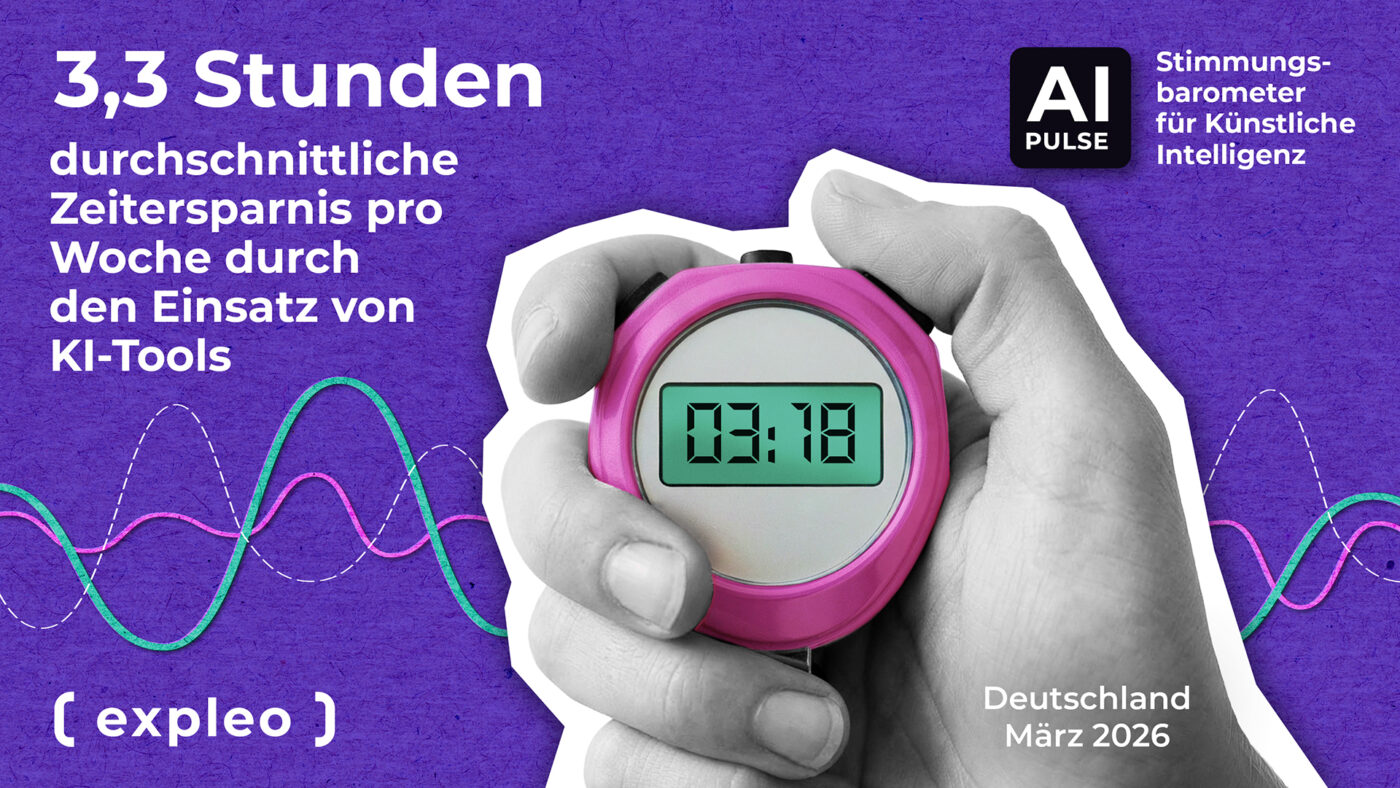
Across Europe, 27% of the managers surveyed reported a weekly time saving of three to three and a half hours thanks to AI. A further 24 percent cite savings of one to two hours, and 13 percent report gains of five to six hours. The picture is remarkably consistent across different markets: in Germany, managers gain an average of 3.3 hours per week, in the UK 3.5 hours and in France and Ireland 3.2 hours each.
«AI is noticeably pushing the boundaries of productivity in management,» says Dr. Yusuf Erdogan, Country Lead Digital & Technology at Expleo Germany. «Managers are not only working faster, but also differently. They delegate more to systems, make more informed decisions and gain time for strategic issues. AI is therefore evolving from a simple tool to a critical work infrastructure - and this is precisely where its real leverage lies.»
Top management benefits particularly strongly
A closer look at the distribution shows: The time gains are above average, especially in top management. Owners and shareholders save an average of 4.8 hours per week, while C-level executives and directors save 3.6 hours. The main reason for this is the targeted use of AI for analyses, decision support and prioritization - in other words, in areas where efficiency gains have a direct impact.
At the same time, Erdogan points out that the picture is not completely uniform: «There is still a small group of managers who have only noticed minor effects or none at all. This shows that there is still considerable untapped potential in many organizations.»
From efficiency gains to structural change
According to Expleo, the current results mark just the beginning of a trend. More integrated applications and the increasing use of AI agents are likely to further increase the productivity effect. The efficiency gains perceived by the study participants are also reflected in the general sentiment: 71% of managers welcome the opportunities that AI opens up for their organization and 66% predominantly see benefits for companies as a whole.
«AI no longer just affects processes, but the way we work itself,» says Erdogan. «In an environment of increasing complexity, it helps to reduce routine tasks, eliminate disruptive factors and focus on value-adding decisions.»
Sentiment stable, debate shifts
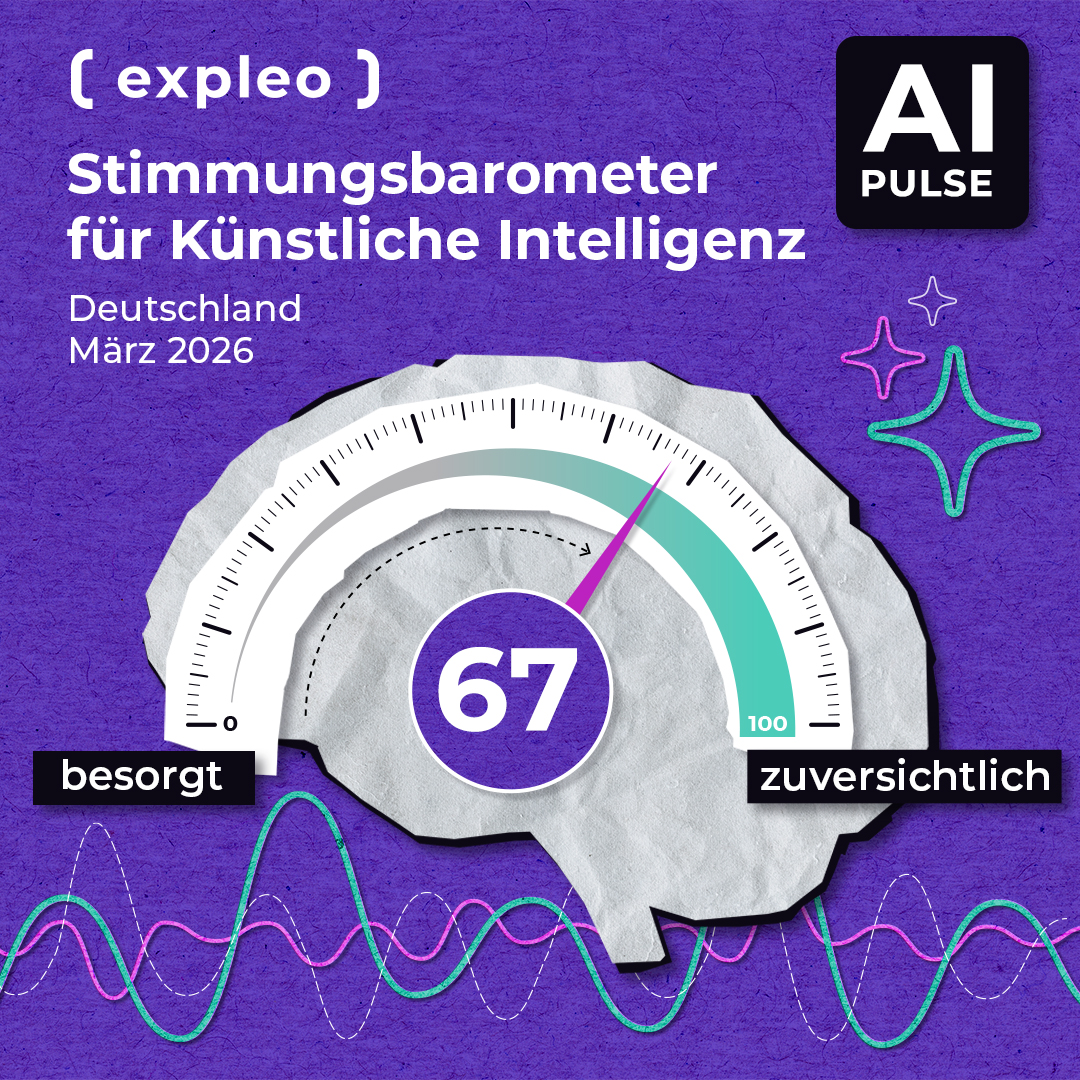
The European AI Pulse Sentiment Score rose slightly to 66 points in March 2026 (previous month: 65 points). Germany remains in a good midfield position with 67 points. «The stable sentiment shows that AI has arrived in people's everyday lives,» comments Erdogan. «The debate is shifting from expectations to concrete results. Companies are increasingly measuring AI by its actual contribution to productivity - and this is precisely the decisive step towards sustainable use.»
The «Expleo AI Pulse» survey has been conducted monthly in Germany, the UK and France since August 2025. 200 managers are surveyed per country; the current edition is based on the eighth survey wave (field phase: March 2026). The study is conducted by the insights agency Opinium on behalf of Expleo.
For more information expleo.com.