Press the reset button
In the past two years, many companies have had to master one crisis after another - crises that massively accelerated the transformation of the economy: March 2020. The first corona-related lockdown. Suddenly, digitization becomes essential for companies to survive. Employees, suppliers, customers, and partners are using new tools in their daily lives, have learned new ways of working, and have acquired new digital skills. [...]





- March 2020. The first corona-related lockdown. Suddenly, digitization becomes essential for companies to survive. Employees, suppliers, customers and partners are using new tools in their daily lives, have learned new ways of working and have acquired new digital skills. McKinsey estimates that Corona accelerated digital transformation by five to seven years.
- Fall 2021. In many companies, replenishment no longer works because the international supply chains have been interrupted in some cases to this day. Thousands of ships full of goods are bobbing around in front of the ports because no one is taking away the containers parked there. In addition, the shortage of skilled workers is more noticeable than ever.
- February 2022. Russia attacks Ukraine. Suddenly, the energy transition is also relevant to security policy. The dependence on fossil fuels must no longer be radically reduced purely for climate policy reasons, but also for economic policy reasons.
It's not just companies that need to reinvent...
In order for the desired or required transformation to succeed, companies must hit the "reset button," so to speak, at the following four levels:- Corporate strategy
- Organization
- Leadership and
- Mindset of the employees
- Which of our (core) competencies are still relevant in the future or which new ones could we develop?
- Which products will (still) be in demand in the medium and long term? What could our new product portfolio look like?
- How do we need to work together in the future - also with external service providers such as suppliers? Which new ones do we need?
- How can we as an organization optimally respond to the changing customer needs, economic conditions?
- How can we make the best possible use of the opportunities resulting from change?
...employees must also be ready for the "reset button
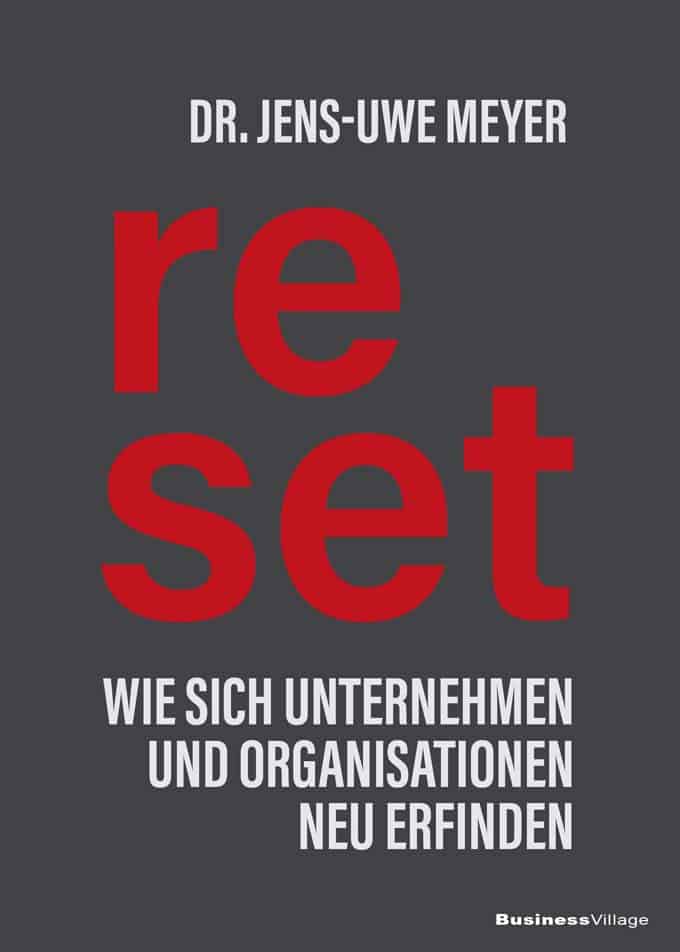
However, the new strategy can only be filled with life if the employees support it, if not enthusiastically, then at least with conviction. It must therefore be communicated to them and discussed with them - across all functions and divisions. In addition, further training concepts are needed that provide employees with the new know-how and skills they need. And the employees? They must be prepared to take advantage of these opportunities and proactively acquire the skills they will need in the future. Employees are usually prepared to do this if they can actively help shape the change. Moreover, if they are credibly communicated to: If you participate in the transformation, the small branch you are currently sitting on may break, but there is a thick branch underneath that will catch you and support you stably in the years to come. To the author: Dr. Jens-Uwe Meyer is the author of the book "Reset - How Companies and Organizations Reinvent Themselves," which will be published in April 2022 by the Publisher BusinessVillage has appeared. Meyer is CEO of the software company Innolytics AG and a sought-after keynote speaker in the field of innovation and digitization.This article originally appeared on m-q.ch - https://www.m-q.ch/de/den-reset-knopf-druecken/