Hupac stays on course: profit despite infrastructure problems
The Hupac Group closes the 2025 financial year with a profit of CHF 3.5 million and increases its transport volumes by 4.3 percent. Despite ongoing construction sites on the rail network, the company is focusing on innovative concepts and targeted investments to stabilize and strengthen combined transport in the long term.





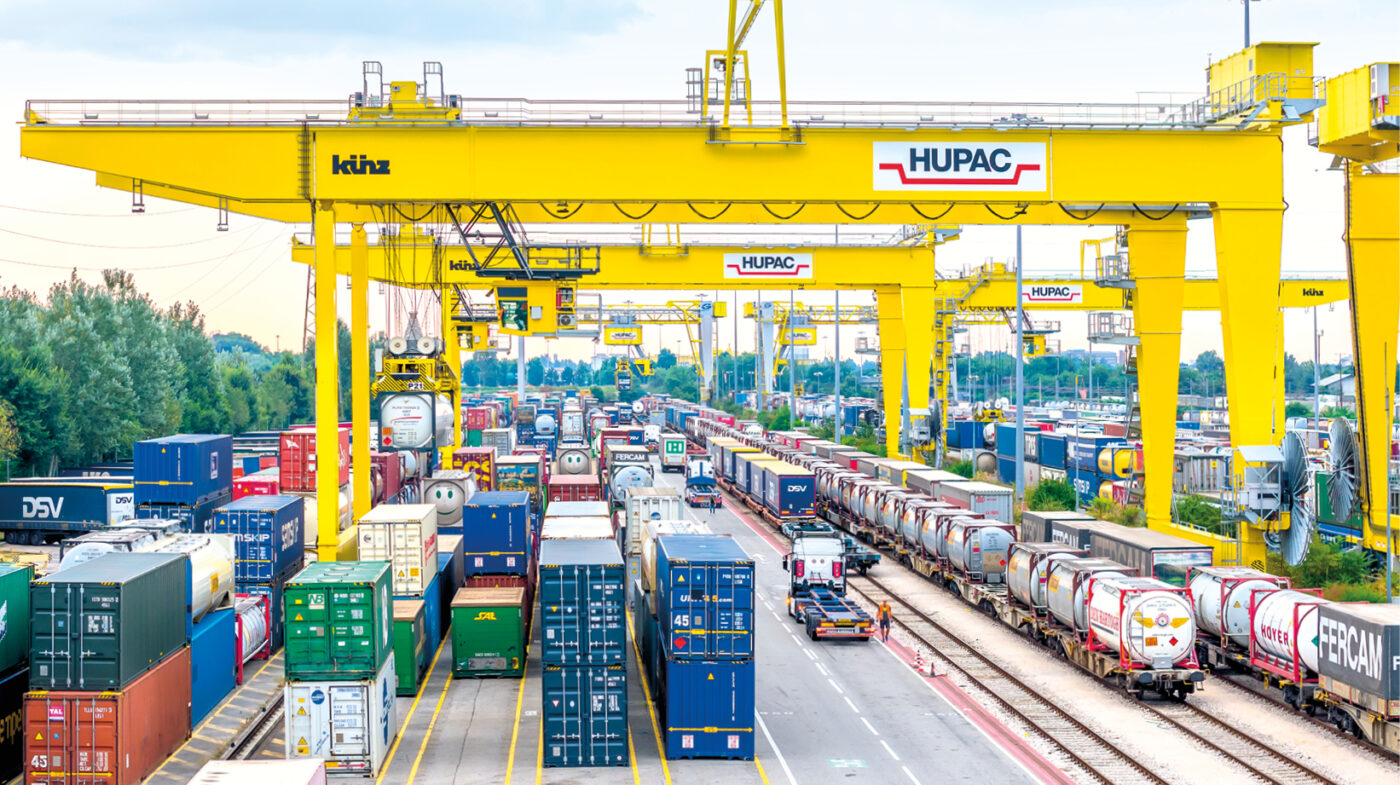
The 2025 financial year presented the Hupac Group with considerable challenges. Despite this, the company posted a positive Group result and closed the year with a profit of CHF 3.5 million. Transport volumes increased by 4.3 percent. In the core business of transalpine transport through Switzerland, growth amounted to 4.5 percent, also thanks to the takeover of traffic on the Belgium-Italy axis. The rail infrastructure situation continues to weigh on the development of combined transport. Stabilizing measures are helping to give market participants reliable prospects for the future.
The year at a glance
Last year, the Hupac Group transported around 975,000 road consignments or 1,853,000 TEU in combined road/rail and maritime hinterland transport. This corresponds to an increase of 4.3 percent compared to the previous year. In transalpine traffic through Switzerland, Hupac was able to increase the volume by 4.5 percent to around 560,000 consignments, thanks in part to the takeover of traffic on the Belgium-Italy axis. Transalpine traffic via France and Austria increased by 26.9 percent to around 25,000 consignments from a low level. In non-transalpine traffic, volumes increased by 2.9% to just under 390,000 consignments.
This development should be viewed positively in light of the ongoing construction sites on the rail network. A high level of construction activity with complete line closures at times has significantly impaired the performance of the rail infrastructure. Nevertheless, Hupac was able to increase sales in 2025 by 3.1% to CHF 646 million compared to the previous year. Sales are below the volume trend, which is due to the negative impact of exchange rates. The cost of services rendered rose faster than revenue, which led to a slight decline in the gross profit margin of 0.6 percentage points to 21.6%. Thanks to measures to safeguard earnings, Hupac was able to maintain the Group result at a satisfactory level in a challenging environment with an EBIT margin of 1.9% and a profit of CHF 3.5 million (previous year CHF 9.4 million).
Strategic progress in the core markets
Hupac's focus is on strengthening its position in its core markets and strategic corridors. To this end, strategic initiatives were launched last year that are now having an impact and leading to a more resilient offering for customers.
With the RadicalShift2Rail concept, Hupac is responding to the increasing delays in the rail network caused by construction sites. Traffic flows are increasingly bundled into a few efficient terminals and transported between them with high-frequency shuttle trains with four to six departures per day and direction. The first connections, Cologne North-Busto Arsizio and Ludwigshafen-Busto Arsizio, were launched with the timetable change at the end of 2025. The weekly frequencies are 25 to 30 train pairs each and can be increased further if required. After one quarter, there have been positive developments in punctuality and resilience; the productivity of the assets of all those involved has also improved. Further high-frequency services will be introduced with the timetable change at the end of 2026.
This innovative approach leads to a stabilization of combined transport and improves planning security for customers and partners. It requires strategic cooperation with the rail transport companies, for example in order to effectively represent common concerns vis-à-vis the infrastructure operators. Major construction sites and diversion traffic must be optimized across countries and companies as part of joint multi-year planning so that the planned transport volumes can be reliably handled.
In the Shuttle Net business unit, further market share was gained at the beginning of 2026 thanks to the new Duisburg-Novara product and the strengthening of the Basel-Busto Arsizio connection (+50% Basel-Busto Arsizio). With both products, Hupac has succeeded in shifting some of the previous traffic from the «Rolling Road», which will be discontinued at the end of 2025, to unaccompanied combined transport and keeping volumes on the railways.
Modal shift in Switzerland: trend reversal in sight
Hupac continues to focus on the development of combined transport in Alpine transit through Switzerland. With around 560,000 road consignments or 11 million net tons, Hupac achieved an increase of around 24,000 consignments in 2025 and was thus able to expand its position as market leader on the most important combined transport corridor in Europe.
After three decades of successful progress in the shift from road to combined transport, the trend reversed four years ago. Since 2022, the volume of transalpine combined transport has fallen by 11%, while road transport has increased by 4% in the same period. This trend is likely to continue with the discontinuation of the «Rolling Highway» at the end of 2025.
Hupac sees the main reason for this negative development in the renewal of rail infrastructure. In 2025, the issue of roadworks was once again at the heart of European rail freight transport. In the next two years, even larger construction sites are planned on the north-south corridor. Without countermeasures, there is a risk of further setbacks in one of Switzerland's key transport policy goals.
Hupac wants to contribute to breaking the negative shift trend with innovative transport concepts and intensified partnership-based cooperation with rail transport companies and infrastructure operators. From 2029, when the major construction sites on the Rhine-Alpine corridor are completed, Hupac expects to see new growth opportunities.
Politics offers a hand
In this challenging situation, it is important that the political framework conditions are reliable. Switzerland is setting a good example: in spring 2026, Parliament decided to extend the operating subsidies for transalpine combined transport beyond 2030. This creates planning security and makes a significant contribution to ensuring that all parties in the intermodal chain can make the necessary investments to put combined transport back on the road to success.
Hupac invests in the future
Hupac is convinced that it will return to its growth path from 2029 with the completion of the major construction work on the German Rhine Valley axis and in northern Italy. With Piacenza (opening in 2025) and Milano Smistamento (planned opening in 2027), Hupac is making targeted investments in new, high-performance terminal infrastructures. This will enable the expansion of further high-frequency services as a central component of the long-term growth strategy.
Hupac is also expanding the network to the west. At the beginning of 2026, the company put the Barcelona Combiconnect terminal into operation, connecting the Iberian Peninsula to the European intermodal network. Hupac sees considerable potential for combined transport in the transport market to and from Spain, which is still dominated by road transport.
Cautious outlook
The current geopolitical situation makes it difficult to make concrete statements about the expected course of business in 2026. The impact of the conflict in the Middle East is palpable and the effects are likely to become much more pronounced in the coming months, depending on how things develop. The risk of a significant global economic slowdown is very real. Against this backdrop, Hupac is cautious about the short-term growth potential.
The general conditions for combined transport are likely to remain challenging over the next two years. A significant improvement in the core market is expected in 2029. Hupac wants to contribute to increasing the reliability and marketability of combined transport with more resilient market offerings thanks to the increased use of the corridor on the left bank of the Rhine, closer partnerships and targeted investments - particularly in the digital transformation of the intermodal transport chain. With the expansion of the terminal infrastructure, Hupac is creating the conditions to return to a steady growth path in the future.
More information: www.hupac.com