Resilient instead of reactive: How the electronics industry is surviving supply chain bottlenecks
The ongoing geopolitical tensions surrounding the Strait of Hormuz are putting global supply chains under pressure - including in the electronics industry. Christian Reinwald, Head of Product Management & Marketing at Reichelt Elektronik, explains which raw materials are particularly affected and how buyers can react now.


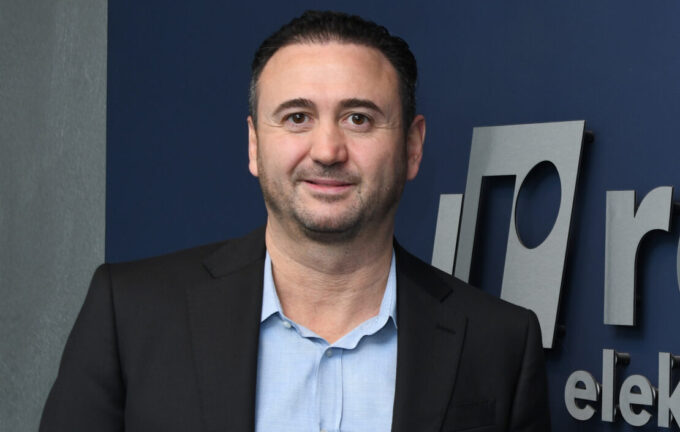
The longer the peace negotiations between Iran and the USA remain fruitless and the closure of the Strait of Hormuz continues, the more nervous global trade becomes. It's not just rising oil prices that are worrying companies around the world - the longer uncertainty dominates the situation, the greater the impact of supply bottlenecks for noble gases or rare earths. Christian Reinwald, Head of Product Management & Marketing at Reichelt Elektronik, explains in which areas things are getting tight and how buyers can react to the ongoing situation.
Impact on the economy
A look at Germany shows that 90% of all companies there expect their business to be impacted, according to a recent study by the Ifo Institute. The reasons include not only rising energy costs, but also restrictions on shipping routes, higher freight costs and delivery difficulties for primary products and raw materials. The energy sector, agriculture and the chemical industry are currently particularly affected. However, there is also cause for concern in the electronics industry: In particular, the trade routes for raw materials such as sulphur, helium or tungsten, which originate from the affected region or take their sea route via the Persian Gulf, are blocked.
Due to high petrol prices, electric vehicles are attracting a lot of interest from buyers. Sulphur is essential for the production of their batteries. However, 50 percent of the world's sulfur is transported by sea via the Persian Gulf. If the supply chain breaks down here, this could have a serious impact on electric vehicle production in Europe and worldwide. What is particularly worrying is that supplies will probably only last for around five weeks.
If supply chains remain disrupted in the long term
Some consequences of the current disruption will only materialize with a delay. If the machines in Asian factories remain idle today due to the oil shortage, this will lead to an aluminum shortage in the European automotive industry a few weeks later.
Special attention is paid to the raw material helium. The noble gas is used to cool high-precision production systems and is therefore essential for semiconductor manufacturing. The Middle East is responsible for a third of global helium production. As early as 2022, supply difficulties - and a prolonged production stoppage at a Russian factory due to sanctions in the Ukraine war - led to a critical bottleneck for South Korean manufacturers. Until then, they had relied on a few large suppliers and sourced more than half of their helium from the Gulf States, for example.
Since 2022, they have been pursuing a diversification strategy and have broadened their purchasing base. They have also increased their stocks. Many customers now have stocks that last for several weeks or even months.
We advise against buying hamsters
There are currently no acute supply problems, but initial hoarding is already causing uncertainty and causing prices to skyrocket. However, there is much to suggest that the global economy can weather this crisis well: Broader trade flows will remain largely intact. The consequences will be much milder than the coronavirus lockdowns in China, for example. In addition, companies have learned from past crises and are now more resilient.
In last year's supply chain report by Reichelt Elektronik, more than half of industrial companies (52%) stated that they had diversified their supply chains. Almost as many (46%) are looking for suppliers in their region (onshoring). South Korean semiconductor manufacturers are therefore not the only ones to have learned from previous bottlenecks.
Striking a balance: short-term and long-term risk management
Today, companies are better prepared for crises - but crises have also become more frequent and more serious due to international networking. Since the coronavirus pandemic, many companies have found themselves in a permanent crisis. Resilience and reserves are coming to an end in some cases.
It is particularly difficult to prepare for anticipated crises during ongoing operations. Cost pressure often prevents companies from investing in diversification or the expansion of resilience systems. For example, the supply chain report cited above shows that 41% of respondents were already worried about a potential wildfire in the Middle East last year - while the same companies were simultaneously under high cost pressure: 79% complained about price increases for critical components, and almost as many suffered from high energy costs (67%).
Conclusion: Learning from crises
Forward-looking risk management is becoming increasingly important. This includes not only the identification of alternative suppliers and the considered expansion of stocks, but also the gradual development of flexible production processes. This enables companies to manage and survive tensions in times of crisis.
The dependence on helium described above is just one example. Similar dependencies exist for rare earths, lithium and other raw materials. In the long term, it is therefore also advisable to expand recycling capabilities in such a way that particularly sought-after raw materials can be extracted after disposal and transferred to new product life cycles. Research into alternative materials and even broader diversification - for example with new trading partners in different regions - will also make companies more crisis-proof in the long term.
Source and further information: www.reichelt.de