
Prix Courage: These people give courage

Once a year, the Beobachter awards the Prix Courage to outstanding personalities who have made an impression through their selfless and courageous commitment. Six candidates are now up for election.

Three favorites can be chosen in the public voting. The jury, chaired by former Federal Councillor Eveline Widmer-Schlumpf, then decides who will be awarded the Prix Courage is awarded.
These courageous people have been nominated:

  • Two craftsmen became rescuers

    On November 26, 2024, two workmen are running late. This minor delay becomes a stroke of luck for many victims of a serious traffic accident. When Kevin Kieffer and Redon Cacaj as we turn a steep bend in Koblenz AG, we see a picture of horror: a completely destroyed car, a driver covered in blood. A little further away: an overturned bus, trapped passengers, including children. The duo act immediately and rescue countless injured people from the crashed Postbus and the wrecked vehicle.

  • He uncovered abuses at the animal hospital

    Dogs and cats lying in their own excrement, mold and multi-resistant germs: The abuses at Zurich's animal hospital have been documented by the keeper Jorge Pereira documented with hundreds of cell phone pictures and made available to the observer. He had to pay dearly for this. He lost his job after his whistleblowing.

  • She founded a secret school for girls in Afghanistan

    Mahbube Ibrahimi fled to Switzerland alone, attended high school here and founded an online school for girls in Afghanistan almost two years ago. The 20-year-old is giving more than 270 schoolgirls in her home country hope of an education.

  • She risked her job for patient safety

    Two years ago, a newspaper advertisement made waves in the Upper Engadine: In an open letter Ladina Christoffel about her dismissal and subsequent resignation as head physician of the women's clinic at the Oberengadin hospital. Together with the Pro Medico Plus interest group, she named problems that were being kept under wraps internally: Staff shortages, overwork, compromised patient safety. Later, the Graubünden labor inspectorate documented over 3,000 violations of labor law.

  • She fought against male rope teams

    Danica Zurbriggen, a university lecturer from Zermatt, learns on her way home of the unanimous election of an ex-CVP National Councillor as President of the Valais Chamber of Tourism. The man, who had been convicted of sexual harassment and stalking, thus takes on a leading position, even though a woman who had reported him works for an organization that belongs to the Chamber of Tourism. Angry that the convicted man is indirectly becoming his victim's boss, Zurbriggen first expressed her displeasure on Instagram and later in a letter to the editor. Her letter and the online discussion reached thousands of people, triggering a national debate - and culminating in the resignation of the former National Councillor.

  • He broke a spiral of violence

    Kurt Erni experienced extreme violence and neglect in his childhood at the hands of his sadistic mother, who abused him physically and psychologically, while his father left the family at an early age. Despite these traumas, Erni vowed not to become like his mother and built a successful career as a chef, police officer and later as a head of department, consciously choosing not to have children of his own. However, the repressed experiences led to a breakdown, which was later diagnosed as post-traumatic stress disorder. Today, Erni deals with his past publicly, including through a book, in order to break the taboo of female violence and encourage other victims.

Dominique Strebel, Editor-in-Chief of the Beobachter"All the nominees have shown great courage, overcoming obstacles and accepting disadvantages to make our society a little more just, fairer and better. This deserves the admiration of us all and inspires us to also courageously stand up for higher values - especially at a time when individual interests are all too often in the foreground."

The public vote The competition will run until October 5, 2025, after which the three nominations that have received the most votes will be presented to the jury headed by former Federal Councillor Eveline Widmer-Schlumpf. This committee will decide who will receive the Prix Courage 2025. The award will be presented to the winner at a ceremony in the Papiersaal in Zurich on November 13.

Number of industrial robots worldwide doubles in ten years

The manufacturing industry installed a total of 542,000 new industrial robots in factories worldwide in 2024 - more than twice as many as ten years ago. This exceeded the 500,000 unit mark for the fourth year in a row. Asia again accounted for the largest share: 74 % of all new robots were put into operation there. Europe accounted for 16 % and America for 9 %. This is according to the World Robotics 2025 yearbook published by the International Federation of Robotics.

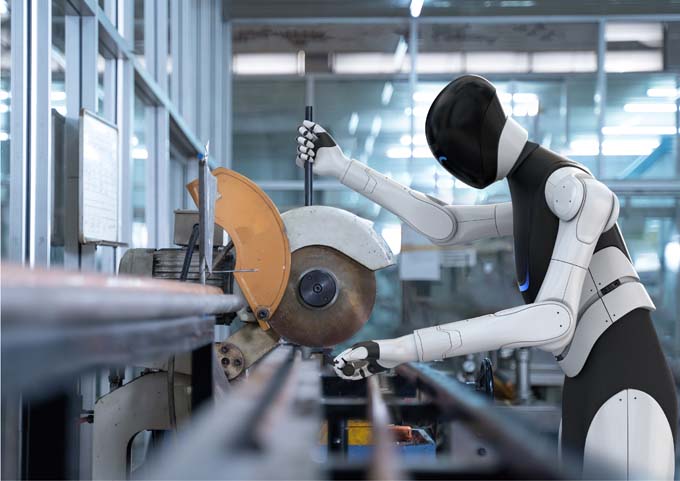
Human-like robots are seen as the next big innovation in robotics: the world's largest market for industrial robots, China, has already set out concrete plans for the mass production of humanoids. (Image: Neura Robotics / www.presseportal.de)

"The new World Robotics statistics show the second-best result for annual installations in 2024 since the surveys began - just 2 % below the peak of two years ago," says Takayuki Ito, President of the International Federation of Robotics. "The transition of many industries into the digital and automated age is characterized by a huge increase in demand. The global operational stock of industrial robots amounted to 4,664,000 units in 2024 - an increase of 9 % compared to the previous year."

Asia as a growth driver

China is the world's largest robot market in 2024 with a global share of 54 % of all units. At 295,000 units, the Chinese industry commissioned the highest number of robots ever installed in one year. For the first time, Chinese manufacturers sold more robots in their own country than foreign suppliers. The market share rose to 57 %, significantly exceeding the rate of previous years, which was 28 % 10 years ago. China's operational stock of industrial robots exceeded 2 million units in 2024 - also a global record. Suppliers of robotics in China are succeeding in opening up new markets for automation. This creates the basis for further demand. By 2028, the Chinese manufacturing industry has the potential for average annual growth of 10 %.

Japan is the second largest market for industrial robots worldwide with 44,500 installed units in 2024 and has thus maintained its position despite a slight decline of 4 %. The operating portfolio increased by 3 % to 450,500 units. Demand for factory robots will grow slightly by low single-digit rates in 2025 and by mid-single-digit rates on average over the next few years.

South Korea installed a total of 30,600 units in 2024 - a decline of 3 %. Since 2019, annual rates have been moving sideways at around 31,000 units. South Korea is the fourth-largest robot market in the world after the United States, Japan and China.

India is growing with a record number of 9,100 newly installed industrial robots in 2024 and an increase of 7 %. The automotive industry is the strongest customer sector with a market share of 45 %. In terms of annual installations, India is now in sixth place worldwide, just one place behind Germany.

Declining industrial robot market in Europe

In Europe Although the number of industrial robots installed fell by 8 % to 85,000 units, this was still the second-best result ever recorded. The European Union accounted for a total of 80 % of all robot installations (67,800 units). Demand in Europe is benefiting in particular from the nearshoring trend. The average annual growth rate from 2019 to 2024 was plus 3 %.

Germany is the largest robot market in Europe and the fifth largest worldwide. After a record year in 2023, the number of installations fell by 5 % to 27,000 units in 2024, the second-best result since records began. The market share of the total annual volume in Europe is therefore 32 %. The number of installations in Italythe second-largest European market, fell by 16 % to 8,800 units. Spain is in third place (5,100 units) thanks to strong demand from the automotive industry, overtaking its French neighbors. France (4,900 units) fell to fourth place with a decline of 24 %.

In the UK, the number of installations fell by 35 % to 2,500 units in 2024. The record of 3,800 industrial robots in 2023 marked a one-off peak, which was due to the "super-deduction" tax credit program that expired in the first quarter of 2023. The installation figures have otherwise moved sideways over the last ten years with cyclical effects. Robot installations in the UK ranked 19th worldwide in 2024.

America: decline of 10 percent

The number of robot installations in America exceeded 50,000 units for the fourth year in a row: A total of 50,100 units were installed in 2024. This corresponds to a decrease of 10 % compared to 2023.

The USA are the largest market for industrial robots in the region with a share of 68%. Overall, a decline of 9 % to 34,200 units was recorded for installations in 2024. As there are only a few US manufacturers, the country imports the majority of its robot units from Japan and Europe. However, there are numerous domestic system integrators in the US that implement robot-assisted automation solutions.

In Mexico the total number of installations reached 5,600 units. This corresponds to a decrease of 4 % compared to the previous year. The automotive industry remained the most important customer for industrial robots in Mexico in 2024 with a share of 63 %.

In Canada robot installations fell by 12 % to 3,800 units. Demand in the country is largely dependent on the investment cycles of the automotive industry. The automotive industry accounted for 47 % in Canada in 2024.

Outlook: Growth with an expiration date

The OECD and IMF expect global growth of between 2.9 % and 3.0 % in 2025 and between 2.9 % and 3.1 % in 2026. However, geopolitical tensions, armed conflicts in Eastern Europe and the Middle East and trade disruptions are having a negative impact on the global economy.

The robotics industry is not immune to global macroeconomic conditions. However, there are no signs that the long-term growth trend will come to an end in the foreseeable future. While trends vary considerably from region to region, the overall global trend remains positive. Worldwide, the number of robot installations is expected to increase by 6 % to 575,000 units in 2025. According to forecasts, the 700,000 unit mark will be exceeded by 2028.

Source: International Federation of Robotics

This article originally appeared on m-q.ch - https://www.m-q.ch/de/zahl-der-industrieroboter-weltweit-in-zehn-jahren-verdoppelt/

His robots deliver parcels and food: Marko Bjelonic, CEO Rivr.ai, in the podcast

A robot-like dog delivers food and parcels in Zurich. Marko Bjelonic explains how he is revolutionizing logistics with Rivr.ai. He is co-founder and CEO of the Swiss robotics company, in which Jeff Bezos is also investing heavily.

Autonomous robots are no longer a dream of the future in Zurich. What sounds like science fiction is becoming visible in everyday life: in Oerlikon and Regensdorf, robotic helpers deliver food and parcels to your doorstep. In the podcast "AI and Society - Paths into the New World" by the Swiss Text Academy, Marko Bjelonic, co-founder of Rivr.ai and ETH graduate, talks about the opportunities, hurdles and visions of this technology.

Bjelonic explains how his team has already implemented specific projects with partners such as SwissPost and JustEat. Pilot trials also encounter regulatory issues, but in close coordination with the authorities, hurdles can often be overcome more quickly than in other countries.

Switzerland is therefore becoming an ideal testing ground for robotics in everyday life. The investment by Jeff Bezos marked a special milestone. With the trust of the Amazon founder, Rivr.ai not only gained capital, but also international attention. "We are part of the first wave of robots on the streets," says Bjelonic. "It's not just about technology, but about the benefits for society."

The question of jobs is also central to this. Robotics is not a job killer, emphasizes Bjelonic, but a stimulus for new occupational fields such as robot management. Delivery work is relieved by intelligent systems, while new opportunities are created at the same time.

Rivr.ai's vision for the future extends far beyond Zurich. The plan is for multimodal robots that can move in different environments, right up to international scaling. The start-up from ETH Zurich not only wants to change the logistics industry, but also help shape the global discourse on the social integration of robotics.


The video podcast "AI and Society - Paths into the New World" is produced by the Text Academy Foundation. Two episodes are released monthly, on Spotify ( https://open.spotify.com/show/4mSsEJuaShBuanBfBjoAeM?si=01b4363426db4d28) , Youtube https://youtube.com/playlist?list=PL4InE9vz-QptAjyy0QXyk6lWFKXreWEh2&feature=shared and other podcast platforms.

Marko Bjelonic was also a guest at a Swiss Export symposium, about which we reported here have

Empathy and helpfulness in customer contact is king

A new global study by Zurich Insurance Group looks at empathy in an increasingly AI-influenced economy.

What is the role of empathy in an increasingly AI-influenced economy? Is there a growing disconnect between what customers expect from empathy and what they experience from companies? A new global study by Zurich Insurance Group (Zurich) addresses these key questions.

The report, which was developed in collaboration with the renowned empathy academic Professor Jamil Zaki, Director of the Stanford Social Neuroscience Laboratory, is based on a global YouGov survey of over 11,500 consumers in eleven countries. The results of the study make it clear: empathy is king. Consumers prefer authentic exchanges and highly value companies that show understanding and care, especially in difficult moments.

Competitive advantage through empathy

Three in five respondents (60 percent) said they only use offers from companies that genuinely care about them and their needs, while almost three quarters (73 percent) of respondents said they would avoid companies that show a lack of empathy for their situation or circumstances. 43 percent of consumers surveyed have left a brand in the past due to a lack of empathy, and a further 61 percent would be willing to pay even more for a brand that genuinely cares about them.

In addition, the survey finds that the benefits of artificial intelligence (AI) are recognized, but there is a lack of authentic emotional exchange - 71 percent of respondents believe that AI cannot make real human connections, and 92 percent value direct emotion-driven human interaction over 24/7 availability.

Empathy expectations of financial service providers often remain unfulfilled

The report provides a cross-industry view and shows that empathy is expected most of all in financial services - 88 percent of consumers consider it important (second only to healthcare providers), but only 63 percent agree that the industry is truly empathetic.

"In today's world, empathy is crucial for creating customer experiences. The positive experiences of our customers determine long-term growth. Companies therefore need to create genuine human connections as a basis for trust and loyalty. By acting empathetically, companies can gain a competitive advantage and build lasting customer relationships," emphasizes Daniela Cerna-Wirths, Head of Strategy, Customer and Sustainability at Zurich Group Germany. "At Zurich, we want to understand our customers even better so that we can go the extra mile for them. We are convinced that empathy is a skill that can be learned and helps us to maintain stable and appreciative customer relationships."

"Empathy is the common thread that runs through all my scientific work. Many years of research show time and again that it promotes trust, collaboration and long-term success. This report highlights how empathy comes into play in business and why it matters - and makes a compelling case for integrating it into every customer experience," said Dr. Jamil Zaki, Director of the Standford Social Neuroscience Laboratory.

Firmly anchoring empathy in the corporate strategy

Understanding empathy as a learnable skill and integrating it into processes can help to build stable customer relationships. The report's key recommendations include:

  • Strategic integration: Make empathy a central part of the corporate strategy and consider it crucial for long-term success - not just a nice gesture.
  • Empathy training and skills developmentInvesting in customized training tailored to both the market and the business function so that frontline employees can truly understand and respond to customer needs.
  • Commitment and measurability by managers: Ensure that managers exemplify empathetic behavior and record its impact as an important performance indicator.
  • Technology and human connection: Combining technological efficiency with authentic human interaction - using AI to support, but not completely replacing personal encounters in key customer moments.
  • Cultural anchoring: Integrating empathy into everyday working life and the corporate culture so that it becomes the basis for all business activities.

Practical test: Zurich's global empathy training increases customer satisfaction

Although 45 percent of consumers believe that empathy cannot be trained, Zurich's award-winning Global Empathy Training Program proves otherwise. Developed together with the Be Human Partnership, 26 percent of Zurich employees worldwide have already completed almost 46,000 hours of training in the UK, Switzerland, North America, Malaysia and Australia since the program was launched in 2023 - and the program continues to grow. In Germany, around half of the approximately 4,600 employees have already completed the training - the highest participation rate of any Zurich country worldwide.

Thanks to the training and other measures, measurable improvements can be seen: Customer loyalty and retention is increasing and the Transactional Net Promoter Score (TNPS) has risen by 7 points (worldwide) between January 2024 and June 2025. Empathy and helpfulness in customer contact are also perceived in Germany: Since 2023, the NPS (Net Promoter Score) regarding these two factors has improved to 79 points.

Sika defends top position in Swiss annual report rating

Sika has once again secured overall victory in the renowned annual report rating by HarbourClub Chief Communications Officers. As in the previous year, the jury honored the construction chemicals group. Geberit follows in second place, with Swisscom in third place.

The overall winners of the year 2025, photographed by Barbara Müller: Hans-Peter Nehmer (Jury President HarbourClub), Quynh Arguello (Corporate Communications Manager, Sika), Myriam Käser (Chief Communications Responsibility Officer, Swisscom) and Roman Sidler (Head of Corporate Communication Investor Relation, Geberit).

Around 170 guests attended the awards ceremony on September 25 at the SIX Convention Point in Zurich - an event that annually honors the best reports from the most important Swiss companies.

The rating focuses on the quality of the annual reports of all companies listed in the SPI, supplemented by the 50 companies with the highest turnover, 15 insurance companies with the highest premium volume and 25 banks with the highest balance sheet total. The jury assessed a total of 214 reports this year. Migros came out on top in the Design category, ahead of Avolta and ZKB. UBS won in the Value Reporting category, with Clariant and SGS completing the podium. Swiss Post won the special prize for outstanding text quality. Swica received a Special Mention for Design, Bucher for Value Reporting.

The annual report rating recognizes strikingly innovative and creative reports. The neutral evaluation is made possible by organizational partner Linkgroup and the support of Antalis, Apostroph Group, EQS, PwC and SIX. All detailed results and PDFs of the reports are available online at www.gbrating.ch can be viewed here. Jury president Hans-Peter Nehmer was impressed by the variety and quality of the work submitted and presented the awards in person.


Office printers: the underestimated cyber threat

A lack of awareness of the risks of unsecured printers and a lack of or inadequate training for employees make companies vulnerable to cyberattacks.

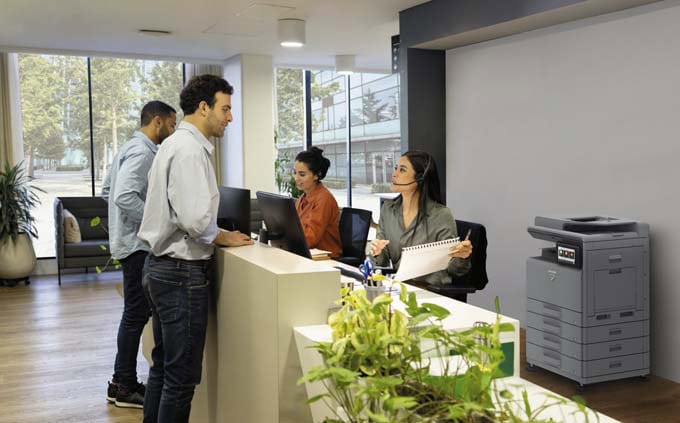
Printer security: Employees need to be made even more aware. (Image: Sharp)

Unsecured printers continue to pose an often underestimated cyber threat to Swiss SMEs, according to the results of a survey conducted by Sharp. According to the survey, 44 percent of 1001 employees surveyed in small and medium-sized Swiss companies (SMEs) stated that no printer-specific IT security measures are implemented in their company. In a world where cyber attacks have become almost commonplace, this negligence in relation to printers represents a serious security risk.

Lack of understanding leads to inadequate protection

The problem here is not so much the devices themselves, which can be solidly secured against external attacks with just a few basic technical settings. Rather, there is often a lack of basic understanding: most office workers are still not sufficiently aware of the fact that a printer is equipped with its own hard disk and numerous network interfaces and can actually be hacked. According to the survey, just 15 percent of respondents even associate their office printers with the topic of cyber security.

The topic also remains largely absent from IT security training: Only 19 percent of employees stated that they had been made aware of potential cyber risks from unprotected printers during training.

It is therefore hardly surprising that many employees hardly think about the office printer in their day-to-day work, let alone their own use of it: 33% of those surveyed, for example, print out files that they send by email from their home office on company printers in the office, where they are left unattended in the output tray for long periods of time. 27 percent use private USB sticks for this purpose without being aware of the associated security risks, and only 21 percent recognize that unattended printouts in the output tray of a printer could pose a data protection risk at all.

Raise awareness and take technical precautions

"Printers are hardly perceived as a security risk in everyday working life and are therefore often inadequately protected, which cyber criminals exploit. Yet printer security is not rocket science: companies should make the necessary security configurations, keep their scanner and printer software up to date and carry out regular back-ups - this already provides solid basic protection," says François Müller, COO of Sharp Electronics Switzerland.

"Companies should also introduce uniform security standards for hybrid teams and make their employees more aware of MFP-related security issues," François Müller continues. "This starts, for example, with ensuring that confidential printouts and copies are not left unattended in the MFP's output tray or disposed of unsecured. In addition to a lack of technical precautions, it is often the supposed trivialities that significantly increase the risk of data loss or misuse by unauthorized persons. Expert advice can provide additional support in designing a holistic security strategy and minimizing the risk of data loss."

Source: Sharp

This article originally appeared on m-q.ch - https://www.m-q.ch/de/buerodrucker-die-unterschaetzte-cyberbedrohung/

Over 80 percent of Swiss companies use AI without a plan

Almost half of Swiss companies currently use artificial intelligence (AI). According to a recent study by Swiss AI Report, the main challenges cited are the lack of integration of AI into existing systems, data protection, IT security and technical hurdles. Patrick Sommer, Managing Director at CNT Management Consulting in Switzerland, knows that the structured use of AI makes perfect sense.

Virtually flying blind: AI is used without a plan in many companies. (Image: Unsplash.com / edited with ChatGPT)

The application areas of artificial intelligence have also found favor in Swiss companies. As the current AI Swiss Report shows that almost 30 percent of the 1,338 managers surveyed stated that they expect an increase in the use of AI. Technologies are primarily used for translations, writing letters, emails or advertising copy. Another quarter of companies use AI specifically to optimize work processes and data analysis. Patrick Sommer, Managing Director of the digital consultancy CNT Management Consulting, knows the benefits of this. "The use of AI has long since become a must-have in many companies' day-to-day operations - be it when creating reports or in consulting. Instead of creating documents manually, AI can use previously analyzed business processes to generate automatic check scenarios."

Swiss companies struggle with AI: only 13% focus on clear goals and integration

A study by the Swiss AI Report (2025) has taken a closer look at how Swiss companies deal with AI. "Only 13 percent of Swiss companies are working with clearly defined AI goals. There is often a lack of long-term implementation and integration into existing technological systems," says Sommer. For the CNT manager, the advantages of structured AI deployment in organizations are crystal clear. "Looking at, analysing and optimizing a wide range of company processes used to take an enormous amount of time, and separate workshops were often organized for this purpose. This cost personnel, time and resources. Today, AI provides us with an objective picture of various problems in just a few hours." According to Sommer, AI-supported process mining is particularly helpful for efficient company processes: "With this method, companies can use digital recordings of activities to recognize how business processes actually work in reality. This enables companies to understand, analyze and improve internal structures more quickly. With AI integration in the customer's SAP system, intelligent assistants (SAP Joule) can immediately provide information on when an order was created, approved or delivered. From this, the AI visualizes the actual process flow - not as it should be, but as it really is."

AI in practice: How companies are making processes smarter and more efficient

When using AI in day-to-day business, the know-how for responsible AI use is often lacking. The integration is not only quick, but also convincing once the technical background is understood, as the consulting expert reports. In a consulting context, he uses SAP Joule to generate code modules. "We give the AI instructions in natural language on what a function should do, for example: 'Create a report that shows all open customer orders over 10,000 francs'," explains the manager. While the recording, processing and evaluation of figures required a lot of time and effort before the AI integration, the AI now writes most of the ABAP code itself, Sommer confirms. And he adds: "Day-to-day work is increasingly shifting from manual configuration to analysis, control and strategic embedding of AI-controlled tools. Customers expect not only technical expertise, but also sound advice on how AI applications can be used efficiently and in accordance with the strict Swiss standards for data protection and transparency in their own company."

Fear of tech replacement: do consultants have to fear for their jobs?

A much-discussed question is how the increasing use of AI will affect the professional future of consultants. Sommer's opinion on this is clear: artificial intelligence is changing the consulting landscape, but is not replacing human expertise, rather complementing it. "AI can process data faster, recognize trends and provide suggestions that consultants can then interpret," says Sommer. While automated routine activities such as test scripts, presentations or code generation are increasingly being taken over by AI, the consultant remains indispensable for context, empathy and supporting change processes. "Consulting means much more than just facts and figures: It's about change management and taking people along in change processes - and AI can't do that," he cautions. AI is "like a navigation system: it shows you the fastest route, but it's still up to the person to decide whether to avoid the traffic jam or make a stopover," Sommer concludes.

Source: CNT Management Consulting

This article originally appeared on m-q.ch - https://www.m-q.ch/de/ueber-80-prozent-der-schweizer-firmen-nutzen-ki-ohne-plan/

Switzerland's first Master's degree program in "Digital Government"

Bern University of Applied Sciences BFH is launching Switzerland's first degree program in the field of "Digital Government". The Master's course for all specialists and managers who want to shape the public sector and administration will start in fall 2026. Graduates of the new Master's degree course will have the skills needed to shape the digital transformation.

Bern University of Applied Sciences BFH has launched Switzerland's first MAS in Digital Government. (Image: Bern University of Applied Sciences)

Efficiency and service orientation, as well as digital sovereignty and artificial intelligence, are topics that the public sector is dealing with intensively today. Aspects of the digital society, organizational transformation and legal aspects must always be taken into account. Not an easy task. This is why the Department of Business at Bern University of Applied Sciences (BFH) is offering a new two-year Master's degree in Digital Government as a part-time course from fall 2026 (see study guide in the appendix). Students will learn all the skills they need to actively shape the digital transformation in the public sector and in the digital society. The course combines practice-oriented learning with flexible online phases and offers an interdisciplinary education in business, technology and law.

The degree program at a glance

The "Master of Science in Digital Government" program focuses on practical training and offers three specializations:

  1. Organization, transformation and procurement: Leadership and public service motivation, agility and resilience in the public sector, digital skills and digital thinking, (process) innovation and cross-agency collaboration, requirements engineering, customer centricity and user experience (UX), basics of public procurement, data protection, legal informatics
  2. Politics, democracy and sustainability: Digital policy in Switzerland, public service of the future, digital ethics and digital inclusion, basics of technology assessment, digital democracy and digital skills, participation, co-production and collaboration, digital sovereignty and open source
  3. Technology: Data-centered public management, data ecosystems, data spaces, data sharing and open government, data governance, networks, infrastructures and sensor technology, data protection and information security, basics of technology (AI models and algorithms, AI use cases and best practices)

Flexible studies for working people

The course combines attendance phases in Bern (four times per semester) with flexible online learning cycles. This hybrid structure enables students to combine their studies with their professional activities. Students can work on practical projects and benefit from an international study trip.

The course is aimed at specialists and managers from the public sector as well as career changers. Admission is open to Bachelor's graduates in business administration, economics, political science, computer science, law or related subjects who want to make the public sector resilient, sustainable and efficient.

The Master's course starts in fall 2026. Further information, dates of information events and registration at http://www.bfh.ch/master-digital-government

This article originally appeared on m-q.ch - https://www.m-q.ch/de/schweizweit-erster-master-studiengang-in-digital-government/

Crowdify launches the world's first AI crowdchecker

The crowdfunding platform Crowdify presents a world first: the first AI-based crowdchecker. The tool shows project starters within two minutes how much financial energy their crowd can actually mobilize - making it much easier to get started with crowdfunding.

Many people have an idea for a social commitment, a project close to their heart or an innovative gadget. However, the start of crowdfunding often fails due to one central question: How big is the financial potential of your own community? This is precisely where the Crowdchecker from Crowdify an.

"Our aim was to develop a solution for the biggest uncertainty in crowdfunding," says Christian Klinner, Crowdify. "If you know how strong your crowd is, you gain the confidence and motivation to actually launch the project."

The crowdchecker takes into account the type of project and the reach in various contact segments - such as personal contacts, social media communities or the reach of influencers. Based on these factors, the AI creates a realistic assessment of the financial opportunities.

If you want to continue straight after the check, you can set up your project completely in just four additional minutes. The tool provides concrete suggestions for the title, project description, storyline, mail text, goodies and even a script for the project video.

With this combination of analysis and implementation, Crowdify is positioning itself as an innovation leader in the European crowdfunding market. "It has never been easier to turn an idea into a concrete project. The Crowdchecker makes it easy to get started and removes the decisive hurdle for project starters," says Christian Klinner.


The concept and idea originate from Christian Klinner, Crowdify / Ron Orp. The technical implementation realized by Qris Riner, Contextery. Crowdify belongs to Ron Orp and is one of the largest crowdfunding platforms in Switzerland.

Real-world AI much bigger than GenAI

Real-world AI will shape the future much more than the generative AI models that are popular today, such as ChatGPT, Google Gemini or Grok from X.ai, predicts the Diplomatic Council think tank, which is part of the United Nations' closest circle of advisors. AI in the real world ranges from autonomous manufacturing to smart cities.

See greater potential of Physical AI compared to Gen AI: Harald Müller (left) and Dr. Daniel Trauth from the Diplomatic Council. (Image: zVg / Diplomatic Council)

Examples of applications for "AI in the real world", often referred to as "physical AI", include manufacturing robots and humanoids, quality control with AI cameras, predictive machine and plant maintenance, autonomous logistics systems, medical diagnostics, self-driving cars and smart cities. The Diplomatic Council's Real-World AI Forum invites you to an online conference on the use of AI in cities and communities on September 22.

Smart City use case

"The true value of AI lies not in the hype surrounding the generation of texts, images and videos, but in its profound integration into the core processes of industry and local authorities," explains Harald Müller, Managing Director of the Bonn Business Academy (BWA) and Co-Chair of the Real-World AI Forum at the Diplomatic Council. Dr. Daniel Trauth, also Co-Chair of the forum and Managing Director of Cologne-based dataMatters GmbH, uses the example of the Smart City to illustrate the benefits. According to him, municipalities could save around 20 percent in costs and reduce CO2 emissions by around 30 percent through AI optimization of waste management alone. AI-controlled traffic lights and networked traffic management systems with real-time parking space information lead to a reduction in traffic jams and further reduce CO2 emissions. A recent McKinsey study shows that smart city solutions can reduce energy consumption in public buildings by up to 15 percent (Smart Building).

Another example is the optimization of public transport. Dr. Daniel Trauth explains the procedure clearly: "LiDAR and optical sensors in buses and trains can be used to record exactly how many seats and standing places are occupied at which times on which lines, or how many children or adults use the service. This data is analyzed using artificial intelligence and the AI can use it to make real-time recommendations for the optimal use of precisely these buses and trains. As a result, this leads to greater public transport acceptance among citizens, more targeted staff deployment and reductions in costs and environmental impact."

Application area "intelligent machining"

Dr. Daniel Trauth cites "intelligent machining" as an example of an industrial AI application with far-reaching effects, on which his company dataMatters is working together with the Fraunhofer Institute for Production Technology IPT in Aachen, among others. Essentially, the aim is to use AI to meet the high quality requirements in the machining industry better and more cost-effectively. Machining, in which material is brought into the desired shape and size by turning, drilling, milling or grinding, forms an essential basis of manufacturing technology in many branches of industry, from automotive production to the manufacture of medical instruments.

Errors in the machining process can have serious consequences, ranging from product failures to safety problems. Strict quality controls are therefore essential, but also time-consuming and expensive. "Automated monitoring and analysis of production processes using AI can significantly reduce inspection times and costs for quality assurance and improve the accuracy of quality assessment," says Dr. Daniel Trauth, explaining the benefits of "Real World AI" using this application example.

"Machining is just one of countless areas of application for artificial intelligence in manufacturing," says Harald Müller. Ultimately, it is about autonomous factories, i.e. production halls devoid of people, in which only robots are active. These "ghost factories" are made possible by a combination of computer technology, networking, artificial intelligence, robotics and innovative manufacturing processes. According to studies, this could reduce operating costs by up to 25 percent, increase productivity by up to 30 percent and reduce error rates by up to 40 percent.

Smart Factory for more competitiveness

Despite the higher initial investment for the construction of a smart factory, where around a third of the total costs are accounted for by sensors, software and infrastructure, the construction of an autonomous factory often pays for itself within the first year of operation. This is primarily due to the significantly reduced wage bill. "In addition, the increased flexibility leads to a faster response to market changes and the higher quality level reduces rework costs, which ultimately increases customer satisfaction," says Harald Müller, outlining the competitive advantages of the new production generation.

The BWA boss clarifies: "This is not a glimpse into the distant future, but is already beginning to become reality in the form of autonomous production twins." An APT - a digital twin in production - combines real-time data, artificial intelligence and advanced networking to create a virtual representation of the production system that can make decisions and adapt processes independently. "An autonomous production twin can actively control production processes and react to unforeseen events, for example by adjusting the robot speed, optimizing the material supply, correcting errors or rescheduling in the event of material bottlenecks," says Harald Müller, giving specific examples of the benefits of using AI in production.

He summarizes: "While generative AI is a useful tool, real-world AI delivers the sustainable efficiency and cost benefits that will shape the economy and communities of the future. Companies that recognize this change early on and embed AI in their physical infrastructure will secure a decisive competitive advantage. In view of the current crisis situation in Germany, the domestic industry must not miss out on this development under any circumstances."

Source and further information: www.diplomatic-council.org/de/ki-in-der-realen-welt

This article originally appeared on m-q.ch - https://www.m-q.ch/de/real-world-ai-viel-groesser-als-genai/

Sarah Levy, Swisscom: "Sovereignty accelerates AI innovation"

When it comes to artificial intelligence, Switzerland is feeling its way between opportunities and restraint. Sarah Levy, Head of Swiss AI Platform at Swisscom, explains why digital sovereignty is crucial.

Sarah Levy, Swisscom, in the AI video podcast of the Swiss Text Academy.

The lawyer and head of the Swiss AI Platform talks to Christoph Soltmannowski in the Text Academy's AI podcast about how Swisscom is already using AI and how difficult the widespread introduction in Switzerland still is.

Swisscom is already using AI in a variety of ways: The virtual assistant "Sam" processes millions of customer inquiries independently. AI also provides support with programming, knowledge queries and network optimization. Swisscom is investing over CHF 100 million in the expansion - in Switzerland and Italy. The Swiss AI Platform runs in Swiss data centers and is primarily aimed at regulated industries such as banking and healthcare.

Hurdles slow down Swiss companies

Many companies get stuck at the pilot stage. The reasons for this are a lack of expertise, high costs and data protection issues. While international companies take a more experimental approach, Switzerland focuses on quality and security - which slows down progress but makes it sustainable. For Levy, digital sovereignty is key to reducing dependencies on foreign models and infrastructures, especially when it comes to sensitive data.

For Levy, responsible AI means transparency, fairness and security. She warns against the externalization of key social issues if we rely unilaterally on foreign models. If Switzerland is to remain independent, it needs strategies to strengthen its resilience.

Apertus as a milestone for independence

The new language model Apertus, developed by ETH and EPFL, marks a step in this direction. It takes into account all national languages, including Romansh, and is hosted by Swisscom in secure data centers. This makes it easy for companies to integrate.

Swisscom wants to shape the ecosystem. The aim is to bring AI into everyday life - through pilot projects, scaling and trust. For the future, Levy sees Switzerland in a leading role in sovereign AI: as an active shaper of a technology that gives people more time for creativity and real encounters.

This episode is also available on Spotify and on Apple Podcasts.


The video podcast "AI and Society - Paths into the New World" is produced by the Swiss Text Academy. Two episodes are released monthly, on Spotify ( https://open.spotify.com/show/4mSsEJuaShBuanBfBjoAeM?si=01b4363426db4d28) , Youtube https://youtube.com/playlist?list=PL4InE9vz-QptAjyy0QXyk6lWFKXreWEh2&feature=shared and other podcast platforms.

Visual brand gap - a threat to brand consistency

A study by visual communication experts Sight Effect reveals an alarming gap: There is a visual brand gap between brand strategy and its implementation.

Only 39 % of employees feel confident in dealing with visual design, while more and more decisions are being made outside the marketing departments. As a result, brand identities are losing consistency.

Visual decisions without voting

Visual communication is no longer the exclusive domain of marketing departments. According to a survey of 598 specialists and managers, 54 % of management and 47 % of HR departments regularly decide on visual content independently and without consulting brand managers. "Every presentation, every job advertisement, every internal memo shapes the brand image - usually in an uncontrolled and inconsistent manner," warns Per Kasch, founder of Sight Effect.

Lack of confidence in one's own competence

The core problem lies in a lack of confidence in dealing with visual design. Just 39 % of all respondents consider themselves competent, and in marketing and branding teams this figure is only 50 %. Confidence in the assessment of visual impact is even lower: only 26 % feel confident in this area. This deficit costs time and efficiency. A total of 60 % report delays in content creation processes.

Internal processes remain weak

Although 46 % of respondents state that there are internal guidelines for visual design. However, only 54 % consistently adhere to them, and only 49 % rate the processes as effective. This means that almost half of all visual decisions are based on intuition rather than strategic principles - with correspondingly high risks for brand consistency.

AI as hope - and risk

A further area of tension can be seen in the use of artificial intelligence. 60 % of respondents consider generative AI to be increasingly important, but only 46 % believe that AI content meets quality requirements. "AI tools are not a panacea. They require precise control by visual experts to ensure brand consistency," emphasizes Kasch.

Dependence on external parties

The study also makes it clear that internal expertise is lacking: only 23 % believe there is sufficient expertise within the company. Many rely on external agencies, but only 45 % of those surveyed are convinced that service providers really understand their brand.

Call for further training

Most employees have already recognized the solution: A total of 82 % are dissatisfied with their knowledge and want to actively improve it. For Kasch, this is a clear signal: "Building internal visual competence through training and further education is no longer a nice-to-have, but a strategic must."

Visual competence as a competitive factor

The study also shows that at a time when millions of new AI images are created every day, visual consistency is becoming a decisive success factor. Companies that establish binding standards, professionalize processes and make targeted investments in internal skills not only secure their brand identity, but also their competitiveness.


The representative survey was conducted online in January 2025 and provides in-depth insights into the potential of visual brand communication. 598 professionals with a connection to visual communication from German-speaking and French-speaking Switzerland took part. The complete study report 

Sight Effect was founded in 2024 by renowned advertising photographer and brand specialist Per Kasch to help companies close their visual brand gap. The SightE ffect method combines strategic brand management with practical training to increase visual competence in teams. 

Sight Effect was founded in 2024 by renowned advertising photographer and brand specialist Per Kasch to help companies close their visual brand gap.
get_footer();