
ESPRIX Forum 2022: The Art of Transformation

The ESPRIX Swiss Award for Excellence has been held since 1999. It offers outstanding organizations the opportunity to measure themselves against others and learn from each other. This year it's that time again: In March, the ESPRIX assessors visited the applicants to identify strengths and potential for improvement and to assess the maturity level of the organization. Based on their [...]


ESPRIX Forum 2022
Topic of this year's ESPRIX Forum on June 17, 2022 at the Bürgenstock Resort. (Image: ESPRIX)
The ESPRIX Swiss Award for Excellence has been held since 1999. It offers outstanding organizations the opportunity to measure themselves against others and learn from each other. This year, it's that time again: In March, the ESPRIX assessors visited the applicants to identify strengths and potential for improvement and to evaluate the organization's level of maturity. Based on their findings, the ESPRIX jury has now decided on the award. Who is a finalist for the ESPRIX Swiss Award for Excellence, or even who will win, remains a well-kept secret. It will be revealed at the ESPRIX Forum 2022 on June 17, 2022 at the Bürgenstock Resort.

ESPRIX Forum 2022: Keynote by Stefan Brunnhuber

But that's not all: Keynote speaker Prof. Dr. Dr. Stefan Brunnhuber will be speaking on the topic of "The Art of Transformation". His message: we will only be able to live together sustainably if we begin to recognize the psychological realities that constantly drive and surround us all. Stefan Brunnhuber is a medical doctor, economic sociologist, psychiatrist and economist. A student of Dahrendorf and member of the Austrian Chapter of the Club of Rome, his interests are diverse and include reflections on resource wars and peacekeeping, post-growth and ecological sustainability. The ESPRIX Forum 2022 starts on June 17, 2022 at 5 p.m. in the foyer of the Bürgenstock Resort Lake Lucerne for an aperitif. The official program starts at 6 p.m. in the ballroom. Phil Dankner will host the program, other guests are the tambourine troupe "Stickstoff" from Basel and the singer ELLE. From 10 pm there will be an after-show party with the jazz band Defrank. The cost of the evening is CHF 425, with members of ESPRIX Excellence Suisse receiving a price reduction of CHF 50 per person. Included are the presentation, food and drinks, the entertainment program and the after-show party. Registration and further information

Workshop: How can companies convincingly implement the circular economy?

In the run-up to the ESPRIX Forum 2022, the ESPRIX Excellence Suisse Foundation, öbu, the association for sustainable business, and Circular Economy Switzerland are hosting an expert workshop. What potential do the "use instead of own" and "use used instead of buying new" business models offer? What are the factual and psychological challenges associated with implementing these business models? And how can they be overcome? After exciting keynote speeches by Mobility and revendo AG, we will discuss these and other questions in groups. The event will be rounded off with a closing address by Prof. Dr. Stefan Brunnhuber and a networking session. Registration and further information is available here.

This article originally appeared on m-q.ch - https://www.m-q.ch/de/esprix-forum-2022-die-kunst-der-transformation/

How sustainability will shape marketing in the future

Sustainability in marketing has been an important social trend not only since the emergence of the "Fridays for Future" movement, which is also reflected in marketing. In this context, sustainable behavior refers to much more than classic environmental issues, but also includes social behavior and governance practices. On the one hand, it is about the fair manufacturing of products using [...]

Sustainability
Photo: unsplash.com/Aaron Blanco
Sustainability in marketing has been an important social trend that is also reflected in marketing, and not just since the emergence of the "Fridays for Future" movement. Sustainable behavior refers to much more than traditional environmental issues, but also includes social behavior and governance practices. On the one hand, this involves the fair manufacture of products using environmentally friendly materials, transparent supply chains, but also sensible reusable packaging and responsible returns processes in the sense of a circular economy. As many as six out of ten customers say they pay attention to environmental and social criteria when selecting products. 45% avoid environmentally harmful ingredients and 41% of customers are in favor of companies avoiding CO2 emissions. At the same time, 68% of customers would be prepared to pay more for a product that demonstrably does not harm the environment. Incidentally, this applies more often than average to buyer groups between the ages of 18 and 39. In short, no manufacturer, retailer or brand can ignore the issue of sustainability these days, as the Smarketer agency explains. The agency, which is one of the most important partners of Google and Microsoft in Europe, has published a comprehensive guide on the topic of "Sustainability in e-commerce and online marketing". In it, the digital company shares its wealth of experience and extensive know-how with companies looking for the right way to do good and use their own commitment for marketing.

Sustainability marketing requires sincerity and transparency

It is essential that brands are serious about sustainability. After all, nothing damages a brand more in the long term than greenwashing, i.e. the transparent and dishonest emphasis on the obvious or hiding behind green advertising phrases. "Companies should set themselves ambitious goals and present progress transparently and honestly. It's about involving customers and sharing a common perspective," explains Eric Hinzpeter, content marketing expert at Smarketer.
Sustainability
Eric Hinzpeter, content marketing expert at Smarketer.
  What manufacturers and brand owners can actually do to improve sustainability depends to a large extent on their own product portfolio and industry. While the Supply Chain Act already sets some requirements with regard to transparency in manufacturing and material selection, sustainability can be demonstrated in transport and packaging through the use of environmentally friendly materials and reusable systems. In e-commerce, too, i.e. with regard to green IT and sustainable web design, resources can be saved, for example, through mobile first and reduced resolutions for moving image content, and target groups can be better included in the context of accessibility.

Making sustainable products findable in a targeted manner

However, sustainability is above all a communication issue. Consumers are increasingly basing their purchasing decisions (also) on such criteria. "More and more online retailers and branded companies are therefore providing corresponding mission statements and sustainability reports, providing information about the materials used and ensuring that particularly sustainable products are easy to find," says Hinzpeter. The marketing expert also advises companies to transparently address relevant details on returns, repairs, disposal and recycling, especially in e-commerce, and to refer to relevant seals and partnerships in this context, as customers also search for these specifically. Sustainability can also be reflected in search engine advertising. Here, Smarketer advises including terms such as "sustainable", "ecological" or "fair" in advertisements, provided the advertising claims are genuinely valid. "When customers not only do something good for themselves but also for the environment by making a purchase, it creates a sense of social affirmation," explains Eric Hinzpeter. It is also advisable to include your own sustainability page in one of the sitelinks and to place values and USPs relating to sustainability topics in the callouts. Special offer extensions and image extensions can be used for special promotions and sustainability days (such as Veganuary, Green Friday, Fair Friday or Circular Monday). The sustainability theme can also be extended to the actual creatives such as banners and videos. Here, clear icons, natural backgrounds and earth tones can convey emotions around the topic. Last but not least, the choice of suitable keywords also ensures improved conversion and helps the message reach customers. "Depending on the competition and search volume, it may be worth including general terms in your own keyword set. This applies to terms such as 'refurbished', 'fair trade' or 'circular economy'," observes the Smarketer expert. The 60-page Smarketer guide on the topic of "Sustainability in e-commerce and online marketing" can be downloaded here. downloaded here for free be
About Smarketer Founded in 2011, Smarketer is now the largest pure Google Ads agency in the DACH region and, with 200 employees, supports around 900 customers from various industries in their digital growth. Smarketer is one of the most important partners of Google and Microsoft in Europe and maintains a close exchange with both companies. This enables the company to participate in selected workshops and betas for the search engines, distribute the knowledge within the agency and efficiently incorporate it into customer projects. Customers include brands such as PIN AG, Walbusch, Schuhe24 and Audible.

Joining forces to renew the Swiss health insurance ecosystem

Diverse technology vendors have made significant investments to address health insurance software developments in terms of complexity, cost and technological innovation. This has resulted in leading-edge solutions that address the needs of both insurance companies and their customers. Offering a better user experience while reducing costs has been a challenge that requires strong, specific competencies and a mid- to long-term strategic [...]

Health insurance
Health insurers of all sizes should be able to manage their plans through a platform that requires minimal staff. (Image: Pixabay.com)
Diverse technology vendors have made significant investments to address health insurance software developments in terms of complexity, cost and technological innovation. This has resulted in leading-edge solutions that address the needs of both insurance companies and their customers. Offering a better user experience while reducing costs was a challenge that required strong, specific competencies and a mid- to long-term strategic perspective.

Vision: More efficiency in health insurance

Through the merger, Sumex AG and Secon AG say they intend to live up to a shared vision of improving the efficiency of the Swiss healthcare system through highly automated and fully digital end-to-end processes. "The two companies complement each other perfectly and the combination of the two solutions opens up new strategic opportunities," says Felix Musterle, General Manager of Sumex AG. To this end, the focus is concentrated on the following objectives:
  • Lower transaction costs through a high degree of automation and maximum effectiveness in damage control
  • Separation of complex tasks from standardized activities, which enables optimal use of specialized resources
  • Modular and open software architecture
  • A Swiss solution designed to meet the needs of Swiss insurance companies
  • Expanded know-how and expertise for innovation and functional coverage that enables Swiss insurance companies to take the next step in their digitization strategy

This article originally appeared on m-q.ch - https://www.m-q.ch/de/mit-vereinten-kraeften-das-oekosystem-der-schweizer-krankenversicherungen-erneuern/

Thanks to stable measurement results: ETH students conquer the edge of the troposphere

In 2020/21, a team of over 50 dedicated students from ETH Zurich, in the association Academic Space Initiative Switzerland (ARIS), realized the 4th research rocket generation to participate in the European Rocketery Challenge (EuRoC) in Portugal. The students had set themselves the goal of winning the highest category "Rocket with self-developed propulsion and flight altitude 10,000 meters" [...]

Measurement results
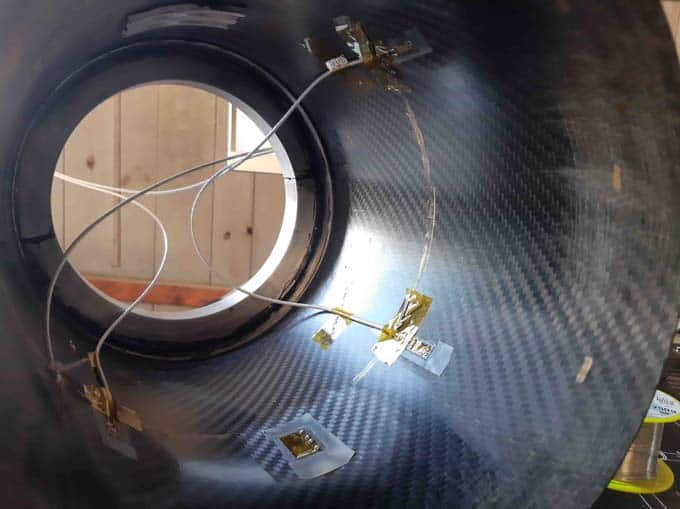
With the arrangement of the strain gauges for the bending moments, the deformations caused by axial forces and temperatures could be compensated. A prerequisite for the successful optimizations was also the stability of the measurement results. (Image: Hottinger Brüel & Kjaer)
In 2020/21, a team of over 50 dedicated students from ETH Zurich, in the association Academic Space Initiative Switzerland (ARIS), realized the 4th research rocket generation to participate in the European Rocketery Challenge (EuRoC) in Portugal. The students had set themselves the goal of winning in the highest category "Rocket with self-developed propulsion and flight altitude 10,000 meters". The functionality of the self-developed hybrid propulsion system was proven by the successful EuRoC launch. The new monitoring system for measuring the load on the research rocket's aerostructure was also decisive for this.

Reliable measurement results for real occurring loads

The structure of such a rocket is subjected to considerable loads in flight, which can only be partially determined in simulations. For example, influencing factors such as the wind or the shock load when the parachute opens cannot be determined exactly in analyses. However, reliable data for all load-relevant factors are required to realize an aerostructure of the rocket that provides the maximum strength with minimum weight necessary to achieve the goals of the mission. In order to verify and, if necessary, correct the determined loads in flight, a monitoring system for real bending moments and axial forces is required.

With 4 kilograms at 10,000 m altitude

After the ARIS teams had determined the forces acting on the rocket in flight purely analytically in the past by means of simplified assumptions in simulations, their own monitoring system was used for the first time in the PICCARD mission. Here, the ETH Zurich students relied on strain gauges from Hottinger Brüel & Kjær (HBK), which provide reliable measurement results even under extreme conditions. Accordingly, a complete system was integrated into the rocket. The strain gauges from HBK installed in the system provide essential knowledge about occurring bending moments and axial forces during every phase of the flight. The bending moments and axial forces recorded during the test flight as part of the structural stress analysis subsequently enabled a corresponding weight-optimized design of all load-bearing structural components. The prerequisites for a successful participation in the Spaceport America Cup 2022 in New Mexico could thus be created. Here, the team wants to transport a payload of four kilograms to an altitude of 10,000 meters and bring the research rocket with all its parts safely back to earth.

Ease of integration as a criterion

The fact that strain gages from HBK were chosen for the right measurement technology was on the one hand the result of past positive experience coupled with the international reputation of the company. Another plus point was the ease of integration of the HBK strain gages, which delivered on the promise of "plug and measure" made by the measurement technology experts. Source and further information: www.hbkworld.com

This article originally appeared on m-q.ch - https://www.m-q.ch/de/dank-stabiler-messergebnisse-eth-studierende-erobern-rand-der-troposphaere/

Rear area monitoring for more safety in warehouse traffic

More and more companies are turning to safety and assistance systems to protect employees and goods during production. One area where there is a particularly high potential for danger is plant logistics. To prevent accidents and collisions with stored goods or rack walls here, the market offers numerous different solutions, with the quality of detection, for example, in [...]

Security
In the RAM 107 rear area monitoring system from tbm hightech control GmbH, a special 3D camera supported by smart image processing monitors the rear area over various safety zones behind the forklift. (Image: tbm hightech control GmbH)
More and more companies are turning to safety and assistance systems to protect employees and goods during production. One area where there is a particularly high potential for danger is plant logistics. In order to avoid accidents and collisions with stored goods or rack walls here, the market offers numerous different solutions, whereby the quality of detection can vary greatly, for example in terms of differentiating between people and objects. More precise systems for rear area monitoring are particularly desirable.

Smart driver assistance systems prevent unnecessary braking

In practice, situations often arise that should make it possible to reduce speed automatically, but at the same time the system must work variably enough to be able to adapt to the potential danger of the situation in question. "In these cases, either all-round protection systems for the forklift or reversing protection systems are then suitable," reports Edgar Nassal, long-standing managing director of tbm hightech control GmbH from Aschheim near Munich. "However, 360° all-round protection for the forklift and the associated transponder systems result in the problem that the forklifts were often slowed down unnecessarily." This is where this company's driver assistance systems provide a remedy. In the RAM-107, the rear area is divided into three adaptive protection zones, with their length automatically adjusting to the truck speed. According to the manufacturer, this is intended to ensure trouble-free travel in narrow areas and when maneuvering, when the vehicle is driven slowly, and thus only short monitoring zones are active. Alarms are thus only triggered when a warning is actually required. This brings a high level of acceptance among drivers, the manufacturer promises.

Back room monitoring all around: 3D sensor technology uses time-of-flight measurement

In practice, this looks like this: From the driver's overhead guard, the RAM-107 monitors the rear of the vehicle with an optimum mounting position, almost without blind spots, directly to the rear of the vehicle. For this purpose, the integrated 3D sensor uses the time-of-flight method by means of patented PMD technology. The area to be monitored is illuminated with a modulated, invisible infrared light and the reflected light in turn hits the PMD sensor. Based on the phase shift between the transmitted and received signal, each pixel of the sensor chip now determines the distances between the stacker and the objects. Signal processing is supported by compact electronics with an intelligent evaluation algorithm, ensuring very high precision. "Unlike comparable systems, we can distinguish very accurately between standing people, people in a stooped position, low-lying trailers or shelf walls, and waist-high cartons," Nassal explains. "The system also reliably detects chasms such as ramps." The smart evaluation unit processes 1,024 pixels (data) per second and detects a test object of 30x30x30 cm at a distance of 3 m and reacts with an alarm signal. In other words, the foot of a person is enough to slow down the vehicle. With a stopping distance of e.g. 2.0 - 2.5 m, this is the necessary safety for pedestrians.

Visual and audible warning signals

From the cockpit, the driver is shown the three adjustable monitoring zones via a five-inch multifunction color monitor. In addition, the distance to the detected object is displayed both visually (green/yellow/red color change) and acoustically (increasingly faster sound signals). The live image and the real-time warning give the driver a full view of the danger zone at all times, which provides additional safety during storage and retrieval, i.e. daily work. Further information on the Internet at: www.tbm.biz

This article originally appeared on m-q.ch - https://www.m-q.ch/de/rueckraumueberwachung-fuer-mehr-sicherheit-im-lagerverkehr/

Marketing Arena with focus on innovation management

Three interactive workshops with other experts will complement the presentations. The event will be moderated by Stephan Klapproth for the twelfth time in a row. The key to success Everyone talks about innovations and wants to be innovative. But how can innovations be managed? What tools are there? Are creativity and courage enough, or do you need a sophisticated [...]

Marketing ArenaThree interactive workshops with other experts will complement the presentations. The event will be moderated by Stephan Klapproth for the twelfth time in a row.
Marketing Arena
Stephan Klapproth, presenter 10vor10, moderates the Marketing Arena. Copyright: SF DRS/Oscar Alessio

The key to success

Everyone talks about innovation and wants to be innovative. But how can innovation be managed? What tools are available? Are creativity and courage enough, or do you need a mature concept? These are questions that concern many entrepreneurs and marketing experts. That is why this year's Marketing Arena is explicitly dedicated to the question: How can innovation management become a key to success? For the twelfth time, Swiss Marketing Schaffhausen is organizing the Marketing Arena, the platform for the exchange of knowledge on all aspects of marketing and communication. On Tuesday, 3 May, from 4 p.m., five renowned experts will be giving talks on exciting topics relating to innovation in the Pavillon im Park in Schaffhausen. Marketing Arena Marketing Arena Keynote speakers will be Dr. Claus Martini, CEO at IVF Hartmann, and Christian Gut, Chief Marketing Officer at Stöckli Swiss Sports AG. In his presentation, Dr. Claus Martini will provide in-depth insights into the innovation process at IVF Hartmann and present a digital business model with an omnichannel approach. Christian Gut will show that especially in winter sports, the topic of innovation is the essential factor for sustainable business success and how Stöckli implements unique strategies in sales and marketing.

Practical workshops

The two presentations will be complemented by three hands-on workshops: Veronika Sallenbach, Co-Founder StartHub Schaffhausen explains the key benefits of Design Thinking. Oliver Gabor of Lego Serious Play at Teambeschleuniger shows how Lego can also become building blocks for successful business development. Samuel Perret, Head of Innovation and Strategy for Sustainability at Milani d&c combines the topics of innovation and sustainability in his workshop.

Klapproth moderates

The event will once again be hosted by Stephan Klapproth, who will lead through the event in his usual entertaining and lively manner. Detailed information on the program and the speakers can be found at here can be called up. Likewise, registration and booking of the limited number of tickets is now possible via the website.
Marketing Arena Schaffhausen 2022 "Innovation management - the key to success?", Tuesday, May 3, 2022, starting at 4 p.m., Pavillon im Park (Park Casino Schaffhausen), hosted by Swiss Marketing Schaffhausen. www.marketingarena.ch About the event: The Marketing Arena Schaffhausen is a platform for knowledge exchange around the topics of marketing and communication and takes place annually. The event is organized by Swiss Marketing Schaffhausen, one of a total of 28 regional clubs of the Swiss professional and trade association Swiss Marketing. The event, which attracts around 180 participants, has become one of the leading business events in the region and beyond since it was first held in 2009.

Supply chain attack: When cyber attacks come via update

An attack on the IT supply chain aims to manipulate the production process of a third-party software from development to updating, so that malicious code is pushed out instead of an update. This IT supply chain is vulnerable and cyber criminals are increasingly attacking it. That's because such a supply chain attack is efficient for them: if they can manipulate vendors' software packages and platforms [...]

Supply Chain
A supply chain attack is an increasingly common case of cyber attack and can become a threat to small and medium-sized businesses. (Image: Pixabay.com)
An attack on the IT supply chain aims to manipulate the production process of a third-party software from development to updating, so that malicious code is pushed out instead of an update. This IT supply chain is vulnerable and cyber criminals are increasingly attacking it. This is because such a supply chain attack is efficient for them: when they attack software packages and platforms of software and information systems providers, they reach multiple victims in one fell swoop. It makes little sense for the hacker to attack one company at a time with a complex attack when there may be tens of thousands of companies and organizations using a widely deployed application or service that is efficiently within their reach. The December 2020 attack on Solarwinds' supply chain affected close to 18,000 of Solarwinds' 300,000 customers worldwide. In addition to a mass attack, however, highly targeted attacks via the supply chain are just as possible.

Supply chain attack locations

A compromised supply chain is difficult for affected customers to detect. Therefore, cyber criminals have enough time to cause damage - such as data exfiltration, attacks on systems or disrupting processes. These attacks are different from previous attacks targeting individual customers and pose a challenge even for experts. It is not for nothing that the European Union Agency for Cybersecurity estimates, ENISAThe risk is high even for companies whose IT defenses are actually quite well established.
Supply Chain
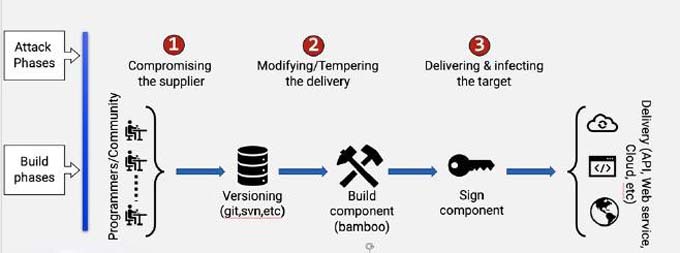
Phases of a supply chain attack. (Image source: Bitdefender)
An attack can be launched at multiple stages of the supply chain for developing, deploying or updating software. Compromising supplier IT does not constitute a supply chain attack. It involves modifying code sources and writing scripts. Depending on which link in the supply chain the hacker starts at, the skills required of him or the possibilities for the defense to recognize a manipulation are all the more different. The following phases in the supply chain can be distinguished as starting points for an attack:
  • Phase One - Programming: These attacks are relatively easy to detect. They start via targeted mails, exploits and malicious websites to gain access to the programming code. It is relatively easy for a hacker to change the code at that point. But what they have changed is visible in the logs.
  • Phase Two - Versioning: Attackers can drive an attack via a remote desktop protocol (RDP) with little effort. Weak passwords and exploits of an application help them to do so. They can also have modified versions rolled out in a reduced or delayed scope, because they have direct access to source code and logs and leave few traces. But the modified code proves the manipulation.
  • Phase Three - Implementation (Build): This is where it gets more challenging for the hackers, but unfortunately also for the defenses. The means are the old ones and attackers use RDP attacks, weak passwords and exploits in the application. But they need a good understanding of scripts. This is because the necessary modifications to individual builds take a lot of time and are complex. The modified code can be hidden. The defense would also have to check the successive script versions individually to detect manipulations.
  • Phase Four - Signing the components: If the attacker gets involved now, he does not have to manipulate code. He simply replaces the actual code with malicious code. But a validation in the supply chain concept will reject this fake update. Hackers must therefore meet some minimum criteria for legal updates in their fake programs.
  • Phase Five - Delivery: Here, too, an attacker only has to exchange the components. But the malicious components then have no signature and can be recognized by it.

How can SMEs protect themselves?

Although the attacks take place in the update supplier's supply chain, the attacks also affect smaller and medium-sized companies. To arm themselves against the damage of a supposedly legal update, they should follow these measures:
  1. A Implement comprehensive cybersecuritywhich includes Endpoint Detection and Response (EDR), but which, thanks to Threat Intelligence, also sees and reports suspicious data connections. After all, a common symptom of a successful supply chain attack is communication with a malicious command-and-control server. Companies with limited IT resources in particular should also consider a managed detection and response (MDR) service, and with it the expertise and time of IT security analysts. Only by combining EDR and MDR can managers see anomalies as they occur.
  2. Equally important is Educating employees about phishing, to prevent the hijacking of an identity in the supply chain process.
  3. It is central to Know and continuously review a company's supply chain processes. Does an IT manager even know which software or service updates they are getting from whom and when? What hardware does it purchase and how is it protected against malware? Every security officer should ask their IT supplier the following questions: - Is the vendor's software/hardware development process documented, traceable and verifiable? - Is the remediation of known vulnerabilities considered in product design and architecture, runtime protection and code review? - How does the vendor keep a customer informed about new vulnerabilities? - What options does the supplier have to fix "zero-day" vulnerabilities - vulnerabilities that are designed into software from the beginning and only discovered later? - How does the supplier manage and monitor the production processes of software and updates? - What does the supplier do to protect its updates from tampering and malware? - What kind of background checks are carried out on the supplier's employees and how often? - How secure is the deployment of the updates?
Anyone who receives a software update must be sure that they are not receiving malicious malware: At the end of the day, he has to suffer the consequences of a successful supply chain attack himself. Caution and a well-considered selection of suppliers, combined with comprehensive IT security, are the best helpers against a type of attack whose risk potential is far from exhausted. Author: Jörg von der Heydt is Regional Director DACH at Bitdefender.

This article originally appeared on m-q.ch - https://www.m-q.ch/de/supply-chain-attacke-wenn-cyber-angriffe-per-update-kommen/

Brandpulse: New brand identity for Bindella Immobilien

Originally developed from the gastronomy division of the Bindella group of companies, Bindella Immobilien felt the need for clearer differentiation from the gastronomy companies and independent positioning as a competent real estate boutique. Therefore, the agency Brandpulse was commissioned to create a new brand identity. The center of the value proposition Brandpulse sharpened in joint workshops with the management the "brand positioning in such a way that [...]

Brandpulse
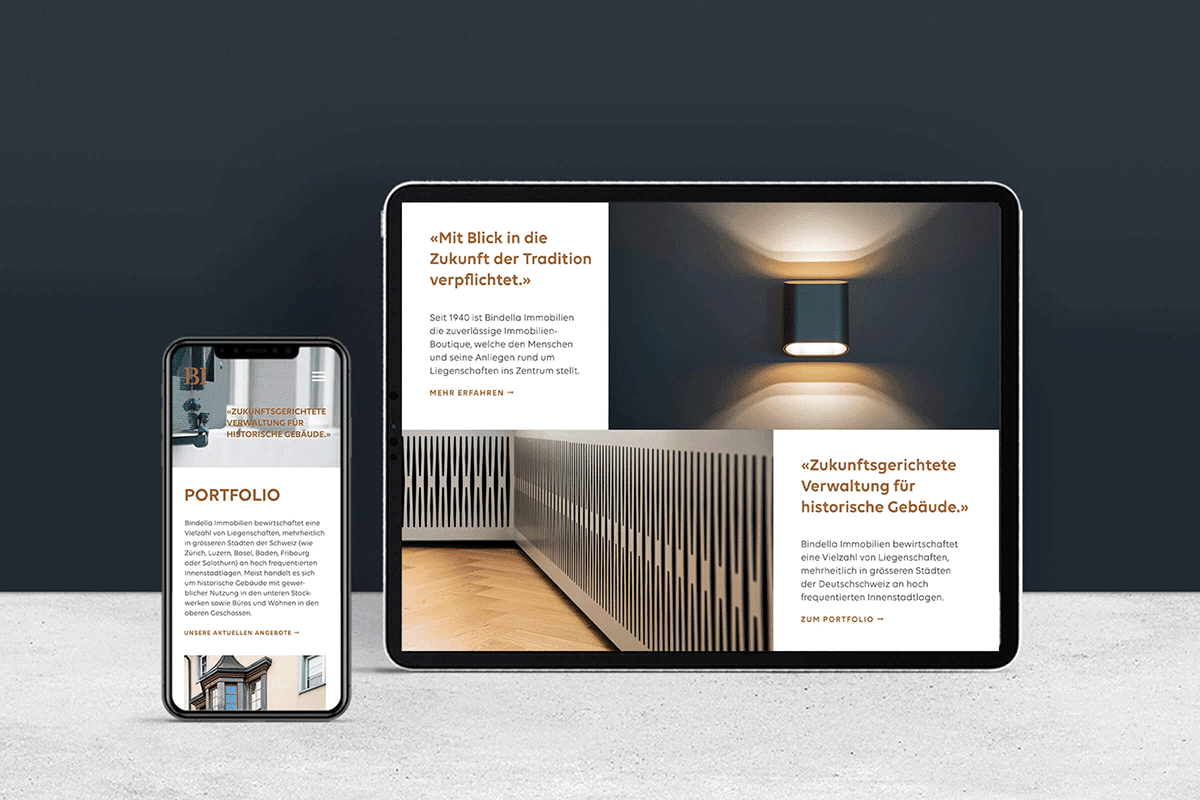
Brandpulse has developed a new brand identity for Bindella Immobilien.
Originally developed from the gastronomy division of the Bindella group of companies, Bindella Immobilien felt the need for clearer differentiation from the gastronomy companies and independent positioning as a competent real estate boutique. That's why the agency Brandpulse was commissioned to create a new brand identity.

The center of the value proposition

In joint workshops with the management, Brandpulse sharpened the "brand positioning in such a way that the will to design, tradition, longevity and attention to detail are at the heart of the service promise," according to a media release. Whether it's a lovingly renovated 100-year-old building or a modern architect-designed house, Bindella Immobilien is always about cultivating the love of detail in the respective property. The Bindella Immobilien brand is characterized by a pronounced will to design. This is expressed in an economic and future-oriented way of thinking, which is geared towards permanence and sustainability.

Critical clarification of identity

"The brand positioning process with Brandpulse forced us to reflect more deeply and clarify the identity of Bindella Immobilien critically," says Patrick Rieffel, the managing director of Bindella Immobilien AG. And he continues: "This can only succeed if there is an interested, empathetic and trustworthy interlocutor on the other side. Thanks to Brandpulse, we were able to reduce our legitimacy to its essence within a short period of time. Brandpulse accompanied and managed this with great class." Brandpulse Brandpulse Brandpulse

Newly developed appearance

The sharpened brand positioning forms the basis of the new corporate identity developed by Brandpulse. The bronze tone of the new logo, the typography, the striking imagery and the corporate colors are intended to embody the brand's high quality standards and create an arc of tension between the traditional values and the modern approach of the real estate company. Brandpulse also implemented the most important touchpoints (stationery, templates, website and company presentation).

Ricoh receives gold rating for sustainability activities

For more than 85 years, Ricoh has fostered innovation and established itself as a leading provider of document management solutions, IT services, communication services, commercial and industrial printing services, digital cameras and industrial systems. Recently, the company again received a Gold rating from EcoVadis for its sustainability activities. This puts Ricoh in the top five percent of companies in the industry in terms of [...]

Gold rating
EcoVadis' gold rating in sustainability for Ricoh. (Image: EcoVadis)
Ricoh has been driving innovation for more than 85 years and has established itself as a leading provider of document management solutions, IT services, communication services, commercial and industrial printing services, digital cameras and industrial systems. The company recently received another Gold rating from EcoVadis for its sustainability activities. This puts Ricoh in the top five percent of companies rated in the industry for sustainability performance. EcoVadis was founded in 2007 and is a globally recognized provider of sustainability ratings for companies. It focuses on corporate environmental, social and governance (ESG) practices and helps companies improve their environmental and social performance across their global supply chains. More than 90,0000 companies from over 160 countries and 200 different industries are rated by EcoVadis on their corporate policies, initiatives and performance in four areas: environment, labor and human rights, ethics and green procurement. Ricoh received the Gold rating for the first time in 2014 and has maintained it ever since. In particular, Ricoh's commitment in the categories "Environment" and "Green Procurement" is clearly recognized in the current EcoVadis rating. This confirms Ricoh's proactive approach to environmental management and sustainable procurement in collaboration with suppliers, according to the statement. In 2019, Ricoh was the first Japanese company to participate in the Business for Inclusive Growth (B4IG) initiative, which is committed to tackling inequality in the workplace and supply chains. Ricoh is also a member of the Responsible Business Alliance (RBA), which promotes social responsibility in global supply chains. To create an effective and global framework for its ESG activities, Ricoh has identified seven focus areas. These are based on 12 of the 17 Sustainable Development Goals (SDGs) introduced by the UN, which can be used to solve specific problems. In this way, the Ricoh Group aims to contribute to the development of a sustainable society that actively addresses economic, social and global environmental policies. Ricoh will contribute to achieving the SDGs by solving social issues throughout the value chain through its business activities, helping to realize a more sustainable society. Source and further information: Ricoh

This article originally appeared on m-q.ch - https://www.m-q.ch/de/ricoh-erhaelt-gold-bewertung-fuer-nachhaltigkeitsaktivitaeten/

Consumption trend according to Profital study: search online, buy offline

What does purchasing behavior look like after the relaxation of Corona measures in Switzerland? Profital, the app for digital brochures and mobile retail marketing, conducted a study with almost 2,000 people. There is a slight trend back toward stationary retail, with consumers primarily obtaining information online before making a purchase. Cross-channel shopping The [...]

Profital
(Source: Profital)
What does purchasing behavior look like after the relaxation of Corona measures in Switzerland? Profital, the app for digital brochures and mobile retail marketing, conducted a study with almost 2,000 people. There is a slight trend back toward stationary retail, with consumers primarily obtaining information online before making a purchase.  

Cross-channel purchasing takes place

Shopping planning remains important and is even increasing slightly: a full 82% of respondents stated that they inform themselves about promotions and discounts in advance. Last year, the figure was 72% (February 2021 survey) and in 2020 only 49% (April 2020 survey). The ROPO effect (Research Online, Purchase Offline) can be observed here. The majority of respondents research online first and then make their purchase in a brick-and-mortar store. "The entire shopping journey is becoming increasingly cross-media and consumers usually start their product research online," says Profital Managing Director Raphael Thommen, "this shows how important digital communication of offers is." For example, 56% of respondents research groceries online and then buy them offline later. However, this trend is not only evident when buying food, but also when purchasing furniture and furnishings (54%) and electronics (48%).  

After Covid: slight trend back to stationary retailing

Around half of all respondents (52%) will continue with their shopping habits compared to the coronavirus years 2020 and 2021. However, a third of respondents stated that they would be shopping in stores more frequently again in 2022. Men in particular (35%) have shifted their shopping habits back to bricks-and-mortar stores, compared to 27% of women. 18% of respondents are currently shopping more frequently in online stores. However, the coronavirus is no longer a major concern for respondents when shopping: only 9% said they were afraid of infection, for example. Consumers are much more concerned about delivery delays (20%) and product origin (37%). However, price is the biggest concern: a total of 69% of all respondents stated that they worry about rising prices when shopping.   Sustainability and delivery time also important Despite rising prices, quality is the top priority when buying a product: the most important purchase criterion for consumers is quality, with an average rating of "fairly important" to "very important". Price follows in second place. Issues such as sustainability, availability and delivery time are also considered important. Regionality, packaging and product presentation are considered less important and the product brand is in last place. The Profital study examines purchasing behavior in March 2022, after the easing of Covid measures. 1,935 users of the Profital app were surveyed. The online survey took place between March 19 and 22, 2022. Profital is a provider of digital brochures and mobile retail marketing. The app connects over 450,000 shopping-savvy consumers with offers from over 100 retailers and brands at the time of purchase. Profital was founded in 2017 as a Swiss Post start-up. The merger with Europe's largest shopping list app Bring! took place at the beginning of 2022. As Bring! Labs AG, the two apps have been guiding millions of users through the entire shopping process - from inspiration and joint planning through to purchase.
The entire study is available here.  


What does... "ROMI" actually mean?

Romi? That's not the name of the new agency dog or the new intern. No, it's an acronym that currently enjoys almost as much attention as the two mentioned above, but spreads far less joy. At the first hearing, the delegates of the agencies in the client meeting had probably actually thought that they were talking about a person who [...]

ROMI Romi? That's neither the name of the new agency dog nor the new intern. No, it's an acronym that currently enjoys almost as much attention as the two mentioned above, but spreads far less joy. The first time they heard it, the agency representatives at the client meeting probably actually thought they were talking about a person who was new to the marketing team. The second time, they may have understood ROI and wondered what that was all about: Return on investment was previously only something that bankers, investors or financiers talked about, but not their client's marketing people? But the third time they realized - thanks to live googling - that it was serious. After all, the M in ROMI stands for marketing, so it had to have something to do with them.
Make everything provable

So now ROMI is making the blood run cold in the veins of many an agency and customer. Suddenly, calculation is the order of the day! With the Return on Marketing Investments the factor that determines how much is left over for the cause - i.e. the profit - after deducting all marketing expenses. And by deducting all expenditure, we mean EVERYTHING. That means everything that is remotely related to marketing: Development, consulting, agency and production costs as well as all media spendings (incl. Google) and - not to forget - catering and travel expenses of the agencies. That adds up to quite a sum. This is now deducted from the income that was hopefully generated for the company through such measures. The result of this subtraction is then divided by the sum. The result of this division is then the ROMI. Simple, isn't it? It is 5.5 in very good cases or just 1.0 or even less in bad cases. This means that the company has received back a factor of 5.50 or just a factor of 1 for every marketing franc invested. "But you can't calculate like that" or "Marketing expenditure is not a cost, it's an investment" are the exasperated exclamations of the agency representatives before they get into their fat cars in the visitor's parking lot under the suspicious eyes of their clients and drive off in resignation. Instead of memorizing the formula, both sides complain afterwards. Not only about rising fuel and electricity prices, but also about the fact that advertising measures are now subject to ever stricter controls.
Benno Maggi is co-founder and CEO of Partner & Partner. He has been eavesdropping on the industry for over 30 years, discovering words and terms for us that can either be used for small talk, pomposity, excitement, playing Scrabble, or just because.

Swiss Cyber Security Days 2022 were a complete success

The Swiss Cyber Security Days 2022 (SCSD 2022), the most important meeting on cyber security in Switzerland, brought together key decision-makers and experts in the field of cyber security at national and international level and around 2,000 visitors on Wednesday, April 6 and Thursday, April 7. The first day focused on key global security issues for [...]

Swiss Cyber Security Days
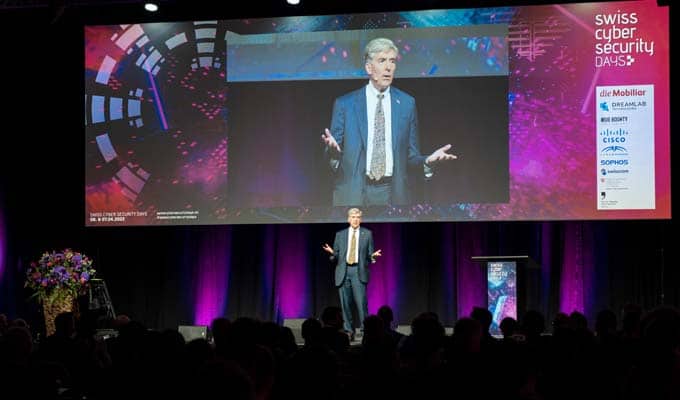
U.S. President Joe Biden's advisor on cybersecurity issues Chris Inglis stressed the importance of good cooperation, as cyberspace knows no national borders, and praised Switzerland's potential for innovation. (Image: SCSD)
The Swiss Cyber Security Days 2022 (SCSD 2022), the most important meeting on cyber security in Switzerland, brought together key decision-makers and experts in the field of cyber security at national and international level and around 2,000 visitors on Wednesday, April 6 and Thursday, April 7. The first day focused on key global security issues for Switzerland. At the opening ceremony, National Councilor and SCSD President Doris Fiala and Daniel Berger, president of Cyber Resilience Ltd, which is organizing the event, pointed out that the increase in infrastructures and data transfer volumes is leading to ever greater vulnerabilities. Moreover, these processes have been accelerated by the pandemic. Companies and administrations are confronted with and threatened by cybercrime on a daily basis, he said. Olivier Curty, President of the State Council of the Canton of Fribourg, also welcomed the participants on the first day in a welcoming message and underlined the importance of cyber security for the cantons.

Global security issues on the first day of the Swiss Cyber Security Days 2022

Among the highlights of the first day of the congress was the presentation by Chris Inglis, National Cyber Director and Advisor to the President of the United States Joe Biden. He stressed the importance of good cooperation. Cyberspace knows no national borders, Inglis warned, praising the potential of Swiss innovations. Florian Schütz, the Swiss government's delegate for cybersecurity, looked back at developments in recent years. He said the Swiss government has made a lot of progress and is currently working on the second version of the national cyber risk protection strategy. Div. Alan Vuitel, head of the Armed Forces Cyber Command project, looked at cybersecurity from a military perspective. He spoke about the main challenges we currently face from a national security perspective.

SMEs in focus on the second day

On the second day, the event focused on cybersecurity in SMEs. Gerhard Andrey, entrepreneur and member of the National Council, spoke about how the aviation industry has been dealing with technical defects in complex systems for decades. This is achieved by means of precise, complete information transmission and transparency. He calls for this to become the standard in dealing with cybersecurity as well. In a panel organized by the insurance company Mobiliar, Susanne Maurer, Editor Corporate Communication, Andreas Hölzli, Head of Competence Center Cyber Risk, and Thomas Kühne, CIO, discussed a recent GFS study showing that one in three companies has already been the victim of a cyber attack. The greatest risk is and remains the employees themselves, whose awareness makes an important contribution to prevention. Nicolas Mayencourt, CEO and founder of Dreamlab Technologies, and Prof. Dr. Marc K. Peter, Head of Centre for Digital Transformation at FHNW, presented the annual edition of the State of Swiss Cyberspace. The study conducted a full scan of Switzerland's public attack surface and presented vulnerabilities by sector for the first time. The study found that the three sectors of education, healthcare and government have the most vulnerabilities.

Presentation of the SCION project of ETH

ETH's SCION project was presented to the public for the first time at the SCSD. The secure Internet architecture SCION offers increased security, availability and performance. The SCI-ED project enables secure and highly available communication between institutions of the ETH Domain and partners. The project was presented by Adrian Perrig, ETH / SCION, Martin Bosshardt, Anapaya, Florian Schütz, NCSC, August Benz, SBA, Urs Fischer, HIN, Stefan Berg, Swisscom, and Robert Wigger, Sunrise Impulse.

Swiss Cyber Security Days 2022: 130 conferences, panels, expert discussions

After last year's edition was held entirely online due to the pandemic, they were even more pleased that Cyber Security Days could be held on-site again this year. Béat Kunz, CEO of SCSD, says: "Although we were very satisfied with the virtual edition, it doesn't replace the personal contacts that are made, especially in the exhibition area." More than 100 exhibitors had gathered at Forum Fribourg. During the two days, more than 130 conferences, panels, expert discussions, best practices and round tables took place. In addition to the key-notes, the Expert Tracks offered many interesting technical presentations and innovations on both days and the two Best Practices Tracks were also a great success. This year, for the first time, admission to the exhibition and the Best Practice Tracks (comprising 20 presentations per day) was free of charge. The Swiss Cyber Security Days 2023 will take place on March 29 and 30. www.swisscybersecuritydays.ch

This article originally appeared on m-q.ch - https://www.m-q.ch/de/swiss-cyber-security-days-2022-waren-ein-voller-erfolg/

get_footer();