
Cloudera strengthens management team in Switzerland and Central Europe

The hybrid data and AI platform company Cloudera is expanding its management team in the DACH region and Central Europe. Nektarios Makris takes over responsibility for Central and Eastern Europe including Switzerland as Regional Vice President, Jens Luebben is now in charge of Germany and Austria, while Yari Franzini is responsible for the entire South, Central & Eastern Europe region.


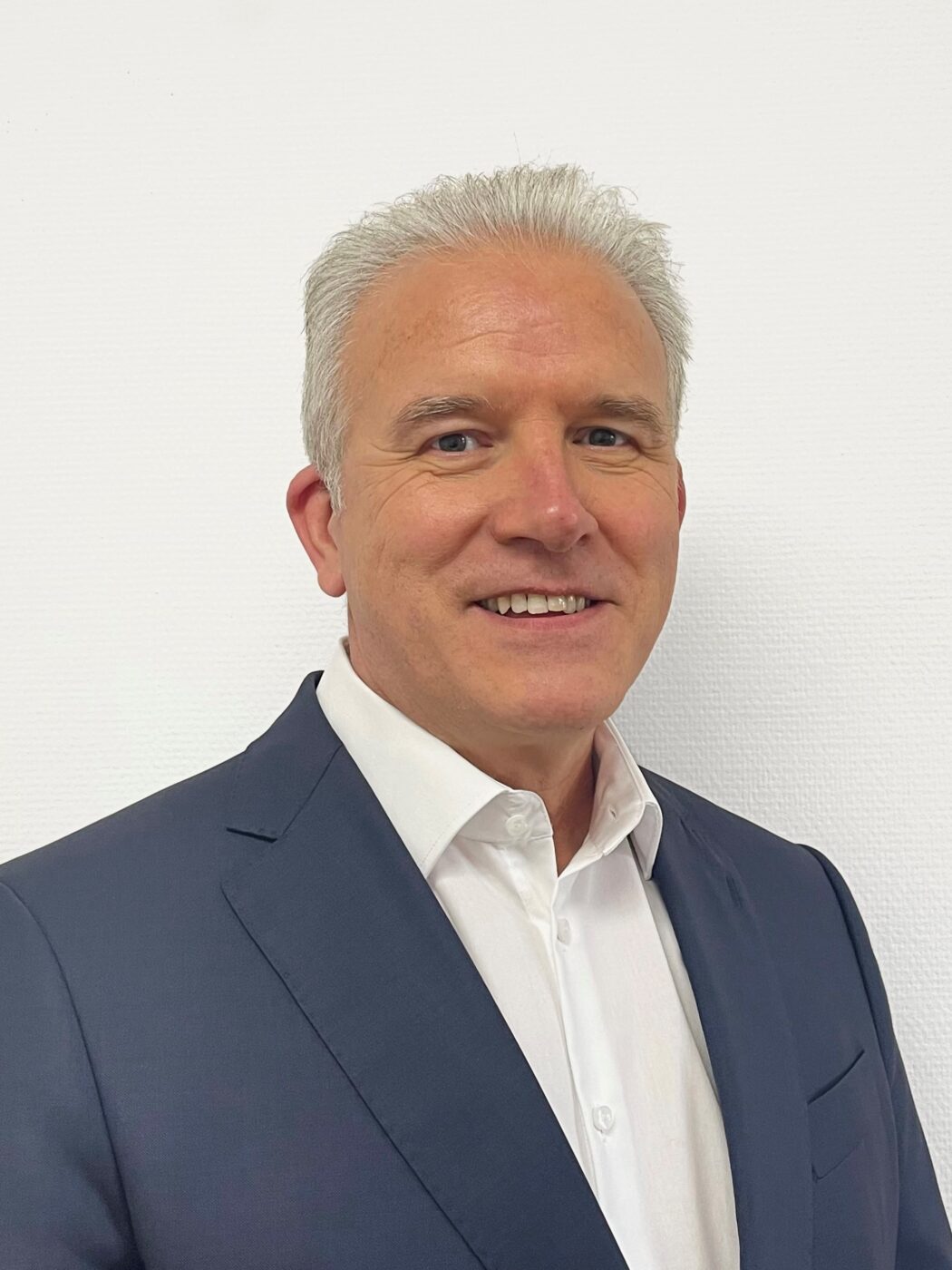
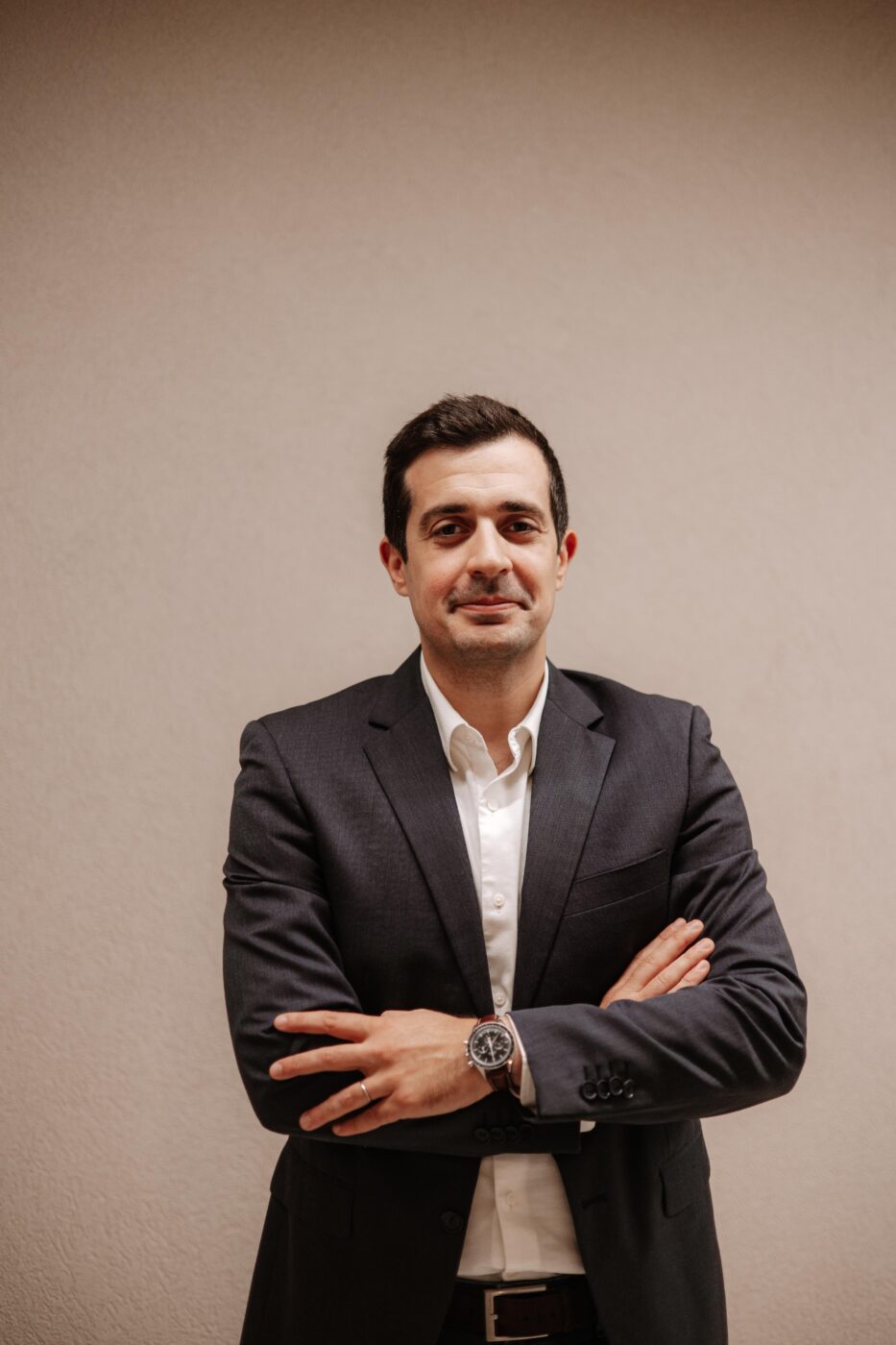
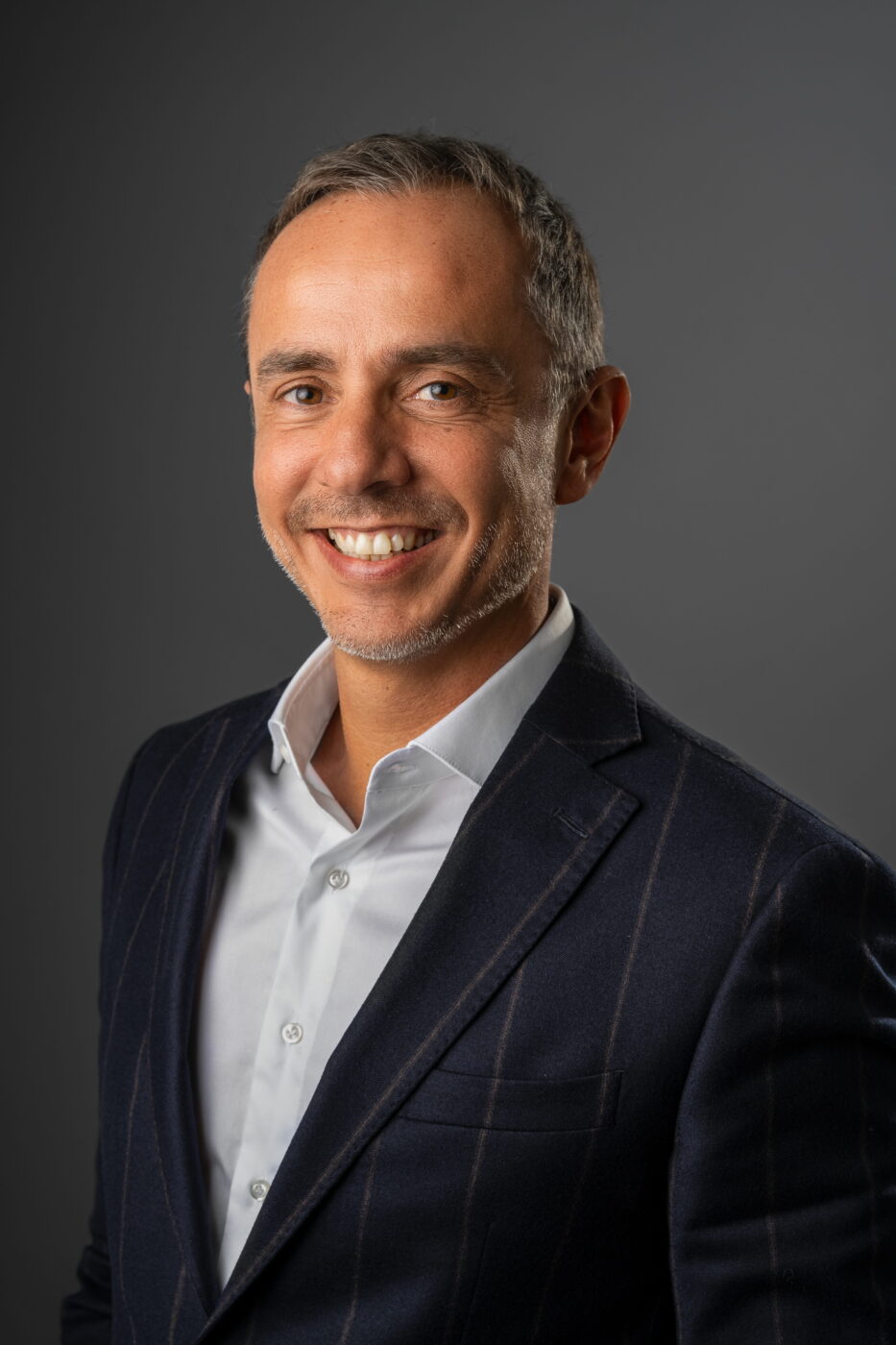
Jens Luebben takes over responsibility for Germany and Austria as Regional Vice President. Source: zvg

Cloudera, provider of a hybrid data and AI platform, is reorganizing its management team in the DACH region and Central Europe. The reorganization includes three key positions: Nektarios Makris becomes Regional Vice President for Central and Eastern Europe including Switzerland, Jens Luebben takes over sales responsibility for Germany and Austria as Regional Vice President. Both will report to Yari Franzini, who will be responsible for the entire South, Central & Eastern Europe region as the new Group Vice President.

Makris expands area of responsibility

Nektarios Makris joined Cloudera in 2022 and is now Regional Vice President responsible for Central and Eastern Europe, including Switzerland. The Geneva-based sales expert has 15 years of industry experience, particularly with software companies. He previously worked for the Swiss company Spotme and Makoptimus Web Solutions, among others.

«Digital sovereignty is no longer an abstract concept for European companies, but a key requirement,» says Nektarios Makris. «With its modern data management platform, Cloudera offers companies comprehensive opportunities to open up new business areas with analyses and data-based AI applications. Thanks to Private AI, companies can now build AI on their own data - in their own infrastructure, compliant with European regulations. I look forward to helping our customers in Europe realize the full potential of their data.»

Nektarios Makris becomes Regional Vice President for Central and Eastern Europe including Switzerland. Source: zvg

Luebben concentrates on DACH core markets

Jens Luebben joined Cloudera in 2023 and is now focusing on the German and Austrian markets. He brings more than 25 years of experience in sales, services and consulting for American software companies. Prior to joining Cloudera, Luebben was Area Vice President at Confluent, responsible for the CEMEA region. His previous experience includes Citrix, Microstrategy, Splunk and TIS.

«Today, the strategic use of AI determines the business success of companies. With Private AI, we give companies full control over their data. They decide for themselves where it is stored and how it is used securely and compliantly for innovative AI workloads,» says Jens Luebben. «I look forward to working with our team and our partners to further expand the German and Austrian markets and support our customers on their journey to becoming data-driven companies.»

Yari Franzini is the new GVP at Cloudera. Source: zvg

Franzini assumes overall responsibility

After successfully leading the Southern Europe region, Yari Franzini is now expanding his responsibilities as Group Vice President at Cloudera to include the newly created South, Central & Eastern Europe region. Prior to joining Cloudera, Franzini held management positions at Oracle and HPE. He began his career as a management consultant before spending seven years at EMC2 in various sales positions.

Cloudera positions itself as the only hybrid data and AI platform company trusted by large enterprises to make AI available for their data anywhere. The platform provides a consistent cloud experience that connects public clouds, on-premises data centers and the edge, built on a proven open source foundation.

More information: https://www.cloudera.com

Mövenpick Wine takes over Liquid Grape

Mövenpick Wein is strengthening its digital fine wine business in Switzerland and Germany with the acquisition of Liquid Grape. The acquisition is part of the strategic realignment under CEO Nikolas von Haugwitz and combines stationary retail with data-based investment solutions. The founders of Liquid Grape will remain on board and will be responsible for the strategic development of the platform.

Annie Dörfelt and Henrik Maaß, founders of Liquid Grape. Source: zvg

With the acquisition of the German wine investment provider Liquid Grape, Mövenpick Wein is driving forward the transformation of its business model. The acquisition aims to more closely integrate stationary retail, digital services and data-based investment solutions. Liquid Grape was founded in 2019 and specializes in the acquisition, management and trading of fine wines as a form of investment.

Customers can use platform-protected applications to manage their wine collections and track the performance of their wine portfolios. The offering is complemented by personal advice, structured investment packages and trading and buyback options. The founders of Liquid Grape, Annie Dörfelt and Henrik Maaß, will remain on board and continue to be responsible for the strategic development of the platform. In this way, Mövenpick Wein ensures personnel continuity, the highest level of advisory expertise and the cultivation of personal customer relationships.

2026 as a key year for wine investments

With this acquisition, Mövenpick Wein is responding to far-reaching changes in the wine trade in Switzerland and Germany. Fine wines are not only seen as objects of enjoyment, but increasingly as an alternative form of investment with long-term appreciation potential. 2026 is seen by experts as a key year for wine investments due to market trends and changes in consumer behavior.

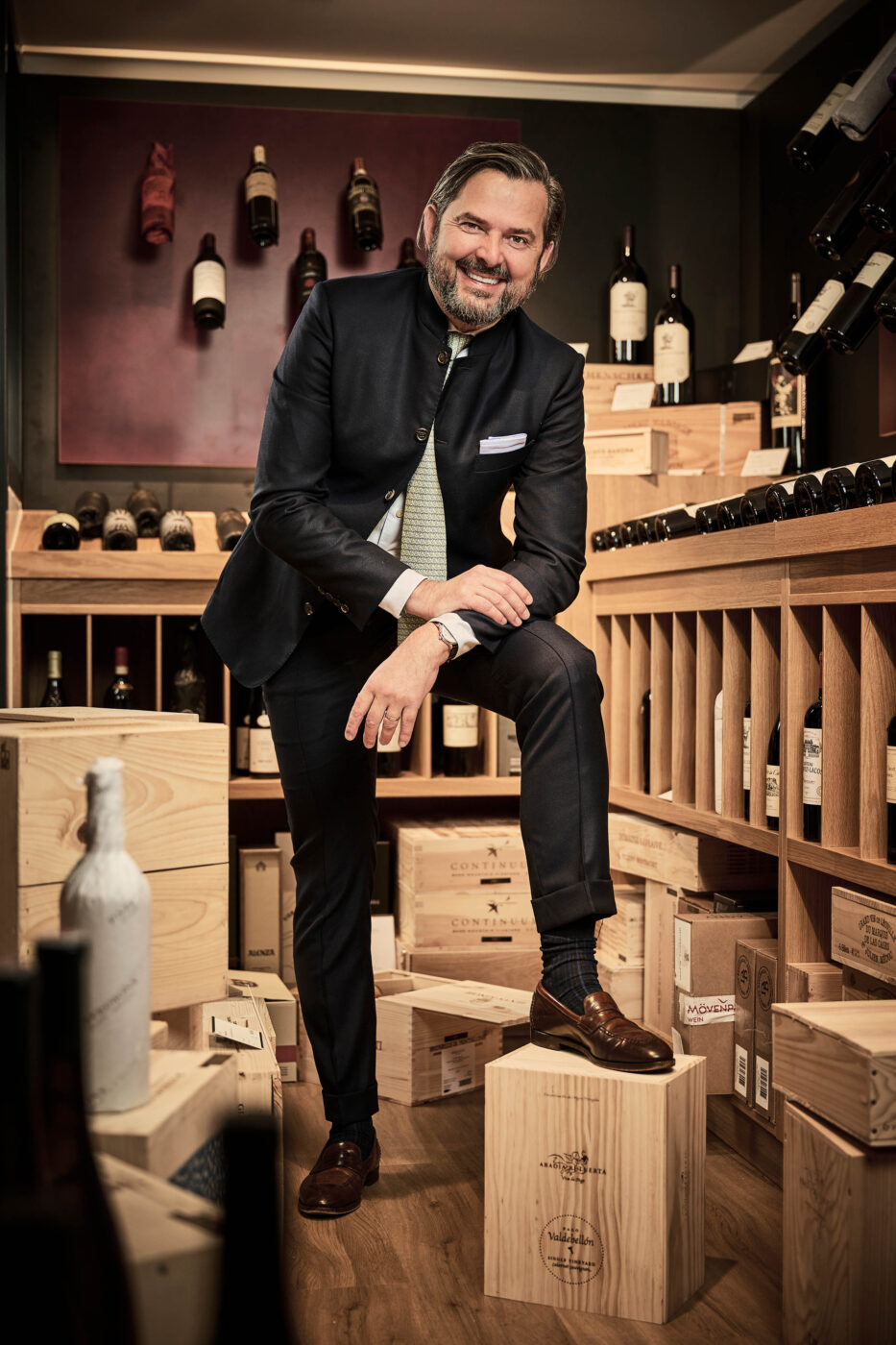
Nikolas von Haugwitz, CEO Mövenpick Wine. Source: zvg

«High-quality wines are tangible assets with stable development and can achieve attractive results compared to traditional asset classes,» says Nikolas von Haugwitz. «As a tangible asset, wine offers a solid basis for long-term investments due to limited availability, declining supply due to consumption and growing global demand.».

Digitalization meets wine culture

With the integration of Liquid Grape, Mövenpick Wein is responding to the rising expectations of a technology-savvy clientele. The platform complements the existing portfolio with data-based tools and digital user experiences that go beyond pure advice and physical trading. The use of technology-based applications and online portfolio services is intended to facilitate access to wine investments - from initial contact to portfolio analysis and the handling of trading processes.

«The wine market is developing rapidly - with an ever-increasing focus on data, networked information processes and new forms of investment,» says Nikolas von Haugwitz. «With Liquid Grape, we are expanding our digital expertise in the area of fine wine investments and creating additional added value for a discerning clientele.»

Stationary retail meets the networked future

Mövenpick Wein aims to combine its long-standing expertise in bricks-and-mortar retail with pioneering online services to create a seamless, integrated customer experience. The aim is to combine a physical presence at over 40 locations in Switzerland and Germany with digital services such as portfolio monitoring, investment reporting and online advice.

The acquisition of Liquid Grape strengthens the existing business model in strategically relevant areas and represents a further step in the company's transformation from a primarily stationary provider to a technology-supported, networked player in the fine wine and investment market.

«With a view to 2026, we are creating the basis for an integrated business model that systematically brings together physical presence, digital platforms and investment solutions,» says von Haugwitz. «This will consolidate our position as an innovation-friendly partner for fine wines and wine investments in the DACH region.»

More information: www.moevenpick-wein.ch

Systemic thinking in consulting

The Institute for Systemic Impulses is offering two seminars in April 2026 that will help consultants to make change processes more effective. The focus is on systems theory concepts for coaching, supervision and organizational consulting. The seminars explain why well-intentioned measures often fail and how patterns can actually be changed.

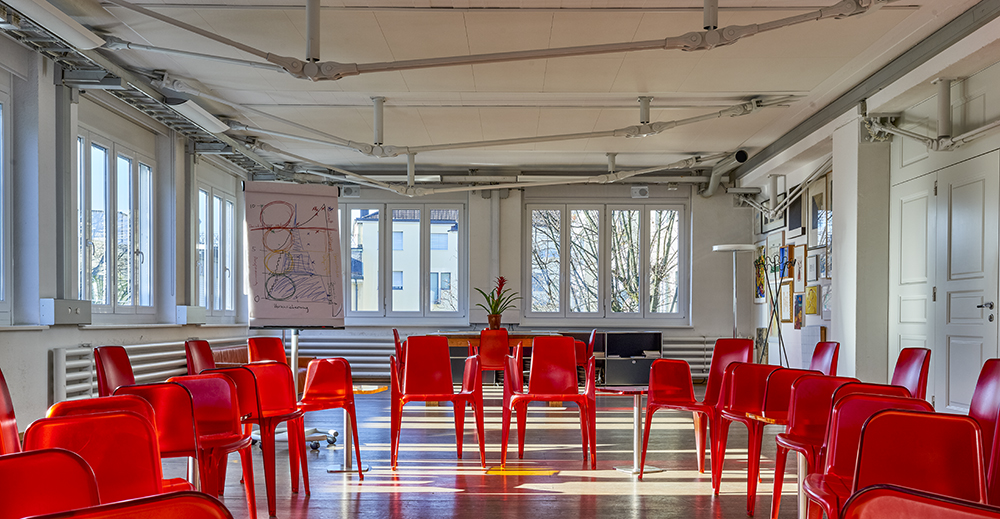
Preparations for important discussions in the meeting room. Source: zvg

A team is in conflict. Discussions are held, measures decided, structures adapted. But after three months, everything goes back to the way it was before. Many people are familiar with this phenomenon from consulting practice. The explanation does not lie in the failure of those involved, but in the logic of the system: patterns do not change through appeals and goodwill, but when you understand the logic that keeps them alive.

Systems theory and counseling practice

The two-day seminar from 21 to 22 April 2026 teaches core concepts of systemic work for coaching, supervision and organizational consulting. Participants will learn how people and teams create their reality and how this can be productively changed. The focus is on recognizing conflict patterns in teams, effectively irritating constructions of reality and developing interventions that actually have an effect - not just calm things down in the short term.

Understanding organizations systemically

The second seminar will take place on April 23 and 24, 2026 and is dedicated to the question of why well-intentioned change processes so often fail. Why does agility remain a buzzword in many organizations that bounces off the real structures? And why are organizational problems so often turned into people problems? The seminar provides conceptual tools to see through organizational logic. Participants will understand why hierarchies are not mistakes, but functional answers to structural questions - and what newer, agile forms can and cannot really do.

Why now?

AI systems make decisions, teams work across continents, organizational forms change every year. The temptation to respond with ever new tools and frameworks is great. But organizations have always been more than the sum of their parts. Decisions have always been made under uncertainty. And change has always been paradoxical. What has changed: The half-life of management fads has become shorter. Consultants who are informed by systems theory ask the right questions - before solutions are implemented.

The speakers

Torsten Groth is a graduate social scientist, independent organizational consultant, lecturer at the WIFU of the University of Witten/Herdecke, managing partner of Simon Weber Friends and initiator of Club Systemtheorie. He is the author of «66 Gebote systemischen Denkens und Handelns» (Carl-Auer, 4th ed. 2022).

Roger Romano is co-owner of the Institute for Systemic Impulses, systemic coach, supervisor and organizational consultant with a focus on transactional analysis. He has more than 25 years of experience in supporting organizations, teams and people through change.

The two seminars complement each other perfectly. Those who attend both develop a coherent conceptual foundation for their own consulting and management work.

Further information on the seminars and registration at www.systemische-impulse.ch.

TheNewNow Future Summit brings business thought leaders to Zurich

TheNewNow Future Summit will take place at the Zurich headquarters on April 22, 2026. The event is a further development of the Swiss Deluxe Hotels Media Summit and is now aimed at all industries. Around 350 participants can look forward to five keynotes and over 100 sessions on media, business, AI and new work.

Prof. Dr. Felicitas Morhart is one of the keynote speakers. Source: zvg

On April 22, 2026, the Zurich headquarters will become a meeting place for decision-makers and thought leaders from business, communication and the creative industries. TheNewNow is a format that offers orientation through access to knowledge and exchange at a time when communication, leadership and technology are changing faster than ever before.

From an exclusive summit to a cross-industry format

TheNewNow is the logical development of the Swiss Deluxe Hotels Media Summit, which has set standards as an exclusive industry format for several years. With the relaunch, the format is now open to all industries. «We are focusing on all the influences that will shape working life in the future. Having seen how valuable an intensive exchange of knowledge at eye level can be, we are now taking the next step and addressing the entire Swiss luxury industry,» says initiator Evelyn Gorgos, explaining the new direction.

Initiator Evelyn Gorgos is responsible for the reorientation. Source: zvg

Over 100 sessions and top-class speakers

Five keynotes as well as numerous workshops, panels and live sessions offer practical expert knowledge from the fields of media, business, AI and new work. Around 350 participants will be able to choose from more than 100 sessions and set individual priorities when putting together the program for the day's event. Highlights include Prof. Dr. Felicitas Morhart, AI expert Sébastien Félix, German business coach Jens Alsleben, photographer Oliver Rust and media professional Gaudenz Looser. More than ten international media agencies will present future scenarios for the transformation of the world of communication.

The headquarters on Stockerstrasse serves as one of the two locations. Source: zvg

Two locations with a variety of rooms

The 15 co-working spaces and community areas at the two locations in Stockerstrasse and Beethovenstrasse are within walking distance and provide the perfect setting for the modern format. Selected contributions are recorded in the Headsquarter podcast studio and the fitness rooms are all about mental health, nutrition and resilience. The factory kitchen is used by cookbook author and journalist Claudio Del Principe for a pasta workshop for interactive team building. Swiss Deluxe Hotels will continue to be represented at the new edition as a hosting partner and with a specially curated series of lectures.

«TheNewNow is exactly the format that belongs in our spaces. It brings people together who are curious and want to learn from each other. It complements our curated community and our understanding of a contemporary work culture,» says Anil Varghese, CEO Headsquarter.

Networking into the night

In the evening, the program turns into an after-show party with a DJ, cocktails and a view over the rooftops of Zurich, providing an opportunity for conversations for which there was no time during the day. Tickets are available for CHF 390 (Early Bird CHF 330). All lectures will be held in English.

More information: www.newnow.work

Mediarent and Screenpro bundle sales under new management

Dr. W.A. Günther Media Rent AG and Screenpro AG are merging their sales activities. Tobias Reithmaier will assume the role of Head of Sales for both companies with immediate effect. The strategic merger will enable competencies to be bundled in a more targeted manner and synergies to be exploited.

Tobias Reithmaier takes over as Head of Sales for Mediarent and Screenpro. Source: zvg

Dr. W.A. Günther Media Rent AG (Mediarent) and Screenpro AG are bundling their sales activities: Tobias Reithmaier is taking over the role of Head of Sales for both companies with immediate effect.

Many years of experience in customer consulting

Tobias Reithmaier previously worked for Screenpro and has many years of experience in customer consulting. In his new role, he will be responsible for the further development of the sales activities of both companies and will continuously expand relationships with customers and partners.

The strategic merger of Screenpro and Mediarent makes it possible to bundle expertise and resources in an even more targeted manner and exploit synergies. Customers benefit from a powerful and reliable range of services in the areas of sales and system integration of display, LED and digital signage solutions as well as the rental of high-quality audiovisual event technology.

Implementing exciting projects together with the team

Commenting on the start of his new role, Tobias Reithmaier says: «I am very much looking forward to further intensifying our collaboration with our customers and implementing exciting projects together with our team.»

Dr. W.A. Günther Media Rent AG is one of the leading providers of professional event technology in Switzerland. With state-of-the-art audio, video, lighting and projection technology, Mediarent creates impressive worlds of experience - from technical planning to on-site implementation. Over 90 years of experience stand for quality, reliability and customized solutions for events of all sizes.

Screenpro AG is one of the leading providers of professional display, LED and digital signage solutions in Switzerland and stands for innovative technologies, high service quality and customized system concepts. Both companies are part of the Messerli Group, the leading Swiss group of companies for live experience.

https://www.mediarent.ch

Tradingzone saves over 1,600 tons of CO₂ with office furniture circular economy

Tradingzone from Regensdorf presents practice-based data with the «Swiss Office 2026 Circular Economy Study»: Over 120 office organizations per year lead to the reuse of around 20,000 pieces of furniture. Systematic reuse saves more than 1,600 tons of CO₂ every year - a real operational impact instead of theoretical potential.

Tradingzone promotes a circular economy for office furniture. Source: zvg

With the publication of the «Swiss Circular Office 2026 Study», Tradingzone documents the impact of its circular activities in the Swiss office market. The analysis is based on data from over 120 office organizations per year and shows The systematic reuse of commercial office equipment saves more than 1,600 tons of CO₂ annually. The values shown document a real operational impact and not just a theoretical market potential.

Commercial office furnishings are under increasing pressure to change. Hybrid work, location consolidations, economic uncertainties and increasing ESG requirements are leading to structural adjustments to working environments and shorter investment cycles.

Around 20,000 pieces of furniture in circulation every year

The data basis of the study includes around 20,000 pieces of furniture per year that are taken over, checked, refurbished and put back into use as part of projects in connection with office reorganizations, relocations and operational restructuring. Around 93 percent of the furniture taken over can be put to a second use. The remaining 7 percent is professionally recycled or disposed of.

Typical triggers for these projects are area consolidations, location mergers, organizational realignments or economic adjustments. Technical defects in the furniture, on the other hand, are rarely the reason.

Real impact instead of theoretical potential

Based on the pieces of furniture that are actually recycled each year, the documented order of magnitude is as follows: around 700 tons of material saved per year and over 1,600 tons of CO₂ emissions avoided annually.

The calculation is based on an average furniture weight of 35 kg and conservative emission values of 80 kg CO₂ per newly produced piece of furniture. The aim of the extrapolation is not to maximize the effect, but to provide a realistic classification of the dimension.

Organizational changes instead of technical wear and tear

«A lot of office furniture is not replaced because it has reached the end of its technical life, but because organizations are changing. The greatest circular potential therefore lies not in buying new furniture, but in reusing it intelligently,» says Marco Bühler, co-founder and Managing Director of Tradingzone.

The study places the results in the context of ESG reporting, Scope 3 emissions and changing workplace concepts. Circular models are increasingly developing from a niche solution into a component of modern procurement strategies.

Tradingzone is an owner-managed Swiss specialist company based in Regensdorf. Since 2007, the company has specialized in new and used office furniture as well as sustainable solutions for office furnishings. With over 70,000 pieces of furniture immediately available and a clear focus on the circular economy, Tradingzone is one of the leading providers of sustainable office furnishing solutions in Switzerland.

www.tradingzone.ch/kreislaufwirtschaft

First National Conference of Engineers joins forces to combat skills shortage

Around 40 experts from business, science and politics met at Lucerne University of Applied Sciences and Arts to strengthen the promotion of young talent in engineering. The challenge lies not in a lack of initiatives, but in coordinating them and making them visible.

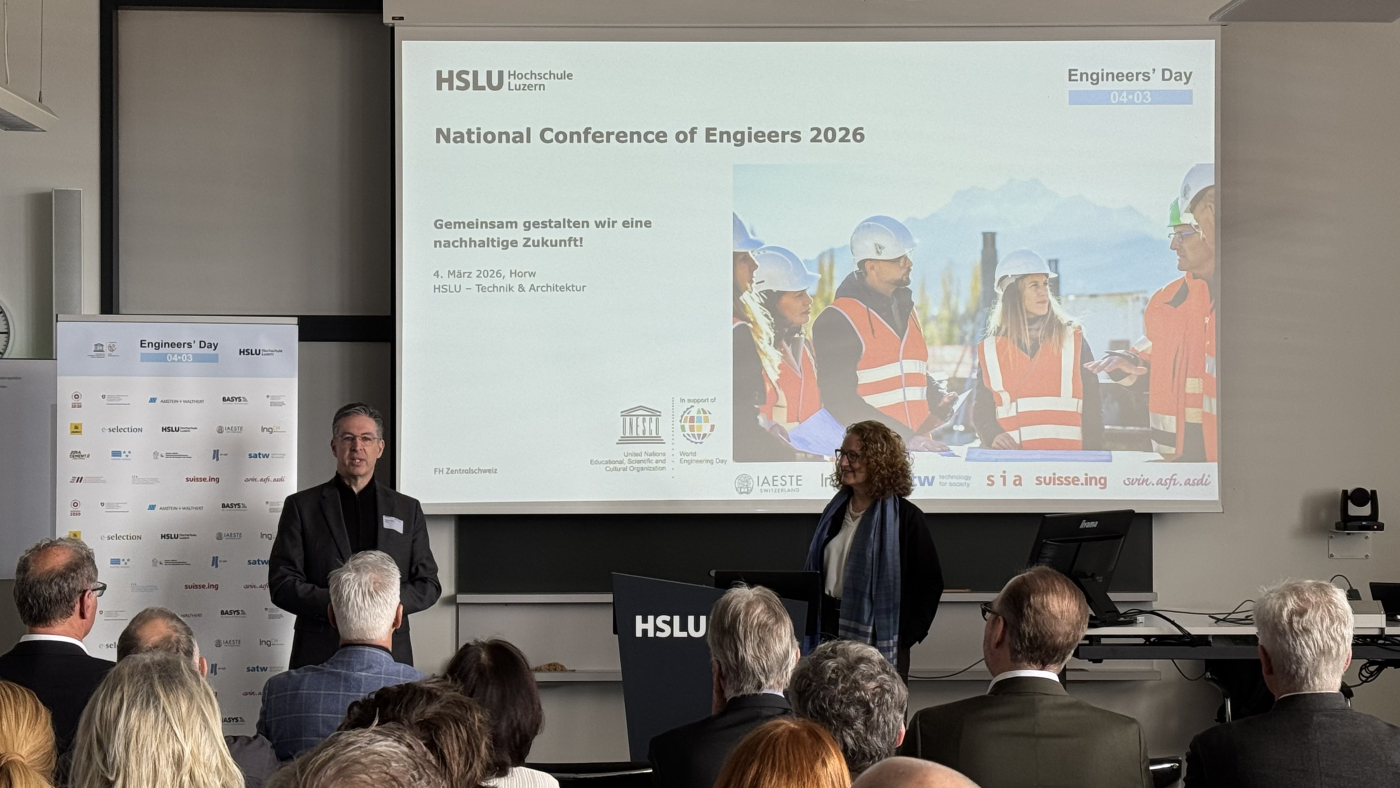
HSLU hosts the National Conference of Engineers. Source: zvg

On March 4, 2026, the first National Conference of Engineers took place at the Lucerne University of Applied Sciences and Arts (HSLU). Around 40 experts from business, science, administration, associations and the student body came together to jointly develop strategies for promoting young talent in engineering. The conclusion of the conference is clear: in order to master the major social, technological and ecological challenges, coordinated action is required from all relevant players.

Many initiatives, lack of coordination

The conference aimed to gain an overview of existing funding initiatives in engineering and to pool resources for future measures. It became clear that there is no shortage of offers in Switzerland - only on the platform educamint.ch at least 860 initiatives are listed. The real challenge lies in coordinating, funding and making these initiatives more visible.

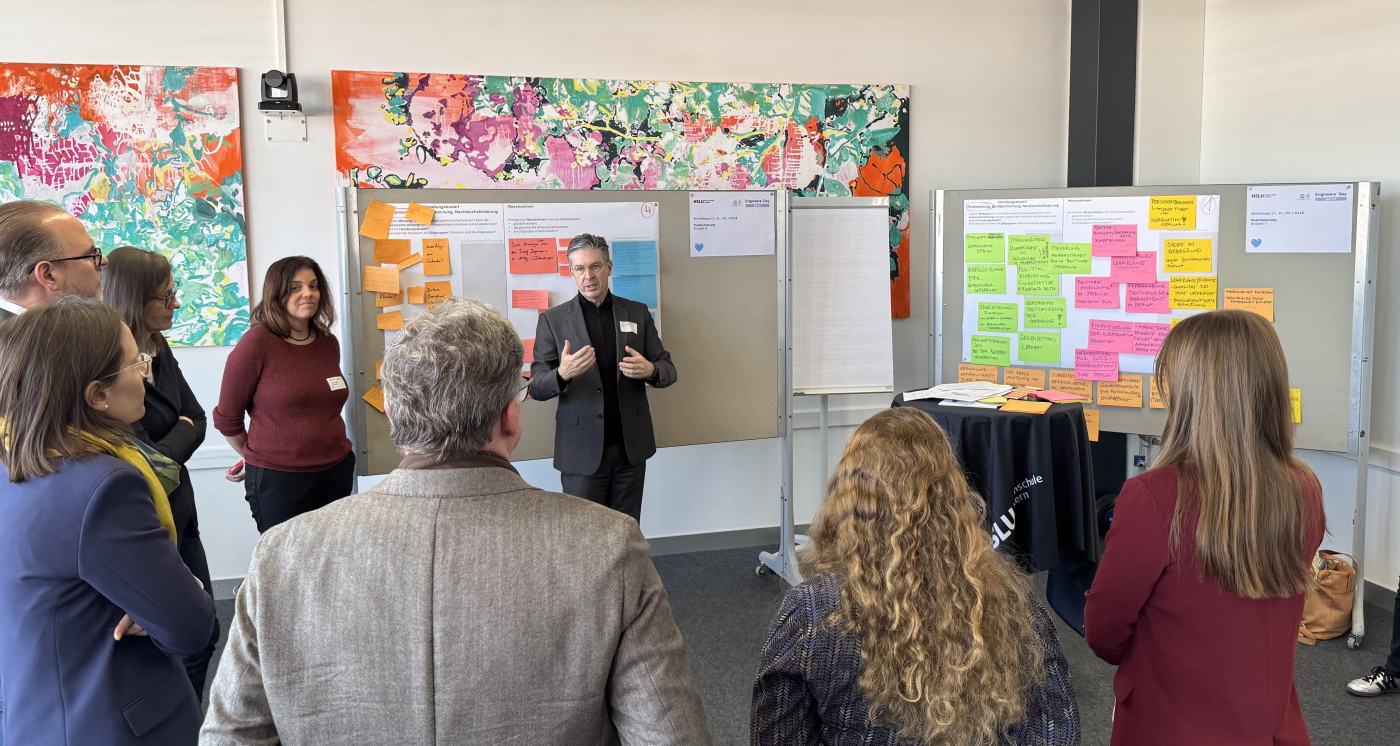
Employees get involved in the joint workshop. Source: zvg

Together, they discussed strategies to get more young people - especially women - interested in engineering, STEM and tech professions. The conference was organized by Engineers‘ Day and Lucerne University of Applied Sciences and Arts.

Engineers as problem solvers

In the face of global challenges such as mobility, climate change and digitalization, engineers have a central role to play. They develop innovative solutions for renewable energy systems, resilient infrastructures, smart mobility concepts, digital technologies, data-based applications and sustainable production processes. In doing so, they make an indispensable contribution to the quality of life, the sustainable development of society and the achievement of the United Nations Sustainable Development Goals.

At the same time, engineering, STEM and tech professions have been under pressure for years: there is a pronounced shortage of skilled workers and women are still significantly underrepresented.

Interdisciplinary workshops develop measures

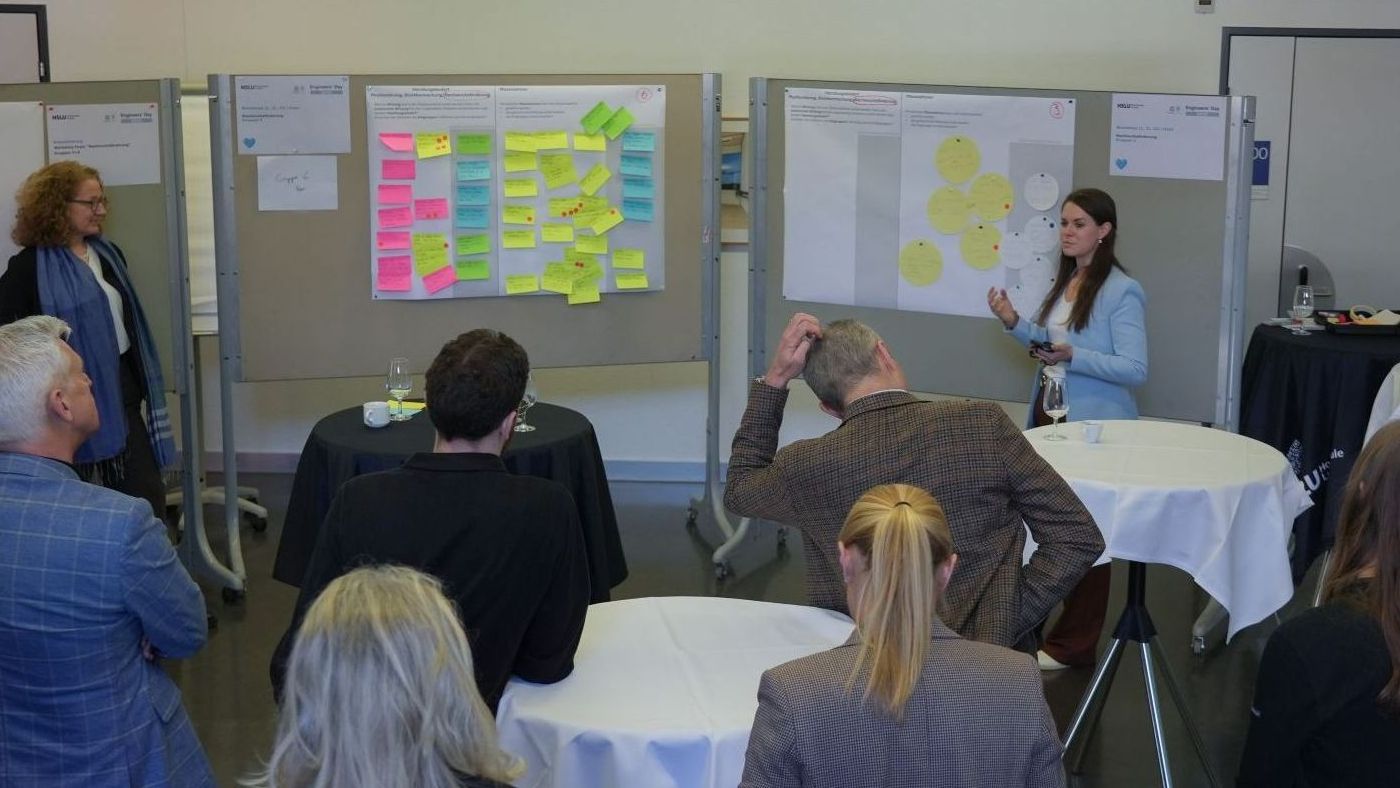
New impetus at strategy workshop for corporate development. Source: zvg

In thematic workshops, the participants jointly developed specific measures, which were then reflected upon, refined and supplemented. Interdisciplinary collaboration and the active involvement of students, who contributed new perspectives and practical ideas, proved particularly valuable.

Roadmap for coordinated action

In the workshops and the panel discussion, the participants developed five central directions as the basis for a joint roadmap. Engineering secures the future of Switzerland, because the skills of engineers are a central basis for innovation, competitiveness and prosperity.

The job description must be told in a new way - more as a socially relevant contribution to solving complex problems, understandable, approachable and beyond clichés. Visibility is created through concrete examples: Concrete projects and everyday examples show the benefits engineering creates for society and the economy.

The next generation should be inspired at an early age. Children and young people should experience early on how exciting and meaningful engineering can be - through schools, various role models and practical insights into real projects. In order to strengthen engineering in the long term, we need national networking, coordinated activities and a continuous exchange between education, industry, associations and politics.

Starting signal for sustainable commitment

The first National Conference of Engineers sent out a strong signal and laid the foundation for a joint, sustainable commitment to strengthening young talent and the engineering, STEM and tech professions in Switzerland. The clear commitment of the participants: Existing initiatives should be strengthened, synergies systematically exploited and more impact achieved together.

The starting signal for coordinated cooperation was given with great commitment - with a clear milestone in sight: the major National Conference of Engineers on March 4, 2027, at which a national declaration is to be adopted.

About the Engineers‘ Day

At the initiative of the World Federation of Engineering Organizations (WFEO), the 40th General Conference of UNESCO decided in November 2019 to declare March 4 of each year as World Engineering Day. Countless events are held around the world. On Engineers‘ Day, numerous companies and institutions offer in-depth insights into the broad professional field of engineering and STEM professions.

Engineers‘ Day in Switzerland was launched back in 2018 and is supported by the sponsoring associations suisse.ing, Swiss Engineering STV UTS ATS, Swiss Society of Engineers and Architects sia, Swiss Academy of Engineering Sciences SATW, IngCH MINT for our future, Swiss Association of Women Engineers SVIN, Swiss Association of Surveyors IGS and IAESTE Switzerland.

More information: www.worldengineeringday.net and www.engineersday.ch

Shein continues to sell products containing hazardous chemicals

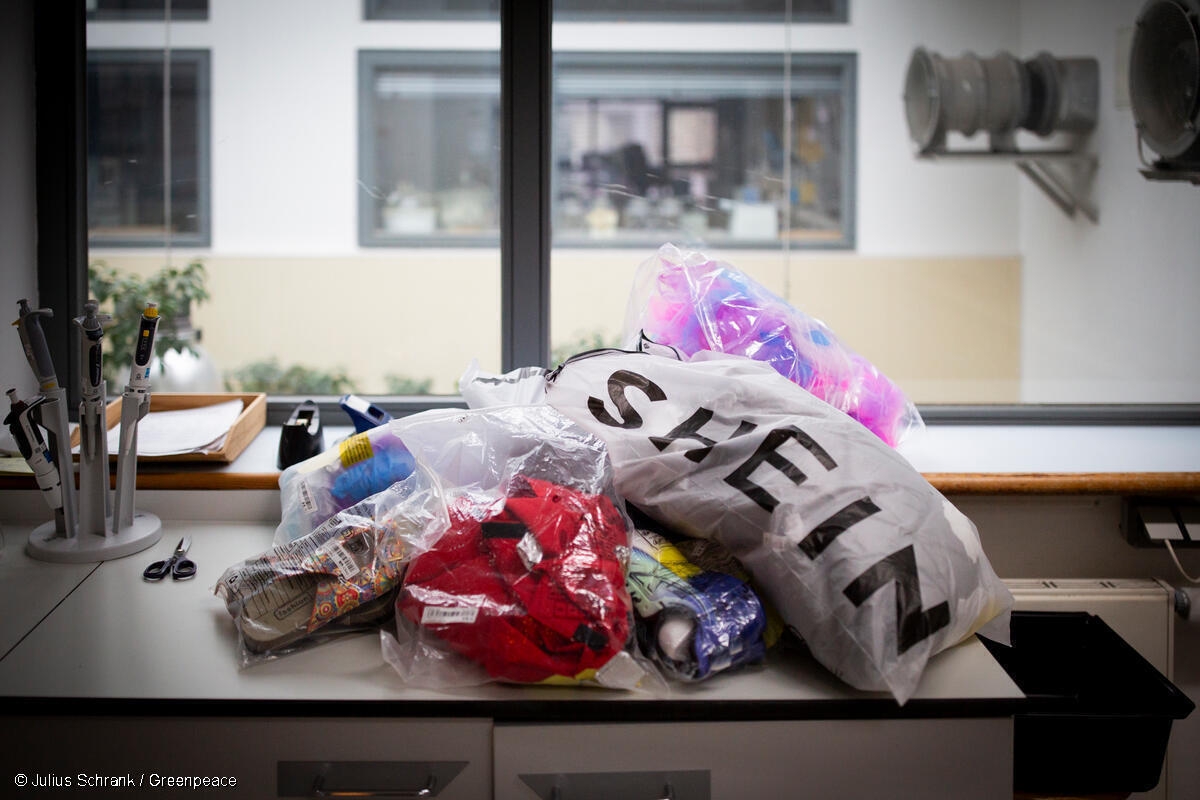
Greenpeace Germany has once again examined items of clothing from online fashion retailer Shein and found that 25 of the 31 products tested massively exceeded the limit values. Despite warnings in November 2025, identical or similar items containing hazardous chemicals remained available.

Greenpeace tests Shein clothing for harmful substances. Source: zvg

The online fashion retailer Shein does not take warnings about harmful chemicals in its products seriously. This is shown by a study by the Bremen Environmental Institute, which tested a total of 31 items of clothing in January 2026 on behalf of Greenpeace Germany. In 25 of them, the European Chemicals Regulation (REACH) was found to have been exceeded, in some cases massively.

Particularly explosive: the products in question were identical or very similar to the first Greenpeace test in November 2025. According to Shein's promises, these should no longer be available on the platform. After the first tests, the fast fashion group announced that it would withdraw the affected items from the market and stated that product safety and EU standards had top priority.

Only specific product numbers removed

The reality is different: Shein only removed the specific product numbers objected to by Greenpeace. The products themselves remained available. «Shein is ignoring warnings and legal limits and is accepting harm to people and the environment. This behavior is grossly negligent,» says Joëlle Hérin, consumer expert at Greenpeace Switzerland.

Of the 25 products tested in January, four were identical to those in the first test. One outdoor jacket was even available again from the same retailer. In one sandal, Shein kept nine other strap colors on offer - all with the same non-compliant footbed, although Greenpeace had already objected to one color variant in November 2025. Some of the hazardous chemicals exceeded the Swiss and EU limits by a factor of 3115.

Risks for people and the environment

Greenpeace was able to detect potentially toxic chemicals above the permitted limits in the clothing, including children's clothing. The chemicals found are associated with various diseases, including cancer, reproductive disorders and growth disorders in children, as well as a weakening of the immune system.

Workers and the environment in the production countries are particularly affected. But buyers also come into contact with the chemicals through skin contact, sweat or inhaled fibers. During washing and disposal, the substances continue to enter rivers, soil and the food chain.

Legal loopholes in Switzerland

Shein supplies the goods almost exclusively directly from China to consumers in Switzerland. The products are therefore not currently subject to the Foodstuffs and Utility Articles Act or the Chemicals Act. In concrete terms, this means that these products do not have to comply with Swiss limit values. As a result, Shein has so far evaded liability under Swiss law.

In order to protect the environment and human health, Swiss law must apply without loopholes to all products that can be purchased in Switzerland. Suppliers who repeatedly violate Swiss regulations must be sanctioned and excluded from the market. Greenpeace is also calling for a strong anti-fast fashion law based on the French model in order to establish environmentally friendly business models.

«The Shein case shows: Voluntary promises made by these companies are worth nothing. As long as fast fashion companies can make a profit with disposable fashion and hazardous chemicals, clear legal limits are needed,» says Joëlle Hérin and adds: «An effective anti-fast fashion law must curb overproduction, limit advertising for cheap fashion and finally hold manufacturers accountable.»

www.greenpeace.ch


Statement from Shein

Shein has sent us the following statement about this article:

«The constructive exchange with Greenpeace is very important to us. As part of the review of the current test results, we have commissioned independent test institutes to carry out further tests on the identified products.

All products mentioned in the previous Greenpeace report were immediately removed from our platform worldwide, as per our own standard protocols. The products are still not listed on our website.

The products identified in this report were also removed immediately after we were informed of the results. At the same time, we are carrying out further tests of our own.

We are addressing concerns about our processes for dealing with such cases and recognize that this process highlights areas where our controls can be further strengthened.

As soon as we became aware of the concerns, we initiated measures to identify potential improvements to our protective measures. These range from the preliminary testing of products to the ongoing monitoring of products that are already available. The protective measures include platform-wide checks of similar products using technical detection systems as well as targeted manual checks. 

In addition, we are increasing our investment in the specialized teams and technologies that implement the specified measures in a targeted manner. We are also tightening up the measures we take against providers who do not comply with our requirements and rules, including by suspending or terminating contracts more quickly and imposing stricter financial sanctions.

These measures build on the Enhanced Compliance Program that we initiated at the end of 2025 to improve product safety and raise compliance standards on our platform. As part of this program, we are expanding our partnership with leading global quality assurance providers to implement a range of improvements. These include more intensive vetting of new vendors, higher training standards for content moderators and vendors, and structured compliance testing to identify vulnerabilities and initiate corrective actions in relevant areas.

We continue to advocate for an increased exchange of information between platforms in order to identify problematic offers and sellers. After all, many such products are still available on several online marketplaces.»

Only five percent of companies achieve measurable added value from AI investments

A recent BCG study shows: Only five percent of companies worldwide generate substantial value from their AI investments. 60 percent achieve minimal returns despite significant expenditure. Skills are becoming the central control variable for successfully bringing people and AI together.

Digital profiles make personnel selection easier for companies. Source: zvg / DesignbyFreepik

Artificial intelligence is fundamentally changing the world of work, but the economic benefits are not materializing for most companies. A study by the Boston Consulting Group of over 1,250 companies worldwide reveals a drastic gap: while a small elite of five percent of companies are recording significant increases in turnover and cash flow, 60 percent are generating hardly any measurable value despite substantial investments. A further 35 percent are in the process of building up, but are moving too slowly.

The growing value gap

The leading companies - described by BCG as «future-built» - are already achieving 1.7 times higher sales growth and 1.6 times higher EBIT margins than the lagging companies. They plan to spend 26 percent more on IT and devote up to 64 percent more of their IT budget to AI. These investments create a self-reinforcing cycle: Revenues are reinvested in new skills and technologies, continually widening the lead.

The role of agentic AI - autonomous AI agents that can observe, plan and act - is particularly noteworthy. This technology, which was barely mentioned in 2024, already accounts for 17 percent of the total AI value and is expected to increase to 29 percent by 2028.

Skill data as a decisive lever

Cornerstoneondemand, a leading provider of talent and learning management solutions, identifies skills as a key performance indicator for 2026. Without transparent skill profiles and linked data, AI cannot provide context and therefore cannot make meaningful recommendations. Current figures show the pressure to act: 35% of companies see clear skills gaps, 55% report selective deficits.

The demand for AI skills has risen by 245 percent - the most sought-after skill worldwide. At the same time, the importance of human skills is growing: The demand for emotional intelligence rose by 95 percent, as technical professions increasingly require human skills.

Five strategies of the successful

The BCG study identifies a clear pattern among the successful companies. They are pursuing a CEO-driven, multi-year AI vision with explicit revenue and cost targets. Nearly 100 percent of future-built organizations report deeply engaged leadership teams, compared to only eight percent of laggards.

Secondly, they fundamentally redesign workflows instead of just automating them. 70 percent of AI potential is concentrated in core functions such as sales, marketing, production and research. IT recorded an increase of six percentage points to 13 percent of the total AI value.

Thirdly, they implement an AI-first operating model with shared responsibility between business and IT. These companies are 1.5 times more likely to establish this shared ownership.

Fourthly, they secure the necessary talent through aggressive further training: Over 50 percent of employees receive training, compared to only 20 percent for laggards. Learning and work are increasingly merging, with learning content being embedded directly into the work context.

Fifth, they are building a technology architecture that is fit for purpose. More than half of future-built companies are working with a single enterprise-wide data model, compared to only four percent of stagnant companies.

HR and IT move closer together

Cornerstoneondemand is observing a closer integration of HR and IT. While HR has structured information such as skills and performance data, IT provides the work context from collaboration and productivity environments. A survey by Nexthink of 1,100 IT managers shows that 92% believe that this integration increases productivity and employee satisfaction.

The boundaries between technical and non-technical professions are becoming blurred. AI skills are expected in almost all roles, while the demands on empathy, communication and judgment are increasing.

High security risks

Despite the potential, 72 percent of companies report unmanaged AI security risks. Successful companies focus on designing safeguards and guardrails without compromising performance. They solve problems such as hallucination, bias and data misuse that often block laggards.

The most important insight: AI agents do not work without humans. Their performance depends on strong human orchestration in redesigned roles. The best organizations configure workflows to combine autonomous agents with human oversight.

Time is running out

Technology is developing at a rapid pace. The 10-20-70 rule for technology transformations remains valid: 70 percent of the strategic focus should be on people and processes, 20 percent on technology and 10 percent on algorithms. Most obstacles concern people, organization and processes.

Companies that have not yet started must act now. Future-built companies are pulling away, the value gap is widening and catching up is becoming more difficult with each passing week. The playbook is clearly defined and available to all - but time is running out.

Further information about Cornerstoneondemand

New think tank einstAIn: How AI should secure Switzerland's prosperity

With the launch of the think tank «einstAIn», Angestellte Schweiz and Kuble are responding to the rapid AI transformation of the world of work. An initial report identifies eight key challenges for Switzerland and shows that artificial intelligence is not a job killer, but a prosperity booster - provided it is strategically designed.

steve-johnson-_0iV9LmPDn0-unsplash
Source: zvg

Artificial intelligence is changing the world of work faster than many can react. With the newly initiated think tank «einstAIn», Employees Switzerland and Kuble - House of Intelligence want to actively, fairly and sustainably shape the AI transformation in Switzerland. The platform brings together companies, employees, science and politics and translates global and Swiss studies into clear recommendations for action.

Framework conditions of work under pressure

«At first glance, it may seem unusual for an employee association to set up a think tank. But the dynamics of artificial intelligence are calling established models into question,» says Alexander Bélaz, President of Angestellte Schweiz. Until now, the rule was: if you work eight hours, you get paid eight hours. But with AI, someone can do in two hours what used to take a whole day. If in future it is no longer working time that counts, but value generated, we as a community must clarify how productivity gains are distributed so that employees are not left behind.

Eight key challenges

The think tank consolidates findings from international and Swiss studies and derives specific fields of action from them. A first Report identifies eight key challenges for Switzerland. It makes it clear: for Switzerland, artificial intelligence is not a promise for the future, but a touchstone for its prosperity. In a high-wage country with a shrinking working population, competitiveness, social welfare and income can only be secured if productivity increases and the innovation advantage is defended.

«Demography means that the labor supply is shrinking, but the demand remains. We must use AI as an opportunity to increase labor productivity - and thus secure prosperity in Switzerland,» says Patrick Chuard, Chief Economist at the Swiss Employers' Association.

Need for strategy and new skills

At the same time, there is a dangerous imbalance in many companies. While employees have long been using AI informally and pragmatically, there is a lack of clear strategy and responsibility at many management levels. It is risky to reduce AI to simple, isolated tools. Those who do not rethink roles and processes are wasting productivity and exacerbating uncertainty instead of creating added value.

«The age of AI requires new ways of working and new skills. Identifying these is crucial - for the self-development of employees, for skills management in companies and for education in order to prepare the current and future workforce in the best possible way,» says David Gisler, Talent Acquisition Lead at Siemens.

Loss of value of professions and qualifications

For employees, this transformation means a fundamental paradigm shift: job security is increasingly being replaced by employability. AI is not devaluing entire professions in one fell swoop, but rather tasks, routines and existing qualifications. Without new skills profiles and a broad, in-depth «AI literacy», there is a risk of a structural division in the labor market - between those who can use AI productively and those whose work is gradually losing value.

«AI will fundamentally change value creation in Switzerland. In order for us to shape this transformation in a self-determined way, we need our own research capacities and open technologies that are transparent, legally compliant and accessible to all,» says Imanol Schlag, AI Research Scientist at the ETH AI Center.

Expected political responses

Politically, too, waiting is not an option. Unclear regulatory frameworks slow down innovation and investment more than technological boundaries, while dependence on a few global providers continues to grow. Those who do not actively shape digital sovereignty, data security and legal certainty risk giving up value creation and creative power.

«AI is rapidly changing the way we work and live. This makes it all the more important to have clear, fair rules that create trust without slowing down innovation. With targeted education and awareness-raising, we ensure that AI serves social cohesion and is shaped in a democratically legitimized way,» says Dominik Blunschy, National Councillor and Advisor Digital Business & Innovation at ti&m.

Broad advisory community

The think tank is supported by an interdisciplinary advisory community that brings together employers, employees, politicians and academics. Different perspectives and sometimes conflicting experiences are explicitly part of the process. The exchange between current research and practical application is crucial in order to develop realistic and socially viable guidelines for AI-driven change.

«All stakeholders from business, politics, work and science are cordially invited to actively shape the dialog and take joint responsibility for the future of work. With a broad dialog, an in-depth exchange of knowledge and courageous action, we increase the chance of continuing Switzerland's success story in the age of intelligence,» says Roger Oberholzer, Partner and Academy Lead at Kuble - House of Intelligence.

The central finding of the report is clear: artificial intelligence is not a job killer, but a prosperity booster - provided it is strategically managed, broadly qualified and responsibly regulated. Whether AI becomes an opportunity or a burden for Switzerland will not be decided in the code, but in the decisions made by companies, politicians and society - and now.

European Marketer of the Year 2026: Marco Greco is nominated

The European Marketing Confederation has announced the ten finalists for the European Marketer of the Year Award 2026. Among them is Marco Greco from Ochsner Sport in Switzerland.

greco
Marco Greco represents Switzerland in the final of the European Marketer of the Year 2026 (Source: Archive)

The European Marketing Confederation (EMC) has announced the finalists for the European Marketer of the Year Award 2026. Ten strategic marketing experts from Europe have qualified for the prestigious award.

Every year, most European countries recognize their national marketing champions. EMC now selects the best of these champions in a formal competition. All marketing associations in Europe were invited to nominate their national marketing champions. The first phase of the selection process has now been completed.

Swiss representatives from the sports retail sector

Among the ten finalists is Marco Greco from Ochsner Sport, a Swiss representative. The other finalists:Stijn Mentrop-Hulisan from McDonalds (Netherlands), Laurence Herbeert from Puratos (Belgium), Ádám Mérő from Coca Cola (Hungary), Orla Mitchell from WaterWipes (Ireland), Vaida Jurkoniene from Telia (Lithuania), Sergio Leal, formerly McDonalds (Portugal), César Romera from Kyndryl (Spain), Carolina Eggertsson from Tele 2 (Sweden) and Werner Lampert from Werner Lampert Beratung (Austria).

A professional jury will interview the candidates and select the winner. The presentation of the European Marketer of the Year 2026 will take place on April 23 in Vilnius during the LIMA Award Ceremony.

Support from 14 marketing associations

As national champions, the finalists have already proven their excellence in their respective countries. Being nominated for the European Marketer of the Year is a special honor. The award is supported by fourteen leading marketing associations in Europe, ensuring that only the best of the best compete for this prestigious recognition.

EMC is proud to recognize these outstanding marketing professionals who have demonstrated exceptional strategic management skills, achieved results and built sustainable business models in the region and globally. Marketing professionals bring a strategic, customer-centric approach that translates into sustainable competitive advantage in the marketplace.

The EMC is Europe's largest marketing organization, representing over 100,000 marketing professionals in fourteen national associations. As a non-profit organization, the EMC works with its member associations to promote education, social orientation and value creation for marketing associations and the marketing profession across Europe.

Mobiliar and Bagels of Berkeley launch «Suissepartout» for the 200th anniversary

To mark its 200th birthday, Mobiliar is giving the whole of Switzerland the gift of «Suissepartout» - a digital experience platform with 80 curated routes. From idea to production, the project was implemented by Mobiliar and the social media agency Bagels of Berkeley as part of Equipe Rouge.

Gathering new impressions in the Swiss mountains. Source: zvg

With «Suissepartout», the country's oldest private insurance company is launching a digital experience platform and campaign together with its 80 general agencies to mark its 200th birthday. https://www.suissepartout.ch is freely accessible to the entire population. 80 curated excursion destinations and routes - from Bellinzona to the Emmental and Lavaux - invite you to experience Switzerland as Mobiliar has known and appreciated it for 200 years.

Discover Switzerland better together

Suissepartout offers thematically curated routes for families, cyclists, culture lovers, culinary enthusiasts and explorers. Each route was developed by the employees of the respective general agency on site; they are the ones who know which vineyard is worth a detour in spring and which village square invites you to linger. The platform is accessible to everyone. Mobiliar customers also benefit from around 180 exclusive offers at selected route stops - from moments of pleasure to free admission.

Suissepartout: Hiking in the picturesque Swiss countryside. Source: zvg

Suissepartout is part of the second phase of communication around the Mobiliar anniversary year and builds on the campaign motto «Better together», with which Mobiliar launched its 200-year activities in January. While the first campaign phase anchored the cooperative idea emotionally, Suissepartout makes it tangible - as a concrete, usable offer.

Yassin Sebai, Anniversary Project Manager, explains: «For 200 years, Mobiliar has stood for proximity, trust and community. And we don't just want to celebrate this anniversary - we want to experience it together. Suissepartout shows what Mobiliar is all about: regional diversity, local roots, local commitment and, above all, togetherness. True to our motto: Better together.»

80 general agencies at the heart of the platform

The backbone of Suissepartout is the network of 80 Mobiliar general agencies, which are anchored in all regions of Switzerland. Each general agency has helped shape its own route - as a local anchor that knows what really makes a region special, beyond the glossy tourist brochures. This insider perspective cannot be replicated and makes Suissepartout a genuine expression of the Mobiliar brand promise: human, close and responsible.

Suissepartout shows a historic castle in a picturesque landscape. Source: zvg

Large production from the Content Bakery

Behind the platform is a content production that is as big as the 200th anniversary deserves. As part of Equipe Rouge, the social consultants and content creators from Bagels of Berkeley spent four months documenting all 80 routes throughout Switzerland in photographs and films - from the planning and execution of the shoots to post-production. The same team created all the editorial content for the platform as well as the image and video material for the «Must-see» campaign.

For Tatjana Streit, Social Project Lead, Suissepartout was a premiere of a special kind: «Sixteen weeks, 80 routes, over 400 stops - and the best thing about it: the hype in the team never died down until the go-live. Now that Switzerland can finally unwrap Mobiliar's birthday present, everything we invested together is paying off.»

«You have to see it for yourself.»

The accompanying «Must-see» media campaign includes 15-second online videos that showcase Swiss locations from the general agencies' regions, as well as target group-specific display advertising measures with weather and seasonal targeting. Half-page and full-page advertisements round off the offline presence. All measures link to suissepartout.ch.

The digital presence will be extended by an influencer campaign designed and supported by Bagels of Berkeley in collaboration with Mobiliar from May to September 2026. Five influencers from German-speaking and French-speaking Switzerland will personally travel selected Suissepartout routes and share their experiences authentically on social networks. Real voices from the community will show what Switzerland has to offer off the beaten track. In doing so, they will bring the heart of Suissepartout to social media: the curated insider perspectives of the general agencies, which are better experienced together.


Responsible at Mobiliar: Michel Gicot (Head of Anniversary), Yassin Sebai, Rahel Schumacher (Anniversary Project Management), Silvia Siffert, Carmen Broger (Anniversary Theme Owners), Angéline Willisch (Marketing Communication Manager), Angela Bönzli, Annina Pfisterer (Digital Content Specialist), Isabelle Fischer, Yves-Emmanuel Hayoz (Customer Experience Manager), Evelyne Ruchti (Marketing Automation Manager). Responsible at Bagels of Berkeley and Equipe Rouge: Tatjana Streit, Miriam Beck, Julianna Stricker, Marie-Theres Ott (consulting, project management), Ramona Gyr (editorial manager, text), Aita Lucia Hasagic (text), Kevin Hy, Monia Rosenow, Patrick Richner, Rommel Felder, Joël Stähli (film and photography), Marco Klein, Aurore von Oppersdorff, Matteo Attanasio (post-production, motion design), Tanja Stierli (image editing), Luciano Hagge Dias, Türi Cengiz (client lead), Pascal Winkler (strategy). External partners: Gabriel Jackson, cxg (web development), Diction (translations and proofreading), Mediatonic (media).

www.mobiliar.ch

get_footer();