
Steve Wozniak comes to Zurich for the A3F

Apple co-founder Steve Wozniak will appear at the A3F (Alan's Friends & Founders Forum) in Zurich on May 6, 2026. Initiated by entrepreneur Alan Frei, the forum brings together leading minds from deep tech, AI, robotics and blockchain and turns the city into a meeting place for founders, investors and visionaries.


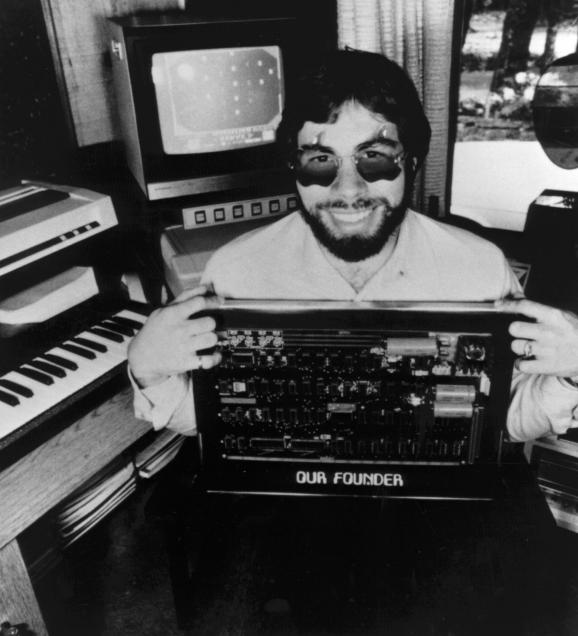
Steve Wozniak, Apple co-founder, presents the first computer hardware. Source: zvg
Steve Wozniak, Apple co-founder, presents the first computer hardware and will be a guest at the A3F. Source: Archive picture / zvg

The A3F (Alan's Friends & Founders Forum) 2026 is bringing Steve Wozniak, one of the world's most famous technology pioneers, to Zurich. The Apple co-founder will appear in an exclusive Fireside Talk at Kaufleuten on May 6, 2026 and talk about the beginnings of Apple, which is celebrating its 50th anniversary this year. Wozniak will also give an insight into his current view of the potential and risks of artificial intelligence.

Steve Wozniak's appearance is intended to raise Zurich's international profile as a location for entrepreneurship, innovation and deep tech. Up to 500 founders, investors and visionaries from the fields of deep tech, artificial intelligence, robotics and blockchain will come together at the tradition-steeped Kaufleuten.

Strengthening Zurich as an innovation hub

The conference was initiated by entrepreneur and investor Alan Frei, who wants the A3F to make a conscious contribution to strengthening the Swiss start-up scene. After several smaller editions of the forum, this year's A3F is being held at Kaufleuten for the first time.

Alan Frei in the Fireside Chat at AF3. Source: zvg

«Steve Wozniak is an icon in the history of technology. The fact that he is coming to the A3F in Zurich is something very special for us and a dream come true for me personally,» says Alan Frei. «His story, his influence on the technology we use, his perspective on innovation and his differentiated view of artificial intelligence make him an exceptional guest.»

Wozniak is not an opponent of AI, but a critical optimist: he sees great potential in the technology, but warns against blind trust, a lack of transparency and misuse through scams, disinformation and deepfakes. For this very reason, his presentation promises not only a historical review, but also a highly topical debate on responsibility in an increasingly AI-influenced world.

For founders and those who want to become one

The forum offers a platform for new ideas and practical insights. With a varied program of keynotes, panels, fireside chats, masterclasses and curated networking formats, the A3F aims to further strengthen Zurich as a global deep tech and innovation hub.

«There are an incredible number of good ideas and talented people in Switzerland,» says Frei. «But people often lack the courage to actually implement these ideas because they are afraid of failure. However, I know very well from my own experience that you can also get ahead through failure. With the forum, we want to inspire people to network and start their projects despite possible inhibitions.»

Top-class speakers and curated formats

Kiki Mäder and Alan Frei will kick off the conference with the official opening. A special highlight will be the welcoming speech by Hans-Rudolf Merz, former Federal Councillor of Switzerland. Other confirmed speakers include Peter Fankhauser (Anybotics) with a keynote on «Building the Future with Robotics and AI», Alex Ilic (ETH AI Center) and Jürg Müller (Avenir Suisse) on a panel about the future of Switzerland as a location for innovation, and Lea-Sophie Cramer, Andrea Silberschmidt Buhofer and Bettina Hein on a panel about financing scalable AI start-ups. Andy Yen (Proton) will speak in a fireside session about building a global product with over 100 million users.

In addition to strategic insights from leading minds in the industry, the conference also offers masterclasses and start-up pitches that provide concrete tools and practical experience. One example is the masterclass by David Alonso, who will show how bloom.diy apps can be created in just a few minutes. Participants can also look forward to a special format: the live podcast recording of «Club Wasserdicht» with Tobias Reichmuth, Adrian Locher, Marc Bernegger and Alan Frei.

The event deliberately focuses on short, intensive sessions and plenty of space for exchange, from a networking breakfast and flying lunch to curated discussions with investors, founders and technology experts. After a day full of ideas, discussions and new contacts, the A3F will end with an after-party at Kaufleuten - with music, drinks and further discussions in a relaxed atmosphere. Further speakers and program items will be announced step by step by May.

Source and further information: https://a3f.ch

Prix SVC expands into Valais

The SVC SME network is expanding its presence. From 2027, Valais will become the tenth economic region in which the Prix SVC will be awarded. The Prix SVC Valais-Wallis continues the tradition of the «Prix Sommet UBS», which was previously awarded in the region.

PRIX SVC VALAIS-WALLIS honors companies. Source: zvg

With the creation of the SVC Prix Valais-Wallis, the SVC is offering small and medium-sized enterprises in the canton of Valais an attractive and appreciative platform to showcase their achievements and innovative spirit. The previous Valais entrepreneur prize, the «Prix Sommet UBS», will be integrated into the Prix SVC Valais-Wallis from 2027.

Commitment to Swiss SMEs

The SVC has been committed to SME entrepreneurship in Switzerland for 25 years and UBS has been the SVC's Presenting Partner since 2025. The SVC's award ceremonies, which reflect this commitment, have established themselves as national flagship events. «In our anniversary year, it is wonderful to be able to announce the addition of Valais as the tenth region to the SVC award regions and thus also to be able to honor Valais business excellence with the renowned Prix SVC,» says SVC Managing Director Franziska Bürki.

The integration of the «Prix Sommet UBS» into the SVC award ceremonies will further strengthen the visibility and reach of the event to the benefit of SMEs in Valais. «By joining this nationally established platform, companies in Valais will benefit from broader exposure, better networking and even stronger positioning,» adds Iwan Willisch, Regional Director Valais at UBS.

In addition, this integration makes it possible to benefit from the SVC's reputation and expertise in the SME sector while ensuring continuity for regional entrepreneurship in Valais.

First issue planned for the end of 2027

UBS shares the SVC's passion for entrepreneurship. As a strong partner to the entire Swiss economy, UBS supports companies of all sectors and sizes in every phase of their business - from start-ups and formation to growth and maturity, IPOs and succession planning.

The SVC and all its partners are looking forward to the first edition of the Prix SVC Valais-Wallis. Further information on the nomination process, the jury and the award ceremony will follow around a year before the Prix, i.e. in late fall 2026.

In addition, an event will be held in Valais this fall to mark the transition from the «Prix Sommet UBS» to the Prix SVC Valais-Wallis and will be dedicated to entrepreneurship. Further information will be communicated at a later date.

Background information on the SVC

The sponsor and initiator of the Prix SVC is the SVC, an independent, non-profit association. Its aim is to make SMEs visible as a driving force in the Swiss economy and to promote them. The SVC is supported by the Presenting Partner UBS and the Gold Partners Emil Frey, Forvis Mazars, IWB, Mobiliar and Swisscom as well as numerous other national partners and regional sponsors.

The SVC was founded in Bern in 2001 and has been honoring the best SMEs in all economic and language regions of Switzerland since 2003. At the 82 Prix SVC awards ceremonies to date, a total of 478 companies have been honored as SVC award winners for their business excellence.

More information: www.svc.swiss

PR Trend Monitor 2026: Job insecurity in the communications industry on the rise

Uncertainty among PR professionals is growing noticeably: almost half expect communication budgets to shrink and as many as 24 percent consider their job to be insecure. These are the findings of the latest PR trend monitor by News Aktuell and P.E.R. Agency, in which 302 communications professionals from Switzerland and Germany took part.

PR mood barometer 2026: Uncertainty is growing
PR mood barometer 2026: Uncertainty is growing (source: zvg)

The first cracks are appearing in the foundations of the PR industry. Although the majority of communication professionals still feel secure in their job, uncertainty is growing noticeably. The main reason for this is the tense economic situation in the industry or at the employer. This is also reflected in communication budgets: almost half of those surveyed expect communication budgets to shrink significantly in the current year. At the same time, over a third expect 2026 to be a better year professionally. This is the result of the latest PR Trend Monitor by the dpa subsidiary News Aktuell and P.E.R. Agency. 302 PR specialists and managers from Switzerland and Germany took part in the survey.

Job insecurity is increasing significantly

The vast majority of PR professionals (71%) continue to see their job as very secure or secure. However, this is significantly less than in the previous year: in 2025, this figure was 81%. At the same time, uncertainty is growing: as many as 24% of respondents stated that they consider their current job to be very insecure or insecure. In comparison: in 2025, only 14% considered their job to be at risk.

Tense economic situation and cost-cutting measures have an impact

The economic situation is by far the most frequently cited reason for job insecurity - whether in the industry in general or at the respective employer (63%). However, budget cuts or cost-cutting measures (44%) and restructuring (42%) also contribute to PR professionals feeling increasingly insecure.

29% observe a decline in the importance of communication in their company and 25% estimate that outsourcing measures - including with the help of AI tools - could jeopardize their job. In addition, 23 percent are convinced that parts of their area of responsibility could be replaced by AI. 11% fear that their temporary or project-based employment relationship is at risk.

In contrast, those with permanent positions or many years of service feel secure: when asked why they consider their current job to be secure, 66% give this reason. A further 58 percent believe that their area of work is strategically important for the company. A good two-fifths (42 percent) rely on a continuously evolving work profile.

Additional reasons for a very secure feeling are the economic stability of the employer (37%), the limited automation of tasks (34%) and the increased importance of media work due to AI and disinformation (24%). 19 percent of those who rate their job as secure also consider their industry to be crisis-resistant.

Communication budgets remain under pressure

Once again this year, there is little growth in communication budgets: only 15% of PR professionals from companies and agencies expect budgets to increase significantly. Over a third (37%) of those surveyed expect it to remain unchanged compared to the previous year. However, almost half - and therefore the vast majority (47%) - expect the communications budget to shrink significantly.

84% of communicators cite company-wide cost-cutting measures as the most common reason for the falling budget. This is followed at a considerable distance by budget shifts to other areas of the company (37%), increased efficiency through technical aids such as AI systems (35%) and investments in more cost-effective communication channels (28%). 24% state that they have a lower need for external PR support.

The following factors were mentioned less frequently: insufficient measurability of PR (16 percent), reduced importance of communication (12 percent) and a reduction in communication activities due to a lower need for communication (5 percent).

Optimistic view of business development

Despite growing uncertainty and shrinking budgets, the majority of respondents are optimistic about the 2026 financial year. Just under a third rate the general business development of their own company as very or fairly good (31%), while the majority (41%) rate it as satisfactory. This contrasts with just under a quarter (24%) who anticipate very or somewhat poor business development.

Positive career prospects

Personal career prospects are also predominantly viewed optimistically: 36% assume that their professional situation will definitely or rather improve in 2026. 34% do not expect any changes. In comparison, 22% believe that their job prospects will be somewhat worse and 7% even clearly worse.

About the PR Trend Monitor

The PR Trend Monitor is an online survey conducted by the dpa subsidiary News Aktuell and the communications agency P.E.R. Agency. Communications professionals from companies, organizations and PR agencies in Switzerland and Germany are surveyed on a regular basis. The survey results provide well-founded insights into trends, challenges and developments that are emerging in the communications industry. The studies have been published for over 20 years and have established themselves as an important indicator for the PR industry. This year's online survey took place in February 2026.

Motor vehicle insurance: Premiums rise by 20 percent

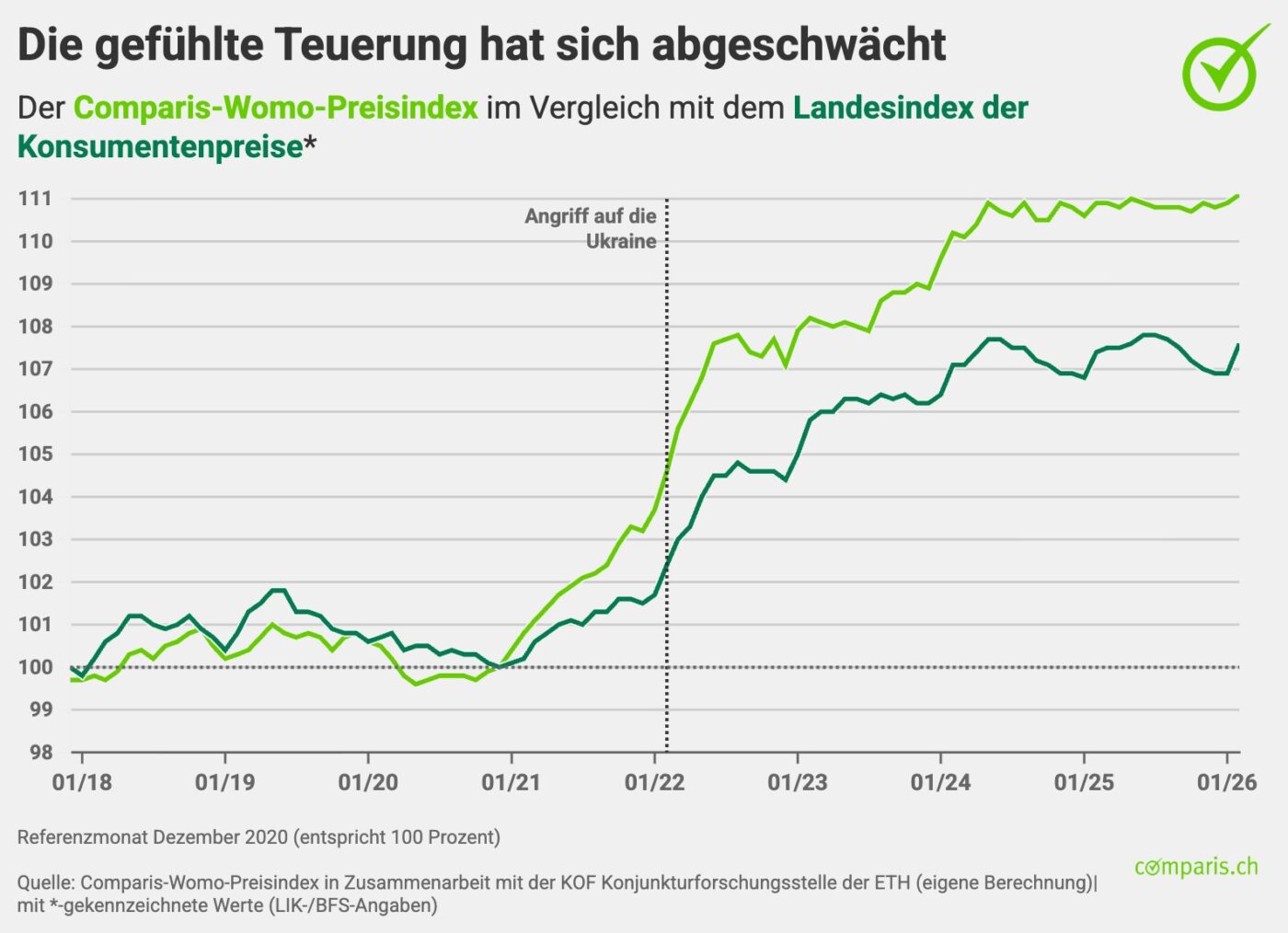
Premiums for motor vehicle insurance have risen by around 20 percent in five years, making them one of the biggest cost drivers in the area of housing and mobility. According to the current Comparis-Womo price index, more expensive spare parts and more complex repairs are leading to this massive increase.

The Womo price index shows a slowdown in inflation. Source: zvg

According to the Comparis-Womo price index in collaboration with the KOF Institute at ETH Zurich, prices for housing and mobility in Switzerland rose by 0.2% in February 2026 compared to the same month last year. While many prices have remained stable or fallen recently, motor vehicle insurance is one of the few areas with massive price increases.

Electronics in new cars drive up costs

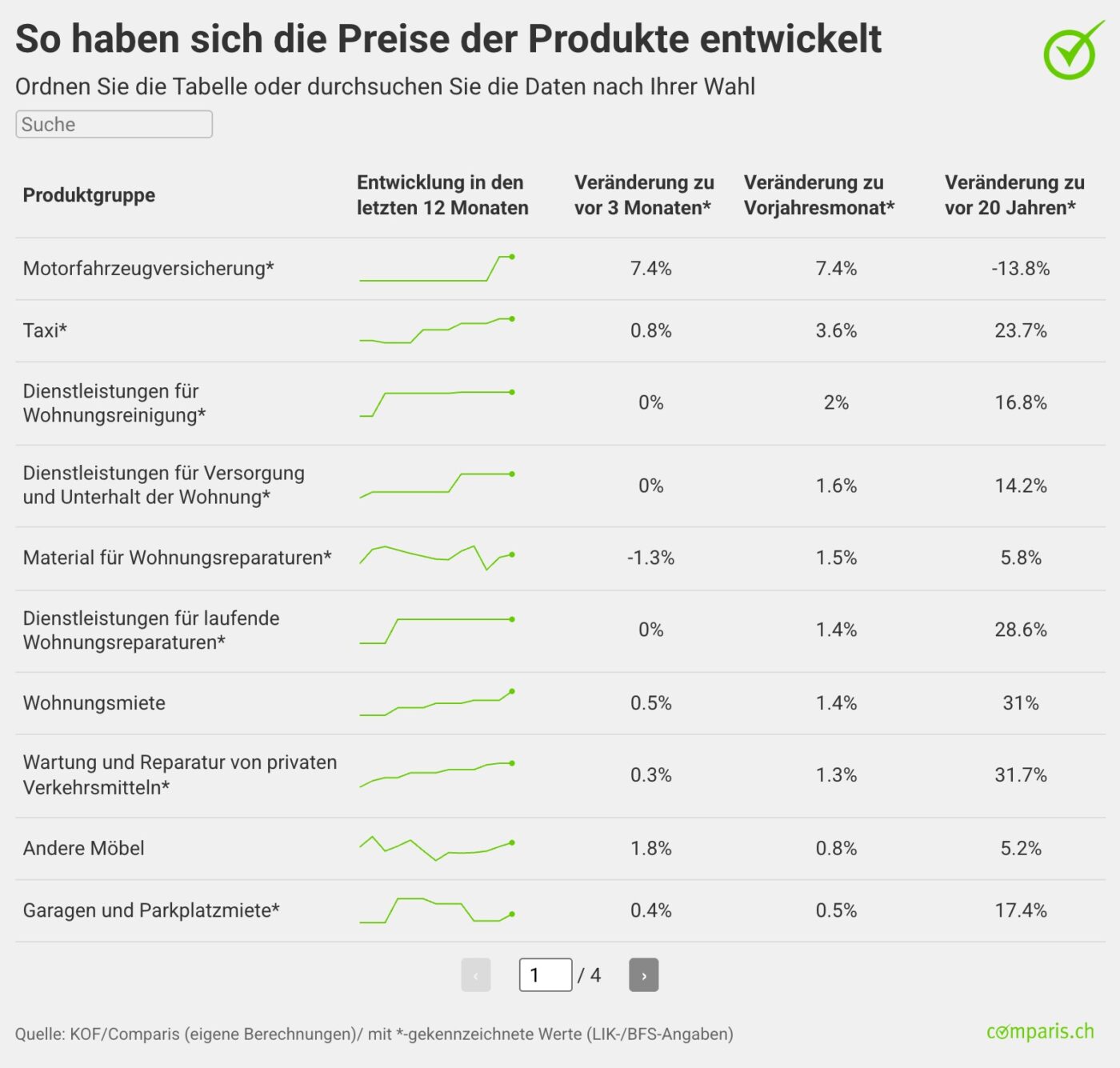
Motor vehicle insurance increased by 7.4% compared to the same month last year. Over the last five years, the increase was as high as 18.9 percent. «More expensive electronics in new cars led to more complex repairs and more expensive spare parts - and thus to a sharp rise in premiums,» explains Comparis financial expert Dirk Renkert. In particular, rear-view mirrors with sensors and cameras, LED headlights and the calibration of assistance systems make repairs more expensive.

The high increases in motor vehicle insurance are due to higher costs for spare parts and repairs. Spare parts have risen particularly sharply over the last five years, increasing by 19.1 percent. Service and repair work for motor vehicles has also become 8.1 percent more expensive. In addition, the increase in claims such as hail damage led to higher costs.

The price development of important consumer goods over 20 years. Source: zvg

Above-average rise in residential rents

Over the last five years, the Womo price index has risen by a total of 10.3 percent. By comparison, the national consumer price index (CPI) rose by 7.3% during this period. Residential rents, the largest expenditure item, increased by 1.4 percent compared to the same month last year.

«The above-average increase in residential rents continues unabated. This is particularly bitter for low-income households, as rent is the largest budget item,» says Renkert.

The products that have risen the most in price over the last five years include energy for heating (gas, heating oil, firewood and district heating), which has risen by 41.2%, and electricity, which has risen by 34.1%.

Fuel prices fall significantly

Not all prices went up. According to the Comparis analysis, fuel prices fell by 5.3% compared to the previous year. Prices for other consumer goods for household use fell the second most, by 5.0%.

The goods and services whose prices have fallen sharply in the last five years include small household appliances (down 8.7 percent), motorized tools for home and garden (down 7.9 percent) and bicycles and electric bicycles (down 3.1 percent).

Low-income households particularly affected

The income classes show that life has become most expensive for the lowest income class compared to the previous year. The Womo price index rose by 0.4 percent for this class. The highest income class was the least affected by inflation, with an increase of 0.1%.

Broken down by household type, single-person households aged 65 and over experienced the highest inflation in housing and mobility in the last twelve months, with an inflation rate of 0.5% compared to the previous year.

Tips for insurance customers

Anyone who receives a higher bill for motor vehicle insurance should not simply accept the adjustment. In the event of a premium increase, there is an extraordinary right of termination, which makes it possible to change provider without complications.

The differences in the market are huge. A comparison shows whether you are paying too much for similar benefits or whether better cover is available. If you have been with the same provider for many years, you should pay particular attention. Loyalty is not automatically rewarded in the insurance market.

With the advancing technological development of new cars, vehicle owners of older models are increasingly being asked to pay, warns Renkert.

Source: www.comparis.ch

Culture Amp launches Performance Culture Quadrant

Culture Amp has introduced a new analytical model for measuring engagement and performance in companies. The Performance Culture Quadrant (PCQ) is a science-based diagnostic tool that links employee engagement with confidence in a company's performance and provides concrete measures for managers.

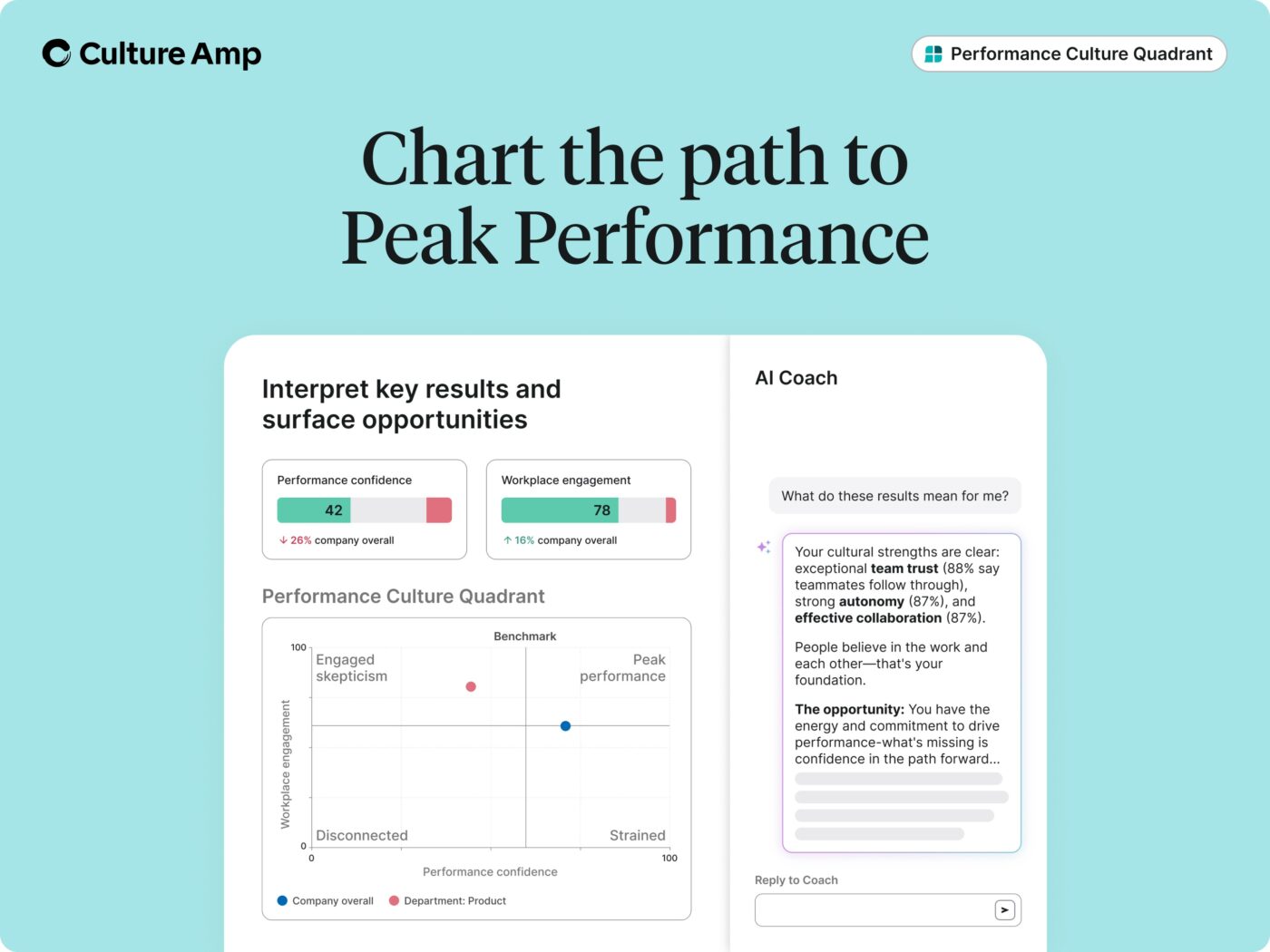
AI coach interprets results to improve corporate culture. Source: zvg

Culture Amp, a leading employee experience platform, has launched a new analytical model for measuring engagement and performance in organizations. The Performance Culture Quadrant (PCQ) is a science-based diagnostic tool that fundamentally changes how organizations can design and implement a high-performance culture.

Based on more than 15 years of research by Culture Amp in the field of people science and using AI, the Performance Culture Quadrant offers a data-supported visualization of the respective culture type of a company. The tool distinguishes between four types of culture: Peak Performance is characterized by high employee engagement and high trust in the company's performance. Engaged Skepticism is characterized by high employee engagement and low performance confidence. The Strained type is characterized by low employee engagement and high performance confidence. Finally, Disconnected is characterized by low employee engagement and low performance confidence.

Integration with AI coach for concrete measures

To take the step from diagnosis to actual impact, the PCQ is integrated with Culture Amp's powerful AI Coach. Launched in 2025, the AI tool provides personalized, contextual and science-based coaching through a powerful, conversational AI interface. By integrating PCQ with AI Coach, companies are supported in interpreting the results they receive from employee surveys.

Specific growth areas can also be identified, such as promoting a shared understanding of strategy within the company or building a stronger culture of team responsibility. Based on the identified culture type, the AI Coach creates personalized action plans that companies can use to further develop their culture in a targeted manner. This enables sustainable peak performance to be unleashed and business success to be increased without risking employee commitment or increased staff turnover.

Four central areas of support

The Performance Culture Quadrant supports companies in several steps: it links corporate culture and business success by turning the mood among employees into a measurable indicator of specific business success factors such as employee retention, productivity and operational efficiency. It also helps companies to understand their own performance culture. Companies receive answers to the questions «Do we have a high-performance culture?» and «What type of culture does our company belong to? Peak Performance, Engaged Skepticism, Strained or Disconnected?»

With targeted recommendations for action, companies can embark on the path to peak performance. Culture Amp's AI Coach translates the diagnosis into concrete action plans and accompanies companies individually on their way to a culture of peak performance. The focus is on the most effective lever for the respective culture type. Culture Amp's demographic evaluation function also shows each manager exactly how they can develop their area of responsibility in a targeted manner towards top performance.

Culture as a strategic key

«Leaders around the world are under increasing pressure to prove the ROI of people investments. Many respond by treating culture and performance as an either-or decision,» says Caroline Rawlinson, CEO at Culture Amp. «Yet culture and high performance are closely linked because culture is the foundation for all aspects of business performance where people play a role. Culture is the fundamental operating system of an organization. It determines how decisions are made, what behaviors are encouraged and ultimately how people perform.»

Preserving and investing in corporate culture is the strategic key to sustainable top performance, Rawlinson continues. In this way, companies create the conditions in which teams can consistently give their best and achieve measurable economic returns.

Culture Amp helps 25 million employees in over 6800 companies - including Canva, Asana, McDonald's and Nasdaq - to actively shape a high-performance corporate culture in a rapidly evolving world of work. The platform brings together data on employee engagement, performance, employee experience and company culture in a single solution.

More information: www.cultureamp.com/platform/engage/performance-culture-quadrant

Expert: Companies need more sales leadership

«Especially in difficult economic times, sales play a key role in a company's success,» says interim manager Eckhart Hilgenstock. Nevertheless, sales potential is being neglected in SMEs due to a lack of leadership in business development. In all of his assignments, he succeeded in increasing sales by 20 percent or more.

Eckhart Hilgenstock: Sales leadership as the number 1 sales lever Source: zvg

«Especially in difficult economic times like the ones we are currently experiencing, sales play a key role in a company's success,» says interim manager Eckhart Hilgenstock. Nevertheless, the sales professional knows from his experience of working in medium-sized companies that sales potential is being neglected in large parts of the SME sector due to a lack of leadership in business development. «In all cases, we succeeded in increasing turnover by 20 percent or more,» he reports from his personal experience as a temporary manager.

According to his observations, the most common mistake is that companies use AI in sales and automatically expect it to generate more turnover. Eckhart Hilgenstock clarifies: «Sales are generated through leadership, AI is just a tool for analysis and acceleration.» He says: «The number one sales lever is not artificial intelligence per se, but sales leadership paired with AI. There is also a fundamental human component, namely trust. Despite all the technology, we must never forget that sales are generated by people whom customers trust.»

Focus as the basis for growth

In second place on the list of mistakes in business development, the sales expert sees a lack of focus on the part of companies. «Many companies treat all customers the same, and that is a major shortcoming,» says Eckhart Hilgenstock. He refers to the Pareto principle, according to which around 80 percent of sales and, above all, the profit margin is generated by around 20 percent of customers. «The figures are slightly different for every company, but the basic principle always applies,» is his experience. At the same time, he clarifies: «There are also unhealthy Pareto ratios.» In the industry, for example, up to half of turnover is sometimes attributable to less than five percent of customers. «That represents too high a cluster risk,» warns the interim manager. He points to the automotive supply industry as an example, where such a focus on a few major customers is not uncommon. «These companies suffer massively from the car manufacturers» weak sales,« he knows from project assignments. His advice: »Companies that have such a cluster risk in their customer base should focus their business development primarily on new markets."

Prioritization is a native management function

Artificial intelligence plays a key role in focusing on profitable customer groups or new markets. When it comes to identifying high-margin segments, the interim manager categorizes the role of AI in the sales process. «Data-based segmentation and potential analysis is basically part of the basics of modern business development, but is criminally neglected by many medium-sized companies,» Eckhart Hilgenstock wonders. The result: sales teams often distribute their resources evenly across all market segments, «with correspondingly low margins». Conversely, the «targeted allocation of sales resources leads to higher profitability with the same effort», as he knows from practical experience. Eckhart Hilgenstock: «Prioritization is a native management function that every sales manager should master. In addition to market and customer segmentation, this also includes differentiating between »urgent' and 'important', as this often marks the dividing line between mere employment and actual productivity. These are all management tasks that AI cannot take over."

Companies fail to recognize the growth potential of existing customers

According to Eckhart Hilgenstock, another common mistake is that companies neglect their existing customers as a growth driver. «Cross-selling and upselling are a completely underestimated lever for more turnover and more profit,» he says, «existing customers are the best growth driver.»

Artificial intelligence can also play a key role here by recognizing purchase triggers and demand windows. AI models for purchase probability are used for this purpose. Put simply, the customer is always offered the product that they are most likely to choose («next best offer»). Studies show that existing customers are on average five to seven times more likely to make a purchase than new customers. «Systematization rather than chance is the key to success in growing business with existing customers,» says the sales expert.

In his experience, many companies overlook this: The basis for growth in the portfolio is often already available in the CRM system. «There are now numerous AI features for all current customer relationship management programs to evaluate the existing database,» says the sales expert, encouraging the use of these functions. Cross/upselling recommendations, next-best-action suggestions and churn predictions (probability of existing customers leaving) are part of the standard repertoire of modern AI/CRM combinations.

Eckhart Hilgenstock has made the following experience during his company assignments: «When I explain to the sales team the potential in the CRM system that can be leveraged with AI, their eyes usually open wide. As soon as it becomes clear how AI can be used for their own success, the enthusiasm is huge. Triggering this enthusiasm is basically a classic management task.»

Sales pipeline instead of gut feeling for more precise planning

«Turnover can be planned,» explains Eckhart Hilgenstock, «but not with a gut feeling, but with precise pipeline control.» He knows from practical experience that sales forecasts are often the result of wishful thinking rather than being based on realistic assumptions. «Many forecasts are created under pressure and are pushed upwards in order to initially meet expectations,» he says, «but as soon as it becomes clear that the forecasts remain unattainable, the situation becomes all the more drastic.» He refers to studies according to which around 80 percent of companies miss their sales forecasts by up to 30 percent. As a remedy, the sales professional advises AI-based predictive sales forecasting. This involves using artificial intelligence to analyze real leads from the sales pipeline in order to evaluate the probability of closing deals and identify risky deals at an early stage. The result: optimized resource planning, better forecast quality and a higher closing rate thanks to realistic prioritization.

Lead qualification often insufficient

Eckhart Hilgenstock has identified inadequate lead qualification as another frequently encountered shortcoming in business development. «Sales often wastes far too much time on the wrong leads instead of focusing on deals with a real opportunity,» he has found. Here too, AI can play a key role in improving the conversion rate, i.e. converting sales leads into actual customers, for example through lead scoring and intent data.

Scoring evaluates the probability of closing a deal based on factors such as demographics (e.g. company and position) and behavior (e.g. website visits or downloads). Intent data, mostly used in the B-to-B sector, shows who is actively researching and thus makes it possible to address companies with current purchasing intentions. In most cases, social networks provide numerous behavioral signals that allow conclusions to be drawn about thematic interests, decision-making proximity and specific problems.

«The range of business development options available today for comparatively little money is broad, but most companies remain stuck in their traditional sales channels,» Eckhart Hilgenstock wonders. He recommends «more leadership and more decisiveness to try out new approaches». In his experience, artificial intelligence is a key to greater success. «But ultimately, sales are not generated by technology, but by its consistent implementation,» he says, «AI accelerates, but it does not replace leadership.»

Eckhart Hilgenstock is one of the most sought-after interim managers in Germany. Companies regularly bring him on board as a temporary manager when it comes to profitable growth and sales as well as digitalization and the use of AI in organizations. «Eckhart Hilgenstock is regarded as a role model in the industry,» WirtschaftsWoche wrote about him. He gained his experience as General Manager EMEA Sales Global Accounts at Microsoft and previously as Managing Director DACH at Lotus Development and IBM Germany. Eckhart Hilgenstock is a member of the Diplomatic Council, a global think tank with advisory status at the United Nations (UN) and author of the book «KI-Einsatz in Unternehmen: Opportunities, Risks, Successes» (ISBN 978-3-98674-114-3), published by the think tank's publishing house. He is one of the authors of the highly regarded «United Interim Economic Report 2025». The Diplomatic Council Future Academy has awarded him the title «Top Interim Manager 2025/26».

https://hilgenstock-hamburg.de

Peter Gassmann leaves Abraxas

Peter Gassmann, member of the Executive Board and Head of Solution Engineering at Abraxas, is leaving the company at the end of July 2026 to join the financial sector. Under his leadership, the number of employees in this strategically important area has doubled to around 110.

Peter Gassmann from Abraxas focuses on innovation. Source: zvg

Peter Gassmann, currently Head of Solution Engineering (SOE) and member of the Abraxas Executive Board, will leave the company on July 31, 2026. He will be taking on a new challenge in the financial sector. Gassmann has been Head of Software Development at Abraxas since April 2020 and a member of the Executive Board since 2022.

Strong development under Gassmann's management

«I very much regret Peter Gassmann's decision,» commented CEO Reto Gutmann on the announced departure of his management colleague. «The SOE division has developed strongly under Peter Gassmann's leadership and is now well positioned for Abraxas» current and future key strategic tasks."

The number of employees in the SOE division has doubled to around 110 under Peter Gassmann's leadership. In addition to topics such as software security and cross-divisional services, this area focuses on the development of AI applications and corresponding customized services for the public sector.

Search for successor begins

Until his change of sector, Peter Gassmann and his management team will ensure continuity and prepare a smooth handover of the management of the division, which is becoming increasingly strategically important for Abraxas, into new hands. «We are approaching the reappointment of this position, which is so important to us, with the necessary care and thoroughness,» emphasizes CEO Gutmann. The search for a suitable successor will begin in the coming days.

Abraxas Informatik, headquartered in St. Gallen, employs around 1000 people in all language regions. The company is the largest provider of end-to-end IT solutions for the public sector in Switzerland and networks Swiss administrations, authorities, companies and the population with efficient, secure and end-to-end IT solutions and services.

https://www.abraxas.ch

42 talented Swiss professionals at WorldSkills 2026 in Shanghai

WorldSkills will take place in Shanghai from September 22 to 27, 2026. 42 young Swiss men and women will compete in 38 skills competitions against around 1,400 participants from over 60 countries. With around 1,000 hours of training per talent, the SwissSkills National Team is preparing intensively for the international competition.

42 talented young Swiss professionals will now prepare for their appearance at WorldSkills 2026 in Shanghai. (Source: SwissSkills)

In six months’ time, Switzerland will be looking forward to China. From September 22 to 27, 2026, Shanghai will host WorldSkills, the world's largest vocational championships. 42 young Swiss nationals will represent their country in 38 skills competitions against around 1,400 participants from over 60 countries. The SwissSkills National Team has been preparing intensively for this international comparison since the selection process - with the clear aim of once again achieving a top 3 position in the national rankings.

Swiss diversity in 38 disciplines

The 42 young professional talents are facing the competition of their lives. They are not only representing their country, but also their profession and their passion. From floristry and cyber security to automotive mechatronics, polymechanics, clothing design and hotel reception - a total of 64 competitions are on the program. WorldSkills is regarded as the largest international comparison in the field of vocational training. For Switzerland, this is a unique opportunity to showcase the strength of the dual education system and put young professionals in the spotlight.

1,000 hours of training for the world's best

The young professionals will complete an intensive training program before the international competition in September. Over the coming months, they will invest around 1,000 hours in their preparation with the support of their experts, professional associations, employers and team leaders. In addition to technical perfection, the focus is on mental strength, team spirit and stamina. Several joint weekends also strengthen team cohesion. The goal is clear: Switzerland should also be one of the most successful nations in Shanghai and at the same time defend its title as the best European country.

Ambassadors for vocational education and training

The SwissSkills National Team is more than just a selection of competitors. The young talents are ambassadors for their professions. With their commitment, they inspire young people to do an apprenticeship and make the most of their talent. Their stories show that professional excellence and passion can lead to great things.

More information: https://www.swiss-skills.ch

Storytelling beats AI in internal communication

While companies are investing massively in AI tools, they are overlooking a crucial efficiency guzzler: internal communication that sends but does not reach. Studies show that storytelling makes teams up to 23 percent more profitable.

Creative exchange leads to innovation. Source: zvg

The current productivity race is often fought on the tech front. But while companies are investing heavily in AI tools to automate workflows, they are overlooking the biggest efficiency hog: internal communication that sends but doesn't reach. When employees don't understand priorities or lose sight of the purpose of their work, performance drops - no matter how fast IT is.

The psychology behind efficiency

From a psychological perspective, storytelling is the most efficient operating system for the human brain. Researchers call this «narrative transportation»: we remember content better and act more decisively when we feel it instead of just processing it abstractly.

A practical example: The announcement «We need to optimize processes» rarely triggers enthusiasm. However, when a manager says: «I spoke to Anna from customer service the other day; she spends two hours every day on redundant data entry, which we now want to save her», the goal becomes tangible. Storytelling saves endless explanations and queries - and therefore valuable time.

The hard figures: 23 percent more profitability

Storytelling is not a «soft skill», but a hard economic factor. Studies by Gallup show that teams with a high level of engagement are up to 18% more productive and 23% more profitable. The key lies in «purpose you can touch», as exemplified by the heating company Viessmann: «We co-create living spaces for generations to come.» This sentence is consistently translated into stories and anchored in everyday life, from the fitter to the developer.

Best practices: How the market leaders tell their stories internally

Microsoft CEO Satya Nadella transformed an entire corporate culture with the simple metaphor of «know-it-all» (know-it-all) to «learn-it-all» (willing to learn). DB Systel, the IT subsidiary of Deutsche Bahn, accompanied its transformation away from hierarchies not with change slides, but with open learning narratives from «Working out Loud» circles. With its «Ownership Culture», Siemens created an identity in which employees feel like co-owners - a narrative that inspires responsibility and pride.

Five impulses for more productive communication

How can storytelling be integrated into day-to-day management immediately? The first step is to clarify the four key questions: Who are we? Why now? What do we want to achieve? What does that mean for me? Instead of empty phrases such as «innovation», tangible images should be used - concrete examples from everyday working life.

Repetition is more important than a flood of information: a story is only effective if it is told so often that employees can tell it again on their own. An open error culture, in which stories about failed approaches are also told, strengthens trust and massively accelerates learning processes. Short stories belong in every all-hands and team meeting, not just in the annual report.

Efficiency through empathy

If you want to survive in the age of AI-driven mass communication, you have to package strategies in a way that makes them memorable. True productivity comes not from the amount of information sent, but from the clarity of the shared narrative.


Source/Author

Miriam Schwellnus is the founder and managing director of the Berlin agency Mashup Communications. As the author of the bestseller «Storytelling for Companies», she has been combining modern public relations with well-founded content marketing and narrative strategies for almost 20 years. Further information can be found at www.mashup-communications.de.

Gisler Protocol analysis 2025: No return to the role models of the 1950s

The Gisler Protocol has published its annual stereotype analysis for 2025. The central question: after a possible woke backlash, has Swiss advertising returned to the traditional role models of the 1950s? The analysis provides answers to the current portrayal of gender roles in the Swiss advertising industry.

Gisler protocol presents stereotype analysis 2025. source: zvg

The Gisler Protocol has presented its annual stereotype analysis for the year 2025. The study focused on the question of whether a so-called "woke backlash" is making itself felt in the Swiss advertising landscape and whether the industry may have returned to the traditional role models of the 1950s.

The answer is clear: „In 2025, 87% of the commercials analyzed were free of gender stereotypes - one percentage point more than in the previous year. So there was (still) no sign of a backlash in Swiss advertising,“ says Nina Bieli, co-initiator and association president of the Gisler Protocol.

Men take care, women explain the world

As in previous years, the most popular role models remained the «funny guy» and the «caregiver». However, there was a notable shift when it came to caring: In 17 commercials, men took on tasks relating to the household, children or relatives - overtaking the 10 women who were seen in caring roles. The opposite is true for explanatory roles: As many as 21 female experts took on explaining in 2025 - an area that has long been considered male-dominated. Only two men were allowed to do the same in the commercials analyzed.

Nevertheless, some clichés persist: „We still hardly see any women in humorous roles and hardly any men who enjoy something, for example chocolate,“ says Bieli. Some bastions of traditional gender images are obviously more persistent than others.

Small progress, big gaps

In 2025, the Gisler Protocol also examined Swiss moving image advertisements not only for gender stereotypes, but also for a broad spectrum of diversity dimensions - both quantitative and qualitative.

Sexual identity and orientation

Three times a person appeared who did not visually correspond to gender-binary ideas - in each case as part of a large cast that showed various everyday situations, never in a leading role. Compared to the previous year (two spots, one leading role), hardly anything has changed.

Statistical classification:
According to a study by the survey institute Ipsos, 6 % of the Swiss population identify as transgender, non-binary, gender-fluid or other than male or female. With three commercials (corresponding to 0.9 % of the analyzed commercials), there is no adequate representation of genderqueer people in Swiss advertising.

Six homosexual couple situations were shown. None of the spots were thematically about homosexuality. Instead, the couples were part of a broad cast that depicted everyday situations. Heterosexual couple situations were shown 59 times.

Statistical classification:
It can be assumed that 3-10 % of the population are not heterosexual. Exact figures are not available for Switzerland or globally. Looking at the total number of couples shown (65), the six homosexual couples shown correspond to around 9 % - which can be considered representative.

Origin

Non-white people appeared in 26 % of the spots analyzed (previous year: 17 %).

Some of these people were seen in leading roles. Unlike in previous years, the focus was rarely on development aid or celebrities, but on everyday topics such as looking for an apartment, mobile subscriptions or weekly shopping.

Statistical classification:
There are no reliable figures on the proportion of BIPOC people in Switzerland. What is known, however, is that 41 % of the population have a migration background. The representation of non-white people has improved both quantitatively and qualitatively. Nevertheless, there are still examples that consciously or unconsciously reproduce racialized stereotypes.

Physical and mental abilities

People with visible disabilities only appeared in very few commercials, some of which were directly related to the topic.

Statistical classification:
22 % of the Swiss population live with a disability. It is unclear how many of them have a visible disability. Nevertheless, it is clear that people with disabilities are hardly considered in advertising - neither as protagonists nor as recipients.

Age

People of an older age (over 70) appeared in around 14 % of the commercials - roughly the same level as the previous year. Some of them took on leading roles.

They were portrayed in different contexts and mostly staged as interested in life, humorous and technically adept.

Statistical classification:
In Switzerland, people over 65 make up 19.3 % of the population. The quantitative representation of older people in advertising is therefore basically given.

SSP Kälteplaner arranges succession with management buy-out

SSP Kälteplaner from Oensingen is handing over the company succession to an internal team of three. After 32 years, Beat and Jeannine Schmutz are handing over the refrigeration planning company to long-standing employees Fabian von Allmen, Mario Bernhofen and Michael Moser as part of a management buy-out.

The previous owners Beat and Jeannine Schmutz and the new owners Fabian von Allmen, Mario Bernhofen and Michael Moser are arranging the company succession of SSP Kälteplaner AG by means of a management buy-out. (Source: zvg)
The previous owners Beat and Jeannine Schmutz and the new owners Fabian von Allmen, Mario Bernhofen and Michael Moser are arranging the company succession of SSP Kälteplaner by means of a management buy-out. (Source: zvg)

SSP Kälteplaner from Oensingen is implementing its succession plan with a management buy-out. After 32 years under the management of Beat and Jeannine Schmutz, the Swiss planning and engineering company for refrigeration technology is passing into the hands of an internal team of three. Long-standing employees Fabian von Allmen, Mario Bernhofen and Michael Moser take over responsibility as the new owners.

The announcement of the succession solution took place on March 21, 2026 in front of around 200 invited guests as part of SSP's midsummer celebrations and, alongside the fireworks, was a highlight of the event. For the company, the handover marks an important milestone in its history.

Carefully planned handover

Future-oriented, as SSP has always planned refrigeration solutions, the succession plan was also carefully prepared, sustainably set up and implemented in line with the company's values. With the chosen solution, SSP is relying on continuity from its own ranks. The new owners have been with the company for many years, have broad expertise in refrigeration planning and management experience and have made a significant contribution to the technical and entrepreneurial development of SSP in recent years.

Fabian von Allmen takes over the management, Mario Bernhofen and Michael Moser are responsible for the areas of technology, quality assurance and finance as members of the management.

Continuity as a key strength

The previous owners Beat and Jeannine Schmutz will remain active in the company and support the transition phase - Beat Schmutz as Chairman of the Board of Directors and member of the Executive Board. Jeannine Schmutz-Zäch is responsible for accounting as a member of the Executive Board. Operational responsibility lies with the new team of owners with immediate effect.

«With this succession solution, we are ensuring the continuity and independence of the company and at the same time creating the basis for stable long-term development. It was always our wish to solve the company succession internally with an MBO. We are convinced that SSP is in the best hands with Fabian, Mario and Michael,» summarizes Beat Schmutz.

The existing team of employees with their extensive know-how and broad professional expertise will be retained. For customers and business partners, this means familiar contact persons, continuity in quality, reliability and project management.

Focus on decarbonization and natural refrigerants

Strategically, SSP continues to pursue a clear course: the company will continue to be managed independently, sustainably and with a high level of technical depth. The focus is on healthy organic growth, long-term customer relationships and technical excellence. At the same time, existing expertise will be developed further in a targeted manner and new fields of activity in the area of decarbonization will be opened up. These include energy-efficient overall systems, the consistent further development of natural refrigerants and integral solutions for reducing CO₂ emissions in industrial and commercial buildings.

«Today, SSP is one of the most important planning companies for refrigeration technology. The fact that we are able to help plan the largest industrial refrigeration systems in Switzerland is primarily thanks to the previous owner Beat Schmutz. We are taking over a strongly positioned company with a high level of professional credibility and will do everything in our power to further develop this basis in a targeted manner,» says Fabian von Allmen, representing the MBO team, summarizing the desired goal.

The new owner team

Fabian von Allmen (35), Managing Director of SSP Kälteplaner, completed further training in construction management and business administration following his apprenticeship as a refrigeration fitter. After completing his bachelor's degree in building technology at Lucerne University of Applied Sciences and Arts, he continued his career as a project manager at SSP from 2017. In 2024, he took over the position of Deputy Managing Director at SSP.

Mario Bernhofen (49), a member of the management team at SSP Kälteplaner, studied energy technology at the HTWK Leipzig, specializing in TGA and graduated with a degree in engineering. He joined the SSP team in 2011 and has been a member of the management team since 2017. The experienced expert in refrigeration and energy technology is responsible for technical management and quality assurance at SSP.

Michael Moser (33), member of the management team at SSP Kälteplaner, has been working as a project manager for refrigeration planning at SSP since 2021 and is responsible for implementing challenging projects for SSP's industrial customers. Originally a heating planner, Moser trained at the Higher Technical College for Building Technology, GIBB Bern to become an HF technician specializing in refrigeration.

SSP has been planning and implementing customized refrigeration solutions for industry and commerce for 32 years - with a focus on energy efficiency, sustainability and technical quality. This is why only natural refrigerants are used. The company is known for its depth of expertise, its personal support and its commitment to developing refrigeration solutions that really make sense.

More information: www.kaelteplaner.ch/

Dematic presents Command Center for central warehouse control

Dematic presents the Command Center, a manufacturer-independent intelligence platform for warehouse operations. The solution integrates real-time monitoring, AI-supported decision support and operational analyses in a single user interface. The platform will celebrate its premiere at LogiMAT 2026 in Stuttgart.

Dematic Monitoring Center monitors logistics processes. Source: zvg

Modern warehouses generate huge amounts of data from automation systems, warehouse software and enterprise applications. However, this information is often spread across different vendors and monitoring tools, making it difficult for warehouse operators to quickly identify problems and understand the causes of performance deviations. Dematic, the world's leading provider of intelligent automation solutions and part of the Kion Group, presents the Dematic Command Center, a manufacturer-independent, centralized intelligence platform for warehouse operations.

The solution integrates real-time monitoring, AI-supported decision support and operational analyses in a single user interface. The aim is to support distribution and logistics centers in understanding, monitoring and controlling complex processes more efficiently.

From data to well-founded decisions

«Warehouse operators today have more data than ever before - but data alone does not automatically improve performance,» said Chris Steiner, Senior Vice President Product Management at Dematic. «The Dematic Command Center brings together information from automation solutions, software systems and manual processes to create a unified level of operational intelligence for informed decision-making. With the ability to see not only what happened, but why, employees can solve problems faster and manage their operations at the highest level of performance.»

The Dematic Command Center enables distribution and fulfilment companies to make informed decisions through centralized analyses and transparent key performance indicators. Emerging problems are identified at an early stage, which strengthens operational resilience and ensures productivity. Performance problems can be rectified more quickly as the causes are specifically identified.

Optimization through operational patterns

Resources and workflows can be optimized through a better understanding of operational patterns, while throughput and service levels are maintained thanks to real-time monitoring and operational insights. The Dematic Command Center connects existing systems and automation technologies to create a unified view of operations - without the need to replace existing investments. In addition, the cloud-based infrastructure ensures enterprise-wide reliability and secure scaling of operations.

Experience from 9000 projects

The Dematic Command Center uses the operational findings from over 9000 automation projects worldwide. This database enables the system to recognize performance patterns in the warehouse and guide operators to the most effective measures.

While the first version already offers full transparency and deep insights into all warehouse processes, future versions will expand this basis: AI-supported decision-making tools, advanced orchestration and digital twins for «what-if» analyses are planned. This will provide single and multi-site operations with a powerful tool to translate data directly into coordinated strategies.

The Dematic Command Center will be presented at the upcoming trade fairs LogiMAT in Stuttgart (Hall 1 / H61) and Modex in Atlanta (Booth B11919), where visitors can get to know the platform in live demonstrations.

More information: www.dematic.com/de

get_footer();