AI expertise: pressure recognized, implementation postponed
76.5 percent of DACH companies expect non-technical roles to require AI expertise within two years. However, a new study by HiBob shows that neither sourcing strategies nor assessment skills are keeping pace with the recognized pressure to act.


AI tools have finally arrived in companies in the DACH region. Whether AI has an impact in an organization depends on how well the daily work is adapted. Many organizations do not yet have answers to this question - as a new study by HiBob, conducted in collaboration with the market research institute Censuswide, shows. The study surveyed 200 specialists and managers in Germany, Austria and Switzerland who are actively involved in recruitment decisions and the assessment of AI skills.
Responsibility is shifted
76.5 percent of respondents expect that most non-technical roles in their organization will require at least moderate AI expertise within the next 24 months. Integrating AI into work structures in a meaningful way is recognized as a pressure to act. However, when asked who should be responsible for preparing the workforce, employers hardly see themselves as having a duty: only 16.5 percent of respondents see employers as having a responsibility.
Instead, direct superiors and team leads (26.5%), technology providers (23%) and even customers and clients (23%) are mentioned more frequently. This finding is also reflected in the data on recruitment strategy: only 65% of respondents state that they have a defined plan to specifically find candidates with high AI skills. This means that around a third of companies are driving change without a structured search approach.
Tools available, judgment missing
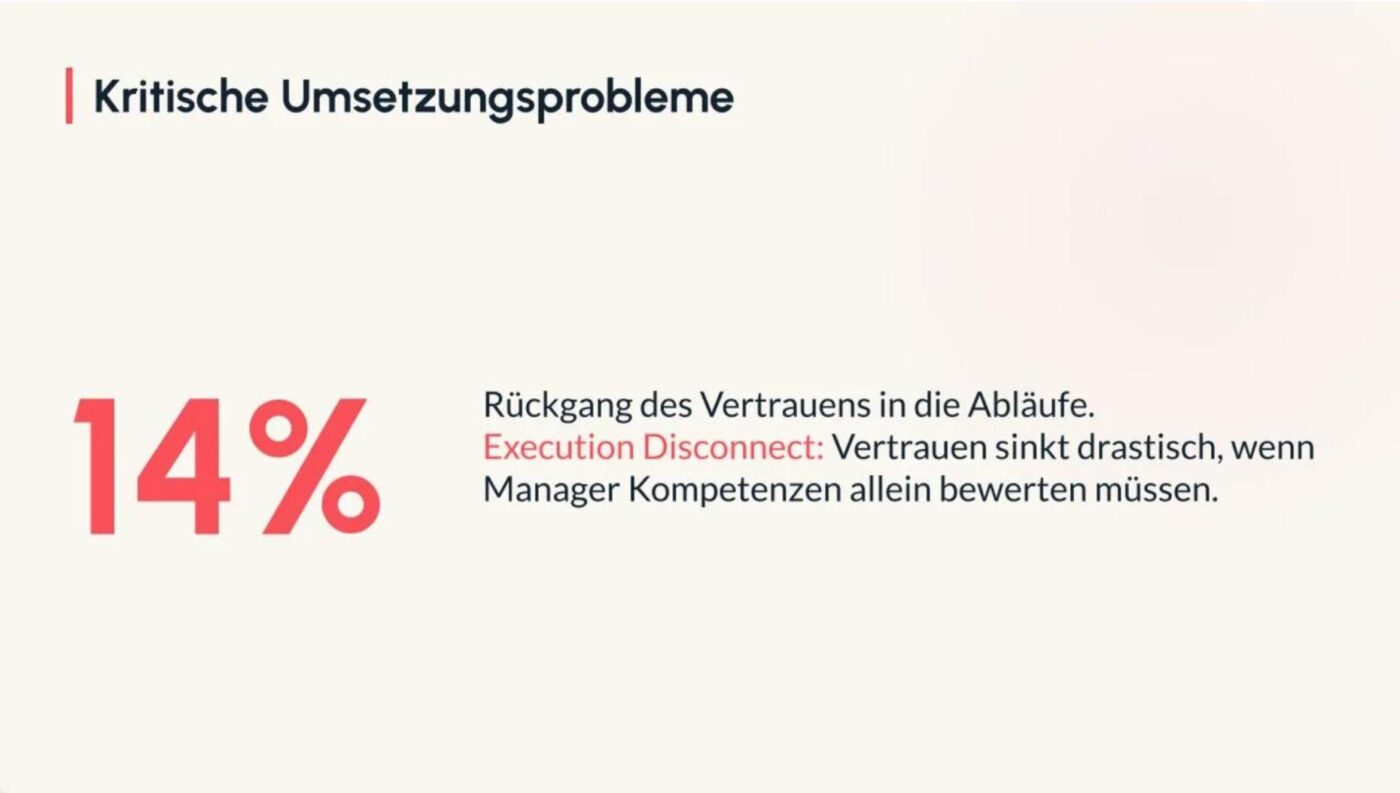
84.5 percent of respondents say they have a clear idea of what strong AI skills mean that HR and hiring teams share. 81.5 percent say they have standardized guidelines or assessments to evaluate AI skills. However, this hides a significant implementation problem: only 67.5 percent trust that their hiring managers can reliably assess how well candidates have mastered AI skills during the interview. The figure for performance reviews is only slightly higher at 71 percent. This means that up to a third of companies are not using the available tools reliably.
Wanted, but not rewarded
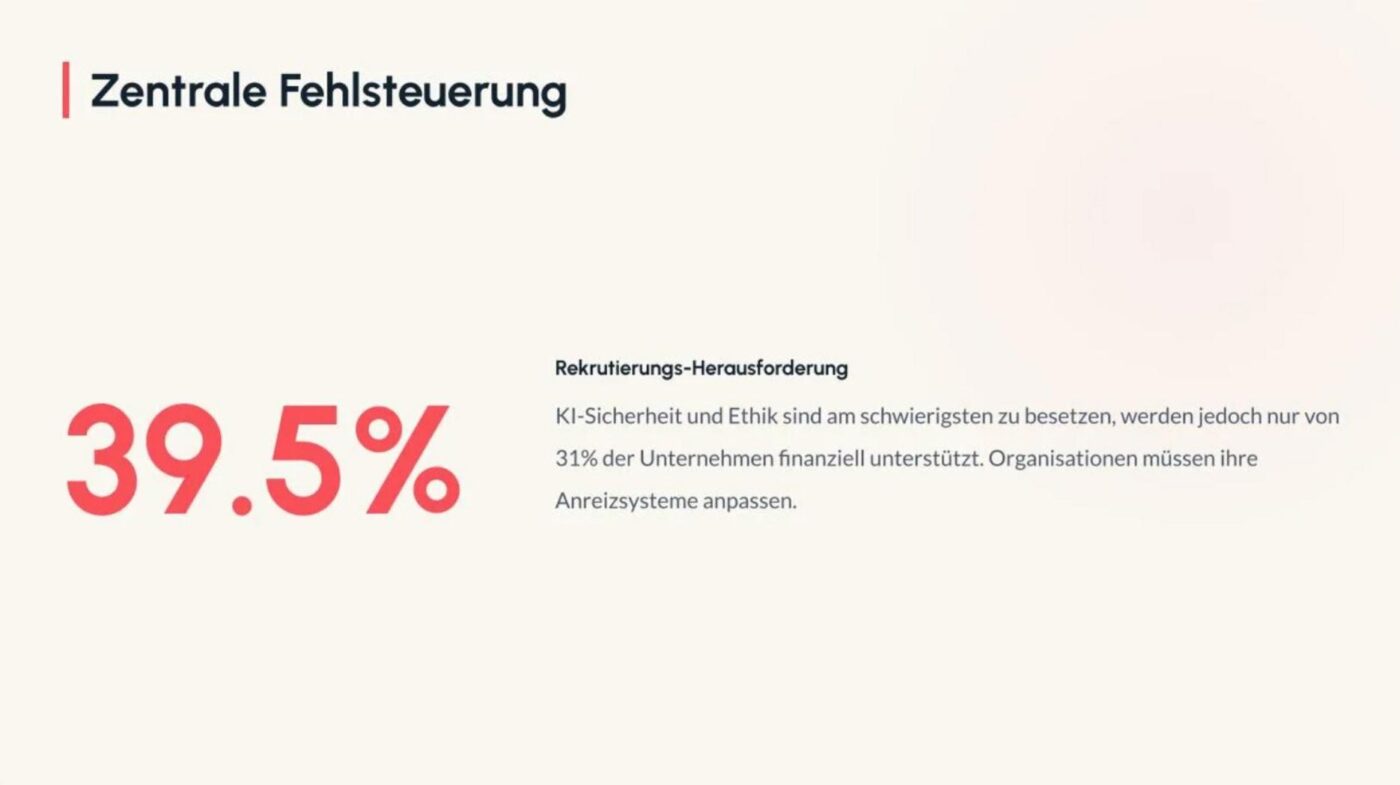
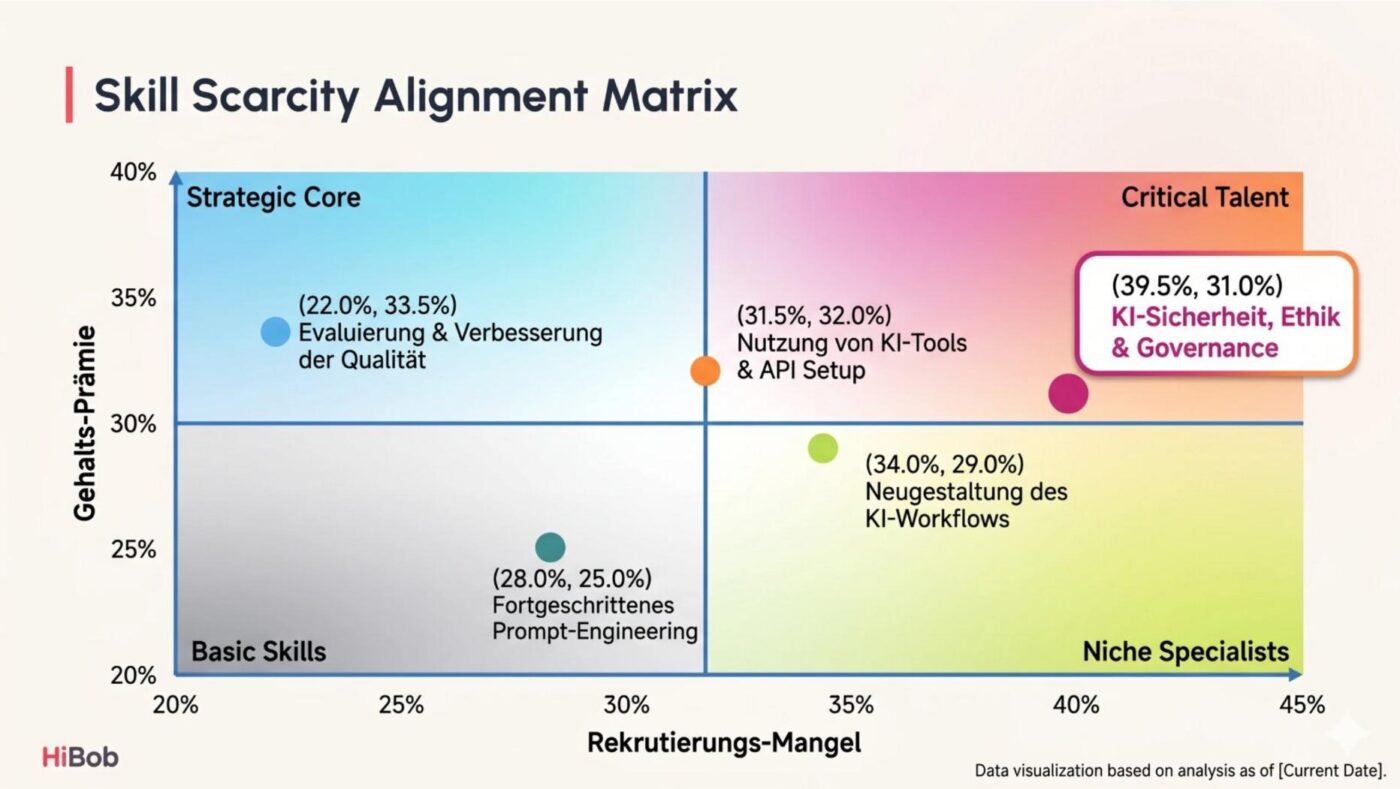
The discrepancy between scarcity and willingness to pay is particularly revealing. At 39.5%, AI security, ethics and governance is the skills group in which DACH companies have the greatest recruitment difficulties. However, when it comes to willingness to pay at least a ten percent salary premium for this skill, this very category is only in fourth place with 31 percent.
By contrast, companies would pay the highest salary premium for «Evaluating and Improving Output Quality» (33.5 percent) - although this skill ranks much lower in terms of recruiting difficulties (32 percent). The price signal on the labor market is therefore distorted: What is most lacking is not rewarded accordingly. This is a considerable risk for companies that want to compete for AI skills.
AI competence determines career
The study findings show a recurring pattern: the strategic urgency is recognized, but operational implementation lags behind. Definitions exist, but hiring managers cannot make reliable judgments based on them. The scarcest skills are not rewarded accordingly. And the preparation of the workforce is delegated, although the requirements should be a reality in less than two years.
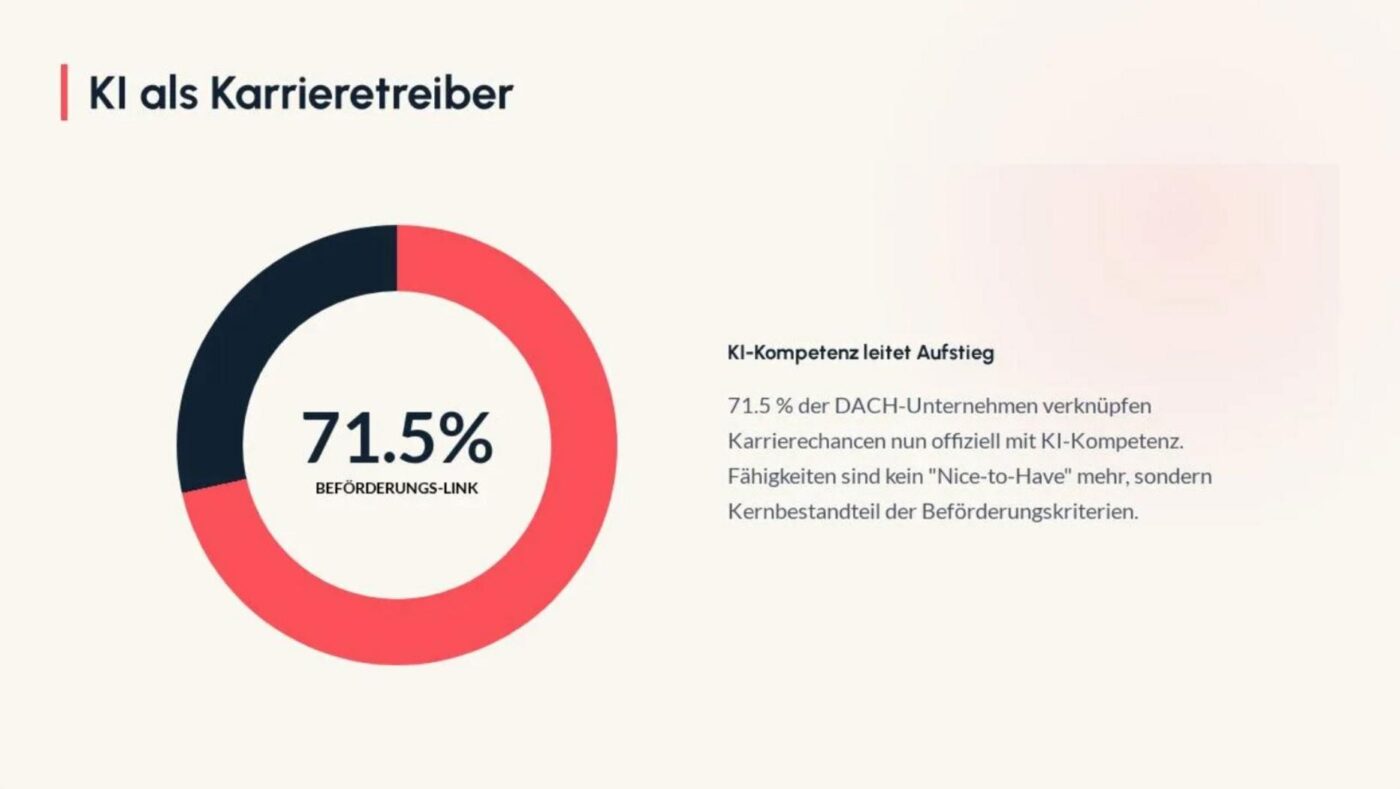
There are already concrete consequences at stake for employees: 71.5 percent of the companies surveyed already explicitly link AI skills to promotion criteria. Anyone who works in a company that formally includes AI skills in career decisions but does not handle the assessment of these skills reliably has a real problem.
The gap between aspiration and reality therefore has a direct impact on salary and career progression. Companies that want to close this gap need a system that combines people data, performance and operational processes so that AI expertise becomes part of day-to-day work and is reflected in measurable results.
Source: www.hibob.com