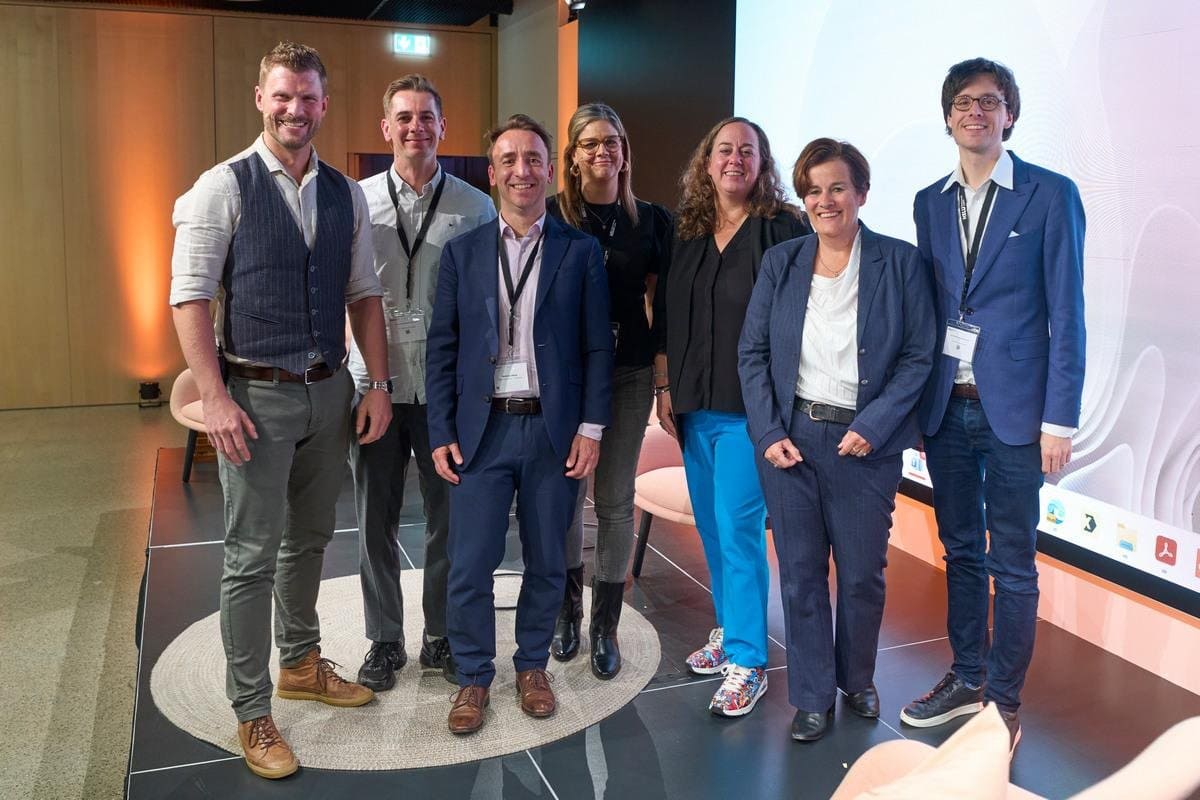
Interview with Mareen Eichinger: «Good communication starts with leaving things out»
Mareen Eichinger, owner of macheete, has been advising companies on strategic communication for years. In this interview, she explains why clarity is a key management task, why «less is often more,» and what social responsibility companies have today.


You advise companies in a time of constant overload. In your opinion, what will be the biggest communication mistake that many managers will make in 2026?
Mareen Eichinger: The biggest mistake is to continue to view communication as a reaction. Many managers feel driven by trends, platforms, and expectations. Communication is accordingly fast and frequent, but without a clear direction. In 2026, this will come back to haunt them. Communication without a strategic framework will no longer be perceived as relevant, but as additional noise.
AI is now standard. How can you tell in practice whether communication is being managed strategically or just automated?
Automated communication can be recognized by the fact that it could work anywhere and, for that very reason, is not really effective anywhere. Strategic communication is recognizable, even when it uses AI. It follows clear themes, a consistent tone, and a consistent attitude. AI accelerates processes, but it does not replace decisions. Those who do not make decisions only reinforce arbitrariness with AI.
Many companies talk about visibility. You often talk about clarity. Why will clarity be the scarcer commodity in 2026?
Because visibility has become technically easy. Clarity means commitment, and many decision-makers find that difficult. Deciding what you stand for always means not doing something else. Many companies shy away from this consequence. The result is watered-down messages that don't really reach anyone. Clarity is uncomfortable, but that's exactly why it's effective.
Where does good communication begin for you: with the message or with the decision about what not to say?
By leaving things out. Good communication is a filter. In 2026, it won't be the person who says the most who gets noticed, but the person who says the right thing. And at the right time and to the right target group. Those who comment on everything lose relevance.
As an agency owner, you work closely with management teams. What questions should decision-makers ask themselves more often before communicating in 2026?
Firstly: Is what we are saying actually true internally? Secondly: Can our employees credibly convey this message? And finally: Would we still stand by this statement in two years' time? Communication today is permanently visible. Short-term narratives without substance become a long-term reputation problem.
For many brands, social media feels more exhausting than ever. What is your alternative to «We have to be present everywhere»?
Conscious reduction. Social media is not a mandatory program, but a strategic space. In 2026, presence will only work where brands have something to contribute: expertise, attitude, and perspective. Pure self-promotion is losing ground—algorithmically and humanly.
Are you observing a return to fewer channels but more attitude, or is that wishful thinking?
I see this very clearly in companies that have matured. They reduce channels, sharpen topics, and thereby gain consistency. Fewer touchpoints do not mean less impact, but rather more depth and trust.
Traditional PR is undergoing significant change. What remains indispensable and what has had its day?
Mareen Eichinger: Journalistic thinking remains indispensable: relevance, context, and classification. PR as a pure placement discipline has had its day. The media are not amplifiers for arbitrary messages, but filters for content and substance. Those who do not understand this will no longer be heard.
How will the role of agencies change in 2026: service providers, sparring partners, or strategic co-thinkers?
Mareen Eichinger: Agencies must be strategic sparring partners. Implementation alone becomes interchangeable or automated. The real added value lies in challenging management teams, sharpening priorities, and speaking uncomfortable truths.
Trust is a big word. In your experience, what causes communication to fail most often?
Mareen Eichinger: Contradictions between claims and reality, between internal culture and external messaging. Trust is not built through perfect communication, but through consistency. Those who constantly reinvent themselves do not come across as dynamic, but as untrustworthy.
Are there any trends or buzzwords that you consciously don't want to hear anymore in 2026?
Anything that suggests tools can replace strategy. «AI will take care of it» is a dangerous statement. Technology reinforces what is already there, but it does not replace classification and responsibility.
If you had to sum up your work in one sentence, what should communication really achieve in 2026?
It should provide guidance at a time when many things are becoming faster but less clear.