Pawi Group strengthens family continuity on the Board of Directors
At the Annual General Meeting on April 17, 2026, Désirée Keller and Céline Küng, the two daughters of Chairman of the Board of Directors Andreas Keller, were elected as new members of the Pawi Group Board of Directors. With their election, the family-run packaging company from Winterthur is underlining its long-term orientation as an independent group of companies.
Editorial - April 24, 2026
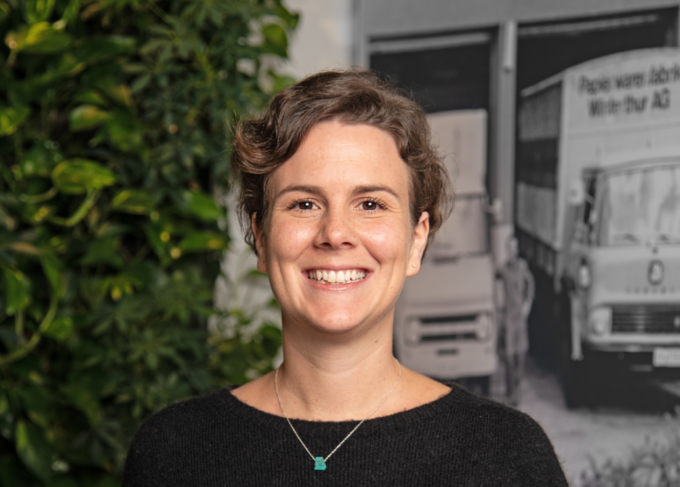
Désirée Keller is a new member of the PAWI Board of Directors. Source: zvg
At the Annual General Meeting on April 17, 2026, Désirée Keller and Céline Küng, the two daughters of Andreas Keller, were elected as new members of the Pawi Group Board of Directors. The election marks an important step in the cross-generational development of the family-run packaging company based in Winterthur.
Céline Küng is also a new member of the Pawi Board of Directors. Source: zVg / Pawi
New composition of the Board of Directors
In future, the Board of Directors will consist of Andreas Keller as Chairman, Matthias Alder, Maria Iskic, Désirée Keller and Céline Küng. Together with their father, the two newly elected members stand for continuity, responsibility and the future of the Group.
Family business with an international footprint
The Pawi Group is a family-run company based in Winterthur (Switzerland) with sites in Singen (Germany) and Warsaw (Poland). With around 370 employees, the company develops and produces high-quality packaging solutions - from functional to highly refined. The focus is on quality, sustainability and innovative technologies in order to meet the requirements of demanding premium brands. With the appointment of Désirée Keller and Céline Küng, the Pawi Group is strengthening its long-term orientation as an independent family business.
Felix Graf becomes new Chairman of the Board of Directors of APG|SGA
At APG|SGA's Annual General Meeting in Geneva, the shareholders approved all of the Board of Directors' proposals by a large majority. The Swiss out-of-home media company is distributing a dividend of CHF 12 per share for the 2025 financial year. Felix Graf was elected as the new Chairman of the Board of Directors and Corine Blesi joined the Board.
Editorial - April 24, 2026
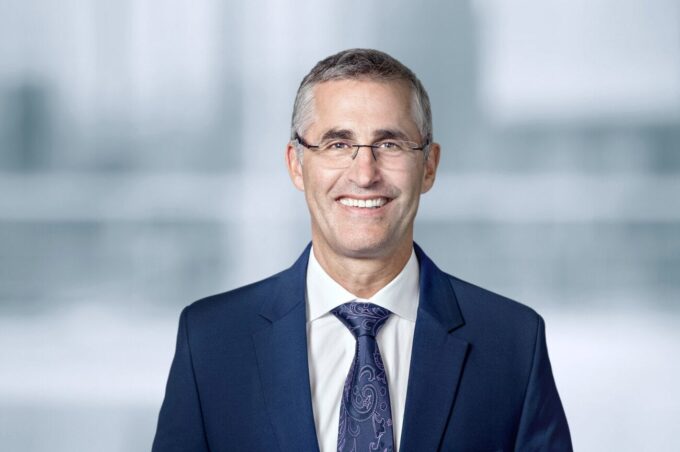
[caption id="attachment_48020" align="alignnone" width="680"] Felix Graf, new Chairman of the Board of Directors of APG|SGA. (Image: Karin Hofer / NZZ)[/caption]
At the Annual General Meeting of APG|SGA on April 23, 2026 in Geneva, the shareholders present clearly approved all the proposals of the Board of Directors. The shareholders, who represented 75.8% of the registered shares with voting rights, confirmed all members of the Board of Directors standing for election or re-election for a further year.
New management structure in the Board of Directors
Felix Graf was elected as the new Chairman of the Board of Directors. He was previously a member of the Board. Corine Blesi was elected as a new member of the Board of Directors. David Bourg, Maya Bundt, Jolanda Grob and Markus Scheidegger were re-elected. Daniel Hofer and Xavier Le Clef have decided not to stand for re-election and are stepping down from the Board.
Jolanda Grob and Markus Scheidegger were re-elected to the Remuneration Committee of the Board of Directors.
Annual financial statements and remuneration approved
The annual report, the annual financial statements and the consolidated financial statements for 2025 were approved. Discharge was granted to the Board of Directors and the Executive Board for the 2025 financial year. The remuneration of the Board of Directors and the fixed and variable remuneration of the Executive Board was approved with over 98.55% of the votes.
The Annual General Meeting resolved to pay a dividend of CHF 12 for the 2025 financial year with 98.16% approval.
APG|SGA is the leading out-of-home media company in Switzerland. Listed on the SIX Swiss Exchange, the company covers all areas of out-of-home advertising: on streets and squares, in railroad stations, airports, shopping centers, in the mountains and in and on means of transport - from high-reach poster campaigns and large formats to state-of-the-art digital advertising spaces, special advertising formats and mobile advertising.
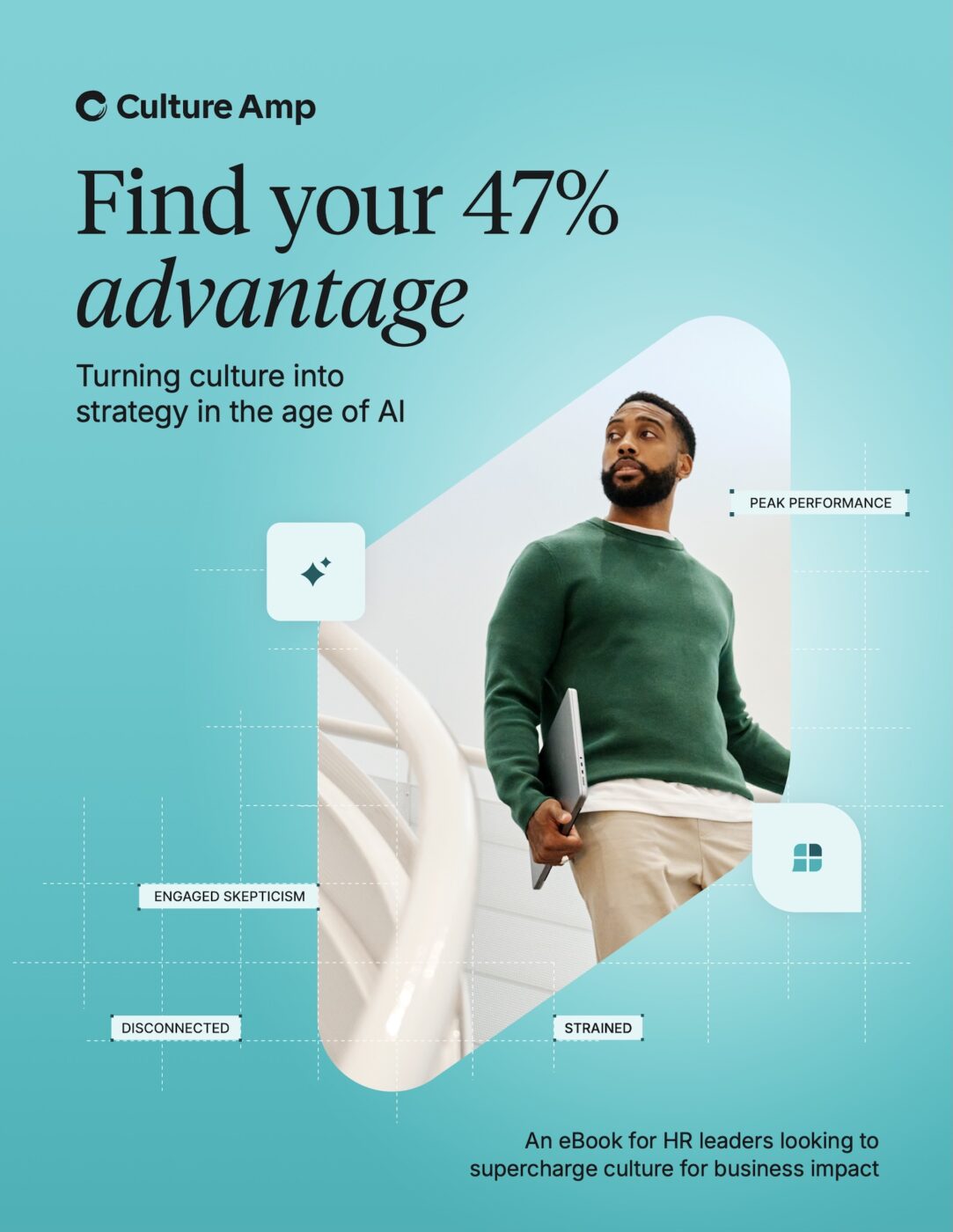
Top performance is not the achievement of individuals - it is the result of a well-orchestrated system. In a new e-book, Culture Amp shows how companies can make their culture measurable and thus achieve a demonstrable competitive advantage.
Culture Amp's science-based data research, based on more than 1.5 billion analyzed data points from 6,800 companies, proves this: Top performance is not the merit of individuals. Rather, it is the result of a well-orchestrated system within the company. Just as in Formula 1 racing, where victory does not depend on the driver alone, but on a well-coordinated team of tire strategists, engineers, pit crew and analysts, top performance in the corporate context is only achieved when all the parts work together.
47 percent advantage thanks to peak performance culture
Leaders and managers try to build high-performance cultures, but sometimes wonder how they will know when they have actually achieved this status. Peak performance often feels more like an aspirational goal than something that organizations can actually identify and sustain. The key question is therefore: can an organization's top performance be measured?
The answer is yes. Culture Amp's data shows that listed companies that are in the top performance area have a 47 percent advantage in terms of share price performance over companies that are not. In addition, these companies have an employee retention rate of 88 percent and attract 21 percent more top talent. And: 76 percent of companies in this state retain their peak performance status in the following year - proof that this is a sustainable, controllable variable.
Commitment and performance: psychologically linked, systematically separated
A key finding from Culture Amp's research is that engagement and performance are closely linked psychologically - but are systematically considered separately in practice. Companies with high employee engagement have been shown to have a higher proportion of high performers. In addition, the quality of leadership has a direct influence on employee performance: Managers who exceed expectations or set new standards have a significantly higher proportion of high-performing direct reports than those who fail to meet expectations.
«CPOs are tired of just improving engagement scores. What we urgently need is a message that marks a clear shift in the conversation towards true excellence and resonates immediately with the CEO and leadership team,» says Anna Binder, former CPO.
The Performance Culture Quadrant: orientation framework for the path to top performance
In its new e-book «Find your 47% advantage», Culture Amp presents the Performance Culture Quadrant (PCQ). The analysis model classifies companies into four cultural states based on engagement and performance data: Peak Performance, Engaged Skepticism, Strained and Disconnected. For the first time, the model provides a clear orientation framework for the path to peak performance.
The PCQ measures six factors that make cultural strengths and weaknesses visible: Excellence (a strategic North Star that creates long-term alignment), Vision (a motivating perspective that rallies everyone around a common goal), Ownership (personal responsibility and accountability), Learning (two-way communication and continuous learning), Voice (roles that align with what drives people) and Energy (clear allocation of roles and focused use of resources).
«The PCQ has shifted the conversation from »how do we improve engagement scores' to 'how do we achieve a peak performance culture'. This change has created greater focus and engagement among managers," says one user, describing the impact of the model.
Where do companies stand today - and how do they achieve top performance?
In the analysis of around 1,800 companies, 44 percent are in the Peak Performance state, 34 percent in the Engaged Skepticism state, 10 percent in the Strained state and 12 percent in the Disconnected state. Medium-sized companies are more frequently represented in the Peak Performance state than very large or very small ones. The distribution also varies greatly depending on the sector.
The e-book also shows what measures companies have taken to achieve top performance: Companies from the Engaged Skepticism state particularly improved cross-departmental collaboration and accountability. Companies in the Disconnected state strengthened trust in leadership, developed a motivating vision and promoted innovation. Companies in the Strained state invested in people-centered leadership and the connection to a social goal. What all successful transformations had in common was a consistent alignment of resources and the visualization of cultural changes.
Five ways in which HR managers contribute to top performance
The e-book concludes with five practical recommendations for HR managers: they should link engagement and performance measurement via a uniform intelligence layer, align the strategy away from individual performers and towards systemic solutions, aggregate performance data at team level, continuously interpret cultural signals and condense them into concrete recommendations for action, and work specifically on the cultural factors that drive or inhibit performance on the basis of the PCQ.
On March 20, 2026, Go 2 Flow launched the D2C Summit at the KKL Lucerne, the first event in Switzerland dedicated exclusively to direct-to-consumer brands. The line-up included keynotes from Snocks founder Johannes Kliesch, Blacksocks founder Samy Liechti and NIKIN CEO Nicholas Hänny as well as panel discussions with representatives of established Swiss brands.
Editorial - April 23, 2026
Source: zvg
On March 20, 2026, Go 2 Flow launched the D2C Summit at the KKL Lucerne, the first event in Switzerland to focus exclusively on direct-to-consumer brands. From specific growth models to the question of international scaling, the program showed how Swiss D2C brands are holding their own in an increasingly fast-paced and demanding consumer world.
The line-up included keynotes, panel discussions, masterclasses and networking formats. The D2C Summit has a clear objective: to promote networking, facilitate partnerships and drive the growth of Swiss D2C brands.
Practical knowledge from successful brands
The stage belonged to brands that know how it's done: Johannes Kliesch, founder of Snocks, took the audience behind the scenes of one of the best-known D2C companies in the DACH region in his keynote speech. Samy Liechti and Blacksocks showed what 25 years of consistent D2C means and what others can learn from it.
In his 45-minute masterclass, Nicholas Hänny, CEO of NIKIN, showed why automated postcards are massively underestimated as a growth channel and how profitable they really are.
Sebastian Paul, representing Victorinox, contributed the perspective of a traditional Swiss company. Together with Simon Bertschinger from Namuk and Andreas von Muralt from Jungkraut, the panel discussion revealed how differently D2C works depending on the industry and where the same rules still apply.
Marlena Hien, Founder of Bears with Benefits, and Philip Class, Founder of Teveo, were two of the strongest German D2C brands on stage. In a discussion moderated by Laura Kremer, they spoke openly about their strategies and experiences.
Platform for exchange and growth
Switzerland has all the prerequisites: Quality, innovative strength and entrepreneurial thinking. What was missing until now was a place for exchange, partnerships and joint growth. The D2C Summit closes this gap and aims to become the most relevant event for D2C brands in Switzerland. The response after the premiere spoke for itself.
The next D2C Summit will take place on January 22, 2027. Super Early Bird tickets will be available from May 1, 2026.
Transformation in Swiss companies: too slow and not consistent enough
Over 60 percent of Swiss companies feel that their own transformation is too slow. A new study by Lucerne University of Applied Sciences and Arts shows: Generative AI has arrived in everyday working life, but measurable economic added value is still lacking for most.
Editorial - April 23, 2026
Companies are focusing on necessary change and innovation, but the transformation is often too slow. (Image: Depositphotos.com)
Business transformation remains a highly relevant topic for Swiss companies. Technological change, changing customer needs, economic pressure, geopolitical tensions and new regulatory requirements often have a simultaneous impact on companies. However, when it comes to practical implementation, many fall short of their own requirements - as shown by the new Business Transformation Survey 2.0 from Lucerne University of Applied Sciences and Arts, for which almost 400 decision-makers from Swiss companies in various sectors and of various sizes were surveyed.
Implementation remains the biggest challenge
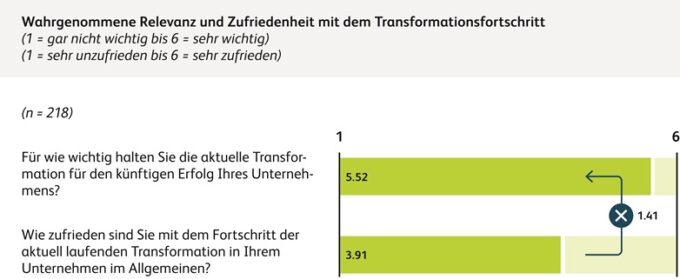
For the majority of respondents, the transformation is not progressing fast enough. «Companies want change, but many are not implementing it with the necessary speed and consistency,» says study author Jan Schlüchter. Although transformation initiatives are launched, there is often a lack of clear responsibilities, sufficient resources and consistent progress measurement and control. Many companies get stuck in individual initiatives or pilot projects without systematically scaling them up.
Figure 1: Relevance and satisfaction with the ongoing business transformation. (Image: HSLU)
Compared to the first survey from 2022, the gap between companies has widened further. «The differences are particularly evident in leadership, communicative support, learning ability and the sustainable anchoring of changes,» says Schlüchter.
Generative AI: employees are further ahead than their organization
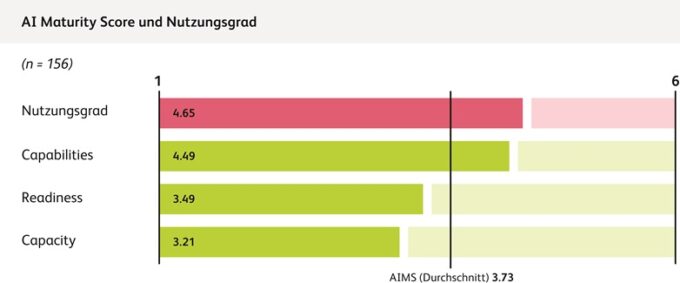
Generative AI is clearly gaining in importance as an additional impetus for transformation - due to delivery bottlenecks as well as efficiency and performance pressure. It has already become part of everyday working life in many companies. At the same time, the study shows that many companies are not yet able to achieve measurable economic added value from it. «Many employees are more advanced in dealing with generative AI than their organization. The ability of companies to implement generative AI in concrete applications, processes and value creation is lagging behind,» says Schlüchter.
Figure 2: AI use and organizational implementation capability. (Image: HSLU)
According to respondents, companies can be categorized as «beginners» or «explorers» in terms of their AI maturity; only a few are «AI champions» so far. The more advanced a company is in terms of generative AI, the higher the perceived goal achievement of the transformation.
AI in procurement: strategically planned, operationally only implemented to a limited extent
The gap is particularly clear in purchasing. A supplementary survey of 74 procurement experts - mainly from the manufacturing and retail sectors - shows that the motivation to use AI is high: The motivation to use AI in procurement is high. AI is seen as an opportunity to further develop the role of procurement into a strategic value driver by making potential and alternatives in the procurement market visible, identifying risks earlier and creating more transparency along the supply chain. However, a lack of expertise, limited resources and unclear responsibilities make consistent integration into existing processes difficult. «The bottleneck is therefore not in the will, but in the organizational capability and scaling,» says Jan Schlüchter.
It's not the technology, but the leadership that counts
The study makes it clear that it is not the companies with the greatest awareness of the problem that transform successfully, but those that manage, implement and anchor change more consistently. «Transformation is not a collection of individual projects, but a management task that must be consistently managed and anchored in the organization,» says Schlüchter.
This leads to a clear conclusion for managers: it is not the availability of new technologies that determines success, but the ability to translate them into sustainable value creation. The study identifies ten specific recommendations for action. The strongest levers lie in visible and decisive leadership, clear shared orientation, open communication about progress, regular measurement and a culture that allows learning and failure as part of development.
The study was conducted by the Institute of Business and Regional Economics (IBR) at the Lucerne School of Business as part of an Innocheck project together with Efexcon and in collaboration with procure.ch.
Further information on the study and the Lucerne University of Applied Sciences and Arts: www.hslu.ch
Swiss insolvencies reach historic record
Global credit insurer Allianz Trade is forecasting around 14,000 corporate insolvencies in Switzerland in 2026 - a new all-time negative record. The Middle East conflict is exacerbating the situation and driving global bankruptcies to a five-year high.
Editorial - April 22, 2026
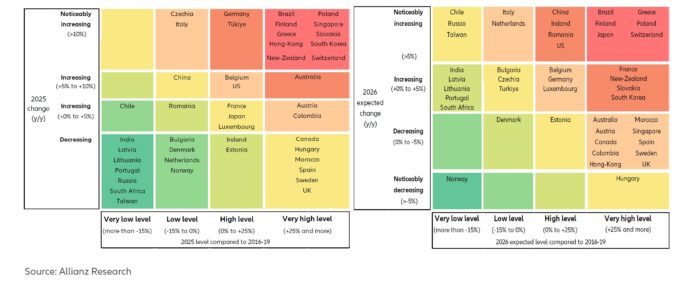
Global Heat Map: Where in the world is the greatest threat of insolvency? Switzerland alone expects 14,000 insolvencies, an all-time negative record. Source: Allianz Research
Switzerland is facing an unprecedented rise in corporate insolvencies. According to the latest global insolvency report from Allianz Trade, the world's leading credit insurer, around 14,000 insolvencies are expected in Switzerland in 2026. This represents the sixth consecutive increase, twice as many cases as in 2022 and almost three times as many as the pre-pandemic average.
New insolvency system as a key driver
A decisive factor in this massive increase is the new Swiss insolvency system, which came into force on January 1, 2025. With the repeal of paragraphs 1 and 1bis of Article 43 of the Federal Debt Enforcement and Bankruptcy Act (SchKG), debts under public law - including VAT, taxes and social security contributions - can now lead directly to the bankruptcy of a company entered in the commercial register, instead of being pursued through the seizure procedure as was previously the case. All registered companies and legal structures are affected by this reform, including self-employed persons.
Jan Möllmann, CEO of Allianz Trade in Switzerland, assesses the situation as follows: «In addition to the new insolvency system, the below-average economic outlook and growth forecasts, which have been revised downwards due to higher energy prices and global uncertainties, are also contributing to the negative trend. We currently expect the increase in insolvencies to be +20 % in 2026 - after +38 % in 2024 and +17 % in 2023 - before normalizing from 2027 (-3 %).»
Middle East conflict exacerbates global insolvency situation
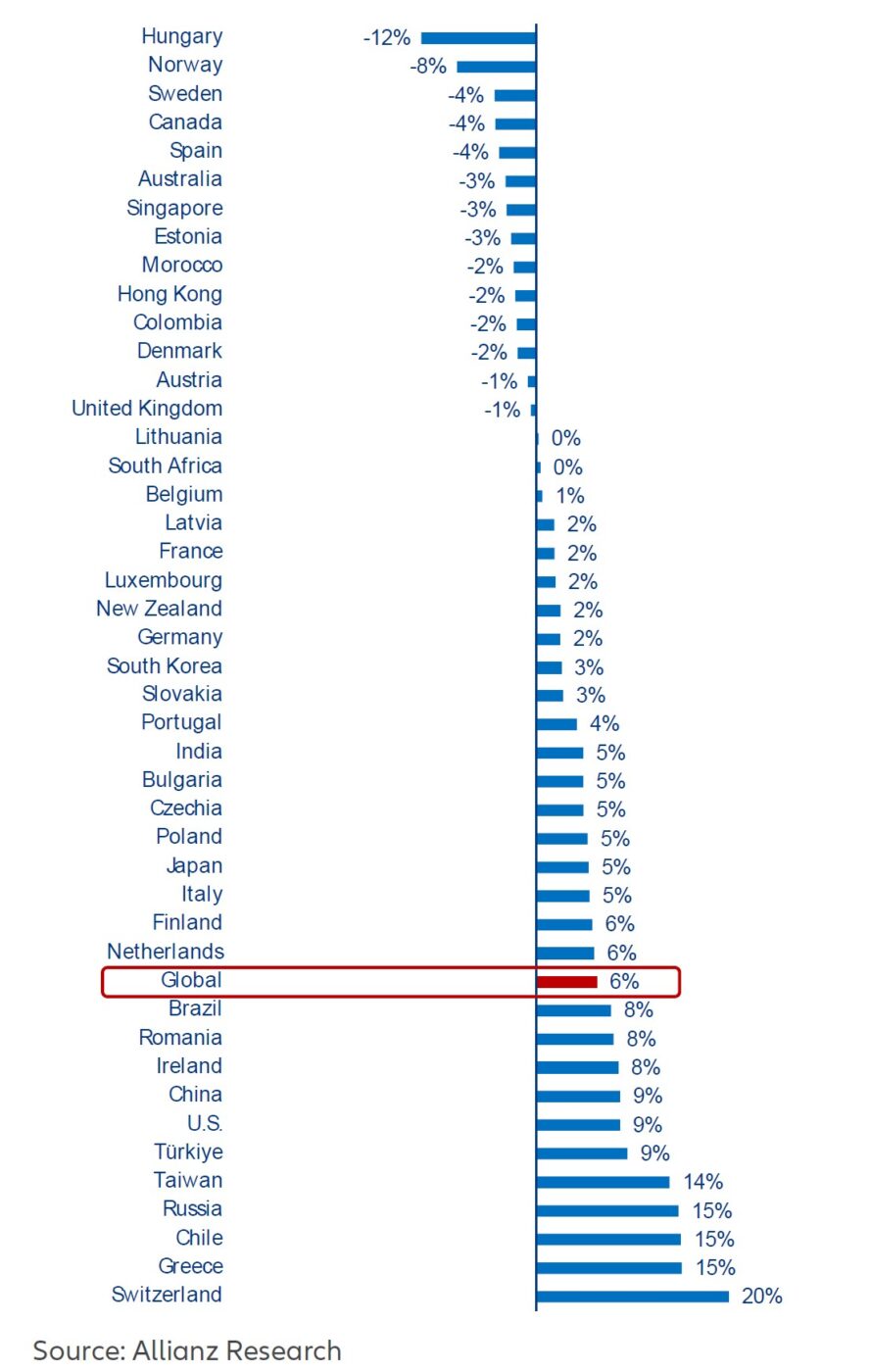
There are also signs of a significant deterioration internationally. The crisis in the Middle East has increased volatility on the energy markets, made transport costs more expensive and destabilized global supply chains. Allianz Trade expects corporate insolvencies worldwide to rise by 6 % in 2026 - for the fifth time in a row. Before the conflict, the forecast was +3 %.
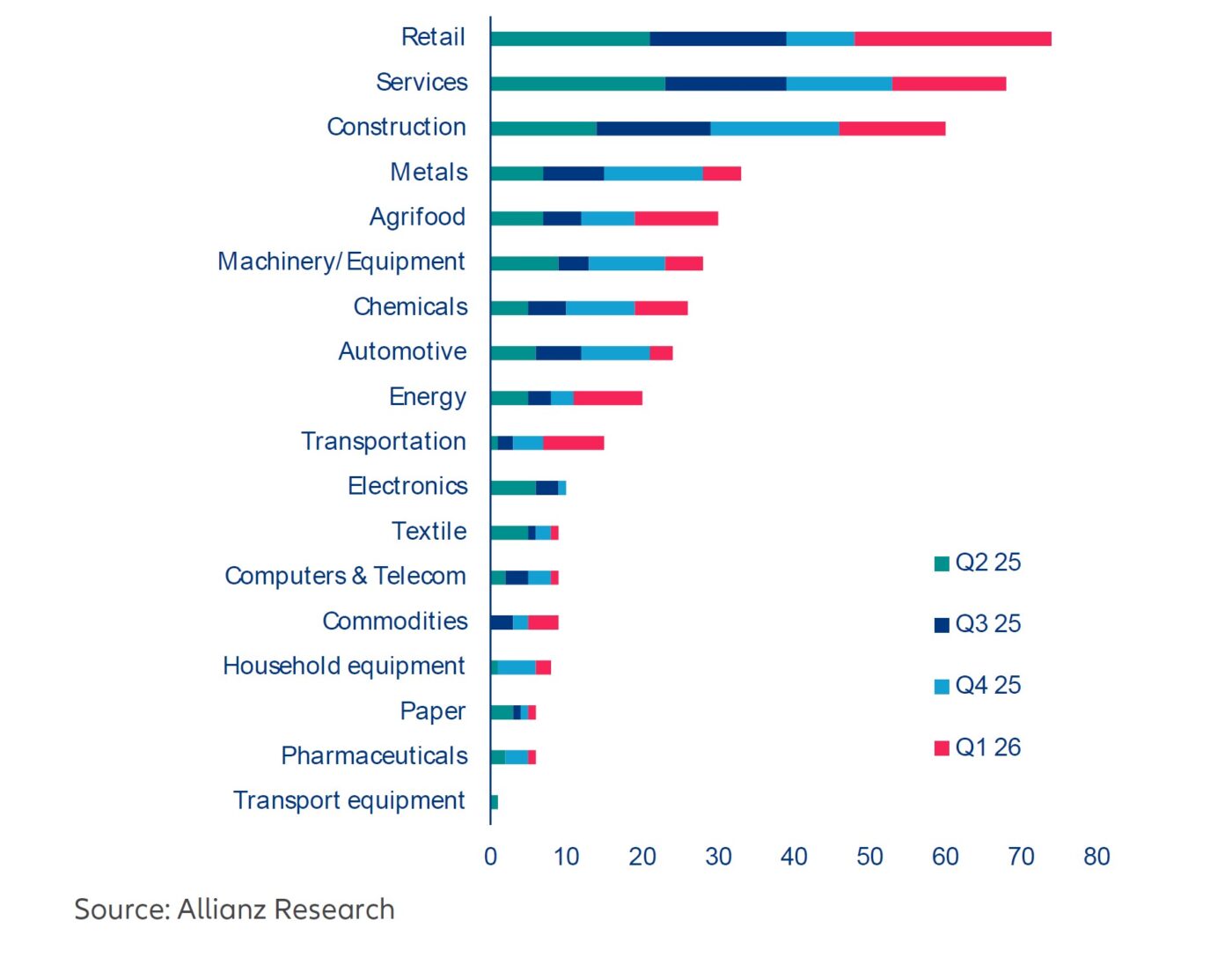
Aylin Somersan Coqui, CEO of Allianz Trade, comments: «This situation is driving up costs along global value chains, from agriculture and food to manufacturing, healthcare and technology. It is also exacerbating the pressure on energy-intensive sectors such as transportation, chemicals and metals. The combination of weaker demand, rising input costs and tight financial conditions is weighing on companies with weak pricing power, low margins, high debt or structurally increased working capital requirements. Compared to our pre-crisis forecast, the direct damage of the Middle East conflict will mean 7,000 additional corporate insolvencies worldwide in 2026 and 7,900 in 2027.»
Major insolvencies, quarterly figures, by sector, worldwide. Source: Allianz Research
Worst case: escalation would further exacerbate the situation
If the Strait of Hormuz remains blocked in the longer term, the consequences could be significantly exacerbated by prolonged supply disruptions for oil and gas as well as other commodities such as fertilizers and helium. Maxime Lemerle, lead analyst for insolvency research at Allianz Trade, warns: «A prolonged and widespread escalation would result in global insolvencies increasing by 10 % in 2026 and 3 % in 2027. This would mean around 4100 additional insolvencies in the US and 10,500 in Western Europe in the period 2026-2027.’
Millions of jobs at risk
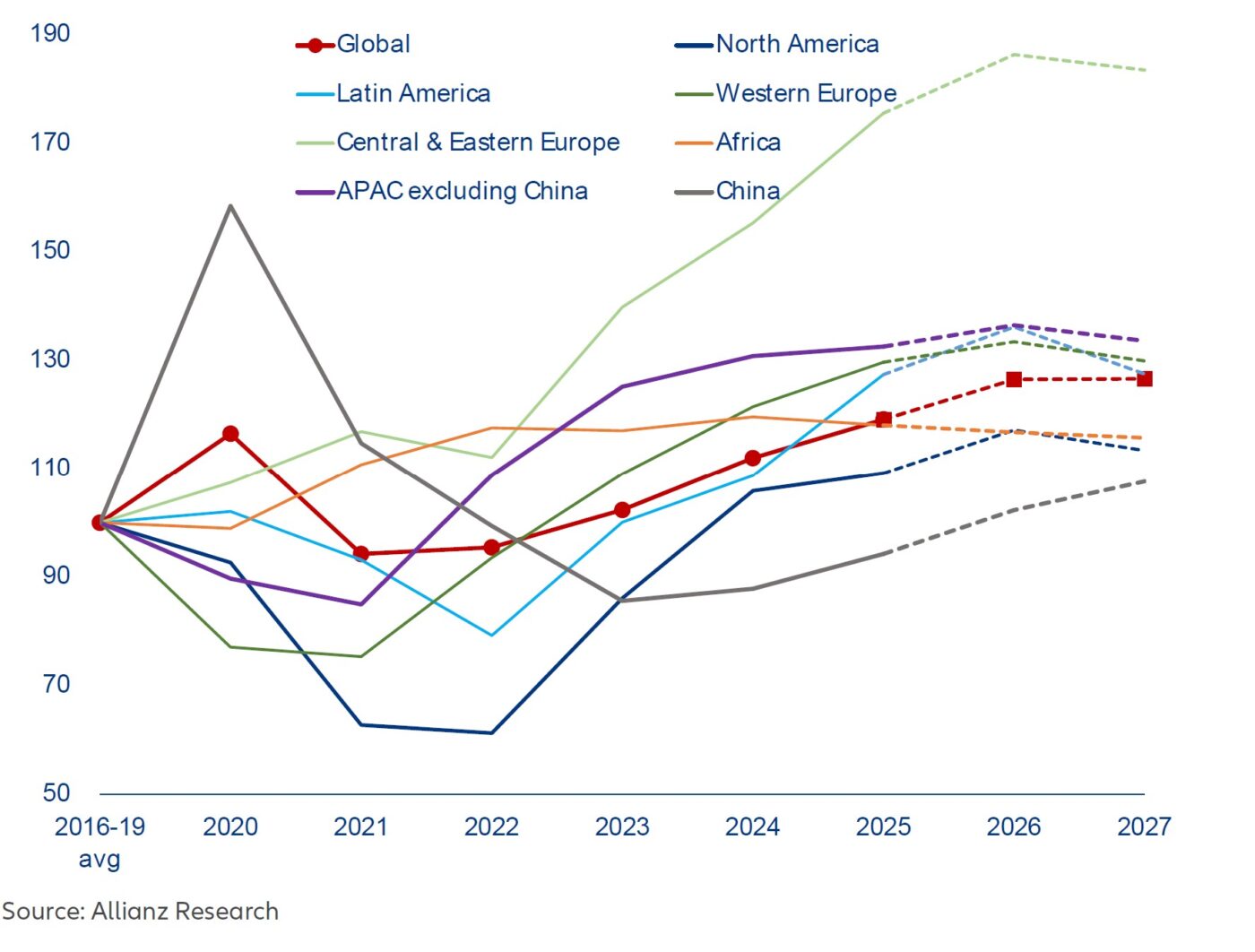
The predicted increase in global corporate insolvencies of 6 % in 2026 will also put jobs under pressure. Allianz Trade estimates that around 2.2 million jobs would be directly at risk - 94,000 more than in the previous year. According to Lemerle, the construction, retail and services sectors would be particularly affected. Europe leads the global statistics with 1.3 million potentially affected jobs. Western Europe and North America are both likely to record a 12-year high. Overall, the jobs threatened by bankruptcies could account for around 6 % of the total number of unemployed in the US and Europe.
Global and regional insolvency indices, annual level, base 100: average 2016-2019. Source: Allianz Research
Stabilization not expected until 2027
Allianz Trade expects a stabilization at a high level globally in 2027 - a slight decline had been forecast before the Middle East conflict. In Switzerland, a normalization is expected from 2027, with a decline in insolvency cases of an estimated 3 %. Until then, the situation will remain challenging for many companies - especially SMEs.
Insolvencies 2026, annual change in %. Source: Allianz Research
Commercial clerk EFZ remains by far the most sought-after apprenticeship in Switzerland. An evaluation of the search queries on yousty.ch shows: The ranking is stable, while retail trade, IT and logistics are competing for the places behind.
Editorial - April 22, 2026
Commercial apprenticeships are still at the top of the popularity scale. (Symbolic image; Depositphotos.com)
Apprenticeships are highly valued in Switzerland - this is confirmed by SERI's job barometer: in summer 2025, 50 % of all school leavers opted for basic vocational training. An evaluation of the most sought-after apprenticeships in 2026, based on the search queries on yousty.ch in German-speaking Switzerland, shows a stable picture with few shifts.
Commercial apprenticeship undisputedly at the top
The occupation of commercial clerk EFZ is still by far the most sought-after apprenticeship. Out of a total of around 5 million searches, 1 million were for this occupation alone. The cantons of Neuchâtel (5.0 % below the Swiss average), Nidwalden (-4.3 %) and Geneva (-3.3 %) have the lowest proportion of searches for commercial apprenticeships.
Retail and IT professions follow directly behind commercial apprenticeships. Compared to the previous year, these two areas - together with logistics and drawing - have moved up or down slightly in the ranking. All other professions in the top 10 have retained their exact positions from the previous year. There are no new entrants in the top 10.
Apprenticeship vacancies and regional differences
The vacancy barometer shows that 13 % of apprenticeships remained open in the last recruitment year. As of April 22, 2026, 12,696 apprenticeships are still advertised on yousty.ch.
In addition to the overarching trends, there are also regional differences: The occupation of care specialist EFZ (FaBe) is the least sought after in the central Swiss cantons of Zug, Schwyz and Nidwalden, while it is the most sought after in the western Swiss cantons of Geneva, Fribourg, Valais, Neuchâtel and Vaud. As in the previous year, the canton of Neuchâtel led the searches for the occupation of pharmacy specialist EFZ (formerly pharmaceutical assistant), followed by Fribourg and Valais. Demand for this occupation is lowest in the rural cantons of Obwalden, Uri, Zug, Appenzell Ausserrhoden, Lucerne and Schwyz.
Further information and current apprenticeships can be found at yousty.ch retrievable.
AI saves managers several hours per week
Artificial intelligence is noticeably shifting the productivity boundaries in management: the vast majority of managers save several working hours per week thanks to AI. The time savings are above average, especially in top management. This is shown by the latest «Expleo AI Pulse» study, which surveyed managers in Germany, the UK and France.
Editorial - April 22, 2026
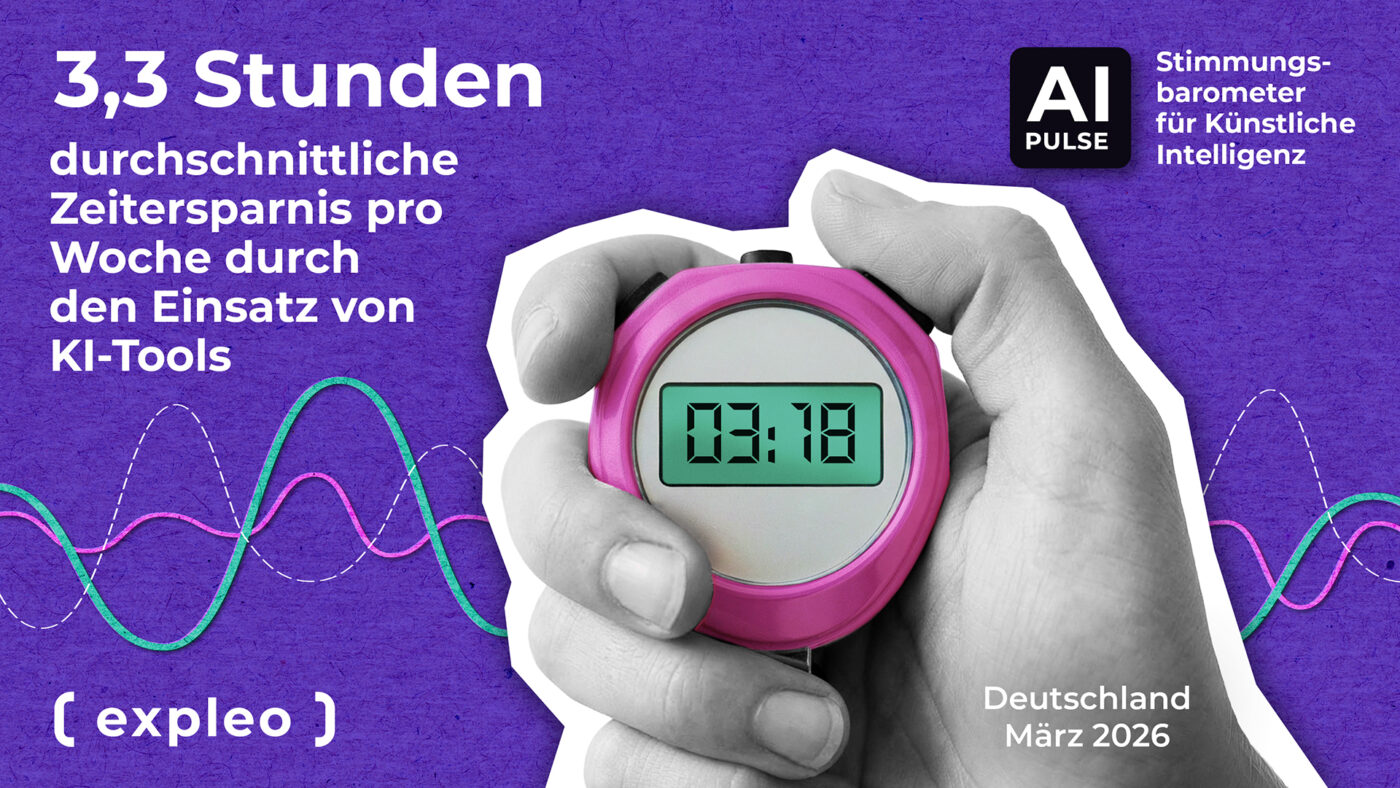
AI saves managers 3.3 hours per week. Source: zvg
Artificial intelligence (AI) has become firmly established in everyday office life and is having a noticeable impact. The vast majority of managers state that they gain valuable working time through the use of AI. Savings of three to four hours per week are mentioned most frequently. These are the findings of the latest edition of the monthly «Expleo AI Pulse» study, which was conducted in Germany, the UK and France in March 2026.
Productivity gains across Europe
Across Europe, 27% of the managers surveyed reported a weekly time saving of three to three and a half hours thanks to AI. A further 24 percent cite savings of one to two hours, and 13 percent report gains of five to six hours. The picture is remarkably consistent across different markets: in Germany, managers gain an average of 3.3 hours per week, in the UK 3.5 hours and in France and Ireland 3.2 hours each.
«AI is noticeably pushing the boundaries of productivity in management,» says Dr. Yusuf Erdogan, Country Lead Digital & Technology at Expleo Germany. «Managers are not only working faster, but also differently. They delegate more to systems, make more informed decisions and gain time for strategic issues. AI is therefore evolving from a simple tool to a critical work infrastructure - and this is precisely where its real leverage lies.»
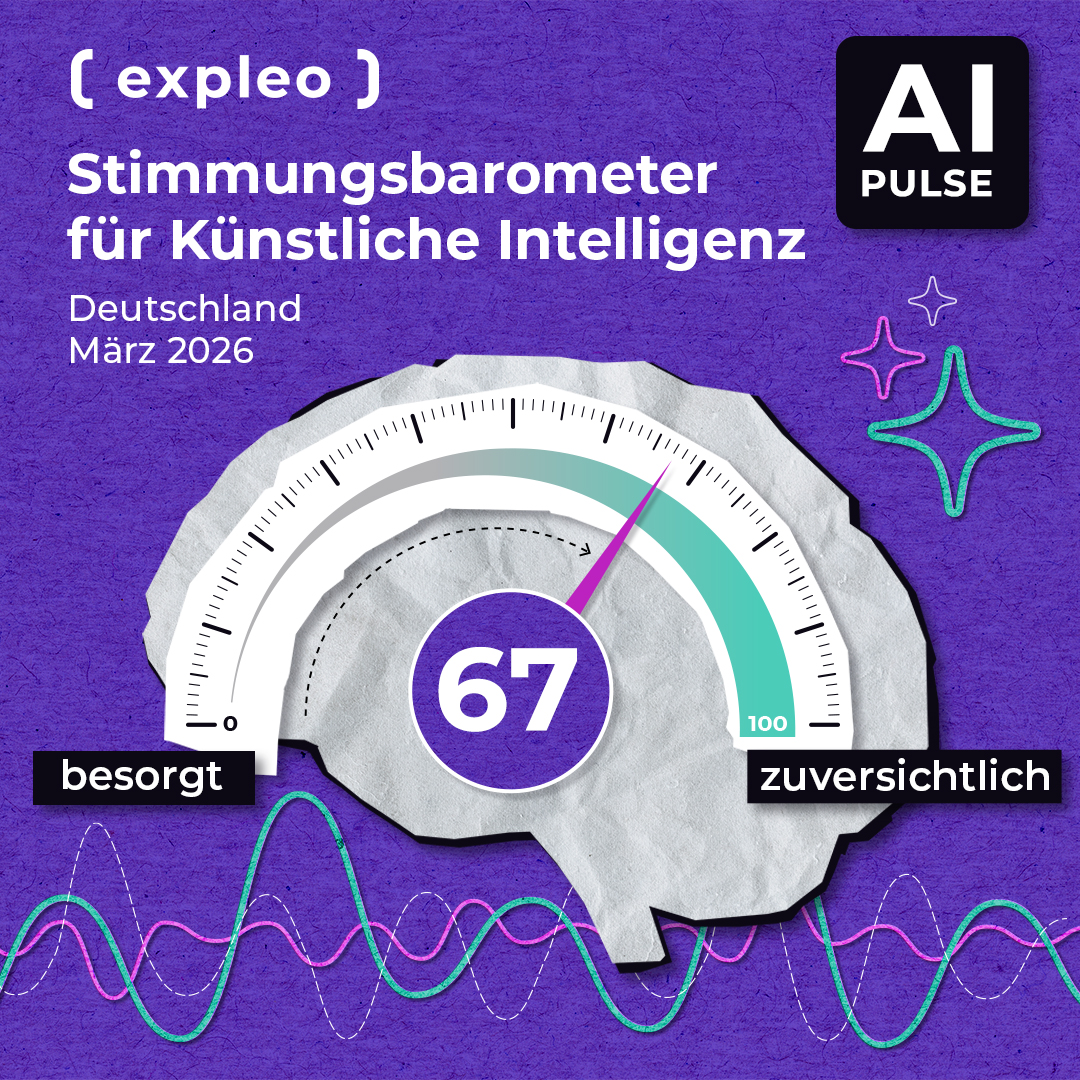
The majority of German managers are confident in AI. Source: zvg
Top management benefits particularly strongly
A closer look at the distribution shows: The time gains are above average, especially in top management. Owners and shareholders save an average of 4.8 hours per week, while C-level executives and directors save 3.6 hours. The main reason for this is the targeted use of AI for analyses, decision support and prioritization - in other words, in areas where efficiency gains have a direct impact.
At the same time, Erdogan points out that the picture is not completely uniform: «There is still a small group of managers who have only noticed minor effects or none at all. This shows that there is still considerable untapped potential in many organizations.»
From efficiency gains to structural change
According to Expleo, the current results mark just the beginning of a trend. More integrated applications and the increasing use of AI agents are likely to further increase the productivity effect. The efficiency gains perceived by the study participants are also reflected in the general sentiment: 71% of managers welcome the opportunities that AI opens up for their organization and 66% predominantly see benefits for companies as a whole.
«AI no longer just affects processes, but the way we work itself,» says Erdogan. «In an environment of increasing complexity, it helps to reduce routine tasks, eliminate disruptive factors and focus on value-adding decisions.»
Sentiment stable, debate shifts
The European AI Pulse Sentiment Score rose slightly to 66 points in March 2026 (previous month: 65 points). Germany remains in a good midfield position with 67 points. «The stable sentiment shows that AI has arrived in people's everyday lives,» comments Erdogan. «The debate is shifting from expectations to concrete results. Companies are increasingly measuring AI by its actual contribution to productivity - and this is precisely the decisive step towards sustainable use.»
The «Expleo AI Pulse» survey has been conducted monthly in Germany, the UK and France since August 2025. 200 managers are surveyed per country; the current edition is based on the eighth survey wave (field phase: March 2026). The study is conducted by the insights agency Opinium on behalf of Expleo.
In many companies today, stress is no longer the result of individual stress peaks. It arises insidiously - through a new basic logic: permanent availability, a fast pace, constant interruptions, tool changes and a feeling of «never being finished». Anyone who treats this only as an individual resilience issue is falling short. Mental work ability is increasingly a management and organizational task: it determines quality, error rate, decision-making ability, commitment and ultimately the stability of the system.
What has changed in the last 20 years
Digital communication has accelerated processes - and at the same time fragmented everyday working life. Many employees no longer work «on tasks», but on a series of context switches: chat, email, meeting, ticket, query, update. Added to this is the pressure to change: new systems, new processes, new roles. What used to be cushioned by rest periods, paths or clearer transitions now often takes place in the same time window. The price is often not a lack of will, but a decline in control: less focus, more errors, longer decision-making paths, more friction in the team.
The new exhaustion is often a permanent adjustment
In practice, exhaustion often arises where people have to constantly mediate between demands: Speed vs. quality, availability vs. concentration, growth vs. stability. The nervous system remains «online», real regeneration becomes the exception. Many compensate for this for a long time - with discipline, extra work and internal pressure. Until sleep, mood, patience and performance start to deteriorate. Not because people are weaker, but because the system constantly demands more than it gives back.
How to recognize the imbalance early on
Focus breaks off more quickly, errors accumulate despite competence
Decisions take longer because new information is constantly being added
Meetings become more, clarity becomes less
Conflicts go round in circles (interfaces, responsibilities, tone of voice)
Relaxation becomes a distraction: you «switch off» but don't recharge
Five levers that leadership can influence immediately
Make priorities visible:
Less «everything important». Clear top 3 per week/team, with justified stops: what do we consciously leave out so that the essentials can be achieved? The decisive factor is not only setting priorities, but also actively putting an end to side issues.
Protect focus:
Focus is not created by appeals, but by conditions. Define focus windows without meetings and without chat obligations. Agree simple rules of the game: Interruptions are bundled (e.g. two defined response times per day), «pinging» is not a work order, and complex topics do not belong in endless chats.
Regulate accessibility:
Many teams do not suffer from a lack of work, but from pressure to react. Clarify bindingly: what is «normal» (same-day response), what is «urgent» (within 2 hours), what is «critical» (immediately, with a clear escalation chain)? If «immediately» becomes the norm, everyone's ability to concentrate decreases.
Simplify decisions:
Unclear decision-making rights create permanent loops. Clarify roles and responsibilities (who decides, who advises, who is informed). Shift small decisions to where the competence lies - and define clear criteria for larger decisions. This reduces friction and takes the pressure off management.
Take rhythm and regeneration seriously:
Breaks, realistic planning and transitions are not a luxury. Make a conscious effort to plan «buffers», reduce lengthy meetings and establish team rhythms (e.g. start the week with priorities, end the week with relief). Regeneration is a management variable - just like quality or budget.
Diagnostic logic that provides clarity in minutes
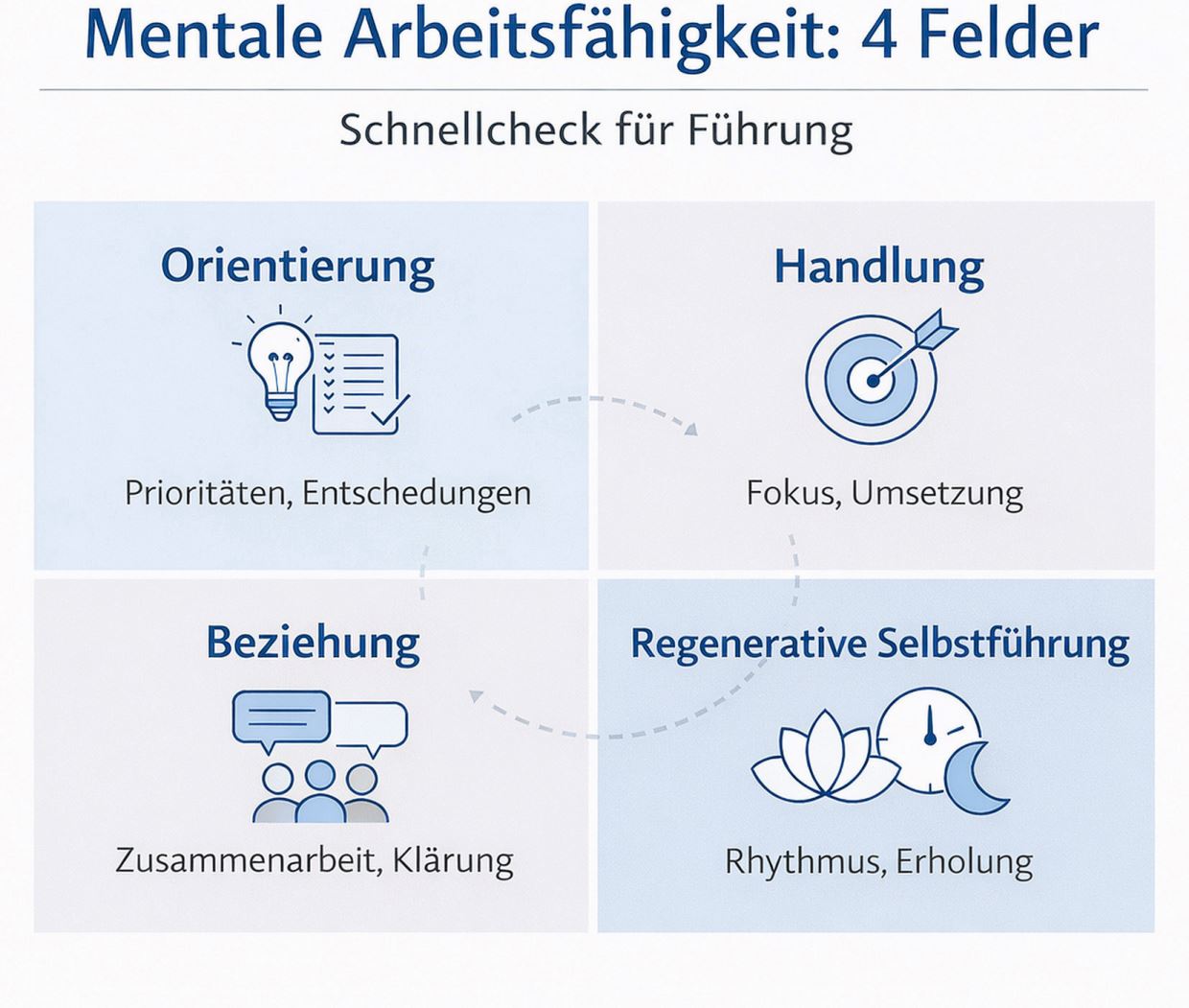
In my work, a pragmatic classification has proven its worth: Where is the bottleneck - in orientation (clarity), action (implementation), relationship (collaboration) or regenerative self-management (stability)? These four fields make it clear whether you are working on symptoms or on the lever. A brief assessment of the current situation in the management circle is often enough to choose the right measures.
Conclusion
Mental work ability is not strengthened with «feel-good programs», but with good design: clarity, focus, sensible boundaries, clean decisions and a workable rhythm. Those who reduce permanent adjustment not only gain health - but also performance, quality and loyalty.
Author
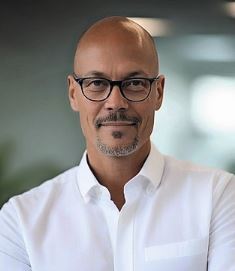
Andreas Gruber is a speaker, systemic coach with a therapeutic background, specialist author and developer of the Ergoarchipel® model. He supports leaders and companies in German-speaking countries in times of change, high complexity and mental stress - clearly, practically and effectively.
Andreas Gruber, systemic coach and specialist author.
Hannes is a fictional character in an industrial company and «Hannes manages» is the title of the corresponding series of stories. Including subtle satire from and about the management floors ...
You need to be logged in to view this content. Please Log In. Not a Member? Subscribe now!
How AI masters the balancing act in business travel management
The desire for flexibility in business travel has never been as pronounced as it is today. It is becoming a challenge for companies to meet these requirements and at the same time fulfill their duty of care. Artificial intelligence is helping to combine the two.
You need to be logged in to view this content. Please Log In. Not a Member? Subscribe now!









 Felix Graf, new Chairman of the Board of Directors of APG|SGA. (Image: Karin Hofer / NZZ)[/caption]