AI is no substitute for leadership
Artificial intelligence can prepare management decisions, but it cannot make them responsibly. This is emphasized by interim manager and AI expert Eckhart Hilgenstock. He warns against transferring developments in the consulting industry to SMEs without reflection.





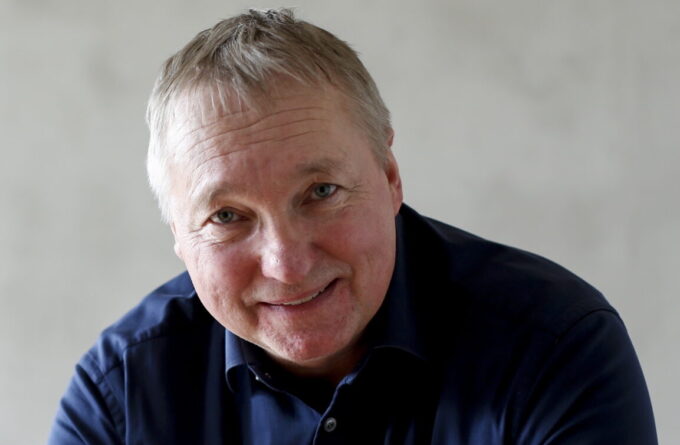
«Artificial intelligence is no substitute for leadership quality,» management expert Eckhart Hilgenstock makes clear. The Hamburg-based expert for artificial intelligence in management wants to counter the idea that AI could take over decision-making power in companies in the future.
The former partner at the Boston Consulting Group (BCG), who is now hired as an interim manager for AI projects, advises differentiation: «If McKinsey lays off 5,000 consultants and replaces them with AI, it's because they only had to do additional work instead of management tasks.» This trend will continue: Managers primarily involved in administrative activities would increasingly find themselves unemployed, while the position of real decision-makers would be strengthened. «Artificial intelligence is ideally suited to preparing decisions, but not to making them responsibly,» says Hilgenstock.
Five minutes instead of five days
«Many of my former colleagues are nervous,» says Eckhart Hilgenstock, who worked as a partner at BCG for many years. But here, too, it is important to differentiate. As an insider, he knows the consulting industry: «The days when junior consultants prepared market analyses and then charged 50,000 euros for a week's work on descriptive data are over. Today, ChatGPT does it in five minutes, with reworking in five hours at most, but never five days.»
While there is already talk of the «end of consulting» in the industry, Eckhart Hilgenstock points to another problem: the «incorrect transfer of developments in the consulting industry to SMEs». The management expert, who now works as a temporary executive and advisory board member in the SME sector, explains: «More and more often, owners, managing directors and board members of SMEs are asking me whether they should follow McKinsey's example and replace their management with AI software too. But this is usually the wrong approach.»
Proximity to the customer as a success factor
He explains: «Small and medium-sized companies are usually so successful because they are closer to their customers and the market and make the right decisions more quickly. This proximity and flexibility are generally based on leadership qualities that cannot be replaced by artificial intelligence. Of course, SMEs also need to automate and AI plays a key role in this, but not so much at management level.»
Eckhart Hilgenstock clarifies: «At best, artificial intelligence provides the data basis for making better decisions. But managers who delegate decisions to AI have missed their job.» In medium-sized management and advisory board mandates, he is often asked whether AI could replace entire departments, such as finance. After careful analysis, he regularly comes to the conclusion that AI can significantly increase productivity and efficiency, but that in no case should «human factors such as ambition, intuition, market and customer proximity, empathy and decision-making power» be dispensed with.
Examples from practice
The expert gives an example from the financial sector: «Of course you should use AI these days to continuously generate liquidity forecasts. But it would be grossly negligent to leave the questions of how to interpret payment delays with a particular customer or whether you should take a risk on a new order to the AI.»
He points to sales as another example: «In business development, artificial intelligence is one of the biggest levers for acquiring new customers and tapping into additional sources of revenue. But this only works if the people in sales are motivated and have mastered the use of AI.»
The same applies to new business models: «As part of my mandates as an advisory board member and interim manager, I am increasingly being asked to keep an eye out for new AI-based business models. In all cases, I can make appropriate suggestions, but the decision as to which path a company wants to take strategically is a management task that ultimately has to be taken by the owner, managing director or board.»
Eckhart Hilgenstock is one of the most sought-after interim managers in Germany. Companies regularly bring him on board as a temporary executive when it comes to profitable growth and sales as well as digitalization and the use of AI in organizations. He gained his experience as General Manager EMEA Sales Global Accounts at Microsoft and previously as Managing Director DACH at Lotus Development and IBM Germany. He is a member of the Diplomatic Council and author of the book «KI-Einsatz in Unternehmen: Opportunities, Risks, Successes».
https://hilgenstock-hamburg.de