
HR transformation: focus on H4S4, SuccessFactors and AI

The German-speaking SAP user group has surveyed its members on the future of HR work. The survey shows: The switch to SAP HCM for S/4HANA dominates the transformation roadmaps, while SuccessFactors is anchored in many cases. Artificial intelligence is named as the most influential trend.


Hermann-Josef Haag, DSAG Board Member for Human Resources & Public Sector
Hermann-Josef Haag, DSAG Board Member for Human Resources & Public Sector (Source: zvg)

The digital transformation in HR and IT is progressing rapidly - from SuccessFactors migration and artificial intelligence applications to new requirements for time recording and data strategy. The German-speaking SAP User Group (DSAG) asked its members about the challenges, trends and solutions for IT and HR managers and specialists in these areas in the SAP context. Two key findings of the survey: SAP SuccessFactors appears to be firmly anchored in the HR IT roadmaps of many of the companies surveyed. And the changeover to SAP HCM for S/4HANA (H4S4) is currently a topic that is driving many companies.

«The survey of our members in the HR IT environment confirms the high relevance of H4S4 and SuccessFactors conversions as well as the clear areas for action in the field of artificial intelligence (AI), cloud and the digitalization of HR processes in general,» summarizes Hermann-Josef Haag, DSAG Board Member for Human Resources & Public Sector. When asked which SAP systems they currently use in HR, 71% of respondents stated that they still work with SAP ECC HCM (on-premises). 39 percent use SAP SuccessFactors, 23 percent SAP S/4HANA HCM (H4S4) on-premises and 9 percent SAP S/4HANA HCM in the private cloud. Multiple answers were possible for this question.

Conversion to H4S4 dominates transformation roadmaps

As part of the survey, DSAG also used free text to find out which conversions companies are currently undergoing and what they are planning. The majority of respondents stated that they are currently working on the migration to SAP S/4HANA HCM (H4S4) (on-premises or private cloud). This suggests that many customers are migrating to H4S4 in order to protect their previous investments and the core.

SAP HR systems used
Overview of the SAP HR systems used (source: zvg)

«On the one hand, the imminent end of maintenance for existing ERP HCM solutions is forcing companies to plan with future-proof platforms. On the other hand, many companies are faced with the challenge of reconciling data migration, process harmonization and hybrid strategies - with a simultaneous need for planning security and resources,» says Haag. For many companies, the changeover to H4S4 does not initially represent a fundamental functional reboot. Above all, it is a necessary step to ensure maintenance security for existing core HR processes.

The transformation becomes more complex when companies combine the HR changeover with a greenfield approach for S/4HANA, with other modules such as Finance or with the introduction of SuccessFactors. Many companies therefore deliberately opt for a step-by-step approach. Initially, the focus is on securing the existing HR landscape with H4S4, while the modernization of processes and functions - via SuccessFactors, for example - takes place at a later stage.

SuccessFactors between mandatory modules and strategic potential

When asked what role SAP SuccessFactors plays in their HR IT roadmap, just under 4 percent stated that they had fully implemented the cloud solution, while just under 40 percent had partially implemented it and 11 percent were planning to do so. 28 percent of respondents are not planning to introduce SuccessFactors and 17 percent are still evaluating it.

«The results clearly show that although many companies have already taken their first steps towards the cloud, the reality remains strongly characterized by hybrid scenarios,» says Haag, adding: «Especially in the HR sector, cloud transformation is a complex process in which basic functions, integrations and industry-specific requirements must work together seamlessly.»

This heterogeneous transformation landscape is also reflected in the use of SuccessFactors modules. SAP SuccessFactors Recruiting (41%), Employee Central (39%), Learning (37%) and Performance & Goals (34%) - i.e. those modules that quickly offer noticeable added value in day-to-day HR operations - are particularly popular. Payroll-related modules such as Employee Central Payroll (8%) or Time Tracking (9%) are still used comparatively sparingly despite their strategic importance.

In this context, SAP's announcement of a strategic integration of SmartRecruiters into the SAP SuccessFactors portfolio is also interesting. «The plan here is to also make SmartRecruiters AI capabilities available to SuccessFactors Recruiting customers. In the future, SmartRecruiters will replace SuccessFactors Recruiting,» summarizes Haag.

Top challenges in the HR-IT context

When asked directly about the relevance of certain topics in the HR IT context, the following top 5 challenges can be identified as very relevant or relevant: Digital HR processes & self services (74 percent), migration from SAP ECC HCM to H4S4 (64 percent), data protection and compliance in SAP HR systems (55 percent), HR analytics and reporting (52 percent) and time recording & working time law (47 percent).

«The survey shows very clearly that companies in the HR IT context are currently primarily concerned with fundamental structural issues,» says Haag. «Legal and planning security, functioning core processes and reliable systems currently take priority over strategic issues for the future.»

Artificial intelligence and automation as top trends

SAP HR trends
The most important SAP HR trends for the coming years (source: zvg)

When asked which SAP and HR trends will have the greatest impact on their work in the next one to three years, the survey reveals a clear picture: artificial intelligence in the HR context was named as the most influential trend by 65% of respondents. This was followed by automation and robotic process automation (RPA) with 53% and people analytics and predictive HR with 34%. The shortage of skilled workers and digital training also remain a dominant field of action with 50 percent.

«The results show that AI, automation and people analytics are becoming strategic levers in HR - but only if they are properly integrated technically, used responsibly and create real benefits for employees and organizations,» says Haag. From DSAG's point of view, clear licensing models are also needed so that the costs of deployment remain calculable and the investments pay off.

DSAG Personnel Days 2026 provide orientation

The issues and topics raised by the DSAG survey also address the DSAG Personnel Days 2026 on. Under the motto «The Dino Dilemma: Survival of the Skilled», the congress on June 17 and 18, 2026 in Heidelberg will stimulate discussion about HR and IT strategies in the SAP context. Over two days, visitors can look forward to two keynotes, numerous presentations and an exhibition with 40 partners.

The main topics clearly reflect the results of the survey: Cloud-first in HR: Between strategy & reality, Artificial intelligence (AI): What HR wants and what HR needs, Departure to SuccessFactors: between mandatory and optional, From mandatory to optional: recruiting, onboarding, learning and co, Low-code & self-services: How SAP can be used innovatively faster, HR and IT in tandem: Successfully mastering SAP projects together and Data-driven HR: Using analytics to create a future-proof organization.

The online survey was conducted among DSAG members from mid-October to the beginning of December 2025. A total of 303 participants completed the survey in full. 44 percent of them are IT specialists, 19 percent HR specialists, 18 percent IT managers, 12 percent HR managers and 7 percent are «other».


Beerligroup appoints Eliseo Auciello as Managing Partner for Eastern Switzerland

Beerligroup has appointed Eliseo Auciello as the new Managing Partner for the Eastern Switzerland region. The experienced senior manager brings with him over 25 years of international expertise in leadership, digital transformation and change management. With this appointment, the management boutique is strengthening its leadership and implementation expertise in a strategically important region.

Eliseo Auciello, Managing Partner Eastern Switzerland at Beerligroup
Eliseo Auciello, new Managing Partner for the Eastern Switzerland region at Beerligroup. Source: zvg

The Board of Directors of Beerligroup has appointed Eliseo Auciello as the new Managing Partner for the Eastern Switzerland region. With this strategic personnel decision, the management boutique, which operates throughout Switzerland, is further expanding its management and implementation expertise in Eastern Switzerland.

Over 25 years of international management experience

Eliseo Auciello has more than 25 years of international experience as a senior manager in industry. During his career, he has worked in both line management and project management roles, specializing in the evaluation and development of executives at executive level and in board audits. His professional experience ranges from large corporations to medium-sized companies in various global markets.

Specialist for digital transformation

A particular focus of his work was the successful implementation of digital transformation projects in international industrial environments. In a global development project with locations in over 60 countries, he assumed responsibility for the fundamental digitalization of collaboration. The aim was to sustainably reduce high complexity, communication problems, duplication and rising costs and development times.

As part of this project, Eliseo Auciello reorganized the engineering teams, defined clear roles and responsibilities and established a performance-oriented team culture. In addition, he professionalized project management through the targeted combination of agile methods, classic project management standards and consistent risk management.

Expertise in leadership and change management

Eliseo Auciello has extensive expertise in the areas of leadership, human resources, interim management and the professional reorientation of C-level executives. A key area of interest and expertise for him is leadership in challenging phases of change and critical corporate situations that require a fundamental strategic realignment. In this environment, he has successfully used his experience and leadership skills to support organizations in challenging times and to shape sustainable change processes.

Paul Beerli, founder and member of the Board of Directors of Beerligroup, explains: «As Managing Partner for Eastern Switzerland, Eliseo Auciello is taking on a key role in our company. He bears overall entrepreneurial responsibility in his region and is actively involved in shaping its strategic and operational development. The Board of Directors is delighted to have gained a proven senior management executive for this role in Eliseo Auciello.»

Central tasks in Eastern Switzerland

Eliseo Auciello's main tasks include the acquisition and support of corporate clients in all sectors as well as the monitoring and quality assurance of ongoing mandates with client companies in Eastern Switzerland.

Beerligroup is a management boutique operating throughout Switzerland that supports boards of directors and CEOs in successfully managing companies during phases of change. The company supports management bodies in the operational implementation of strategically crucial transformation processes - such as turnarounds, reorganizations, restructurings, change management initiatives, post-merger integrations or performance management programs.

Adagio focuses on sustainable aparthotels with «Green Key» certification

78 Adagio aparthotels now carry the «Green Key» label - this corresponds to 60 percent of the entire portfolio. The European market leader for aparthotels is thus pursuing its long-term sustainability strategy and is aiming for 100% certification.

Furniture, Interior design, Flooring
Adagio Aparthotel: sustainability becomes the standard. Source: zvg

In 2026, Adagio takes its «Green Key» certification process, which was introduced in 2025, to the next level. With 20 new aparthotels certified in 2026, a total of 78 Adagio properties now carry the Green Key label. This corresponds to 60 percent of the entire Adagio portfolio. This momentum is part of a long-term strategy: Adagio is aiming to have 100 percent of its locations certified with the «Green Key» label.

European dynamics across all locations

The «Green Key» ceremony, at which the certified establishments in France were officially recognized, took place last week in Strasbourg. In 2026, a further 18 Adagio aparthotels in France received the «Green Key» label. Internationally, the 27 certified locations are spread across ten countries, including Germany, the UK, Belgium, the Netherlands, Switzerland, the United Arab Emirates and Qatar.

Of the total of 78 certified Adagio aparthotels, 58 are operated directly by Adagio, 14 are franchises and six are master franchise locations. This result reflects the growing commitment of the entire network to common environmental standards.

Measurable results in seven areas

«Green Key» is the first international label for sustainable tourism in the accommodation sector and is based on an ambitious, cross-divisional approach based on seven major areas: Environmental Policy, Customer Awareness, Energy, Water and Waste Management, Responsible Purchasing and Living Environment.

At Adagio, these certification guidelines are reflected in concrete and measurable measures that are implemented on site: The reduction in energy consumption is 4 percent per occupied apartment. Water savings reach up to 5 percent per resident at the French locations. More than 20 tons of organic waste are recycled through local partnerships. More sustainable household appliances and increased maintenance through repairs support the circular economy. Measures to promote urban biodiversity and local anchoring round off the concept.

On the way to a sustainable standard

The «Green Key» label is one of the cornerstones of Adagio's CSR strategy, which revolves around the commitment «Agir pour la transition des villes» (Act to transform cities). There are already 28 new applications for certification for 2027. Beyond certification, the brand reaffirms its intention to make this label an operational standard that is already integrated into the planning phase of new openings.

«The increasing number of »Green Key' certified sites reflects the concrete commitment of our teams and the continuity of our CSR strategy. This label is both a demanding framework and an excellent lever for mobilization. It allows us to offer a more responsible hospitality in a structured, measurable and collective way, for the benefit of cities and their inhabitants," says Virginie Barboux, Senior Vice President Client & Marketing Adagio.

Directly on site, this approach and the recognition of the work done are seen as factors that are extremely meaningful and make the teams proud. «The »Green Key' approach has enabled us to structure our measures, better involve our employees and make our commitment to our guests more visible. It's a challenging job that unites us strongly and gives meaning to our daily lives," explains Yoann Angot, General Manager Adagio Access Le Havre Les Docks.

Adagio is the European market leader for aparthotels. Founded in France in 2007 as a joint venture between Accor and Pierre & Vacances Center Parcs, Adagio now has 130 locations with around 14,700 apartments in 70 cities in 16 countries.

Robot as a service: flexibility for SMEs

«Robot as a Service (RaaS) enables small and medium-sized companies to use automation flexibly and cost-effectively - without high investments and their own IT infrastructure. Maintenance, software and updates are included and costs can be planned. But the convenience also has its pitfalls, as Malte Janßen from Reichelt Elektronik explains.

Malte Janßen, Product Manager at Reichelt Elektronik. Source: zvg

Robots no longer have to be bought - they can be rented. «Robot as a Service (RaaS) is more than just a leasing model, as it gives small and medium-sized companies the opportunity to use automation flexibly, cost-effectively and without their own IT infrastructure. Maintenance, software and updates are included and the costs can be planned. What sounds like a convenient solution could fundamentally change the production landscape: instead of ownership, use counts. However, convenience comes at a price - and if you don't take a closer look, you run the risk of becoming newly dependent.

Opportunity for the little ones

SMEs are under pressure: high energy costs, volatile supply chains, lack of skilled workers. Automation is seen as the answer - but many companies shy away from the high investments and technical effort involved. This is precisely where RaaS comes in. Instead of six-figure acquisition costs, monthly installments are incurred, which can be more easily incorporated into limited budgets. The model gives companies quick access to robotics without having to hire their own specialists.

There is also a wide range of products: collaborative robots for assembly and quality inspection, autonomous logistics vehicles for internal transport or specialized service robots. Companies such as ABB, Robco and young RaaS providers are now enabling medium-sized companies to implement solutions that were previously only available to large industrial groups.

The biggest advantage, however, remains flexibility. If the order situation flattens out or fluctuates seasonally, robots can be added to or removed again depending on the contract. For many SMEs that traditionally work with tight margins, this scalability is a real competitive advantage.

Risk in installments

But RaaS is not a sure-fire success. The monthly fees can add up to a considerable expense in the long term - often exceeding the cost of a traditional purchase. If you don't calculate the profitability properly, you'll end up paying for it.

Added to this is the dependence on the provider. Many solutions are based on proprietary hardware and software. If the provider fails, prices are increased or the service model changes, the company may be left without alternatives. In practice, switching is often expensive or technically difficult.

IT security is also a factor. Remote maintenance, cloud connectivity and data-driven analysis are part of many RaaS offerings. This can pose a risk for SMEs that are only just developing their digital strategy. On the one hand, because they often do not have mature cybersecurity structures themselves. On the other hand, because the security architecture of RaaS providers cannot always be smoothly integrated into a company's existing IT systems. This is particularly critical when sensitive production data passes through external servers or cloud services.

In addition, rental robots are usually standardized systems. They work well in simple processes, but reach their limits as soon as production steps are highly individualized. For specialized companies, RaaS can therefore be more of a promise than a solution.

The middle way: seize opportunities, manage risks

RaaS is a valuable option for many SMEs - but not one that should be chosen lightly. Transparent cost models, clear service level agreements and open interfaces are crucial. At the same time, a minimum level of digital expertise must be present in the company. Because even if providers take on a lot: Responsibility for processes and data cannot be outsourced despite external service providers. Without internal expertise, dependency grows - and with it the risk. Appropriate training for staff should therefore be included in the decision-making process. RaaS is not a product that you can «just try out». It is a strategic lever.

Progress over time

«RaaS is not a miracle cure, but it is a realistic path to an automated future,» Malte Janßen is convinced. «SMEs can benefit from lower barriers to entry, more flexibility and access to modern technology.» Anyone using RaaS should therefore do one thing: look at the benefits without illusions - and manage the risks with a cool head. Then the robot on demand will not become a cost trap, but a competitive advantage.


Reichelt Electronics

Reichelt Electronics (www.reichelt.de) is one of Europe's best-known online distributors for electronics and IT technology and sells more than 150,000 products worldwide. Reichelt offers customers worldwide a very good price-performance ratio with the highest availability and shortest delivery times, even for the smallest quantities. Both private and business customers will find a wide range of components, developer boards and single-board computers, home and security technology and workshop supplies in the online store. The product range also covers components for lighting and measurement technology, PC and network technology and power supplies. Reichelt Elektronik, based in Sande, was founded in 1969.

Suva becomes a member of the Gisler Protocol

Suva, the largest accident insurance company in Switzerland, is a new member of the Gisler Protocol. The membership underlines Suva's commitment to effective diversity in its communication and the authentic representation of the realities of life in Switzerland.

Font
Source: zvg

Suva, the largest accident insurance company in Switzerland, is a new member of the Gisler Protocol. The membership underlines Suva's commitment to effective diversity in its communication and the authentic representation of the realities of life in Switzerland.

Images and language shape who feels addressed by Suva and how its messages work. Suva does not communicate for itself, but fulfills its legal mandate: it makes work and leisure safer, prevents accidents and work-related illnesses or reduces their consequences. It supports those affected in their recovery and return to work. To ensure that these messages are effective, Suva designs them in such a way that as many people in Switzerland as possible feel addressed.

«As Suva, we want our communication to reflect the reality of people's lives in Switzerland. It is important to us that as many people as possible see themselves reflected in our images and that we authentically represent diversity,» says Anton Gadza, Head of Creation at Suva.

Initiative for more diversity in communication

This is why Suva is now a member of the Gisler Protocol - a Swiss initiative that promotes greater diversity in marketing, advertising and communication. The Gisler Protocol helps companies to do justice to the diversity and multifaceted nature of Switzerland in their communications in an authentic and realistic way.

«We are extremely pleased about Suva's membership. Suva is joining the Gisler Protocol as a company whose communication is not only widespread, but also highly relevant,» says Nina Bieli, co-initiator and President of the Gisler Protocol Association.

Membership of the Gisler Protocol is open to advertising companies, agencies and the self-employed and can be obtained via www.gislerprotokoll.ch can be applied for.

AXA Switch Report 2026: CSS is the biggest winner of the switching season

The latest AXA switching report shows: Almost one in four people switched their basic insurance to CSS. Over 54,000 people saved an average of CHF 426 per year by switching. Young adults between the ages of 19 and 25 benefit in particular, with savings of up to CHF 600.

Recreation, Knee, Physical fitness
Change health insurance? Young people in particular can save money. (Image: Adobe Stock)

There is still no easing in sight for healthcare costs in 2026. Last fall, 54,000 people applied for the AXA basic insurance calculator compared their premiums and switched to the best offer for them with the help of AXA's switching service. As a result, these people have saved around CHF 23 million on their basic insurance premiums for 2026.

CSS overtakes Helsana as the most popular health insurer

This corresponds to an average reduction of CHF 426 per person, as Alexandra Gmür, Head of Healthcare at AXA, explains: «Although this is a slightly smaller amount than in the previous year, it's still a lot in relative terms, because a large proportion of the changes are purely between insurers.» For example, 58% of people who used AXA's switching service only moved between insurers. This still results in an average saving of CHF 321.

CSS is the clear winner of the 2025/2026 switching season, with almost one in four people switching to CSS. The growth comes mainly from the large health insurers. Last year's winner Helsana, on the other hand, lost policyholders.

Young adults save the most

Young people in particular should check their premium situation carefully year after year, emphasizes Alexandra Gmür: «Adults between the ages of 19 and 25 tend to pay a lot and receive few benefits. If they consistently switch to the cheapest basic insurance for them, they can save up to a thousand francs a year, depending on the premium region.»

In the canton of Geneva, it is CHF 925 per person per year for men aged 19 to 25. In Jura it is 800 francs and in Basel-Stadt 814 francs. Young women save a particularly high amount in Graubünden at 784 francs and in the canton of Ticino at 728 francs, while the figure in the canton of Zurich is 690 francs.

Map
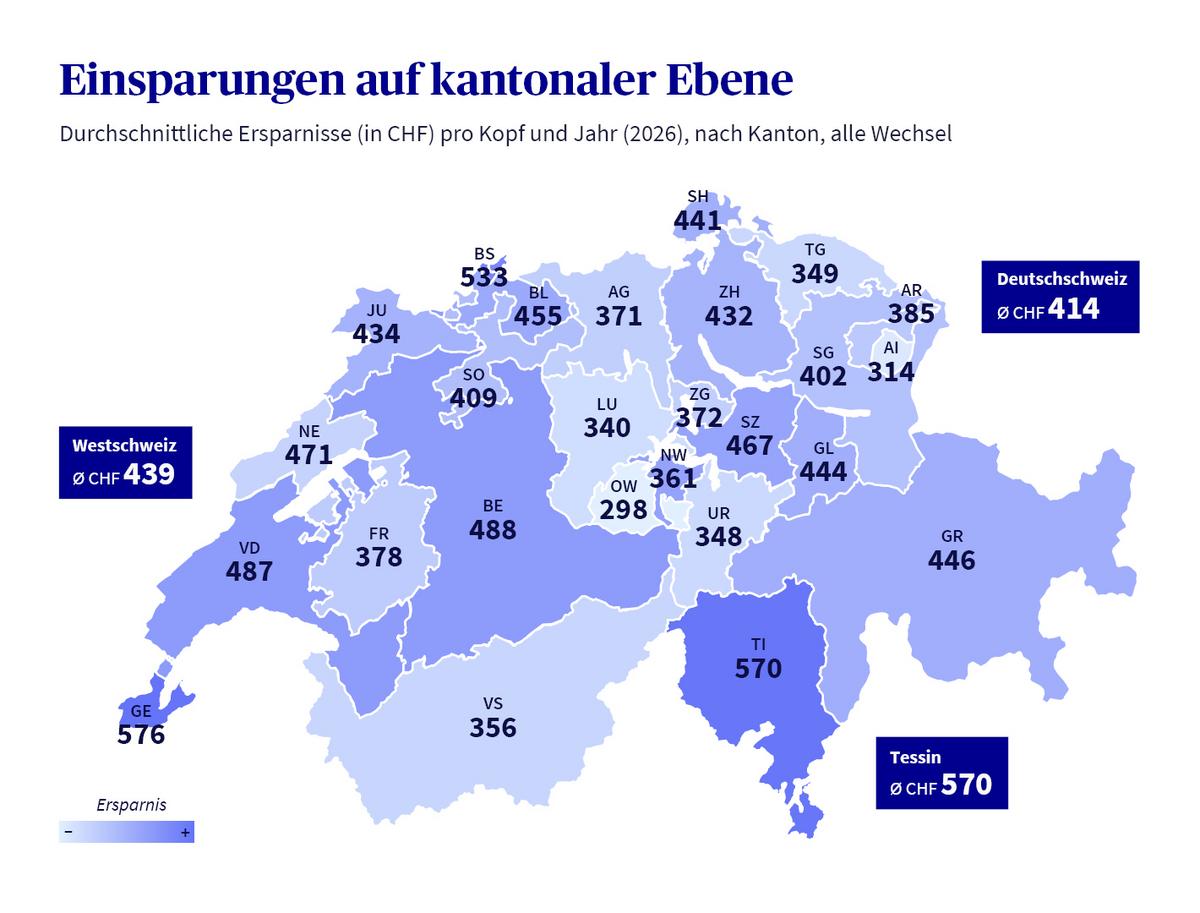
Average savings per capita and year by canton. Source: AXA

Geneva, Ticino and Basel-Stadt in the lead

Across all age groups, people who have changed their basic insurance in the canton of Geneva save the most (CHF 576), followed by Ticino with CHF 570 and Basel-Stadt with CHF 533. The least savings can be made on 2026 premiums in the cantons of Obwalden (CHF 298), Appenzell Innerrhoden (CHF 314) and Lucerne (CHF 340).

«This is probably also due to the fact that the premium level in these cantons is generally lower than in cantons with high savings potential,» explains Alexandra Gmür.

Switching is also worthwhile in Zug

The canton of Zug has reduced health insurance premiums for its population by 15 percent in 2026. The average monthly premium is therefore still around CHF 260. But even at such a low level, basic insurance premiums can still be optimized: Young men between the ages of 19 and 25 can save CHF 561 per person per year. For women aged between 41 and 45, the figure is CHF 486.

Save thousands in the long term

The AXA switching report also shows that the savings from a first switch are higher than those from subsequent switches. On average, around 75 percent of the initial savings can still be achieved with a second switch. And even with a third switch, the average is still around 70 percent.

On average, switchers have saved CHF 1,013 over the last three years. Adults were even able to save 1,136 francs and a family of four was able to reduce their household budget by 3,232 francs in the long term.

Telmed and the family doctor model are popular

The trend in insurance models continues: the 2,500 and 300 franchises are the most popular. Telmed and Hausarzt are the most frequently chosen insurance models. AXA Switzerland only offers supplementary insurance and no basic insurance. The AXA basic insurance calculator can be used to make a neutral comparison of all basic insurance providers.

For the fourth time, AXA is providing data on the actual switching behavior of people living in Switzerland with regard to mandatory basic insurance in its switching report. The report is based on over 54,000 basic insurance changes that were made in fall 2025 via the AXA switching service and resulted in premium savings in 2026.

Double You: New agency for sponsoring and brand partnerships in Switzerland

Alexander Weislein founds Double You, an innovative agency for sponsorship and brand partnerships in Switzerland. The new agency is active in all language regions and focuses on strategic partnerships instead of logo placement. Double You already manages a portfolio of established events such as the Polaris Festival Verbier and Zurich Fashion Week.

Entertainment, Performance, Event
Source: zvg

With the founding of Double You, an innovative player has entered the Swiss sponsorship and marketing landscape that consistently focuses on genuine partnerships. Double You specializes in sponsorship, brand partnerships and brand activation, is mandated by events and event platforms and always focuses strategically on sponsorship. As the only agency of its kind, Double You is active in all language regions of Switzerland and supports event organizers in acquiring the right brand partners and building relevant long-term partnerships with measurable added value for all parties involved.

Strategic approach instead of logo placement

The industry is faced with the challenge of reaching target groups authentically and creating economically sustainable models at the same time. Under the leadership of industry expert Alexander Weislein, who has held leading positions in sponsorship, brand activation and event management for over 30 years, Double You pursues a clear approach: connecting brands with the right events for them and developing sponsorship engagements in such a way that they have an emotional impact and are remembered for a long time.

People, Entertainment, Event
Source: zvg

Double You develops sponsorship strategies, structures partnership models and identifies suitable platforms. Based on this, effective activations are created, the operational implementation of which is deliberately carried out as a second step and always serves the sponsorship strategy. In selected cases, Double You also takes on the overarching management of activation campaigns across several events. «For us, sponsorship is not a logo placement, but a strategic instrument,» says founder Alexander Weislein. «Our aim is to create a sustainable impact for brands, organizers and audiences.»

Strong portfolio built up

In a very short space of time, Double You has built up a portfolio that includes some of the hottest and fastest-growing event platforms in Switzerland - in German-speaking Switzerland, French-speaking Switzerland and Ticino. These include the Polaris Festival in Verbier, the Verve Festival Andermatt, Zurich Fashion Week, the Zurich Jazz Festival (from 2027) and the Nevermind Festival in Bellinzona. Double You also manages curated pop-up and experience formats such as Lobby 6 and Palm 3, which offer brands flexible and urban sponsorship and activation platforms.

Red, Trousers, Shoe
Source: zvg

In the coming weeks, the agency will also be launching its own digital tools, which will offer event organizers, partners and sponsors additional, measurable added value and make sponsoring partnerships even more transparent, efficient and effective. Initial insights can be found at www.festivaltwins.ch.

Double You, managed by Alexander Weislein with offices in Zurich, Lausanne and Rotkreuz, combines strategic sponsorship expertise with operational implementation skills. As an agency mandated by events and focused on sponsorship, Double You is present in all Swiss language regions. Further information can be found at www.2w2.ch.

Promokant refocuses with premium staffing agency Kyo

Promokant has outsourced its entire personnel administration to the boutique staffing agency Kyo. The aim is a clear focus on strategy, conception and excellent live and field marketing implementation. Kyo is taking over the entire pool of promoters, sales consultants and hostesses with immediate effect.

White, Font
Source: zvg

Good live and field marketing is decided where brands meet people. In direct contact. Promokant has been developing personalized brand activations at precisely these crucial touchpoints for 20 years. But expectations have changed, for brands and brand managers as well as for promoters. Today, it's all about clear responsibilities, professional support, flexible deployment models and genuine appreciation.

Clear focus on core competencies

Promokant draws a clear conclusion from this: an agency cannot do everything equally well at the same time. This is why Promokant will focus entirely on strategy, conception, project management and excellent implementation of live and field marketing activations in future.

Kyo is taking over the entire pool of promoters, sales consultants and hostesses with immediate effect and will continue to develop it independently. As a specialized agency for recruitment, support and deployment quality, Kyo is positioning itself as the first port of call for promotion, event and trade fair personnel. Kyo works for Promokant as well as directly for brands, event organizers and agencies that require professionally managed, high-quality personnel. All necessary licenses are available, the processes are fully compliant, transparent and can be audited at any time.

Modern technology in personnel management

This model is complemented by modern technology in personnel management. The KyoX Board, developed in-house, provides real-time transparency on deployments, personnel and relevant key figures, thereby creating a new quality of controllability and reliability.

With this further development, Promokant and Kyo are making themselves fit for the next generation of brand managers and project managers on the client side as well as for current and future brand ambassadors of their brands. The new Promokant and Kyo websites went live on January 1.

Bechtle Switzerland recognized by HPE as «Hybrid Cloud Solution Partner 2025»

Hewlett Packard Enterprise (HPE) has recognized Bechtle Switzerland as a «Hybrid Cloud Solution Partner 2025». The award recognizes the successful implementation of hybrid cloud projects in the Swiss market. Bechtle is currently the only HPE partner in Switzerland with the highest partner status in all three strategic core areas of Compute, Hybrid Cloud and Networking.

Trousers, Jeans, Smile (1 Person)
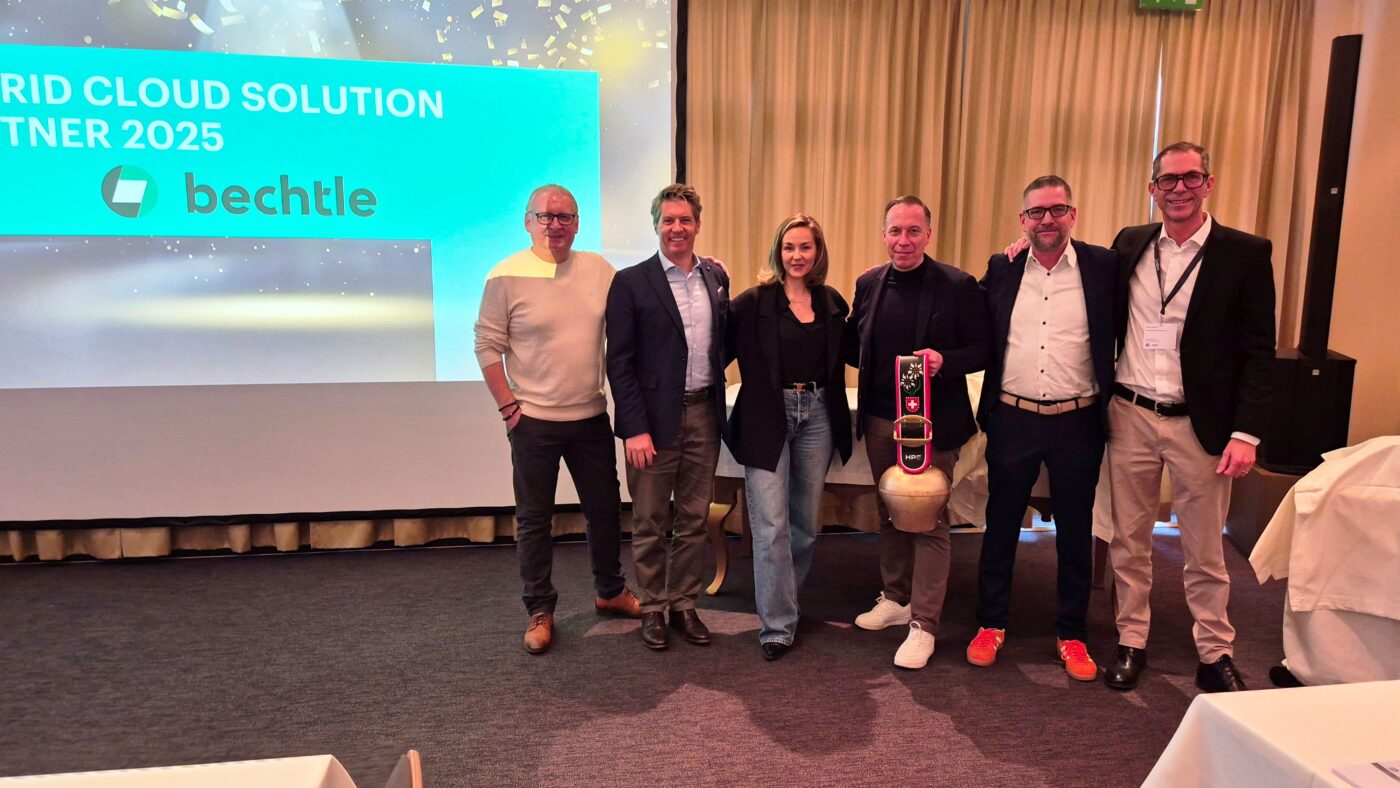
Picture from left: Adrian Mebold (Country Lead Hybrid Cloud Solutions, HPE), Pierre Bolle (Sales Manager Large Enterprises, Bechtle Switzerland), Cynthias Locht (Partner Business Manager, HPE), Andreas Weidner (Service Manager, Bechtle Switzerland), Serge Bourgnon (Channel Manager, HPE), René Zierler (Country Manager, HPE). Source: zvg

Bechtle Switzerland has been recognized by Hewlett Packard Enterprise (HPE) as a «Hybrid Cloud Solution Partner 2025». HPE presented the award at the HPE Partner Executive Kick-off in Lenk (BE) for the business success achieved and the successfully implemented hybrid cloud projects in the Swiss market.

Hybrid cloud architectures are becoming increasingly important for companies and public institutions. Bechtle is active in numerous hybrid cloud projects in Switzerland that are based on HPE solutions and technologies.

Martin Kull, Vice President of Bechtle Switzerland, explains the award: «Many organizations are currently faced with the task of combining existing IT infrastructures with cloud models. The award underlines our many years of experience in the practical implementation of hybrid IT environments.»

Unique position in the Swiss HPE partner ecosystem

The award also underlines Bechtle's special position within the Swiss HPE partner network: Bechtle is currently the only HPE partner in Switzerland to have the highest partner status in all three strategic core areas - Compute, Hybrid Cloud and Networking.

Smile, Chin, Happiness (1 person)
Martin Kull, Vice President Bechtle Switzerland. Source: zvg

«The fact that we hold the highest partner status in all three areas is the result of consistent investment in expertise, certifications and long-term partnerships,» adds Martin Kull. «This creates security for our customers - today and with a view to future requirements.»

HPE also emphasizes the importance of the collaboration. Serge Bourgnon, Country Sales Manager Channel HPE Switzerland, says: «Bechtle is a central and reliable partner for HPE in the Swiss market. The team is characterized by a high level of technological expertise, innovative strength and a strong customer focus. With the Hybrid Cloud Solution Partner 2025 award, we are recognizing Bechtle's great commitment and the successes we have achieved together in the hybrid cloud sector.»

The award is based, among other things, on the business success achieved in the hybrid cloud sector and the successful implementation of complex customer projects based on HPE technologies in the past financial year.

Joint focus on future topics

HPE and Bechtle have been working closely together for many years to support companies in Switzerland with their digital transformation. The focus is particularly on hybrid cloud, artificial intelligence, modern compute platforms, network infrastructures and sustainable IT solutions.

Bechtle Switzerland combines Bechtle Switzerland, Bechtle direct and Bechtle Suisse and is a leading IT service provider in Switzerland and the partner of choice for SMEs, large companies and the public sector for consulting, IT infrastructure, cloud solutions, IT services and software. Its offering covers the entire IT lifecycle, from consulting to implementation and operation. Customers benefit from the highest partner certifications with most well-known manufacturers. The Bechtle companies in Switzerland are members of the Bechtle Group. The Group is one of the leading IT service providers in Europe and combines personal support, digital services and global collaboration at over 120 locations in 14 European countries.

Source: Bechtle Switzerland

HSO survey: AI expertise is becoming a career factor

A survey of over 600 students conducted by the HSO business school shows that artificial intelligence has arrived in everyday working life. Those who master AI will gain a decisive advantage. 78 percent are convinced that AI has already changed professional requirements and that targeted further training is essential for long-term competitiveness.

Those who are good with AI increase their job opportunities. (Image: zVg / HSO)

Artificial intelligence is increasingly determining professional success. For students, this is no longer a distant vision, but a living reality. A survey by the HSO business school of over 600 active students shows that Those who master AI gain a decisive advantage - those who ignore it fall behind.

AI has long been part of everyday life

AI tools are a daily companion for the majority of students. ChatGPT leads the way (580 mentions), followed by DeepL Write, Microsoft Copilot and Google Gemini. AI is used wherever efficiency, quality and speed count: for research and information searches (441 mentions), in professional communication (445), for learning and exam preparation (415) and for brainstorming (391).

«For our students, AI has long been part of their everyday working life. It's a tool that makes work more efficient, structured and faster,» says Michael Segrada, Head of HSO. «AI doesn't replace specialist knowledge, but it increasingly determines how productive and connected someone is in their day-to-day work.»

Further training becomes an obligation for your career

78% of students are convinced that AI has already changed professional requirements. Targeted further training is essential for long-term competitiveness. This also increases the demand on educational institutions to teach AI skills in a systematic, practical and responsible manner.

«AI skills are not an optional extra, but a key prerequisite for sustainable professional connectivity,» says Thomas Grosser, Head of Study Management.

Great expectations - but no blind trust

Almost all respondents expect AI to fundamentally change learning and work over the next five years. At the same time, the survey shows a reflected picture: AI-generated content is met with moderate to high, but not blind, trust by the majority. Critical thinking remains central for students.

Biggest fear: disinformation, not technology

The students' biggest concerns are not about AI as a technology, but about its social consequences. In first place is misinformation, followed by targeted manipulation through deepfakes. The potential loss of jobs is mentioned much less frequently, but is still relevant.

«The results show a remarkable maturity in dealing with AI,» says Michael Segrada. «The students see the enormous potential - but expect clear rules, transparency and responsibility. This is precisely where we see our role as an educational institution.»

The HSO Business and IT School is one of the leading private educational institutions in Switzerland. With over 42 courses at 10 locations in German-speaking Switzerland and an online campus, it educates around 5,000 students every year. HSO also qualifies the highest number of business administration graduates in Switzerland.

Source: HSO

IT trends 2026: Sovereignty, cloud-native and AI industrialization

Nutanix Director Beat Müller ventures a look at the coming months and assesses the most important IT trends for 2026. The focus is on digital sovereignty, cloud-native operating models and the industrialization of artificial intelligence. These three developments are mutually reinforcing and require a clear strategic sequence from IT managers.

Beat Müller, Director Systems Engineering, Switzerland & Austria, Nutanix
Beat Müller, Director Systems Engineering, Switzerland & Austria, Nutanix. Source: zvg

The year 2026 will bring a series of profound changes and challenges for IT managers that will reinforce each other. Companies must simultaneously secure their digital sovereignty, operate modern applications cloud-natively, make artificial intelligence fit for company-wide use, i.e. drive forward AI industrialization, and master an increasingly distributed IT landscape. These developments result in a plan with a clear sequence for 2026: first, sovereign infrastructures are needed, then cloud-native platforms that create the basis for scalable AI use, and finally, IT managers need to create seamless hybrid multicloud environments that can be managed centrally.

Sovereign cloud infrastructures are gaining in importance

In 2026, the global demand for sovereign and private cloud infrastructures will increase significantly. Geopolitical developments, stricter data protection requirements and the desire for digital independence mean that countries and organizations are looking for complete cloud stacks that can be implemented, operated and used independently of hyperscalers and service providers based outside their own jurisdiction. To this end, companies are increasingly relying on local service providers in addition to their own data centers in order to keep sensitive data in the country and minimize regulatory risks. In Switzerland in particular, this approach has grown strongly in recent years because it addresses the need for sovereignty and control particularly well. The sovereign cloud thus forms the necessary basis for processing and operating critical data and workloads securely and efficiently.

Cloud-native as a connecting foundation

On this basis, cloud-native is becoming the leading operating model for modern IT environments. Containers, microservices and Kubernetes continue to gain in importance, as applications need to be operated in an increasingly scalable, portable and flexible manner - in your own data center, at the edge and with cloud providers. Forecasts show that many companies will be using containerized applications by 2029, while the majority are already operating Kubernetes across multiple clouds or edge locations. Cloud-native architectures will thus become the connecting foundation for automation, speed and scalability and form the technical prerequisite for the next big trend: company-wide artificial intelligence.

AI industrialization begins

We are at the beginning of the industrialization of AI. Companies are moving beyond individual pilot projects and developing systematic, scalable «AI factories» in which data, computing power, models, security and governance are brought together in integrated platforms. The decisive factor here is that AI workloads can only be scaled efficiently and economically if they run on cloud-native platforms and if the underlying infrastructure is sovereign as soon as confidential or regulated data is involved.

Hybrid multicloud as an unavoidable reality

This combination ultimately results in the hybrid multicloud as an unavoidable reality, both as a prerequisite and a necessity for companies to be able to support the aforementioned trends in a future-proof manner. Data and applications are distributed across edge locations, in-house data centers, national cloud providers and hyperscalers. Hybrid multicloud thus becomes a logical consequence and an operational reality that brings everything together and enables companies to master sovereignty, cloud-native technologies and AI scaling in equal measure.

As a provider in the hybrid multicloud sector, Nutanix offers companies a standardized software platform for operating applications and AI across environments and managing data. Nutanix supports its customers in precisely this area of conflict: with solutions that enable both local and cloud-based scenarios and thus ensure secure, flexible and confident handling of data.

Source: Nutanix

Cybersecurity in the skilled trades: one in three companies sees deficits

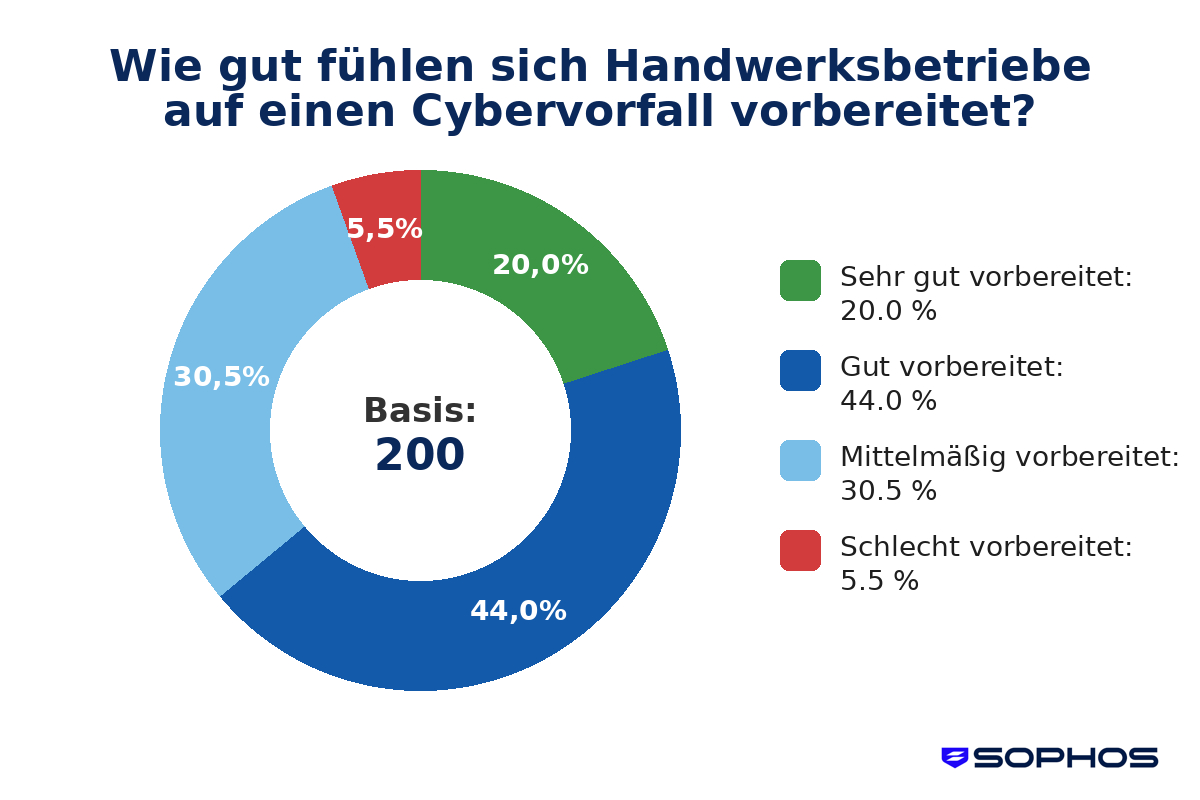
A recent Sophos survey of 200 trade businesses shows: While 64 percent feel well prepared for cyber incidents, 36 percent still see a need to catch up. The clothing, textile and leather trades are particularly affected, with almost 29% of businesses rating their preparation as poor.

Infographic on preparing craft businesses for cyber incidents
The Sophos survey shows how differently trade businesses rate their cyber resilience. Source: Sophos

Today, digital systems, networked applications and mobile working methods characterize the processes in workshops, on construction sites and in the administration of craft businesses. As part of a survey of craft and craft-related businesses, Sophos investigated the question of how cyber security is organized and how businesses assess their own preparation.

Cybersecurity is anchored in the organization

Cybersecurity is clearly assigned in most of the surveyed skilled trades and skilled trades-related companies. 67% of companies operate cyber security in-house and with additional support from external service providers. A further 19.5 percent rely exclusively on internal resources, while 12.5 percent have outsourced the issue entirely to external providers. Only 1 percent of companies state that there is no clear responsibility.

The organizational structures are largely comparable across the trades and company sizes surveyed. One exception is the clothing, textile and leather trade, where 42.9% of companies completely outsource cyber security to external service providers.

Safeguarding digitally supported processes

Digital networking is an integral part of daily work in many trade businesses - for example through machine control systems, digitally connected tools or mobile devices on construction sites. 58% of the companies surveyed state that they have established clear security guidelines, regular updates and access controls for networked systems. 29 percent secure individual devices or applications, but not consistently. 10.5 percent rely on the security concepts of manufacturers or providers to secure networked systems.

Different assessment of own preparation

When it comes to assessing their own preparation for a cyberattack, a differentiated picture emerges. 20% of the companies surveyed rate their preparation as very good and expect to be able to resume operations immediately. A further 44% stated that they were well prepared and would be able to resume operations after a short time.

In contrast, 30.5% state that they would only be able to work to a limited extent in the event of a cyberattack. A further 5.5 percent feel poorly prepared and expect longer downtimes. Individual companies confirm that they are not prepared at all or are unable to assess their situation with certainty.

Once again, the clothing, textile and leather trades stand out: 28.6 percent of the companies surveyed said they were poorly prepared in the event of a cyberattack.

Conclusion: Clear structures, but varying degrees of readiness

«Cybersecurity is now firmly anchored in operational processes in the skilled trades - often in clearly defined organizational structures. Transparency about processes, responsibilities and their own level of preparation plays a key role here. However, the assessment of cyber resilience in the skilled trades sector is significantly below the level of larger companies,» says Michael Veit, security expert at Sophos.

«For the attackers, however, it makes little difference who is being attacked. Even smaller companies have valuable data and information that cyber criminals can misuse for their own purposes. It is therefore important that effective cyber security, if necessary with external expertise, takes place at a very high level.»

Four recommendations for craft businesses

Define clear responsibilities: Responsibilities and processes should also be clearly defined when working with external service providers. Systematically consider digital systems: IT systems, applications and networked processes should be regularly reviewed and included in security measures. Regularly review resilience and preparation: A regular review of your own ability to restart after cyber incidents supports the assessment of the actual situation. Continuously develop cyber security: Technical and organizational protective measures should be reviewed and adapted on an ongoing basis.

The evaluation is based on a quantitative survey of 200 companies conducted by Techconsult on behalf of Sophos in December 2025 and January 2026. Companies from the following sectors were surveyed: Construction and finishing trades, electrical and metal trades, wood and plastics processing, food trades, clothing, textile and leather trades, health, personal care and cleaning trades, arts and crafts as well as industries related to crafts, technical services and other craft-related businesses. The survey included companies with more than 20, 50, 100 and 250 employees.

get_footer();