Effie Awards Switzerland 2026 launch with new co-presidency
The Effie Awards Switzerland are entering the next round and will once again set the benchmark for effective marketing communication in 2026. From March 9, entries can be submitted for work implemented between January 2024 and December 2025. For the first time, the jury will be co-chaired by Lara Jelinski from Dentsu and Daniel Fischer from Swiss Re.
Editorial - February 2, 2026
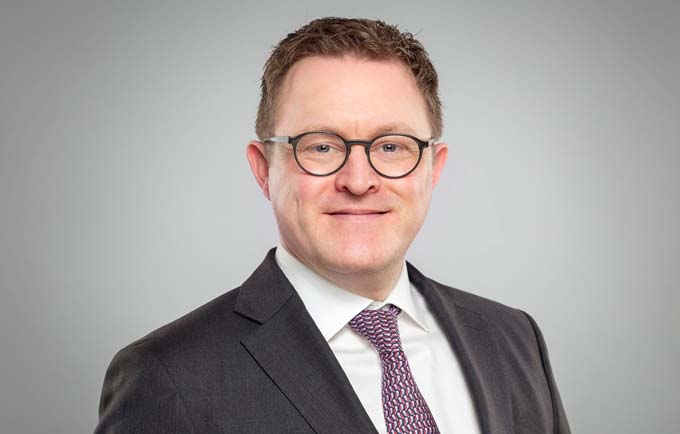
Lara Jelinski and Daniel Fischer are the new Co-Presidents of the Effie Awards Switzerland 2026. source: zvg
The Effie Awards Switzerland are returning in 2026 and will once again recognize outstanding communication solutions. The prestigious award is regarded by clients and agencies alike as a respected proof of achievement for effective marketing communication. Entries will be accepted from March 9.
Eligibility and criteria
All marketing measures implemented in Switzerland between January 1, 2024 and December 31, 2025 are eligible to participate. Work that has demonstrably achieved or exceeded its set goals can be submitted. The decisive factor is measurable results - not sender or budget size. Entries are open to agencies, companies and individuals. Entries can be submitted from March 9 at effie.ch possible.
New category structure
The Effie Awards place a strong focus on Effective Marketing, i.e. marketing with a demonstrable impact on business or organizational performance. To reflect this focus, entries are now divided into two overarching category groups: Industry Categories (marketing impact on business performance) and Specialty Categories (marketing impact in specific contexts). Further information can be found at effie.ch.
Co-Presidency for the first time
For the first time, two personalities are chairing the jury together: Lara Jelinski, Chief Growth Officer Central Europe & CEO Media Switzerland at Dentsu, and Daniel Fischer, Positioning & Planning Lead at Swiss Re. The co-chairmanship solution stands for a new, collaborative jury approach that combines professional diversity, strategic depth and a holistic view of the submissions.
Award show in November
On November 19, 2026, the Effie winners will be announced and celebrated on a big stage as part of the newly designed Effie Award Show.
The Effie Awards Switzerland have been presented in Switzerland every two years by Leading Swiss Agencies since 1985. They are regarded as the national Oscars of the industry and recognize the most effective and pioneering marketing communication.
The most important dates
March 9: Call for entries, May 22: Final deadline for submissions, July 2: Jury Round 1, September 3: Jury Round 2, November 19: Effie Award Night.
Alexander Kohler becomes Suva's new Chief Financial Officer
The Suva Council Committee has elected Alexander Kohler as the new Head of the Department of Finance and IT and as a member of the Executive Board. The internal financial expert prevailed in a public recruitment process and will take over from Hubert Niggli on July 1, 2026.
Editorial - February 2, 2026
Alexander Kohler, Suva's new head of finance. (Image: zVg)
At its last meeting, the Suva Council Committee elected Alexander Kohler to succeed Hubert Niggli. Kohler will head the Department of Finance and Information Technology and serve as a member of Suva's Executive Board. The internal candidate prevailed in a public recruitment process.
With the appointment of Alexander Kohler, Suva is focusing on continuity. The financial expert already works for the company and has extensive knowledge of internal structures and processes. He will take up his new role on July 1, 2026.
The decision to appoint an internal candidate underlines Suva's confidence in its own managers. In his new role, Kohler will be responsible for both finance and IT at the company.
Fairbruary: Fairtrade Max Havelaar launches annual campaign for conscious consumption
With the nationwide «Fairbruary» campaign, Fairtrade Max Havelaar is activating consumers for more conscious and fair consumption for the fifth time in February. The campaign is based on a multi-channel approach with digital content, gamification and collaborations with content creators as well as a national poster campaign.
Editorial - January 30, 2026
Source: zvg
With the nationwide «Fairbruary» campaign, Fairtrade Max Havelaar is activating Swiss consumers for more conscious and fair consumption for the fifth time in February - in a playful way, suitable for everyday use and with plenty of inspiration.
Fairbruary makes visible what has long been apparent on the market: Fairtrade is no longer a niche topic. Over 3,800 Fairtrade-certified products are now available in Switzerland - across all price categories and consumption occasions. From fresh food to sweets and coffee to high-protein snacks, fair consumption has become part of a modern lifestyle. This is precisely where the campaign comes in and translates values into concrete purchasing impulses.
Content, gamification and multichannel approach
The campaign hub is the central touchpoint www.fairbruary.ch with recipe ideas, quiz formats and interactive elements that invite you to engage with your favorite fair products. The offering is supplemented by trend-oriented social media content and collaborations with content creators such as @ART4N, @aninamutter and @sandro_zinggeler. The focus is on entertainment, identification and low-threshold knowledge transfer.
Source: zvg
In addition to digital channels, Fairbruary is also present in public spaces: a national poster campaign is attracting widespread attention. Together with retail partners such as Coop, Lidl, the French-speaking Swiss coffee brand La Semeuse and Munz-Prügeli manufacturer Maestrani, Fairtrade Max Havelaar is creating a targeted product and brand presence. The campaign is now increasingly relying on multi-brand posters, which also offer visibility to smaller brands. «We are delighted that by incorporating this measure, we are also involving popular smaller brands such as Pakka, Ekô Kaffee, Stella Bernrain and Blasercafé and thus actively communicating their commitment to fair trade,» says Mike Coray, Marketing & Communications Manager at Fairtrade Max Havelaar.
Fairtrade in Switzerland: A strong context
This year's Fairbruary has a particularly strong context: in 2024, more than one billion Swiss francs were spent on Fairtrade products in Switzerland for the first time. Switzerland also has the highest per capita consumption of Fairtrade products in the world. The campaign builds on this high level of awareness and extends it into a concrete, activating consumer movement.
Fairtrade Max Havelaar, founded in 1992, is a non-profit foundation based in Zurich. It awards the Fairtrade label in Switzerland to products from Africa, Asia and Latin America that are produced and traded fairly according to comprehensive social and ecological criteria. Their sale enables small farmers and workers to achieve higher incomes and better working conditions.
Dry January: 12,000 alcohol-free days - employees want a repeat performance
The first Dry January Workplace Challenge in Switzerland was a complete success: 565 employees from 31 companies gave up alcohol in January. A survey shows that 94% of participants would like to see it continue. Two thirds also believe that alcohol consumption is now discussed more openly in the workplace.
Editorial - January 30, 2026
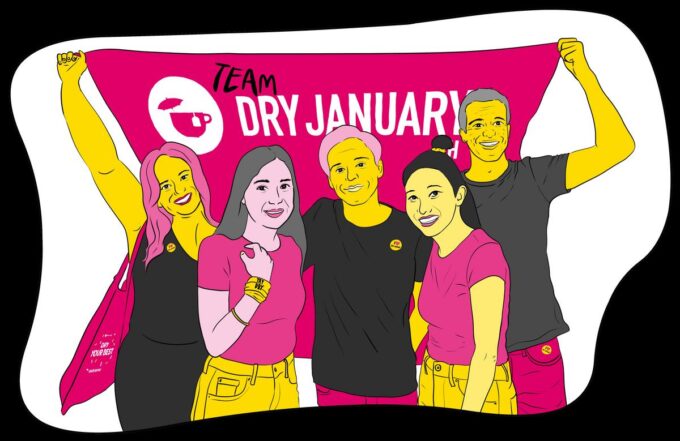
Tea instead of after-work beer: the Dry January Workplace Challenge was a complete success. (Image: zVg)
31 companies took part in the first Dry January 2026 Workplace Challenge, whose 565 employees did not drink alcohol on a total of 11,759 days. The initiative enabled companies to question drinking norms in the workplace and improve the health of their employees. The playful dimension of the team competition also strengthened cohesion among the participants.
Overwhelming approval for continuation
According to an anonymous survey, an overwhelming majority of 94% of employees would like to see the Workplace Challenge continue next January. Even among individual participants who did not take part in the Workplace Challenge, curiosity is high: two thirds (69%) would like their company to carry out this challenge in the future.
«I think the campaign is very successful. It's motivating when several people in the company take part and you're not alone. This makes the challenge even bigger and you can show yourself and others that you can do it,» says one participant in the Workplace Challenge.
More open communication about alcohol consumption
Two thirds of respondents (65%) found that the taboo of talking about alcohol consumption in the workplace had been broken down. This means direct added value for the participating companies.
«Although only a few people from our company took part, the topic of alcohol - when, why and where automated/ritualized - was discussed several times during breaks, at drinks receptions, etc. and beyond the participants. This means that I have already achieved one of my goals,» explains one of the Workplace Challenge organizers.
Friends and relatives react positively to a break from alcohol (96%). Temporarily not drinking alcohol is popular in the middle of society. The idea that alcohol is the only drug that you have to apologize for not taking does not apply to Dry January.
Better sleep and more energy
More than four out of five participants (83 percent) sleep noticeably better thanks to Dry January, as the survey revealed. This confirms the medical opinion that alcohol helps you fall asleep quickly, but also reduces the quality of your sleep. This is because alcohol suppresses the REM sleep phases. So anyone who regularly sleeps badly can try a dry period - one month or even better three. After three months, the body should have regenerated. In addition, four out of five people who take a break from alcohol (80 percent) feel more energetic.
«I noticed more consciously when I was very tense inside and would normally reach for a beer or glass of wine. Instead, I drank tea or went for a walk. That felt good,» reports one of the Workplace Challenge participants.
Extension and less consumption
Four out of five Dry January participants (82%) want to extend Dry January for the time being. Almost all participants (97%) want to reduce their alcohol consumption in the future.
«It's not easy to give up alcohol on certain occasions. These are business events (drinks receptions) or a beer after training with my team-mates. I have to say that I haven't always succeeded. But I've consciously decided against it several times,» says one participant in the Workplace Challenge.
Dry Pub Crawl in Basel sold out
This year, the third Dry Pub Crawl - after Bern and Aarau - took place in Basel. Tickets sold out quickly. On this alcohol-free pub crawl, people got to know each other and people got to know Basel bars. The guests proved that it is not alcohol that creates sociability and fun.
The bars and restaurants showcased their non-alcoholic offerings. Nomad's in Basel offered a menu with 68 non-alcoholic drinks, including 13 non-alcoholic cocktails and four non-alcoholic beers as well as 51 soft drinks, lemonades, iced teas, juices, water, coffee and tea. Nobody had to go thirsty and plenty of food was also provided.
Clean Party in Lausanne
Lausanne celebrated its first Clean Party at the D! Club. The Alwarda label organized the city's first rave party without alcohol and other drugs. The event combined music and awareness with yoga sessions and breathing exercises. The result was a unique dance experience and positive vibes. Dry January supported the Clean Party and was represented at the event with a prevention stand.
Online retailer Brack.Alltron returns to growth
The Swiss online retailer Brack.Alltron increased sales by 1.9% to CHF 1.16 billion in 2025. After a declining year in 2023 and stabilization in 2024, the new strategy under CEO Stefan Fraude is beginning to bear fruit. Operating EBITDA increased by around 20 percent.
Editorial - January 29, 2026
[caption id="" align="alignnone" width="1300"] Brack.Alltron significantly increased sales and EBITDA in 2025. (Source: zvg / Brack.Alltron)[/caption]
Brack.Alltron, the largest independent Swiss online retailer, recorded sales of CHF 1.16 billion in 2025. This corresponds to an increase of 1.9% compared to the previous year. After sales declined for the first time in the company's history in 2023, sales stabilized in 2024 under the new management and have now resumed their growth trajectory in 2025.
«The new strategy for the future, which was accompanied by a structural reorganization, bore its first fruits last year. We were able to confirm the upward trend in sales development,» says Dr. Stefan Fraude, Chief Executive Officer of Brack.Alltron. The company is in the middle of a major transformation process. Fraude is pleased that all relevant figures have developed positively after just one year. «But we are still at the beginning of our journey to develop both Brack and Alltron into even stronger digital retail companies,» he says confidently.
Significant increase in operating profitability
This is particularly pleasing for the company: Operating EBITDA increased by around 20% compared to the previous year. This enables investments and innovations for the future. This success is remarkable given that Brack.Alltron reported declining sales in 2023 and sold Medidor and its sales in mid-2024.
The parcel volume processed at the logistics center in Willisau (LU) continued to rise in 2025 and amounted to 4.58 million. This corresponds to an increase of 1.3 percent compared to the previous year. This volume can be handled thanks to world-leading automation with the AI-based picking robots from start-up NoMagic and the more than 500 robots that transport products from the AutoStore warehouse to the picking stations fully automatically around the clock. Brack.Alltron employs 1292 people.
Ambition of a comprehensive digital department store
Fraude has a clear plan for the coming years: «We will intensively expand the product ranges in order to do greater justice to the ambition of a comprehensive digital department store with ICT and increasingly also non-ICT products. We also want to raise the customer experience on all our sales channels to a new level and inspire our customers.» On the one hand, the aim is to become one of the most attractive one-stop stores in Switzerland for private customers. On the other hand, we want to consolidate and expand our leading position in the distribution and B2B business.
Brack significantly increases brand appeal
The appeal of the Brack brand has risen by 12% since the launch of the Brack Super League - by far the strongest increase of all e-commerce brands, as determined by the YouGov Institute in November 2025. Brack's new brand identity was honored with the German Design Award as one of the best rebrandings.
The marketing of the Brack Super League also proved successful: the first-time listing of football products from the Puma, Adidas, Macron and Reusch brands led to a 230% increase in sales in this area. The new Brack app was implemented in just five months, achieved more than 20,000 downloads in the first 20 days and immediately topped the download charts in the Apple Appstore and Google Playstore.
The fact that Brack is becoming a more attractive brand for young, digital target groups was also demonstrated by the collaboration with Red Bull: the energy drink manufacturer chose Brack as the exclusive distribution channel in Switzerland for its glacier ice edition. Around 120,000 cans were sold out within 48 hours.
ICT distributor and sister company Alltron celebrated its 40th anniversary at the CONNECT trade fair and continues to expand its market position.
Swiss Staffingindex: Turnover of personnel service providers falls after economic slowdown
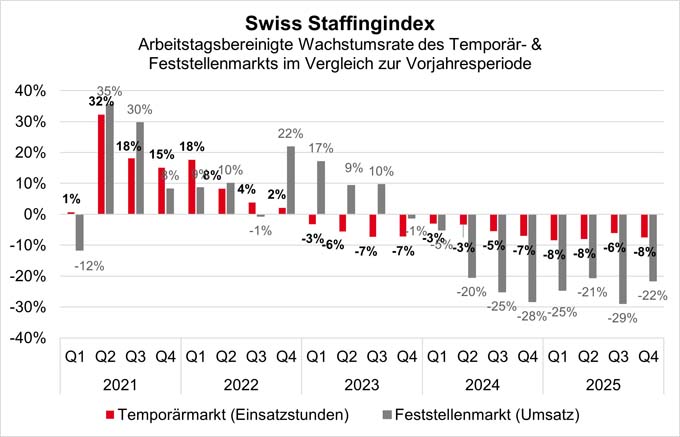
Swiss personnel service providers can look back on a difficult year in 2025. The number of hours worked by temporary staff fell by 7.1%, while the permanent placement business slumped by 23.3%. By contrast, construction and household-related services provided impetus for growth.
Editorial - January 29, 2026
Source: Swiss Staffingindex Q4/2025
Swiss personnel service providers were hit by a significant economic slowdown in 2025. The year was economically challenging for the industry: The number of hours worked by temporary staff fell by 7.1% compared to the previous year, according to the Swiss Staffingindex. This is the first time that the temporary staffing business has fallen for three years in a row. The permanent placement business fell even more sharply. After an already weak 2024, turnover in 2025 fell by 23.3% compared to the previous year.
The downturn in the global economy, the economic crisis in Germany and the high level of economic uncertainty - also caused by US tariff policy - are the reasons for this development. The US tariff policy led to a high level of uncertainty in the export industry for months. Added to this was the continuing economic weakness in Germany, one of Switzerland's most important sales markets. Due to the weak order situation, many companies were very cautious in their personnel planning, particularly in industry.
Personnel service providers as a mirror of the labor market
The temporary sector is ahead of other sectors in terms of developments on the labor market. As Seco's unemployment statistics show, unemployment has risen the most in sectors such as research and development (+146%), information technology (+96%) and the pharmaceutical industry (+91%) since December 2021.
Christian Biedermann, Managing Director at Coopers Group, states: «The demand for IT specialists for cloud solutions, cyber security and artificial intelligence remains high.» But generalists are having a hard time: «The IT labor shortage is over. Uncertainty and cost pressure are keeping companies away from permanent positions in particular.» The temporary market is more differentiated. Biedermann explains: «Companies are less reluctant to take on new projects and ongoing assignments are being continued. The combination of IT skills and industry expertise in highly regulated sectors is particularly in demand.»
The situation is similar in the pharmaceutical sector. Ramon Bodenmiller, Managing Director of Bodenmiller Recruitment, says: «In the pharmaceutical sector, specialists in the clinical area, in regulation or in quality management are still in high demand.» There is less demand for overarching functions such as marketing, finance and sales.
Growth in construction and household-related services
According to Seco, unemployment has continued to fall in several sectors since December 2021, particularly in household-related services (-17%) and construction (-12%). This trend is also reflected in the temporary sector. «The construction sector performed well last year,» says Balz M. Villiger, Country Manager of Gi Group Switzerland. «Carpenters, electricians and foremen are particularly in demand. These professions cannot be replaced by AI.»
The trend also shows the strength of Swiss apprenticeships: apprenticeships and the dual education system are proving to be a mainstay in the current labor market situation. Villiger is optimistic about the coming months: «The combination of the abolition of the imputed rental value, the recent interest rate cuts and the ongoing housing shortage will further increase demand in the construction sector.» At the same time, he warns of a key challenge: «A lack of skilled workers could become a limiting factor for many construction companies.»
By providing care for senior citizens at home, the temporary employment sector is also active in the area of household-related services. Béatrice Mast, CEO of Dovida Switzerland, observes: «Due to demographic trends, there is a high demand for care among senior citizens. Accordingly, our company has been able to grow against the market trend.» In order to meet the increasing demand, Dovida Switzerland is promoting low-threshold training opportunities for new employees. Mast explains: «Thanks to training and further education, we can also quickly integrate older jobseekers - also from the non-employed sector - into our company.»
Cautious optimism for 2026
According to KOF and Seco forecasts, the economic situation in Switzerland remains challenging. The CEOs of swissstaffing member companies expect the economy to bottom out in 2026. According to an ad hoc survey by gfs-zürich, 79% expect business to move sideways or increase over the next six months. Only 12 percent expect a decline in 2026.
Dr. Marius Osterfeld, Head of Economics and Policy at swissstaffing, recalls: «The negative market signals currently predominate. At the same time, artificial intelligence, population growth and demographics offer new market opportunities. This growth potential is underestimated.»
Rivella and Schöni Transport rely on electromobility
The Rivella Group and Schöni Transport are expanding their collaboration in the name of sustainability: four new electric trucks will transport the Rivella Group's beverages across Switzerland in future - using solar power from the roof of the logistics center in Rothrist, among other things.
Editorial - January 29, 2026
The new e-trucks in the eye-catching Rivella design transport the drinks across Switzerland in a climate-friendly way. Source: zvg
The eye-catching red and light blue canvas design makes it impossible to overlook what is on the road here in an environmentally friendly way: Rivella and Focuswater drinks, delivered by Schöni Transport. The new Renault E-Tech e-trucks, model T BEV 6×2, are another joint project by the two Rothrist-based family businesses to benefit the environment. A hydrogen truck in Rivella design, «Hydrollino», has already been driving on Swiss roads for four years.
Schöni continues to expand its e-fleet
With the four new vehicles, Schöni Transport is expanding its electric fleet to a total of 15 trucks in national use. This brings the company a step closer to its ambitious sustainability goals: «Since 2025, we have been operating our national fleet more than 90 percent fossil-free,» explains owner Daniel Schöni. By 2030, emissions in Scope 1 and 2 are also to be reduced by 30% compared to the reference year 2023. «The new Rivella e-trucks are another important step for us on this path.»
In the medium term, Schöni plans to expand its e-fleet to 30 vehicles. The electric trucks are charged at one of the company's eight charging stations - including with the company's own solar power from the roof of the logistics center in Rothrist.
Together for net zero
For the Rivella Group, the e-trucks are also a strong signal in terms of climate protection. «We believe in electromobility as a promising solution for the future. The fact that our beverages are now being delivered to our customers not only with hydrogen and bio-diesel, but now also with solar power, is very pleasing. As a company, we can only achieve net zero together,» says Maarten Lauwerijssen, Head of Technology & Innovation and in this role responsible for the Rivella Group's sustainability efforts.
The beverage manufacturer has already made great progress in its direct emissions in recent years thanks to the consistent use of hydro and solar power as well as new, energy- and water-efficient facilities. In order to achieve the net-zero target in the long term, it relies on partners who are following the same path - such as Schöni Transport with its commitment to fossil-free logistics.
The four new Renault E-Tech T BEV 6×2 electric trucks have a battery capacity of 540 kWh and a range of up to 360 kilometers. The total weight of the train is 42 tons, with an expected payload of 22,800 kilograms - the equivalent of around 36 pallets or 46,656 half-litre Rivella bottles. In October 2025, Schöni was awarded the Swiss Climate Label for the fifth time - this time with the ’Bronze’ label.
Innovation index: Zug leads, Jura makes big leap
The Lucerne University of Applied Sciences and Arts has compiled the Cantonal Innovation and Creativity Index (KIKI) for the second time, now together with the Swiss Federal Institute of Intellectual Property. Zug remains the leader in terms of business start-ups and economic growth, Basel-Stadt scores highly as a cultural metropolis and Zurich impresses as a balanced all-rounder. For the first time, major regions can also be compared with each other.
Editorial - January 29, 2026
The HSLU's latest innovation index shows which cantons in Switzerland are the most innovative. (Image: Depositphotos.com)
Switzerland regularly occupies top positions in international creativity and innovation rankings. But how do the individual cantons fare within the country? The Cantonal Innovation and Creativity Index (KIKI) provides answers to this question in a comprehensive ranking and can be found at www.kiki-icic.ch can be downloaded.
Broad-based methodology
The KIKI is based on the Global Innovation Index (GII) and consists of various indicators that are grouped into «input» and «output». Input factors are those that promote innovation and creativity, while output factors measure the impact of innovation and creativity. Data sources include the Swiss Federal Institute of Intellectual Property (IPI), the Federal Statistical Office (FSO), the Federal Finance Administration (FFA), the federal innovation agency Innosuisse and the OECD.
Zug leads the field again
As in the first edition of KIKI 2025, the cantons of Zug, Basel-Stadt and Zurich dominate the top three positions in the second edition. While Zug consolidates its top position with excellent scores for business start-ups, economic growth and supporting factors such as tax incentives, Basel-Stadt impresses with its outstanding performance as a cultural metropolis and is a pioneer in terms of diversity. Zurich, on the other hand, impresses as a balanced all-rounder with very solid values across almost all dimensions.
«The top three cantons also appear at the top of other economic rankings, which is not surprising in itself: innovative capacity is a key driver of economic success in Switzerland in particular,» says Christoph Hauser, economist at Lucerne University of Applied Sciences and Arts and author of the study.
Central Switzerland strong in technology
Bern (20th place) is on a par with the leaders in research, development and knowledge. In Northwestern Switzerland, Aargau (19th place) and Solothurn (24th place) shine alongside Basel (Basel-Stadt in 2nd place; Basel-Landschaft in 18th place) with competition-promoting, supportive factors. All of them have increased their economic growth compared to the previous year, with the exception of Basel-Stadt.
Central Switzerland presents itself as a technology region: Nidwalden (12th place) ranks first in patents, trademarks and designs, just ahead of Zug thanks to global industrial lighthouses. Lucerne (15th place) recorded significant gains in the area of environment thanks to improved tax conditions (patent box) and is among the best in terms of education and educational success. Obwalden (14th place) impresses with a high level of research intensity. Schwyz (9th place) scores highly in the areas of environment, companies and start-ups, also thanks to its excellent tax framework. Uri (26th place) proves that entrepreneurial vitality is not a question of size with its high start-up dynamism.
«Small cantons can also be successful with their own character or a niche strategy. Uri, for example, positions itself with its agility and location on the north-south axis,» says Christoph Hauser.
Jura makes a big leap
In French-speaking Switzerland, Geneva (4th place) and Vaud (6th place) impress with an innovation-friendly environment and high start-up momentum. Neuchâtel (5th place) confirms its historical strength as «Watch Valley» and is among the leaders in Switzerland for patents, brands and designs. Jura (10th place) improved significantly overall and also benefits from a high density of patents.
«Jura was able to make significant gains in three of the eight pillars. The latest data for patents, brands and designs, companies and start-ups as well as economic growth show significantly better values than a year ago,» says Christoph Hauser.
Fribourg (22nd place) and Valais (16th place) made significant progress, particularly in the areas of knowledge and education.
Graubünden scores highly for diversity
Ticino is in seventh place overall, thanks in part to its dynamic economic growth, in which the southern canton ranks second. Right behind it in eighth place, Schaffhausen impresses with a broad-based profile and strong improvements in patents, brands and designs. Thurgau (23rd place) is growing solidly and has good scores in education, while St. Gallen (17th place) also scores well as a research location and is ranked seventh in the area of knowledge.
Graubünden (13th place) was able to improve its position in the ranking and scores well in diversity and education. Glarus (25th place) made gains in knowledge and creation, while the two Appenzells found their niches: Appenzell Innerrhoden (11th place) impresses with high scores in supporting factors and patents, brands and designs, while Appenzell Ausserrhoden (21st place) shows a solid basis in education, knowledge and supporting factors.
Zurich is ahead in the major regions
Large regions were also compared for the first time this year: The Zurich region, the most populous large region in Switzerland, is in first place, followed by the Lake Geneva region, Ticino and Central Switzerland. Northwestern Switzerland is close behind, while Eastern Switzerland and Espace Mittelland are more clearly at the bottom of the list.
Christoph Hauser explains the surprisingly good performance of the southern canton: «Ticino is proving dynamic in terms of economic growth, companies and start-ups, thereby overtaking the different regions of Central Switzerland and Northwestern Switzerland.»
Overall, the KIKI paints a differentiated picture of the Swiss innovation landscape: each canton or region has different strengths and characteristics. These have a variety of causes, such as favorable geographical conditions or far-sighted political decisions in the past.
«The KIKI does more than just take stock: by breaking down the complexity of innovation and creativity, it provides the cantons with concrete starting points for their development strategies,» says Christoph Hauser. According to Hauser, if Switzerland is to remain the most innovative country in the world in the future, each canton must utilize its specific strengths and contribute to the national innovation system.
The eight pillars of KIKI
At a global level, the Global Innovation Index (GII) has been a comparable index to the KIKI for a number of years. Switzerland has been ranked first in the GII for over ten years. The KIKI is based on the GII and consists of various indicators that are grouped into «input» and «output». Input factors are those that promote innovation and creativity, while output factors measure the impact of innovation and creativity.
Both dimensions each contain two subgroups, namely knowledge and environment (input) and creation and growth (output). These in turn each contain two, i.e. a total of eight pillars: Education and educational success, research, development and knowledge, diversity, supporting factors, art and culture, patents, brands and designs, companies and start-ups, and economic growth. Each pillar takes into account between eight and 20 individual indicators, which are ultimately weighted equally within the pillar.
The KIKI study can be downloaded from the website www.kiki-icic.ch can be downloaded. The individual profiles of the cantons can also be found there.
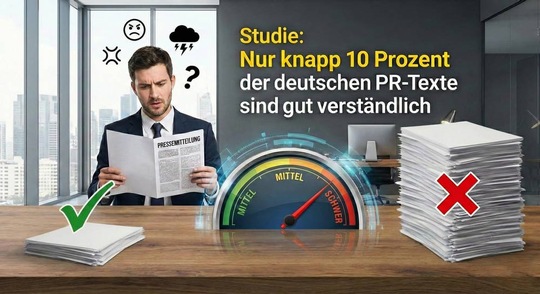
German PR texts: Only 10 percent are easy to understand
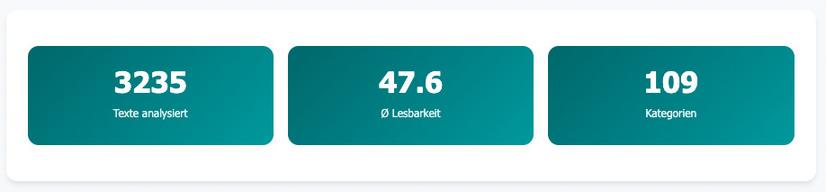
An analysis of 3,235 press releases on Presseportal.de shows: Only just under a third of German-language PR texts are good or acceptably comprehensible. Texts from the healthcare sector and other sensitive areas are particularly problematic. The study by Wortliga reveals major weaknesses in PR communication.
Editorial - January 28, 2026
Source: zvg
How clearly do German companies, authorities and organizations communicate? A study of 3,235 press releases on the largest German PR portal Presseportal.de shows major differences: texts about entertainment are easy to understand. Important sectors such as healthcare, on the other hand, often use complicated official language.
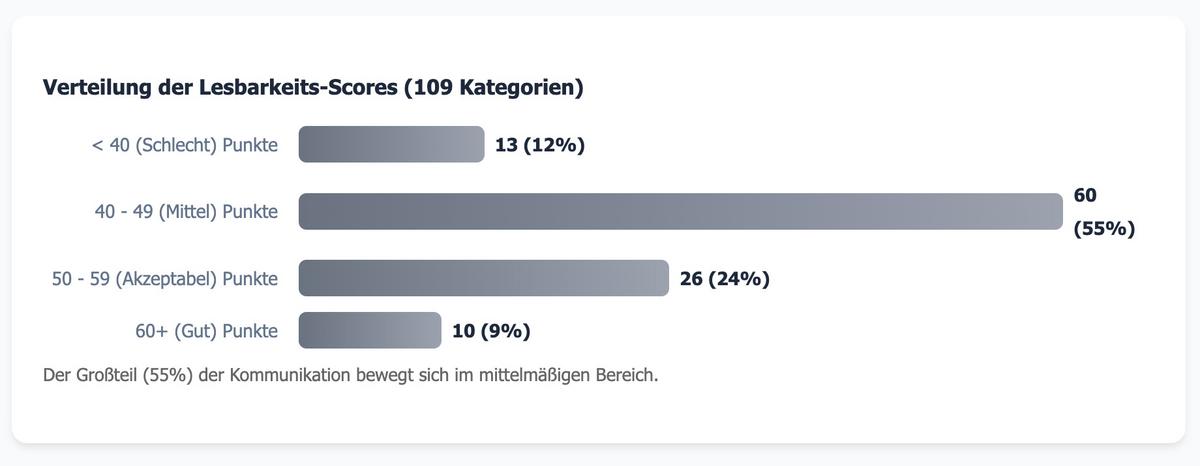
The study by the Munich-based manufacturer of text analysis tools Wortliga examined texts from 109 subject areas on Presseportal.de in November 2025. The result: only around one in three texts (33 percent) achieved a good or acceptable result in terms of readability. In contrast, 55 percent of the messages are only moderately comprehensible and almost 12 percent fall into the critical range below 40 points.
Critical topics do not get through
The difference between the topics is very large: texts on the topic of entertainment («show») are the clearest with 63.8 points. Communications from hospitals scored the worst with only 36.4 points. Authors often use cumbersome passive sentences, especially where trust is particularly important.
Source: zvg
«We are observing a huge gap,» explains Gidon Wagner, Managing Director of Wortliga. «Particularly in sensitive areas such as health, finance or crisis topics, senders hide - perhaps unintentionally - behind nested sentences and nominal style. Authors use language here as an instrument to distance themselves rather than as a bridge to the reader.»
«It's a big problem when important topics such as health or finance don't reach people with incomprehensible language,» says Wagner. «A readability score of 36.4 for hospital press releases is a sign of very poor communication. Readers and journalists need clear facts instead of long and complicated sentences.»
Complexity of topics is no excuse
The data disproves the idea that complex topics require complicated texts. Even dry topics such as «fuel prices» land in the top field in the study. However, it is striking that the more unpleasant the news (e.g. insolvencies), the longer and more bureaucratic the sentences become - to the detriment of transparency, trust and reach in editorial offices.
Source: zvg
The results at a glance
The analysis based on the word league formula (scale 0-100) shows the winners and losers in terms of communication quality:
Top 5 categories (best comprehensibility): Show (score: 63.8), Bundesliga (score: 62.7), television production (score: 62.5), fuel prices (score: 62.5), celebrities (score: 61.5)
Scentis Summit 2026: How fragrance strengthens brands
On March 18, 2026, GoodAir invites you to the third Scentis Summit on the Säntis. At an altitude of 2,502 meters, experts from business, research and practice will discuss how scent acts as a strategic success factor in brand design. The focus is on the question of how scents create orientation and make brands tangible.
Editorial - January 28, 2026
Source: Unsplash; Declan Sun.
On Wednesday, March 18, 2026, GoodAir invites you to the third Scentis Summit on the Säntis. At an altitude of 2,502 meters, the focus will be on a sense that has long been underestimated in the brand design of many industries - and is now a strategic success factor: the sense of smell. Under the guiding theme ’Scent as a booster for your brand«, experts from business, research and practice will discuss how scent creates orientation and makes brands tangible.
Emotional impact beyond consciousness
The Scentis Summit brings together decision-makers, marketing managers and brand strategists to shed light on a phenomenon that works faster than human consciousness. Fragrances are not filtered rationally. They are deeply anchored in our memory and emotions - where traditional communication is increasingly reaching its limits.
The event will focus on in-depth insights into the impact of scent in brand work. Benjamin Baumli, Head of Expos and Stores at V-ZUG, will show how scent creates orientation, directs paths and makes brands tangible. Prof. Dr. Johanna Gollnhofer from the Institute for Marketing and Customer Insight at the University of St. Gallen will scientifically classify the effect of scent and explain why it influences our decisions before we consciously make them.
From theory to practice
Richard Illi, CEO and owner of Escentina, explains how concrete brand profiles are created from this effect. He gives an insight into the composition of corporate fragrances - and shows why recognizability is not only visible, but can also be smelled. Marcel Hetzel, CEO and partner of GoodAir, makes the link to practice: scent marketing as a precisely placed stimulus that activates neuronal processes and clearly positions brands.
The event will conclude with a panel discussion with the speakers, open to questions and perspectives from the audience. The entertaining afternoon will end with a relaxed networking session, providing an opportunity to exchange ideas and make valuable contacts.
Salt Business launches Switzerland-wide corporate Internet with integrated business continuity
Salt Business is expanding its offering with Corporate Internet, a nationwide connectivity solution for Swiss companies. The portfolio includes high-performance Internet access with automatic failover to the mobile network as well as comprehensive security functions in cooperation with Fortinet. With prices up to 50 percent below comparable offers, Salt is positioning itself as a comprehensive connectivity partner.
Editorial - January 27, 2026
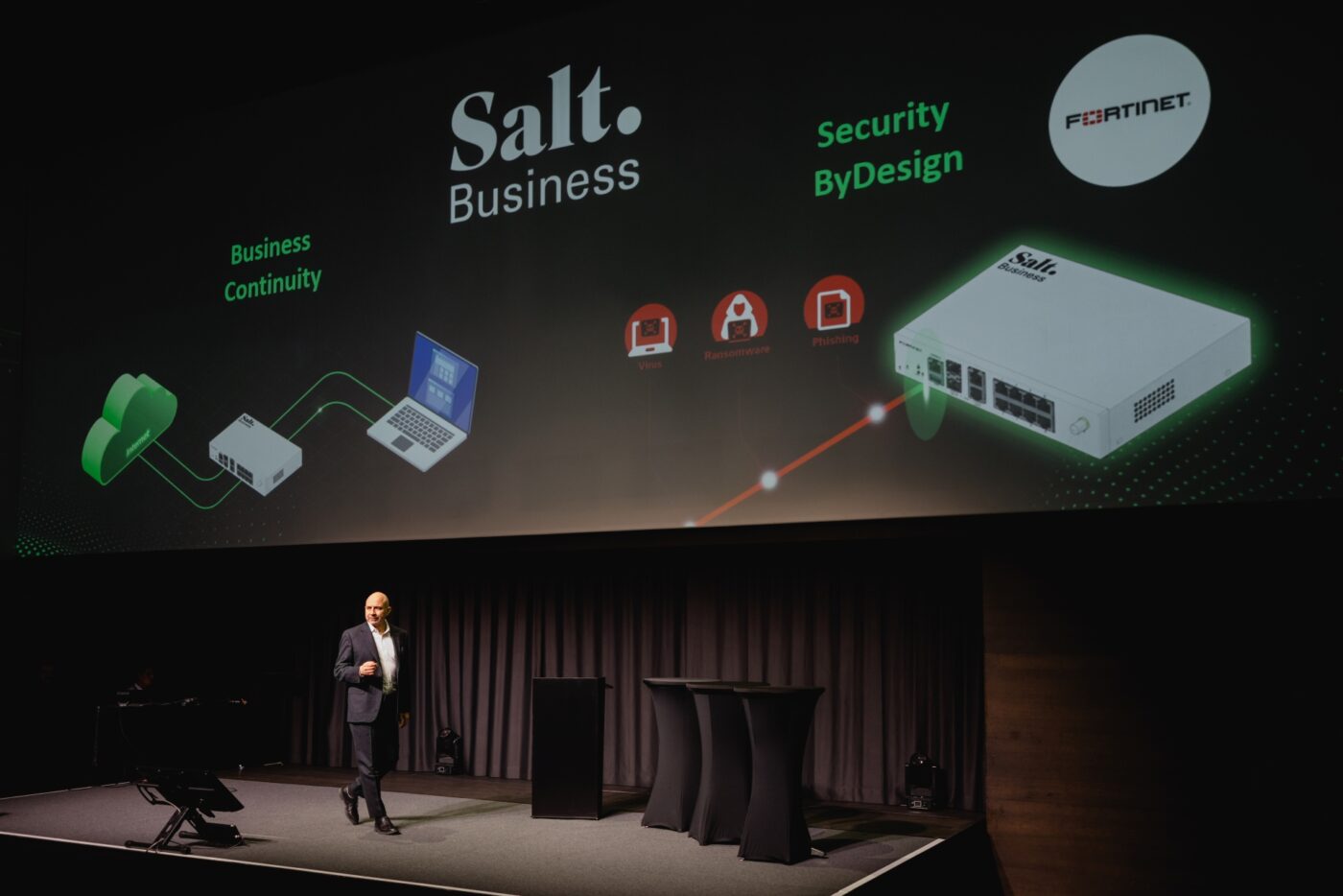
Max Nunziata, CEO of Salt, at the product launch in Aura, Zurich. (Picture: Livia Bass)
Salt Business has launched Corporate Internet, a new Switzerland-wide connectivity solution for companies. The strategic expansion of the service portfolio takes account of the growing demand for resilient and secure connectivity as a business-critical infrastructure. The service is available throughout Switzerland and is provided via fiber-based infrastructure and, where necessary, via other technologies.
Business continuity as a core element
Business continuity is at the heart of Corporate Internet. Thanks to integrated resilience and automatic failover, business continuity is ensured even if the primary connection fails. The switch to Salt's mobile network takes place immediately and with stable performance. Applications such as video conferencing, cloud services, VPN access and remote working tools remain available and ensure uninterrupted operations.
Security by design with Fortinet
Security by Design is an integral part of Corporate Internet. The solution is supported by Fortinet, a global leader in cyber security, and protects networks, data and applications against modern threats. Integrated DDoS protection helps to keep websites available even in the event of large-scale attacks, while anti-malware protection detects malicious software at an early stage and blocks it before it can spread. The security functions are centrally managed and continuously updated. Thanks to Fortinet's global presence, threat databases are rapidly updated and new viruses are quickly blocked.
Corporate Voice as a supplement
In addition to Corporate Internet, Salt Business offers Corporate Voice, a carrier-grade voice solution that is compatible with existing local PBX systems and cloud-based telephony platforms. Flexible pricing models, including pay-as-you-go as well as flat Swiss and flat international tariffs, ensure predictable cost control.
Market launch and prices
Corporate Internet is now available throughout Switzerland and is offered in three symmetrical speed levels: 1 Gbit/s from CHF 95.20 per month (excl. VAT), 10 Gbit/s from CHF 159.20 per month (excl. VAT) and an ultra-fast 40 Gbit/s option on request. With prices that are up to 50 percent below comparable offers, Corporate Internet underlines Salt's claim to offer excellent value for money. Salt Business Mobile business customers benefit from a 20 percent discount, while an early bird offer provides a 50 percent discount in the first six months. Further information is available at www.salt.ch/business.
Max Nunziata, CEO of Salt, explains at the product launch in Zurich: «Our business customers have placed their trust in us as a mobile communications provider for many years. With Corporate Internet, this trust now also extends to connectivity for business-critical company processes, the strategic importance of which is constantly increasing. Connectivity therefore plays a central role in our range of services. It is supported by integrated business continuity and advanced security functions. The launch marks the end of an extensive test phase with existing business customers, who have confirmed the relevance and reliability of the solution.»
Ethics Society warns: 80 percent of all jobs will be lost by the end of the decade
The Ethics Society has published a position paper on the future of work in the age of AI. In it, the authors Jürgen Linsenmaier, Reiner Huthmacher and Gerald Wood predict a «disruption of biblical proportions»: by the end of the decade, 80 percent of current jobs will become redundant. Employment relationships subject to social security contributions will be a thing of the past and the gig economy will become the norm.
Editorial - January 27, 2026
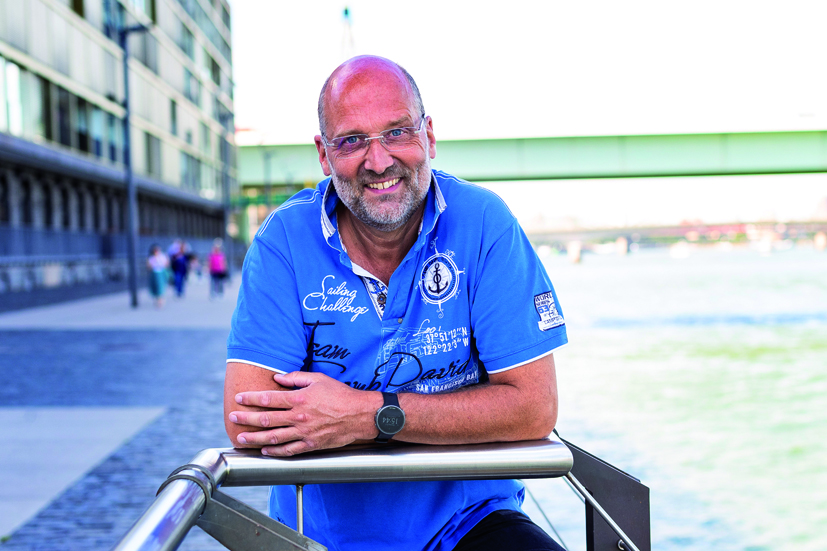
Reiner Huthmacher is a labor market and human resources expert. He is co-author of an Ethics Society position paper on the future of work in the age of AI. Source: zvg
The Ethics Society has published an eight-point paper on the future of work in the age of AI. The core message: in the future, there will be hardly any employment relationships subject to social insurance contributions, 80 percent of jobs will be eliminated and the profession practiced will no longer determine identity. The authors Jürgen Linsenmaier, Reiner Huthmacher and Gerald Wood accuse politicians of failing to hold the really important debates and playing down developments.
Politicians play down the development
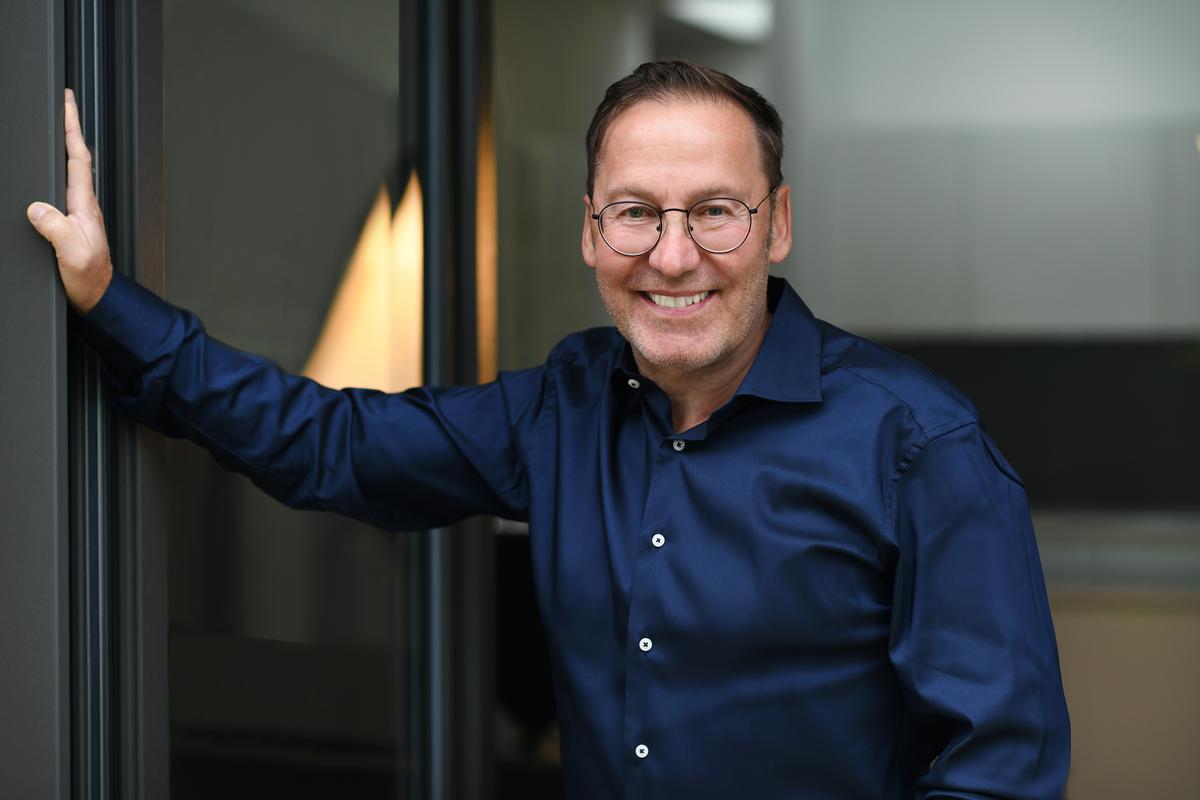
«Politicians are not telling the truth, are playing down and ignoring the development,» criticizes Gerald Wood, AI expert and author of the book «#NextGenWork». 80 percent of currently known jobs will become redundant - not in twenty years, but by the end of the decade. «And yes, new jobs will also be created, but they will be completely different jobs, of which we don't even know the job title today,» he is convinced.
Gerald Wood is an AI developer and author of the book #NextGenWork. Source: zvg
It will be a disruption of biblical proportions, at the end of which the vast majority of jobs will either be done directly by AI or robots or in which humans will have effectively merged with technical systems. It will be the end of work as we know it. Anyone who does not train themselves in AI now and get fit, both as a company and as an employee, will disappear from the market. According to the German-American, it's five past twelve.
Gig economy becomes the rule
«Permanent employment has had its day. Anyone who still has work in the near future will do it on a temporary basis in projects, of which they usually have several at the same time,» explains Wood. The so-called gig economy will become the norm. Ultimately, everyone will become self-employed in one way or another and be able to work from anywhere. «Then social security and our tax system will be at an end.»
The Ethics Society paper therefore recommends that in future, productivity should be taxed rather than labor, for example in the form of a machine tax. With regard to social security systems, the authors recommend taking their cue from private systems. «If almost everyone works like the self-employed, then collective pay-as-you-go systems have no future,» say the authors.
Technology dividend for employees
Reiner Huthmacher, labor market and HR expert, promotes more employee participation. «We expect employees to be motivated to participate in the current transformation. Then it is only fair to involve them appropriately.» The Ethical Society paper develops several scenarios and solutions for this. In each case, employees should receive a kind of «technology dividend».
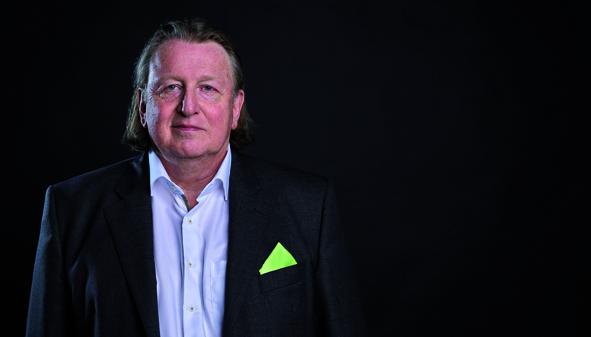
Jürgen Linsenmaier is the founder of the Ethics Society and publisher of the 8-point paper. Source: zvg
Employers also need to train themselves to adapt to the new role in largely digital and autonomous companies. «The manager of the future will not only lead people, but also AI models. That is something completely different from today,» says Reiner Huthmacher.
Huthmacher is also calling on politicians to raise the monthly exemption limit for benefits in kind from the current 50 euros to at least 500 euros. «Especially in these times of upheaval, work must be worthwhile, and companies that want to offer their employees something should be able to do so easily and individually.» He is certain: "In the coming years, we will experience a shortage of skilled workers and mass unemployment at the same time. This is not a contradiction, but a logical consequence of technological development.
Making AI sustainable
Jürgen Linsenmaier, founder of the Ethics Society and publisher of the eight-point paper, calls for a sustainable approach to AI. «Regulation must not hinder development under any circumstances, but ethical issues and aspects of environmental protection must also be taken into account,» he warns. He cites high energy consumption, the construction of new data centers and green coding as examples.
«Up to now, we have largely defined ourselves by our profession and our professional experience. But what if that disappears because almost everyone can do everything themselves with the help of AI? We will have to find new ways of working together. A new humanity will emerge,» concludes Jürgen Linsenmaier with a positive message.











 Brack.Alltron significantly increased sales and EBITDA in 2025. (Source: zvg / Brack.Alltron)[/caption]