Swiss Pricing Congress shows how AI is changing pricing
On June 10, 2026, the second Swiss Pricing Congress will take place at the Dolder Grand in Zurich. Leading brands such as NZZ, SBB, AutoScout and TWINT will show how artificial intelligence, data and new models are changing pricing and how companies are enforcing premium prices.
Editorial - April 7, 2026
Speaker at the Swiss Pricing Congress 2025. source: zvg
At the second edition of the Swiss Pricing Congress, everything revolves around one of the most effective levers for corporate success: price. The congress starts at 2 p.m. at the Dolder Grand Hotel in Zurich, parallel to the Swiss Brand Congress. The focus will be on strategies with which companies can consistently monetize value creation, enforce premium prices and manage profitable price campaigns.
The congress is aimed at managers and decision-makers who no longer see pricing as an operational task, but as a central management discipline. This is because price has a direct impact on earnings, growth and company value. And this makes it one of the strongest levers for success in a company.
AI is changing the rules of the game
Artificial intelligence has long since changed the rules of the game. Traditional pricing logic is coming under pressure. Companies need to develop new approaches. The congress shows how this works in practice. Leading companies will provide concrete insights into their strategies.
Practical examples from leading companies
AutoScout is evolving from a marketplace into a platform with differentiated monetization. The NZZ will show how premium offers are tapping into new target groups and increasing sales. TWINT will shed light on the role of pricing in digital ecosystems. And SBB will provide insights into pricing in public transport.
Further impetus will come from YouGov with new methods for measuring price acceptance and from VIU, which focuses on transparent price architectures and stable prices. The program will be supplemented by practical examples of AI in pricing and data-driven management of sales and prices.
Platform for exchange and new ideas
The Swiss Pricing Congress brings together different perspectives and combines scientific findings with concrete application. As a spin-off of the Swiss Brand Congress, it creates a platform for exchange, discussion and new ideas. Around 100 participants took the opportunity to network and gain new impetus for their own pricing strategy.
Creator Marketing becomes a growth driver: Dentsu X and Meta show new ways
Creator marketing is establishing itself as a key driver of modern brand communication, while traditional influencers are losing relevance. Together with Meta, Dentsu X presents the comprehensive guide «The Creator Catalyst», which shows brands how they can use creator marketing in a systematic and impact-oriented way.
Editorial - April 2, 2026
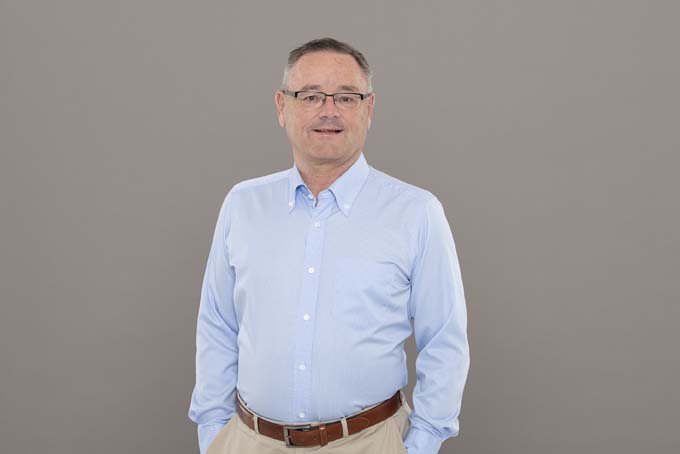
Carsten Kollmus is responsible for important projects at Dentsu X. Source: zvg
The international media and marketing landscape is undergoing radical change: while traditional influencers are increasingly losing relevance, creator marketing is establishing itself as one of the most important drivers of modern brand communication. The reasons for this are changing user expectations, declining trust in heavily promotional content and a clear shift towards creative, authentic and specialized content offerings.
With «The Creator Catalyst», Dentsu X and Meta are publishing a comprehensive guide that shows brands how they can use creator marketing in a systematic, scalable and impact-oriented way.
Creators stand for fundamental change in influencer marketing
In a media landscape that is increasingly shaped by algorithms and in which attention must be earned through creative quality more than ever before, creators are increasingly moving to the center of modern brand communication. They are characterized by their ability to develop original and high-quality content. Their work focuses on creativity, their expertise in the respective subject area and a clearly recognizable personal style.
In contrast to traditional influencers, whose impact is primarily based on reach and personal appeal, creators are defined by the quality and substance of their content. For brands, this creates a particularly credible, target group-oriented environment that is based less on pure visibility and more on the relevance of content and added value for the community.
Current Dentsu data shows: Up to 85 percent of Generation Z regularly interact with creator content and 89 percent of CMOs plan to further increase their budgets for creator marketing. However, despite increasing budgets in this segment, the results often fall short of expectations.
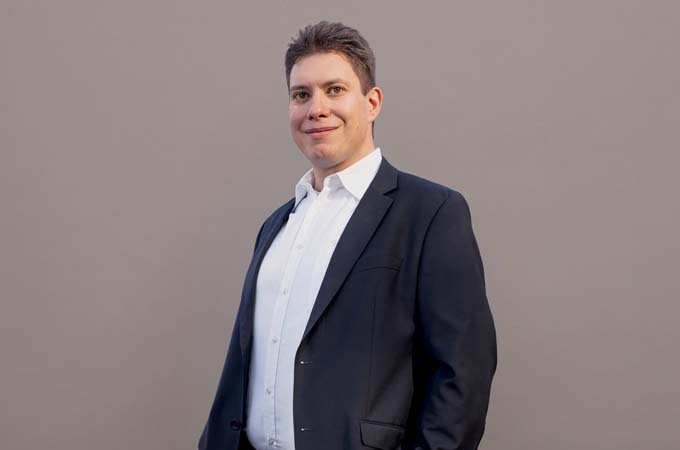
Andrea Biebl presents new corporate strategy. Source: zvg
Casting: From one-size-fits-all to orchestrated roles
«The Creator Catalyst» makes it clear that the key to success cannot be based on individual protagonists, but lies in building a creator ecosystem based on the target group. The playbook provides CMOs with answers to three central areas of tension in modern brand management: casting, culture and commerce.
The study makes it clear that creators are not interchangeable influencers, but fulfill different roles - from brand ambassador to trend translator to pure community expert. The playbook takes the collaboration between brands and creators to a new level: it presents a practice-oriented casting model that goes far beyond conventional selection mechanisms.
The clever combination of cultural fit, data-based analysis and thorough reputation checks creates a reliable and transparent basis for decision-making - for campaigns that are both strategically and creatively convincing. With the Creator and Trends Studio (CATS), Dentsu X is expanding this approach with a powerful platform that combines all steps of creator activation in a single system - from identification and evaluation to final activation.
Culture: From content element to cultural engine
Brands often lose speed because creators are only involved in the development process at a late stage. Yet the most effective and attention-grabbing campaigns are created precisely when creators are involved at an early stage as creative sparring partners - and their perspectives are incorporated into the brainstorming process from the outset.
«The Creator Frame» is a process developed together with Meta that combines creative control and cultural relevance. The playbook also illustrates how brands can recognize cultural signals and trends at an early stage and use them to their advantage in the form of forward-looking planning. Case studies show that brands can use platform-native creator content to increase their reach and perception as likeable, trustworthy, relevant and attractive.
Commerce: From impact to demonstrable business growth
Creator marketing is now a key growth driver across all stages of the customer journey. 71% of consumers buy a product they have previously seen on Creators within a few days. The Creator Catalyst Report shows how creators trigger direct buying impulses with shoppable content, live commerce, limited drops and personalized formats.
Building on this, Dentsu X presents the ICON framework - a measurement model that makes influence, conversion, opinion formation and network effects visible and comparable across short-term and long-term KPIs. Case studies prove that strategically managed creator marketing contributes measurably to increases in sales, a higher return on advertising spend and a stronger brand impact.
Outlook: Creator as a growth factor until 2030
The playbook assumes that the creator economy will grow to around 528 billion US dollars by 2030 - an indication of the extent to which this ecosystem is becoming more professionalized and economically significant. In a digital world in which discovery, entertainment and commerce are increasingly taking place on the same platforms, creators are becoming the central link between brands and consumers.
Carsten Kollmus, Managing Director Dentsu X Germany, comments: «Many brands are doing creator marketing today - but only a few are doing it right. As long as creators are treated as interchangeable influencers, their impact and business success will remain limited. The Creator Catalyst makes it clear: only when casting, cultural relevance and commerce work together systematically does creator marketing become scalable and measurable. This is precisely where the decisive competitive advantage for brands arises.»
Andrea Biebl, President Dentsu X, iProspect & MW Office, adds: «The decisive success factor in creator marketing today is not the individual talent, but the ability to systematically manage creativity and make it economically effective. This is exactly where our solutions come in: We combine cultural intelligence, data-based selection models and performance measurement into an integrated approach. This enables brands to involve creators in the development of ideas at an early stage, orchestrate content in line with the platform and transparently demonstrate impact across all phases of the customer journey.»
Caron EC70: Electric transporter for sustainable work
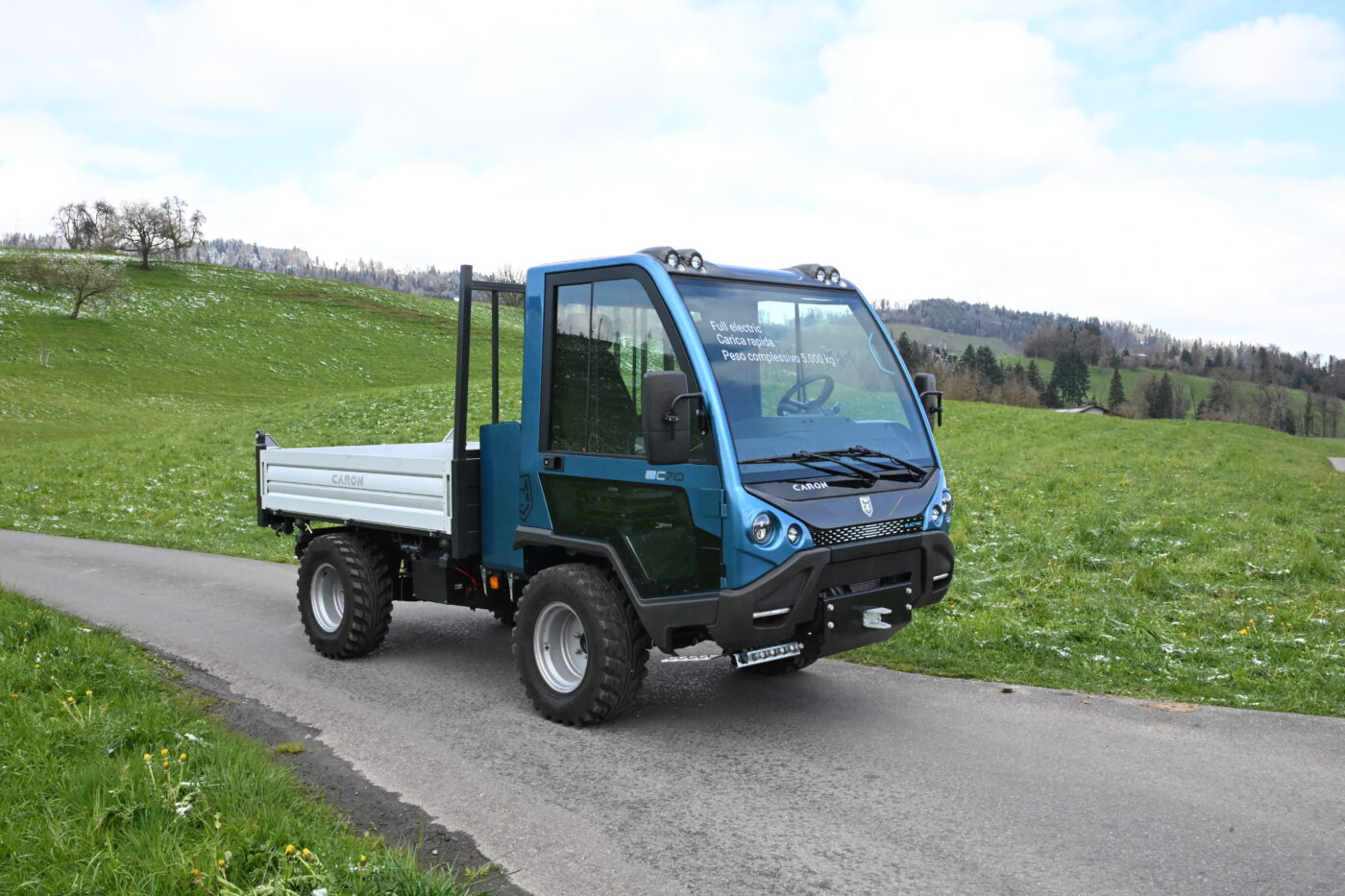
On March 31, 2026, Sepp Knüsel AG presented the new Caron EC70, a fully electric transporter for agricultural and municipal technology. With 50 kW of power, a 40 kWh battery and up to 100 percent gradeability, the vehicle sets new standards for emission-free work in difficult terrain.
Editorial - April 1, 2026
Caron EC70: New electric transporter with a total weight of 5000 kg. Source: zvg
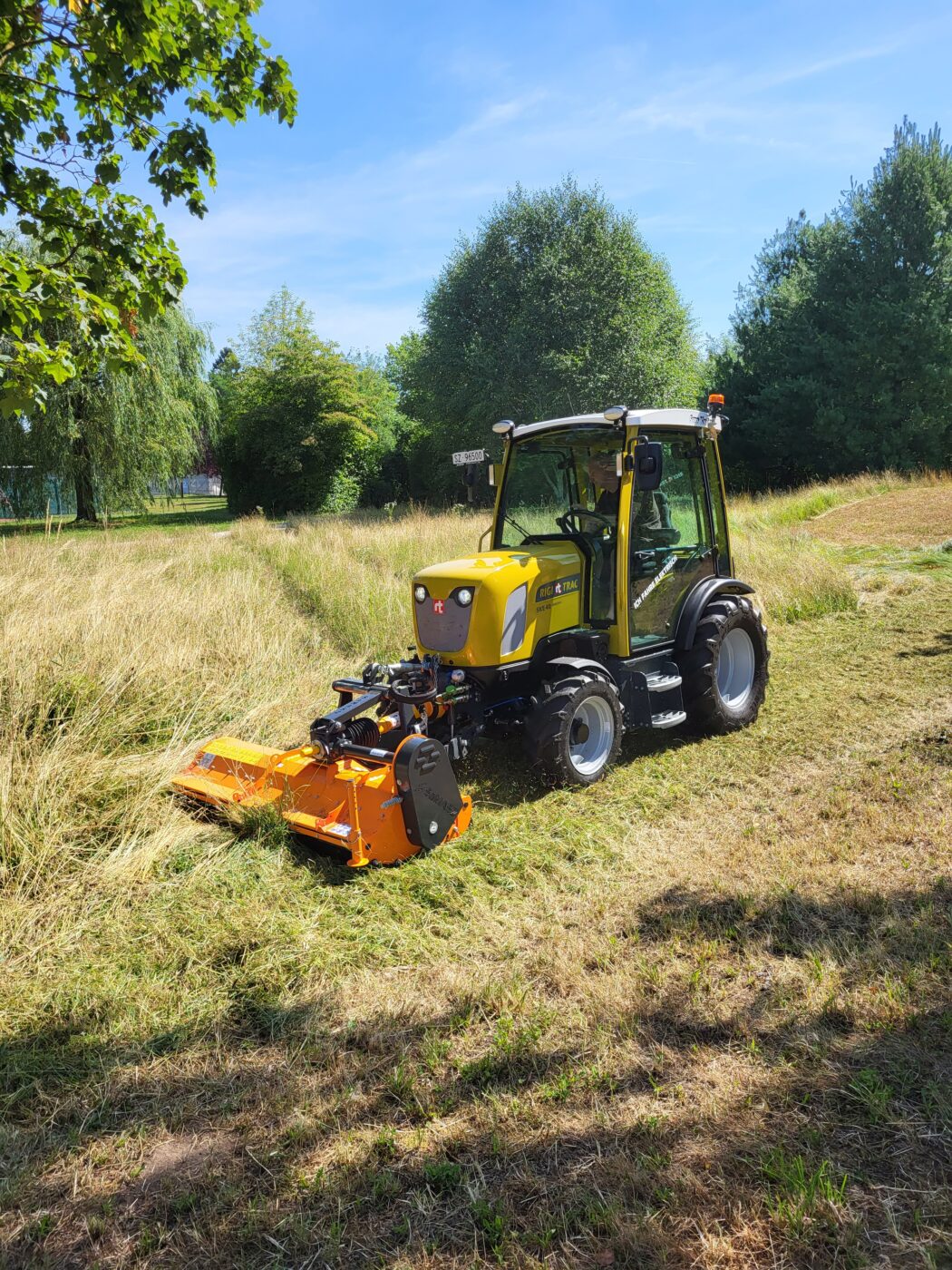
Sepp Knüsel AG hosted an exclusive test drive day in Küssnacht am Rigi on March 31, 2026. Trade visitors were able to experience state-of-the-art agricultural and municipal technology up close. The focus was on the all-electric Caron EC70 transporter, complemented by proven models such as the Rigitrac SKE 40 e-direct as well as other Rigitrac models and the Antonio Carraro.
Powerful and emission-free
The new Caron EC70 sets new standards for electric mobility - not only in agriculture, but also in municipal applications and transportation tasks in difficult terrain. Its direct electric drive with permanent magnet synchronous motor delivers up to 50 kW of power and a peak torque of 280 Nm. The 2-speed system with integrated reverse gear on the steering wheel enables precise work in all conditions and reaches a top speed of 40 km/h.
With a tare weight of 2600 kg and a total weight of 5000 kg, the transporter offers an impressive payload of 2400 kg. The modern Webasto LiNMC battery with 40 kWh and 350 volts is R100-certified and ensures short charging times. With the integrated 22 kW charger, the battery is fully charged in 1 hour and 45 minutes. A fast charger with up to 50 kW is available as an option, which reduces the charging time to 50 minutes.
Versatile in use
The Caron EC70 supports efficient work thanks to regenerative braking with retarder effect, which improves the vehicle's energy efficiency. An integrated inclinometer ensures safety when working on uneven and steep terrain. The standard air conditioning system ensures comfortable working conditions, while a data logger enables the real-time recording and analysis of operating data and supports predictive maintenance.
The service-friendly tilting cab allows easy access to all important components. A prepared front PTO shaft for a 15 kW ePower unit offers maximum flexibility in addition to the existing mechanical PTO shaft. With a gradeability of up to 100 percent, the transporter masters even the most demanding terrain conditions.
Proven electrical engineering
The Rigitrac SKE 40 e-direct has established itself as a reliable and sustainable tractor. Thanks to its quiet operation, it is particularly pleasant to use. The tractor is very popular with local authorities, municipalities, cities, horse farms and vegetable growers.
The e-direct system ensures maximum efficiency: five intelligently controlled electric motors are only activated when required, minimizing energy consumption and optimizing performance. With a rated power of 40 kW and a peak power of 64 kW, the Rigitrac SKE 40 offers a variable driving speed of 0 to 40 km/h. The 58 kWh battery (400 volts) enables a working time of around 4 to 8 hours. With the internal 22 kW charger, the vehicle is quickly ready for use again.
Even in winter, numerous jobs can be carried out economically and emission-free. At the same time, maintenance and service costs are minimal, which makes the vehicle particularly interesting for anyone who values sustainable, reliable and cost-efficient solutions. The direction of rotation and speed of the PTO shafts can be controlled independently, and all hydraulic valves are proportional, electrically controlled and volume-adjustable.
The Sepp Knüsel AG test drive day impressively demonstrated that electromobility has long been a reality. Powerful, economical and sustainable vehicles open up new perspectives for emission-free work in agriculture and the municipal sector.
Molinoteq, a full-service provider specializing in digital transformation, is completing a management buy-out. Selim Akyol, operational managing director and co-founder, is taking over the company completely from the previous investor Andreas Knöpfli. With 22 employees and over 200 customers, Molinoteq has already implemented more than 450 projects in the DACH region and Serbia.
Editorial - March 31, 2026
Selim Akyol is the new owner of Molinoteq. (Image: zVg / Molinoteq)
Molinoteq, a full-service provider specializing in the digital transformation of marketing and business processes, is setting the course for an owner-managed future with a management buy-out. As part of the succession plan, Selim Akyol, the operational managing director and co-founder of the company, is taking over the company completely from the previous investor Andreas Knöpfli.
Selim Akyol has been the driving force behind Molinoteq's development from a specialized service provider to a pioneer in digital marketing and AI solutions. With a team of 22 employees and over 200 customers, the company has already successfully implemented more than 450 projects in the DACH region and Serbia. With the change of ownership, Akyol is now assuming full strategic, financial and operational responsibility.
Healthy and fast-growing company
Andreas Knöpfli, who founded the company and has been an investor since its inception, is handing over a healthy and fast-growing company: «Molinoteq is the result of Selim Akyol's visionary work. As an investor, it was important to me to provide the framework for this development. Now the time has come to hand over the company completely into the hands of the man who lives Molinoteq every day.»
Andreas Knöpfli, founder of Molinoteq. (Image: zVg / Molinoteq)
For Selim Akyol, whose expertise in software engineering and performance marketing forms the foundation of the company, the management buy-out marks the start of the next growth phase: «Molinoteq has been a project close to my heart from day one. Now we want to consistently expand our pioneering role in the orchestration of AI solutions.»
Nothing will change operationally for the more than 200 customers and employees. The owner-managed structure ensures continuity while at the same time strengthening innovation in core areas such as the «Marketing Command Center».
Voices from the market
«Molinoteq has established itself as an absolutely competent and reliable partner for our training ecosystems. Selim Akyol combines top-level technological expertise with digital marketing, taking it to the next level. With him as strategic leader, I am convinced that Molinoteq is taking an important next step to be optimally equipped for the future. I am very much looking forward to our continued collaboration,» explains Evelyn Leu, founder of Lifturskill.
«Molinoteq has been a central pillar and an indispensable and reliable partner in the digital transformation of Thommen Watches, which was founded in 1853, for five years,» says co-owner and CEO Andreas Thommen.
«Golf Meggen stands for tradition and quality, and we needed a partner who could translate this into the digital world. Molinoteq convinced us with their innovative strength and reliability. Selim Akyol and his team are an indispensable source of inspiration for our digital marketing campaigns,» says Beat Schuler, Managing Director of Golf Meggen.
Molinoteq, founded in 2020 and based in Wangen-Brüttisellen, specializes in the digital transformation of marketing and business processes. Its core competence is the targeted orchestration of state-of-the-art AI technologies in the areas of web engineering and digital marketing, taking into account the specific customer context.
Christoph Lenggenhager takes over CEO role at care4IT
Zurich-based managed service provider care4IT has appointed Christoph Lenggenhager as its new CEO. The IT expert with over 15 years of management experience took up the position on January 1, 2026. Founder Philipp Hollerer will focus more on his role as entrepreneur and board member in future.
Editorial - March 31, 2026
Christoph Lenggenhager has been CEO of care4IT since January 1, 2026. Source: zvg
care4IT has been growing dynamically for several years with sustained high double-digit growth rates. In the past financial year, the company exceeded the 35 qualified employees mark for the first time and generated sales of around 8 million Swiss francs. Against this backdrop, the two owners Philipp Hollerer and Matthias Naber decided to realign the operational management.
While Hollerer will increasingly focus on his role as an entrepreneur and member of the Board of Directors and Naber will continue in his role as CTO, the CEO position was deliberately filled with an external, growth-experienced leader.
Many years of IT and management experience
Christoph Lenggenhager, a proven IT and management expert, is taking over the operational management of care4IT. He brings with him over 15 years of experience from IT SMEs and the management of growing technology companies.
Lenggenhager has held management positions at Valantic, rockIT, soxes and CM Informatik, among others. Most recently, as Managing Director, he was responsible for the operational and strategic development of Oepfelbaum IT Management in Zurich, a consulting firm specializing in financial service providers. In this role, he successfully scaled the organization from around 25 to 50 employees and at the same time sharpened its structure, processes and customer focus.
Vision 2030: 100,000 IT devices under contract
Christoph Lenggenhager is taking on the role of CEO at care4IT at a time of high strategic ambition. With its Vision 2030, the company is pursuing the goal of consistently expanding its position as a managed service provider for SMEs and managing around 100,000 IT devices under contract by the end of the decade.
Christoph Lenggenhager says: «care4IT is in an excellent position professionally, organizationally and culturally. My focus is on further developing this strong foundation in a targeted manner: with clear priorities, scalable structures and an uncompromising customer focus - together with a highly committed team.»
Strategic realignment of management
Co-founder and owner Philipp Hollerer explains the decision to appoint an external CEO: «care4IT has grown strongly in recent years - at the same time, the market, technologies and customer requirements have changed fundamentally. In order to actively shape this change, we need operational management with full attention and at the same time the space to develop the company strategically. I therefore want to focus more on my role as an entrepreneur, member of the Board of Directors and driver of the long-term direction. In Christoph, we are gaining a CEO who has proven to bring together growth, organization and customer benefit and who will successfully lead care4IT and the team into the next phase of development.»
care4IT ensures that SMEs and organizations with between 10 and 150 IT workstations in the greater Zurich area can operate their core business more competitively with a modern and up-to-date IT infrastructure. The range of services includes IT consulting, design and planning as well as the implementation of complete IT and cloud infrastructures. The infrastructures are monitored, maintained and replaced as required using state-of-the-art managed IT services.
Quickline increases sales despite loss of customers
The Swiss telecommunications provider Quickline increases its turnover slightly to CHF 249 million in 2025. Despite the loss of a network partner, the company gains three new shareholders and scores highly in terms of customer satisfaction. The SMB segment grows by over 10%.
The Quickline network closed the 2025 financial year with revenue of CHF 249 million - an increase of 0.4% compared to the previous year. Customer satisfaction also remains at a high level, as confirmed by recent awards.
«We have been providing customers with our products and services for over 30 years, and for the past four years they have been able to use them throughout Switzerland - regardless of their local network operator,» comments Egon Perathoner, CEO of Quickline, on the past year. In the highly competitive telecommunications market, customer proximity and satisfaction, authenticity and strong partnerships are becoming increasingly important.
New shareholders compensate for partner departure
Unfortunately, Quickline 2025 lost Wasserwerke Zug (WWZ) as an association partner. In return, however, the company was able to gain three new shareholders: EW Oftringen, StWZ Energie and fenaco Genossenschaft were confirmed as new shareholders of Quickline Holding in November. With the minority shareholding of the fenaco cooperative, both parties want to strengthen the digital infrastructure in rural areas and further develop joint potential for fenaco customers and members.
Simplified product portfolio shows effect
In September 2025, Quickline launched a new, more attractive and simplified product portfolio. Internet remains the basic building block of the offering. It now only offers a TV subscription that makes no compromises in terms of entertainment quality and variety. Quickline continues to win over customers with mobile subscriptions designed to meet their needs at attractive prices. The fixed network remains part of the portfolio for specific target groups such as families or older people.
The customer loyalty program «Benefit» is very popular: around 63,000 loyal Quickline customers were able to benefit from free or discounted leisure activities in the areas of ice hockey, handball, skiing, concerts or museum visits in 2025.
Customer numbers fall, sales rise slightly
Adjusted for the loss of WWZ customers, moderate growth was achieved. This is confirmed by the higher effective network revenue of CHF 249 million (+0.4% compared to the previous year) and the positive operating result. As at December 31, 2025, Quickline had the following effective customer numbers: Mobile 92,400 (-18.5 percent), TV streaming 69,300 (-18.7 percent), Internet 142,500 (-24 percent), linear TV 215,508 (-28.3 percent) and fixed-line telephony 68,100 (-29.5 percent).
In the small-medium business (SMB) segment, the successful cooperation with market partners, local IT and telematics companies, is bearing fruit: the SMB segment was able to increase sales by 10.5 percent compared to the previous year. The Quickline Hospitality TV solution from primetime has already established itself in hotels, hospitals, retirement and nursing homes.
Quickline TV is constantly being further developed
Quickline TV - Quickline's flagship and gateway to unlimited entertainment with over 700 TV and radio stations, live sports, apps and streaming services - is constantly being developed for an even better experience. In 2025, for example, this included cross-device rewatching, improved search and picture quality with over 220 new channels in Premium HD, the expansion of Replay Premium to include the most-watched TV channels and the rating option for films and series.
Awards for customer service
In 2025, the Swiss Industry Monitor of the Swiss Institute for Quality Tests (SIQT) once again named Quickline the best internet provider in the «Customer Service» category - for the fifth time in a row. Among TV and mobile providers, customer satisfaction received a top rating. Comparis, the Swiss price comparison portal, crowned Quickline as the test winner in the «Touchpoints & Contact» category and awarded it a gold rating for satisfaction with mobile subscriptions.
Quickline Energy as a smart meter partner
50,000 households and businesses throughout Switzerland are already equipped with a smart meter from Quickline Energy. Quickline Energy offers energy suppliers in Switzerland a fully integrated solution for the various energy communities. Via the platform, private individuals with their own electricity production can find buyers for their electricity and conclude the contract digitally, including a billing service. Quickline Energy has also integrated a leading smart grid operation platform, which ensures comprehensive and intelligent grid control at low-voltage level in the distribution grids.
Optimistic outlook
Quickline is consistently pursuing its growth strategy. «I look back on my first year as CEO of Quickline with pride, confidence and pleasure. Quickline has held its own in a highly competitive market. We have continued to position ourselves as a personal telecommunications provider, acquired new customers and treated existing customers with care,» says Egon Perathoner. The company is geared towards the future with its new strategy. He is convinced that the new shareholders will compensate for last year's loss of customers.
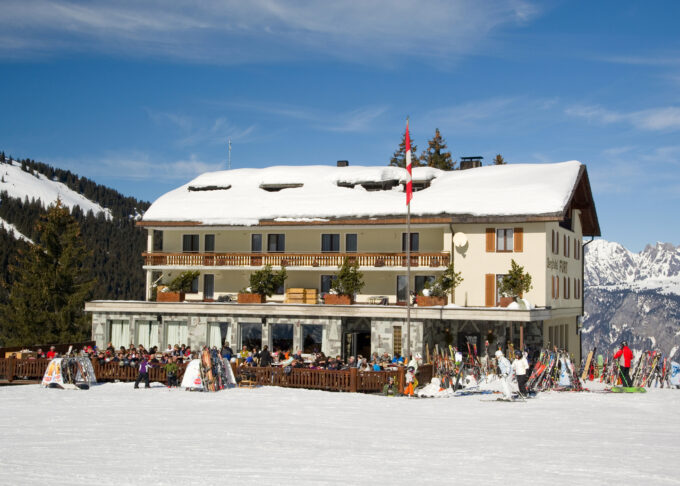
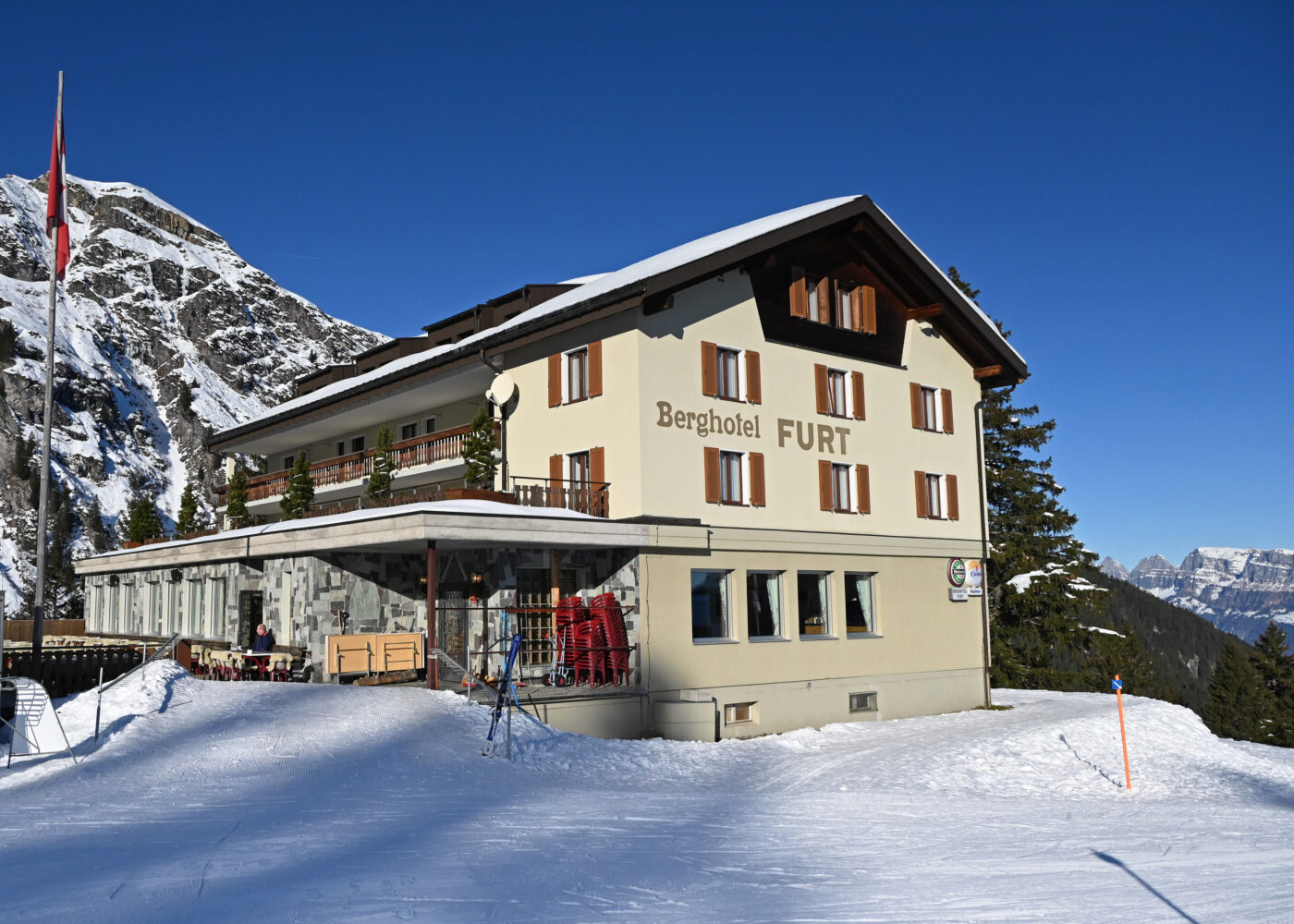
After 37 years, Artho Meli is retiring as owner of the Berghotel Furt. From the 2026 summer season, the Pizolbahnen will take over the traditional business under its own management. The strategic expansion of the gastronomy offer opens up new options for the development of the offer on the Pizol.
Editorial - March 30, 2026
Berghotel Furt on the Pizol is a popular excursion destination. Source: zvg
After 37 years, Artho Meli is handing over the Berghotel Furt on the Furt in Wangs to new hands. The owner and host is retiring at the end of the current winter season. From the start of the 2026 summer season, Pizolbahnen will run the Hotel Furt under its own management, adding an attractive establishment to its range of restaurants.
A house with a lot of tradition in a prime location
The mountain hotel was built back in 1961 and opened its doors for the first time in February 1962. Over the years, the Meli family and subsequently Artho Meli have put their heart and soul into making the «Furt» the first address on the mountain.
In addition to the restaurant with around 100 seats, the «Furt» also has a small and large hall, a terrace with around 150 seats, a bar, a bowling alley and 18 rooms with a total of 41 beds. Three smaller dormitories round off the accommodation on offer.
Strategic development
The «Furt» fits perfectly into the gastronomy strategy of the Pizolbahnen and ideally complements the existing establishments - Panoramarestaurant Edelweiss, Berggasthaus Zanuz, Gruppenhaus Pardiel, Pizolhütte and the Berghotel Gaffia.
Berghotel Furt makes a successful start to winter operations. Source: zvg
Christian Kubli, CEO of Pizolbahnen, explains: «On the one hand, Pizolbahnen has not been represented on the ford until now, and on the other hand, this opens up completely new options for the development of the offer. The unique location and good accessibility will provide us with opportunities to further develop Pizol and ensure the necessary warm beds and a wide range of catering options.»
Pizol Gastro und Sport, a wholly owned subsidiary of Pizolbahnen, has signed a long-term rental agreement for the property from the 2026 summer season.
Thanks to Artho Meli
The Berghotel Furt is not just a hotel, but a real institution that has played a key role in the development of the Pizol. Countless encounters, friendships and enjoyable hours - and of course Artho's legendary Crèmeschnitte - will be fondly remembered by all guests and partners.
«The footsteps that Artho leaves behind are correspondingly large,» adds Markus Oppliger, Chairman of the Board of Directors of Pizolbahnen. The Pizolbahnen would like to thank Artho Meli for the great time they spent together and wish him all the best in his «retirement».
For Artho Meli, «Pizolbahnen is strategically the ideal successor for the continuation of the mountain hotel, and I am delighted to be able to place responsibility for this wonderful establishment in the hands of Pizolbahnen».
Swiss Brand Congress: AI as a team member of brand management
The Swiss Brand Congress will take place at the Dolder Grand Hotel on June 10. Over 100 speakers will discuss how brand management works in the age of AI in 16 forums. Top brands such as Sixt, IKEA, L'Oréal and AXA will show how they use artificial intelligence as a tool without relinquishing strategic leadership.
Editorial - March 30, 2026
Source: zvg
How do you manage a brand when AI is suddenly everywhere? The Swiss Brand Congress is asking precisely this question. The motto is «Team game brand management - team member AI». The message behind it: Artificial intelligence is massively changing marketing and communication. However, it does not replace a strategy, but remains a tool.
16 forums, 7 stages, over 100 votes
On June 10 at 9 a.m., the Swiss brand scene will meet at the Dolder Grand Hotel. More than 100 speakers will discuss the latest trends in 16 forums and on two main stages. The focus will be on the question of how companies can survive in a complex world of communication, under uncertainty and increasing budget pressure. The congress brings together marketing decision-makers, agencies, platforms and academia.
This year's program is diverse. In the morning, experts will pass on their brand knowledge on seven parallel stages. It will become clear just how much the discipline is changing. Between AI fatigue and the growing desire for authenticity, between data-driven marketing and new channels such as social search, brands need to be managed more precisely than ever before. Topics such as the increasing use of data, new KPIs and new legal frameworks relating to AI and sustainability also show how broad the challenges have become.
What makes strong brands today
From 2 p.m., the focus will be on the two main stages. On the «Strategy Stage», brands such as Sixt, IKEA, Kärcher, Zweifel and Brack will show what makes a strong brand today. It's all about clear positioning, social relevance and the ability to continuously evolve. Transformation runs through all the examples.
Data, AI and new brand logic
At the same time, the «Tech & Digital Stage» shows how technology is changing brand management. Webrepublic discusses the right metrics for brand management, L'Oréal combines digital innovation with cultural relevance, AXA manages brands on the basis of data-based insights. Again and again, the central question arises: where does AI automate, where does it support and where do humans remain indispensable?
The new standard: holistic brand management
The strategic framework is provided by research at the University of St. Gallen. Using the holistic brand communication approach, experts Hannah Leimert and Philipp Scharfenberger show which tasks brands have to fulfill today: Generating attention, telling stories, building relationships and moderating dialogs.
The common thread of the congress thus runs through all stages. Successful brands combine a clear attitude, the right mix of consistency and continuous development and the targeted use of data and AI. Technology opens up new possibilities, but leadership remains human.
In addition to the content, the congress also offers space for exchange. Brand managers, agencies and platforms meet for direct dialog during business networking and the joint get-together.
Switzerland's largest industry gathering has a long tradition, as it reflects current trends in the Swiss brand landscape. With over 24 hours of stage program, the Swiss Brand Congress offers a unique opportunity to gain profound insights into the future of brand management. The congress is organized by the ESB Marketing Network together with htp St.Gallen.
Family caregivers support the system - but the framework conditions are lagging behind
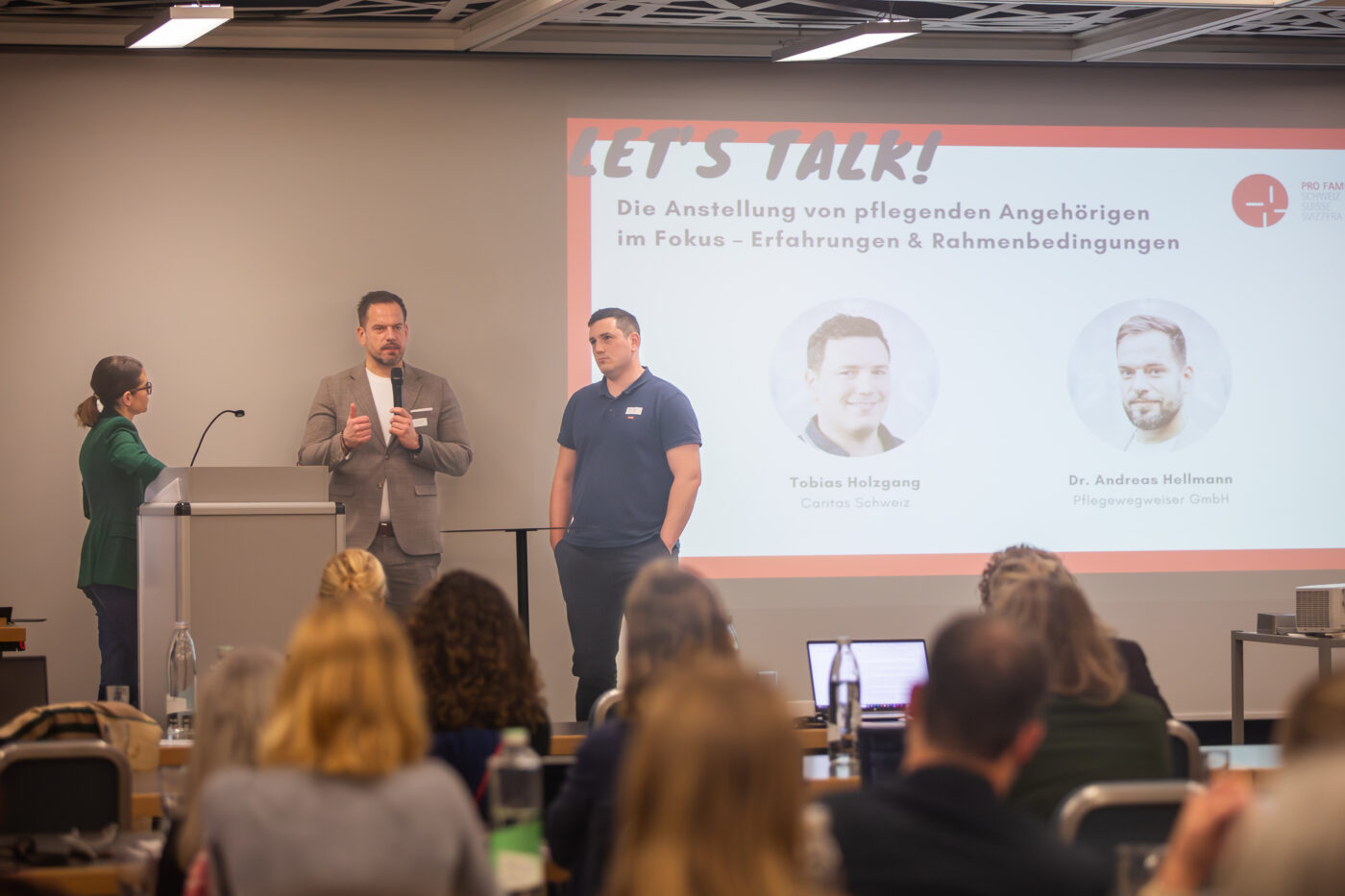
On March 24, 2026, Pro Familia Switzerland held a symposium in Bern on the topic of caring for relatives. Experts from science, practice and politics agree: relatives are a cornerstone of care, but for this model to work in the long term, clear and binding framework conditions are needed now. Around 500,000 elderly people in Switzerland are cared for at home by relatives.
Editorial - March 30, 2026
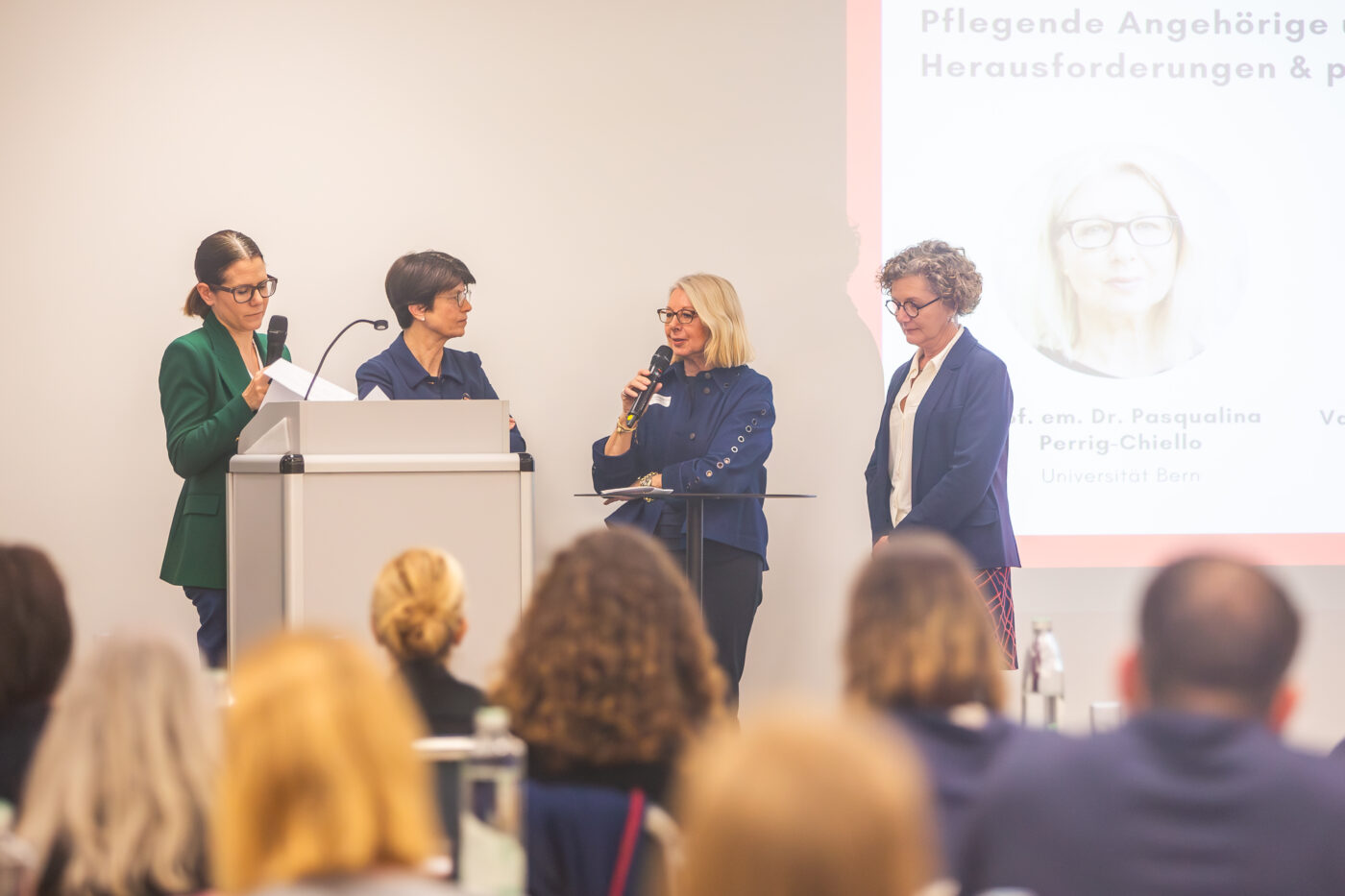
Discussion about challenges for family caregivers. Source: zvg
Around 500,000 elderly people in Switzerland are cared for at home by relatives. This commitment is systemically relevant, but often remains invisible, inadequately supported and a burden on health. The symposium ’Caring and caring relatives in the focus of an ageing society« on March 24, 2026 in Bern showed that there is a concrete need for action in terms of framework conditions, funding and relief services.
«Family caregivers are not a buffer. Not a cost factor. And certainly not a marginal issue. They are a cornerstone of our system. What follows now is the decisive step: Prioritize. Decide. And above all: implement,» emphasizes Eva-Maria Kaufmann Rochereau, Managing Director of Pro Familia Switzerland.
Ensuring quality, clarifying responsibility
Clear standards are a key lever. The conference shows: Care for relatives can be a viable component of care - if it is professionally embedded. This requires binding minimum standards for training and support, clear roles between professionals and relatives, systematic data bases and comparability as well as coordinated management across cantons. The focus is not on the question of whether relatives provide care, but on how quality, safety and fairness can be guaranteed.
Symposium 2026 discusses the employment of family caregivers. Source: zvg
Rethinking financing
Another key is transparent and balanced financing. In particular, the effect of current tariff structures was discussed. One thing is clear: costs must be transparent, prices must be structured in such a way that false incentives are avoided and greater consideration must be given to the economic benefits. Clear rules are the only way to prevent economic interests from shaping healthcare provision.
Systematically strengthening support and relief
Alongside care, support remains a key challenge. It makes up a large part of care work, but is often inadequately regulated and financed. The conference presents concrete solutions: Expansion and better accessibility of respite services, greater involvement of municipalities and regional networks, promotion of so-called caring communities and better reconciliation of gainful employment and caring for relatives.
Health begins before care
In the long term, there needs to be a stronger focus on prevention. Education throughout the life course strengthens health literacy and can reduce the need for care. This makes it clear that caring for relatives is not just a question of organization, but also of social investment in health.
Act now
The key challenges are known - now it's a question of implementation. Clear political guidelines are required to ensure quality, relieve the burden on relatives and stabilize the system as a whole. Family caregivers are not a marginal issue, they are systemically relevant. They must be treated accordingly.
Speakers at the conference included National Councillor Valérie Piller Carrard (President of Pro Familia Switzerland), Prof. em. Dr. Pasqualina Perrig-Chiello (University of Bern), Dr. Andreas Hellmann (Pflegewegweiser GmbH), Tobias Holzgang (Caritas Switzerland), Valérie Borioli Sandoz (IGAB Interessensgemeinschaft Angehörigenbetreuung) and National Councillor Ursula Zybach.
The gfs-zürich research institute has new ownership and co-management: Stefan Keller and Dr. Andrea Umbricht are taking over the reins together. Both have been with the company for over ten years and have been part of the management team since 2024. The previous owner Dr. Andreas Schaub will remain with the company for three years as Senior Project Manager.
Editorial - March 27, 2026
The new co-directors of gfs-zürich: Stefan Keller and Dr. Andrea Umbricht. Source: zvg
The Zurich-based research institute gfs-zürich is focusing on continuity and new impetus: Stefan Keller and Dr. Andrea Umbricht are taking over the management of the company as experienced co-managers. Both have been closely associated with gfs-zürich for more than a decade and know the company and its clients inside out. They have been part of the management team since 2024 and are now responsible for the strategic direction as the new owners.
Regulated handover with Dr. Andreas Schaub
Dr. Andreas Schaub, the previous owner and managing director, is stepping down from operational management, but will remain with gfs-zürich for a further three years as senior project manager. He will continue to contribute his extensive expertise to projects, thus ensuring a smooth transition to the new co-management. This continuity should give clients peace of mind.
Stefan Keller: From data analyst to co-managing director
Stefan Keller, born on December 11, 1982, joined the company in 2013 as a project employee and data analyst. After initial commercial training and three years of professional experience in financial accounting, he studied sociology at the Universities of Zurich and Constance. In 2016, he took on a project manager role at gfs-zürich. The father of three lives with his family in Mettlen TG.
Dr. Andrea Umbricht: Scientific expertise meets practical experience
Dr. Andrea Umbricht, born on 26 November 1981, joined gfs-zürich as a project manager in 2015. She studied communication science and media research with a minor in political science and sociology. She then worked as a research assistant and lecturer at the IKMZ at the University of Zurich. She completed her doctorate on political journalism in 2014. Andrea Umbricht is the mother of three children and lives with her family in Zurich.
The new co-management will further strengthen gfs-zürich. According to the company, the commitment to the highest quality and customer satisfaction remains unchanged. With the dual leadership, the research institute is relying on broad expertise in the areas of market and social research.
Diversity is set, inclusion is a decision: That was the Gisler Summit 2026
The fourth Gisler Summit took place in Zurich on March 26. Around 120 participants celebrated the 5th anniversary of the Gisler Protocol. On stage, activist Markus Theunert, Prof. Dr. Gudrun Sander and other experts discussed the representation of people with disabilities in Swiss advertising. We show the best pictures of the summit.
Editorial - March 27, 2026
Source: zvg
On Thursday, March 26, the fourth Gisler Summit of the Gisler Protocol took place in Zurich. Around 120 participants filled the Daizy restaurant to the last seat to be inspired and celebrate 5 years of the Gisler Protocol. Activist and author Markus Theunert and Prof. Dr. Gudrun Sander from the HSG were joined on stage by Senad Gafuri, Annette Häcki and Serafina Kuster, who discussed the representation of people with disabilities in Swiss advertising.
The general meeting of the Gisler Protocol also took place before the Gisler Summit. The Board of Directors was almost completely re-elected. Board member Flavio dal Din had decided in advance to leave the Board after four years and take on new responsibilities. He was thanked by the entire association for his great and formative commitment over the past four years.
5 years, many memories, many thanks
The Gisler Summit was kicked off by association president Nina Bieli. To mark the anniversary, she looked back on the highlights of the last five years and presented several anniversary specials: «Shift happens», a set of reflection cards with 36 questions about the conception and creation process, a potted plant anniversary shirt and the new Gislerprotokoll website. «For the anniversary, we wanted to create something that captures the content of the Gisler Protocol in a form that can be used on a daily basis. We also wanted to create a fitting monument to our now almost iconic potted plant. This is how the reflection cards and the shirt came about. The fact that we are also able to present our new website today naturally makes us all the happier,» says Nina Bieli.
Bieli also made special mention of her co-initiator Annette Häcki, who was also on stage during the event. «The Gislerprotokoll was and still is a project close to Annette's and my heart. Even though Annette is now more involved from the sidelines - including as a member with her agency Day Partners - she is still an incredibly important and valuable sparring partner for me,» says Nina Bieli.
Nina Bieli then presented the results of the Stereotype Analysis 2025, with one particularly striking result forming the basis for the subsequent panel discussion: people with disabilities are practically invisible in Swiss advertising.
Disability and representation in Swiss advertising
The panel discussion was attended by Annette Häcki, a creative with several years of experience in designing and implementing campaigns on the topic of disability, Senad Gafuri, Managing Director of the organization Reporters without Barriers, and Serafina Kuster, an HR expert who has been in a wheelchair since the age of 12. Together, they discussed what is needed to make people with disabilities more visible in Swiss communication, what needs to be taken into account - not least in terms of language - and what those affected themselves want from their representation.
Following the panel discussion, activist and author Markus Theunert offered an insight into the manosphere and the radicalization of masculinity ideology. He addressed the contradictory simultaneity that young men have to face today and the fact that men are far too often left alone with this task. According to Theunert, the political right is increasingly capitalizing on this orientation vacuum.
Diversity is a given - inclusion is a decision
Prof. Dr. Gudrun Sander, professor and lecturer in business administration at the HSG with a focus on diversity management, concluded the event. Sander spoke about the woke backlash and its already noticeable effects in the Swiss economy. However, she also pointed out ways out of this backlash and emphasized the relevance of inclusion in this context. «Diversity is a given, inclusion is a choice for high-performance cultures,» said Sander.
Gisler summit of the Gisler protocol photographed on Thursday, March 26, 2026 in Zurich. (VOLLTOLL / Jana Leu)Gisler summit of the Gisler protocol photographed on Thursday, March 26, 2026 in Zurich. (VOLLTOLL / Jana Leu)Gisler summit of the Gisler protocol photographed on Thursday, March 26, 2026 in Zurich. (VOLLTOLL / Jana Leu)Gisler summit of the Gisler protocol photographed on Thursday, March 26, 2026 in Zurich. (VOLLTOLL / Jana Leu)Gisler summit of the Gisler protocol photographed on Thursday, March 26, 2026 in Zurich. (VOLLTOLL / Jana Leu)Gisler summit of the Gisler protocol photographed on Thursday, March 26, 2026 in Zurich. (VOLLTOLL / Jana Leu)Gisler summit of the Gisler protocol photographed on Thursday, March 26, 2026 in Zurich. (VOLLTOLL / Jana Leu)Gisler summit of the Gisler protocol photographed on Thursday, March 26, 2026 in Zurich. (VOLLTOLL / Jana Leu)Gisler summit of the Gisler protocol photographed on Thursday, March 26, 2026 in Zurich. (VOLLTOLL / Jana Leu)
Zurich's banking sector contributes half of the city's corporate tax revenue
A new study shows the systemic importance of Zurich's financial sector for the region. The sector employs over 100,000 people, contributes 16 percent to regional value creation and provides almost 50 percent of corporate tax revenue for the city of Zurich. At the same time, the financial center is facing structural challenges.
Editorial - March 26, 2026
The city of Zurich lives from its banks... (Image: Claudio Schwarz / Unsplash.com)
Zurich's financial center is a mainstay of the regional economy. This is shown by a new study by Oliver Wyman, which was commissioned by the Zurich Banking Association and presented on March 26, 2026. The figures demonstrate the high relevance of the financial sector for the city, canton and region of Zurich in several respects.
The financial sector in the Zurich region, which includes the cantons of Zurich, Zug and Schwyz, employed a total of 102,040 people in full-time equivalents in 2024. Employment has thus risen by 12% since 2015. The banking sector alone accounts for over 44,000 jobs, which corresponds to more than 40 percent of all Swiss bank employees. If indirect jobs created by consumption, services and suppliers are included, the financial sector will account for around 180,000 full-time jobs in 2023.
Significant contribution to value creation
In 2023, the financial sector accounted for a good 16% of gross value added in the Zurich region. In absolute figures, this corresponds to CHF 32.8 billion. Banks accounted for the largest share at 7%, followed by insurance companies at 6% and other financial service providers at 3%. This makes the financial sector the second-largest sector in terms of regional value added after trade.
In the city of Zurich, the financial sector accounts for as much as 26% of total value added, and 18% at cantonal level. In comparison, the financial sector accounts for 9 percent of Switzerland's gross domestic product. Zurich's financial center is thus on a par with other international financial centers such as London and even surpasses Hong Kong with 25 percent and Luxembourg with 20 percent when looking at the city of Zurich.
Almost half of municipal corporate taxes
The fiscal contribution of the financial sector is particularly exceptional. Banks and insurance companies account for almost 50 percent of corporate tax revenue in the city of Zurich, and up to 40 percent across the canton. These figures show how strongly the city and cantonal finances depend on the success and stability of the sector. In addition to corporate taxes, the more than 100,000 employees in the financial sector also pay taxes on their income.
Central role for the real economy
Zurich's financial sector fulfills essential functions for the real economy. Banks in the Zurich region handle a credit volume of around CHF 100 billion for companies of all sizes. Mortgage loans account for around 70 percent of this volume. Overall, the banking sector in the Zurich region covers around 30 percent of the financing requirements of companies and households throughout Switzerland.
In addition, the financial sector provides access to the capital market for bond issues and IPOs and is central to the processing of payment transactions. As at the end of October 2025, bonds issued by companies in the real economy totaling CHF 168 billion were listed on the SIX trading platform.
Knowledge exchange and innovation
The financial sector makes an important contribution to the education and training of employees. In addition to around 3,500 apprenticeships, the sector in the Zurich region offers various further education courses and supports tertiary education. A sustainable exchange of knowledge takes place through the continuous training and migration of employees.
More than half of the people currently employed in the largest companies in the real economy have previously worked in the financial sector. In the ten largest companies in the real economy, almost 60 percent of employees have previously worked in the financial sector and also contribute the experience and knowledge they have gained outside the financial center.
The financial sector also plays an important role in the dynamic start-up ecosystem. In recent years, companies in the Zurich region have accounted for around 50% of the seed financing volume. Although banks are only directly involved in a small number of seed financings, these are above-average rounds with higher volumes.
Structural change and challenges
Despite the strong starting position, the Zurich financial center is facing structural change. The number of banks in the region has fallen by around 17% since 2015. The integration of Credit Suisse into UBS has permanently changed the big bank landscape. At the same time, Zurich is in intense competition with international financial centers such as London, Hong Kong, Singapore and the Middle East, which are making targeted investments in location attractiveness, technological infrastructure and regulatory frameworks.
Three central fields of action
The study identifies three key challenges for the Zurich financial center. Firstly, it is important to actively shape the offering and ensure that the real economy continues to have access to a broad, competitive range of financial services in the future. Secondly, the international attractiveness of the location must be secured and expanded through reliable tax and regulatory framework conditions, an efficient infrastructure and an attractive environment for highly qualified specialists. Thirdly, technological change and the talent issue must be mastered through targeted investments in data and AI capabilities as well as the modernization of platforms and processes.
Christian Bretscher, Managing Director of the Zurich Banking Association. Source: zvg
Christian Bretscher, Managing Director of the Zurich Banking Association, comments: «Anyone who only thinks of a single sector when it comes to the financial center is underestimating its importance for the entire location. Tens of thousands of jobs, investments and innovative strength, the financing of companies and households and substantial tax revenues for the public sector are at stake. Precisely because Zurich is under increasing competitive pressure internationally, politicians must not allow the framework conditions to gradually deteriorate.»
Bretscher continues: «Other financial centers act strategically, invest in attractiveness and create reliability. Zurich and Switzerland must also aspire to this. After all, a strong financial center creates direct benefits for every company and the entire population.»
The study concludes that Zurich's financial sector is systemically relevant for value creation, employment and tax revenues in the region. If the need for action is not addressed, there is a risk of lower growth, lower tax revenues, a loss of highly qualified jobs and a decline in innovative strength in the medium term. If, on the other hand, the agenda outlined can be implemented consistently, Zurich can not only secure its role as Europe's leading financial center, but also expand it further.