
EMCH Elevators: Successful niche strategy

EMCH elevators: The traditional Swiss company has been revolutionizing lift construction for 150 years. Its success? Niche strategy, top quality and humanity!


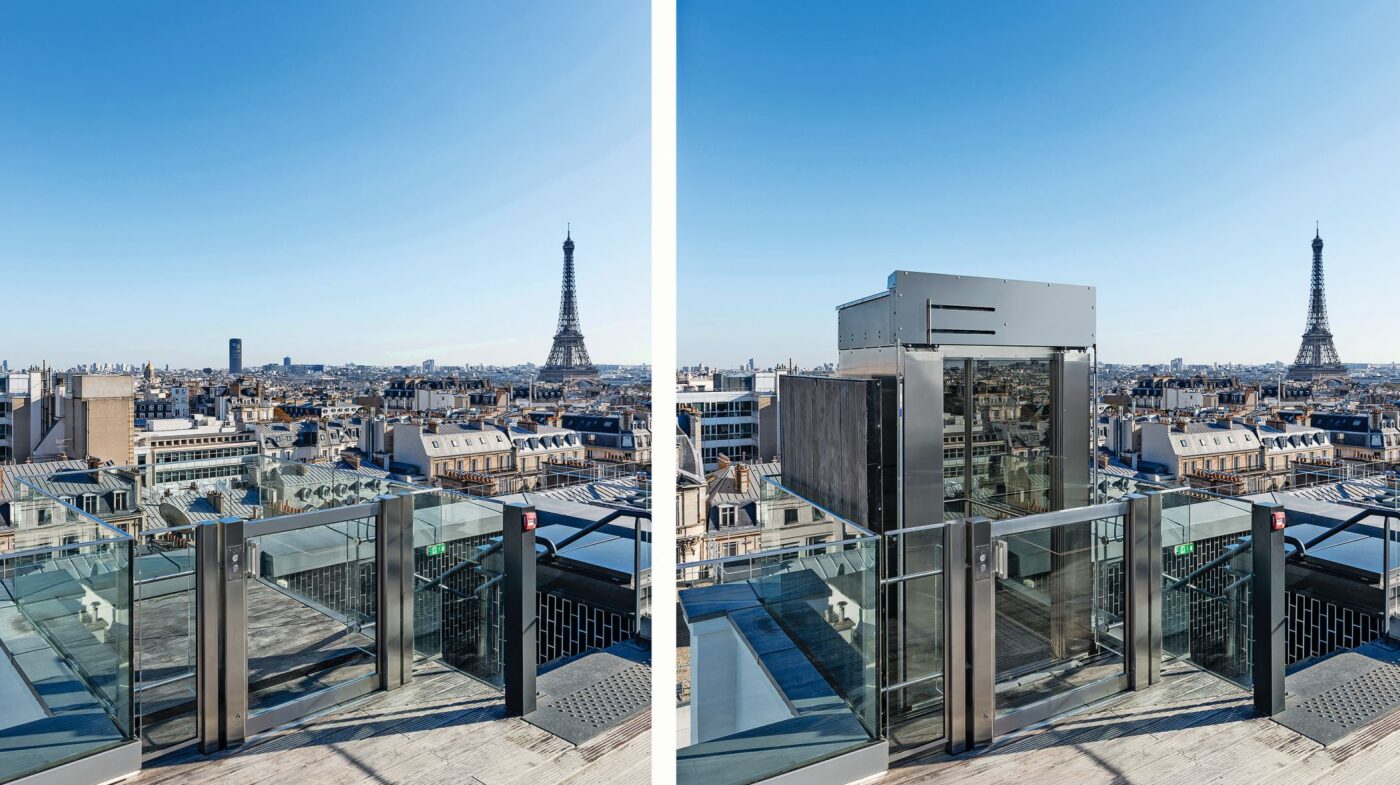
Rooftop elevator in a building on Avenue Kléber in Paris. The highlight: the elevator reaches the outside through a flap in the roof (right). © EMCH Elevators

Who hasn't seen the striking inclined elevator in Zurich's main station? Very few people know that it is a lift made entirely in Switzerland. Let's delve into the history of EMCH Aufzüge AG, which has been run by the same family for four generations. With a vision for innovation, the company has developed into the leading manufacturer of customized elevators in Switzerland and Europe.

Soon to be 150 years of company tradition

To mark the 50th anniversary of the site in Bern-Bümpliz in 2018, EMCH Aufzüge AG created a special technical and non-fiction book and published it with Bern-based publisher Stämpfli Verlag: «Liftfahrt - eine Zeitreise». Not only those interested in technology will learn how versatile vertical access can be and how elements such as worm gears, belt and hydraulic drives work in elevators and elevators. It is undisputed that EMCH elevators are characterized by elegance and timeless aesthetics, with which the company from the city of Bern has been doing pioneering work for 146 years.

The move to Bern Bümpliz in 1968 marks the beginning of a new era for the company. Production is now developed further under more favorable conditions and with completely renewed machinery. Jürg Emch set himself the goal of equipping all passenger elevators with automatic car and landing doors. Different floor heights require special control of the individual entrances. When the office building was later extended by two floors, the floor plan of the in-house elevator was enlarged with a glass construction and glass doors. The elevator was now also wheelchair-accessible and the building was accessible for the disabled.

«Agile and customized action»

Mr. Emch, the start of large orders was in 1970, shortly before your father Jürg took over the company at the age of 36. In the same year, EMCH Aufzüge also installed its 1000th lift. What are your father's other outstanding skills, achievements and milestones? Bernhard Emch: Our father not only set standards as a managing director, but also as a person and engineer. From an early age, our parents taught us values such as respect, honesty, perseverance, self-discipline, hard work and courage - and it was precisely these principles that our father consistently brought into the company. As an outstanding engineer, he was often ahead of his time and was quick to develop innovative solutions for elevators that did not yet exist.

24 years ago, with the support of your brother Hansjürg, you took over the family business from your father Jürg. Despite the national economic downturn, you then managed to increase turnover by over 50 percent and create 100 additional jobs. What were the basis and reasons for this good start and the subsequent very successful period up to the present day?
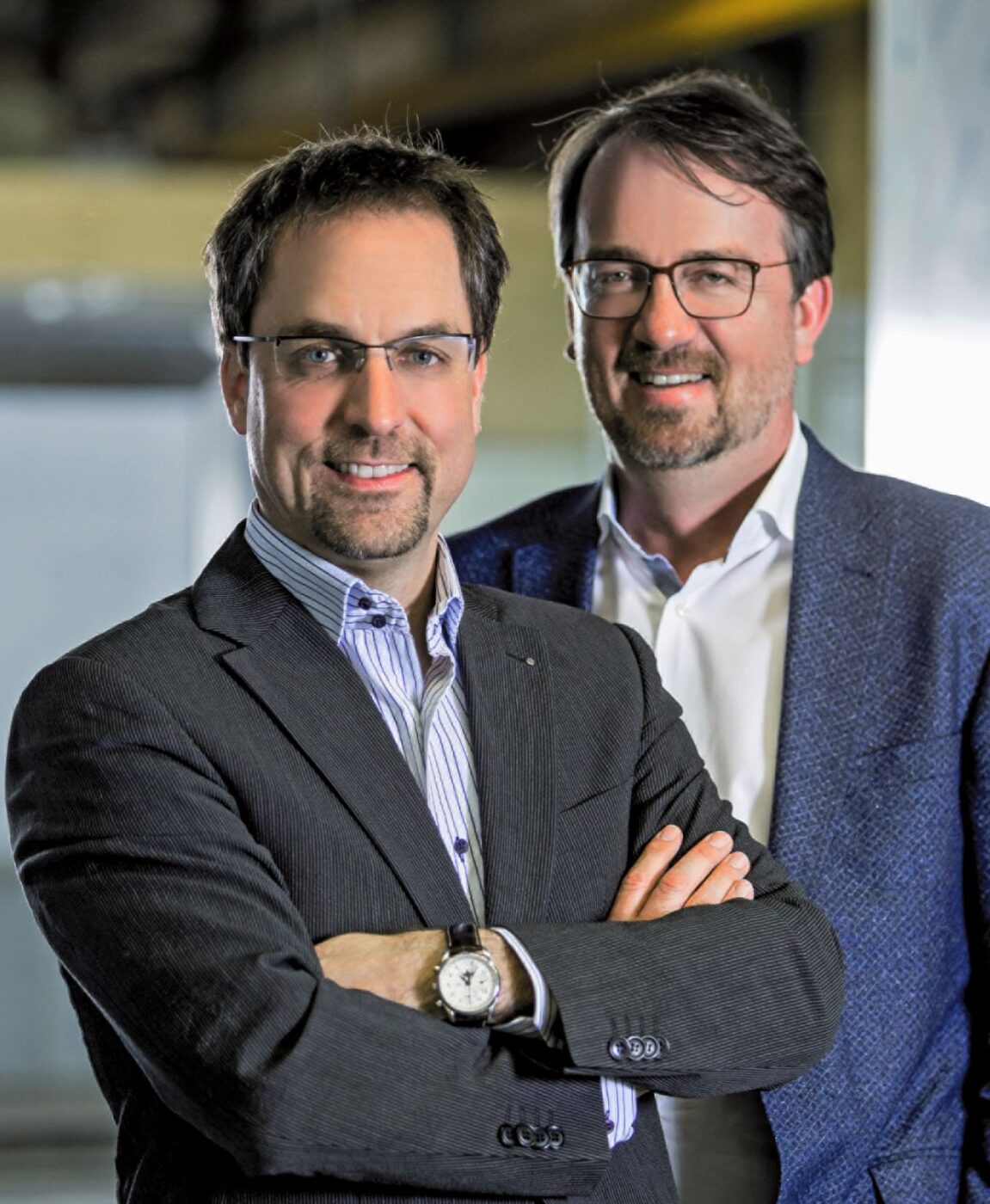
The brains behind EMCH Aufzüge: Bernhard Emch (left) and Hansjürg Emch. © EMCH Elevators

Bernhard Emch: One decisive factor was certainly the fact that we continued to pursue the strategy established by our father of consistently focusing on the niche market with the quality of Swiss production. This enabled us to clearly differentiate ourselves from the existing competition and address specific customer needs in a targeted manner. This specialization also allowed us to expand our market area - initially from Bern to the whole of Switzerland and then increasingly abroad. What are the strengths of EMCH Aufzüge? And: does the niche focus on the special in terms of planning, processes and procedures also pose special challenges? Our strength is that we have the entire value chain on site in Berne. This gives us the necessary flexibility to respond individually to all customer requirements. This proximity to development, production and customers is a decisive advantage, especially in the niche sector. It enables us to offer innovative solutions and act in an agile and customized manner, even for complex projects. The sale of individual systems also requires special know-how, which we have been acquiring for almost 150 years.

From Bümpliz into the wide world

To this day, EMCH Aufzüge fills a typical Swiss niche in the international economic area, namely that of a reliable partner that is always innovative. Head Bernhard Emch: «We have become an international company that still produces everything here on Fellerstrasse in Bern-Bümpliz. From Bümpliz to the rest of the world.» The local roots and international orientation thus merge to form a modern company with traditional values. The CEO emphasizes: «We don't just focus on quality, people are just as important to us. This starts first and foremost with our employees, their training and further education and thus also the dual education system. In other words: people instead of pure management - humanity instead of a one-sided power imbalance.»

Employee training minimizes skills shortage

And when it comes to the shortage of skilled workers, Bernhard Emch is clear: «A company must provide training and opportunities. We are tackling the skills shortage with our own approaches and solutions.» And they are quite something: «We regularly organize parent events where we not only introduce ourselves, but also show what we can do and what we train. Many parents still believe that only a university degree will get their child through life. I always ask how many of our 250 employees have an academic degree. The answers are always between 25 and 30. The parents are then amazed when I tell them it's just four.» Emch's aim is to demonstrate and internalize the fact that the Swiss teaching and training system is internationally top class. Bernhard Emch concludes his plea for the successful Swiss career path, which must be preserved and nurtured, with the words: «Without this dual education system, which is still successful today, our company would not be where it is today.»

As already mentioned, internationalization did not stop at EMCH. The company boss is particularly fond of French-speaking Switzerland and France. French is often spoken at the company headquarters in Bümpliz. EMCH could probably sell twice as much in France if capacity allowed. Bernhard Emch knows why: «There are almost only large corporations left in France. You look in vain for specialized companies that offer individual solutions. That's why many rely on us.» EMCH Aufzüge took a bold step in the middle of the pandemic and opened a subsidiary in Paris. This was triggered not least by the order for a spectacular elevator in Paris's 16th arrondissement - where the rooftop elevator simply travels on, pierces the roof surface and comes to a halt in the open air. With a unique view of the city, something like ‚Over the rooftops of Paris‘.

International markets and two special elevators

The «Space Eye» observatory, built three years ago, stands ten kilometers south of Bern in the hilly landscape at an altitude of almost 1,000 meters above sea level with its striking 12-meter-high, elliptical tower - designed by Mario Botta. White, horizontally jagged concrete elements surround the tower, which can be seen from afar, with its planetarium sphere on the roof, which contains the largest telescope in Switzerland. The publicly accessible observatory for space and the environment also has a very special elevator from EMCH: a retractable elevator that brings the shaft with it. Bernhard Emch on the two extraordinary elevators in Paris and the Space Eye: «A particular challenge in these projects was to design a lift in which the lift shaft at the top is only temporary. This is particularly important for Botta's ‚Space Eye‘ observatory, where an unrestricted all-round view is essential for the telescope. We found an innovative solution in which the elevator remains invisible when retracted.»

«Engineering blood flows through our veins»

In every family business, sooner or later the question arises: will the next generation carry on? Bernhard Emch already knew during his studies that he would one day take over from his father Jürg. And what was it like for you, Hansjürg Emch? Hansjürg Emch: We, my brother Bernhard and I, both became engineers, and that was no coincidence. Engineering blood has flowed through our veins for generations. I looked at different fields of study: History and philosophy. Then I read Max Frisch's «Homo faber» and found it fascinating to become an engineer. You can travel all over the world and solve problems. I also had to go to Zurich to study, so I was away from home.

An often-heard reason for the failure of family successions is that the selected or chosen successor is often overwhelmed by the role of boss. What was it like for you, Bernhard Emch? Bernhard Emch: I was cautious and gradually approached the big new task. First, I set up the project management and worked alongside my father for a while. That was a test run to see whether I was at all suitable to continue running the company successfully. Another advantage was that I already knew many of the employees.

If you look at the family photo in the anniversary volume, you don't have to worry about the succession into the fifth generation, do you? Bernhard Emch: We'll see. There are a total of ten children from the fourth generation. It remains to be seen who will eventually take over and who has the necessary qualifications.


Book Tip:

«Liftfahrt - eine Zeitreise» by Simone Bammatter, Stämpfli Verlag Bern, 59 francs, or directly from EMCH Aufzüge AG, Bern-Bümpliz.


Author

Angelo Zoppet-Betschart is a freelance journalist specializing in construction and architecture.

Trade fairs: «It's about appealing to people»

The trade fair season is starting again. For some companies, a trade fair appearance is simply part of the marketing mix, for others it is a topic that is associated with costs and resource commitment. What does it take to make a trade fair appearance a success?

You need to be logged in to view this content. Please . Not a Member? Subscribe now!

John Feigl becomes Faigle's new CFO

Effective March 1, 2026, John Feigl will assume the position of Chief Financial Officer (CFO) of Faigle. As a member of the Executive Board, he will be responsible for finance and controlling as well as the financial management of the Faigle Group.

John Feigl will become the new Chief Financial Officer (CFO) of Faigle AG as of March 1, 2026. (Source: zvg)
John Feigl to become Faigle's new Chief Financial Officer (CFO) as of March 1, 2026. (Source: zvg)

Effective March 1, 2026, John Feigl will assume the position of Chief Financial Officer (CFO) of Faigle. As a member of the Executive Board, he will be responsible for finance and controlling as well as the financial management of the Faigle Group.

Experienced financial expert for future-oriented development

«With John Feigl, we are gaining an experienced financial specialist who will ideally complement our management team,» comments Armin Bäbler, CEO of Faigle. «His expertise in managing complex projects will help us to further develop the Faigle Group in a financially sound and future-oriented manner. I am very much looking forward to working with him.»

John Feigl has many years of experience in financial management as well as in complex corporate transactions (M&A) and transformation projects. He holds a degree from the University of St. Gallen and the CFA Charter. Most recently, he was CFO of Graphax, where he contributed to the positive development of the company. Prior to that, as CFO of Spectroplast, he supported the development and scaling of a company in the field of additive manufacturing (3D printing).

Strengthening financial management

The appointment of John Feigl strengthens Faigle's financial management and professional support for the company's further development.

Faigle, an owner-managed family business, is the largest manufacturer-independent provider of managed print services in Switzerland and is a leading partner for business process digitization, managed print solutions and business process outsourcing. Faigle supports companies in exploiting the potential of digital transformation. Faigle thinks and acts with an eye to the future and combines expertise with a unique range of solutions. Thanks to its 90 years of experience, Faigle knows the needs of its customers and works with them to develop customized solutions that support them in their day-to-day business.

www.faigle.ch

Swiss tech industry: between stagnation and location loyalty

The Swiss tech industry had a lost year in 2025. High US tariffs and weak export markets led to stagnation in sales and exports. Despite the volatile global situation, companies are sticking to Switzerland as a business location and are planning further investments.

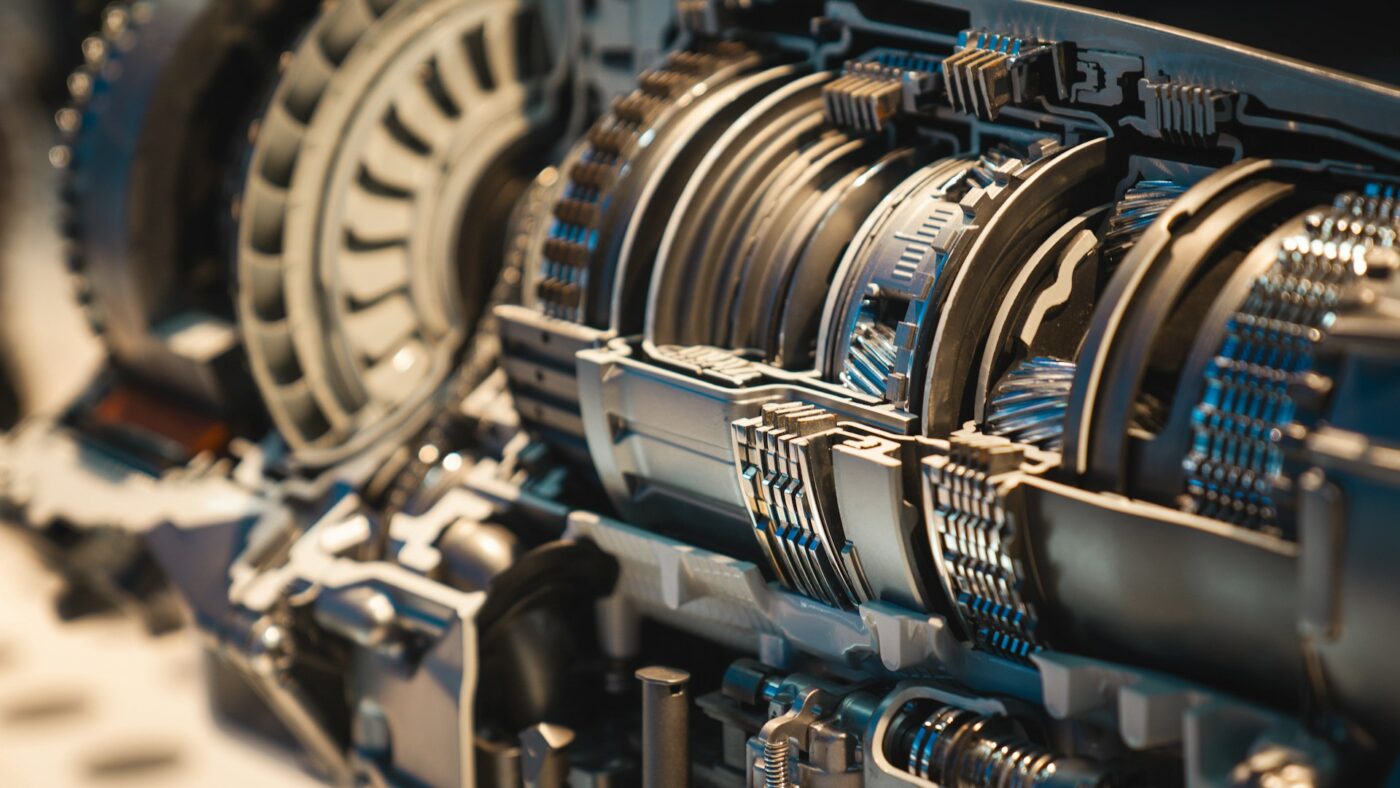
The precise production of complex components like these characterizes the Swiss tech industry, which showed the first signs of recovery in 2025 despite stagnation and is sticking to Switzerland as a business location. (Source: zvg)
The precise production of complex components like these characterizes the Swiss tech industry, which showed the first signs of recovery in 2025 despite stagnation and is sticking to Switzerland as a business location. (Source: zvg / Unsplash.com)

The Swiss tech industry had a lost year. 2025 was characterized by high US tariffs and weak export markets. Turnover (-0.3%) and goods exports (+0.7%) stagnated. The first signs of recovery in incoming orders (+1.4%) are small rays of hope. However, the volatile global situation, the unpredictable US customs policy, the strong franc and the EU's isolationist tendencies will continue to pose major challenges and risks in 2026. Nevertheless, a recent survey by Swissmem shows that companies remain committed to Switzerland as a business location and plan to continue investing here.

Sales stagnate, slight recovery in the second half of the year

Turnover in the Swiss tech industry (machinery, electrical and metal industry and related technology sectors) remained practically at the previous year's level in 2025 (-0.3%). After a weak first half of the year with a significant decline in sales (-2.5%), there was a slight recovery in the third (+3.0%) and fourth quarter (+1.1%) compared to the same periods in the previous year.

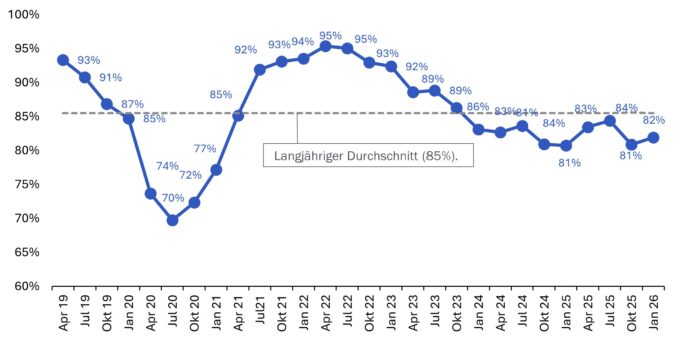
Incoming orders developed only modestly. They increased by a total of 1.4% in 2025. Nevertheless, the second half of the year was better than the first. Compared to the respective quarters of the previous year, orders increased in both the third quarter (+5.4%) and the fourth quarter (+5.0%). These are small rays of hope. In addition, capacity utilization in companies rose slightly for the first time in ten quarters. It reached 81.5% in the fourth quarter, having previously fallen to 80.7%. However, this is still well below the long-term average of 85.6%. The number of employees in the tech industry amounted to 322,900 in the fourth quarter of 2025, which is 6,600 fewer than in the previous year.

EU business compensates for export losses to the USA and Asia

Compared to the previous year, exports of goods in the tech industry stagnated in 2025 (+0.7%) and reached a value of CHF 68.1 billion. Among the most important product groups, exports of machinery, apparatus and mechanical equipment fell by 3.5% and exports of metals and metal goods by 0.6%. By contrast, exports of rail, road and air vehicles rose by 14.9%, electrical machinery, apparatus and other electrotechnical goods by 3.0% and measuring, testing and precision instruments by 0.5%.

The most important sales markets developed differently. Due to the high tariffs, the sharp decline in exports to the USA (-7.6%) is hardly surprising. In the fourth quarter alone, they fell by 18%. Exports to Asia were also down in 2025 (-2.9%), with the negative development of the Chinese market (-11.2%) being particularly significant. The secure anchor for the tech industry's exports was once again the EU market, where exports of goods rose by 3.5%.

Brightening the mood with various reservations

«2025 was a lost year for the Swiss tech industry,» says Martin Hirzel, President of Swissmem. «However, companies did very well in the face of a brutal environment with horrendous US tariffs and a global reluctance to invest.» Expectations for 2026 are mixed. There was a slight tailwind for orders in the second half of 2025, and the industry PMI points to growth in key markets, particularly in Europe.

The mood among entrepreneurs has also brightened slightly. In the latest survey, 32% of companies expect orders from abroad to increase over the next twelve months. 45% expect the trend to remain unchanged and 23% anticipate a decline. However, it is not yet possible to assess whether this positive trend will continue or remain a brief flash in the pan. «The challenges and risks remain great,» warns Martin Hirzel. «I'm thinking of the generally uncertain global situation with many open and smouldering conflicts, the unpredictable US customs policy, the strong Swiss franc and the EU's recent isolationist tendencies. I am also concerned that there seems to be a lack of understanding in parliament of the importance of our locational advantages.»

Locational advantages secure investments in Switzerland

Despite the recent difficult years, companies in the tech industry have remained committed to Switzerland as a business location. This was revealed by a survey of Swissmem member companies at the beginning of 2026, which showed that 88% of companies have invested in Switzerland in the last three years - primarily in the expansion and modernization of production capacities, in the development and manufacture of new products and in the modernization of IT and business processes. The most important reasons in favor of Switzerland are the availability of qualified workers (79%), the advantageous labor market regulations (75%) and the good regulatory framework (68%). 81% of companies are also planning to invest in Switzerland in the next three years.

«These survey results show that Switzerland remains an attractive location for the tech industry,» says Stefan Brupbacher, Director of Swissmem. The survey also clearly shows which locational advantages Switzerland must defend to ensure that this remains the case. «An important key to access to skilled workers is the free movement of persons with the EU. That is why the «No 10 million Swiss» initiative must be rejected, as it jeopardizes the free movement of persons,» emphasizes Stefan Brupbacher.

In addition, the focus remains on the liberal labor market and good framework conditions. This includes concluding the customs agreement with the USA. Switzerland must also do everything in its power to ensure that it is not treated as a third country and partially excluded from the market in the event of countermeasures by the EU. Swissmem believes that the Bilaterals III are the only realistic bridge to this, even if there are no longer any guarantees in the new world.

More information: https://www.swissmem.ch

Guillaume Leopold new Consulting Leader at EY Switzerland

EY Switzerland appoints Guillaume Leopold as new Consulting Leader (Non Financial Services) as of March 1, 2026. He succeeds Urs Indermühle, who was promoted to Consumer and Health Industry Leader at EY Europe West in November 2025.

Guillaume Leopold, EY partner. Source: zvg

The auditing and advisory firm EY Switzerland has appointed Guillaume Leopold as the new Consulting Leader (Non Financial Services) with effect from March 1, 2026. He takes over the position from Urs Indermühle, who was promoted to Consumer and Health Industry Leader at EY Europe West in November 2025.

Stefan Rösch-Rütsche, Country Managing Partner of EY, warmly congratulated Guillaume Leopold on his promotion: «I am very much looking forward to working with him. With this appointment, the EY Switzerland leadership team is ideally positioned for the future.»

Over 20 years of international experience

Since joining EY in 2018, Guillaume Leopold has been instrumental in expanding supply chain & operations capabilities, strengthening cross-functional collaboration and guiding clients through transformative challenges in an increasingly complex global environment.

With more than two decades of international experience - including various leadership roles in global companies - he brings a unique combination of strategic vision, operational excellence and deep industry understanding in areas such as consumer goods, life sciences, supply chain, manufacturing and procurement.

Focus on innovation and talent development

Guillaume Leopold himself commented on the new challenge: «I am very much looking forward to this challenge. With my team, I want to build on our strong foundation in consulting, promote innovative solutions and collaboration, develop our talents and help our clients achieve their strategic and operational goals in a rapidly changing environment.»

In his free time, Guillaume Leopold enjoys skiing, fishing and hiking in the Alps.

www.ey.com

Share of Model - Why AI visibility is the new marketing KPI

More than half of Swiss consumers use AI tools for product research - twice as many as a year ago. If you don't appear in the responses from ChatGPT, Perplexity or Claude, you lose visibility. A new KPI called «Share of Model» measures exactly that - and fundamentally changes the rules of the game in marketing, explains guest author Lucas Blochberger.

Lucas Blochberger, Founder & CEO at Blck Alpaca
Lucas Blochberger, Founder & CEO at Blck Alpaca (Source: Blck Alpaca)

It's happening before our very eyes, and yet many marketers lack awareness of it: the way consumers discover brands is fundamentally shifting. ChatGPT now processes around 2.5 billion prompts a day and is one of the top five most visited websites in the world with 5.7 billion monthly website visits. Perplexity AI answers 780 million queries per month - a growth of 239 percent within one year.

The Comparis data provides an impressive picture for Switzerland: the proportion of consumers using AI tools has almost doubled from 27.4% (2024) to 52.9% (2025). At the same time, traditional search engine use has fallen by around four percent since 2020. In Germany, SE Ranking recorded a growth in AI referral traffic of over 700% with almost 64,000 websites analyzed - still small in absolute terms, but with exponential momentum.

Gartner already predicted at the beginning of 2024 that traditional search volumes would fall by 25% by 2026. This forecast is materializing: so-called zero-click searches, where users receive a direct AI-generated answer and never click on a website, already account for 59.7% of all Google queries in Europe. When Google's AI Mode is active, this figure rises to 93 percent.

What Share of Voice is no longer enough

The concept was coined in 2024 by Jack Smyth, Chief Solutions Officer at Jellyfish (The Brandtech Group). Tom Roach, VP Brand Planning also at Jellyfish, then categorized it in a clear development line in Marketing Week: Share of Market → Share of Voice → Share of Search → Share of Model. The formula is simple: brand mentions by AI models divided by the total mentions in the category, expressed as a percentage.

The decisive difference to Share of Voice lies in the binarity. Search engines also show less popular brands - on page five if necessary. AI models, on the other hand, do not recognize page two. If a brand is not anchored in the knowledge model, it simply does not exist in the AI-generated reality. Researchers at INSEAD business school, in collaboration with Jellyfish, found that many established brands with high consumer awareness are surprisingly weakly represented in AI responses - so-called «high-street heroes» that are strong with humans but invisible with machines.

There is also a considerable variance between models. In one analysis, the detergent brand Ariel showed around 24 percent share of model with Meta's Llama, but less than one percent with Google's Gemini - in the same market. Brands therefore need to be measured across multiple AI platforms.

How AI models decide which brands to recommend

Language models operate via two paths. Firstly, via parametric knowledge learned from large amounts of data during training. Secondly, via real-time retrieval using web search or Retrieval Augmented Generation (RAG). At ChatGPT, an estimated 60 percent of queries are answered purely from training data - without web search.

The decisive factor for parametric knowledge is how frequently and authoritatively a brand is mentioned in the training data. Wikipedia content accounts for around 22 percent of the training data of large language models; for ChatGPT, Wikipedia is the most cited source at 47.9 percent. Contrary to SEO intuition, the strongest statistical predictor of AI visibility is not the number of backlinks, but the brand search volume. Brands that are mentioned on four or more platforms are 2.8 times more likely to appear in ChatGPT responses.

Each AI platform has its own preferences: Perplexity obtains 46.7 percent of its citations from Reddit. Google AI Overviews relies on Reddit for 21 percent and YouTube for 18.8 percent. ChatGPT's web browsing correlates with 87 percent of Bing's top organic results.

Five levers for more AI visibility

The most academically sound study in this field comes from researchers at Princeton University and Georgia Tech. Their «Generative Engine Optimization» study published at KDD 2024 analysed 10,000 search queries and showed that targeted optimization can increase AI visibility by up to 40 percent. Five levers proved to be particularly effective.

Structured data and schema markup: Machine-readable context helps AI systems to interpret content accurately. Experiments show that schema markup improves the response accuracy of ChatGPT by 30 percent. Comparison tables with clean HTML achieve 47 percent higher citation rates. Priority is given to FAQPage, Organization, Product and Article schema in JSON-LD format.

Authoritative, quotable content: The Princeton study shows that citing sources in content can increase visibility by up to 115 percent - quotes by 37 percent, statistics by 22 percent. Content should provide direct answers in the first 150 words and be structured in 40-60 word paragraphs. Pages that have been updated within the last 30 days receive 67 percent more AI citations.

Wikipedia and Knowledge Graph presence: 50 percent of the top marketing agencies cited by large language models have a Wikipedia entry. Wikidata entries with consistent entity information and multilingual Wikipedia pages disproportionately strengthen the basis for AI brand recognition.

Digital PR and brand mentions on highly authoritative sources: Earned media flows directly into training data and retrieval systems. Reddit, YouTube and industry publications are among the most frequently cited sources across all major AI platforms. Nick Taylor from Edelman described earned media as the most important driver of brand visibility in AI-generated responses.

Technical optimization for AI crawlers: The robots.txt must explicitly allow GPTBot, ClaudeBot and PerplexityBot. The new llms.txt standard, already implemented by Stripe, Cloudflare and over 600 other websites, offers AI crawlers a summary of the website optimized for the machine. Server-side rendering is mandatory - AI crawlers do not execute JavaScript.

What CMOs in the DACH region should do now

The first step is an audit. Test 50 to 100 prompts that reflect typical customer queries in your category - in parallel on ChatGPT, Claude, Gemini and Perplexity. Important: Run each query multiple times. Rand Fishkin's research with 600 subjects showed that only 30 percent of brands remain consistently visible between successive AI responses. Make sure you also test in German: «Tell me everything you know about brand [X]» delivers different results than the English version.

Integrate AI visibility metrics into your existing dashboards. Relevant KPIs include mention frequency, citation rate relative to competitors, sentiment score and - crucially - the conversion rate of AI referral traffic. The data is compelling: AI search traffic converts at 14.2 percent, compared to 2.8 percent for traditional Google searches. That is five times higher.

Professional tools are now available for monitoring: Profound (155 million dollars in funding, over ten percent of Fortune 500 companies as customers), Otterly.ai (with Swiss partner AB3.ch for the DACH region) and Semrush with integrated AI visibility tracking. Jellyfish offers its own share-of-model platform.

In terms of budget: AI visibility is an additional investment, not a redistribution of the SEO budget. Deloitte Germany classifies the combined approach of SEO, AEO (Answer Engine Optimization) and GEO (Generative Engine Optimization) as a «strategic necessity». Companies with a high level of GEO maturity invest almost twice as much as their competitors - and 97 percent of digital managers report a positive impact.

The DACH region has a head start - yet

The first-mover advantage in German-speaking countries is real. According to a KfW analysis from February 2026, only 20 percent of DACH SMEs use AI at all - and practically none of them ask themselves whether they appear in AI-generated responses. Some specialized agencies are already positioning themselves: Claneo (Berlin), eMinded (Munich), Dachcom and AB3.ch (Switzerland), the GEO Agency Zurich. But the field is still wide open.

The core message for marketing decision-makers is clear: share of model is not the next hype KPI. It captures whether a brand exists in the AI-mediated reality in which a growing majority of consumers make their decisions. INSEAD research shows that strong traditional brand awareness does not automatically translate into AI visibility. And AI referral traffic is growing by 700 percent annually with five times the conversion rate.

Investing now in structured data, authoritative content, knowledge graph presence, digital PR and technical AI accessibility will build a cumulative advantage. Those who wait risk what a recent white paper from Monks aptly puts: being optimized by the machines from the conversation.


About the Author: Lucas Blochberger is Founder & CEO at Blck Alpaca in Vienna, an agency specializing in data-driven marketing and AI automation. Blck Alpaca develops tailor-made AI agents for marketing automation and supports companies in the DACH region in optimizing their processes - from content creation and lead generation to data-driven campaign management. References include projects with IPEC Group, Heimwatt and Biopower. blckalpaca.at

How peripheral devices become a gateway for critical systems

A comprehensive analysis by the National Cyber Security Test Institute (NTC) shows that peripheral devices in the digital workplace are an often underestimated attack surface. Around 30 devices from established manufacturers that are widely used in Switzerland were tested - with alarming results.

Electronic device, Display device, Gadget
Over the course of a year, the NTC has subjected around 30 wired and wireless devices to a comprehensive technical security analysis. (Source: National Cybersecurity Test Institute NTC / © Stefanie Maurer)

A confidential video conference at a critical infrastructure operator is well protected against hacker attacks - the network, server and laptop are up to date with the latest security standards and the connection is end-to-end encrypted. However, an attack is still possible: using an antenna in the nearby parking lot, an attacker intercepts the inadequately secured radio traffic of the wireless table microphone. Within a few seconds, he can listen in on the confidential conversation. This scenario is not fictitious - it shows how existing protective measures can be circumvented via an insecure peripheral device.

In a comprehensive technical analysis, the National Cybersecurity Test Institute (NTC) examined around 30 keyboards, headsets, webcams and conference systems from established manufacturers that are widely used in Switzerland - devices that can be found on every Swiss desk. The result: the NTC identified over 60 vulnerabilities, including 13 serious and 3 critical findings.

Critical interface for sensitive information

Peripheral devices form the critical interface through which sensitive information flows. For example, passwords are entered via keyboards and confidential conversations are transmitted via microphones and webcams. There is a dangerous asymmetry: the cost of professional security analyses often exceeds the purchase price of such devices many times over.

«In practice, peripheral devices are often regarded as mere accessories and are therefore not systematically tested or consistently integrated into existing safety concepts,» says Tobias Castagna, Head of Test Experts at the NTC.

Electronic device, Electronic component, Computer
Source: National Cybersecurity Testing Institute NTC / © Stefanie Maurer

Systematic safety analysis uncovers risk patterns

In order to systematically assess the security level of widely used peripheral devices in Switzerland, the NTC subjected around 30 wired and wireless devices to a comprehensive technical security analysis over the course of a year. The selection included products from established manufacturers, including devices from Logitech, Yealink, Jabra, HP, Eizo and Cherry, which are also used in critical infrastructures in particular.

The analysis shows that modern peripheral devices can achieve an acceptable level of security with secure configuration and up-to-date firmware. However, the risks increase with increasing device complexity, for example in conference systems or other IoT devices, as well as when using outdated wireless technologies.

The vulnerabilities identified were reported to the manufacturers concerned and most of them were quickly rectified. In one individual case, however, a manufacturer did not respond: in the case of a wireless presentation system, the NTC referred the case to the Federal Office for Cybersecurity (BACS), which then published a public warning.

Five recommendations for minimizing risk

The public report deliberately avoids technical details and product-related vulnerabilities. Instead, it highlights overarching risk patterns, including insecure default settings, weaknesses in device pairing, inadequately secured wireless communication and deficits in firmware and lifecycle management. The study makes it clear that the security of peripheral devices is not just a product characteristic, but depends largely on configuration, operation and clear organizational guidelines.

Based on the results, the NTC has formulated five general recommendations for reducing the risks associated with the use of peripheral devices, particularly for operators of critical infrastructures and organizations with increased security requirements:

  • Standardization and secure procurement via trustworthy channels,
  • Inclusion of peripheral devices in IT lifecycle and asset management,
  • Network segmentation for network-compatible devices such as conference systems,
  • Preference for wired solutions in areas with increased protection requirements and
  • Raising employee awareness of physical and organizational risks.

The investigation was carried out as part of a joint initiative by the National Cyber Security Test Institute (NTC) with the support of federal and cantonal authorities and organizations from the financial sector. In order to ensure the independence of the results, the manufacturers of the tested devices were neither involved in the selection nor in the execution of the tests and were only contacted as part of the confidential notification to rectify the vulnerabilities.

More information: www.ntc.swiss

Swiss management bodies in transition: older, more international and more tech-savvy

The schillingreport 2026 shows clear shifts in Swiss management bodies: Executive board members are getting older, the proportion of foreign specialists is rising and boards of directors are increasingly relying on business and technology expertise. At the same time, the proportion of women is stagnating after reaching the gender benchmarks.

Formal wear, Meeting, White-collar worker
The Swiss economy is facing major challenges - this is also reflected in the composition of management bodies. (Source: Depositphotos.com)

The Swiss economy is facing far-reaching challenges: Digitalization, technological disruption, decarbonization and demographic shifts are increasing the pressure on management structures. In the 21st edition of the schillingreport, the question arises as to whether the changes in the board of directors and management of the 100 largest employers are sustainable enough to meet these challenges in the long term.

Management boards are getting older

The average age of members of the Executive Board has risen steadily since 2011 from 50 years to the current 53 years, while that of the CEO has risen from 52 years to 55 years. What is particularly striking is that the newly appointed members of the Executive Board are also significantly older. Whereas they were 46 years old when they joined in 2006, they are now 50 years old - although the length of time they have been with the company has remained unchanged at 6 years.

«The world today is much more complex than it was 20 years ago, and the cadence of external events is increasing. These demanding challenges call for proven leadership and life experience,» concludes Guido Schilling, publisher of the schillingreport.

A closer look at the data reveals clear shifts in the age structure: the proportion of management board members aged 50 or over rose from 49% in 2006 to 72% today. The over-60s increased from 5 to 9 percent. At 35 percent, the 55 to 60-year-olds form the largest group, whereas in 2006 the 45 to 49-year-olds dominated with 28 percent. The latter now only make up 19 percent. Strikingly, 23% of management board members were younger than 45 in 2006, compared with just 9% at present.

«Older members of the Executive Board contribute important experience, but a lack of generational diversity can create strategic blind spots. For the next ten years, the nomination committees must take an active and forward-looking approach to succession planning for the Executive Board in order to involve talented individuals in good time and show them prospects within the company,» says Schilling.

Competence before nationality

The proportion of Executive Board members without a Swiss passport is 48% - the second-highest level since the survey began in 2006. Important: 71% of foreign Executive Board members are so-called «nationals». These are people without a Swiss passport but who have already gained professional experience in Swiss companies before being promoted to the top management body.

The 20 globally active SMI companies have a proportion of foreign management board members of 74% - here too, «Swiss nationals» make up the majority at 75%. «Swiss companies traditionally recruit some of their specialists abroad and know how to develop them in a targeted manner and retain them in the Swiss economy in the long term. This strengthens competitiveness and innovative capacity,» concludes Schilling. «At the same time, I am concerned that increasing regulation is restricting access to global specialists to such an extent that this could become a disadvantage for the Swiss economy in the medium term.»

Excluding the 20 SMI companies, the proportion of management board members without a Swiss passport is 42%. Around one-fifth of the companies (19%) have an all-Swiss Executive Board, while 15% have no Swiss nationals on their Executive Board.

Stagnation after reaching the gender benchmarks

The proportion of women is currently stagnating in all samples. In the Board of Directors, this rose only slightly: in the overall sample from 33% to 34% and in the SMI from 35% to 36%. With the expiry of the transitional period for achieving the gender benchmark in the Board of Directors on January 1, 2026, the focus is shifting to the responsibility of companies. Although 71% of companies achieve the benchmark of 30% women on the Board of Directors, just under a third (29%) still fall short of it, and 4% have no women on the Board of Directors.

«16 listed companies from our sample do not currently meet the benchmark for the Board of Directors. These companies are particularly challenged, as from the 2026 remuneration report they will have to state the reasons for not reaching the benchmark and explain measures to promote the underrepresented gender,» says Schilling.

The proportion of women on the Executive Board has stagnated at 22%. The proportion of women among newly appointed members of the Executive Board is 21%, the lowest level since 2020. At 28%, the number of women leaving the Executive Board is at its second-highest level since the survey began. This flattening trend can also be seen in the 20 SMI companies: the proportion of female members of the Executive Board fell from 28% in 2025 to currently 27%. 25 percent of vacancies in the SMI were filled by women.

A look at the 2025 survey results on the gender diversity pipeline shows: Between 2016 and 2025, the proportion of women in middle management rose from 22% to 28% and in top management from 14% to 21%. Meanwhile, the proportion of women in management grew particularly strongly from 6% to 22%. «In recent years, companies have focused on meeting the benchmark at the expense of a sustainable increase in female managers across all levels,» says Schilling. «Is the Swiss economy really aware of the long-term added value of gender-balanced management teams at all levels - or is gender diversity still primarily seen as a regulatory obligation rather than a strategic success factor?»

In the public sector, too, the proportion of women in top management is leveling off and has stagnated at 27%. The public sector was long regarded as a pioneer in terms of gender diversity, but the private sector has now caught up to 22%. In the federal government, the proportion of women in top management has leveled off at 38%.

Changing profiles on the Board of Directors

After the 2008 economic crisis, the focus of the Board of Directors was on governance, regulation and risk control - lawyers played a central role. Today, companies are facing different challenges. «Global markets, technological disruption, digitalization and the use of artificial intelligence require a deeper understanding of business models, markets and technologies. Geopolitical uncertainties and fragmented markets further increase the pressure on internationally oriented companies. Personalities with a business and STEM profile are coming into focus with their approach to these issues,» says Schilling.

This is also reflected in the work of the Board of Directors: 12 companies already have a dedicated digitalization or technology committee, the majority of whose chairs have a STEM background.

In particular, the requirements profile for chairmen of boards of directors is evolving substantially away from primarily legal control towards strategic market and technology expertise. As recently as 2006, 27% of board chairmen had a law degree, 33% an economics degree and 22% a STEM degree. Today, the picture is different: the proportion of lawyers has fallen to 17%, while 42% have a business background and 34% a STEM background.

The full report will be available online from May 2026 at www.schillingreport.ch/de in German, French and English.

More information: www.guidoschilling.ch

Humanoid robots: Tesla's bet on the next industrial revolution

The market for humanoid robots could grow to up to 200 billion US dollars by 2035. Tesla is positioning itself as a pioneer in this new industry with its Optimus robot. However, competitors from the USA and China are also investing heavily in the technology.

Will such humanoid robots soon become investment boosters? (Image: Joe Planas / Unsplash.com)

From car manufacturer to robotics company? What has long sounded like a vision of CEO Elon Musk at Tesla is now taking concrete shape. Humanoid robots - machines with a human-like shape, sensors and autonomy - are developing from a research project into an industry potentially worth billions. For investors, the question is: is this the next big platform on the verge of a breakthrough?

A market with enormous leverage

The global market for humanoid robots is still in its infancy, but the growth expectations are extraordinary. Analysts at Goldman Sachs estimate that the market could reach a volume of 150 to 200 billion US dollars by 2035, with annual growth rates of over 40 percent. By 2030, more than one million humanoid robots could be in use worldwide - initially in industry, logistics and care, and later in the service sector.

By comparison, the current market for industrial robots is worth around 16 billion US dollars a year. Humanoid robots would structurally expand this category. Not replacing, but complementing.

Audun Wickstrand-Iversen, Portfolio Manager at DNB Fund Disruptive Opportunities (Source: DNB Asset Management)

Tesla Optimus: The most ambitious approach

Tesla is at the center of attention. With its humanoid robot Optimus, the company is taking a radically different approach to traditional robotics manufacturers. While competitors focus on specialized tasks, Tesla wants to develop a universally deployable worker.

Optimus is around 1.73 meters tall, weighs around 70 kilograms, can carry up to 20 kilograms according to Tesla and is controlled by the same AI systems as Tesla's vehicles. At its heart is the self-developed Full Self-Driving (FSD) AI system, supplemented by neural networks for gripping, walking and object recognition.

Elon Musk puts the long-term production costs per unit at less than 20,000 US dollars - a figure that would have a disruptive effect if industrial scaling were achieved. By comparison, humanoid prototypes today often cost over 100,000 US dollars.

The strategic advantage: data, software, scaling

Tesla's decisive advantage lies less in its mechanics than in its software and data basis. No other provider has comparable experience with real-time sensor fusion, visual AI in complex environments and series production in the millions.

Musk argues that Optimus could become more valuable than the car business in the long term. With several hundred million jobs worldwide in simple, repetitive activities, the addressable market is enormous. Crucially for investors, even low market penetration would have a massive impact on Tesla's valuation.

Strong competition from the USA and China

However, Tesla is not alone. In the US, Boston Dynamics (Hyundai Group as shareholder) is driving development with its humanoid Atlas, which today works autonomously alongside humans in Hyundai factories. Figure AI, backed by Microsoft, OpenAI and Nvidia, has reached a valuation of around 40 billion US dollars in 2025 and is already testing humanoid robots in factories such as UPS and BMW.

In China, companies such as Xiaomi, Unitree Robotics and state-funded research institutions are investing heavily in humanoid systems. China sees robotics as a key strategic industry, especially against the backdrop of demographic change.

The silent beneficiaries: chips, actuators, AI

As with previous technology cycles, attractive opportunities arise beyond the end products. With its AI accelerators, Nvidia provides the computing power for training and simulating humanoid movements. Qualcomm is working on energy-efficient edge chips for autonomous robotics. Manufacturers of electric motors, actuators and sensors - such as Harmonic Drive, Nabtesco and Bosch - are benefiting from the increasing demand for precision and reliability.

Despite all the euphoria, caution is still required. Humanoid robots are technically extremely complex. Autonomy, safety, energy efficiency and regulatory issues remain unresolved. In the short term, humanoid robots will not replace human workers, but will initially provide support - for example in factories, warehouses or care facilities.

For Tesla, this means that Optimus will not generate any significant sales in the coming year. The valuation is still primarily based on the automotive business. But in the long term, an asymmetric option opens up: if the project fails, the damage will be limited; if the breakthrough succeeds, Tesla could dominate an entirely new industry, which could be the largest industry ever created.

Outlook: The next big platform?

Humanoid robots could become what the smartphone was for the digital world: a universal interface between humans and technology. For investors, it is crucial to distinguish between vision and feasibility. Tesla brings both, but also considerable risks.

One thing is certain: The race for humanoid robots has begun. And as is so often the case with technology: Whoever controls the platform controls the market.

Source and further information: DNB Asset Management

Zurich tourism region breaks the 7.5 million mark

The Zurich tourism region recorded a total of 7.56 million overnight stays in 2025, representing growth of 3.5% compared to the previous year. The Swiss market developed particularly dynamically with an increase of 4.8%. The balanced guest mix with a strong domestic market ensures stability in economically uncertain times.

Winter view of Zurich's old town
The Zurich tourist region achieves a new record for overnight stays. Source: zvg

The Zurich tourist region recorded a total of 7,556,846 overnight stays in 2025. This means that the number of overnight stays grew by 3.5% compared to the previous year and reached a new high. The figures confirm the strategic course pursued since 2022 with a focus on a balanced guest mix with a strong domestic market and the clear positioning of Zurich as a premium destination with a high quality of life.

The tourism region, which extends from Baden and Winterthur via the city of Zurich and the airport region to Rapperswil and the canton of Zug, is thus continuing the positive trend of recent years.

Strong domestic market and stable international demand

Growth was evenly distributed across the most important markets of origin. The Swiss market developed particularly dynamically: overnight stays by domestic guests rose by 4.8%. With a share of 38.7%, guests from Switzerland continue to make up the largest group of guests.

The European core markets also returned to growth. Germany grew by 3.6%, the UK by 8.2% and Italy by 6.4%. This clearly compensated for the previous year's declines.

The positive trend from the USA and Canada continues: with growth of 4.5% and a market share of 13.5%, guests from North America remain the second-largest visitor group. In contrast, the overseas markets of India declined by 2.8%, South East Asia by 8.8% and the Gulf States by 6.2%.

Balanced guest mix strengthens resilience and stability

Around 39% of guests come from Switzerland, with just under a third each from local European markets and long-distance markets. This broad distribution makes the destination particularly resilient, as fluctuations in demand in individual markets can be better balanced out. «The balanced guest mix with a strong home market is a success factor for Zurich,» says Thomas Wüthrich, Director of Zürich Tourism, «because it ensures stability, especially in economically and geopolitically uncertain times.»

Leisure grows, MICE remains strategic focus

A long-term comparison shows that overnight stays in Zurich have grown, particularly in leisure tourism. Business travel and congress and conference visits (MICE) remained stable. The congress and conference business remains a strategic focus for Zürich Tourism. «Business guests generate higher added value, strengthen Zurich's visibility thanks to international networking and position the city as a knowledge and business location,» emphasizes Wüthrich. «In order to further develop this segment, we need a competitive infrastructure, strong partnerships and a clear international positioning.»

Growth with impact: focus on length of stay, seasonality and quality of life

The positive development underlines the sustained demand for the region. For Zürich Tourism, however, the focus is not on pure volume growth, but on balanced and sustainable long-term development. The aim is to increase the length of stay, smooth out seasonal fluctuations, increase added value per guest and ensure a balance between tourism development and quality of life.

For the future, Zurich Tourism is therefore focusing more on quality of stay and social connectivity. The region is to be further developed as a premium destination worth living in, where visitors stay longer, enjoy a wide range of cultural and natural attractions and perceive Zurich as an authentic place with a high quality of life.

The focus is also on the perspective of the local population: tourism offers should be designed in such a way that they benefit both locals and visitors. An attractive cultural, leisure and event landscape, sustainable urban development and positive economic impetus contribute to tourism being perceived as part of a vibrant visitor economy. «Only what is good for the population is also good for guests,» Thomas Wüthrich is convinced. «Long-term attractiveness is created where tourism strengthens the quality of life.»

US customs ruling: Switzerland and emerging markets benefit from new uncertainty

The US Supreme Court has overturned key tariffs, but the customs system remains in place. Alongside Brazil, China and other countries, Switzerland could benefit from a time window in the new customs regime. For companies, however, the ruling means further uncertainty and a new round of hoarding.

Switzerland could also benefit from the US customs ruling. (Image: Depositphotos.com)

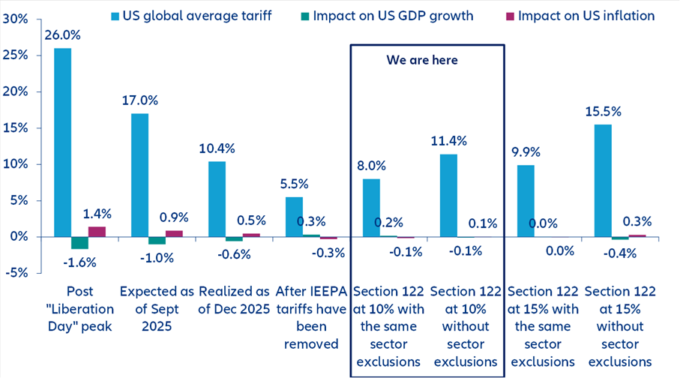
The US Supreme Court has declared part of the US tariffs unconstitutional - but not the new tariff system as a whole. In a 6-to-3 decision, the court ruled on February 20 that the International Emergency Economic Powers Act (IEEPA) does not provide a legal basis for the reciprocity tariffs announced on Liberation Day. The tariffs put on hold represent around 60 percent of US customs revenue since April 2025. The ruling invalidates tariffs worth around 60 billion US dollars as well as the emergency fentanyl tariffs on China, Mexico and Canada amounting to a further 40 billion dollars.

Halving the tariff - but only temporarily

The court ruling halves the effective US tariff rate to around five percent. However, significant parts of the tariff regime remain in place: Section 301 of the Trade Act, with 25 percent tariffs on industrial machinery, electrical equipment and other products from China, and Section 232 on steel and aluminum. President Trump has already confirmed his plans for a universal minimum tariff of ten percent. Section 122 of the Trade Act of 1974, which allows tariffs of up to 15 percent for 150 days, is expected to serve as a replacement instrument.

The respite is likely to be short-lived. «The tariff ruling does give some countries more breathing space, probably for a slightly longer period of time,» says Ana Boata, Head of Economic Research at Allianz Trade. «But the US has already launched new tariffs, with Section 122 of the Trade Act replacing the invalidated tariffs.»

Winners and losers of the reorganization

Bangladesh (minus 20 percentage points) and Pakistan (minus 19 percentage points) as well as major emerging exporters such as Indonesia (minus 18 percentage points), Brazil (minus 17 percentage points), China (minus 15 percentage points) and Vietnam (minus 15 percentage points) are currently experiencing the greatest tariff reductions as a result of the ruling. South Africa (minus 15 percentage points), Turkey and India (minus 12 percentage points each) also benefit from lower tariffs.

Under a Section 122 regime with industry exemptions, Brazil, Bangladesh, India, China, Pakistan, Switzerland, South Africa, Vietnam and Indonesia in particular would benefit. Exporters from these markets could benefit from a reduction in the average US tariff rate by at least ten percentage points compared to the previous level. In contrast, Saudi Arabia, Mexico and Ecuador as well as Taiwan, Norway, South Korea or the European Union could face higher tariffs if no sectoral exemptions are granted.

After the US tariff ruling: This is how the development and scenarios for US tariffs look. (Graphic: Allianz Trade)

Uncertainty for Swiss companies

«The ruling comes at an inopportune time for Switzerland,» says Jan Möllmann, CEO of Allianz Trade in Switzerland. «The envisaged trade agreement should finally create more predictability for local companies. Thanks to the stop-and-go policy, they are now still up in the air.» In a new customs system, exceptions for certain sectors, such as pharmaceuticals, are crucial for Switzerland in particular.

The time window in Section 122 is limited by definition: Congressional approval is required after 150 days. This is likely to lead to deliveries from favored markets being brought forward before there are further tariff increases under other sections.

New round of warehousing in the USA

The customs chaos is leading to a new wave of hoarding in the USA. «By 2025, warehouses were already full and pull-forward effects ahead of new tariff levels were the new normal,» explains Boata. «Manufacturers of cars and household appliances in particular have filled their warehouses, but the retail and chemical industries have also made provisions for longer procurement cycles with more goods.»

Working capital requirements (WCR) in the US rose by more than 35 days to over 60 days in the third quarter of 2025. Automotive manufacturers and producers of household appliances - the two sectors with the highest exposure to tariff increases - were particularly affected. A renewed precautionary inventory cycle is likely to keep US WCRs at their 2025 highs.

Fiscal and inflationary effects

So far (until December 2025), only half of the higher customs costs have been passed on to consumers. The greatest impact is not expected to be felt until well after the first quarter of 2027, with an additional inflation contribution of one percentage point at an average tariff rate of ten percent.

Since Liberation Day, US customs revenue has risen to 240 billion dollars - 180 billion dollars more than in the same period last year. IEEPA-related measures accounted for almost 60 percent of the additional customs revenue. If the tariffs are found to be retroactively illegal, refund liabilities could reach 120 billion dollars (0.5 percent of GDP) and widen the budget deficit to 7.5 percent of GDP.

Markets react cautiously

The reactions on the financial markets were measured. The S&P 500 rose by 0.7%, while the markets in Europe rose by around 0.9%. Analysts expect that the short-term upward effects could be dampened by uncertainty. A growth impulse of 0.5% could increase corporate profits by around 1% - modest compared to the 16% profit growth expected for the S&P 500 in 2026.

«It will continue to be a back and forth in the coming weeks and months,» predicts Boata. «Ultimately, we expect an average tariff rate of ten percent in accordance with Section 122 with sectoral exceptions. Overall, therefore, little is likely to change in the medium term despite the overturned tariffs. However, for some countries and sectors, there may well be a ripple effect if the cards are reshuffled now.»

More information: www.allianz-trade.ch

MEM SMEs continue to battle headwinds

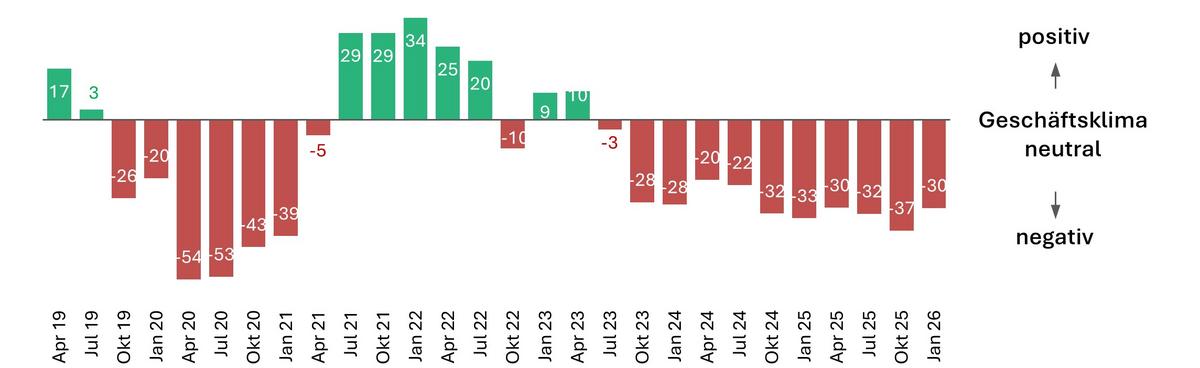
The Swissmechanic SME-MEM business climate index continues to show a tense situation in the mechanical, electrical and metal industry at the start of 2026. At around -30 points, the index remains clearly in negative territory. Three quarters of companies rate their current business situation as unfavorable.

Utilization of production capacities (source: BAK Economics, Swissmechanic quarterly survey)

The business climate in Swiss industry remains pessimistic at the start of 2026. Around 40% of companies recorded a decline in incoming orders and sales in the fourth quarter of 2025 compared to the previous year. EBIT margins fell at 46%. Although individual companies reported a slight stabilization, overall capacity utilization remains below the long-term average. Only 18% of companies still have an order backlog of more than twelve weeks.

Order situation remains the biggest concern

At 63%, the order situation remains the biggest concern for companies. Exchange rate fluctuations (37%) and the shortage of skilled workers (26%) are an additional burden. 17% of companies are currently using short-time working - a figure that corresponds to the average of previous quarters. The short-term order situation remains secure for most companies: seven out of ten companies have at least four weeks of production secured.

Swissmechanic business climate index
Swissmechanic business climate index for SME MEM companies (source: BAK Economics, Swissmechanic quarterly survey)

US tariffs bring only limited relief

Even the reduction in US tariffs from 39% to 15% only provides limited relief. For the majority of companies, this does not mean a turnaround, but only a moderate improvement in business prospects. Strategic adjustments continue to focus on process and cost optimization, while production relocations are rarely planned.

Investments under pressure

Financial restrictions are preventing 26% of companies from investing - a slight increase compared to fall 2025. The main reason for this is a lack of own funds. At the same time, two thirds of companies are planning to keep their production capacities constant. The majority of companies also kept their headcount constant, with just under one in three having to reduce their workforce.

Macroeconomic environment remains challenging

The global economy will lose momentum slightly in 2026. BAK expects Swiss gross domestic product adjusted for sport to grow by 0.9% in 2026. Development in the EU will be at a slightly higher level with growth of 1.2%. The US economy will grow more strongly with a forecast growth rate of 2.8%. The Swiss franc will also remain strong in 2026, at CHF 0.93/euro or around CHF 0.80/USD.

Swissmechanic President Nicola Tettamanti says: «Our SMEs are showing great stamina. But stabilization at a low level is not yet a recovery. We need reliable framework conditions and political stability that enable investment and create planning security.» Swissmechanic Director Erich Sannemann adds: «Companies are reacting pragmatically: they are optimizing processes, securing their liquidity and keeping their workforces as stable as possible. This resilience is impressive - but it should not be taken for granted.»

More information: www.swissmechanic.ch

get_footer();