
Microcars considered sensible - but nobody wants to drive them

The majority of the Swiss population find cars too big. Environmentally-minded people in particular criticize the dimensions of vehicles. But when it comes to owning a car, space, comfort and flexibility continue to dominate. Small cars remain a marginal phenomenon - despite growing cities and a shortage of parking spaces.


Land vehicle, Vehicle, Car
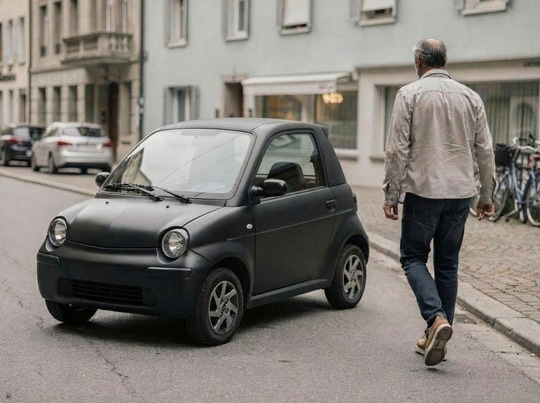
Microcars are considered parking-friendly - but too small for everyday use. Source: zvg

According to a representative study commissioned by AutoScout24, only 4 percent of Swiss households own a microcar. These include microcars such as the Microlino, Fiat Topolino or Citroën Ami. Only 17 percent of the population can imagine buying or leasing such a vehicle within the next two years. However, the pressure of suffering in road traffic is certainly there: Six out of ten respondents feel that the cars on Swiss roads are too big. This perception is particularly pronounced among environmentally-minded people, 85 percent of whom criticize the size of vehicles. At the same time, however, only 28 percent see cars that are too big as a key stress factor. From the population's point of view, inconsiderate behavior by other road users, traffic jams and the search for a parking space are much more stressful.

Too small for everyday use

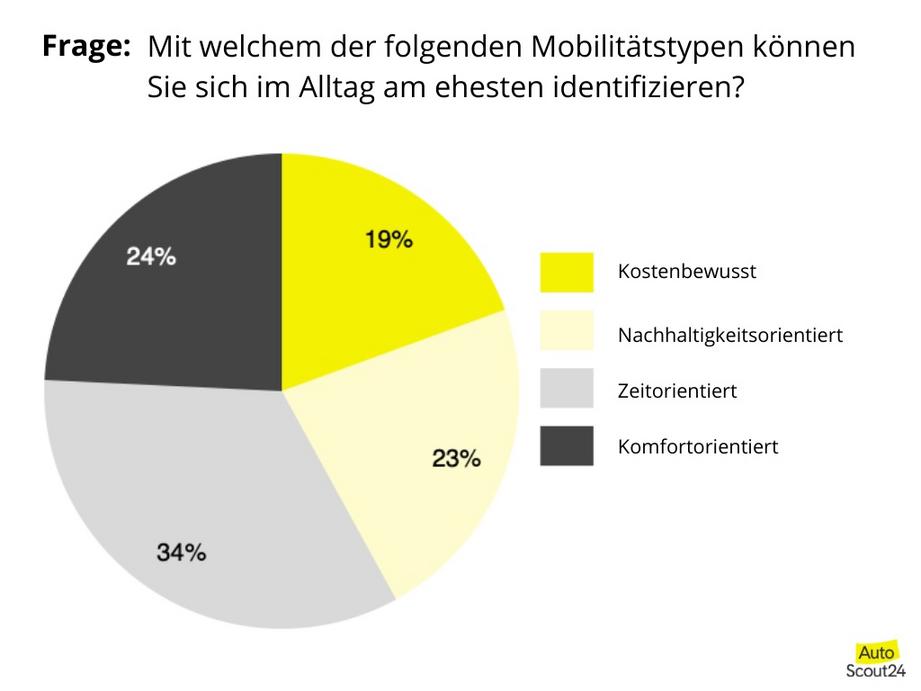
In terms of mobility types, the Swiss most frequently categorize themselves as time-oriented (34 percent), followed by comfort-oriented (24 percent) and sustainability-oriented (23 percent). Money seems to play a relatively smaller role: Around 19 percent classify themselves as cost-conscious.

The Swiss population primarily perceive microcars as being easy to park (56%). At the same time, many associate them with little storage space (49%) and limited occupant protection. Only a quarter of respondents associate microcars with environmental friendliness. Accordingly, 64 percent see them primarily as a second vehicle - and only 15 percent see them as a model that suits their own lifestyle.
Text, Font, Diagram
The perception of microcars in Switzerland. Source: zvg

The skepticism is particularly clear when it comes to family suitability: Over 80 percent are of the opinion that subcompact cars are not suitable for everyday family life. For many, this is the end of the matter - around half of those who are not interested in buying one do not mention any aspect that could change their mind. The most frequently expressed wish for more storage space contradicts the basic concept of this vehicle category.

Price-performance in demand

Those who find microcars attractive do so primarily for rational reasons. The most important purchase argument is a good price-performance ratio, followed by sustainability, low maintenance costs and suitability for short distances in city traffic. On average, the Swiss population cites just under CHF 10,000 as a reasonable price. The market data from AutoScout24 shows that the corresponding models are in this price segment: The Citroën Ami was advertised for an average of around 9,925 francs in 2025, while the Fiat Topolino was advertised for around 11,182 francs. Price expectations and market supply are therefore close together - even if interest on AutoScout24 remains low.

Sustainability with limits

Microcars are seen as a solution, especially when it comes to space consumption by parked cars: Three quarters of those surveyed believe they would have a positive effect. Many also believe that noise and air pollution could be at least partially alleviated. In contrast, only 33 percent believe they could make a noticeable contribution to traffic congestion.

«For many Swiss people, compact cars are more of a supplement than a replacement - in everyday life, vehicles that offer more space and flexibility continue to dominate in the country of SUV drivers,» says Alberto Sanz de Lama, Managing Director AutoScout24 of the SMG Swiss Marketplace Group.

Data basis: On behalf of AutoScout24, YouGov Switzerland conducted a representative online survey from January 6 to 14, 2026. A total of 656 people aged between 18 and 79 from German-speaking and French-speaking Switzerland were surveyed. The results are weighted according to gender, age and region and are representative of the online-savvy population of German-speaking and French-speaking Switzerland.
www.autoscout24.ch

ZID Bernapark invites you to pitch night, workshops and networking

The Centre for Innovation and Digitization (ZID) presents its current programme for start-ups and SMEs. In addition to the Pitch Night Bern on March 12, practical workshops on due diligence and Microsoft Copilot are on the agenda. The ZID also offers flexible office solutions for innovative teams.

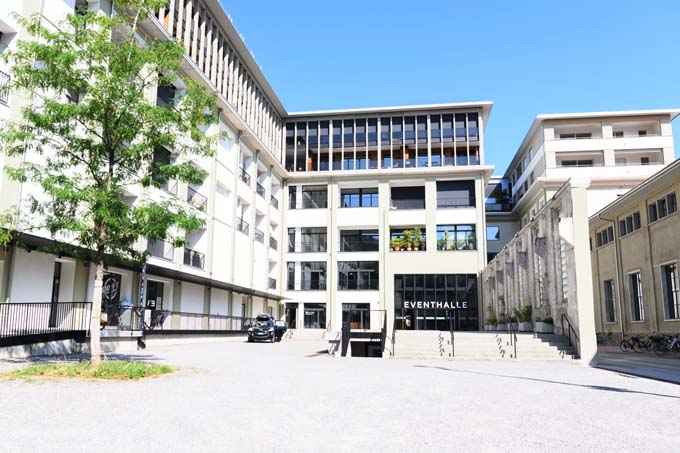
The event hall in Bernapark, which is also home to the ZID. (Image: zVg / Bernapark)

The Centre for Innovation and Digitalization (ZID) in Bernapark offers start-ups, SMEs and people interested in innovation a diverse programme. From pitch events and practical workshops to networking opportunities - the ZID is positioning itself as a central point of contact for the regional innovation landscape.

Pitch Night Bern on March 12, 2026

On March 12, 2026, Bern will become a stage for fresh ideas and courageous founders. Pitch Night Bern brings together start-ups, investors, experts and people interested in innovation for an inspiring evening. Ten start-ups will be selected from all the applications to present their business idea live on stage - in just three minutes of pitching plus two minutes of Q&A. The most convincing startup will receive a prize worth over 10,000 francs at the end of the evening. As co-organizer, the ZID is pleased to actively strengthen the regional innovation landscape and offer founders a stage.

Workshop on due diligence for start-ups

On February 25, 2026, a workshop on «Due diligence for startups - optimally prepared for the investor pitch» will take place from 14:00 to 19:00. Together with Dominik Witz, Co-Founder of Konsento, participants can check whether the structure, governance and documentation are really «investor-ready». The share register is digitized, key documents are analysed from an investor's perspective and potential gaps are closed at an early stage. The workshop concludes with a networking aperitif.

Microsoft Copilot in corporate use

After the successful SME update on January 20, 2026 with Tobias Kluge from Incratec, an in-depth workshop will follow on March 26, 2026 from 08:00 to 12:00. Participants will learn how to introduce Microsoft Copilot in SMEs in a targeted manner and how to use it productively straight away. The workshop will cover effective prompting, setting up a personal Copilot and automating recurring tasks with Copilot Agents. Participants will also receive practical input on data protection, security and governance as well as a clear implementation roadmap. After the workshop, there will be a follow-up as well as access to the documents and a prompt library.

Sictic Masterclass on Vesting and Employee Incentive Plans

On March 3, 2026 from 17:30 to 19:30, a Sictic Masterclass will take place at ZID Bernapark. Claudio Gür, Partner at Domenik & Partner, will explain the importance of ESOPs, PSOPs and phantom shares. In an interactive exchange with Ralph Mogicato (Board Member Sictic) and Rüdiger Petrikowski (Regional Director Bern Sictic and CEO & CFO MIHM Ventures), participants will learn why the exercise period is important and what significance it has for founders and investors. The event is open to all investors.

Flexible office solutions in the ZID

The ZID offers modern serviced offices with space for every need - from compact individual desks for focused work to spacious areas for teams with up to 40 workstations. Each room can be individually designed. The «all-round carefree package» at a standard rate includes fast internet, meeting rooms and access to an inspiring community. The premises are located in the historic halls of the former cardboard factory in Deisswil, now known as Bernapark.

Further information on the program and the offers of the ZID Bernapark can be found on the Website of the Centre for Innovation and Digitization.

Manor relies on Swissper for influencer marketing

The Swiss department store chain Manor is strategically reorganizing its influencer marketing and transferring overall responsibility to the social-first agency Swissper. The Zurich-based agency, part of the Thryve Group, is developing a year-round creator ecosystem that systematically combines brand management and retail logic.

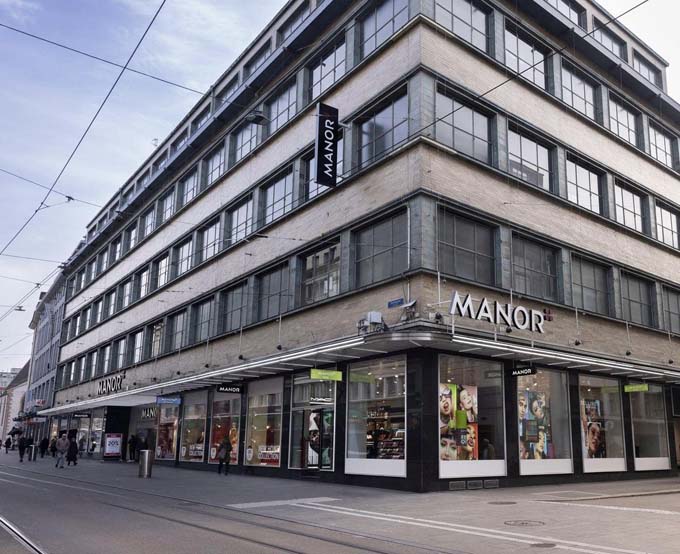
[caption id="attachment_44747" align="alignnone" width="680"] The department store chain Manor is reorganizing its influencer marketing. (Image: zVg)[/caption]
Manor is strategically repositioning its influencer marketing and relying on Swissper. The social-first and creator agency, part of the Thryve Group, has won Manor's strategic influencer account and will be responsible for the conceptual and operational management of the creator setup of Switzerland's largest department store chain. The aim is to build a structured creator ecosystem that is integrated into the brand and retail strategy in the long term.

From campaigns to infrastructure

At the heart of the collaboration is a strategic realignment: influencer marketing will no longer be campaign-driven, but rather a permanent infrastructure within brand management. To this end, Swissper is developing a clear annual architecture with defined roles in the creator setup, tailored to the fashion, beauty and home product ranges as well as Manor's seasonal retail logic.

Central peak phases such as Mother's Day, Easter, Back to School and Black Friday are not activated in isolation, but embedded in a consistent, year-round concept. The result is a creator system that structurally combines reach, relevance and retail objectives.

«Our approach for Manor is clearly strategic. We are not building a campaign construct, but a resilient creator ecosystem that works all year round and integrates seamlessly into the retail logic,» says Nicolas Bernauer, Head of Business Development at Swissper. «The decisive factor is the conceptual bracket: a clear annual structure, defined roles in the creator setup and consistent brand management across all touchpoints.»

Conceptual precision as a decision criterion

Strategic depth was also at the forefront of Manor's decision. «Swissper understood exactly what role Creator Marketing should play in our brand and retail strategy in the future,» says Sabrina Jagode, Head of Content Factory & Social Media at Manor. «The proposed concept combines our seasonal structure, our product ranges and our national presence in a clearly structured Creator system. This conceptual precision was decisive for us.»

For Swissper, the mandate is a strategic step in the Swiss retail market. «Retail is faced with the task of integrating brand management, inspiration and retail more closely,» says Kevin Toma, CEO of Swissper. «Creators are not an add-on, but part of the brand infrastructure. With Manor, we are developing a setup that is sustainable in the long term and grows strategically with the brand.»

The mandate includes overall strategic responsibility for the conception, structure and further development of Manor's Creator ecosystem. Swissper is thus consolidating its position as one of the leading social-first partners in the Swiss market.

AI recommendations in retail: customers expect hyper-personalization

Two thirds of online customers see benefits from the use of artificial intelligence when shopping. A recent survey by Lufthansa Industry Solutions shows: Retailers need to step up their game when it comes to personalized recommendation systems and digital advice. A new white paper explains how AI-supported tools are leveraging the trend towards hyper-personalization.

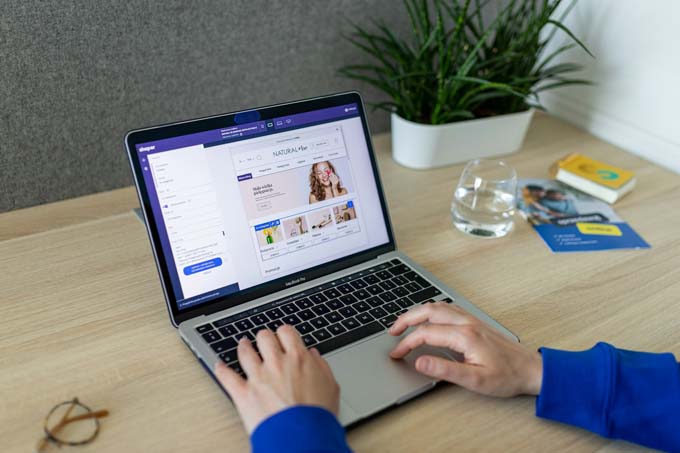
When AI makes purchase recommendations: customers demand hyper-personalization. (Image: Unsplash.com)

Almost one in two people now order something online at least once a week. Online shopping is popular, but is undergoing radical change. «Customers want more than functioning technology and a large selection of products,» says Marius Browarczyk, Head of Retail at Lufthansa Industry Solutions. «The keyword is hyper-personalization.»

According to a recent survey by Lufthansa Industry Solutions of almost 1,100 people in Germany, 81 percent use the product recommendations displayed on the platforms. However, only one in ten online customers is really enthusiastic about it. The respondents hope that the increased use of artificial intelligence will help.

Customers are satisfied, but demanding

89% of Germans are very or at least somewhat satisfied with their online shopping experience. However, the issue of advertising is a cause for concern: 44% of respondents complain that they receive too much of it, and 39% even feel that they are downright «persecuted». Many would prefer real advice instead of advertising, but this is often in short supply online.

There is also an increased need for advice when buying online, particularly for electronics, travel, medicines and DIY products. For electronics, 36% of customers would like advice, 24% for travel or tickets and 22% for medicines and healthcare products.

Chatbots not yet established

Advice in online stores is often provided by chatbots, but these have not yet become established. Only five percent of respondents use them very frequently, with a further 15 percent using them fairly frequently. More than a third (36%) never use chatbots, 44% rarely. However, they have potential, as 60 percent of users are somewhat or even very satisfied with them.

Recommendation functions are more popular. They are used frequently or very frequently by 38 percent of respondents. Only 19 percent do not attach any importance to product recommendations. In terms of satisfaction rates, the recommendation systems perform slightly better than chatbots: 10% are «very satisfied» and 62% are «somewhat satisfied».

67 percent see advantages through AI

Overall, 67% of respondents see benefits from the use of AI in online shopping. For example, 36% expect it to save them time and effort, and 27% assume that they will receive more suitable offers thanks to AI. A further 31% expect to find the desired products more quickly, 26% hope for more accurate information and 24% for optimal recommendations.

However, there are clear differences between the age groups. Among the younger respondents up to the age of 29, only 17% are skeptical, while in the 60+ age group, this figure is almost half (47%). Generation Z and the generation following it, Generation Alpha, are particularly open to AI-supported offers - they are the financially strong customers of tomorrow.

Transparency and data protection are key

However, 93% of online customers want to decide for themselves which of their data is used. And for 89 percent, it is important to know when and what AI is used for when shopping online. Eight out of ten respondents also want to understand why certain offers are presented to them.

«These figures show that consumers only accept AI if it delivers real added value and is comprehensible,» emphasizes Tobias Kämpf, Product Owner AI in Retail at Lufthansa Industry Solutions. Almost 90 percent of those surveyed would prefer to be able to reach a real person when needed.

Data quality as a success factor

«Retail faces many challenges. A clean data structure is crucial, without which there can be no successful AI applications,» says Marius Browarczyk. With clean data, retailers can improve the customer experience, work more efficiently with suppliers and secure further steps in digitalization.

Tobias Kämpf adds: «The main prerequisite for a successful AI recommendation system is reliable data. Customer data, article master data and interaction data are the basis on which the system recognizes semantic correlations and generates suitable recommendations. Without clear product descriptions or sufficient history, the desired precision would be lost.»

Shape: all-in-one solution for retailers

With Shape (Semantic Hybrid Algorithm for Personalized Engagement), Lufthansa Industry Solutions has developed an all-in-one solution that provides a recommendation engine and a digital sales assistant in the form of a language model chatbot. The associated product search is not based on keywords or tags, but on the semantic understanding of the item details and the customer's query.

Shape combines the control of personalized product recommendations and customer advice in one tool. It is a white label solution that remains invisible to the end customer. It therefore does not replace the web store, but extends its functionalities.

The new white paper from Lufthansa Industry Solutions shows how AI-supported recommendation systems help retailers to create real added value with personalized recommendations. It can be downloaded free of charge.

More information: www.lufthansa-industry-solutions.com

Havas Commerce shows how retail will be rebuilt in 2026

The Retail Trends Book 2026 by Havas Commerce analyzes six fundamental retail trends and eight structural shifts for the coming years. The focus is on a new logic of purchasing decisions: five years after COVID-19, consumption is not back, but recalibrated - more tactical, more comparison-intensive and increasingly AI-curated.

[caption id="" align="alignnone" width="1300"]People, Jeans, Pedestrian Image: zVg / Unsplash.com[/caption]

Five years after COVID-19, consumption is not «back», but recalibrated: Consumers are buying more tactically, comparing more intensively, expecting proof instead of promises - and naturally moving between stores, e-commerce and social commerce. This is shown in the Retail Trends Book 2026 by Havas Commerce, which identifies six fundamental retail trends and eight structural shifts for 2026-2027. The focus is on a new logic of purchasing decisions: less oversupply, more selection precision - increasingly curated by AI.

The key message: retail is becoming the infrastructure for relevance, orientation and trust - and in a world of algorithmic pre-selection, it must not only be visible, but also «eligible»: selectable in the systems that pre-filter purchasing decisions.

From crisis consumption to a «culture of conscious choice»

The Trend Book locates the coming years in an era of conscious choice. The pandemic, supply chain disruptions and ongoing price pressure have permanently changed consumption. According to Havas Commerce, 74% of consumers worldwide say that COVID-19 has had a lasting impact on their consumer behavior. Impulsive buying has turned into strategic decision-making: In Europe, 68% of households say they systematically weigh up value against pleasure; 59% invest more time in purchase planning.

This development manifests itself in eight «shifts» that are reshaping the architecture of consumer decision-making: Nearly 60 percent distrust «green» claims; 58 percent have already boycotted brands they perceived as misleading. Over 70 percent switch between store, online and social before making a purchase; at the same time, personal AI agents are emerging that scan, compare and act «on behalf of» offers. Comparison tools, cashback and cash-based loyalty are winning - consumption is becoming an optimization task. AI ends the era of «endless choice» and curates: less volume, more fit.

AI becomes an operating system, not an add-on

AI is no longer «innovation» in retail, but infrastructure. The Trend Book shows how AI is simultaneously transforming operations, customer experience and communication: DoorDash is testing the delivery robot «Dot», Walmart is scaling automation via Symbotic, among other things, and thinking of stores as automated fulfillment hubs. Amazon integrates visual search (Lens Live) with the shopping assistant Rufus; L'Oréal backing for Noli shows how BeautyDNA profiles and structured product data enable hyper-personalization. Walmart announces that it will enable shopping directly in ChatGPT - a signal that search, advice and checkout are converging.

The implication: visibility becomes secondary - the decisive factor is whether products and brands appear as the «best option» in AI-supported selection processes. This requires clean product data, reliable availability, clear benefit arguments and verifiable claims.

Retail becomes an experience, gastronomy and travel platform

Retail is expanding its role from a transaction location to a lifestyle destination. This is particularly visible in two areas: John Lewis integrates Jamie Oliver cooking school and café into its Oxford Street flagship. Hospitality sales are increasing, food is becoming a loyalty and frequency driver. Zara introduces «Travel Mode» in the app - with city guides, local recommendations, geolocalized product offers and offline functionality. Ikea, on the other hand, is testing hospitality with a boutique hotel in Spain - remarkably: without bold branding.

The implication: retail wins when it is integrated into «life situations» - not just shopping lists. The new key figure is: time well spent.

Self-care, nutrition and health as retail core

Wellbeing is becoming the dominant consumer motivation. The Trend Book shows how retailers are no longer just «selling» health, but organizing it: Kroger offers virtual nutritional advice; Walmart uses shopping data and AI for personalized «Everyday Health Signals». Amazon expands PillPack and adds caregiver functions; Morrisons launches on-demand pharmacy. Amazon opens «Parafarmacia & Beauty» in Milan, including derma bars and advice; Walmart tests beauty bars.

The implication: Retail is becoming an accessible health interface - but only if data protection, transparency and actual customer benefits are right. Trust becomes a product component.

Circulation becomes mainstream, «proof» mandatory

Sustainability is shifting from moral positioning to hard market logic: waste reduction, repair, resale and accessibility are becoming competitive factors. Aldi creates reduction zones, cooperates with Too Good To Go; anti-waste becomes a price and image lever. Back Market expands repair services and stores; John Lewis rolls out repair in stores. Tesco improves self-checkout accessibility, Morrisons introduces Braille menus in cafés.

The implication: impact becomes measurable, comparable, factored in - and therefore a real choice driver. Companies that only tell stories lose out to companies that prove their claims.

Premiumization meets value architecture

Retailers are navigating a polarized world of price consciousness and aspirational culture. Two strategies dominate: Stores are curated, culturally charged, service-oriented - for example with art pop-ups in malls. Retailers are increasing private label shares (Albertson's target: from 25 to 30 percent) and managing value perception via tiered models.

The implication: «Value» is not price, but a suitable value proposition. The winners are brands and retailers that manage tiering properly: entry, core, premium - without a breach of trust.

Zero-Click Commerce & Attention-Play Currency

Gen Z buys where content is created - and expects conversion to work without friction. Carrefour launches TikTok store in France. Asos rolls out «Asos Live». Walmart builds shoppable immersive series and experiences; brand activations with Apple Vision Pro (e.g. Boss) show retail as a stage.

The implication: brands must not only «perform» but also entertain - and at the same time build a bridge to the transaction: fewer clicks, more context, more creator logic.

Outlook: Destination 2030

Havas Commerce describes five plausible AI scenarios up to 2030 - including AI agents as personal shoppers, near-demand production, impact scoring in the shopping basket, ecosystem seamlessness and (in the longer term) quantum-supported journey simulation. The common denominator: retail is becoming an orchestration system in which availability, price, impact, service and content are brought together in real time.

The Trend Book provides a clear list of priorities for 2026/27: Eligibility instead of just visibility - making product data, claims, availability and pricing logic AI-ready. Accept proof economy: Sustainability, quality, value must be provable. Combine experience and utility: Think destination - but with concrete benefits. Health & self-care as a platform topic: services, partnerships, trust. Social-first conversion: streamline content-to-commerce processes.

Achim Schneider becomes Managing Partner at Retailsolutions

The Zug-based retail consultancy Retailsolutions is strengthening its management team with Achim Schneider. As the new Managing Partner, he has been responsible for the global strategic development of the company since February. Schneider joined Retailsolutions after 27 years at SAP, where he was most recently Global Head of the Retail & Wholesale Distribution Industry Business Unit.

Achim Schneider
Achim Schneider is the new Managing Partner at Retailsolutions. Source: zvg

The Zug-based retail consultancy Retailsolutions, one of the leading SAP consulting companies in Europe, is strengthening its management team with Achim Schneider. As the new Managing Partner, he has been responsible for the global strategic development of the company since February.

27 years of experience at SAP

Schneider moved from SAP to Retailsolutions. He spent 27 years with the Walldorf-based company, where he worked internationally in the areas of consulting, product strategy, go-to-market and solution management. Over the past ten years, as Global Head of the Retail & Wholesale Distribution Industry Business Unit, he and his team were responsible for the industry strategy as well as the global positioning and introduction of the entire industry portfolio for retail, wholesale distribution and fashion. He also managed complex transformation programs for leading retail companies, particularly in the Asia-Pacific region and Latin America.

Focus on digital transformation

«I am looking forward to the new tasks at Retailsolutions and to supporting retailers worldwide in their digital transformation. I have a clear focus on long-term customer relationships, sustainable customer benefits and the use of innovative SAP-based solutions along the entire retail value chain,» says Schneider.

Retailsolutions is one of the leading retail consultancies for SAP solutions in Europe. Over 450 consultants support retail companies from locations in Switzerland, Germany, Austria, Romania, Sweden, Spain, South Africa, the USA and the UK. The portfolio includes solutions along the entire value chain. The company owes its extensive expertise not least to its close partnership with software manufacturer SAP, from which it emerged as a spin-off in 2005.

More information: www.retailsolutions.ch

Bug Bounty Switzerland appoints Stefan Velikov as Head of Sales

Bug Bounty Switzerland has appointed Stefan Velikov as Head of Sales and member of the Executive Board as of February 1, 2026. With his expertise in complex sales processes and scaling companies, Velikov will support the Swiss pioneer in security testing in coping with the high demand for the AI-orchestrated Cyber Resilience Shield and the upcoming internationalization.

Sleeve, Facial hair, Beard (1 Person)
Stefan Velikov will join the management of Bug Bounty Switzerland as Head of Sales from February 2026. Photo: © Daniel Cattaneo

Bug Bounty Switzerland has appointed Stefan Velikov as Head of Sales as of February 1, 2026. In this key position, Velikov will strengthen the management of the Swiss pioneer in security testing with ethical hackers. One of his most urgent tasks is to scale the sales team. This involves creating sustainable structures and reproducible processes within the sales organization to support the transformation of Bug Bounty Switzerland from a start-up to a scale-up company and its national and international expansion.

In this important task, Velikov can draw on his extensive know-how of complex sales processes as well as his wide-ranging network in the Swiss venture and start-up ecosystem. Stefan Velikov founded the company Viabz in 2017, which developed an app for workplace health promotion, and successfully scaled it until it was sold in 2022. Since then, he has been heavily involved in the Swiss start-up scene, including with the non-profit organization Swisspreneur. He has also built up the largest B2B sales community in Switzerland with the Sales Velocity Collective, which has been awarding the Swiss Sales Trophy for sales talent in the B2B software sector since 2025.

Supporting the next phase of growth and internationalization

Bug Bounty Switzerland can look back on a successful past year in which the company finally developed from a start-up to a scale-up. The Cyber Resilience Shield, an innovative security testing product launched in November 2024, played a major role in this. Velikov's task will be to further develop the existing sales team and multiply it by the end of 2027 in order to meet the high demand and generate further sales growth. At the same time, international expansion will now be systematically driven forward.

The establishment of an efficient and scalable sales organization with a clear set-up is the next step in the implementation of Bug Bounty Switzerland's vision: redefining security testing and positioning itself as a leading provider. «I see a rare combination of timing, talent and technology at Bug Bounty Switzerland,» says Stefan Velikov. «I am particularly excited to work with the team to build a scalable go-to-market organization and prepare the company for the next phase of growth and internationalization.»

«Stefan Velikov's strong drive, extensive network and vast experience in building scalable sales systems and high-performing teams make him the ideal fit for our scale-up,» says Sandro Nafzger, CEO and Co-Founder of Bug Bounty Switzerland. «Stefan joins us at a pivotal time - at a moment when we are transforming as a company and the way security testing is done in the age of artificial intelligence is changing.»

AI-supported platform for security testing

Bug Bounty Switzerland operates an AI-supported Swiss platform for data-driven security testing. The platform enables large companies and organizations to perform continuous, scalable and easily accessible security checks - always-on, self-learning and «plug and play». The core of the solution is the Cyber Resilience Shield: a virtual protective shield that combines the expertise of over 16,000 ethical hackers with threat intelligence and autonomous AI agents to uncover security vulnerabilities faster, more precisely and more efficiently than with traditional testing methods. The system continuously learns from each test result, refines its methodology and adapts security strategies in real time.

Bug Bounty Switzerland, with offices in Lucerne, Zurich and Bern, supports organizations worldwide in building sustainable digital resilience. Its clients include leading organizations in Europe, including governments, critical infrastructure operators, banks and insurance companies.

www.bugbounty.ch

Oxyle wins Green Business Award with solution against PFAS chemicals

The Zurich-based ETH spin-off Oxyle receives the Green Business Award 2026 for its innovative technology for the permanent removal and destruction of PFAS from water. The so-called «perpetual chemicals» can be detected in over half of Switzerland's groundwater monitoring wells and pose a significant risk to the environment and health.

Smile, Sleeve, Face (1 person)
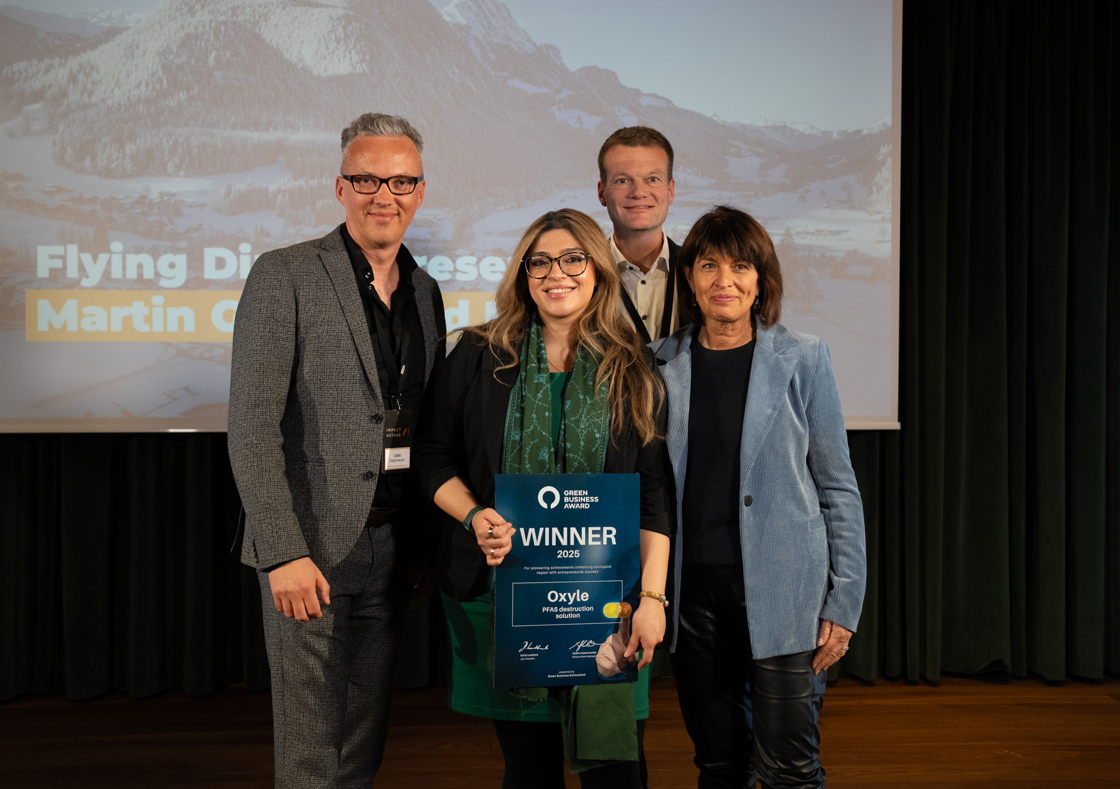
Cédric Habermacher (Green Business Switzerland), Fajer Mushtaq (Oxyle), Reto Knutti (jury member) and Doris Leuthard (jury president) (from left to right). Source: zvg

The Green Business Award 2026 goes to Oxyle. The Zurich-based scale-up impressed the jury with its innovative solution to combat PFAS, the so-called «perpetual chemicals». These highly toxic chemicals accumulate in groundwater and drinking water as well as in the human body. Founder Dr. Fajer Mushtaq and her team have developed a technology that not only removes PFAS, but also permanently degrades them. Oxyle thus makes a significant contribution to protecting the environment and human health.

Switzerland heavily contaminated with PFAS

Switzerland is heavily contaminated with PFAS. Studies show that these highly toxic perpetual chemicals can be detected in over half of the groundwater monitoring wells and in people's blood. All soils examined also contain PFAS - even remote places such as the Matterhorn. The substances increase the risk of cancer and infertility, damage the immune and endocrine systems and remain in the environment for centuries due to their extreme stability.

This is exactly where Oxyle comes in: The ETH spin-off has developed a technology that not only removes PFAS from water, but destroys them completely. With this solution, Oxyle convinced the jury of Switzerland's most important sustainability award.

Doris Leuthard, former Federal Councillor and President of the jury, says: «The classification of PFAS contamination is still new and much is unclear. One thing is certain: In addition to political solutions to prevent PFAS, approaches such as those of Oxyle, which permanently break down chemicals already in circulation, are also needed.»

What are PFAS chemicals?

PFAS (perfluorinated and polyfluorinated alkyl compounds) are odorless and tasteless chemicals that are extremely long-lasting - hence the term «eternity chemicals». Due to their water-, grease- and dirt-repellent properties, they are used in countless everyday products: in outdoor clothing, cosmetics, Teflon pans, dental floss and even toilet paper. At the same time, PFAS get into soil, water and plants through industrial wastewater, fire extinguishing foams or sewage sludge, from where they spread further into the environment. They gradually find their way into food, drinking water and everyday consumer goods.

From childhood dream to innovation

Founder and CEO of Oxyle, Dr. Fajer Mushtaq, grew up in Delhi and was confronted with the issue of water pollution during her childhood. These formative experiences motivated Mushtaq to found Oxyle. Together with her now 30-strong team, she develops customized, scalable and energy-efficient solutions that completely eliminate short-chain PFAS, which were previously difficult to break down.

Dr. Fajer Mushtaq is delighted to have won the award: «Protecting our waters has long been a personal concern of mine. One that our entire team shares with conviction. We are very honored that Oxyle's work has been recognized with the Green Business Award.»

Sustainable innovations in the spotlight

The Green Business Award was presented for the seventh time. In the final at Impact Gstaad, Oxyle came out on top against two other companies: Voltiris, which uses solar modules for greenhouses without crop loss, and Everllence, whose large heat pump supplies entire cities with climate-neutral district heating.

The Green Business Award is the most prestigious sustainability award in Switzerland and offers finalists a unique opportunity to finance growth. «With the Green Business Award, we want to give visibility to companies that show that sustainability is a business opportunity. Our finalists show what is possible when business takes responsibility,» says Cédric Habermacher, Director of Green Business Switzerland.

The selection process takes place in a multi-stage procedure. The main jury includes well-known personalities such as Michèle Rodoni, CEO of Mobiliar, Axpo CEO Christoph Brand and Prof. Dr. Reto Knutti from ETH.

More information: https://www.oxyle.ch

Silvan Wildhaber to become the new President of Economiesuisse

The Executive Committee of Economiesuisse unanimously proposes Silvan Wildhaber as the new President. The 48-year-old entrepreneur and CEO of the St. Gallen textile company Filtex will take over in September from Christoph Mäder, who is stepping down after six years at the helm of the umbrella organization of the Swiss economy.

Silvan Wildhaber
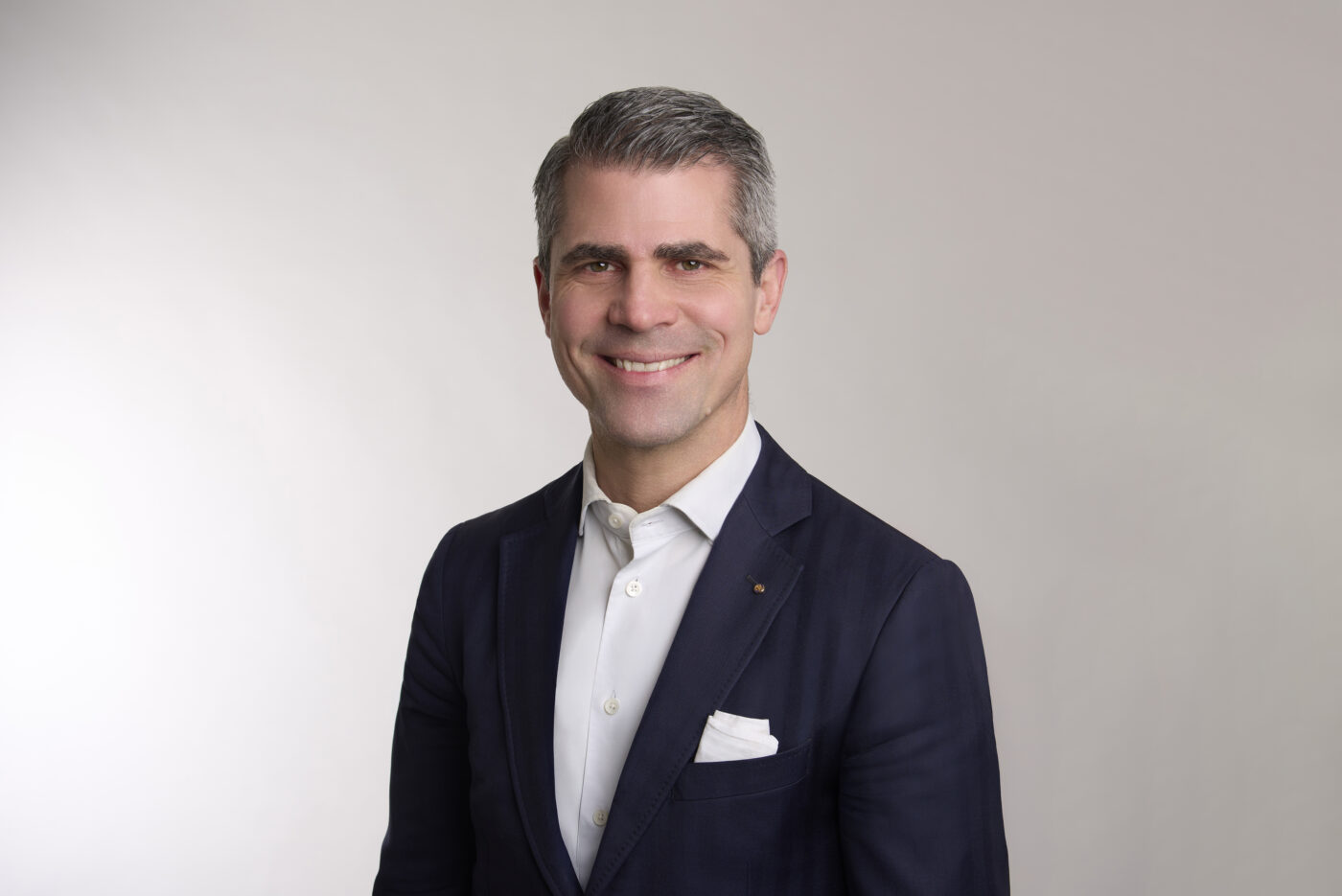
Silvan Wildhaber is to become the new President of Economiesuisse. Source: zvg

After six years at the helm of the Swiss Business Federation, Christoph Mäder has decided to hand over the office of President at the end of his term of office in September. At its meeting on February 12, the Board Committee considered the proposal of the appointed search committee and unanimously recommended that the Board elect Silvan Wildhaber as the new President. The election of the new President will take place at the next Board meeting in March. He will take office in mid-September on the occasion of the Business Day.

Christoph Mäder comments on the Board Committee's proposal as follows: «I am very pleased about the nomination of Silvan Wildhaber as his successor. He has the best qualifications to successfully lead and further develop Economiesuisse in the coming years.»

An entrepreneur at the head of the umbrella organization

In Silvan Wildhaber, the Board Committee is proposing a strong entrepreneurial personality for election. The 48-year-old Wildhaber has been CEO of the St. Gallen textile company Filtex since 2012 and Chairman of the Board of Directors of the parent company Emil Anderegg. Founded in 1919, the family business Filtex exports exclusive textiles and embroidery worldwide. Wildhaber studied business administration at the University of St. Gallen (HSG) and worked at the former Credit Suisse before joining the family SME in 2006. Wildhaber lives in the city of Zurich, is married and has two children.

Silvan Wildhaber has been a representative of Swiss Textiles on the Board of Economiesuisse since 2014 and has first-hand knowledge of the relevant economic policy dossiers. In 2021, he was also elected to the Board of the Swiss Employers« Association. »I am extremely pleased with the trust that the Board Committee of Economiesuisse has placed in me,« says Silvan Wildhaber following his nomination. »I want to make the political concerns of Swiss companies and their employees understandable and win the hearts and minds of people in Switzerland for them,« says Wildhaber, adding: »As an entrepreneur, I know that we can only move forward together. That's why it's important to me to build bridges and move Switzerland forward together."

www.economiesuisse.ch

Fairtrade flowers for Valentine's Day strengthen women's rights

Women make up the majority of the approximately 500,000 workers in the East African flower sector. Melanie Dürr from Fairtrade Max Havelaar appeals before Valentine's Day to focus on the working conditions of these women and to support initiatives that strengthen their rights.

Melanie Dürr, Head of International Cooperation Fairtrade Max Havelaar (Source: zvg)

Systematic discrimination in the flower sector

Women make up the majority of the approximately 500,000 workers in the East African flower sector, which supplies Switzerland, particularly for Valentine's Day. ’On this holiday of love, we should focus on the working conditions of these women who grow the flowers and support initiatives to strengthen their rights,« says Melanie Dürr, Head of International Cooperation at Fairtrade Max Havelaar. She continues: »Because today, many female workers are systematically affected by discrimination, sexual harassment or a lack of occupational health and safety. Fairtrade Valentine's roses can make a real contribution to improving working conditions on the ground.«

Structural grievances widespread

Hundreds of thousands of people work on East African flower farms, but only around 15 percent of them are employed on Fairtrade-certified farms. Only a small proportion of the flowers imported for Valentine's Day are Fairtrade-certified. Structural abuses are widespread in the flower sector: Sexual harassment, inadequate maternity protection and a severe underrepresentation of women in management positions are key challenges.

Binding standards for real improvements

To counteract these problems, binding structures are needed that enable real improvements. Fairtrade places a clear focus on the promotion and protection of women. The approximately 65 Fairtrade-certified flower farms in East Africa employ around 75,000 people and are subject to comprehensive Fairtrade standards. These stipulate fixed employment contracts, regulated vacation entitlements, clearly defined maternity protection regulations and firmly established mechanisms for dealing with sexual harassment. Regular training courses also raise employees’ awareness of their rights.

Women's School of Leadership

Among other things, Fairtrade is implementing the «Women's School of Leadership» initiative. A sector-specific program in East Africa that aims to empower women in the Fairtrade flower supply chain. Specific measures have been introduced on participating farms to facilitate women's access to leadership roles, strengthen gender policies and improve reporting and counseling structures for sexual harassment.

Fridah Makena, a 28-year-old Kenyan woman, took part in the program: «After the ten-month training at the Fairtrade Women's School of Leadership, I successfully applied for a job as a supervisor. Today, I lead a team of flower workers and am proud of my professional development.‚

Fairtrade-certified flowers stand for working conditions that strengthen women's rights and take responsibility in global supply chains.

More information: https://www.maxhavelaar.ch

Meta Hiltebrand becomes Kuhn Rikon brand ambassador

Top Swiss chef Meta Hiltebrand is the new brand ambassador for the traditional Kuhn Rikon brand. The partnership combines culinary passion, Swiss craftsmanship and design. Hiltebrand contributes her expertise in recipe development, cooking formats and brand communication.

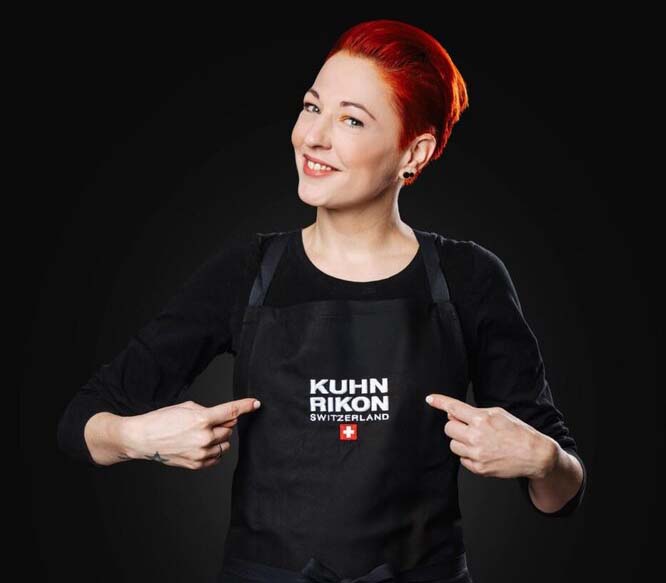
[caption id="attachment_44565" align="alignnone" width="666"] Kuhn Rikon's new brand ambassador: top chef Meta Hildebrand. (Image: zVg)[/caption]
Top Swiss chef, TV personality and entrepreneur Meta Hiltebrand is Kuhn Rikon's new brand ambassador. The collaboration combines culinary passion, Swiss craftsmanship, design and creativity. The aim of this partnership is to build a bridge between amateur and professional chefs - an open exchange to bring even more professionalism and fun into the kitchen.

Two people who share the same values and fit together as well as a pot and a lid: the traditional brand Kuhn Rikon and professional chef Meta Hiltebrand. In her new role as brand ambassador, she will contribute her expertise to recipe development, cooking formats, events and brand communication.

Connected since childhood

The restaurateur has had a special relationship with the brand since early childhood. «The magic of the pot with the red lid - the Duromatic - drew me into the kitchen. Not because I wanted to be a chef, but because my mother cooked fresh food every day and was a real magician for me,» says Hiltebrand.

Swiss products were very important to her family - pots and pans in particular were supposed to last a lifetime. «Kuhn Rikon promised that - and kept it. We still use some of these pots today.»

Shared values such as craftsmanship, quality, joy

The partnership is characterized by shared values: culinary delights, the joy of cooking, quality craftsmanship and functional design. The Zurich native appreciates Kuhn Rikon's wide range of products. In addition to classic cookware, she loves using modern kitchen gadgets such as the Pull Chop or the cast-iron orange-red caquelon, which she regularly puts on the table as a fondue lover.

«Meta Hiltebrand stands for passion, authenticity and modern Swiss cuisine. It is precisely this attitude that characterizes Kuhn Rikon: deeply rooted in craftsmanship, but always open to new ideas and solutions. Together, we want to show how tradition and innovation can enrich everyday cooking - in a high-quality and approachable way,» says Peter Waltenspühl, Head of Marketing at Kuhn Rikon.

The traditional brand, which is celebrating its 100th anniversary this year, and its new brand ambassador want to use their passion to enliven everyday cooking and awaken a desire for culinary creativity. Or as Meta Hiltebrand says with a wink: «Together we are salt and pepper: salt makes every dish better, a pinch of pepper makes it exciting.»

Favorite product and personal anecdote

Her favorite product is clearly the Duromatic. «The magic of the red lid continues. It shortens cooking times and makes even rather fibrous pieces of meat wonderfully tender. I also appreciate high-quality materials - the feel is just as important to me as the taste. Cooking with Kuhn Rikon pots inspires me every time,» explains Hiltebrand.

Her relationship with the brand also includes an anecdote: since her childhood, she has had a Kuhn Rikon pan that she «borrowed» from her mother - and, as is often the case, deliberately never gave back. Unfortunately, she once put this pan - it was the double-walled Durotherm saucepan with golden handles - together with the trivet on the stove and left both on until they became one piece. The corresponding size is still missing from her mother's set today.

Kuhn Rikon has been inspiring the world of cooking since 1926 with innovative products for preparing, serving and enjoying food. The Swiss brand develops, designs and produces innovative, high-quality and sustainable products, which are sold directly, via retailers and specialist retailers as well as online all over the world. Meta Hiltebrand is one of the best-known top chefs in Switzerland and today runs CookCouture, a studio for recipe development, events and media productions.

Swiss companies are increasingly relying on AI for customer experience management

Customer experience has become much more important in Swiss companies. The Swiss CEX Study by Lucerne University of Applied Sciences and Arts recorded a new high of 59% in terms of maturity. Particularly noteworthy: AI projects, which hardly played a role two years ago, will be a reality in many companies by 2025.

Source: HSLU

Swiss companies rate their progress in customer experience management more positively than they have in years. This was revealed by the Swiss CEX Study conducted by Lucerne University of Applied Sciences and Arts in collaboration with Nexa Consulting. Compared to the previous year (53%), the maturity level has reached a new high of 59%. The acceleration of this development since 2023 is particularly remarkable: A consistent improvement is evident in both German-speaking and French-speaking Switzerland.

Measures take effect

The maturity level is based on an assessment of 14 individual criteria relating to customer experience management in the companies. It is a measure of how far companies have progressed overall and in various sub-areas.

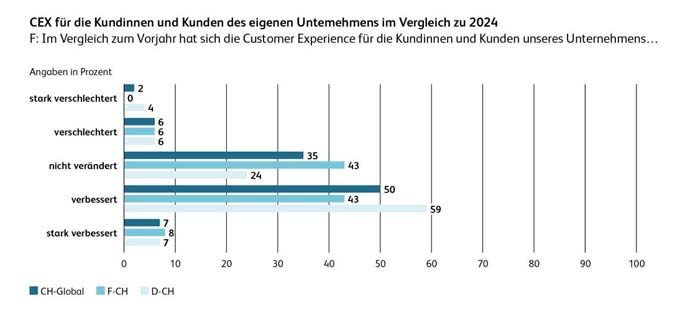
Almost 60 percent of the companies surveyed stated that the customer experience they offer has improved in the past year. Those responsible increasingly rate their measures as effective. The study therefore shows not only rising ambitions, but also increasing professionalization in the area of customer experience.

AI is becoming increasingly important

A key finding of this year's study is the rapid development in the area of customer experience and artificial intelligence. While AI projects hardly played a role two years ago, they will be a reality in many companies by 2025. Although the scope and degree of maturity of the implementations vary considerably, AI has clearly established itself in the context of the customer experience.

Chatbots are the most widespread and have already been implemented in around 40% of companies - compared to 20% in 2024. Voicebots are also making progress, but the majority are still in the discussion phase. Other solutions such as vocal biometric identification are «not an issue» for the vast majority of respondents.

«Progress in the field of AI has been remarkable over the past two years. It will be interesting to see what developments we can record in the anniversary study at the end of 2026,» says study author Michael Grund.

Stable investments - focus on employees and processes

Around 50% of companies are planning stable investments for 2026, while 35% are planning an increase. The most important goals continue to be increasing customer satisfaction and strengthening customer loyalty as well as strengthening the brand. Employee training is once again seen as a key area of investment, followed by AI initiatives and process optimization.

About the Swiss CEX Study

The 9th edition of the Swiss CEX Study has been published. Thanks to the collaboration of three institutes of the Lucerne University of Applied Sciences and Arts (Institute of Business and Regional Economics, Institute of Communication and Marketing and the Institute of Financial Services Zug) and the partner Nexa Consulting, the Swiss CEX Study combines practical consulting expertise with a scientific basis.

The assessment is based on 14 individual statements covering three key areas: Vision & Leadership (including strategy, anchoring in management, resources), Interaction & Intelligence (customer interaction, data and knowledge management, product development) and Excellence & Performance (processes, technology, measurement systems, profitability).

Further information and the complete study can be found at www.hslu.ch.

get_footer();