
Globetrotter becomes main partner of the Landesmuseum-Hofkino

The courtyard cinema in the courtyard of the National Museum Zurich is entering into a new main partnership from 2026: Globetrotter will become the main partner of the summer cultural format and will develop new live formats outside of the classic cinema context in the anniversary year.


In their first year together, the collaboration will focus on Globetrotter's 50th anniversary - with specially developed activations and two new formats that specifically expand the Hofkino program. The weekend of Saturday, 27 and Sunday, June 2026 is a central point in the partnership's program. With an Explora live show on Saturday evening and a family format on Sunday morning, new program items will be created that specifically complement and expand the Hofkino.

On Saturday evening, June 27, 2026, Globetrotter, in collaboration with Explora, will present an evening at the Hofkino to celebrate Globetrotter's 50th anniversary. An Explora live show with Louis Palmer will be shown as an exclusive summer premiere. Explora stands for staged live reports in which travelers, adventurers and photographers bring their stories to the stage with pictures, videos and personal storytelling. In his show, Palmer combines personal adventures from all over the world with impressive images, humor and surprising perspectives on our relationship with the world. The Explora live show also marks the start of a larger Explora tour: at least 16 further dates with Louis Palmer are planned for winter 2026/27.

Sunday morning is all about families and encounters: with the «Rendez-Vous with the World»: Family Brunch, Globetrotter is bringing one of its well-known formats to the Hofkino in a new form. Travel reports and entertainment for young and old will provide low-threshold access to the world of travel. In addition, Louis Palmer will bring his Solar Butterfly, the largest solar-powered vehicle in the world, which has just circumnavigated the globe in four years and visited 48 countries, including an interactive climate museum, to the courtyard of the National Museum - as a walk-in experience.

Sven Ziörjen, Head of Marketing at Globetrotter, says: «As an important part of Globetrotter's 50th anniversary celebrations, we not only want to look back, but also create new experiences together with a strong partner. The Hofkino offers an ideal stage for this - urban, open and close to the people.»

Daniel Frischknecht Knörr, co-founder and organizer of Hofkino, is also delighted: «Globetrotter is a perfect fit for Hofkino with its thirst for adventure, its curiosity about the world and its ability to bring stories to life. This partnership enables us to create new formats that offer our audience real added value - and further open up the content of Hofkino.»

SwissAI calls for more clarity and competence in dealing with AI

Generative artificial intelligence (AI) can make parliament's work easier. The swissAI association therefore welcomes the use of AI tools by the federal government, but recommends that they are used with caution.

(symbolic image).

Generative artificial intelligence (AI) can make parliament's work easier. The swissAI association (formerly "KImpact") therefore welcomes the use of AI tools by the federal government because they can make parliament's work easier. However, it recommends careful, confident use. The association, founded in 2023 is committed to a constructive digital future for Switzerland - in harmony with people and technological progress.

SwissAI writes in a press release: "The way in which Microsoft's Copilot was introduced in parliament and in parts of the federal administration, on the other hand, was done without an official decision, without clear governance and without a systematic development of competencies. As a result, two opportunities were missed: a responsible introduction of AI and a credible role model for business and society in dealing with this technology.

The problem: AI introduction without control and without training

As the freelance journalist and MAZ study director Reto Vogt showed in his research for the «NZZ am Sonntag» on 4.1.2026, the activation of Microsoft's Copilot in parliament was effectively carried out autonomously by the American technology company - without an official decision by the federal government, without clear guidelines, without defined responsibilities and without transparency. The introduction took place virtually through the back door. This created a legal and security policy gray area.

Members of parliament and employees of the administration work with sensitive, sometimes confidential information. Nevertheless, no comprehensive training or binding guidelines have been introduced. Anyone who uses AI without understanding how it works, its limitations and risks can neither assume responsibility nor create trust - neither within the institutions nor towards the public.

The use of AI: first and foremost a question of leadership

This situation reveals a fundamental governance problem in dealing with AI. Political institutions need to clarify, whetherfor what and under what conditions AI is used. What understanding of digital sovereignty applies? What data may be processed? Who decides on its use - and who bears the responsibility? These questions must be answered politically before technical systems are used productively. This awareness is lacking in many places.

swissAI advises the competent and controlled use of AI

«Our direct democracy depends on trust in state institutions and independence from external influences. AI is a powerful tool that can improve our processes - but only if we ensure transparency, competence and sovereign decision-making channels,» says Chris Beyeler, President of swissAI.

In this case, swissAI recommends a three-stage approach that begins with a fundamental political clarification. As part of a broad dialog, Parliament should define which AI applications are permissible and how Switzerland's digital sovereignty can be safeguarded in the long term. At the same time, the aim is to build up targeted expertise: Through a systematic evaluation of training needs and further training for parliament and the administration tailored to these needs, risks are to be better understood and opportunities proactively exploited. In addition, swissAI emphasizes the involvement of external expertise. Independent specialist bodies should support the technical and ethical evaluation to ensure that the rollout is in line with data protection and Switzerland's fundamental values.

Confidence in dealing with AI

Switzerland has excellent expertise in the field of artificial intelligence. This potential must be exploited - in a coordinated, responsible and sovereign manner. AI can be a locational advantage. However, it must be introduced professionally and not left to chance or licensing mechanisms.

More information: SwissAI

AI Check 2025: How fit is your marketing team really? Take part now!

Artificial intelligence is no longer a future scenario, but is changing our marketing here and now at a rapid pace. But while everyone is talking about ChatGPT and new tools, the crucial question is: who in the Swiss corporate landscape is actually keeping pace? That's what the AI Check 2025 wants to find out.

Artificial intelligence is no longer a future scenario, but is changing our marketing here and now at a rapid pace. But while everyone is talking about ChatGPT and new tools, the crucial question is: who in the Swiss corporate landscape is actually keeping pace? To find out, Brandfinity and Swiss Marketing, together with HEG Fribourg, are launching the National Study 2025 on AI Marketing Maturity. We cordially invite all marketing and sales managers to become part of this important survey and thus paint a true picture of the situation.

Well-known partners such as PME magazine, Tag Inspector and our «sister magazine» M&K are involved in this study. The aim is to provide an objective survey that goes beyond mere buzzwords and delivers real facts. Taking part is very easy and takes just seven minutes of your time. Your details will be treated absolutely anonymously, so that an open and honest exchange about the current state of the art is possible.

The methodological approach behind the study is particularly clever and modern. It combines your personal expertise from the survey with an automated analysis of your company website. This mix creates an objective picture of your technological fitness that goes far beyond a purely subjective self-assessment. We want to know how «AI-fit» the teams really are and where the Swiss economy stands in an international comparison.

As a thank you: A detailed report

Your participation is not only worthwhile for the industry, but also for your own company. As a thank you for your input, you will receive a confidential and detailed report (a little later, after the entries have been evaluated). This will show you in black and white where you stand in comparison to companies of your size and industry. This exclusive benchmark provides you with a perfect starting point for your future analyses and strategic planning.

Take advantage of this opportunity to gain a sound knowledge advantage and help us to create a reliable information base for Swiss marketing.


You can find the link to participate at https://brandfinity.ch/de/ki-marketing-readiness/.

Violations of data guidelines involving generative AI have doubled

The new Netskope Cloud & Threat Report 2026 for the DACH region warns that while the use of generative AI (GenAI) is increasing threefold, data security is lagging behind. «Legacy risks» such as phishing and insider threats remain critical.

Data protection and generative AI do not always go hand in hand: shadow AI and data leaks have led to a massive increase in data policy violations. (Symbolic image; Gerd Altmann / Pixabay.com)

Despite attempts to control AI usage through official company tools, the recently published Cloud and Threat Report 2026 Netskope Threat Labs has identified a worrying trend: the number of data security policy violations related to AI applications has more than doubled compared to last year. The risk posed by shadow AI remains high, as employees continue to feed large amounts of sensitive data into unprotected channels. The Netskope Cloud and Threat Report 2026 is based on anonymized data collected worldwide via the Netskope Security Cloud platform. It analyzes trends in cloud usage, AI adoption, and the global threat landscape. 

AI boom overtakes security measures

The report shows explosive growth. While the number of users of SaaS GenAI applications tripled last year, the intensity of use increased dramatically. The number of prompts sent rose sixfold. Of particular concern is the fact that Despite increased efforts by IT departments, 47% of users continue to use private AI accounts for business purposes. As a result of this shadow AI, companies record an average of 223 incidents per month in which sensitive data is sent to AI apps. Among the top quarter (25%) of the companies surveyed, the figure is even higher, at over 2,100 incidents per month.

The report shows further relevant results:

  • Gemini is in the fast lane: Google Gemini experienced massive growth, with its usage rate rising from 46% to 69%. Netskope predicts that Gemini will replace ChatGPT as the most widely used AI platform in businesses in the first half of 2026.
  • Dangerous data leaks: Source code (42 %), regulated data (32 %), and intellectual property (16 %) are the most common types of sensitive information uploaded to AI tools.
  • Insider risk «Personal apps»: 60% of all insider threats are related to the use of private cloud instances (such as Google Drive or OneDrive), with the use of GenAI tools massively increasing this risk. Particularly worrying: 54% of data policy violations involve regulated data (financial, health, or personal data).

Agentic AI and MCP

Netskope warns that 2026 will see increasing complexity due to agentic AI. These are AI systems that autonomously perform complex tasks across various company resources. «Agentic AI creates a whole new attack surface,» says Ray Canzanese, Director of Netskope Threat Labs. «When autonomous agents gain access to internal data, misconfigurations or malicious prompts can lead to massive data leaks in milliseconds.» The trend toward AI-driven browsers and the Model Context Protocol (MCP) is also classified as a critical security risk for 2026.

Recommendations for action

The report recommends a four-step protection plan for companies:

  1. Complete inspection: Inspection of all HTTP/HTTPS traffic, including AI traffic.
  2. App governance: Blocking high-risk tools with no business purpose (e.g., ZeroGPT, DeepSeek).
  3. DLP focus: Use of data loss prevention to protect source code and passwords from being leaked into AI models.
  4. Isolation: Use Remote Browser Isolation (RBI) for risky or new domains.

Source: Netskope

This article originally appeared on m-q.ch - https://www.m-q.ch/de/verstoesse-gegen-datenrichtlinien-mit-generativer-ki-haben-sich-verdoppelt/

Siemens and NVIDIA aim to make AI the operating system of industry

Siemens and NVIDIA are deepening their strategic partnership to make artificial intelligence the operating system of industry. The goal is to create fully AI-driven factories, faster development cycles, and energy-efficient AI factories for a new era of industrial value creation.

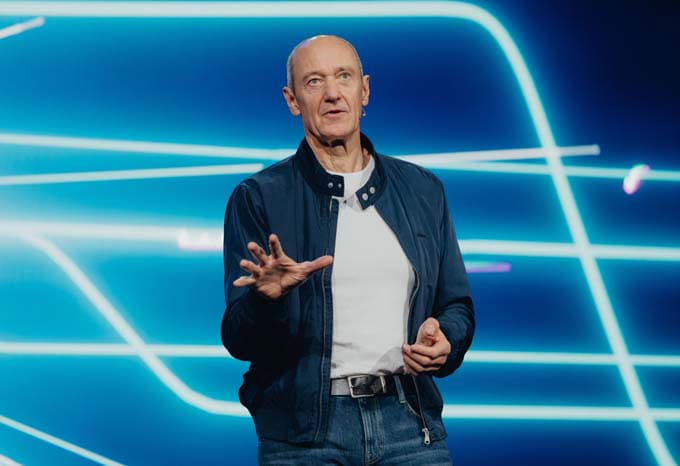
Roland Busch, Chairman of the Managing Board of Siemens AG, at CES in Las Vegas: «Together, we are turning artificial intelligence into an industrial operating system—and redefining how the physical world is designed, built, and operated. We are scaling AI and creating concrete benefits for the real world.»

Siemens and NVIDIA are fundamentally expanding their partnership to bring industrial and physical artificial intelligence to all industries and accelerate entire production chains. NVIDIA will provide AI infrastructure, models, frameworks, and simulation libraries, while Siemens will contribute industrial AI expertise and hardware and software solutions. This was announced at the CES electronics trade show in Las Vegas. 

The cooperation is centered around the vision of turning AI into an «industrial operating system» and developing digital twins from passive simulations into active, self-optimizing representations of real factories. This will enable companies to develop products faster, adjust production in real time, and significantly reduce downtime.

Starting in 2026, the Siemens plant in Erlangen will serve as the first fully AI-controlled, adaptive production facility and act as a blueprint for other locations worldwide. An «AI brain,» fed by software-defined automation, industrial operating software, and NVIDIA's Omniverse platform, continuously analyzes the digital twin, tests optimizations virtually, and transfers confirmed improvements into ongoing operations.

The partners are also addressing semiconductor design and electronic design automation: Siemens is integrating NVIDIA CUDA-X, PhysicsNeMo, and GPU acceleration into its EDA portfolio to accelerate key workflows such as verification, layout, and process optimization by a factor of two to ten. AI-powered features will help engineers with layout, debugging, and circuit optimization, enabling shorter design cycles and higher manufacturing quality.

At the same time, Siemens and NVIDIA are working on a standardizable blueprint for AI factories that combines high computing power with energy-efficient infrastructure, cooling, and automation. The combination of NVIDIA's AI ecosystem and Siemens' expertise in energy infrastructure, electrification, and automation is intended to accelerate the global expansion of industrial AI data centers – and both companies are using each other's technologies in their own operations to demonstrate practical customer benefits on an industrial scale.

Source: Siemens

This article originally appeared on m-q.ch - https://www.m-q.ch/de/siemens-und-nvidia-wollen-ki-zum-betriebssystem-der-industrie-machen/

Coop reports record sales, gains more customers and market share

Coop achieved sales of over CHF 35 billion for the first time in the past fiscal year. With an increase of CHF 742 million or 2.1% compared to the previous year, adjusted for currency effects, Coop reported sales of CHF 35.4 billion. Coop is gaining market share in both its supermarkets and specialty stores. This is partly due to the large number of new customers.

Coop supermarkets grew by 2.6%, with Coop.ch increasing by 10.1%. Excluding fuel, net sales in the retail sector rose by 2.3%. Wholesale/production grew by 2.9% after currency adjustments. Net sales of sustainable products increased to CHF 6.8 billion.

2.6 % Growth in retail trade

Total sales in the retail sector amounted to CHF 21.1 billion. Coop supermarkets, including Coop.ch, achieved net sales of CHF 12.4 billion, grew by 2.6% and gained market share. In addition to sustainable products, the Prix Garantie own brand also saw increased demand and grew by 7.5% %. Coop was able to reduce the prices of around 1,900 products last year, investing around CHF 700 million in lower prices since 2019.

The specialist formats achieved growth of 1.7% without fuel and continued to gain market share. Coop City increased its sales by 4.7% to 838 million. Interdiscount, Jumbo, Coop Vitality, and Update Fitness also increased their net revenues. The Gastronomy/BâleHotels segment grew by 0.7% to CHF 530 million and attracted additional guests. The leading convenience format Coop Pronto also performed very well, growing by 3.5%.

Excluding fuel, Coop recorded currency-adjusted growth of 2.3% in its retail business.

2.9 % Growth in wholesale and manufacturing

In the Wholesale/Production business segment, total sales rose by 2.9% to CHF 17.2 billion after adjusting for currency effects. Transgourmet generated net sales of CHF 11.6 billion, which corresponds to an increase of 2.6% on a currency-adjusted basis. It is thus performing successfully in the European cash-and-carry and delivery wholesale business. In the Production business segment, net sales rose by 4.0% on a currency-adjusted basis to CHF 5.9 billion.

Online retail grew by 10.1%

The online supermarket Coop.ch, with over 22,000 products, saw net sales grow by 10.1% in local currency terms. In the wholesale sector, online net sales rose by 12.5% in local currency terms. Overall, Coop's online business achieved net sales of CHF 6.1 billion.

CHF 6.8 billion in revenue in the sustainability sector

Net sales of sustainable products rose to CHF 6.8 billion. With around 21,600 items, Coop has the widest range of sustainable products in the retail and wholesale sectors. This makes Coop the undisputed leader in sustainability.


Coop will announce further details and the complete income statement, including profits, at its balance sheet media conference on February 17, 2026.

Interview with Mareen Eichinger: «Good communication starts with leaving things out»

Mareen Eichinger, owner of macheete, has been advising companies on strategic communication for years. In this interview, she explains why clarity is a key management task, why «less is often more,» and what social responsibility companies have today.

Mareen Eichinger


You advise companies in a time of constant overload. In your opinion, what will be the biggest communication mistake that many managers will make in 2026?

Mareen Eichinger: The biggest mistake is to continue to view communication as a reaction. Many managers feel driven by trends, platforms, and expectations. Communication is accordingly fast and frequent, but without a clear direction. In 2026, this will come back to haunt them. Communication without a strategic framework will no longer be perceived as relevant, but as additional noise.

AI is now standard. How can you tell in practice whether communication is being managed strategically or just automated?

Automated communication can be recognized by the fact that it could work anywhere and, for that very reason, is not really effective anywhere. Strategic communication is recognizable, even when it uses AI. It follows clear themes, a consistent tone, and a consistent attitude. AI accelerates processes, but it does not replace decisions. Those who do not make decisions only reinforce arbitrariness with AI.

Many companies talk about visibility. You often talk about clarity. Why will clarity be the scarcer commodity in 2026?

Because visibility has become technically easy. Clarity means commitment, and many decision-makers find that difficult. Deciding what you stand for always means not doing something else. Many companies shy away from this consequence. The result is watered-down messages that don't really reach anyone. Clarity is uncomfortable, but that's exactly why it's effective.

Where does good communication begin for you: with the message or with the decision about what not to say?

By leaving things out. Good communication is a filter. In 2026, it won't be the person who says the most who gets noticed, but the person who says the right thing. And at the right time and to the right target group. Those who comment on everything lose relevance.

As an agency owner, you work closely with management teams. What questions should decision-makers ask themselves more often before communicating in 2026?

Firstly: Is what we are saying actually true internally? Secondly: Can our employees credibly convey this message? And finally: Would we still stand by this statement in two years' time? Communication today is permanently visible. Short-term narratives without substance become a long-term reputation problem.

For many brands, social media feels more exhausting than ever. What is your alternative to «We have to be present everywhere»?

Conscious reduction. Social media is not a mandatory program, but a strategic space. In 2026, presence will only work where brands have something to contribute: expertise, attitude, and perspective. Pure self-promotion is losing ground—algorithmically and humanly.

Are you observing a return to fewer channels but more attitude, or is that wishful thinking?

I see this very clearly in companies that have matured. They reduce channels, sharpen topics, and thereby gain consistency. Fewer touchpoints do not mean less impact, but rather more depth and trust.

Traditional PR is undergoing significant change. What remains indispensable and what has had its day?

Mareen Eichinger: Journalistic thinking remains indispensable: relevance, context, and classification. PR as a pure placement discipline has had its day. The media are not amplifiers for arbitrary messages, but filters for content and substance. Those who do not understand this will no longer be heard.

How will the role of agencies change in 2026: service providers, sparring partners, or strategic co-thinkers?

Mareen Eichinger: Agencies must be strategic sparring partners. Implementation alone becomes interchangeable or automated. The real added value lies in challenging management teams, sharpening priorities, and speaking uncomfortable truths.

Trust is a big word. In your experience, what causes communication to fail most often?

Mareen Eichinger: Contradictions between claims and reality, between internal culture and external messaging. Trust is not built through perfect communication, but through consistency. Those who constantly reinvent themselves do not come across as dynamic, but as untrustworthy.

Are there any trends or buzzwords that you consciously don't want to hear anymore in 2026?

Anything that suggests tools can replace strategy. «AI will take care of it» is a dangerous statement. Technology reinforces what is already there, but it does not replace classification and responsibility.

If you had to sum up your work in one sentence, what should communication really achieve in 2026?

It should provide guidance at a time when many things are becoming faster but less clear.

Revolutionary technology for reducing CO₂ emissions in the maritime sector

Lugano-based Azra Advanced Materials AG, which specializes in highly energy-efficient marine coatings, has been added to the Swiss Technology Fund's portfolio. This recognition underscores the potential of Azra's technologies to significantly reduce CO₂ emissions from the global maritime sector, which accounts for around 3% of total global emissions.

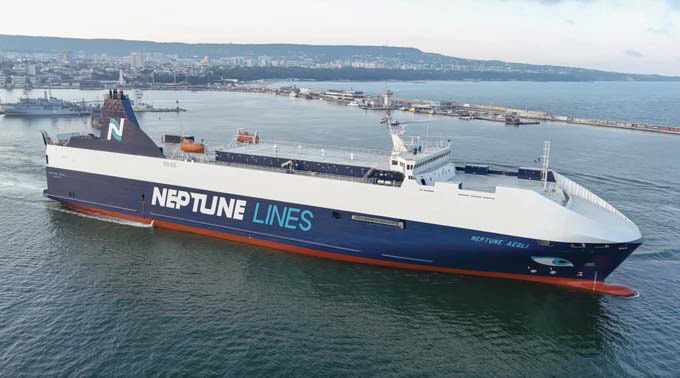
Neptune Lines also relies on nanocoatings from Azra Advanced Materials AG to reduce CO2 emissions. (Image: zVg / Azra Advanced Materials)

More than 90% of international trade is carried out by sea. In 2022, maritime shipping generated around 858 million tons of CO₂. A significant proportion of these emissions is attributable to biofouling. This refers to the accumulation of organisms on ship hulls. This can increase fuel consumption by up to 40% and causes annual economic damage of over $30 billion. In addition, the continuous degradation of biocide-containing and silicone-based coatings during a ship's operating cycle leads to the additional release of toxic chemicals into the oceans.

Less friction with nano-coating

Azra's durable, ultra-low friction, biocide-free coating system, based on proprietary, patented nanotechnology, reduces hull friction and completely eliminates the use of silicone oils. It has been proven to release no toxic substances into the marine environment. At the same time, it ensures consistently high performance, lowers fuel consumption, and reduces CO₂ emissions. According to Azra Advanced Materials, the use of its coating has saved more than 20,000 tons of CO₂ since 2021. These results have been verified on commercial fleets worldwide, the company says.

In addition, the coating system supports broader sustainability goals. Azra's biocide-free formulation is fully compliant with IMO environmental requirements and contributes to several United Nations Sustainable Development Goals (SDGs), particularly SDG 14 – Life below water. It contains no active substances that could harm marine ecosystems and makes a long-term contribution to protecting the health of the oceans.

Expanding presence in the international shipping sector

With the support of the Swiss Technology Fund, Azra Advanced Materials AG will be able to further expand its presence in the international shipping sector and accelerate the development and market launch of a new generation of superhydrophobic coating systems that further reduce friction on ship hulls. This supports global decarbonization efforts and contributes to further reducing CO₂ emissions. «With the support of the Swiss Technology Fund, we can further expand our presence in the shipping market and contribute to the decarbonization of the industry by reducing CO₂ emissions through sustainable, durable, and high-performance coatings that improve the efficiency of ships,» explains Azra Advanced Materials.

Source: https://www.azra-tech.com

This article originally appeared on m-q.ch - https://www.m-q.ch/de/revolutionaere-technologie-zur-reduktion-von-co%E2%82%82-emissionen-im-maritimen-sektor/

Dry January challenge against alcohol in the workplace

Alcohol in the workplace endangers the health of employees, increases the risk of accidents, and poses a challenge for businesses. Dry January® 2026 focuses on a healthy workplace with a Workplace Challenge. Employees can reflect on their own and collective alcohol consumption in a playful way.

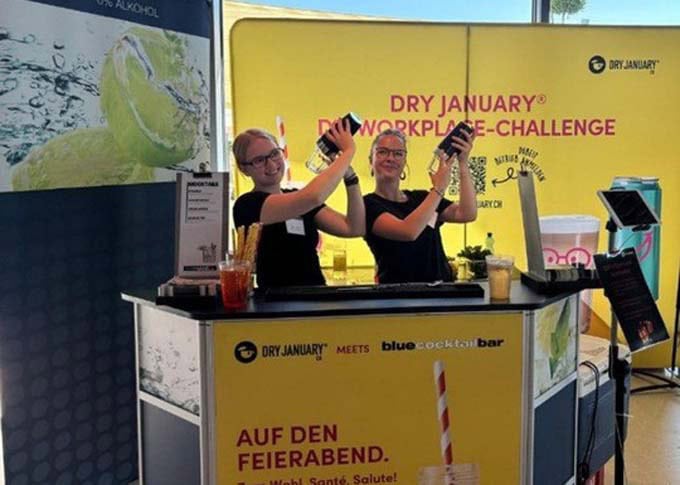
The Dry January challenge can also be carried out at work starting January 1, 2026: If the team masters the workplace challenge together, it not only strengthens team spirit, but there are also prizes to be won. (Image: zVg / Dry January)

Starting on January 1, 2026, Dry January, which claims to be Switzerland's largest alcohol prevention campaign, invites people to live alcohol-free for a month and thereby question their own alcohol consumption. In January 2026, the professional environment will also be included. This is because there is now the Workplace Challenge, which motivates companies and teams to venture into an alcohol-free start to the year together. Dry January provides those responsible in the company with tips and materials before and during the campaign to make the challenge interesting for the team. The campaign is supported and sponsored by Blue Cross Switzerland, the Professional Association for Addiction, Addiction Switzerland, and the Federal Office of Public Health (FOPH), among others.

Alcohol in the workplace as a cost driver

In Switzerland, 2 to 5% of employees and up to 10% of managers have a harmful relationship with alcohol. Alcohol consumption plays a role in one in six dismissals. 15 to 25% of workplace accidents are attributable to alcohol consumption or the consumption of other psychoactive substances. In Switzerland, 215 million hours of absence are due to illness or accidents, 8.4 million of which are alcohol-related.

Companies take responsibility

«For us, Dry January is not about giving something up, but rather a conscious start to the new year. We want to actively support our employees in this. At Unic, we are exploring new ways to improve well-being in everyday working life with curiosity and a sense of community. As office manager, the physical and mental health of our employees is particularly important to me. That's why we promote mindful alcohol consumption, including through specific offers such as alcohol-free aperitifs in January,» says Anita Hermecz, office manager at Unic AG Bern-Liebefeld. «Go for Dry January – good for your liver and your wallet,» says Michael Frei, a participating employee at Unic.

What is the Workplace Challenge?

The Dry January challenge as a team provides the impetus for a healthier, more productive, and happier working environment. This year's Dry January focus on «occupational health management» aims to introduce companies to the topic of «alcohol and work» in a lighthearted way. To this end, it has created the «Workplace Challenge,» which focuses on employee health as well as raising awareness and questioning drinking norms. Drinking norms can be particularly problematic in a work context if they create social pressure and make employees feel uncomfortable. In contrast, the Workplace Challenge promotes team cohesion. Dry January makes it easier for companies to organize alcohol-free team events that were previously accompanied or even dominated by alcohol, while still celebrating in a relaxed atmosphere. The vision: places where we work are perceived as a central, valuable, and safe environment for reflecting on alcohol consumption together and supporting changes in consumption. By participating in Dry January, companies are making a committed contribution to the physical and mental health of their employees.

Dry January at work – easy to implement

Dry January supports companies and HR managers in implementing the campaign in the workplace. It provides materials and gadgets for the Workplace Challenge. In addition, the Frappé bike, interactive half-day workshops on alcohol in the workplace, the Blue Cocktail Bar, mixing shows, courses, or bar service with world-class flair bartenders, a driving simulator, drunk goggles, and interactive workshops can be hired at a lower member price. Prizes include weekly deliveries of non-alcoholic drinks for the whole team and a grand prize of a spa visit in Burgdorf.

Further information and how to participate

This article originally appeared on m-q.ch - https://www.m-q.ch/de/dry-january-challenge-gegen-alkohol-am-arbeitsplatz/

AI 2026: Closing the gap between intelligence and context

Artificial intelligence will feel personal, truly understand our work, and finally reduce the amount of time we spend working. That's the view of Andy Wilson, Senior Director, New Product Solutions, Dropbox, in his guest article.

AI will increasingly be able to «think» in larger contexts. (Image: Depositphotos.com)

For most of us, the technology we use at work follows a familiar rhythm. The internet has opened up access to unlimited information, mobile devices have freed us from our desks, and cloud software has enabled every team to build its own ecosystem of specialized tools. These changes have brought speed and flexibility, but they have also created a noisier and more fragmented workplace. Today, our attention must be divided among a growing number of apps and platforms. However, in 2026, we will see the next major shift in this evolution as technology finally begins to fully understand us and how we work.

AI learns

We are moving away from tools that simply perform tasks and toward those that understand why we perform these tasks. Away from generic AI that answers questions and toward contextual AI that truly understands our priorities, role, and the work we actually need to do.

Until now, AI has mostly been generic and powerful, but without knowledge of the team, the company's terminology, or the reality of the last quarter. It could name the capital of Peru (Lima), but not why a project stalled last week. This gap between intelligence and context will close in the coming year!

The next leap: AI becomes a strategic assistant

For years, digital environments have become increasingly cumbersome and cluttered with more tabs and notifications than anyone can realistically manage. The result is a workday characterized more by friction than concentration.

Employees fall behind with their workloads not because of a lack of effort, but often because they spend so much time searching for information that exists somewhere—hidden in tools that were never designed to work together.

This pattern will change starting in 2026, and AI will take over much of the quiet, invisible coordination that has consumed most of our attention until now. The next generation of tools will reduce administrative work by taking it over instead of piling it higher and higher for users. People will regain their time and clarity.

Smarter calendars are a good example of this change. They are evolving from static schedules to decision-making tools that organize the work week based on results rather than availability. They identify which meetings can be rescheduled, protect important appointments, and create uninterrupted space for tasks that require depth. They also protect the small but very important breaks during the working day, when you can reorder your thoughts, for example, during a walk in the fresh air or over a cup of coffee.

Career next level: Expertise meets flexibility

Another trend that will become more apparent in 2026 is fractional working, as more and more executives seek portfolio-style careers. The gig economy paved the way for more flexible ways of working, and the pandemic has shown that executive performance does not always depend on whether they are in the same location. Instead of committing to a single employer, executives in the fractional working model choose a combination of tasks where they can have the greatest impact. Companies benefit from access to skills that might otherwise not be available to them. Fractional work also leads to more conscious career planning and gives employees the freedom to take on challenges they find meaningful. At the same time, many companies have recognized that they need expertise that cannot always be provided by a single full-time employee.

In 2026, this will become even more practical as AI begins to take over the coordination that previously made these tasks so difficult. A recent survey conducted revealed that 97% of executives already use AI in their personal work. This shows that they are increasingly relying on these tools to perform routine tasks and increase their effectiveness.

On this basis, managers can rely on systems that consolidate communication, display important updates, and organize priorities in very different environments. AI-supported emails, smarter scheduling, and knowledge tools such as Dash help reduce time lost when switching between companies and give employees a clear overview of what each team needs from them.

The Future of Work in 2026: More Personal, More Focused, More Human

There is no doubt that AI fatigue exists, and the answer does not lie in even more tools. What people need is leadership that sets boundaries, builds trust, and gives them space to explore new skills without feeling overwhelmed. Accordingly, AI can help promote healthier work rhythms and reduce the pressure caused by constant context switching. It can also help people make better decisions about how to manage their time and well-being, which is now just as important as productivity.

From features to clarity—the new role of AI

In 2026, AI will take on a larger share of coordination tasks, creating space for focused thinking and meaningful work. As this happens, technology will become more unobtrusive and supportive, and the focus will shift from the number of functions to the clarity it enables. Because when AI filters out distractions, highlights what is essential, and supports people in a way that feels personal, it will be a transformative change. It will not be a loud breakthrough, but a gently redesigned workday that feels clearer, calmer, and more human.


Author:

Andy Wilson is Senior Director of New Product Solutions at Dropbox. With more than 18 years of experience in interactive television services, broadcast innovation, product management, and digital rights for the BBC, and after holding a leadership position at the Digital Production Partnership initiative, Andy Wilson joined Dropbox in 2018. He works closely with companies every day to help them get the most value out of Dropbox's technology and products. Dropbox be able to draw on. 


This article originally appeared on m-q.ch - https://www.m-q.ch/de/ki-2026-die-luecke-zwischen-intelligenz-und-kontext-schliesst-sich/

Swiss Cyber Security Days 2026: Embracing digital sovereignty

The Swiss Cyber Security Days (SCSD) will take place for the seventh time on February 17 and 18, 2026. On the main and tech stages of the congress area, leading national and international speakers will spend two days highlighting the opportunities and challenges of cyberspace and new technologies such as AI and quantum computing. Various exhibitors will also be on site.

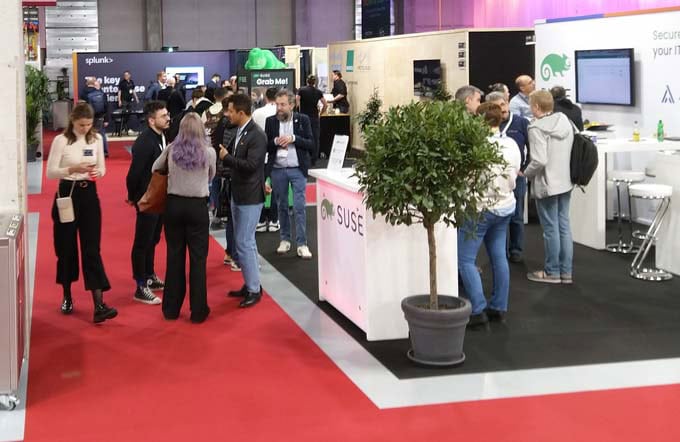
Impressions from the Swiss Cyber Security Days 2025. On February 17–18, 2026, various exhibitors will once again be showcasing their cybersecurity services and products. (Image: Thomas Berner)

Data, code, and digital infrastructures are the new building blocks of power, freedom, and self-determination. «Digital Sovereignty – The New Frontier» means that we ourselves determine and actively control our digital infrastructures. This is not about isolation, but about real choices, autonomy, transparency, and freedom. The motto of SCSD 2026 extends an invitation to the frontier of digital self-determination.

Digital sovereignty means self-determination and freedom

This goes hand in hand with a call to actively shape developments. «Digital sovereignty is not a question of isolation, but of self-determination. We must not delegate this responsibility, but actively exercise it,» says Nik Gugger, National Council member and President of the SCSD.

The audience can look forward to two days of high-caliber content: Federal Chancellor Viktor Rossi will give the opening speech. In addition, Florian Schütz, Director of the Federal Office for Cybersecurity, will give a keynote speech on how Switzerland's cyber resilience can be increased collectively. At the heart of SCSD 2026 is a three-hour focus on digital sovereignty, led by one of Europe's clearest and most courageous voices, Dr. Cristina Caffarra. Together with Nextcloud, Eurostack, and European and Swiss partners, we will unfold a compelling vision of why digital sovereignty is not only necessary, but also attractive and forward-looking. Also participating are NATO, Dr. Jean-Marc Rickli from the Geneva Center for Security Policy (GCSP), the FBI, Prof. Dr. Touradj Ebrahimi from EPFL, and the latest findings from the fields of e-ID, AI security, and quantum computing. Another highlight will be the contribution by Prof. Dr. Dr. Oliver Hoffmann. His research focuses intensively on the psychological conditions for sustainable work and the effects of artificial intelligence on our self-image.

New SME Zone and renowned exhibitors

The backbone of the Swiss economy—SMEs—is also particularly exposed. Those who understand and control their own IT infrastructure not only protect their business, but also gain freedom: the freedom to choose, change, and combine technologies. For SMEs, digital sovereignty is becoming a beacon that guides them through the fog of risk, dependency, and growing pressure. The new SME Zone, created specifically for this purpose, takes this into account and connects SMEs with relevant IT service providers. Here, decision-makers meet experienced IT and security specialists who present practical tools, solutions, and best practices. The zone offers guidance, inspires new partnerships, and accompanies companies on their way to a secure digital future.

In the Start-up Zone, young companies showcase their innovative cyber security solutions and engage in direct exchange with potential partners, investors, and trade visitors. Together with over 90 exhibitors such as Hornetsecurity, ELCA, Keepit, Sophos, Cloudflare, Redhat, and Axpo, a versatile platform for practical solutions, technological innovations, and direct knowledge transfer is created.

Tickets and formats – access to knowledge, exchange, and inspiration

Swiss Cyber Security Days 2026 offers the right ticket format for every interest – from EXPO Access to CONGRESS Access to the exclusive VIP ticket. Visitors can still take advantage of the early bird offer until December 31, 2025. EXPO Access now also includes access to the Tech Stage, which offers practical short presentations and technical insights.

Further information and tickets: www.scsd.ch/tickets

This article originally appeared on m-q.ch - https://www.m-q.ch/de/swiss-cyber-security-days-2026-mut-zur-digitalen-souveraenitaet/

AI and robotics at Phänomena: Learning as an adventure

The Phänomena science exhibition is returning after more than 40 years and will be traveling from place to place. Natural phenomena will be brought to life for young and old alike. AI and robotics are central themes.

Sketch of the exhibition environment. (Image: zvg)

Digitization you can touch, climate you can feel, energy you can see: Phänomena turns science into an experience. The first edition in 1984 was a crowd-puller because it made research interactive and tangible for the first time. In 2026, Phänomena On Tour will revive the fascination of that time and consistently carry it into the future.

Mobile world of experience

Urs Müller, General Manager of Phänomena

Phänomena On Tour creates a mobile world of experiences at various locations. The exhibition will open in Dietikon on March 14, 2026. Further locations are yet to be announced. Through interactive stations, immersive installations, and digital tools, curious visitors discover natural phenomena by exploring them. Because when you experience knowledge, you remember things for a long time. «As a child, Phänomena taught me that the world is full of wonders,» says Urs Müller, general manager of Phänomena and son of founder Georg Müller. «For me, continuing this legacy means passing on the fascination of my own childhood to the future.»

How AI and robots are changing the world

In its 2026 exhibition, Phänomena is deliberately focusing on the topic of artificial intelligence. Instead of concentrating on language models such as ChatGPT, the focus is on making AI an experience. It deals with ethical questions and how AI and robots can relieve humans of dangerous jobs with drones or other technologies, what responsibilities programmers have, and whether machines also have feelings.

get_footer();