Switzerland: Cyber attacks down eleven percent in January
Check Point Research recorded an 11% decline in cyber attacks in Switzerland in January 2026 to 1093 weekly attacks per company. Europe, on the other hand, saw an increase of 18%. The energy & utilities, public administration and consumer goods & services sectors were particularly affected in this country.
Editorial - February 13, 2026
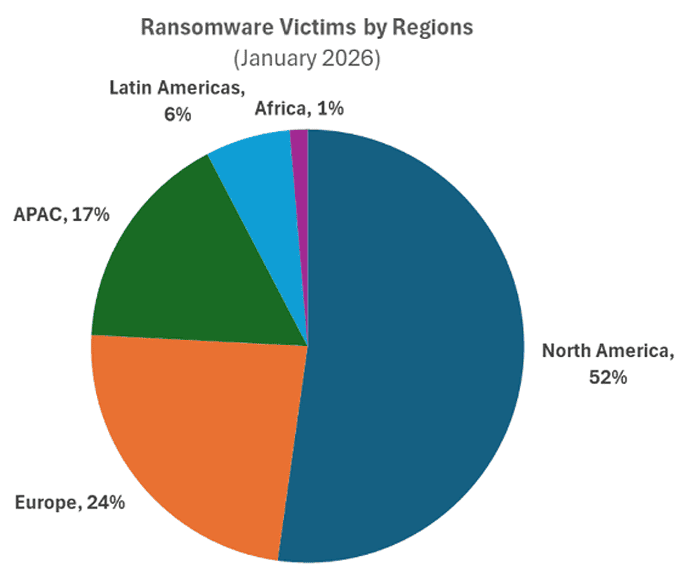
Number of victims of ransomware attacks named on ransomware namesites by cyber criminals by region in December 2025. In Switzerland, cyber attacks declined in January. (Source: Check Point Software Technologies)
Check Point Research, the security research division of Check Point Software Technologies, has published its Monthly Cyber Threat Report for January 2026. The figures show a varied picture: While cyber attacks continue to increase worldwide, Switzerland has seen a significant decline.
Switzerland bucking the global trend
In January 2026, cyber attacks in Switzerland fell by 11% to an average of 1093 attacks per week and organization. This contrasts with the European average, which recorded an increase of 18% with 1755 weekly attacks. Globally, the volume of attacks rose by 3% compared to December 2025 and by 17% compared to the previous year to an average of 2090 cyber attacks per week.
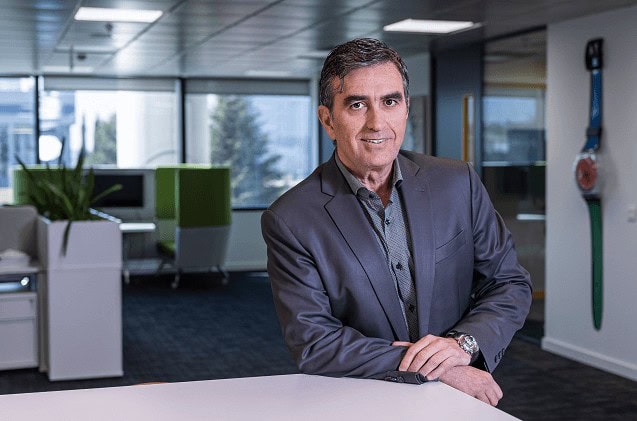
«In Switzerland, the volume of attacks may have decreased, but the intensity with which Swiss companies are attacked has not,» explains Armin Thommen, SE Manager Switzerland at Check Point Software. «The energy & utilities, public sector and consumer goods & services sectors were particularly affected in this country. We are seeing increased cybercriminal activity in all of these sectors. The use of AI is particularly worrying, because even if the volume is currently falling, the complexity and speed are increasing.»
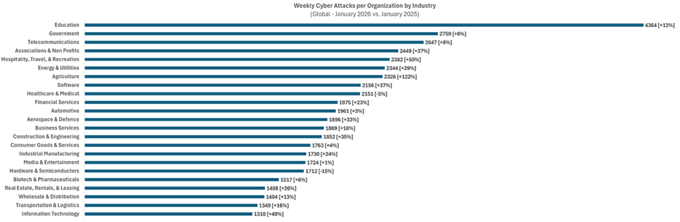
Average number of weekly cyber attacks per organization by country and region in January 2026 (Source: Check Point Software Technologies)
Education sector still hardest hit
The education sector remains the most affected industry globally, with an average of 4364 attacks per organization per week - an increase of twelve percent compared to the previous year. The large attack surface, high user numbers and often outdated infrastructures make this sector particularly vulnerable. The government sector follows with 2759 weekly attacks (up eight percent), while telecommunications companies moved up to third place with 2647 attacks.
GenAI use harbors new data leakage risks
The increasing use of artificial intelligence in companies is significantly increasing the risk of data loss. Check Point Research identified dangerous trends in January: one in 30 GenAI prompts showed an increased risk of sensitive data being leaked. This data leakage risk affected 93 percent of companies that regularly use GenAI tools. 16 percent of all prompts contained potentially sensitive information.
Companies used an average of ten different GenAI tools, indicating fragmented and inconsistent usage patterns. The average enterprise user generated 76 GenAI prompts per month. This opacity in GenAI usage underscores the need for solid governance, better visibility of AI tools and strict controls on data processing.
Ransomware activities continue to increase
Ransomware activity continued to increase by ten percent in January 2026 with 678 publicly reported attacks. North America accounted for 52 percent of ransomware victims, followed by Europe with 24 percent. The USA remained the most affected country with 48 percent, followed by the UK (five percent), Canada (four percent), Germany (four percent) and Italy (three percent).
Industries that rely heavily on continuous operations remained the main targets of ransomware. Business services accounted for 33 percent of all ransomware victims, followed by consumer goods and services (15 percent) and industrial manufacturing (11 percent).
The most active ransomware groups
Qilin was responsible for the most ransomware incidents, accounting for 15 percent of reported attacks, and expanded the exposure of victims through its Rust-based ecosystem. LockBit (12 percent) continued its large-scale campaigns with double extortion. Akira's activities also continued (9 percent). The group targets Windows, Linux and ESXi systems, with a particular focus on business services and industrial manufacturing.
The insights come from Check Point's ThreatCloud AI platform, which analyzes millions of indicators of compromise every day. ThreatCloud is powered by over 50 AI-driven engines and fed with information from more than 150,000 networks and millions of endpoints.
Dematic presents data-driven innovations at LogiMAT
From March 24 to 26, Dematic will be demonstrating at LogiMAT in Stuttgart how companies can gain targeted operational insights from warehouse data. Among other things, the leading provider of automation solutions for supply chains will be presenting a new software solution for operational intelligence and, for the first time in Europe, next-generation trackless AS/RS technology.
Editorial - February 13, 2026
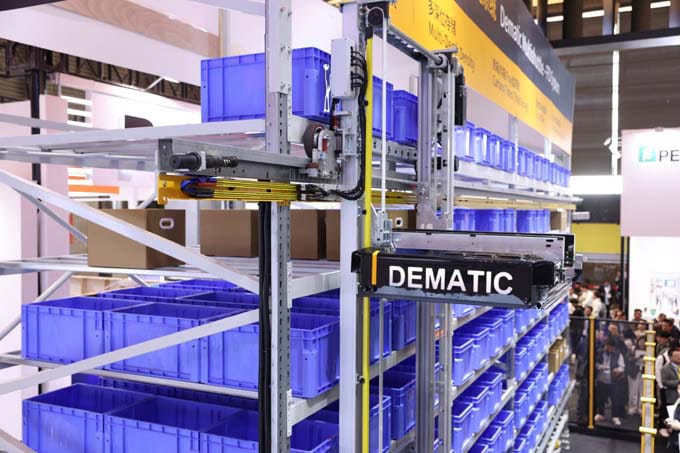
At LogiMAT, Dematic will be presenting its high-performance, trackless AS/RS solution (Automated Storage and Retrieval System) for the first time in Europe. (Photo: Dematic)
At this year's LogiMAT from March 24 to 26 at the Stuttgart Exhibition Center, Dematic will be demonstrating how companies can gain targeted operational insights from warehouse data. This facilitates the planning, operation and continuous optimization of automated systems. The leading provider of automation solutions for supply chains will also be presenting new technologies that simplify the integration of automated systems and promote their smooth interaction.
«Innovation doesn't come from individual technologies, but from a comprehensive understanding of actual operating processes,» says René Sickler, Managing Director of Dematic for Germany, Austria and Switzerland. «When we combine operational data, on-site observations, analyses and customer experiences, we gain valuable insights. These enable better thought-out solutions, greater efficiency and high-performance systems in the long term.»
Dematic invites visitors to experience the warehouse of the future up close at stand H61 in hall 1. Live demonstrations, expert talks and practical training sessions will show how networked intelligence supports decision-making along the supply chain. Dematic's technology partners will also be on hand to explain how seamless integration helps customers achieve long-term automation and performance goals.
Operational intelligence: all processes at a glance
A particular highlight is the European market launch of Dematic's pioneering solution for operational intelligence. The platform bundles processes from different automation technologies and converts the collected data into actionable information. In many logistics centers, equipment, personnel and processes are still controlled by separate systems, which leads to transparency gaps, delayed response times and time-consuming root cause analysis. Dematic's new solution, on the other hand, integrates real-time monitoring, AI-supported decision support and operational analytics in a unified user interface. This not only gives users a complete overview of current operations, but also provides them with in-depth insights into the causes of performance deviations - the basis for fast, data-based decisions in dynamic intralogistics.
Brett Webster, Head of Product Management at Dematic, explains: «Today, warehouse operations are not limited by automation itself, but by fragmented process understanding.» He adds: «At LogiMAT, we will be demonstrating how unified operational intelligence provides customers with a complete overview and enables them to make informed decisions in real time.»
New AS/RS and robotics innovations
Dematic's latest high-performance, trackless AS/RS (Automated Storage and Retrieval System) solution will also be presented in Europe for the first time. The overhead, lightweight system has been specifically designed for fast-growing e-commerce and multi-channel environments. With no traditional rail infrastructure, it offers greater flexibility, faster implementation and easier scalability - ideal for businesses with seasonal peaks or large product variety.
In addition to the AS/RS system, an interactive piece-picking robot arm for the automated removal of individual items will be in live operation at the trade fair stand. The robot is part of Dematic's high-speed AS/RS for containers, with variable storage depth and flexible handling. Dematic will also be demonstrating at LogiMAT how the system works together with the autonomous mobile robot (AMR) D30. This achieves top values in speed, reach and container handling.
Support over the entire life cycle
The trade fair appearance will be rounded off by presentations from the Lifecycle Solutions & Services teams. They will demonstrate how warehouse locations can be flexibly adapted to future supply chain requirements through continuous evaluation, modernization and expansion planning.
Throughout the three-day trade fair, experts from all over Europe will be on hand to show how data-based automation helps companies to optimally combine operational performance and strategic business objectives. Interested parties are cordially invited to experience the latest innovations live at stand 1H61, including demonstrations of AS/RS and robotics solutions.
iTAC and Dürr: Ten years of joint digital strategy for the industry
iTAC Software has been part of the Dürr Group for ten years and has evolved from a traditional MES specialist into a leading MOM provider with a global ecosystem. Together, the companies are driving the digital transformation in industrial production - from the store floor level to the data-driven optimization of entire production networks.
Editorial - February 12, 2026
iTAC and Dürr combine their strengths for the digital factory. (Source: iTAC Software)
Today, the digital transformation of industrial production processes requires more than just individual software modules. What is needed are integrated systems that connect systems, data and processes across all levels. iTAC Software has been part of the Dürr Group for ten years now and, as an MES/MOM specialist, supports its Group-wide digital strategy. Together, the companies develop solutions for networked, transparent and efficient production.
«Dürr and iTAC are constantly working on software solutions that aim to increase plant availability and sustainability or save time,» says Dr. Jochen Weyrauch, CEO of Dürr. «We combine our digital know-how with expert knowledge of production processes to support our customers in future-proofing their entire production.»
The aim of the joint digital strategy is to support customers holistically in the digitalization of their production - from the store floor level to the data-driven optimization of complete production networks. iTAC contributes software expertise and a deep understanding of industrial manufacturing processes to the development of modern manufacturing operations management solutions.
MOM as a central component of the Digital Factory
Dürr bundles its digital expertise across the Group and develops cross-divisional solutions for networked production - from plant integration to MES and MOM systems through to AI-supported analytics and maintenance applications. Within this portfolio, the MOM system forms a central basis for transparency, controllability and efficiency in production.
iTAC has been playing a key role in the development of scalable and integrated production management solutions within the Dürr Group for ten years. The iTAC.MOM.Suite controls and optimizes production processes, supports detailed planning via integrated Advanced Planning & Scheduling (APS) and links production management, logistics, material flow and maintenance in an integrated system. Seamless data acquisition and process visualization is ensured by the SCADA functionalities of Dürr's DXQcontrol solution.
The Dürr Group has also implemented the «OneMES strategy» together with iTAC. A standardized, Group-wide MOM was developed for the Dürr Group's production sites, which maps production digitally and in real time and serves as a best-practice reference for the rollout of comparable structures in other mechanical engineering companies.
From MES provider to global MOM ecosystem
Since becoming part of Dürr, iTAC has consistently evolved from a traditional MES specialist to a provider of a broad, internationally positioned MOM ecosystem. Over the years, iTAC has integrated several companies into the group as subsidiaries - expanding the portfolio both technologically and geographically.
DUALIS strengthens expertise in APS and simulation, adding resilient planning and detailed planning to operational production control. Since 2021, Cogiscan has been expanding its capabilities, particularly in electronics manufacturing, to include machine connectivity, track & trace and analytics - with a customer base that already had a strong international focus. Accevo, which is part of the Dürr Group, complements the iTAC portfolio with software for the process industry and brings additional international project experience, including in the pharmaceutical, food & beverage and FMCG sectors.
This bundling creates an integrated range of services along the entire value chain in production - from planning and connectivity to MOM/MES and data-supported optimization. At the same time, iTAC continues to grow globally as part of Dürr: new markets can be addressed more quickly, international rollouts can be implemented more efficiently and customers can be supported more consistently worldwide.
Leading MOM provider in numerous industries
With the expansion of the iTAC network, the company has further strengthened its position in discrete manufacturing and at the same time expanded into additional sectors. Today, iTAC addresses customers in the automotive and e-mobility, electronics/EMS, telecommunications, medical technology and other manufacturing industries - supplemented by process industries such as pharmaceuticals, food & beverage and FMCG. This makes iTAC one of the MOM providers with a particularly broad industry and technology footprint.
In addition to the MOM core, analysis and AI functions support the continuous improvement of production processes - from the identification of optimization potential to the context-based provision of knowledge in the production environment. This allows decisions to be made more quickly and measures to be implemented in a more targeted manner, both locally in individual plants and across global production networks.
Ten years of partnership with a view to the future
«Ten years of being part of Dürr stand for the consistent further development of our MES and MOM solutions in the industrial environment,» says Martin Heinz, CEO of iTAC Software. «As part of Dürr's digital strategy and together with our subsidiaries, we are shaping the digital transformation in almost all manufacturing industries - with a clear focus on end-to-end processes, scalability and measurable added value on the store floor.»
With the iTAC.MOM.Suite, iTAC Software offers a holistic manufacturing management system that is used by discrete manufacturing companies worldwide. Other systems and solutions for implementing IIoT and Industry 4.0 requirements round off the portfolio. The company is headquartered in Montabaur, Germany, with subsidiaries in the USA, Mexico, China and Japan and has a global partner network for sales and service. The iTAC Group includes the companies DUALIS, Cogiscan and Accevo.
The Dürr Group is a leading global mechanical and plant engineering company with particular expertise in the technology fields of automation, digitalization and energy efficiency. The Group generated sales of € 4.7 billion in 2024 and currently has around 18,000 employees and 130 locations in 32 countries.
Private AI in response to stricter data protection requirements
On Safer Internet Day 2026, the focus is shifting to the responsible use of artificial intelligence. While the threat situation has worsened by over 56 percent according to the Stanford AI Index Report, companies must also comply with the GDPR and the EU AI Act. Private AI offers a solution in which sensitive data never leaves the corporate environment.
Editorial - February 11, 2026
Francisco Mateo-Sidrón, Head of EMEA at Cloudera (Source: Cloudera)
The discussion surrounding Safer Internet Day has changed fundamentally in recent years. Instead of individual password hygiene, the focus in 2026 will be on broader topics such as the regulation of artificial intelligence. In Germany, the GDPR and the EU AI Act are significantly tightening the requirements for dealing with AI systems. At the same time, companies are trying to keep pace with the progress of AI and become increasingly data-driven.
Data forms the basis for the use of AI, especially when companies have large amounts of consumer information. According to a Cloudera survey, this is reflected in the data culture: in Germany, the proportion of respondents who classify their corporate culture as «extremely data-driven» rose from eight percent (2024) to 30 percent (2025).
Volatile threat situation and geopolitical tensions
The urgency of considering data protection as part of AI strategies stems from a volatile threat situation and geopolitical tensions. The increasing use of AI in various business areas increases the attack surface for cyber threats. The Stanford AI Index Report 2025 documents an increase in security and data protection incidents in the AI environment of more than 56 percent within one year.
Consumer data continues to be a particular focus for cybercriminals: In IBM's Cost of a Data Breach report, it was the most commonly compromised data type globally, appearing in 53 percent of all retail data breaches. The increased cyberthreats are targeting the large transaction volumes and sensitive personal data that retailers and financial institutions manage.
In addition, consumer awareness of the value of their data has increased, as the Cisco 2026 Data Privacy Benchmark Study shows. According to the study, 46% of global companies state that clear communication about how AI is trained with consumer data is essential. This is the only way to maintain users' trust in an organization.
Private AI overcomes the data protection dilemma
Companies must responsibly manage and protect the data that drives their growth to reduce the risk of data leaks and unauthorized access. In these circumstances, a single breach not only leads to fines, but can damage reputation and brand value in the long term. At the same time, it is important to explore the limits of AI in order to gain a competitive advantage.
Private AI has emerged as a key framework for modern companies. This is a strategic approach that defines how companies develop, operate and manage AI systems. Private AI ensures that the input and output data of models never leave the corporate environment. All information remains within the company's own infrastructure. This enables companies to overcome the «data protection dilemma». Private AI disproves the assumption that companies have to choose between using data for innovation and blocking it for AI for compliance reasons.
Absolute visibility as a prerequisite
However, effective, private AI requires absolute visibility of data. According to Gartner's metadata management report, almost 60 percent of companies admit that they don't know where their critical data is located. And what you can't see, you can't control. To counteract this, successful companies today use standardized data platforms such as those from Cloudera, which offer seamless data lineage. They track exactly where the data comes from, how it was transformed and who accessed it.
As generative AI agents become an increasingly integral part of workflows, the data that feeds them must be carefully scrutinized. The most valuable data for fine-tuning AI - support transcripts and transaction histories - is often also some of the most sensitive information. Data protection and security can therefore become a decisive value driver. In a time of increased regulation and growing geopolitical uncertainty, the companies that succeed will be those that proactively implement safeguards and ensure their AI is private, controlled and secure from the ground up.
On February 6, Mobiliar celebrated its 200th anniversary - and turned it into a brand production on a large stage. At the Stadttheater, the cooperative idea was told as a show, carried by solidarity, speed and the advertising icon «Liebe Mobiliar». m&k was there - and reviews the five «Mobiljahre» acts in multimedia.
Editorial - February 9, 2026
Many things can survive for two hundred years. A brand that remains light, appealing and still big is rarer. This is exactly what Die Mobiliar showed this afternoon in Bern: not «200 years» as a chronicle, but «200 mobile years» as a flawless brand production - four acts in the Stadttheater and a fifth, which the guests continued to write themselves later in the Casino Bern.
In 1826, when Mobiliar was founded, Switzerland was a different world. Not only technically, but also mentally: torn apart, with a cantonal mindset, still far removed from the self-image that would later be called the «Swiss Confederation». It was precisely at this time that the cooperative idea of bearing risks together was born - not as a cliché, but as a business model with attitude. Two hundred years later, Mobiliar has long since become a large, powerful company based in Berne and operating in the Swiss Confederation. And yet on this afternoon, it achieved something that has become rare among large organizations: its communication is not polished, but approachable. Sympathetic. And above all: credible.
This credibility is not a whim of the day. It is the result of consistency. From brand management that doesn't change color with every trend or change of leadership. From a language that doesn't have to constantly prove how important you are. And of an honesty that holds up even when the world becomes more confusing. That was the real message of this anniversary: less «200 years», more «200 years of brand».
Shortly before the show begins: «die Mobiliar» and 400 guests at the Stadttheater Bern
Since 1826 - and suddenly the brand is on stage
The first act of this afternoon took place at the Stadttheater Bern. Not as a classic celebration with a review and chronicle, but as a masterful production. CEO Michèle Rodoni set the tone in her welcoming address. In three languages, but with a crystal-clear message: «Exactly 200 years ago, in February 1826, Mobiliar was founded. To bear risks together. That is our mission.» And it anchored the mission in a sentence that sounds like everyday life: «Cohesion is not just a word for us. As a cooperative, these are values that we live by every day. Not because they sound good, but because they are the foundation of our society and make us stronger.»
Michèle Rodoni, CEO of Die Mobiliar
Rodoni linked this idea to the anniversary year, which is intended to create encounters - with «Better together» as the motto, with «Red Round Tables» as a symbol, with events across the country. And it led back to the stage: anyone who survives 200 years must constantly renew themselves. That's exactly what the show is supposed to tell. «And now: have fun.»
Act 1: The idea of bearing risk in solidarity - «Better together»
In the dramaturgy of the play «Together for tomorrow. Since 1826.», everything begins where the brand has its origins: with the idea that risks can be taken together. In the production, this becomes a founding scene, a market situation, a new beginning. In the language of Mobiliar, it is the first, silent proof of its own identity: not product first, not premium first, but purpose. Rodoni's words give this a contemporary framework. «Better together» is not just an anniversary motto, but an attempt to establish the basic cooperative idea as a contemporary attitude.
And this is exactly where the anniversary communication comes in, which should extend beyond the ceremony. Yassin Sebai, who is responsible for the campaign work for the anniversary at Mobiliar, says: «Round. That's the symbol we were looking for for »together«.» The round table has no corners, there is room for different interests, and «everyone around it has the same opportunity and equal rights to speak». This idea is not just a graphic motif, but a program: creating encounters, triggering dialogue, not just asserting the "we", but practicing it.
Act 2: From fire insurance company to all-lines insurer - Nadine Imboden turns 200 years of the brand into a show
The second act jumps into the development movement that makes Mobiliar a nationwide insurance company - and a brand that everyone knows. This is precisely where the production resorts to big images: Change, expansion, new risks, new answers. And this is where Nadine Imboden's creative signature is particularly evident.
In the interview, she says what fascinated her about Mobiliar as a material: «What really impressed me was the history. A company that has been inspiring people for 200 years and has developed this idea of solidarity and built on it - I think that's great.» For her, this history is not just a retrospective, but material that can be shaped. And this shaping is the difference between an anniversary and brand staging.
Project manager Michel Gicot emphasizes that the show did not come about «just like that». «The idea was to offer a single event - today for society and tomorrow it will be offered to our employees,» he says. «It's unique because it offers a journey through the history of Mobiliar and is also a show that conveys the values of Mobiliar, this cooperative idea.» And he immediately categorizes what is often forgotten in Bern when something goes smoothly: «Of course, it's the work of an entire team. I am not alone.»
m&k highlight: The stick figure becomes human
For m&k, there was a moment that afternoon that was a lesson in brand management. The famous damage sketch men were not simply projected or used as animated transitions, but brought to life as part of the production. The show had a main actor who led through the acts like a stick figure turned human - slightly clumsy, sometimes as if he had accidentally ended up in the wrong picture, and therefore perfect as a figure of identification.
Stadttheater Bern: Transition from sketch man to stage actor
This performer interacted with props that looked like three-dimensional sketches: Trampoline as safety net, bathtub as water damage slapstick, lantern as swinging gymnastic apparatus, snowball as avalanche image, springboards as athletic thrills. And again and again this «Liebe Mobiliar» logic: a mishap happens - and it doesn't turn into a drama, but into a punchline. The iconic value of the campaign was not explained. It was played.
Imboden sums up this effect in an interview: «You only have to say the first sentence - »Dear Mobiliar« - and everyone in Switzerland knows it.» It was therefore clear to her team: «It has to be in there.» At the same time, they had to think ahead: "A drawing on stage is not alive per se. We had to think about it: How do they come to life? Who gives them a face?"
For Gicot, integrating the sketches was not an optional extra, but a duty. «Damage sketches have been present in all of our communication for 30 years,» he says. «That's why it was actually a »must' for the team and for us that we integrate the damage sketches into the show - in one form or another." The fact that this was not a nostalgia element, but a dramaturgical driver, is precisely the quality of this production.
Damage sketch 2126: He who has the clone, has the damage
Sebai also describes how the sketches were «embodied» in each of the acts - from fire to cyber. «In each act and each historical section, we looked for what embodies it,» he says. «For example, there were the clones [in the future section], which actually looked like the sketches. Or the trampoline that catches someone.» And in the water element, the core was: «We stick together in solidarity and lift each other up.»
Act 3: Insurers in times of climate change
In the third act, the present is here. Climate, natural hazards, cyber risks - a world in which risks are not only becoming more frequent, but also more difficult to categorize. On stage, Renato Kaiser gives voice to this mood of the times. He appears as an «expert for the first general uncertainty» and suddenly makes the topic of risk approachable. He plays his way through climate risks, politics, artificial intelligence and this vague notion that everything has become faster and more uncertain at the same time. His strength is that he doesn't lecture the audience, but takes them along with him - with precise timing, moments of dialect and sentences that stick.
Mobiliar 200 ceremony: Comedian Kaiser, first down-to-earth, then aloof...
Kaiser's performance was more than just a comedy interlude. He brought the show back to the present and gave it the tone that suits Mobiliar: serious in its subject matter, light in its approach. In a production that touched on everything from fire to floods to cyber risks, he was the one who not only described the uncertainty, but also brought it to the stage as an emotion.
Act 4: Insurer of the future - Sina as the final point
The fourth act plays with the future. It deliberately overacts, focuses on identity, on the question of what security means in the future and how much the world can still get out of sync - and at the same time the cooperative idea remains visible as the core.
At the end came a moment that transformed the evening from artistry to emotion: Sina performed and sang a song composed especially for the anniversary by Roman Riklin. It was also Riklin who provided the script for the entire anniversary show. After the tempo, images, punchlines and choreography, Sina's strong-voiced performance was like a warm final chord - a song that emotionally anchors «Together for Tomorrow».
Mobiliar 200 ceremony: Singer Sina sets musical highlightMobiliar 200 ceremony: Festive finale at the municipal theater
Act 5: Casino Bern continues to write
After the final applause and the last confetti, the evening was far from over. The fifth act began where Bern can be festive: in the casino. Suddenly, the theater audience became a crowd of guests, the rows of seats became a lively hall, the stage lights became a warm hall sound - and the production became an event that continues to write itself.
200 years of Mobiliar, ceremony in the Casino with 400 visitors
This is where what brand staging always achieves in the best case scenario happens: it allows people not only to watch, but also to participate. People clink glasses, laugh, nod, discuss. And yes: also enjoyed. In culinary terms, the evening was conducted as one might expect in Bern when an institution like Die Mobiliar invites guests: not as a side program, but as part of the hospitality.
And somewhere between the courses and conversations, the anniversary idea of the «round table» comes full circle: encounter not as a campaign slogan, but as an actual practice. Sebai calls the round table a symbol without corners, with space for different interests. At Casino Bern, this idea was put into practice in a very analogous way: not as a logo, but as an evening that brings people together, gets them talking and makes the «we» tangible for a few hours.
Stefan Mäder: Innovation without losing the cooperative core
Mobiliar Chairman of the Board of Directors Stefan Mäder put the anniversary in historical perspective and emphasized that the founders in 1826 did not think in cantonal terms, but in Swiss terms - a cooperative as a bridge across interests. Mäder spoke about innovation as a necessity for a 200-year-old company, but always in this double track: technologically forward, anchored in the cooperative. «A 200-year-old company can't help but be innovative,» he said, drawing a line from the IBM mainframe computer in 1966 to today's phase of upheaval with the cloud and AI - not as a technology show, but as a means of enabling proximity: more time for personal advice, more space for the human touch.
Stefan Mäder, Chairman of the Board of Directors of «die Mobiliar» during his speech
He also recalled natural hazard insurance as proof of solidarity in action: voluntary payouts in the event of natural disasters, later the natural hazard pool as «double solidarity». And he emphasized profit sharing as an identity-forming promise that applies not only in good times. In this way, brand communication becomes a form of consistency that is constantly renewed without losing itself.
Viktor Rossi: A tribute with a jass beat and cooperative spirit
Federal Chancellor Viktor Rossi delivered a tribute that fits this brand perfectly: He first played with the tricky Bern logic that invitations to private anniversaries can quickly look like «cronyism» politically - and resolved it with a Jass anecdote. He had been playing Jass for over 20 years with a Mobiliar employee who had asked him to reserve February 6. Rossi was thinking of a Jass evening, but then received the invitation to the anniversary. He turned this story into the image of the evening: you hope for good cards, «but you only show your character when you have a bad hand».
Federal Chancellor Viktor Rossi with Weibel (usher)
Rossi used three keywords that link Mobiliar and the Confederation: Neighborhood, cooperative idea, responsibility. And he found a closing image that summarized the evening in one sentence: «So this evening is a family celebration.» People don't always agree, but when it comes down to it, they stick together. Not suppressing risks, but bearing them together - with foresight, common sense and a sense of proportion.
Video: Five acts in eight minutes
m&k was there. The eight-minute video by Beat Hürlimann summarizes these five acts like a story: Show moments, images from Bern, atmospheres between the Stadttheater and the casino - and three voices, representing all those who made this afternoon possible. It is also a small promise to the future that points beyond the anniversary: that Die Mobiliar, like the Aare, will continue to flow for another 200 years. We hope so, we wish so - and we are pretty sure that the brand has the necessary constancy to do so.
Thank you, Mobiliar, for the material for this report.
m&k editor Beat Hürlimann with Nadine Imboden after the interview session in the foyer of the Casino Bern
ZKB with new Head of Sustainability in Asset Management
Ruben Feldman will be the new Head of Sustainability in Asset Management at Zürcher Kantonalbank from April 1, 2026.
Editorial - February 5, 2026
Ruben Feldman, new Head of Sustainability in Asset Management at Zürcher Kantonalbank. (Image: ZKB)
Ruben Feldman, currently Deputy Head of the «ESG Strategy & Development» sustainability division, will take over the management of the same division on April 1, 2026. He succeeds Fabio Pellizzari, who is moving to the Index Solutions division. «With his extensive professional and academic expertise, his strategic mindset and his commitment to sustainability, Ruben will continue the success story of our sustainability team and provide new impetus,» says Iwan Deplazes, Head of Asset Management at Zürcher Kantonalbank. Ruben Feldman is extremely pleased to be taking over the management of the team, according to the statement. «Thanks to the outstanding work of Fabio Pellizzari and the support of an extremely competent team, we will expand the sustainability area in a targeted manner and further strengthen our position as one of the world's leading providers of sustainable investment solutions,» he is quoted as saying.
Ruben Feldman has been working for Zürcher Kantonalbank since 2020. In his role as Deputy Head of Sustainability, he has already made a significant contribution to the further development and implementation of the proprietary sustainability strategy. His key achievements include the integration of ESG principles into ZKB's entire asset management portfolio, the development of innovative sustainability models and frameworks and the co-development of the state-of-the-art «Sustainalyzer» analysis platform. The latter plays a central role in the bank's asset management and is also used across all divisions.
Before joining Zürcher Kantonalbank, he held management positions at the sustainability-focused investment company RobecoSAM and the index provider STOXX, where he led teams in the area of quantitative research and was responsible for cross-divisional business development projects.
Ruben Feldman has an excellent academic background with a clear focus on sustainable investments and financial engineering. The CFA charterholder completed an Executive MBA with honors at the renowned IMD in Lausanne, where sustainable finance was a central focus. Prior to this, he obtained a Master of Financial Engineering from the University of California, Berkeley, Haas School of Business. In addition, he completed a Master's degree in Mathematics with distinction (Gold Medal) at Trinity College Dublin. Further training in sustainable finance and financial mathematics at Columbia University and UC Berkeley round off his academic career.
Economic uncertainties, regulatory decisions and rapid progress in digitalization and artificial intelligence are shaping the transformation of the industry. Nando Freyberg, Senior Strategic Relationship Manager at Dun & Bradstreet, highlights six trends that will transform the sector.
Editorial - February 5, 2026
The banking and financial sector is facing a challenging year. (Symbolic image; Image: Depositphotos.com)
2026 is shaping up to be a crucial year for the banking and financial services sector. The challenges range from increasing margin pressure and cyber risks to the company-wide introduction of AI. In addition, there is improved data quality, regulatory acceleration and increasing demand for real-time data, as well as personalized and trustworthy services. Nando Freyberg from Dun & Bradstreet names six trends that will be important for the industry.
1. pressure on margins and the search for new sources of income
Persistently low interest rates and economic volatility are squeezing net interest margins and forcing banks to diversify. Fee-based services such as payments, wealth management and advisory are gaining traction, while platform banking and embedded finance are opening up new avenues for growth. The winners will be those that use advanced analytics and clean, structured data to identify opportunities, segment customers and support strategic diversification.
2. cyber and resilience risks: Building robust defense mechanisms
With new regulations such as DORA in the EU and stricter rules in the UK, there is an increased focus on digital resilience and managing third-party risk. According to our survey, 91 percent of financial services and insurance executives cite cyber and fraud as their biggest threats, and most have suffered negative impacts from third-party risks. Banks need to integrate real-time risk information and vendor assessments tailored to regional nuances - such as Germany's focus on real estate risk and IT security - to ensure operational continuity and regulatory compliance.
3. large-scale AI: from pilot project to transformation of the entire company
AI is at a turning point. 2026 marks the transition from isolated pilot projects to company-wide transformation. Banks are increasingly using AI agents for predictive analytics, risk management and customer service automation. However, 64 percent of companies lack decision data, and over half have seen AI projects fail due to poor data quality. This highlights that without a solid data foundation, even the best AI and most ambitious transformation efforts will fail. Success depends on a trustworthy data foundation: traceable data provenance and policy controls to ensure explainability and regulatory compliance.
4 Data quality and open finance: the new competitive advantages
Data is the foundation for transformation. Banks are investing in modern data platforms, but fundamental problems persist: over half (55 percent) distrust their internal data sets, and many struggle with silos and duplicates (52 percent). New open finance regulations - such as the European Commission's Financial Data Access Regulation (FiDA), which comes into force in 2026, and the UK Data (Use and Access) Act 2025 (DUAA) - will allow clients to share data, enabling tailored offers and cross-selling opportunities. Clean, interoperable data is crucial to avoid model drift - situations where decisions become less accurate over time due to outdated data and misclassification affecting AI-powered personalization.
5 Accelerated regulation and compliance as a strategy
The pace of regulatory change is accelerating: new operational resilience requirements came into force in 2025 and remain a key focus for banks. In addition, stricter standards for AI governance apply and the regulation of instant payments is progressing. Institutions will be expected to demonstrate ongoing compliance as these frameworks evolve. Compliance is becoming a strategic advantage as automated real-time monitoring and reporting is integrated into technology and operating models. Banks using compliance dashboards and regulatory risk analytics are better able to anticipate and respond to change.
6. customer expectations: Real-time, personalized and trustworthy response
Customer loyalty is being transformed by three forces: the shift to mobile channels, the rise of fintech innovators and growing expectations of transparency. Together, these trends are driving demand for instant payments, seamless digital experiences and personalized services. To keep pace, banks must prioritize omnichannel engagement and data-driven personalization. However, customer retention challenges and slow, manual onboarding show that there is a need for instant verification and trusted identity data. Both accelerate transactions and increase customer trust. Meeting these requirements depends on high-quality data and implementing compliance through live dashboards, real-time data checks and transparent identity profiles. This enables banks to transform compliance from a constraint to a source of trust.
Revision of the fire protection regulations: What's next?
Immediately after the devastating fire in Crans-Montana, fire safety became the focus of public interest. This also has an impact on the ongoing project for the revision of fire safety regulations. We asked about it.
Editorial - February 3, 2026
Michael Binz (VKF) comments on the next steps in the revision of Swiss fire safety regulations. (Image: zVg)
The consultation on the new fire protection regulations 2026 (BSV 2026 for short) had been running since fall 2025. The consultation was about to be concluded at the beginning of 2026. However, the disaster on New Year's Eve in Crans-Montana could mean that some changes need to be reconsidered. The consultation was duly concluded at the beginning of January. What happens now? We spoke to Michael Binz, Head of the Fire Protection Division at the Association of Cantonal Fire Insurers (VKF).
The «Fire safety regulations 2026» project was put on hold at the beginning of January. What are the next steps? Following the very serious fire in Crans-Montana, the Intercantonal Body for Technical Barriers to Trade (IOTH), which is responsible for fire safety regulations, among other things, has deliberately halted its liberalization efforts. The next steps are to carefully evaluate the approximately 11,000 responses received from the technical consultation process and to incorporate the preliminary findings from the ongoing investigations into the fire in Crans-Montana. On this basis, the total revision will be further developed with the aim of bringing the totally revised fire protection regulations into force, probably by fall 2027.
What are the effects of this march stop on the work already done? The work carried out to date remains fully valid. The feedback from the consultation process basically confirms the chosen direction of the risk-based approach and uniform enforcement. The march stop allows this work to be specified more precisely, open questions to be clarified and safety-relevant aspects to be considered in greater depth. It is therefore a qualitative further development.
The BSV 2026 also provides for liberalization and deregulation. In which areas are the changes most significant compared to the current fire safety regulations? The biggest changes in the draft are the freedom to choose between three verification procedures and the consistently risk-based approach. This would make it easier and more flexible where there are demonstrably low risks. At the same time, it requires more targeted measures where risks are increased and the measures are proportionate. Strong individual responsibility is envisaged, particularly for utilization concepts, operational measures and enforcement, embedded in clearly defined safety objectives. Existing responsibilities would be defined more clearly and transparently. A detailed description of the planned changes can be found in the explanatory report on the consultation process.
Pending further consultation steps and the prospect of the BSV 2026 coming into force: What recommendations can you currently make to safety officers in companies? Safety officers are recommended to continue to work consistently in accordance with the applicable fire safety regulations and to implement them in full. At the same time, it is worth familiarizing yourself with risk-based thinking at an early stage, systematically analysing internal fire risks and strengthening organizational measures. A well-documented and practiced fire protection and emergency concept remains central, regardless of when it comes into force.
In view of the disaster in Crans-Montana, how important should fire protection be in a company's risk management in general? Fire protection is a central element of corporate risk management. Fires endanger human lives, interrupt business processes and can cause damage that threatens a company's existence. Regardless of the industry, fire protection must be seen as an integral part of corporate management - on a par with occupational safety, IT security or financial risks.
What criteria should currently be used to carry out a fire risk assessment? A fire risk assessment should be based on usage, density of people, fire loads, ignition sources, structural conditions and organizational and technical protective measures. The interaction of these factors is crucial: Where risks are higher, measures are increased accordingly. This way of thinking already corresponds to the basic logic of fire protection regulations.
On the construction side: Which points should be checked regularly under your own responsibility? In particular, escape and rescue routes, fire compartments, penetration seals, the condition of fire doors, the effectiveness of fire detection and extinguishing systems and compliance with the intended use must be checked regularly. It is equally important to ensure that structural changes or conversions do not unintentionally impair fire protection.
New fire safety regulations: likely to be introduced in fall 2027
Recently, the executive committee of the Intercantonal Body on Technical Barriers to Trade IOTH (Concordat of Building Directors of all 26 cantons) also discussed how to proceed with the BSV 2026. In addition to the preliminary findings from the disaster in Crans-Montana, around 11,000 responses were received as part of the technical consultation process. The IOTH Steering Committee has set itself the goal of bringing the future fire safety regulations into force by fall 2027. It will also propose to the IOTH Plenary Assembly on March 6, 2026 that a nationwide ban on the setting off of pyrotechnics in publicly accessible areas be introduced as an immediate measure. This does not apply to the categories of fireworks that already require a permit.
European CLOs are taking on more and more strategic leadership roles
The 2026 CLO Survey 2026 by ACC and FTI Consulting for Europe shows that legal departments are taking on a central role in corporate strategies in the face of increasing sanctions, ESG audits and the accelerated adoption of AI.
Editorial - February 3, 2026
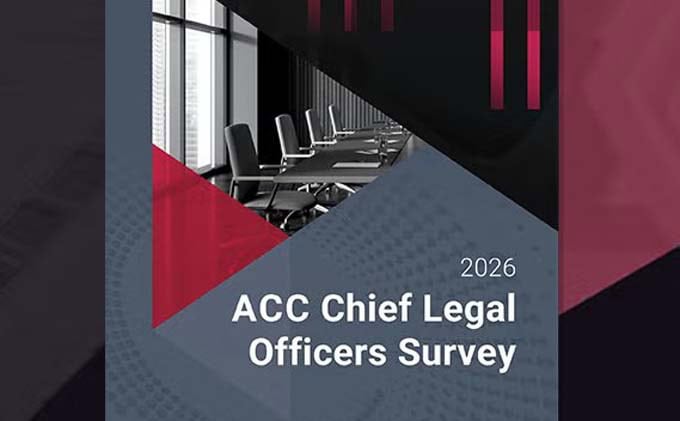
CLO Survey 2026 shows: European CLOs are taking on strategic leadership roles as geopolitics, AI and regulatory frameworks reshape corporate decision-making (Image: www.acc.com)
The Association of Corporate Counselv (ACC), in collaboration with the global management consulting firm FTI Consulting, Inc. has published the European results of its 2026 Chief Legal Officers (CLO) Survey. It highlights how legal professionals across Europe are becoming key strategic partners as organizations face geopolitical instability, complex regulations and rapid technological change.
Now in its 27th year, the ACC CLO Survey sheds light on how senior legal leaders are adapting their roles and resources to respond to growing external risks and internal transformation pressures. The European annex draws on responses from CLOs across the region and compares their priorities with global trends. «This year's results for Europe confirm that the role of the CLO is no longer limited to legal risk management,» said Jason L. Brown, President and CEO of ACC. «European CLOs are deeply involved in business strategy, enterprise risk and ESG governance at a time when companies are facing unprecedented geopolitical and regulatory uncertainty. The data shows a profession moving decisively to the center of corporate decision-making.»
European CLOs gain better access to senior management and the board of directors
The survey shows a sharp increase in the influence of senior executives in European legal. A record 82 % of European CLOs now report directly to the CEO, up from 73 % last year and approaching the global average of 84 %. Board engagement has also increased, with 75 % regularly attending board meetings, compared to just 56 % in 2025.
European CLOs are much more likely than their global counterparts to take the lead or co-lead role:
ESG strategy (48 % vs. 26 % worldwide)
Enterprise risk management (83 % vs. 65 %)
Advice on geopolitical risks (57 % vs. 41 %)
They increasingly define their impact in strategic terms, referring to contributions to corporate strategy and corporate culture that go beyond traditional legal functions.
AI adoption accelerates as Europe modernizes its legal departments
European legal departments are faster than the global average in adopting new technologies. Almost 62 % plan to implement new legal technologies in the coming year, and 77 % expect to deploy generative AI tools within the next 24 months.
While most CLOs do not anticipate major job cuts, they do expect the areas of work to evolve significantly. 72 % expect AI to fundamentally change legal work, with a focus on upskilling teams in technology skills, data analytics and legal innovation.
«European CLOs are not sitting idly by when it comes to AI,» says Sophie Ross, Global CEO of FTI Consulting's technology division. «They are prioritizing technological expertise and operational efficiency to meet increasing regulatory requirements and faster business cycles.»
Sanctions, ESG and investigations dominate regulatory issues
Europe's regulatory risk profile clearly stands out in the survey. European CLOs are almost three times more likely than their global counterparts to report this:
the enforcement of sanctions as the most important concern (34 % compared to 13 %)
the enforcement of ESG criteria (26 % compared to 14 %)
They also report a sharp increase in the complexity and cost of investigations. 45 % state that investigation costs have increased compared to the previous year, and 43 % cite greater complexity.
In response, 44 % have hired more compliance specialists, reflecting a trend towards deeper in-house expertise in regulatory and geopolitical risk management.
Resource pressure and geopolitical risks determine the priorities for 2026
Geopolitical instability is currently the biggest organizational risk for European CLOs. This was stated by 28 % of respondents, almost three times as many as worldwide. At the same time, European legal departments have fewer resources at their disposal. More respondents than the global average cited budget constraints (40 %) and skills shortages (23 %) as the biggest obstacles to success.
Despite these challenges, European CLOs are strengthening their strategic role. Two thirds cite strengthening their position as business partners as their most important focus for 2026, in addition to implementing technologies and increasing operational efficiency.
How can the future succeed - economically, organizationally and humanly? These four books show from different perspectives why standing still is not an option: they analyze structural weaknesses, call for a rethink in leadership and HR policy and encourage people to actively shape innovation, learning and responsibility again. Clever, practical and inspiring.
Editorial - February 3, 2026
In collaboration with GetAbstract, we present four books from the marketing and communications sector. This time: «Accelerating experience», «Between job cuts and labor shortages», «The new prosperity» and «Recruiting - a matter for the boss».
Accelerate experience!
Principles of success in a fluid world.
Paul M. Achleitner
Publisher: Campus
Publication year: 2025
Pages: 296
ISBN: 9783593520872
Paul M. Achleitner gets on his nerves when he complains. The former Chairman of the Supervisory Board of Deutsche Bank does not fail to recognize that entrepreneurs are facing huge challenges due to geopolitical conflicts, technological innovations and climate change. But where politicians and the media spread pessimism, he believes that companies have a duty to act with courage and confidence. Achleitner looks back on his work in an entertaining and largely unpretentious way. Today's managers should not copy him - but should feel encouraged by reading this book to turn their own experiences into effective action.
getAbstract rating: 9
Qualities:
Opinionated
Eloquent
Inspiring
Between job cuts and labor shortages
Skilling strategies for a future-oriented personnel policy.
Silke Eilers and Jutta Rump (Eds.)
Publisher: Wiley-VCH
Publication year: 2025
Pages: 221
ISBN: 9783527512164
Digitalization, AI, a shortage of skilled workers and general structural change are causing problems for many companies. How should they respond? What can companies do to ensure they have enough competent employees in their ranks in the future? One approach is to retrain existing staff in the long term and prepare them for future challenges. Up-skilling and re-skilling are among the most important keywords in this anthology. The authors show why companies should rely on existing employees and how they can qualify them for new tasks.
getAbstract rating: 8
Qualities:
Background
Practical examples
For experts
The new prosperity
What we need to do for a better future.
Ezra Klein and Derek Thompson
Publisher: Hoffmann and Campe
Publication year: 2025
Pages: 359
ISBN: 9783455020588
The book is a surprise - especially for those interested in Germany. The two renowned US authors attest that their country has become weak in innovation, bureaucratically encrusted and hostile to growth. The empirical data they use to back up their thesis is even more surprising than this steep thesis, for example the lack of living space, the failure of major projects or the reluctance to engage in risky research. Klein and Thompson place the astonishing findings about the supposedly freest country in the world in its political landscape - including the rise of Trump. Worth reading.
getAbstract rating: 9
Qualities:
Eye opener
Visionary
Background
Recruiting as a matter for the boss
How companies need to position themselves today in order to attract applicants.
Markus Brandl and Nicole Truchseß
Publisher: Wiley-VCH
Publication year: 2025
Pages: 256
ISBN: 9783527512423
In the past, jobseekers applied to companies - today it's the other way around. However, many HR professionals find it difficult to get off their high horse, break new ground and change their perspective. They should ask themselves today: What do potential employees really expect and how do they want to work? Nicole Truchseß and Markus Brandl advise at the interface between recruitment and sales. Their message to the industry: stop complaining. From now on, recruitment means actively selling your employer brand.
getAbstract rating: 8
Qualities:
Realizable
Practical examples
Inspiring
Bystronic opens up new markets in medical technology
At the end of January, Bystronic announced the completion of the acquisition of the Tools for Materials Processing division of the US company Coherent Corp. and revives the «Rofin» brand.
Editorial - February 2, 2026
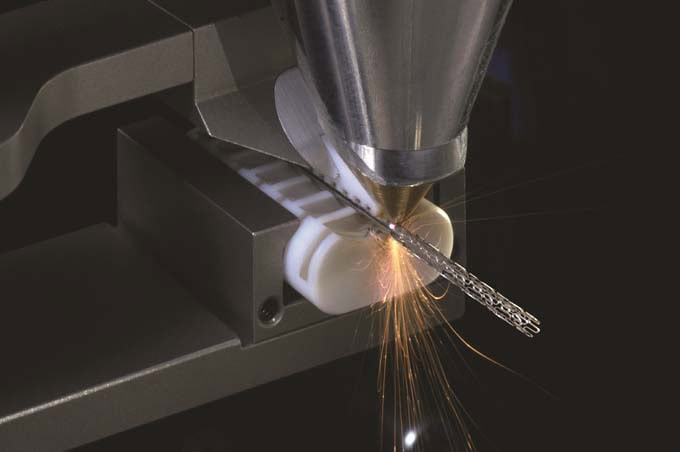
StarCut Tube enables the cutting of stents in the micro range with maximum precision. (Image: Bystronic)
Bystronic, an international company based in Switzerland, is a leading provider of solutions for sheet metal and material processing. Bystronic combines laser cutting technology, press brakes, automation and software with innovative laser applications for new materials and processes. The company is now completing the acquisition of the Tools for Materials Processing business from Coherent Corp. The acquisition will help Bystronic to expand into new attractive growth markets such as medical, semiconductor and general manufacturing. In addition, Bystronic's portfolio will be expanded to include new laser applications such as micro material processing, marking, engraving and drilling.
Acquisition of the trademark rights to Rofin
With this acquisition, Bystronic also acquires the rights to the well-known Rofin brand, which will continue as part of the newly created «Bystronic Rofin» division. Bystronic Rofin's versatile laser technologies enable the processing of a wide range of materials, including metal, glass, ceramics, polymers and organic materials. Due to the wide variety of applications and materials, the acquisition will open up new opportunities in research and development.
Applications for a wide range of industries
«We warmly welcome all customers, partners and colleagues of the company to our new Bystronic Rofin division,» says Domenico Iacovelli, CEO of Bystronic. «We are integrating Rofin's successful and pioneering technology into our Bystronic product portfolio, creating a broad range of applications for customers from various industries. Together, we will support our customers in optimizing and further developing their production so that they can stay ahead in increasingly competitive markets.»
With around 400 employees, the profitable Bystronic Rofin division has achieved an annual turnover of around 100 million US dollars in recent years. The headquarters are located in Gilching near Munich.
Europe's digital future is being decided in the here and now. On February 17 and 18, 2026, the BERNEXPO site will become the focal point of a debate that will decide on security, freedom and self-determination in the digital space.
Editorial - January 30, 2026
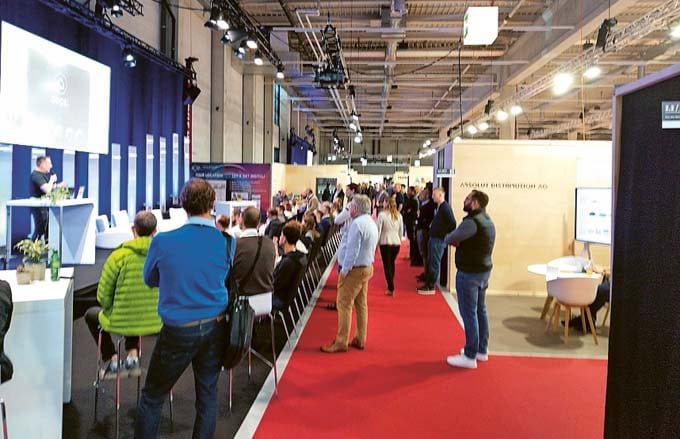
At the Swiss Cyber Security Days 2026, visitors will once again find a wealth of answers to pressing cyber security questions and more. (Image: Thomas Berner)
Under the motto «Digital Sovereignty - The New Frontier», the Swiss Cyber Security Days 2026 will bring together national and international figures to find answers to one of the most pressing questions of our time.
Digital sovereignty is moving onto the political and business agenda
The appearance of the United States of America at the World Economic Forum 2026 was an unmistakable signal: sovereignty, also and especially in the digital space, is moving further into the center of geopolitical, economic and social power issues. In this new reality, outrage is not a strategy. Neither for Europe nor for Switzerland. The Swiss capital will be at the center of this debate for two days on 17 and 18 February 2026. Top national and international speakers will negotiate the digital future - uncomfortably and relevantly, as the organizers promise. After all, digital sovereignty is no longer an abstract buzzword, but a strategic necessity. Who controls data, infrastructures and identities? Who sets standards, shapes dependencies or dissolves them? And how do we secure freedom, innovation and security in an increasingly networked but fragmented world?
National and international stars on the stage
When digital sovereignty, security and geopolitical reality come together, the result is an inspiring dialog of international scope. Leading minds from politics, technology, authorities, science and international organizations will come together on stage to provide answers to the central strategic questions of Europe's and Switzerland's digital future. The speakers at the SCSD 2026 include
Florian Schütz, Director of the Federal Office for Cybersecurity BACS, on cyber resilience and state protection mechanisms
Dr. Cristina Caffarra (EuroStack) on European digital independence and strategic autonomy
Frank Karlitschek (Nextcloud) on open source applications and sovereign digital infrastructures for governments and public authorities
Dr. Jean-Marc Rickli (GCSP) on geopolitical power shifts in the digital age
Prof. Dr. Dr. Oliver Hoffmann on the human mind, mental economy and resilience in cyberspace
Prof. Dr. Touradj Ebrahimi (EPFL) on the importance of standards for technological sovereignty
José Neves (Aerospace & Defense Cluster Portugal) on the role of industrial clusters in the European innovation and security architecture
Bruno Giussani, long-standing European Director of TED, on technology, social responsibility and global discourse
Nathalie Gratzer (NATO) on international security architectures
Pavlina Pavlova (United Nations) on global cybercrime and multilateral counter-strategies
The programme will be supplemented by contributions from fedpol, the Federal Office of Justice and Google on e-identities, the Cyber Division of the FBI and other international organizations of key security policy importance. Future topics such as post-quantum cryptography and AI security round off the program and highlight the technological course that needs to be set today in order to remain effective.
Best practice and SME workshops
The transition from strategic classification to concrete implementation is made possible by the two curated Best Practice Stages. In practical experience reports, companies, authorities and solution providers will show how cybersecurity strategies and solutions are successfully introduced, operated and further developed in everyday life - from employee sensitization and incident response to the establishment of sustainable security structures.
The content is aimed at specialists and managers from SMEs and large companies as well as SMEs, authorities and user organizations. In the new SME zone, additional in-depth workshops on SME-relevant topics will be offered in cooperation with the Lucerne University of Applied Sciences and Arts HSLU. The Best Practice Stages and the workshops in the SME zone thus supplement the strategic conference program with the decisive element: practical implementation knowledge. A total of around 100 exhibitors will be presenting their products, services and innovations at this year's Swiss Cyber Security Days.